1. Characters
1.1. PCs
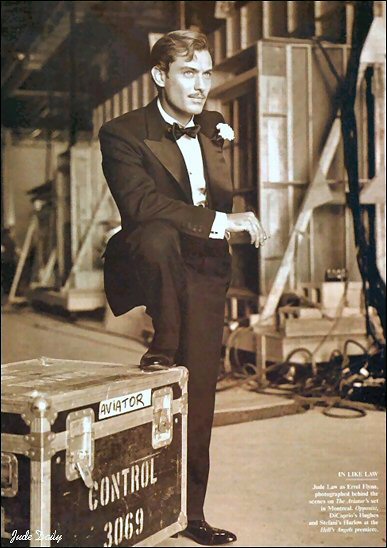 Vincent Alexander, an unnaturally charismatic actor. (Image of Jude Law as Errol Flynn; played by David Devereux.)
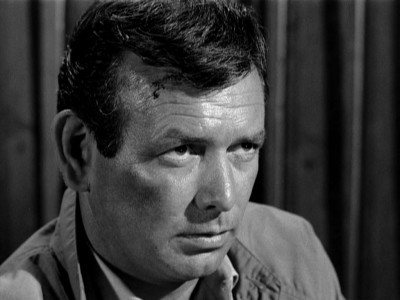 Pete Argas, a veteran of the Great War with a talent for not being seen. (Image of Barry Morse; played by John Dallman.)
Robert John Carnegie, an American dabbler in the occult. (Played by Ingvar Mattsson.) Missing, presumed damned.
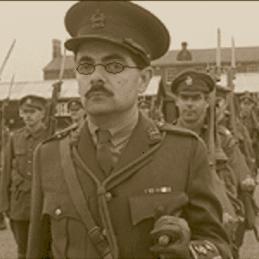 Major Brian Kingsthorpe, an engineering officer, veteran of the Great War, and subtle ritual magician. (Image of Rowan Atkinson as Major Blackadder; played by Phil Masters.)
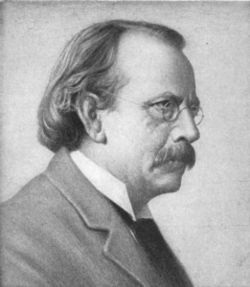 Reginald Arthur Matthews, retired from the Indian Civil Service and knowledgeable in the ways of the Mysterious East. (Image of J J Thompson FRS; played by David Cantrell.)
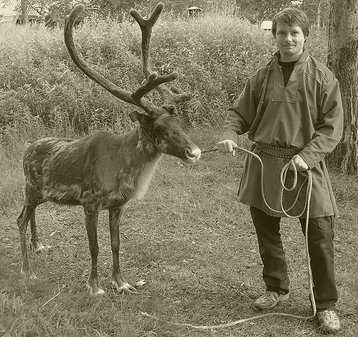 Ola Nordmann, a Norwegian/Sami fisherman and shaman. (Played by Ingvar Mattsson.) Killed in Action.
 Barbara Vane, teacher, housekeeper and spirit medium. (Image of Merle Oberon; played by Karen Gilham RIP.)
Vladimir Igorovich Kirilov, White Russian elementalist. (Played by Ingvar Mattsson.)
1.2. NPCs
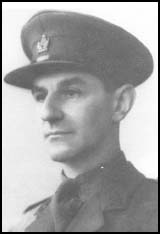 Captain Maxwell Knight, in charge of MI5's B5(b) (which nominally monitors political subversion, but has other less official rôles (such as running magically-talented troubleshooters).
Sarge, Miss Vane's spirit guide.
Ola Nordmann, Mr Matthews' spirit guide.
 Princess Charlotte, apocryphal younger sister of King George VI.
Apocryphal younger sister of King George VI.
2. Events
2.1. Introduction and Training
[13 October 2007]
Early in September, the team is gathered for the first time. Captain Knight performs summary introductions, and explains that the powers that be aren't quite sure how to use the team yet; for the moment, they should concentrate on training.
2.2. Haunted Battleship
Friday 13 October 1939
Captain Knight confirms that some instructions have come in "on the square"; the second-in-command of HMS Royal Oak, which got back yesterday from the North Atlantic, is concerned that his ship is haunted; she's had more than the usual rate of boiler tube failures, and a variety of other problems. Commander Nichols, the 2ic, is aware of the team's nature; for other eyes, their cover is that of a civilian engineering investigation team. The ship is currently at Scapa Flow; the team's assigned transport is at Croydon Airport, a DH.89a Dragon Rapide.
The weather is clear after the previous night's storms, and the flight to RNAS Hatston takes about three and a half hours. Nichols is waiting with a boat to take them to Royal Oak, moored offshore. Alongside her is a fleet tender; a few hundred yards away is the old seaplane carrier Pegasus. He warns them that Captain Benn is a very suitable captain for this ship (Royal Oak fought at Jutland and is generally considered close to obsolete).
The team starts with a tour of the ship, though when they get to one of the boilers that's under repair they cut this short; Mr Alexander talks with Sublieutenant Fisher, who's overseeing the work, and persuades him to clear the room for twenty minutes or so. Mr Matthews and Miss Vane ask Commander Nichols to show them the ship's records; several men have been taken up recently for fighting, not in itself especially surprising, but more significantly several men seem to have reported fires that turned out not to exist. The current supposition is mental weakness, but they're good men in other respects.
In the boiler-room, Alexander keeps watch while Mr Carnegie and Major Kingsthorpe perform their respective workings to diagnose weak points in the boiler. Apart from the burst tube that was being replaced, there don't seem to be any particularly frail areas. That tube seems to have burst, which is the normal failure mode, though it's unusual for it to happen this thoroughly in a tube which has passed inspection. Carnegie talks about demon-summoning in a familiar way which Kingsthorpe finds somewhat disconcerting.
When Commander Nichols returns, Carnegie and Kingsthorpe ask him to introduce them to a more senior engineering officer; he brings them Lieutenant Martin, with whom they talk about the boiler failures. Martin can't account for them; the failures would be consistent with a boiler running far too hot, but the gauges (which have been checked and replaced) don't show any problems of that sort.
Miss Vane has been casting around for spirits of the dead, but has not found any. She speaks with her spirit guide, Sarge, who's sure there's something here, but thinks it's very large ("all through the hull") and not something he recognises. He attempts to speak with it, but gets no answer and doesn't want to push things.
Mr Argas considers random fires, and thinks about the effect they might have on the magazines. Alexander is noticeably nervous about this. Nichols is rather more sanguine; fires in magazines are something that battleship crews know how to deal with.
The team members retire to their accommodations (two junior officers' cabins, one for Miss Vane). She and Kingsthorpe conduct a seance; she invites Sarge to speak through her, and Kingsthorpe asks him to try harder to talk to the spirit. He does, and rapidly finds himself in a fight. Kingsthorpe attempts to lend him energy, but can't act quickly enough to be of help; he tells Sarge to flee, since the local spirit doesn't seem to be prepared to leave the ship.
Almost at once, a tannoy call goes out: "Check magazine temperatures". Argas follows invisibly to see what's going on; there's a wax sensor designed to sound an alarm if things get too hot, and it has melted, but there's no other sign of heat or fire. The sailors who were investigating replace the sensor and leave.
Matthews goes out on deck and uses his empathy with plants (the weed on the ship's hull) to try to find out about other hot spots; there are lots of them, all through the hull, and usually only lasting for a very short time. There's no real sense of how long this has been going on, though. He goes below again and checks the maintenance records (the last two years' are on board); reading between the lines a bit, this sort of failure and oddity has been going on at a low level for all that time, and possibly longer.
Alexander escorts Miss Vane round the deck so that she can try again to look for spirits of the dead; she doesn't detect any. Anyone who may have died aboard Royal Oak is presumably at rest.
Kingsthorpe speaks with the chaplain, who confirms that Royal Oak has never been a "happy" ship; in response to Kingsthorpe's hints of higher (or lower) powers, he gives mundane explanations (ship's traditions and such, that could only be cured with a total change of personnel). Kingsthorpe asks that a telegram be sent to the Admiralty requesting the full maintenance records.
The hints of something "throughout the hull" leads the team to get changed into boiler-suits and crawl about the innards of the ship. While there's nothing immediately obvious, it becomes apparent as they collate their reports that there's been some very large-scale symbol drawing going on, not based on the plans but seemingly connected with the specific small-scale details of the way the ship's been constructed. Kingsthorpe recognises it as a German pattern, though not a recent one; it's some sort of enchantment of binding.
It's getting quite late, and the team is invited to the officers' mess; Alexander tries to charm Captain Benn, who takes an instant dislike to him (though somehow this is defused into at least polite conversation). Kingsthorpe's vegetarianism is a matter of some comment, but the cooks manage somehow.
Before everyone turns in, Kingsthorpe conducts a protection ritual round the cabins; he stays up for an hour or so researching various powerful spirits.
Saturday 14 October 1939
They are woken shortly after 1am by a crash solid enough to be felt through the ship, followed by a loud rattle. Carnegie looks magically for the nearest source of refined fuel, and gets a trace off to the south. Kingsthorpe goes to investigate the rattle, and finds that the starboard anchor chain has broken loose ("that'll be a job for the divers"). He's very concerned, especially when the call goes out again to check magazine temperatures; Argas overhears that the first guess was a fire in the inflammables store, which could indeed cause such an explosion, but there's no sign of damage there. He goes out on deck; there's no moon, but the weather is clear, and in the light of the aurora he thinks he sees unusual ripples to the south. By the time he can get another crewman to look, they've gone.
About a quarter of an hour after the initial shock, three more shocks go off in quick succession, and the ship takes on a pronounced list. The team decides to leave her (so as not to get in the way of the professionals, of course). As they're climbing companionways to get to the deck, a rope whips round Carnegie; Alexander cuts one end of it, and Kingsthorpe works on the other. Carnegie tries a flame-based attack to burn it off, but it comes out rather more powerfully than expected; Kingsthorpe jumps back in time, but Alexander is singed. They decide not to fiddle further, but to carry Carnegie with them to the tender (now being cut loose as the Royal Oak continues to list). This is slow going, though, and the oily water catches up with them as they get out on deck. Nobody knows how to swim; Argas manages to stay afloat on his own, and the others cling to wreckage. Carnegie notices that it's smouldering where he touches it; he manages to dispel the effect, but finds himself being dragged down by his feet. He calls out something unclear about "old enemies". Kingsthorpe attempts a ritual of dispelling, but doesn't manage it in time.
After about half an hour, the team is fished out of the oily water and taken back to Hatston to dry off. Later in the day, Kingsthorpe tries divination to find out where Carnegie is; he starts with maps, going to increasingly smaller scales and larger areas, then attempts a vision of Carnegie's surroundings and reels somewhat. There definitely seems to be an infernal connection...
Sunday 15 October 1939
Research in London indicates that the symbolism found aboard Royal Oak is consistent with very early Thule Gesellschaft. HMS Warspite was built around the same time, also at Devonport; a team will be sent to check her over, as well as the ships converted and built there shortly after the Great War.
2.3. Talvisota
The next two months or so pass in waiting, paperwork and training. On Christmas Day, Captain Knight starts to talk about winter clothing, and the team is sent on an intensive training coures in arctic survival. Those who've been listening to the news start to brush up on their Finnish.
A new member joins the team: Ola Nordmann apparently paddled a boat across the North Sea and up the Thames to knock on just the right door...
Monday 1 January 1940
Captain Knight gives some background to the mission. Slightly over a month ago, the Soviet Union invaded Finland; much to everyone's surprise, they haven't managed to conquer the country, and indeed they've bogged down a bit. Britain is interested in providing some assistance to Finland, but not too soon -- Finland is still on good diplomatic terms with Germany and could be a potent ally. The British and French plan involves a landing in Norway and an overland march across Norway and Sweden, coincidentally persuading Sweden to abandon her neutrality and giving the chance to leave Allied garrisons on the iron-ore reserves. Actually providing military aid to Finland is somewhat lower on the priority list. In any case, none of that is going to happen for a couple of months, until it's warmed up a bit.
However, remote viewing resources -- and Knight is not prepared to discuss any details of those with people who might potentially be captured -- have picked up a suggestion that the Soviets are attempting some sort of large-scale working in order to break the stalemate. The mission is to stop it and to find out more about it, possibly not in that order. Magic isn't something that the official Soviet world-view can accept, so Allied intelligence has no information about their capabilities. The best guess as to the location is somewhere near the northern shores of Lake Ladoga, some miles on the Soviet side of the front line.
Since His Majesty's Government is not in a position to provide any sort of formal assistance to Finland, the group will be travelling as civilian volunteers (indeed, several other Britons have gone to Finland to lend their aid). Refuelling has been arranged at Kristiansand and Stockholm, and the aircraft should probably be left in the care of the British Embassy at Helsinki, since if it's taken further forward it will probably be requisitioned for military use.
The team stocks up on cold-weather gear, alcohol and cigarettes, as well as survival rations, good-quality portable food, camouflage netting, rifles and ammunition, and even a Lewis gun (though without its bulky and heavy cooling jacket). They fly to Helsinki, stopping overnight in Stockholm.
Tuesday, 2 January 1940
At Helsinki, they are met by a junior staff member of the British Embassy, who secures their plane and takes them to meet the Military Attaché, Mr Walker. He suggests that they bypass headquarters at Mikkeli and proceed directly to the front at Kollaa, closest to their target location; Major Rissanen is particularly sympathetic to the British cause and will probably be prepared to help further. The team buys more alcohol in Helsinki (since it will probably be more to the taste of the people they'll be dealing with), loads up a pair of borrowed trucks, and makes immediately for Mikkeli, as it's on the road to the front. They arrive, find a house where they can bed down, and turn in fairly immediately; there's some suggestion of trying to pick up some rumours, but since only one of them speaks the language and the Finns are a notoriously closemouthed lot they decide to get some rest instead.
Wednesday 3 January 1940
They take advantage of the few hours of daylight to drive to Kollaa, and make contact with the rear areas of the Finnish forces there. After a certain amount of discussion (involving the sentries muttering things like "no, they can't be spies, spies would at least try to blend in") they are introduced to Major Rissanen, who is somewhat busy with plans for the next day's fighting. He speaks good English ("I speak many civilised languages, as well as Russian"), but seems somewhat puzzled by the team's reasons for being present. Major Kingsthorpe explains that this group is specialised in unconventional operations and has its own reasons for being here, and simply throwing them into the line as volunteers is possibly not the best thing; after a bit, Rissanen exclaims "ah, I see! You're witches. Why didn't you say so?" Things seem to go more easily after that, at least from his point of view; it's the team's turn to be nonplussed.
Major Kingsthorpe asks for a guide, and Rissanen says he has just the man. "It'll make a change for him from dodging artillery." They have dinner together, the team making significant inroads into their food and alcohol supplies, though Rissanen is unusually sober by the standards of his fellow-officers.
Thursday 4 January 1940
The guide, Corporal Häyhä, is ready for them with skis and rifle in the morning. He seems to have some trouble with the idea that they're not competent on skis, but grudgingly admits that snowshoes will probably do. They advance slightly south of the main fighting, and head down to the bank of the Kollaa, a narrow river which has nonetheless served as a front in the fighting. It's frozen, of course, and they encounter little difficulty in crossing, though Häyhä has a disturbing habit of vanishing even when he is trying to be seen.
They continue through the forest, with no clear idea of where they're going other than they're heading for the northern shore of Lake Ladoga. They meet a Russian BT-5 tank crew trying to fix their vehicle (mostly by blowtorching the engine to get it warm enough to restart); Häyhä asks permission, then snipes the three men from a distance that seems too great to be possible with the M28 rifle (a near variant on the Mosin-Nagant) he's carrying.
Some miles further on, they see a larger group of Russians, apparently a motor pool; there are two tanks, some self-propelled guns, and several trucks. The idea of taking one of the trucks is discussed briefly, but abandoned; they seem quite well-guarded, and the alarm could be raised quickly. Their unit insignia are slightly odd: 47th Special Morale Detachment, with a black and white oblique checked patch.
There's a log-and-ice road running from here to the south-east, and the team decides to parallel it. Late in the evening they reach an encampment, with several log buildings apparently thrown up in some haste from local timber. Häyhä points out that the Russians guarding this place are unusually smart: they're actually using cover and concealment effectively.
Miss Vane summons Sarge, who reports that the dead seem to be mustering here -- dead soldiers from both sides, which he finds quite surprising. The team lays up for the night.
Friday 5 January 1940
Argas turns himself invisible (deliberately in front of Häyhä, who doesn't visibly react except to comment that Argas doesn't have green eyes) and sneaks up to the edge of the encampment. There's a sound of continuous plainsong-like chanting coming from the biggest building, which is windowless; there seem to be three or four voices involved. The other buildings are a barracks, an office of some sort, and a cooking and storage area (currently unheated); there are two trucks on the far side of the encampment, with the same Special Morale Detachment insignia. It looks as though there might be about twenty people present in total.
Argas ducks under the gate and takes a closer look. One Russian comes out of the barracks and enters the large building; after a bit, another comes out and heads for the barracks. There's smoke rising from the large building as well as from the barracks and offices; Argas thinks he can detect incense of some sort. He can mak out a few repeated words in the chanting; one of them is "Chyornovog". He heads back to the team; Kingsthorpe recognises that name as Bad News, and they plan an assault.
They split up and cover the encampment from different angles. Alexander aims up the Lewis gun on the barracks door. Argas sneaks in again, picks the lock on the armoury door, and enters when the guards are looking the other way. He finds rifles, pistols, ammunition and grenades; he takes several of the latter. As he's leaving again, one of the guards spots the door and shouts something; a soldier tries to leave the barracks, and is shot by Alexander, which slows down the others long enough for Argas to toss in a grenade. It starts to get substantially colder. The rest of the team (excepting Miss Vane) shoots at the guards, and at anyone else who shows his head, killing them mostly without difficulty, though one of them gets in a lucky shot which wounds Major Kingsthorpe severely (he stays conscious but rather wishes he hadn't). Argas, meanwhile, uses grenades to blow in the door of the big building; he sees several Russians inside, as well as a very large arcane diagram, taking up most of the floor area. A whirlwind starts to form in the sky over the middle of the camp. Argas throws a grenade squarely onto the diagram, and things start to go severely wrong for the Russians, starting with the building itself catching fire. The whirlwind disperses.
The team (and Häyhä) shoot the other Russians who appear, though one of them (perhaps more ruthless than the rest in using his dead and wounded comrades for cover) manages to get away into the woods. Sarge reports that the spirits are dispersing. Nordmann drums for a few minutes and apparently heals Kingsthorpe's wound. The team members grab up all the paperwork they can find from the office hut, and then set fire to the whole place and take one of the trucks to get away. They drive back past the other Special Morale Group camp, where one of the guards waves at the truck. Matthews is driving at first, but the ice road is a bit of a challenge; Alexander takes over after they've had to lever the truck back onto the road.
They cross back across the Kollaa River, and Häyhä waves at several snipers whom they haven't seen. They leave most of the spare food, booze and tobacco behind with Major Rissanen. From there, the trip back to Helsinki and thence to London is relatively painless.
Sunday 7 January 1940
The papers are frustratingly fragmentary, but MI5 finds them distinctly interesting nonetheless. It appears that the objective of the Russian ritual was to deepen the winter to the west of the front, making the off-road going easier, and that the power source was the spirits of the dead of both sides. It's not clear just where the 47th Special Morale Detachment fits into the Soviet order; it seems to be a GRU unit, but there's some indication that its existence is being kept secret from Soviet high command.
2.4. Archaeological Directorate
[2 February 2008]
The British effort to send troops to fight in Finland founders somewhat when the Finns make peace with the Russians, ceding a fair amount of territory. Germany invades Denmark and Norway, and everyone keeps glaring across the Maginot Line and other fixed defences.
In March and April, Argas, Alexander and Miss Vane each spend a week or two at a castle in the Highlands, learning extremely pragmatic forms of unarmed combat from a former member of the Shanghai Municipal Police.
Monday 6 May 1940
Captain Knight calls the team together to discuss a report from British agents in Luxembourg; it's believed that German spies have been seen in the area, investigating a local archaeological site. Since fighter escorts are limited, flying isn't recommended, but a ferry and train to Luxembourg can certainly be arranged. Argas talks a Bren gun and a supply of ammunition out of the armoury, just in case; fortunately this is an era that still has railway porters.
Tuesday 7 May 1940
The group arrives in Luxembourg in the afternoon, and talks with M. Daubigny, the agent who sent in the report. The agents have been seen in the town of Neufchateau, about fifty miles away in south-eastern Belgium. Major Kingsthorpe and Miss Vane do some digging in local libraries; apparently the archaeological site is a pre-Christian Celtic one, and was first dug up around twenty-five years ago; it's not of particularly great interest, and most of the items found are in a museum in the basement of Neufchateau's town hall. The site itself is a mile or so outside town, in the corner of a field.
The team proceeds immediately by local train to Neufchateau, arriving shortly after dark. They book in at the local hotel, which is somewhat overwhelmed by the custom particularly in the present political climate; Major Kingsthorpe establishes that they're the only guests at the moment. Argas proceeds to the site, becoming invisible when he gets close, and is followed at a distance by the others. He spies three Germans, digging and talking to each other; they aren't showing any light, and he can only make them out because of his very good night-vision. While he doesn't understand German, he reckons they don't sound happy. There's no sign of a vehicle, at least on the road where he's walking, which is the closest approach to the site.
Miss Vane advances quietly, and translates: the Germans are apparently looking for a specific item, rather than "more arm-rings".
Miss Vane, Argas and Alexander go to wake the nearest farmer, and borrow paraffin lanterns and rope. Argas, Alexander and Matthews advance along the hedge-line towards the Germans, while Nordmann and Miss Vane take a flanking position. Alexander steps out into the open, and calls "Guten abend".
The Germans look surprised, but don't immediately react. Alexander calls for them to surrender, and a flare bursts in the sky behind him. The Germans start to draw weapons; Matthews entangles the two who were pulling out pistols, while Argas shoots the other with his Lee-Enfield - and is rather disconcerted to find himself apparently hit by his own bullet. He remains conscious, and calls a warning to the others.
Alexander tries a full-blown magical intimidation attempt on the Germans, and is disconcerted to feel it bounce from a hard arcane defence. Miss Vane calls on Sarge to take a look; he reports that the Germans' defences are very solid, and he'd have severe trouble getting through.
Major Kingsthorpe heeds Argas' warning, and takes aim on the flare. Nordmann has heard the warning too; rather than shoot the German who's apparently picking up a rifle from a pile of equipment, he shoots the equipment pile itself. The ensuing explosion of stored dynamite leaves the two entangled Germans plainly dead, and the third nowhere to be seen. The flare goes out.
Nordmann partly heals Argas, and Kingsthorpe looks around the site for anything useful that might have survived. There are quite a few unburned fragments of notebook paper, which he gathers. Once the local police arrive (both of them), the team leaves the site. Alexander fetches the local doctor, who is persuaded to keep quiet about Argas' apparent several-days-old bullet wound; he's brought back to the town on a farm cart. The others return to the hotel; Alexander borrows a horse and sets off for Luxembourg to send a telegram from the Consulate there.
Kingsthorpe, Matthews and Miss Vane work on reconstructing the notes; there's something about a bronze dirk, but it's all frustratingly fragmentary. There's some suggestion that it might once have been in the town hall museum, and a sketch. The only useful name that comes up is that the local curé, Père Chauvet, has taken some interest in the site and its artifacts.
Wednesday 8 May 1940
Alexander sends a cable to London, confirming the presence of Germans and asking for a proper archaeological team to go over the site in more detail. They'll take a few days to arrive, however. He stays in Luxembourg long enough to get the reply (and amuse himself while waiting), then heads back to Neufchateau on a fresh horse.
The rest of the team visits Chauvet, who's packing to go and assist with the defence of Belgium. He's in his forties, and while he's happy to talk with Major Kingthorpe and the others they get the feeling he's holding a lot back. He was a young man when the site was found, shortly before the Great War; apparently the German military governor, Graf Hans von Blumenthal, took some interest in it between bouts of his more usual preoccupation of hunting. He's rather more evasive about the dirk, suggesting that it might do much damage if it were found, particularly with the Nazis' quest for some sort of historical or mythological justification for their actions. He doesn't seem too worried that it will be found, however, even when Kingsthorpe suggests that it might be wise to protect those who know the item's location.
The team heads to the museum, and Kingsthorpe is disgusted by the very poor state of the records of the site; he thinks some pages may have been removed entirely, but there's no way to be sure. There's certainly no bronze dirk matching the description or the sketch.
Nordmann visits Argas and finishes the job of healing him while Miss Vane distracts the doctor; then they and Matthews take turns watching the curé's house in case he should go out to retrieve the dirk, or simply leave suddenly.
Alexander returns, and he and Kingsthorpe visit Chauvet again. As Alexander gathers his will to control Chauvet's mind, the latter recognises him, crying "Talons of the Sphinx! You are monsieur Alexander, non?" This makes the control even firmer than expected, and the two have a very friendly conversation. Chauvet readily admits that he buried the dirk by a tombstone in the cemetery, and leads them to the place; he digs, but is rather disconcerted to find that the earth has been disturbed quite recently (in the last few days) and the dirk is missing. Miss Vane calls on Sarge, who contacts the spirits of the graveyard; the digging was done on the night of Saturday the 4th, by one person, but they can't make out any details as the impression is jangled or jammed in some way.
Kingsthorpe gathers some earth from the spot with the intent of casting a location ritual; Alexander and Argas talk to the sexton, who's in the pub, so they end up buying drinks for the idlers who are there in the afternoon. Alexander questions the sexton carefully, since the latter seems to be hiding something, but it turns out that it's just his general dereliction of duty.
The afternoon becomes generally boisterous, as Alexander and Argas buy more drinks and ask about strangers -- the only ones who've been seen lately are the three Germans, who didn't even stay in town. While the pub is mostly empty at the moment, "everyone will be in later"... except for old Mère Sorel. "Why?" "She doesn't have any money!"
[22 March 2008]
Kingsthorpe gathers various magical components (including some fennel scavenged by Miss Vane), and sets up in the museum; the ritual takes some hours, and shows an interesting result. The pendulum would normally swing directly over the item of interest, but in this case it circles, as though it's being kept away by some means: the circling is however precise enough that Kingsthorpe can trace the centre of the effect to a house on the outskirts of the town. Kingsthorpe joins Argas and Alexander in the pub, where they determine that Mère Sorel has been away on a scrouging trip since Monday.
As things wind down, the team heads over to what they suspect is Sorel's house. There are no lights, but when Miss Vane gets Sarge to scout he reports that there's one spirit in the cellar (a live person). Argas walks invisibly to the back door, with Kingsthorpe following; there are a few chickens in the yard, but no animals likely to give an alarm. The back door is in poor shape; Argas oils it, then picks the lock and enters. He finds the cellar stairs and descends, in the near-darkness; when he gets to the bottom, he puts down his torch, turns it on and steps quickly away from it.
The light reveals piles of junk, some of it perhaps of some small value, and the figure of a old woman sitting on the floor, rocking back and forth. She doesn't seem to pay any attention to the light, or to Argas or Kingsthorpe. As they get closer, they see that she's holding the knife in her lap, mumbling to it, in a language that neither of the team members recognises -- they later work out that it might be some sort of Celtic.
Argas picks her up and carries her upstairs to the parlour, then fetches the others from where they've been lying up in the hedgerow. Alexander takes the knife, and the woman stops mumbling; she seems catatonic. He and Kingsthorpe take her to the curé in the hope that she can be looked after and will recover.
The whole team heads back to the inn to get some sleep, and the knife is hidden in Kingsthorpe's ritual toolbox.
Thursday 9 May 1940
The team catches the first train back to Luxembourg, shortly after noon. It's a long journey, with frequent halts for troop trains; they don't arrive until the evening. They talk to the British embassy staff, and find that there have been ugly scenes at the station, with people scrambling to get on board any westbound train, though there's no particular news that should have caused people to panic.
The team decides that all these people might have a reason, even so, and that they should get the knife away from German forces as quickly as possible. Miss Vane manages to get hold of a horse and cart for only several times its peacetime value, and the team learns the hard way how to handle it. They drive overnight, sticking to main roads and mostly avoiding getting bogged down.
Friday 10 May 1940
At dawn, the sound of aeroplanes is very noticeable behind them. They make for Sedan, the nearest RAF base, on the basis that they ought to be able to get hold of an aeroplane there (at least for one person to get away with the knife). There's increasing air activity as they push through the woods of the Ardennes, and in the afternoon what sounds worryingly like mechanised units catching up.
They make good time, though, and come out of the forest in the late afternoon, as the French forces are advancing from Sedan to meet the oncoming German probe. They have no flag, but do their best to look harmless to the French, who are in any case distracted by attacking Stukas; when one seems to be coming a bit close, Alexander takes the Bren gun and knocks out its engine after it's committed to its dive.
The base at Sedan is mostly deserted, though Alexander finds a maintenance crew chief working on a downed Hurricane. He's got nothing ready to fly, since everything that can is already involved in the battle, but does point out Wing Commander Millett's staff car. "Wouldn't have told you about it if I weren't prepared for you to take it, sir."
It's a touring car with a foldable soft top, with seating for four, but with a quick bit of spanner-work the boot can be made to accommodate the other two team members.
Kingsthorpe sanctifies the back seat of the car, with Miss Vane's help, and they conduct rituals to increase the speed and fuel-efficiency of the car. Alexander drives, with Argas beside him navigating as they head north-west. There are a few hairy moments, but there isn't a great deal of traffic, and after several more hours they arrive at Calais.
Kingsthorpe hires a fishing boat that's about to head out, and the team gets back to Dover, having mostly slept across the Channel (though Alexander and Argas are seasick).
Saturday 11 May 1940
The team returns to London and hands over the dirk to Captain Knight. After a few hours of analysis and research, it appears that its importance is primarily symbolic rather than as a direct power item, but centuries of local belief in it as a symbol of resistance to foreign invaders may well have given it a level of power of its own...
2.5. Celtic Knife
[12 April 2008]
The team spends an uneasy few days listening to the news: Rotterdam is carpet-bombed, the Netherlands surrender, and at home the Local Defence Volunteers are set up. British and French forces are pushed further and further back towards the French coast.
Tuesday 21 May 1940
Captain Knight calls the group together. Extensive research has revealed a ritual associated with the dirk that was recovered in the last foray into Europe; it's specifically tied to slowing and stopping invaders, and with the rate of German advance it seems well worth a try. The team will be going over to Béthune, fifteen miles behind the front lines, to perform the ritual at an appropriate spot and leave the dirk buried there.
Their transport is a Bristol Bombay, flying supplies over to the troops. Alexander and Argas take the turrets, and the others dispose themselves among the bales and crates. The flight goes well at first, but over France they and their escort are jumped by a flight of Me109s. They're too many for the escort, and Alexander and Argas do their bit to help defend the plane. Argas has some success, scoring two hits -- he thinks on the same aircraft, though the situation is very confused -- with the second causing it to retreat, smoking heavily. Alas, this isn't enough to prevent the starboard engine being shot, and with other damage and the heavy load the pilot has to make an emergency landing.
Note: the GM is well aware of the proper nomenclature of these aircraft, but "Me109s" they were to the men at the sharp end and "Me109s" they shall be herein.
The landing is rough, but the structure of the aircraft takes the brunt of it, and only Major Kingsthorpe is particularly shaken up. They've arrived in a ploughed field; Argas climbs a tree and spots a road nearby, but no buildings that might contain transport.
The group, and the two flight crew, head for the road, and flag down the first vehicle to come past: it's a lorry full of cabbages, as is traditional. After a slow and bumpy ride, they get to Béthune, and the crew head off to the local airfield to report in; after some checking around, and finding that apart from a small RAF contingent all the troops nearby are French, the team follows, to try to get some information about the area.
Squadron Leader Grimbald gives them maps of the area, and Major Kingsthorpe looks over it to find the area that seems most propitious. There's a graveyard on the edge of the town which seems eminently suitable, and the team goes to check it in more detail. Matthews stays close by, ready to mobilise the extensive plant life in defence of the team, while Major Kingsthorpe and Miss Vane plan to do the actual ritual and the others will form a perimeter.
Miss Vane summons Sarge to try to check the disposition of any spirits that might still be present; he's somewhat distracted by something, then seems to be blown away on a wind that's only perceptible to him. Miss Vane asks where he's being carried, but the link is lost.
Major Kingsthorpe performs a small experimental ritual, and feels the power being sucked out of it; he can get a vague idea of the direction, to the south-east, towards the nearest point of the German lines... and towards the middle of town. The group moves a few miles and repeats the experiment; it definitely seems to be an effect centred on the town, rather than on the Germans. They also find a medallion, suggesting that they're not the first to use this particular spot as a ritual location; it bears the symbolism of the Grand Orient de France, the Masonic group most active in the country. As they continue to test, the directionality gets vaguer. The centre is somewhere in the central, oldest, part of town, but that's all they can be sure of.
It's now full dark, and they spend some time looking around the blacked-out town for architecture that seems consistent with Masonic principles. There are three likely candidates, but the most promising seems to be the 14th-century bell tower, particularly when they realise that the chain on the door is loose enough to have been fastened from the inside. Argas picks the lock and sneaks in invisibly; he sees an obvious ritual setup, with elaborate chalked diagrams, candles and incense burners, and what appears to be most of a roughly-butchered cow on a table in the centre of it all.
There's also a man, who goes over to the door and notices that it's been opened; he spots Alexander outside, runs back in and bars the door, then heads upstairs (where he sets off a signal flare). Argas unbars the door again, and Alexander charges in after the man, who pulls a pistol on him but is clearly intimidated.
Major Kingsthorpe speaks with the prisoner -- one Boniface Guerin -- and tries to find out just what's going on with the ritual. Guerin doesn't seem to know much detail, but talks of "raising the land in its own defence". Meanwhile Miss Vane tries again to contact Sarge, from within the tower; she can get through to him, but he can't describe where he is other than to say "it's dark down here, crowded, and smells funny". He can't get out; the other spirits trapped with him seem essentially to be spirits of the land, of the streams and fields and trees.
Argas spots some men gathering in a side street; borrowing Major Kingsthorpe's field glasses, he identifies them as gendarmes. He (inivisibly) and Alexander go out to deal with them, while Major Kingsthorpe and Miss Vane talk with Guerin and Matthews and Nordmann try to make sense of the ritual setup.
Sarge reports to Miss Vane that the spirits seem to be being shouted at: something about rising up and destroying the foreigners. When Guerin boasts that this is a very old ritual, Major Kingsthorpe has a moment of inspiration: would these "foreigners" include, say, those of Frankish blood? Sarge thinks so.
Outside, Alexander raises an eyebrow at the gendarmes, using all his persuasive talents. They halt the charge they'd half-begun, and start muttering among themselves; one of them is sent away, and comes back with a man who's clearly a local dignitary of some sort. Alexander sends him inside to talk with Major Kingsthorpe.
Quote: (Major Kingsthorpe) I'm going to have a good word with all the people responsible for this, because it's deeply...
(Alexander) Stupid?
(Major Kingsthorpe) Misguided. Deeply misguided.
Alexander passes out cigarettes to the (rather confused) gendarmes, who retire to a nearby bar, leaving their most junior member to "keep an eye on things". Alexander and Nordmann follow them, in the hope of getting some food for the group.
The dignitary, M. Angrand, is clearly a ritualist of sorts himself; Major Kingsthorpe tries to explain to him just what the problem is with the magic that's in progress, but comes up against a self-importance raised almost to the level of an art-form. Angrand is willing, just, to concede that the setup might not be entirely perfect, but he's certainly not willing to disassemble it or otherwise let the trapped spirits out. While Major Kingsthorpe keeps talking with him, Miss Vane works out just what needs to be done to break the circle: smudge that line there, spill some ash from that burner, and knock over this chalice. She and Argas do this, and there's a very loud bang, which mostly prevents them from hearing the pained howling that follows. The door of the tower is blasted to pieces, and the people inside it are covered with a fine layer of exploded cow.
They clean up in a horse-trough as hearing slowly returns. The food-foraging party returns, Alexander telling the gendarmes to go and get help; in the ensuing confusion, which is assisted by a sudden air-raid, the party gets out of town, though Alexander stays behind to influence the medics to keep Guerin and Angrand unconscious for longer than might be strictly necessary.
The group apart from Alexander cleans up properly in a stream, and spends the night in a shed full of tractor parts. Alexander passes it more pleasantly.
Wednesday 22 May 1940
Dawn brings with it the sound of tanks: the Germans have arrived, rather sooner than anyone expected. Major Kingsthorpe and Miss Vane decide that time is of the essence, and elect to perform the dirk-ritual in the shed, leaving the dagger buried under the earth floor. Matthews causes moss to grow over the spot where it's buried, Argas camouflages it, and Major Kingsthorpe attempts without success to cast an obscuring ritual. Argas then heads into town to see what help he can give to Alexander.
Alexander is woken by a tank blowing up the house next door to the one where he's spent the night. He thinks fast and dresses in civilian clothing, then strolls nonchalantly out into the town square and persuades a series of Nazi officers, of steadily increasing rank, that he is an Abwehr agent with vitally important information for the commanding general. To General Hoth, he explains that he has been tracking a British special unit, and needs transport ahead of the lines before they can escape; Hoth is impressed, but will await confirmation of his credentials from Berlin. Meanwhile, the agent will be found some suitable accommodation. Hoth passes him to Captain Ehmsperger and his soldiers.
Argas arrives just as Alexander is led out from the town hall, now clearly the local Nazi headquarters. Alexander uses his persuasive powers on Ehmsperger, explaining that he needs to get ahead of the front line with the greatest speed; Ehmsperger has his car fetched, a rather battered Kübelwagen, and he, Alexander, and two of his troopers get into it. Argas climbs onto the back, staying invisible, and holds on very firmly. They drive north; Alexander would feel confident about taking on Ehmsperger alone, but doesn't fancy his chances against the two privates, and isn't aware of Argas' presence. Just short of St Omer, Alexander explains to Ehmsperger that he has to go back under cover and can't be seen arriving in the company of German officers; Ehmsperger stops, then turns the car round and heads back, looking somewhat confused. Alexander and Argas wait in town to see what they can learn of the others.
Meanwhile Major Kingsthorpe casts rituals of good fortune and concealment, and the remainder of the team sets off cross-country. There's rather less traffic today, and it's several hours before they see a vehicle: it's a Kübelwagen, heading south. Matthews causes the vegetation by the road to grow across and bind the vehicle, stopping it suddenly; while Ehmsperger and his men are still recovering (since the Kübelwagen is entirely without such effete luxuries as seat-belts), Major Kingsthorpe and Nordmann shoot at them, with Matthews joining in shortly thereafter. Ehmsperger and his first private go down quickly; the second is a bit more combat-experienced, and dodges around before Matthews ties him down with more plant life. Ehmsperger's bleeding heavily, and Miss Vane performs first aid on him before they leave in the Kübelwagen.
They meet the others, and abandon the car, in St Omer, then try to scrounge up some more civilian transport; the best they manage is an ancient tractor and cart. Major Kingsthorpe has to perform some fairly thorough rituals just to work out how to get it started, but it successfully gets them further north; after sunset, Argas directs the driving, as it has no lights. They cross the British lines around Dunkirk around 9pm.
Thursday 23-Tuesday 28 May 1940
Over the next few days, they learn that the Panzer advance has halted, though nobody's quite sure why. If the dirk ritual has had some effect, unfortunately it doesn't seem to have stopped the Luftwaffe, who continue to attack the town and the beaches. Alexander spends much of his time marshalling the various groups of soldiers as they straggle in; Major Kingsthorpe and Nordmann help with treatment of the wounded, with a bit of distraction necessary before they can use their really effective treatments; Miss Vane assists with general organisation, and Matthews finds a unit of Indian troops to reassure. Argas is kept busy keeping the group supplied with food and other essentials; he even manages to find a new leather flying-jacket for Alexander, who had to abandon his old one with the rest of his uniform. Major Kingsthorpe and Nordmann also work to keep the weather closed in, not so much as to prevent navigation but enough to make aerial operations tricky.
On Saturday the news comes that Boulogne-sur-Mer has surrendered; Calais falls the next day. While the destroyers are taking off troops a few at a time, they can't get in close enough to do this efficiently; on Monday, the call goes out in England for small boats to come to the assistance of the trapped BEF. On Tuesday, as the news of Belgium's surrender comes in, the really large-scale evacuation begins, and as a group containing civilians the team is on one of the earlier boats.
They are rather surprised when they see their transport: in spite of the biggest Red Ensign her captain can find, and rather gaudy red, white and blue paint over the torpedo mounts, the vessel picking them up is very clearly a German E-boat. They are suspicious even though she's in convoy with the other British boats under Royal Naval escort; Alexander asks the captain how he came by such a vessel. "Found it." Suitably reassured, they crowd on board.
The group makes it back to Margate, and thence to London.
2.6. Shipyard Sabotage
[6 September 2008]
Mr Alexander, or more specifically Flying Officer Alexander, has a spot of difficulty reconciling his duties with 74Sqn at Hornchurch with those to MI5, especially since as he's one of the more experienced pilots he's being rotated through flights to try to give the other fliers the benefit of his experience. Or to put it another way:
"How many hours on Spits?"
"A hundred and twenty-five, sir. Plus a hundred and two on Hurricanes, time on the Blenheim, Defiant, Wellington, Lysander, Dominie... I'll just leave my log book on your desk."
"Where the bloody hell did you come from?"
"Whitehall, sir."
"You're not bloody going back."
Tuesday, 9 July 1940
The team is called together for a new mission. Captain Knight explains:
"After your trip to Scotland last year, we took a long hard look at Devonport and the ships that had been built there. Didn't find a great deal -- a chalk scrawl here and there -- but during the investigation we did see that production at Devonport is rather less than it should be. Too many 'accidents', and that sounds worryingly familiar. We'd like you to look into it."
They take the train to Plymouth, and thence Devonport. There are plenty of troops being moved around the country, blackout precautions are being discussed, and the harbour defences are clearly being built up. Rationing is starting to bite, too, with some commonplace items being hard to find.
Lt Bartlett, their liaison at the yard, has been described to them as on the square but not particularly aware of occult matters; Major Kingsthorpe decides that the team will present itself as time-and-motion experts. Bartlett is young, enthusiastic, and has his head full of hypothetical communist saboteurs; there's certainly been a certain amount of labour trouble, and while Russia is nominally neutral the Communists have certainly been preaching that British workers should not assist the war effort.
Miss Vane gets Sarge to cast about; he can't detect any odd spirits. A general look around reveals a certain degree of sloppiness and low morale, but nothing that can be tied specitically to sabotage.
As they are inspecting the working areas, there's a loud crash from the northern caissons, where three destroyers are under construction. They hurry over, to find a man pinned under a steel plate that's fallen off its hoist. He's not badly injured, but work in the area has stopped.
Nordmann, Major Kingsthorpe and Miss Vane overhear one of the workers muttering sditiously to the others: "Look how much they care about us. The union rep's here before the ambulance." They get Argas to follow him invisibly, which he does with some success.
Nordmann accompanies the worker to the base infirmary; he hears him muttering something to the effect of "it just got away from me". He attempts to heal the man, but without success in this highly unnatural setting.
Meanwhile Kingsthorpe inspects the accident site; he and Matthews look through the yard's records. There are indeed rather more accidents than one might expect, and a disproportionate number of them involve errors made by a single person (rather than general failures of equipment).
Argas continues to follow his man ("Jim"), out of the yard gates at the end of the shift and into the Lamb and Packet. He buys beer for himself and his friends, perhaps buying rather too often for someone on his wages, and at closing time heads home. He waits around 20 minutes, then goes out again, carrying a small lantern to find his way. He steps up to a gate leading to the back yard of another pub, exchanges a few words with the man guarding it, and steps in -- still followed closely by Argas.
There are two other men in the yard, and Jim reports to them that everything went well today: "lots of disruption, nobody seriously injured". The second man, who looks a bit more prosperous, asks whether they've been given any more targets; the third man, "Joe", says no. "She hasn't said anything yet."
Jim heads home, and Argas goes back to the base; he reports, eats, and goes to bed.
Wednesday, 10 July 1940
Eyeballing the workers as they come in lets Argas spot that his second man is Brian Andrews, a foreman -- Matthews spots in his records that he gave up his job in a drafting office to come here.
Miss Vane talks to the typing pool to sound them out. They seem, if anything, keener on their work than the men outside. One of them mentions in passing "good thing Ronnie wasn't there -- he'd have tried to lift the plate off on his own". Another says that maybe he could have done it... he may be a bit slow, but he's strong, and his heart's in the right place. Argas spots Joe, who's a welder.
At lunch-time, the news on the wireless is that the British Union of Fascists has been banned: "about time too" is the general sentiment, and indeed Mosley has been locked up for some months.
Matthews and Kingsthorpe take another look at the accident site, but to no avail.
Argas follows Joe as he followed Jim yesterday, but in the crush at the end of the shift he's knocked down and trampled; he managed to get out of the way before too many people get suspicious. He takes a few hours to track down Joe, who's in the Goat and Compasses; at closing time, Joe goes home, and doesn't come out again.
Thursday, 11 July 1940
Sarge watches for active spirits, and doesn't see anything. He also scans the workers' lockers for active magical items, again without result. Matthews continues to examine the records; while the overall level of accidents is the same on day and night shifts, the number of people working at night is rather lower, and so the rate per person on nights is much higher. Kingsthorpe informs Lt Bartlett that they think they have their sights on some subversive types, but are working on gathering evidence.
Argas visits Brian Andrews' house while the latter is at work, He slips over the back wall into the yard, picks the back door lock, and starts to look around. It's a fairly standard two-up two-down row house: the back downstairs room is a kitchen, while the front is a living-room (the wireless set is tuned to the Home Service). Upstairs, the back room is being used as an office, with various paperwork and household bills scattered about; the front room is a bedroom.
Argas checks the loft hatch, and sees that there are a couple of hairs across the opening. He carefully removes these, then lifts the hatch. In the loft are several large boxes, all of the same general type, labelled "fruit"; there's also a light switch. Argas slowly and carefully opens boxes: he finds a complex piece of electrical equipment (something like a radio), more electronics but this time wrapped round a sort of skeletal metal helmet, and in the third box electronics with an antenna socket. He closes the boxes, puts the hairs back across the loft hatch, re-locks the back door and leaves.
In the evening, Argas follows Joe, who spends it again at the Goat and Compasses chatting with his mates -- and with Ronnie, which strikes Argas as somewhat unusual (while "naturals" are an accepted part of life, they don't tend to get invited down to the pub). Joe heads home and then out again shortly thereafter, meeting at the same place (which appears to be the back yard of the Goat and Compasses). This time when Brian asks him about targets he has one: Number 7 crane's driver, on tomorrow (Friday) night shift around 9pm. Brian says he'll take care of it; Joe says that he knows a lad who can be on the spot to offer sympathy.
Brian asks whether "he" still doesn't suspect anything. Jim answers: "Him? Of course not."
Argas is fortified with fish and chips when he gets back to base.
Friday 12, July 1940
Kingsthorpe and Nordmann inspect number 7 crane. They can't see anything wrong with it: no sign of sabotage, not even any weak components. Matthews and Miss Vane attempt to locate Ronnie in the yard records: Ronnie Thorpe is a general labourer, not particularly skilled but usefully strong, who lives in town with his aunt.
In the evening, Argas breaks into Brian Andrews' house again and waits invisibly to see what will happen; Nordmann waits outside to back him up. The others are waiting by the crane.
Shortly before 9pm, Brian climbs to his loft and turns on the light. There's a protracted noise of assembly, then of valves warming up, and Argas risks poking his head through to see what's going on. Brian is wearing the helmet, and apparently deep in thought, while surrounded by his array of odd machinery.
At about ten past nine, number 7 crane drops its load on some boiler tubes (fragile and expensive). Nobody is hurt. The operator is aware that he made a mistake of some sort, but is at a loss to account for how it could have happened. Kingsthorpe and Matthews spot the "friendly face" egging the crowd on to greater dissatisfaction.
At about twenty past nine, Brian takes off the helmet, then turns off and disassembles the machinery. Argas leaves.
Saturday, 13 July 1940
The team is still trying to work out who the mysterious "she" might be. They decide to look into Joe's landlady. She was widowed in the Great War, and turned to renting rooms to make ends meet. Argas locates Joe's room (top floor at the back) and breaks in; the main finding of interest is a cache of (British) money in the wardrobe, rather more than Joe could plausibly have saved.
Sunday, 14 July 1940
Miss Vane goes to church and strikes up a conversation with the landlady, Mrs Bithell. The latter seems sound: she's stern in her condemnation of the Germans, and feels that the Treaty of Versailles self-evidently didn't go far enough.
Monday, 15 July 1940
Kingsthorpe arranges for Special Branch to raid the houses of Brian, Jim and Joe (and their colleague on the night shift). When Brian is picked up in the dockyard, the others try to run, unsuccessfully.
A Navy radio engineer is brought in to look at Brian's hardware; his first reaction is that this clearly isn't a radio, but he's not sure what it is. Checking some of the part numbers suggests that it's of Russian manufacture, though most of the valves and other fragile components are British.
Kingsthorpe operates a ritual to determine how the device is properly operated, and gains a brief but detailed knowledge; the main consideration is that it should not be used more often than once per day by the same person, "not even for the glory of the Motherland". It seems that it is a psychic amplifier of some sort, and interrogation of Brian reveals that he was using it both to inflict unluckiness on people and to report in to Moscow. He's prepared to collaborate with MI5 and share his limited knowledge of the device in return for not being hanged for treason (for all that the prosecution might face something of a challenge, this is wartime).
Joe and Jim stay quiet: where they were getting their targets from remains a mystery. While they have clearly been seditious and can be locked up for the duration, getting a treason charge to stick would be a hard business. Superiors at MI5 consider whether it's worth the effort of trying to run them as double agents.
2.7. Hexenbombenflugzeug
[11 October 2008]
Monday, 12 August 1940
While flying patrol from Hornchurch with his wingmates Francis and Matuschanskavasky ("Ski" for obvious reasons), F/O Alexander is vectored towards an incoming bomber raid near Clacton; count is uncertain because of bad weather in the area. The weather is both very bad and very localised; as he approaches the target he finds very heavy cloud with occasional lightning, and substantial air turbulence. He heads for the centre of the cloud; Francis and Ski aren't able to handle the state of the air, and break off. The lightning is interfering with radio communications enough that Alexander can't contact base.
In a surprisingly spherical clear area in the middle of the cloud, Alexander spots a formation of five Heinkel 111s. One of them is heavily painted with odd, rune-like markings. He attacks this one, putting a couple of good bursts into the tail, but to no visible effect; apparently in return, his aircraft is struck by lightning from within the cloud, and set afire. Since it is no longer airworthy, he calls in his situation as he falls out of the cloud, and makes an emergency landing on a country road. He's brought back to base, with the Spitfire slated to follow when a truck can be scrounged up. His CO orders him to take his sighting report to Whitehall first thing in the morning.
Tuesday, 13 August 1940
The rest of the team is called together to hear Alexander's report. After some discussion, Major Kingsthorpe decides that a useful first step will be relocation to an active fighter base; since the flight of Heinkels was tracked heading roughly southwards after it had dropped its bombs on Rochford, he picks Tangmere, and arranges for a house just by the base to be made available.
On arrival, he starts to set up one of the rooms as a ritual space; this will take some days. Meanwhile, he performs an immediate ritual to create a protective amulet against lightning, since it seems likely that Alexander will have to intercept this attacker again. (Argas obtains the necessary owl and crow feathers from a local.) Alexander meanwhile attempts to arrange the loan of a Hurricane; as long as the base isn't fully scrambling, this should be possible.
Wednesday, 14 August 1940
Kingsthorpe casts a location ritual, based on the full description of the aircraft (and its unique identifying number) brought back by Alexander. He tracks it down to a hangar in Abbeville, on the French coast -- this is known to be a fighter base (Bf110s), and it's not clear what a bomber is doing there, as they're mostly based rather further from the front.
Alexander spends much of the day on the phone to various procurement personnel, and eventually manages to divert the new Spitfire that was to be ferried to his home base at Hornchurch down to Tangmere.
As the evening approaches, Kingsthorpe, Nordmann and Miss Vane head to an Observer site on the coast, and set up in a tent. Argas and Matthews stay in the fighter control room at Tangmere, where they can listen to both the controllers and the telephone link to the others. Alexander waits in his Spitfire.
Kingsthorpe (with confirmation from Sarge) detects a magical presence at high altitude just as the weather round the site worsens substantially. They alert Tangmere, and Alexander takes off to intercept the attackers. As before, the air around them is very rough, but he penetrates the bubble, which seems to be moving firmly with the central plane; he shoots at the rune-painted Heinkel, but again seems to have no effect. A lightning strike jumps at his plane, but misses at the last moment (and he feels his new amulet crack). Since his fire doesn't seem to be having any effect, Alexander reduces speed, lowers landing gear, and slams the port gear into the topside turret of the Heinkel. This certainly kills the crewman there, and at this point the Spitfire isn't going to make a clean landing anyway, so he repeats the effect by putting the starboard gear into the left side of the cockpit, killing the pilot and damaging the controls. The Heinkel starts to spiral down and out to sea; the bubble of clear air disperses, and the storm starts to blow itself out. Alexander notices that his shiny new Spitfire is displaying a worrying amount of rust, particularly since it's mostly made of aluminium.
He stays in the fight, though, and shoots down a second Heinkel (this one in conventional livery) before the creaking and groaning of the airframe gets too much to ignore. The Spitfire clearly isn't going any further, other than straight down, and he bails out.
Kingsthorpe calls the nearest Naval presence to send out a launch to the Heinkel's ditching site. He then sends in a preliminary report to MI5. The Navy crew reports that the aircraft had been abandoned, with no sign of the crew except for two dead bodies, and all sensitive material removed.
Thursday, 15 August 1940
It appears that the team will have to travel to France, and MI5 has an asset in place that can drop them off that evening. They spend most of Thursday getting their kit together (including a variety of German uniforms), then head down the Thames Estuary to meet Captain Furneaux, the man who got them off Dunkirk. His S-boat is no longer flying the red ensign. He can't put them ashore directly, but does drop them off in a rowing boat fairly close in to the Somme estuary, from which Abbeville is only about six miles overland; he tells them to signal green-white-green at local midnight when they want a pick-up. They conceal the boat on shore and make camp for the night.
Friday, 16 August 1940
At dawn, Alexander and Miss Vane (with Argas following invisibly) walk into Saint-Valéry-sur-Somme, sit in the local cafe speaking German, and order wine. After a few hours, an army Leutnant turns up in a truck, with six men; he orders Alexander to accompany him, and takes him to the air base, turning him over to the commandant with "I believe this is one of yours". The Leutnant seems keen to get on with the invasion of England, encouraging the Luftwaffe airmen (including Alexander) to "hurry up and finish off the Royal Air Force".
Alexander claims to be part of an airfield survey party from the Reichsluftministerium, and shows his Kondor Legion badge to squash any argument. He gets the commandant to lend him a truck and driver to pick up the other members of his group. On the way back, he tries to get the driver to stop in the bombed-out ruins of Abbeville itself and let off Matthews and Nordmann; the driver is firm in his determination to obey orders, and Alexander has to use his mind-control powers to make him stop.
When the others (Alexander, Kingsthorpe, Argas and Miss Vane) arrive at the Abbeville air base, they are rapidly surrounded by armed men. A Hauptmann (with strange shoulder-board insignia, that somehow make the eye look away from them) slightly outside the ring explains to the commandant that these are the spies he was talking about -- "and I never forget a face". He looks at Alexander, who is as confused as the rest, and explains "we met briefly on Wednesday night, but were not introduced. Indeed, I had to walk home from the party". Alexander, who at that point was wearing goggles and an oxygen mask, is nonplussed.
The group is searched, though Argas manages to hide his lockpicks, and confined to a cell. There's one guard in the building with them, and presumably others outside. Meanwhile, Matthews and Nordmann observe the base from a safe distance, working out the routines of the sentries.
Miss Vane asks to be taken to the privy, and while she's away Alexander controls the mind of the guard. When Miss Vane returns, on a signal from Alexander she hits her guard; Argas, who's picked the relatively simple cell lock, and Kingsthorpe join in, but it's Miss Vane's kick that really causes him to lose interest in the fight. Alexander slits the throats of the two guards before the others can object.
Argas locates a truck, returns to the others to tell them where it is, and then heads towards the one hangar that's been kept closed while they were on the base. The others sneak to the motor pool, start the truck and follow. Miss Vane crashes the truck into a side wall of the hangar, and the three pile out into what seems to be an office of some sort; they all grab up handsful of the paperwork that's floating around loose as a result.
Argas comes in through a door in the opposite wall, as they confront someone who is clearly magically empowered. Alexander gives him pause with some well-chosen words ("So, Helmut, we meet again"), but this has more effect on the other occupants of the hangar (maintenance crew, it seems) than on their target. He's finishing a magical ritual of some sort, and as they watch a Heinkel 111 is assembling itself out of nothingness in the middle of the hangar.
He leaps towards them, striking at Alexander, but Alexander dodges his blows and shoots him, as do Kingsthorpe and Argas. They reduce him to unconsciousness, and as soon as there's enough of the aircraft to enter bring him in and start the engines. Miss Vane opens the hangar door, then jumps in. The plane's weapons have been stripped, presumably to save weight; Kingsthorpe realises that the entire cabin area is a formalised ritual space, though not of a tradition that he knows.
Matthews and Nordmann knock out a sentry and go through the fence when the excitement starts; they're in time to see the Heinkel taxiing out (still missing the tip of its tail, though this forms itself as they watch) with Alexander gesturing at them from the cockpit. They run that way and are hauled on board during the taxi run.
Alexander takes off, though he can see a number of Bf110s being scrambled in pursuit. With a certain amount of fumbling, the team gets a radio call through to Tangmere, asking for an emergency interception. Matthews and Nordmann blaze away at their pursuers with small arms, surprisingly enough getting a few hits (though without any effect other than on morale), but it's only the arrival of a wing of Hurricanes that gets the Germans to break off pursuit.
Alexander brings the plane in at Tangmere, heavily escorted; he manages to crumple the main gear on landing, and everyone's rather shaken up. The plane is hauled off the runway by tractor, while the team and their prisoner are taken to debriefing. ("Kingsthorpe, Royal Engineers. May I use your telephone?") The snatched-up paperwork proves to give some clues to the strange rune-based magic being worked by the Armanenorden.
Saturday, 17 August 1940
Immediate interrogation of the prisoner reveals that his name is Hauptmann Gervas von Ettingshausen, the project was Sturmkrähe, and that it was being kept on the coast (and linking up with passing bombers in the manner of fighter escorts) to avoid observation from the ground.
He starts getting very ill on Saturday evening, and cheerfully points out that the drugs that will alleviate this are only available in the Reich. (He refuses to say what or where.) While he is technically a prisoner of war (and was wearing uniform when captured), consensus is that attempting to obtain a supply of drugs from Germany -- or indeed to return him there -- would simply be too dangerous for too little potential reward.
von Ettingshausen dies of multiple organ failure on Saturday evening, with a smile on his lips in spite of what must be severe pain. Over the next few minutes, his body dries out and turns to dust.
(Sarge can detect that his spirit goes roughly east, rather than dispersing as the spirits of dead people normally do. But not, he thinks, far enough north of east to be heading for Berlin.)
2.8. Went the Day Were?
[15 November 2008]
Monday, 19 August 1940
Captain Knight looks slightly embarrassed and apologetic.
"A gentleman formerly of our service, and with some pull in high places, has requested a team to look into what he's described as 'a werewolf'. Sir Andrew Davies-Wright was one of the precognitives working on artillery in the Last Lot, and -- between us -- it rather took its toll of him. But he still knows enough people to put pressure on us here..."
Werewolf lore isn't as firmly established as it will be in coming years, but just in case, the team loads up on flare pistols and silver steak-knives.
A truck is supplied, and the team heads to St Mary in the Marsh, a village near New Romney in Kent. It's a small place -- a few houses, a church and a pub -- and they first contact Sir Andrew. He explains that there have been a few chicken-killing incidents over the last week - not notable in itself, and would normally be written off as just a fox, but two people have seen something rather larger than a fox running off when they confronted it. One of them, Eric Harper, took a shot at it without any effect. The police aren't bothered with something so minor, but Davies-Wright has a feeling it's more important than it seems.
Eric Harper and his wife Audrey are in their sixties, and glad (if somewhat surprised) that their reports are attracting so much official attention. He shows the team the hen-house, and points out just where he was standing and where he saw the whatever-it-was (man-sized or a bit larger, he's at pains to point out, though going on all fours).
He was disturbed on Wednesday night by the sound of chickens in panic, and went out with his shotgun; he fired both barrels at the creature, and it ran off apparently unwounded. He found most of the pellets on the ground, and collected them; he hands over the jar. The pellets are noticeably flattened, as though they'd stuck something very solid. (There are one or two still stuck in the wood of the hen-house, which argues for the bulk of his shot having gone where he said it did.)
The wire of the chicken-run has been repaired, but it's possible to see that a triangular hole was made in it -- and it certainly looks as though it was torn, rather than cut.
The team next visits Mrs Catchpole, the other person who saw something (on Tuesday night). She is chatty, but doesn't have much to add; the creature ran off when she confronted it with a broom. She mentions that "those parapsychological research people" have been asking questions, too; apparently they're four friends of the doctor's who have come to visit. (She is unimpressed with their various claimed ailments, and clearly thinks they're cowards who don't have the guts to join up or even to be conscientious objectors.) As with the Harpers', the hedge isn't dense enough to need to be broken through. Miss Vane thinks there's something odd about Mrs Catchpole's accent, but can't place it.
The team returns to Sir Andrew, who is slightly aware of the people from the Society for Parapsychological Research but is inclined to dismiss them.
The next stop is the pub, The Star, where Alexander immediately starts to... obtain information from... the young barmaid, Martha (who is fascinated by his flying stories). The landlord, Jim Wilson, has only two rooms left, but is happy to let the team have them (and gets the young "Ned" to make them up, with collapsible beds for the gentlemen). (In passing, he reckons the war will be over soon -- the Germans are all very well on the attack, but they have no staying power.)
Martha tells Alexander that the Mellinghams, Peter and Anne, have the other room -- they're two of the people from the Society for Parapsychological Research. The other two are staying with Doctor Taylor at his house.
The team pauses for lunch (basic but good); Alexander calls for a dispatch rider. Miss Vane sends Sarge to check on the village, particularly the spots where incidents have happened; he doesn't spot anything.
The team goes out to take a further look around; the place seems prosperous enough, but it's clearly missing a lot of people. Miss Vane spots the other two parapsychologists, Christopher Brown and Stephen Jones, talking earnestly about "psychical vibrations"; she encourages Sarge to shout at them, and they don't react at all. She chats with them briefly, explaining (without going into detail) that she and the team have been sent down from Whitehall to look into the incidents; they're glad that there's an official investigation happening, but somewhat rueful about not having had an opportunity to serve (as parapsychological investigators) themselves. They are eager to help; an official report of strange goings-on will _force_ Whitehall to pay attention.
Argas reckons he's going to be up for much of the night, so gets some sleep in the afternoon. Kingsthorpe visits Sir Andrew again, and reads the local histories in Sir Andrew's library -- there are indeed legends of a "Black Dog of the Marsh", but they're very much the same as the ones to be found in most villages. Alexander's dispatch rider arrives; he sends the names of the parapsychologists, and Dr Taylor, to Whitehall for a background check.
As Miss Vane is walking back to the Star, Ned catches her arm. He explains that he saw Stephen Jones looking left-right-left when he crossed a road a few days ago -- "and that's in the book! I think he's a spy! But Uncle won't listen..."
Around 9pm, Argas heads out and sets up in the fields behind the houses to one side of the village. There's a howling in the distance, but nothing else noticeable for a few hours. Around 11pm, there's a noise of panicking chickens; he heads towards it, in the garden of a house the team hasn't yet visited. He sees a large creature with its head and shoulders into the hen-house, and stays back to observe. After a few minutes, a woman comes out of the house, shouting; the creature pulls its head out of the hen-house (it does indeed appear to be a large dark wolf) and confronts her. They stare at each other for a few seconds, and then it pounces at her. Argas, who's been carefully aiming, takes a shot; it's a good hit, and knocks the creature aside; it doesn't seem wounded, though, and runs away through a neighbouring garden. He follows, but can't keep up with its pace.
The rest of the team is woken by the shot, and Alexander calms Mrs Coates. Alexander then calls for a second rider, whom he sends off with an urgent request for reinforcements (and silver bullets). Kingsthorpe goes to wake up Sir Andrew, who's happy to get his hounds out -- but they turn away and refuse to follow the scent trail.
Tuesday, 20 August 1940
Argas searches for scraps of fur, but doesn't locate any. The parapsychologists are poking about enthusiastically; Argas follows them invisibly as they wave pendulums around.
The other team members are also poking about; Alexander recognises "Anne Mellingham" as someone he knew as Adelinde Fröbe in Berlin (someone who didn't choose to get out when he and others did). He immediately retreats to the Star before she gets a chance to recognise him, and calls for immediate backup by telephone. Kingsthorpe returns and asks him for more information; Alexander is evasive, and Kingsthorpe is unconvinced that the situation is as grave as Alexander represents.
Argas, who is still following the parapsychologists, starts to think that there might be some sort of code in their enthusiastic occult babblings. Kingsthorpe suggests that, as they're all away from their lodgings, he check the doctor's house.
He does so; the doctor's car is away (he spends most of his time in New Romney), and he gains entrance without difficulty. In one of the bedrooms, he spots a loose floorboard, under which are a great many oilskin-wrapped packages; he abstracts one that's unlikely to be missed, and recognises the shape of sticks of dynamite. He hears the parapsychologists returning, apparently alert to some sort of intrusion, but manages to hide in the kitchen until they have all gone upstairs.
He returns to the pub; the dynamite is in German wrappings. Kingsthorpe is keen to arrest these spies before they can escape; Alexander is more cautious, but strongly suggests that if Anne shows any sign of resistance they shoot her promptly.
The team goes to the doctor's house, with Argas invisible behind them and carrying the Bren gun. When confronted, three of the four pull out MP38s and start shooting; the fourth, Christopher Brown, drops his pack and starts to grow (both in stature and in hirsuteness).
The team hits the ground and returns fire with pistols; Anne goes down quickly, but the other two manage to take cover behind shrubbery and it's some time before Argas is able to shoot them; Kingsthorpe takes a nasty hit, and is out of the fight (and will take some time to recover). Meanwhile, Alexander takes his silver knife and confronts the werewolf; he holds his own briefly, but soon the creature's superior strength and sharp claws start to tell. Miss Vane takes Kingsthorpe's knife and starts to move up to help, but Alexander takes a nasty swipe to the lower abdomen and goes down, bleeding very heavily. Argas moves in with his own silver knife and manages to get in a good stab to the werewolf's stomach, killing it.
The volunteer ambulance service arrives, and with heroic efforts their doctor (not Dr Taylor, who gets grabbed later) manage to get Alexander's heart started again. He's taken some very severe damage, though, and will be walking with a cane for a fair while.
When the team returns to search Dr Taylor's house, among the dynamite and other sabotage materials are a wireless set and several cases of occult paraphernalia. These are all brought back to Whitehall for study. (Around the end of the week, it appears that one of these is some sort of magical navigation beacon. And that night, bombs fall on London...)
2.9. Hexenwetter
[17 January 2009]
Alexander buys a cane, and manages to get his flight status confirmed in spite of having only limited use of his legs. The demand for experienced pilots certainly has something to do with this. (Nordmann reckons he can fix the injury, but it will take time.)
Wednesday, 28 August 1940
As Kingsthorpe is leaving the British Museum one evening, the porter hands him a letter left "by an American gentleman". It's addressed by description rather than by name; Kingsthorpe asks the porter to describe the American, who was slightly overweight, with thinning light hair.
Kingsthorpe takes the letter home to his flat in Bloomsbury, scans it for obvious magical emanations (without result), and leaves it in a ward overnight.
Thursday, 29 August 1940
He opens the envelope, which contains a handwritten sheet and another envelope. The sheet reads "At seventeen minutes past nine on Thursday morning, do not cross the road. After that, read the other letter."
He proceeds on his way, keeping an eye on the time. Shortly before the time noted, he decides to wait before crossing the road; a building on the other side sloughs off its frontage into the street, presumably weakened by last night's air raid. Nobody is caught under it as far as Kingsthorpe can see, but he might well have been had he continued as usual.
On arrival at Whitehall, he opens the second letter. It states that on the evening of 4 September, a German magician will be out in a small boat, calming the waters for the invasion of England. The writer isn't quite clear how Kingsthorpe is involved with stopping this, but he's quite sure that he is.
He and Argas look at both letters, and establish that they're on paper watermarked from the Dorchester. They walk there across the parks, and Kingsthorpe readily gains access to the records. The receptionist recognises Kingsthorpe's description as Adrian Fiske, an American who's been staying for a few months. His home address is in Chicago. "It's after eleven, so you'll probably find him in the bar..."
He does seem to be there, so while Argas keeps watch in the corridor Kingsthorpe searches his room on the third floor. There's very little in the way of occult paraphernalia -- a lump of cloudy quartz that might be used for scrying or might just be a paperweight, but no odd books or anything of that sort.
Kingsthorpe and Argas repair to Scotland Yard, where they ask to see the file on Fiske. He's been in England since just before the outbreak of war; he is an insurance agent for an American company, and has kept postponing his return to the USA, perhaps in consideration of the vulnerability of shipping in the Atlantic. He makes a bit of money on the horses, and doesn't seem to have any particularly dubious contacts.
Kingsthorpe and Argas return to Whitehall, pick up Nordmann and Matthews, and head to Hornchurch to talk with Alexander, who's very much tied up with anti-bomber missions. Kingsthorpe proposes getting Alexander to strafe the boat once it's located, but Alexander reckons that someone more used to patrolling in that sector would be a better bet; he refers them to Squadron Leader Henshaw at Coastal Command.
They go to Southampton, arriving just as the desk officers are leaving for the day. They do get a chance to talk with some of the pilots who are preparing for night patrols. They spend the night nearby.
Friday, 30 August 1940
Henshaw is available in the morning, and reckons that if this hypothetical boat is off the English coast, there should be no problem; if it's off the German coast, that will be rather more difficult, as Coastal Command's aircraft aren't exactly the newest or most agile. Perhaps a torpedo boat might be a more appropriate?
The group returns to London, where Kingsthorpe consults Captain Knight. Knight has been trying to get the Bureau's remote viewers to see where preparations are being made, but there's a very large-scale magical blackout on the French coast.
Kingsthorpe decides to talk to Fiske to see if he can get any further information out of him; Argas goes along for backup. Fiske is quite happy to talk, in between working his way through the Dorchester's whisky reserves. He doesn't have control over what he "sees", and he doesn't understand it well, but he's quite sure that Kingsthorpe would have been under the building when it came down. He's seen other magicians, when he was living in the USA; the German felt rather more powerful than them. All he can add is a rough description, and that this German seemed very pale.
Kingsthorpe spends the rest of the day making up a Luck charm for Alexander, and gets it sent up to Hornchurch by the next courier.
Saturday, 31 August 1940
The team digs through the Bureau's scanty records on German occultists from before the war started, and going by Fiske's description it seems likely that their target is one Gerlach Essig, who was generally reclusive but shows up occasionally on occult society membership lists.
Alexander gets the feeling that there's something odd about recent weather patterns in the Channel, and this is confirmed with the Met. Office: the last few days have been alternating better and worse weather than usual for the time of year. It's not conclusive, but it's certainly indicative; Nordmann feels that it's definitely not from natural causes.
Kingsthorpe attempts to locate Essig (armed with name and description), but is unable to penetrate the veil over the Continent.
The team develops a plan to put Kingsthorpe and Nordmann on a Sunderland, to plot the location of the mage, while Argas and Matthews are on an MTB and Alexander provides top cover.
Sunday, 1 September 1940
On Sunday, the weather is much worse, continuing the pattern. Kingsthorpe borrows a Fairmile B and crew from the Navy at Dover, and brings along Nordmann, Argas and Matthews. They head out into the channel, and Nordmann attempts to use his ability to detect oddities in weather patterns to locate the centre of the effect, pinning it down to somewhere between Calais and Boulogne.
As they head towards the French coast, they find that there's a substantial growth of water-weed, which forces them to reduce speed. Fortunately there's a very low cloud base, and they're not spotted from the air, though there are occasional sounds of aerial combat overhead. The cloud-base gets lower as they progress east, and it's soon foggy at the water's surface.
The Fairmile crew spots a German destroyer lying about a mile off the coast, a mile or two to the north of the centre of Nordmann's detection. The consensus seems to be to head back to base and call for the MTBs, but after the call is sent Kingsthorpe gives the order to turn south and see what can be seen. The Fairmile comes in very slowly, until it's possible to see the small boat and its single occupant, a hooded figure who's chanting and making odd gestures. Matthews causes the water-weed to reach up and haul down one side of the boat, and it capsizes readily; the figure goes into the water and doesn't surface, until he causes the weed to push him up again.
He's caught with a boat-hook and hauled aboard the Fairmile, which then makes for England while Argas works on reviving the half-drowned German. (Nordmann tries to heal him more thoroughly, but his magical efforts are strongly resisted.) He's unwilling to talk, but at least appears to be in slightly better shape than von Ettingshausen was (apart from the cocaine withdrawal).
Over the next couple of days the weather starts to settle back to normal (and the German engineers working on trying to make Rhine barges survivable for a Channel crossing in any sea state worse than "millpond" continue to worry).
2.10. Danger UXM
[21 March 2009]
Sunday, 8 September 1940
Last night, in the first really large-scale bombing raid on London, St Katherine Docks were hit. The Engineers found something odd and passed it up the chain, so the team is called in...
As they get through the perimeter, passing the damaged buildings and rubble (on some of which someone has pinned a sign saying "business as usual during alterations"), they see three shored-up pits, each holding one unexploded bomb. Lt Robert Andrews, a painfully young Engineer, points to the odd one: it looks like a standard small German bomb casing, but it has a substantial dent in one side, and it's covered with runic symbols (Kingsthorpe identifies them as the Armanic Thor rune, associated with ruin and destruction). There's some magical presence, but it seems quiescent.
Given these limited assurances, Lt Andrews defuses the bomb, and some of the team take it out to Essex. With magical protection provided by Kingsthorpe, Nordmann disassembles the bomb; it contains a mixture of explosives and cloth bags containing dust of some sort. Matthews believes it to be some sort of disease pathogen, but can't identify it in more detail. The team takes it to the Microbiological Research Establishment at Porton Down, where after some hours it is confirmed to be psittacosis. It certainly can infect humans, but it seems an odd choice for a biological attack.
Back in London, Andrews passes on a report from a fire warden who was on duty when the bombs were falling. He claimed that this particular bomb was falling towards the nearby Tower of London, but then "bounced off the air" and came down in the docks instead. Miss Vane gets Sarge to take a look at the Tower; there's something going on there, but it's very subtle. (The team's superiors claim to know nothing about magical protection on the Tower.)
Monday, 9 September 1940
With all the team back in London, they decide it's time to visit the Tower. Gerlach Essig, the magician captured the previous week off the coast of France, has apparently been asking for them -- quite apart from the cocaine withdrawal he's been going through, it seems he's suffering from nightmares of being attacked by ravens. He's in a bad way even though he's in one of the Tower's "quiet cells", ones in which no magic can work. (A little research suggests that these date from the 1500s or so.)
Argas reckons that the combination of psittacosis and the Tower may mean that someone's trying to nobble the ravens. Kingsthorpe speaks with them, but doesn't get much -- the food has been a bit off in the last few months, there haven't been any interesting humans about for ages, and the quiet cells "smell funny". (And their current inhabitant is keeping the ravens awake by raving all night.)
Kingsthorpe speaks to the Ravenmaster, Yeoman Warder William Barnett, who's in his sixties; he can't account for anything odd about the food, as it's still coming from the usual sources (Smithfield and other meat markets).
Argas decides to take a look at things overnight, and goes home to sleep for the afternoon. Kingsthorpe visits the British Museum to check up on legends of ravens and the Tower -- it was first written down by the Victorians, but there's some suggestion that the idea of the birds' being essential to the Tower's survival is an older one in oral tradition.
That evening, Argas sneaks in invisibly and keeps an eye on the ravens' feeding; he can't spot anything odd. He remains inside the Tower overnight.
Tuesday, 10 September 1940
Matthews runs background checks on the Yeoman Warders and their families. Alexander and Miss Vane speak with Barnett, who is visibly hiding something; under Alexander's influence, eventually backed up with full-on mind control, he admits that he is being blackmailed. His granddaughter, who's a clerk in the Ministry of Food, had some unfortunate friends a few years ago, of the student communist variety... and some of them have been leaning on him to try to poison or drive off the ravens. He gives descriptions of the three men he's seen, and hands over a hip-flask which he says contains the poison. Kingsthorpe analyses it, and confirms that it's a suspension of mercury.
Quote: (Alexander) So we stop giving it to them, and hope they don't... croak.
The team visits Scotland Yard, but can't identify their targets from descriptions. However, there's a Constable Jones over in Whitechapel who deals with that sort of thing; they head back. Jones (who looks profoundly disreputable) gives them a few places to look, and Argas finds them in The Mariner's Rest -- not talking to each other, but all in the same place.
Miss Vane calls the Yard to get them picked up. One leaves, and Argas and Alexander follow him home (to a third-floor flat). The light goes off after a short while, and Argas decides to risk breaking in; the target is wearing headphones and operating a wireless transmitter, and doesn't choose to fight when he's captured.
Barnett identifies him and the other two, and they are taken to be tried as spies (and probably to have their radio fists imitated)...
2.11. Sunken City
[25 April 2009]
Wednesday, 11 September 1940
An early morning call goes out: meet at the docks on HMS Maori, bring tropical-weight clothes, briefing to follow.
Italian aircraft have crossed the border into Egypt, and a full-blown invasion cannot be far off. Last night, a radio message was received from Sidney Ericson, an agent in place in Alexandria: it wasn't entirely clear, but did include code groups for "send special assistance" and "likely to affect the course of the war". So special assistance is being sent...
Maori steams to Gibraltar, and refuels there, giving the team some time to pick up spare clothing, then proceeds to Alexandria (where they get the news that the Italians have crossed the border in force, but are so far being held back by the British).
Saturday, 14 September 1940
The local contact is a "trade attache" at the embassy, Thomas Williamson, who formally works for MI6 rather than MI5. His principal job is keeping tabs on the local Axis agents, mostly Germans; he has had only a loose supervisory relationship with Ericson, but does give the address of the antiquities job that he has been keeping as a cover job. As far as he's aware, Ericson's main job has been to listen in on the local anti-government movements, which vary from constitutional reformers to outright anti-British rebels. He arranges rooms in a local hotel.
Alexander has not been in Alexandria for some years, and takes out Miss Vane to paint the town red (and get some decent-quality clothes made up by local tailors). He gets distracted by a local lady at one of the casinos, and having made sure Miss Vane gets safely back to the hotel spends the rest of the night otherwise engaged.
Nordmann, Kingsthorpe and Argas proceed to the shop, which is clearly shuttered and untenanted; Argas heads in to scout it while the other two wait in a nearby cafe. The place has been locked up reasonably well, but he gets in through a barred back door and searches. In the upstairs bed-sitting room is a mummified corpse, sitting in the armchair; some magic is present, but it's not animated. In an ashtray is ash from coding sheets; concealed about the room are a radio and various high-value antiquities, presumably those too good for the general stock downstairs. He removes a gold ibis-head as an exemplar, and returns to the others.
Later in the evening, all three (and Miss Vane) return to the shop to take a more detailed look. Kingsthorpe analyses the magic on the mummified corpse; after some consideration, he thinks it is the residue from a failed attempt to animate a servitor. They recover the other artefacts from the upper room.
Sunday, 15 September 1940
The team returns to the embassy, and Williamson confirms from their photographs of the corpse that it is indeed that of Sidney Ericson. He points them to Fadil abd-al-Muttalib, a local collector of antiqiuties who was one of Ericson's sources in the revolutionary political world.
Kingsthorpe, Alexander and Miss Vane visit Fadil, an overweight and clearly rich man, who is happy to help friends of Mr Ericson's; he tells them about various diggers and dealers with whom he had business, though says that he'd been doing some digging himself recently. On Monday he was very excited about something, but by Tuesday he seemed very low, saying "my career is over" and "they'll never believe me again".
They look around for the diggers at Pompey's pillar, one of the main surviving antiquities and a popular relic-hunting area. They locate Daud, one of Ericson's preferred diggers -- he hasn't seen him for several days, but assumed that this was of the new source of items he'd found, which certainly wasn't in this area.
Alexander visits the local museum, and impresses on Dr Jones the need for utter secrecy; he then shows him some of the artifacts. Jones is impressed by their condition; he dates them to the early Dynastic period, and believes that they may have been underwater recently.
The team rejoins, and with Alexander's information takes a boat tour of the Eastern Harbour -- much of which covers the older parts of Alexandria, and which has in the past been a good hunting-ground, though it's mostly picked clean now. They speak with Sarwat, who skin-dives for items here, but he certainly hasn't heard of any new or especially interesting finds.
As they take tea in a cafe and consider what to do next, Miss Vane is approached by an elderly Englishwoman wearing a mixture of English and native dress; she seems agitated, and clearly believes she has found a fellow Spiritualist. Miss Vane allows the misunderstanding, and they converse; the lady, Miss Poole, has been suffering from terrible dreams, of Pharaohs rising from the water and killing the townspeople. She wasn't sure quite where this was happening, since it didn't make sense - the old Roman amphitheatre isn't underwater, after all!
Alexander visits the Navy base to investigage possible submarine traffic, and Kingsthorpe talks to the embassy to try to arrange for police support (though it seems that this isn't likely to be easy). The others go to the amphitheatre, and search using magical detections; they're soon joined by Kingsthorpe and Alexander. There's a trace of magic in a cleft under a wall, which seems large enough to get down.
Argas goes down first, winding his way through a fairly tight passage, and comes out into what's clearly a ritual space, thickly decorated with gold statuary; there's a definite jackal motif about it. The others follow him down, though Alexander (who's still unable to move well following his brush with death some time ago, in spite of Nordmann's efforts) stays on guard at the surface. There are several exits, which seem to lead further onward and downward; they explore down the largest of these, passing some high-powered pumps and following canvas pipes into the depths of the earth and eventually down to a pool of water that blocks the passage.
It is Alexander, therefore, who hears the barking of jackals; three of them run towards him, biting (with strangely-glowing fangs) and clawing. He shoots one of them; then two humans turn up, dressed in local robes and holding Thompson guns. They get ready to shoot Alexander (who's still dealing with the jackals), but the larger appears to recognise him -- they have a hurried conversation on Arabic, including the words "Talons of the Sphinx", and he draws a large sword. Alexander draws his own swordstick, and they fight, recreating the scene from the film that Alexander made here a few years ago. Alas for him, it doesn't end the same way, as the big man gets a solid blow in to Alexander, who's already weakened from the jackal-bites and loses consciousness.
The team inside has heard the gunshots, and Sarge confirms two jackals coming in. Nordmann kills the first one, getting badly bitten in the process and falling down; Kingsthorpe shoots the second.
With a certain amount of wriggling and rearrangement, Argas sneaks invisibly up the passage, and finds the two Egyptians with Thompson guns laying an ambush in the ritual chamber. He kills one of them and badly wounds the other, then heads outside, to find Fadil and a woman in the process of picking up Alexander's body. He has the drop on them, but Fadil still tries to out-draw him -- unsuccessfully. The woman is gesturing strangely, so (bearing in mind the rules that apply to magical engagements) he shoots her too; a crackle of electricity plays around her fingers as she falls.
She's carrying a bulky gold amulet that's clearly magical, as well as a number of other items that are not. The amulet seems to be hollow, and contains an oddly-shaped lobed cavity, as well as what seems to be a magnet in the middle.
Kingthorpe gives Nordmann some basic healing to get him back on his feet (and deal with the poison from the jackal's bites); Nordmann heals Alexander.
Monday, 16 September 1940
The temple is to be recorded in detail, then stripped to be shipped back to England when conditions permit. The surviving cultists are interrogated; the woman turns out to be Alexander's companion from the first night. They are engaged in an attempt to overthrow the constitutional government by magical means, intending to replace it with an absolute rule (and one rather less friendly to Britain). They have been using a combination of magic and technical means to plunder the early-dynastic cache they detected under the harbour.
When the Navy divers are called in to deal with the cache, one of them recognises the design of the "amulet" and passes word up the chain of command -- "tell Sir Henry to forget everything he knows about Number Twelve".
2.12. Errore
[16 May 2009]
Wednesday, 18 September 1940
Williamson has received a report from a Long Range Patrol unit: in one of the villages near the Italian front lines at Sidi Barrani, there seems to be construction going on, specifically a Roman-style temple. The LRP unit had more militarily important targets for their explosives, so they left it alone. On the basis that Williamson doesn't understand what it might be for, and the team deals with things he doesn't understand, he'd like them to take a look at it.
Argas borrows a Lewis gun from the Navy, just in case, and Alexander hastily obtains a set of native-style robes. The flight to Mersa Matruh, aboard a Bombay carrying supplies, is uneventful, and the team is introduced to Lieutenant Parmenter of the Long Range Patrol. He takes them in a 30cwt Chevrolet truck through the Italian lines after dark, and parks up behind a sand dune about half a mile from the site. Even from here, Matthews can identify the smell of camels.
There is a small force of native cavalry, and a platoon or so of Italian infantry, camped out by the village, as well as one armoured car and one staff-type car without insignia. The temple is very obvious, and clearly quite close to completion. Argas sneaks round to the side of the encampment and investigates more closely. There are two one-person tents in the middle of the Italian encampment which seem to be guarded to prevent people from getting out, though there are no lights showing or sounds of conversation from them. The temple seems to be entirely new construction, slabs of marble cladding on a steel framework.
Argas approaches the prisoners' tents more closely, and detects a smell of very strong and cheap tobacco.
It is decided that, whatever the Italians are up to, it's probably worth stopping. Parmenter can bring his patrol back on the following night, half of it going to set fire to the ammunition dump at the next strongpoint, with the other half available for support here. He takes all the team apart from Argas and Major Kingsthorpe back to Mersa Matruh.
Thursday, 19 September 1940
Alexander arranges to borrow a Blenheim and bombardier for the coming evening's festivities. He'll also get a Gladiator for escort (there's only one Hurricane in the whole of Egypt, and it's needed elsewhere), flown by the local top ace, one "Pat" Pattle. (He and Alexander engage in some kill-measuring, though the fact that all Pat's have been scored in Gladiators counts very much in his favour.)
Matthews heads out in an LRP car with several small bags of gold, in an attempt to find locals who will be prepared to help with the attack. Nordmann arranges for some desert camouflage clothing, and manages to scavenge a Holland & Holland rifle the previous owner of which has no further need for it.
During the day, Major Kingsthorpe and Argas keep an eye on the site. There are definitely two prisoners, one man (probably local) and one woman (possibly European, but very tanned from long exposure to desert sun); they're being guarded, but also apparently being consulted on the construction. A junior officer visits during the morning; it seems to be substantially his project, judging by the amount of shouting he's doing.
Shortly after the lunch break, two trucks arrive with goats on board; they're unloaded into the animal pens near the outdoor altar-block.
Around two hours after sunset, once Nordmann and Miss Vane have returned, a much more senior Italian officer arrives, accompanied by the junior officer from earlier in the day. The latter begins what is clearly a long and complex ritual.
Nordmann takes careful aim with his rifle and shoots the senior officer, wounding him in the shoulder. Argas, having been sneaking up to the site, shoots the magician (whom he reckons is definitely doing something necromantic) twice in the back. Both of them go down.
About this time, with a rumble of hooves, Matthews appears, leading his scratch local force (who are especially enthusiastic once they realise that the natives working for the Italians are Libyan Bedu).
The senior officer is hustled by his aide into his staff car, which departs at speed. Argas encourages the prisoners, who have their hands tied but not their feet, to run for the dunes, then grabs the papers that the adept was working from (he's rapidly bleeding out).
Kingsthorpe and Miss Vane, meanwhile, have been taking tea and getting ready to receive the escaped prisoners. He asks Lieutenant Parmenter to head out to capture the Italian senior officer. Around this time, Alexander comes in with his Blenheim, scoring a direct hit on the temple with bombs and strafing the Italian troops. Nordmann gets closer and keeps firing.
A smaller bomb catches the staff car, but it keeps going, albeit on fire. Alexander is forced to break off pursuit when he realises he's overstressing his aircraft -- and the Italian CR.42s (and light tanks) are starting to come up from Sidi Barrani.
The team, with the two escaped prisoners, heads back to Mersa Matruh. The two turn out to be archaeologists, Dr Paola Vercesi and Jibril abd-el-Rahim, who had been out of touch in the desert until they were captured by the Italians. Apparently they were the closest thing available to experts on Roman antiquity. They ask whether anything has been heard of their leader, Professor Domingues, a Brazilian who was captured at the same time; Kingsthorpe makes sure a note will be sent to the Brazilian Embassy.
The magician's notes, in classical Latin, suggest that while he had told his superiors he was going to strengthen and protect the Italian troops, he was in fact attempting to summon the shade of Italo Balbo (shot down a few months ago by his own side's anti-aircraft gunners) to take possession of Marshal Graziani, the senior officer who got away. Balbo was noted for rather more flair and less caution than Graziani has been displaying in the attack so far.
Rumours will be spread that the attack was aimed at Graziani, his schedule having been leaked by a spy in his headquarters.
2.13. Secrets of Palestine
[22 August 2009]
Saturday, 21 September 1940
After a day of rest, a cipher message arrives from London for Major Kingsthorpe. It seems that "an Allied operative inside the Italian Navy" has passed on information regarding the Italian bombing campaign against Palestine, specifically the oil refinery and port at Haifa -- reports are being sent from within the town (and relayed by Italian ships) regarding the movement of assets, deception operations, and so on. Local agents have been trying to track them down, with no luck: they are unable to intercept radio messages or find any trace at all. The administrative section these spies seem to be dealing with is the same as that of the flamen who was working out of Sidi Barrani, so a destroyer will take the team to Palestine... The cover for the benefit of local agents is that this is thought to be a particular faction within SIM (Italian military intelligence) with which the team has dealt before (this is even technically true).
Sunday, 22 September 1940
The team is met by Major Baldwin, who advises them to try not to look British -- there are plenty of locals, both Jews and Arabs, who don't like them. He has arranged hotel rooms and a secured room at the Consulate for their use; he's clearly not happy to have had to call in outside help, but his own resources are limited. The team studies the layout of the town and catches up on details; Baldwin has had direction finders out, but they haven't caught any illicit radio transmitters.
Miss Vane calls Sarge to search for signs of active magic or spirits; he can't spot anything out of the ordinary.
Alexander talks to the police to find out who's in charge of the underworld of Haifa; the answer seems to be a man called Siraj, who's essentially apolitical. Alexander visits his coffee shop and observes.
Kingsthorpe tries to track down local occultists, starting by with the antiquarian booksellers (working out likely prospects and then having long and philosophical conversations with them). He gets the impression that if there are serious magicians in Haifa they're staying well hidden.
At around dusk, most of the team (except Matthews) suffer sudden blinding headaches; Alexander is particularly badly affected, having to leave the cafe rather than making contact with Siraj. It is clearly some sort of magical effect; it lasts for around thirty seconds, then stops just as suddenly. To Alexander it feels like trying to listen to an aircraft radio during a thunderstorm. Sarge tries to pin down the location; it's somewhere near the Technion university, he thinks.
Alexander goes out that night looking for trouble (and finding it, though nothing he can't handle). Kingsthorpe, Matthews and Miss Vane visit a variety of cafes near the university, looking for anything unusual; they spot it, in the form of a young and painfully thin man being fed a large quantity of honeyed pastries and other foods by his friends. Asking about a little reveals that he's "one of those students" and comes in nearly every night.
Matthews listens to conversations nearby -- there's a fair bit of political talk, which could be considered borderline subversive, but their target doesn't seem to be involved in it (he's discussing engineering and women with his friends, with similar lack of knowledge of both). Sarge establishes that his name is Tamir, and follows him back to his shared flat.
At the Consulate, Baldwin doesn't have a file on Tamir, but is certainly prepared to open one. He mentions that the RAF have been out looking for the Italian ships that must be lurking off the coast to relay signals, but with no luck. "They've never been as good as they were in the early days, like the time they wiped out the Turks at Megiddo." A little conversation with Kingsthorpe reveals that they have differing memories: Baldwin claims to have seen the RAF destroy by bombing the Turkish Seventh Army in Wadi Fara (in 1918), while Kingsthorpe regards that as a cover story because the Turks were actually destroyed by an earthquake caused by Allenby's staff adepts (something of an open secret in the British occult community). Allenby was offered the title of "Viscount Armageddon", but felt that it would play too much into the hands of the millennialists; he took Viscount Megiddo instead.
Monday, 23 September 1940
A little before dawn, Alexander goes out to have a word with Tamir. The blinding headache strikes him (and the rest of the team) again; once it's passed, he knocks on the flat door and asks for Tamir. Whoever's inside speaks very little English; Alexander takes control of his mind and gets him to open the door. There's a crunching sound from the back of the flat, and Tamir emerges at the other end of the hall, clearly in a panic. Alexander trips him with his cane, but he pays little attention, just trying to scramble up and keep going. Smashing through the doorway behind him comes a massive grey human figure, wielding a pair of sub-machineguns. Alexander, familiar with Hollywood folklore, recognises it as a golem (though it has no writing on its forehead).
Alexander allows Tamir to pull him out of the building and takes control of his mind, telling him to go to the Consulate. They try to get away together -- but Alexander still moves slowly thanks to his leg injuries, and he takes a couple of bullets and goes down.
Kingsthorpe meanwhile has been reading up on the Battle of Megiddo; the histories here describe the RAF's attack, but that's more or less what he'd expect from the cover story. He's informed of a madman banging on the Consulate gates, and gets the team together. After hearing Tamir's somewhat incoherent story, he goes with Nordmann to the site (also calling for an ambulance), while Matthews and Miss Vane talk to Tamir to try to get his story into some sort of order.
Alexander is unconscious, and without his wallet. Kingsthorpe fixes him up while waiting for the ambulance; once he's been stabilised (and before he's taken away), Nordmann drums for a while and repairs the worst of the damage. Alexander persuades the ambulance crew to take him back to the Consulate rather than to hospital.
Kingsthorpe and Matthews search the flat; there are no signs of occult paraphernalia, apart from a very basic book on spiritualism which has clearly been read once and then discarded in a corner.
Tamir is still in shock, and quite prepared to talk. A few months ago he was riding back from visiting his family, and something happened; he's not sure what, but the next thing he knew he was lying on the sand and being woken by his donkey. Over the next few days, he found that he could talk to people at a distance in his head; he made contact with someone called "Julius", who seemed similarly anti-British (in Tamir's case, because the British aren't restricting Jewish immigration or stopping them from taking over Arab land), and has been passing on information since then.
Alexander talks to the RAF attaché to find out where he'd most like the Italian bombers to come in; he then arranges with Tamir to feed this false target information to them. Kingsthorpe sends a coded cable to JFC Fuller at Sandhurst, asking him for a summary of the battle of Megiddo to see which version he remembers.
The place where something happened to Tamir is very close to the crossroads at Megiddo, only about thirty miles away, and the team takes a car out there. They all spot a very strong magical shimmer off the side of the road, and as they get closer they can see that the foot- and hoof-prints tend to avoid it. Throwing a stone through the shimmer doesn't seem to make any difference, but when Alexander pokes it with his sword-cane it collapses, revealing a scorched but basically mundane document folder lying on a circle of blackened sand. It's labelled in Latin written in Enochian script, which Kingsthorpe can read: "Read this at once. Only you can prevent the poisoning of the world."
The paper inside is very fragile and prone to crumble; its contents are typed in English. It's about forty double-sided and closely-spaced pages, giving a concise history of the world (written in the future tense) from about 1910 (and it's accurate as far as they can tell) to 1960, with some particular emphases: there's very little mention of magic, but some excursion on (the carefully-explained ideas of) atomic power and atomic weapons. Both of these, it seems, are intrinsically inimical to magic and magicians; the startup of the Chicago pile in December 1942, and the bombings of Hiroshima and Nagasaki, will kill magicians all over the world. The other major emphasis is on the decline of Britain and the rise of two atomic-armed powers, the USA and the USSR, and the damage they both do to Europe.
The document goes into some detail as to how Britain can avoid being damaged by the Great War, implying that perhaps this is not the time at which it was intended to be read.
There's enough detail for an immediate prediction: according to the document, Vichy French forces will bomb Gibraltar for the first time tomorrow night.
The team drives back to their hotel; Alexander sends a cable to Gibraltar (citing "intelligence sources") warning the air defence crews to be on particular alert tomorrow night.
Around dusk, Tamir is planning to send the deceptive information; in case the golem returns, the team sets up an ambush in the military prison (Nordmann with his H&H rifle, Alexander with his Bren, Matthews with grenades). A few minutes after Tamir sends his message (with accompanying headaches again for all the team except Matthews), there's shouting from the front gate; it seems that the golem was pushed out of a car and is smashing its way towards Tamir. (He is got out of the way; the golem keeps heading for the same place.) As the golem comes down a corridor, the ambush is sprung; Nordmann and Alexander damage it, but not enough to slow it down, and it returns fire with its sub-machineguns, injuring Nordmann. The grenades finish it off, though, with fired clay fragments scattering throughout the corridor.
Alexander finds the nearest rabbi, Mordecai, and describes in roundabout terms what's been going on; he asks to see the head of the most conservative faction.
A cable comes back from Fuller; his analysis includes the earthquake.
Kingsthorpe and Miss Vane work to transcribe the document before it crumbles completely; they photograph as many pages as they can, particularly the signatures on the last page (Maxwell Knight, JFC Fuller, Julius Evola, Karl Spiesberger, TC Lethbridge, Hellmut Wolff). Kingsthorpe knows the first two signatures, and they look too unlike the ones he's met to be competent forgeries.
Tuesday, 24 September 1940
Alexander goes to see Elihu ben Yaron, and with a lot of coded talk about "noise being made" and "young hotheads" he believes they have reached an accommodation.
While the team has not yet decided just who should be shown this document, getting it back to London seems to be a priority, so Kingsthorpe throws his rank around a little to get space on a destroyer heading home.
2.14. Interlude in Gibraltar
[26 September 2009]
Some discussion of what to do with the document ensues; the consensus seems to be that it should at the very least be shown to Captain Knight. Preventing the development of atomic power and weapons seems likely to be a significant challenge, and may not even be worth doing, if the number of magicians killed is less than the number of lives saved by its availability in the war with Japan...
Argas and Miss Vane make themselves useful aboard -- the former with manual labour, the latter in the galley.
Thursday, 26 September 1940
The destroyer arrives in Gibraltar to refuel, and the team is given quarters in the evacuated town overnight. Kingsthorpe borrows the Intelligence people's photographic equipment to make some more copies of the document, while Argas and Miss Vane go about getting hold of some better-quality food supplies.
(The players of Alexander and Nordmann were unable to make this session; they were clearly off at the RAF station on the island.)
Kingsthorpe runs into an old colleague from Sandhurst, (now) Colonel Banfield -- he's a bit of a plodder, but seems to have done all right fr himself. Over brandy, Banfield explains that he's here as an advance party for the Engineers who are arriving next month to dig a host of new tunnels in the Rock; after a few more drinks, he asks the Major whether he's ever heard of mice getting at explosive detonators. It's happened to him in his last few postings...
Kingsthorpe returns to the others. Miss Vane summons Sarge, who says that there are definitely spirits in Banfield's vicinity, possibly held there by magic. The team inspects the explosive store -- there's no sign of mouse-droppings, and the metal boxes in which the detonators are stored are still intact. It's only the items themselves that have been gnawed.
More discussion with Banfield reveals that he went on a trip to the Maginot forts in June of 1939 -- semi-officially, his commission was being reactivated but wasn't yet in force -- and the problem seems to have been dogging him since then.
Matthews and Miss Vane set up to spend the night in the explosives store: Sarge will tell Miss Vane about the spirits if and when they arrive, and Matthews will attempt to control them with his yogic powers. Meanwhile, Kingsthorpe arranges to sleep on Banfield's sofa, and pleads an early start; once Banfield has retired, he sets up a cleansing ritual, directly below Banfield's bed.
The spirits appear -- they seem to be spirit-mice. Matthews commands them to go north and a little east, towards the Spanish mainland; they set off that way, but are thrown back by some other force. When Kingsthorpe's ritual takes effect, they are able to go on their way.
Friday, 27 September 1940
The team returns to their ship, but it seems that the oil taken on overnight was contaminated -- the burners will have to be disassembled, cleaned and checked, and this will take a few days. This must have happened in the twenty-four hours leading up to the ship's arrival last night; Kingsthorpe and Sarge look for signs of magical influence on the oil, but it seems that it's just had a lot of a heavier fraction added. There's some muttering from the base personnel that perhaps the accident to a shell hoist on Thursday morning wasn't really an accident either - a rail broke and some shells were damaged, but nobody was hurt.
Kingsthorpe sends a ciphered message to London, hinting at problems following Banfield around and suggesting that investigation of other people who've visited the Maginot Line might be worth trying.
The team decides to look at the caves in the Rock, and so is fairly close by when someone in the hospital (in the upper part of St Michael's cave) finds that someone's broken into the drugs store and the supply of sulpha drugs has been severely damaged. MPs are sent to secure the place; Argas sees that the store has been crowbarred open, but reckons that someone acting quietly could have done it if he'd been able to avoid being seen or heard by the personnel on tidy.
Kingsthorpe speaks to the Provost Marshal and arranges that his team should have appropriate passes in case they're challenged while investigating. There don't seem to be any more relevant incidents in the recent past.
Argas checks Banfield and finds no trace of magic on him. That evening, the team splits up to keep an eye on likely targets -- Argas and Kingsthorpe looking at the harbour, Matthews and Miss Vane roaming. They don't spot anything.
Saturday, 28 September 1940
In the morning, it turns out that the crew of one of the anti-aircraft posts was murdered during the night -- each of them stabbed. Argas looks at the scene and spots some tracks of bare human feet outside the gun-nest. Sarge talks to the recently-dead spirits, and finds that each of the gunners was killed by a single stab in the lower back; none of them saw anyone, though one of them fired his pistol blindly.
Argas widens his search, and finds some disturbed vegetation; he and Matthews establish that it had something sodden with salt-water put down on it around the time of the murders. Miss Vane finds some scrapes on the sea-wall at the south end of the harbour which might indicate someone's having climbed out of the sea there. Kingsthorpe scans out across the bay to Algeciras, but doesn't spot anything unexpected.
That night, the whole team sets up in a sentry box with a good view of that end of the harbour, except for Argas, who's invisible closer to the point Miss Vane spotted. Around 1am, he and Matthews see a disturbance in the water; it's hard to make out the form itself, but Argas closes in, planning to capture it. Matthews has a good shot and takes it, and the figure goes down. It seems to be human, though his skin is coloured to match the quayside he's been crossing. He's dressed in a basic breechclout, and is carrying a long narrow blade that matches the wounds on the gunners. He's carried to the temporary quarters, and the local Intelligence officers are asked to recommend whichever medic they regard as most close-mouthed; the intruder is patched up. Kingsthorpe dispels his camouflage, and he's handcuffed to the bed.
Sunday, 29 September 1940
In the morning, he wakes; he tries to stick (in Italian) to name (Isidoro Paluzzi), rank and serial number but this doesn't last very long in the face of the evidence of what he's been up to. It's decided to take him back to England; en route, after it's become clear that he needs to be immersed in sea water at least once a day, he reveals that he was the one of several hundred people put through a big magical ritual who survived; he gained his chamaeleon skin and the ability to breathe water, but sadly not an appreciation of espionage or sabotage tactics. He's been sleeping underwater in the harbour.
2.15. Hellish Eleanor
[10 October 2009]
Monday, 30 September 1940
The destroyer reaches London late on Monday night, and the characters disperse to their various homes and lodgings.
Tuesday, 1 October 1940
They foregather at headquarters, and present their reports to Captain Knight. He is, to say the least, concerned. It's clear to him that the existence of the document can't go any further up the chain of command (i.e. to non-magicians and non-believers in magic), though perhaps some of its contents can. (There's also a concern that as the information in it is used, the remainder may become less accurate, as events no longer have their causes to follow.) Knight agrees that the signature looks somewhat like his, though if it's a forgery it's a lousy job; the same goes for Fuller's.
There's some discussion of the possibility of assassinating Enrico Fermi, who's currently working in Chicago. The possibility of suppressing the magical-radioactive effects, or shielding magicians against them, is also considered; it's concluded that the team needs to talk with a physicist who's sufficiently open-minded to be cleared for magic. Perhaps someone working with Frisch and Peierls in Birmingham, or with the Paris Group at Cambridge, could be brought in?
Meanwhile, thinking of things that shouldn't be known in advance: Mrs Jane Draper, of Croydon, was widowed on the night of 31 August; her husband was aboard HMS Ivanhoe. The information concerning casualties aboard Ivanhoe wasn't released even to relatives until 10 September, but on 3 September one of her co-workers at the shell factory where she's employed heard her talking about it. (The co-worker's report has been working its way through police channels since.)
During the day, Alexander, Nordmann and Argas visit Holland & Holland, first to obtain more ammunition for the salvaged rifle but also to get some of their other weapons upgraded; this will take a while.
Miss Vane, in ATS uniform, visits Mrs Draper at home that evening. Clearly there isn't a lot of money available, but the house seems reasonably well-kept-up. Mrs Draper is wearing blacks, but talks with Miss Vane; "it'll seem silly, but I went to a seance on the Monday night, and the spirit said that there'd been an accident to Ivanhoe, and I just knew my husband was dead".
Mrs Draper is not of great intelligence, and "didn't tell anyone important" about the news she'd had; she clearly doesn't make the connection between such news and the war effort. Miss Vane does extract from her the location of the seance she attended; it's in Bayswater.
Wednesday, 2 October 1940
Miss Vane does a bit of digging; these seances have become quite popular, and it's since she left London early in September. She arranges to attend the one that's happening that evening.
There seem to be three women running the thing -- Mrs Parnell, who's clearly in charge, Mrs Andrews, a countrywoman who spends most of her time cooking and making tea, and Mrs Siudek, a Polish exile. They take a "charitable donation" and provide a meal (mostly vegetables, excessively boiled, but quite a lot of them) before the seance itself.
Miss Vane, who's had some exposure to Spiritualists before, has a pretty good idea of how a seance should go, and this one follows the pattern; Sarge reports no sign of magical activity or other spirits in the area, and the effects are most probably a combination of sleight-of-hand (table-tapping and rocking) and cold-reading of the other guests. Mrs Parnell expresses regret that the spirits could not be persuaded to use the talking-board; apparently this is quite a usual thing.
Thursday, 3 October 1940
Argas checks the area; he doesn't find any sign of magical activity. The team looks up Mrs Siudek; she claims to have fled from Poland in 1939 with her husband, and showed up at Dover. It's not really possible to check her story. Her husband, Andrzej, works as an aircraft-fitter at one of the bases in Kent; Alexander drives over to talk with him, and finds that far from having Nazi or Communist sympathies he has a fanatical hatred of both Germans and Russians.
Friday, 4 October 1940
Miss Vane returns to the next seance; this time the talking-board comes out, and (when asked "is there any news of the war") it spells out R-A-I-N-B-O-W -- it transpires that "the spirits" think this is the name of a ship that's been sunk. Miss Vane calls on Sarge to disrupt matters, throwing the table about, to distract the guests. Afterwards she calls for checks on all three of the people running seances. (HMS Rainbow, an R-class submarine, has indeed been sunk, overrun -- perhaps accidentally -- by an Italian merchant ship.)
Mrs Parnell was widowed in the Great War and has been keeping the boarding-house for several years. Mrs Andrews is from Devon; her husband, in the merchant navy, was killed last year.
Monday, 7 October 1940
Argas goes to the seance, asking about news of his son; it seems to him like more cold-reading. What is genuine news is the German invasion of (or assistance to) Romania, which comes over the radio a few minutes later. The air raid siren goes during the seance, and they all spend some time in the house's Anderson shelter (noting the well-stocked garden); Argas talks with Mrs Parnell about spiritualism, and finds her well-read.
Tuesday, 8 October 1940
During Tuesday night's air raid, Argas and Matthews break into the house while the inhabitants are in the shelter. Argas searches the rooms: in Mrs Parnell's, he finds a great many books on spiritualism, including some (slightly hidden) which hint at using one's abilities for personal gain -- though they're still claiming that the whole thing is genuine. In Mrs Siudek's room, he spots some scrape marks and lifts a floorboard to find a leather bag containing Polish gold coins, which at the very least should have been declared on entry. Mrs Andrews' room contains cookery books, largely unused. The final room belongs to the fourth occupant of the house, Miss Sibbett, who's concealing a supply of eggs (there are no chickens in the garden, so possibly they were obtained on the black market); Argas also finds some old medals, possibly Indian. There's an attic space, with cobwebs in the hatch-corners which haven't recently been disturbed and no ladder immediately to hand. Argas detects no magic anywhere in the house.
Matthews meanwhile checks the garden; it's well-tended, but he can't find any sign of unusual influence or of anything buried there.
Wednesday, 9 October 1940
Argas talks with Miss Vane about the spiritualist books; some of the authors he spotted have been comprehensively discredited since. Alexander arranges for Special Branch to help raid the place on Friday evening.
That evening, Nordmann and Matthews visit the seance; Nordmann uses his silencing powers to muffle all sounds, and Mrs Parnell plays up to this. They find out afterwards that they missed the air-raid siren.
Friday, 11 October 1940
Alexander visits the seance; there's much fluttering from the ladies present, though Mrs Siudek seems to take a dislike to him on the spot. The "news from the war" is that the Germans are making preparations to invade England almost at once. Alexander blows his police whistle, and everyone present is hauled off to the station.
The three ladies are interrogated separately. Miss Sibbett has no idea what's going on, and admits to having bought the eggs illegally. Mrs Andrews cheerfully admits to having faked the lot, since it's all a lot of nonsense but a good racket.
Quote: (Major Kingsthorpe) We'd beat you with a rubber hose but judging by your vegetables you'd probably enjoy it.
Mrs Siudek, confronted with the gold, breaks down, but she's a true believer in Mrs Parnell's talent.
Mrs Parnell herself seems to believe in her own talent too; Miss Vane says that, as a medium herself, she detected no spirits, and Mrs Parnell says that they must have been on a different "etheric frequency".
Argas strips the sitting-room where the seances have taken place; he finds a mark under one of the table-legs where a stone has been inserted to make it easier to rock, and locates the stone itself kicked under a dresser. Kingsthorpe scans the room and detects no sign of magic at all; Argas checks the house's fuse-box, and finds a crude clockwork device that could make the lights flicker.
Both the stone and the clockwork are presented to Mrs Parnell, who breaks down -- she'd been trying to contact spirits for a long time, and had so much success once Mrs Andrews moved in.
Andrews claims that she simply made up the messages she faked; the team starts to think she may have some latent remote-viewing ability. Alexander and Miss Vane get her to write down a random thing that she's made up (HMS Hood being sunk by an air raid), which has not happened.
Saturday, 12 October 1940
On the basis that something about the seance setup might set off Mrs Andrews' latent talent, the stripped room is recreated at MI5 headquarters. The team would like Mrs Parnell to lead it, but while she's willing they don't think she'll be able to carry it off now that she knows that it was (at least mostly) faked.
Miss Vane presides at a seance as thoroughly observed as can be managed: nobody spots any sign of spirit or magical activity. Mrs Andrews says that Southampton has been sunk (not true).
Mrs Andrews will be prosecuted for fraud; the others will be let go, and Mrs Siudek found a new place to lodge, though the local police will be asked to keep eyes on them. It's still not clear whether her information was genuinely fortuitous or the subject of some mechanism still unclear...
2.16. Battle of the Charms
[7 November 2009]
Monday, 14 October 1940
After a rare day off, the team is called into Captain Knight's office for a new job. It seems that in the last couple of weeks German bombing has got a lot more accurate, and it's thought that their navigation has improved; Farnborough has been looking at captured aircraft, and the team should head down there and see what they can work out.
Flight Lieutenant Stainer, a navigator who's clearly unhappy to have been taken off bomber duty, is the local liaison; he's not cleared for the details of what the team does, but he's used to being tight-lipped. He explains that the Germans have been using a couple of radio-based systems for navigation, one fairly simple and one rather more complex; the guidance beams for those can be detected, and measures are being taken to stop them working. Whatever this new system is, it's not using detectable radio beams. They're still using pathfinders, so presumably not all their aircraft have been fitted with the system.
The team looks at the wreckage of one of the KGr100 pathfinder He111s that was forced to land a few days ago after a raid on Manchester -- its fuel tanks were shot up, and the pilot put it down in a field in Warwickshire. (The crew were picked up about half an hour later by a Home Guard unit; they'd burned their maps, but made no effort to resist capture.) There's no sign of anything magical on board, even after thorough examination; Alexander takes Stainer to the mess while unconventional means are being used.
The team heads for the crash site to see whether the recovery teams missed anything. A few hundred yards back from the landing site, Kingsthorpe turns up a small silver swastika pendant that seems faintly magical to him (in fact he only finds it because of this). Argas reckons that one of the sheep that's wandering around is also magical, though Kingsthorpe doesn't agree; nonetheless, it is brought back to Farnborough.
Kingsthorpe secretes himself in the base library to perform a ritual that will allow him to learn more about the pendant; it was made a few months ago, it sometimes gets warm and vibrates, and the user was probably a pilot.
After a while, the sheep (which has been christened "Mutton Chops") passes a second magical pendant, which is cleaned off. Kingsthorpe repeats the ritual, and with a little more difficulty determines that this one was probably used by the navigator (and it doesn't get warm or vibrate for as long as the other). The team theorises that there are two magical beams, set to cross over the target; the pilot flies along one and the navigator releases his flares when the aircraft crosses the other.
Argas goes looking for Stainer, and finds him crouched and trembling round the side of the hangar. It looks to him very much like shell-shock, but it seems awfully sudden, and the medics confirm that he hasn't had any problems before (but that this thing has hit a few other people over the last several months -- they think it's some sort of general stress of war work). Kingsthorpe confirms that he's under a curse of some sort, and performs a cleansing ritual. Stainer starts to recover straight away. Argas searches his office and finds a faint magical resonance on a hip-flask, which Stainer says he picked up a few years ago during a trip to Berlin (one of the meetings of aviation enthusiasts that have been common for a while).
Alexander has reported on possibilities, and is asked for more information. He borrows a recently-repaired Wellington and its crew to test the pendants. The pilot's does react, getting warm when it's roughly in the right beam and vibrating when it's on target, but it's still very hard to follow the beam. He is able to spot a formation of He111s coming in, around the same time Chain Home picks them up; he gets a rough bearing on the east-west beam, and a better one on the north-south.
Tuesday, 15 October 1940
The team talks with some of the other "shell-shock" victims; they have indeed all been to Germany on various aviation-related occasions, and have souvenirs. A carefully-worded circular is sent to the RAF medics, suggesting that anyone else who's been on one of these trips should send their souvenirs to MI5; there's a suggestion of long-term drugging.
Kingsthorpe returns to London to make a full report. The others, with Stainer, wait for nightfall and take up a captured and repaired He111 to follow one of the beams as far as can be arranged. Alexander flies, Stainer is navigating, Argas has the belly gun (and both pendants) and Nordmann is on top. It's still tricky to use the pendants, but Argas seems to have more of a knack for it; they join up with a returning group of bombers that's heading in roughly the right direction. The bombers soon turn away from the beam, though, and Alexander continues on. They approach the northern Netherlands, heading towards Groningen; somewhere aroung Leeuwarden, the beam suddenly cuts out. Alexander turns north to head home.
The radio comes to life, and Alexander spins a yarn of a damaged and lost aircraft. A Bf110 is sent up to escort them to the nearest airfield; they're clearly suspicious. Alexander shuts down one engine to allow a more convincing imitation of a damaged aircraft; when the Bf110 is close enough, showing lights and leading them down, he drifts slowly upwards, restarts the engine, and puts the He111 into a fast dive to give Argas a good shot with the belly guns. Argas rakes the Bf110's cockpit with machine-gun fire, and it crashes into the sea. The team returns to Farnborough.
Wednesday, 16 October 1940
Alexander calls up Hendon and asks for photo reconnaissance of the Leeuwarden area. There's some information already available; as the team pores over the photographs, Kingsthorpe spots a confluence of ley lines with a group of tents placed directly on top of it.
Assuming the second beam is also being sent from close to the coast, Cherbourg is the closest likely point, so photographs from there are checked; there's a similar group of tents in a magically-significant location.
The team puts together a report recommending immediate bombing of these two spots, and gives it to Knight to pass up the chain of command.
2.17. Fundamental Interactions
[5 December 2009]
Monday, 21 October 1940
Given some of the contents of the Knight-Fuller-Lethbridge document, the team has decided that talking to some of the British atomic scientists would probably be a good idea. Knight can supply them with rail warrants to Cambridge, since the closest group is working at the Cavendish Laboratory, but after that it'll be up to them.
The chief of security, George Whiskeard, is an MI5 man, but not one of Knight's lot. However, he's clearly exhausted by trying to get scientists to follow basic security procedures, and is glad to see people who (probably) have a better idea of how these things work; he gets one of the scientists, Nicholas Kemmer, to show them around. (Kemmer asks distractedly if they've seen his wallet; Argas checks, and it isn't in his jacket...) They start in Kemmer's half-office, since his room-sharer isn't there just at the moment, and talk in rather more technical detail than Kemmer is expecting about the possibilities of the atomic programme -- putting it to him as primarily something they're worried about the Germans developing.
Kemmer explains roughly what the teams have been up to: uranium as a power source obviously has great potential, but the idea of a "super-bomb" some three or more orders of magnitude more powerful than conventional explosives -- something which might end the war overnight if detonated in the right place -- is getting rather more attention (at least in the UK -- the Americans don't seem to accept that it's possible). The Germans started the war with pretty much the same information as the British, and have plenty of good scientists of their own (he names the ones he can remember -- Walther Bothe, Kurt Diebner, Otto Hahn and Paul Harteck), so it seems likely that they've got about as far along as the British -- further, if Hitler's taken a fancy to the project (much of the equipment here is scavenged up or built by the researchers, since resources haven't had much of a priority).
The team asks about uranium, since that's the primary raw material being looked at; in Europe, the main stockpiles (waste from radium extraction) are in Czechoslovakia and Belgium. It doesn't have any industrial uses beyond the extremely small scale, so if movements of it can be traced they may well be relevant to a power or super-bomb programme. There was also some talk about using heavy water in a power reactor, though the British research programme now regards that as something of a blind alley.
The short- and medium-term health risks of working with radioactive substances are reasonably well-understood by now, but there are some obvoius ways things can go wrong if short-cuts are being taken; Kemmer suggests some illnesses to look for (and key words that would be used in German communications, in case those should be intercepted). All of this information will be passed into the main section of MI5, so that it can be considered in assessing intelligence from other sources.
Kingsthorpe has been doing most of the talking; Argas scans for active magical effects, and finds only one, a fairly small item at some small distance. Kemmer takes the group to see an experiment in the production of one of the recently-discovered elements ("well, what would you call the two elements that come after uranium?"; he's slightly surprised when Miss Vane fills in "neptunium and plutonium"); as they're approaching it, Argas falls in a dead faint, Kingsthorpe feels very ill (as if he had a bad dose of 'flu), and Nordmann and Miss Vane are briefly dizzy. As they take Argas out to fresh air ("he was in the Last Lot, you know"), Miss Vane hears someone inside the lab say "that's very odd..."
Argas and the Major recover quite quickly once they're out in the open. Argas walks round the outside of the Laboratory to pin down the magical signal he detected; the others head back in, to speak to Norman Feather, the physicist who was conducting the experiment. He's friendly enough but rather distracted, clearly trying to come up with a workable theory to explain the very odd observation he's just seen: for about ten seconds, the radiation output of the neutron source he was using dropped to zero, and the current theory says that this essentially cannot happen. (It was just about as the team was approaching the lab...)
There's a pen trace to confirm it, but only one, and an equipment failure is one possibility -- but the detector tube itself had stopped clicking. While Nordmann and Miss Vane talk to him, Kingsthorpe tries a basic ritual in the experimental chamber -- finding it substantially harder than usual. Miss Vane calls Sarge, and he's very reluctant to enter the chamber -- he says it "smells funny", but he can't explain just how. These effects seem to be in something like a ten to fifteen foot radius of the radioactive materials, even though they're in heavily shielded containers and by conventional standards entirely safe to approach.
The team looks around a bit more; Kingsthorpe, guided by Argas' observations, finds the magical item -- it's a pocket-watch lying on a desk. As he takes a look at it, someone he hasn't seen before enters and says "oh good, you've found it" -- this is Francis Perrin, one of the French scientists who came over from Paris after the fall of France. (He explains that he bought it last year, on a previous visit to Cambridge - it's a reasonable-quality but unremarkable timepiece.)
The team leaves; Argas checks the shop where the watch was bought, and can't detect anything remarkable about it. Kingsthorpe and Miss Vane ask about Perrin; he has lived for most of his life in Paris and hasn't been to Germany at all, certainly not since the war started.
Argas goes back into the lab and picks up Perrin's watch from a bench where he's left it. They all head to a boarding-house, and Kingsthorpe conducts a history ritual -- there's nothing odd about the watch's history until a few days ago, when it was in a dark place for a while, then exposed to a strange electrical machine that sparked intensely, then in a dark place again. (There's no sign of damage to the watch case, though it's clearly seen some fairly hard use.) Argas takes a closer look and reckons that the watch is recording everything it "sees" and "hears".
Tuesday, 22 October 1940
When the watch-seller opens, Argas buys another watch of the same model, then goes to a specialised repair place and picks up a set of very small screwdrivers. He starts to transfer the mechanism from Perrin's watch into the new case, but when he removes it the magic dissipates, and does not return when he reassembles it.
The team talks to Whiskeard, on the basis that Perrin may well be recording his research to be passed on to other people. Argas drops off the watch where Perrin can find it. Kemmer sees the team and says gladly that he's found his wallet -- though it now has a familiar-looking magical aura on it. Argas tails Kemmer for a few hours, staying away from experimentation; when Kemmer comes out of the first experiment, the wallet is no longer magical. As the team asks around, it seems that quite a few small items have been going missing and then turning up a day or two later; it's being blamed jokingly on "elves".
Wednesday, 23 October 1940
The items that went missing yesterday are back, though during the day their new magic fails when they are brought near radioactive substances. Argas, who's moving most through the labs, finds that he's getting a sense for radioactives -- he definitely feels queasy when they're nearby, even if they're shielded. He borrows Kingsthorpe's watch, and arranges to leave it lying around in the hope that it will be taken. It is.
At about 8pm, Kingsthorpe scries for his watch; it's in a dark place, and there's a sound of two people arguing, but the voices aren't clear. At 9.30, he tries again: it's in an electrical machine, which when he describes it sounds very similar to the Russian machine captured at Devonport earlier in the year. At 11pm, it's being pointed around a room by an unfamiliar man, while another unfamiliar man looks on; the man who's holding it appears to be trying to convince the other that the spying effect is working correctly.
Thursday, 24 October 1940
Argas heads in to the Laboratory earlier than usual, and spots one of the cleaners looking around her and then dropping off the watch where it was left yesterday. He follows her away once her work is done; she shops, then goes home and spends the day cooking and cleaning. Kingsthorpe dispels the magical effect on his watch. Nordmann lurks near the cleaner's house, while Argas keeps an eye on her when she turns up for the evening's work at the Laboratory. When she leaves, she makes a telephone call, then bicycles (slowly, and it's quite a short distance) to Trinity College, where someone (the first figure from Kingsthorpe's vision of the previous night) steps out of the porter's lodge, collects an envelope from her, and heads back inside. The cleaner heads home; Argas follows the other figure, invisibly, as he heads back to his rooms. This is Alexander Black, apparently a Fellow; Argas doesn't attempt to follow him into his rooms but lurks nearby for a bit, and after a little while hears some electrical noise as the lights flicker briefly.
Friday, 25 October 1940
Argas goes out early again to trace the collection (an envelope has been left for the cleaner at the porter's lodge of Trinity). Looking up Black in the yearbook shows that he's a senior lecturer in law. At the Laboratory, a man from the Ministry of Supply has turned up -- one Simon Dowsett, here to inquire into resource usage (and, he claims, try to get higher priority for the lab if it's important war work). He's the second figure from Kingsthorpe's vision.
Kingsthorpe phones London to see what's known about both Black and Dowsett. Black has been at Trinity for pretty much his whole career; Dowsett was a factory foreman who got pulled into the Ministry when the war broke out; he's pretty clearly anti-fascist, and even went to Spain with the International Brigades in 1937.
Argas follows Dowsett throughout the day; Dowsett has some sort of magical effect active on him, though the details aren't clear. In the afternoon, he's close to an experiment when it's fired up; he falls over, bleeding from the nose, and his suit starts to smoulder. Argas gets him out of the lab and after a quick check decides that he really does need a hospital. The doctors at Addenbrooke's reckon it looks as though he's had a sudden stroke; Nordmann is unable to help him, and it's arranged for him to be transferred to London.
Argas and Kingsthorpe confront Black, naming enough names that he can't get away with the blanket denials that are his first tactic. He caves; he's been an ideological communist for some years, as many people are, but he was contacted by someone who asked if he'd help to do more to further the peaceful socialist cause. He agreed, and was given the machine and some basic training in its use; he's had it for a year or so, and has gradually been getting more proficient at it, but is baffled as to why it's suddenly failing. He's also hauled off.
Kingsthorpe casts a Chaperone ritual onto a lead charm; it successfully jerks him out of the way when an experiment is about to start, but this doesn't seem to bode well for a situation in which radioactivity is rather more pervasive...
2.18. Amateur Athenians
[16 January 2010]
Monday, 28 October 1940
After a weekend off, the team is called in around lunchtime on Monday; it seems that Nicholas Kemmer has been trying to get in contact with them. After some discussion, they agree to meet him; he has been talking with Feather and the others, and he reckons that there's something about this group that affected radioactive substances. Knight expedites some new clearances (many of Kemmer's colleagues, after all, are as foreigners regarded as too unreliable to work on important things like radar so have been shuffled off to the atom project instead).
Meanwhile, Italy has invaded Greece. It's not entirely clear what their strategic goals may be, but their initial progress is very impressive.
Tuesday, 29 October 1940
Once the clearances are done, the group meets Kemmer again; Kingsthorpe talks about old and ill-understood forms of science (carefully avoiding using the word "magic") Argas demonstrates his ability to be unseen.
Kemmer (who seems surprisingly accepting -- "I grew up in St Petersburg, I had a grandmother") asks several relevant questions: is the effect on radioactives something they were doing deliberately? Apparently not, and it made them feel unwell too. He wonders what would happen if they got close to a criticality; so do they. Since they obviously can't spare a team member for testing, they consider the Russian machines they've recovered (and the prisoners who at least know how to operate them, even if they don't understand how they're supposed to work); those should be able to produce "magical items" that can then be tested near radioactives. A section of the MI5 cellars is partitioned off to be Kemmer's part-time lab, since this is something he won't be able to talk about even with the other radiation physicists.
Wednesday, 30 October 1940
Meanwhile, there's work to be done: a body's turned up in Bristol, at the City Museum and Art Gallery, apparently burned to death but with no sign of fire damage on anything nearby. The local police punted it upstairs, and the Ministry has passed it on to the funnies.
The team takes a train to Bristol, and on arrival at the museum sees what is clearly an ongoing and acrimonious discussion between the police and a Mrs Campbell, apparently in charge, who wants all this cleared up so that she can open the museum normally. She found the body when she opened the museum this morning; there was no sign of a break-in.
The body is in the Greek Room, and doesn't appear to have been moved; there's enough char that there probably would be signs of this. (There are some traces of footprints from yesterday's visitors, so the place hasn't been cleaned up afterwards either.) Argas detects no magic on it, or in the room. Kingsthorpe photographs the site, while Nordmann goes to check all the potential entrances and exits. Matthews looks at the wooden ceilings and floors, not finding anything concealed behind them, but does spot that the items in one of the display cases have been rearranged to conceal the fact that something's missing. The label for the item is still there: it's a small terracotta head of an (unidentified) veiled goddess, in a style typical of the Eastern Hellenistic Kingdom, probably somewhere near the Hindu Kush. The catalogue is not entirely helpful; the head came as part of a bequest, and its provenance before that it somewhat uncertain.
Kingsthorpe looks at the body; the damage seems consistent with a powerful lightning bolt, though while he's theoretically aware of how this might be done it's more usually something that happens out of doors. One electric light fitting is somewhat melted, though the fuses haven't been blown. There are on the body:
- some melted coins and keys
- the remains of an electric torch
- a long narrow knife strapped by the ankle
- a cheap watch, probably picked up in Egypt or Palestine
- a leather-wrapped shard of pottery with some fragments of Greek writing on it (it's not one of the usual dialects, but seems to say something about Athene striking down the enemies of the Greeks)
Some of his teeth have been filled, not very well.
Nordmann locates a window that has been expertly forced; there's a crowbar tucked under the sill. Some tracking suggests that two people went in, separately, and the second person came out again. Kingsthorpe attempts rituals on various objects on the site, but something about the air of the place isn't right. The crowbar is handed over to the police to check for prints. The items found suggest that the victim might have been a sailor.
Back at the team's hotel, Kingsthorpe examines the history of the label, confirming that it was moved recently. The pot-shard has been in its wrappings for the last twenty-four hours. The police are asked to check the local Greek and Italian communities to see if anyone's gone missing recently, though they don't expect quick results.
Thursday, 31 October 1940
Nobody's shown up as missing straight away. The team returns to the Greek Room, though they allow Mrs Campbell to open the rest of the museum. Matthews checks the will that gave the head (and various other items) to the museum; Jacob Buckler died some ten years ago, and didn't have any living relatives. He asked for certain specific items to be delivered to particular people across the Levant, but gave the remainder of his collection to the museum. Matthews heads over to the University to find out who catalogued it.
Using the descriptive label, Kingsthorpe attempts to locate the missing head; it's in the central areas of the University. Argas gets a map of the University buildings and Kingsthorpe pins it down to the Classics department.
Matthews, talking to the departmental secretary, manages to borrow a photograph of the head. There's nothing in the accession records about the pottery shard, though, and it doesn't look as though it was broken off the head.
The others meet Matthews as he's leaving the department; they go back to talk to the secretary and find out just who of the academic staff is left; Argas takes an invisible look round the corridors, but doesn't see much activity. Dr Nicholson is the only one here at the moment. They go to see him; Argas reckons that there's certainly something magical in his filing cabinet. They talk about the incident at the museum, though Nicholson professes not to know much; the missing head is certainly not easily saleable, though other items in the museum would be. Nicholson is very clearly uneasy about something; when the group leaves (and Argas lurks behind), he listens to make sure they've gone away, then checks his filing cabinet and makes sure the head is still there.
Nicholson locks the cabinet and leaves at lunchtime; Argas opens it and removes the head. As far as he can tell, it's not something that could be used directly, but rather part of a larger magical effect.
Nicholson gets back from lunch and leaves again a few minutes later. Nordmann follows him, being deliberately obvious, to make him more nervous. Nicholson gets his bicycle; Argas slashes the back tyre as he gets aboard. Nicholson walks the bicycle down into the middle of town, near the city docks; in the crowd, looking around nervously, he patches the tyre, which gives Argas time to steal a bicycle for himself. They ride out of the centre to a suburban house which seems to be Nicholson's home. Argas stays outside; there's no immediate or obvious sound from inside.
After a while, Argas knocks; there's no answer. He knocks again; there's a slight sound from inside, perhaps muttering or chanting. He opens the door and calls out "Dr Nicholson, I've come to arrest you". Nicholson comes out into the hall and throws a small object at Argas; it sticks to his coat. Argas shoots and misses; Nicholson shouts something, but there's no effect; Argas shoots again, hitting this time, and Nicholson goes down. Argas levers the sticky thing off his coat -- it's a piece of pottery with various writing on it, coated in glue -- and bandages Nicholson, then calls for the rest of the team, who arrive just before the police.
Combining interrogation of Nicholson and examination of his (very extensive, but well-catalogued) handwritten notes, it seems that he was working on a location ritual of his own; he's very keen to recover the head and get it to Greece, since if the right actions are performed with it in a duly-consecrated temple of Athene it should substantially aid the Greek defence. (As a traditional classicist he's in favour of the Greeks in theory, if not always in practice.) He's spent some years constructing a magical system based on hints in obscure texts, and seems to have got it working most of the time. His career has rather suffered for lack of attention, though...
He was approached by the Italian -- who called himself "Isaac Benton" and presented himself as a merchant seaman, but talked like someone who'd grown up on a farm near Rome -- on Tuesday, supposedly to translate the pot-shard and see whether it might be valuable. Nicholson realised that this was the clue to an item he'd been looking for for a while -- indeed, something he'd had in his own hands, but not realised its significance. He followed "Benton" (he hasn't forgotten all his skills from his trench-raiding days), and when the latter broke into the museum and lifted the head he felt he had to kill him quickly. Since then he's been out to Avonmouth looking for a ship that might be heading towards the Mediterranean, but without luck so far.
There's some feeling that Nicholson could be recruited, or at least helped with his mission. Nicholson himself hasn't met any other magicians before, and is rather overwhelmed by the whole business.
2.19. Acropolis
[20 February 2010]
Friday, 1 November 1940
Kemmer has been conducting a variety of experiments. There's a hard edge to the interference effect, and the distance seems to be correlated with the square root of the radioactivity level (and of the magical power of the magical item -- the Russian machine is being used to create a variety of glowing stones). It changes a bit with different radioactivity types (alpha emitters interfere at 3-4x the distance of betas for the same decay rate, with neutrons and gammas somewhere in the middle). Once the interference kicks in, the decay stops dead; once the magical item has stopped being magical, decay resumes at its previous level. And interposing lead bricks makes absolutely no difference to the distance at which the effect kicks in.
While the team has no memory of self-luminous radium instrument faces causing them problems, they do seem to do so (and to stop glowing) when very close. The decay rate is so low that the distance is very small, though.
Kemmer has built a crude and short-ranged "magic detector": an alpha source and a Geiger-Müller tube connected to a capacitor, with a light to come on when the capacitor stops charging.
Kingsthorpe tries a variety of protective rituals, but radioactivity doesn't seem to be treated as a hostile spell or curse. Nordmann's weather-working doesn't trigger the detector, though controlling a small whirlwind does. Matthews sets up a long-term experiment with tomato plants (some of which he's encouraged to grow, others not) next to radioactive sources.
Sunday, 3 November 1940
Dr Nicholson has been hastily sworn in, and has agreed to work within the bounds of MI5 from now on. Since there's a diplomatic mission being sent to Greece, the team (plus Nicholson, and the votive head of Athene) is hurried onto a Wellington that'll be flying there overnight carrying the "real" mission, refuelling in Gibraltar.
Monday, 4 November 1940
Arriving somewhat groggy, the team goes to the diplomatic mission (carefully not being called an embassy or consulate -- until the Italian invasion, Greece was a fascist country with some ties to the Axis). There's a fairly steady stream of politicians and senior officers coming to see the diplomats, and they are able to offer some advice from their military experience. Two Greek officers are assigned as liaison: Iatrides and Trikoupis, both with the rank of Lochagos (captain). Miss Vane starts learning Greek fast, and chats with them both; Trikoupis is optimistic about Greece's chances in the war, while Iatrides thinks a glorious death is more likely ("and what good will your diplomacy do when an Italian flag is flying from the Parthenon?").
Argas looks around the mission, and spots a couple of watchers front and back as well as the official guards. He heads out invisibly, while Miss Vane persuades Trikoupis to take the party to see the Acropolis. Dr Nicholson had hoped to use the temple of Athene Nike for his ritual, but the carvings -- while undoubtedly good copies -- aren't the originals. Those are in the Acropolis Museum, on the east side of the rock. Shifting them would be a pretty major job... so Nicholson arranges to be "overcome by the heat" while visiting the museum, and while resting pokes around on a magical level. The carvings have been here long enough that he ought to be able to do his ritual here, though it'll take an hour or so, longer than he'd hoped.
Argas takes a less-supervised look around; there are quite a few loafers about, though whether they're intelligence agents of some sort is anyone's guess.
That evening, the group (minus Argas) arranges to go out for food and drink with Iatrides; they do a poor job of holding their liquor (only partly faked) and generally give an impression of themselves as harmless. Argas meanwhile takes a look at the Acropolis Museum at night: there's a single night-watchman inside, and the doors are kept locked. The watchman walks around inside every once in a while, but snoozes for much of the time. There's a basic contact alarm system that'll go off if the windows are opened. Argas also scouts good routes for getting from the city across the Acropolis to the museum without being thoroughly exposed.
Tuesday, 5 November 1940
Once everyone has recovered from the previous evening's exertions, Kingsthorpe obtains some knockout drops from the "cultural attaché". That evening, around 10.30, Argas heads for the Acropolis Museum; when he gets there, he sees a truck outside, the door open, and the night-watchman slumped behind his desk. Looking more closely, he spies four people inside, loading up trolleys with antiquities and bringing them out to the truck. A significant fraction of the carvings Nicholson wants has already been loaded. Argas lets down all the tyres on the truck.
Wednesday, 6 November 1940
When the robbers finish, around midnight, they don't check the tyres, and start to drive off. Argas (still invisible) slashes the tyre closest to him, and that's enough to get them to stop. The robbers get out and start to argue; Argas slips into the cab and cuts the ignition lead (and all the other wires he can find, not being mechanically-inclined).
Meanwhile the rest of the group has been out with Trikoupis, and Kingsthorpe has managed to slip him the knockout drops. They head for the Acropolis, Argas spots them arriving, and they arrange to come at the robbers from two sides at once. The robbers scatter, and the team decides not to pursue them.
It takes about half an hour to shift the carvings back inside the museum. Dr Nicholson starts his ritual, with Kingsthorpe and Nordmann assisting; Argas, Matthews and Miss Vane stay outside to keep an eye on things. Around a quarter past one, Miss Vane spots a head briefly looking over the cliff below the museum. Argas takes a closer look: it's a black-clad man carrying a couple of knives and a pistol, and he has two comrades further down. There are three more coming over the ridge from the top of the Acropolis.
Argas stabs the first climber, who shouts something in Italian. The other two hurry up and over the edge, and start waving their knives about randomly. Argas hamstrings the second.
Matthews tells the scrubby plants on the rock to entangle the three coming from above, and brings them down; they start to break free, but he reinforces the binding and starts to strangle them.
The two Italians who are still mobile move back-to-back, and slowly approach the museum, waving knives randomly. When they spot Miss Vane, one of them throws a knife at her, but misses. Argas stabs one in the guts, and he goes down, then catches the last one as he sprints for the museum door. Matthews finishes off his three.
The ritual draws towards its end; Kingsthorpe and Nordmann both see on each other and on Nicholson a ghostly impression of a Greek helmet, which expands and fades into nothingness. Nicholson thinks the ritual worked, though the practical effects remain to be seen. He writes a label for the votive head and conceals it among the museum's other items.
Kingsthorpe inserts himself into the dreams of the night-watchman, suggesting that various groups of robbers fought among themselves and the watchman was able to knock out the last couple. The two surviving Italians are left knocked out and tied up. Argas waits on the site until the police arrive; the others head back to their taverna of the evening, but Trikoupis is gone, so they return to the mission (and get the "attaché" to raise the alarm with Greek military intelligence).
In the morning there's no sign of Trikoupis, so Kingsthorpe casts a location ritual: it points to the Piraeus. They get Iatrides to take them down there, and a crowd is gathering to look at the body that's just been fished out: Trikoupis, with his throat cut. Miss Vane gets Sarge to try to talk to Trikoupis' spirit: he can't get much, though, just a sense of betrayal by his (Italian) friends. Apart from dropping hints to Greek intelligence, there's not much more the team members feel they can do, so they board the Wellington that evening and head back to England.
2.20. The Old Straight Track
[27 March 2010]
Tuesday, 12 November 1940
After a few days of rest, the team is called back in on the following Tuesday morning, where the news of the previous night's attack on the Italian fleet at Taranto is unofficially shared.
Of more immediate importance, however, is a worrying collection of crime reports from round the country: seven in all, they all refer to petty vandalism (broken windows and such like), but they all seem to have occurred at more or less the same time on Sunday evening, nobody was caught, and in each case there was an odd symbol found nearby -- a three-lobed knot, with various twiddles. The combination of symbols (not belonging to any known group) and seven events has meant that Knight has picked it up.
The events happened in Bath, Cirencester, Dover, St Albans, Fenny Stratford, Lincoln and Wroxeter. The team plots these on a map, and they seem to line up at least a little bit; after some contemplation, Matthews draws in what he remembers from his schooldays of the Roman road network, and all the sites seem to lie on either Watling Street (now mostly the A2 and A5) or the Fosse Way (various minor roads, and in some places lost completely).
The team heads to the nearest site, in St Albans, having called ahead to the local police. PC Braddock saw most, and explains: about 11.45 pm he was in the station, having just come in from patrol, when he heard breaking glass outside. He went out, saw a broken window in a nearby house and someone running away, and gave chase; he was unable to keep up and broke off pursuit. On returning, he spotted the symbol on the wall of the house with the broken window.
That symbol has been preserved; it's been chalked in place, and consists of the three-lobed pattern with a couple of extra small curlicues. Argas feels a magical residue about it, but can't get any deetails.
Since they're already half-way there, the team heads next to Fenny Stratford. Nobody observed the vandalism there (knocking over and stamping about on some road-works signs), but a man heading back late from his friend's house spotted the damage (and symbol) and called the police; there's no sign of magic on him. Mattsson recovers a size-8 boot print; the symbol here looks slightly different in the curlicues, but is basically similar.
The team calls from the police station to ask Knight to pull telephone records from the smaller villages where incidents happen; this will take some time. For the moment, they head back to London and hit the books.
Miss Vane looks into possible significance of the threefold knot: two things come up, both quite vague. It shows up in some Celtic designs but doesn't appear to have any particular significance, and some books by Margaret Murray (particularly God of the Witches) hint at some sort of three-fold symbol that might have been used in the religion she hypothesises. There also seems the possibility of a connection between the Roman roads and Alfred Watkins' idea of "ley lines" -- while Watkins himself ascribes no occult significance to the alignments he discovered, occultists have gladly adopted the idea, and (as found during Operation Headache back in October) it seems to have some validity.
Nordmann looks at the symbols in a mathematical way; the ones found closer to the coast seem a little more complex, but the significance of the details is not at all clear.
Matthews calls around the police in other towns built on major Roman settlements to see if any reports have slipped through the gaps. He finds one from Exeter which seems to be a match, but nothing in York or other places that weren't on one of the two Roman routes in question.
Wednesday, 13 November 1940
The logical next step seems to be a trip to High Cross, near Hinckley, where the Fosse Way (or what's left of it) crosses Watling Street. Finding the spot is tricky in itself, as there's no settlement on the spot; the Fosse Way is just a cart track on one side of the main road and a field entrance on the other. Argas detects some magic in the area. A search reveals a crude hut in one corner of the field, in bad repair but somewhat weather-resistant; inside, there's a three-fold symbol (without curlicues) scraped out on the earth floor, which Argas reckons is definitely (if passively) magical. There are quite a few footprints inside and outside, and footprints and bicycle tracks outside - obviously more or less contemporary with each other, given how they overlay, but even Nordmann can't be sure of their age. Sarge can't spot any spirits in the area, but he confirms Argas' feeling of magic.
Matthews stays on site to keep watch (persuading the hedge at the side of the field to curl away and make a sheltered and concealing nook for him) while the others take the car five miles into Hinckley to obtain overnight lodging. They also report in, using code phrases, and buy a bicycle.
While he waits, Matthews gets a feel for the local plants. In the field on the other side of the road, there's a patch where they aren't growing quite as well; he investigates further, and finds that it's a rectangular outline with some other lines inside, perhaps the site of a Roman fort or something similar. He decides that this is probably not significant for the moment, and returns to his position.
At around 8pm, Argas bicycles back to relieve Matthews, though finding him causes brief difficulty. The first visitors arrive at 11pm, and they straggle in for the next twenty minutes or so, thirteen of them altogether, walking their bicycles across the field and leaning them against the hedge by the hut. All of them carry small bundles. Once three of them have gone inside the hut, Argas sneaks closer to overhear them (and look through some of the many knotholes and gaps in the hut's structure). They have changed into the robes they were carrying and lit lanterns; they are talking in English, in local accents, and are mostly catching up on news and gossip.
Argas gets the feeling there's a hierarchy involved, though he's not sure of the details: a man in his seventies (with a magical feeling about him) seems to be in charge, and a woman in her sixties is probably the number two. There's lengthy occult talk, of which Argas can't make much sense, and actual magic-working starts at 11.30. The ritual is conducted in English, albeit archaic, and seems to be orientated towards summoning some form of protection.
Thursday, 14 November 1940
The meeting breaks up once the ritual is over, a few minutes after midnight. Only one person leaves on foot, the elderly woman; Argas follows her a mile or so back to the nearest village, Claybrooke Magna, and carefully notes the house into which she goes. He returns to the hut, noting that the symbol on the floor has been re-inscribed.
Nordmann arrives at 4am to relieve Argas, but nothing happens for the rest of the night. Argas reports when the others wake up, and the details are passed on to Knight. He can check the address Argas found: it belongs to a Miss C. Winstanley, with no criminal record or file as a subversive; her family has lived in Claybrooke Magna for many generations, though the younger members have moved away and she's the last one left.
Matthews and Argas take the car to pick up Nordmann and then head for Claybrooke's one pub, the Pig in Muck. Miss Vane goes to the village on foot, and spots Miss Winstanley working in her garden (turned over to vegetable production); she strikes up a conversation, and gradually (via talk about gardening and the desire to do a bit more concrete to help one's country) works the conversation round to practical occultism. Miss Winstanley suddenly realises she's said rather too much to a total stranger and clams up; Miss Vane waves her Military Intelligence identification, and explains that she works for people who are taking just such concrete measures. Miss Winstanley is relieved: "I thought we were the only ones." Apparently it was all the Colonel's idea, to rebuild the Old Religion based on what Murray has reconstructed of it; the results can't be denied, and while some of it seemed faintly blasphemous the Colonel has explained that it's all entirely compatible with Christianity. On Sunday night they were able to send some of their coven along the old roads, and now that they can draw power from that network they're working on a large summoning, something to put a shield over the country and save London from the air raids.
Miss Vane offers a warning, but Miss Winstanley is sure the Colonel knows what he's doing, though he seems to be under some strain (poor man). She's happy to give his name (Burchard) and address (in Coventry, about ten miles away).
The others have been hinting that they're spying out the land for a possible military exercise. Most of the inhabitants either work on the farms nearby or take the bus into Coventry for war-work there. Argas books both of the guest rooms at the pub, in case they need to stay overnight. Matthews spots something odd about Miss Winstanley's garden; it looks over-heated, odd for November, but very reminiscent of attempts he saw in India to grow an "English garden" in the climate there.
It's late afternoon when the team goes to visit Burchard. There's a lot of flashing of identity cards, and Burchard, clearly an old India hand, is happy to talk. His house is packed full to bursting with Indian artefacts, of wildly variable quality; Argas spots that some of them are faintly magical, though probably from having been an object of veneration for centuries rather than from direct enchantment.
Burchard has a tedious and self-important conversational style, and he's glad of an audience. He explains how he's used Murray's work to reconstruct the Old Religion, and how he worked out that if ley lines may be significant then actual roads that people have travelled along for hundreds of years must be more so. The symbol is used as a thing to "push" against to start travelling.
While Burchard is talking, Argas confirms that there's something magical about him -- his body, rather than something he's wearing. Miss Vane gets Sarge to look too; he doesn't like the "smell" of Burchard at all, though he can't pin down exactly what's wrong.
Matthews proposes that Burchard accompany the team to London for a detailed debriefing; Burchard is happy to go along with this, but explains that he needs to lead the current ritual for two more nights (i.e. until the full moon).
Once the team leaves and has a chance to talk, there's a feeling that it might be a good idea not to let the ritual be finished. Argas is dropped off (with bicycle) to keep an eye on Burchard's house; the others head to the Army offices in Coventry, on the basis that this is the best place to get a phone line that isn't going entirely through civilian exchanges. They call Knight, who starts things moving to get plenty of policemen available on Friday night to take the whole coven into custody if it seems like a good idea. He also confirms that Burchard has no criminal record and isn't a known occultist; he'll work on getting Burchard's service record, but this may take a bit of time.
Burchard leaves his house (by bicycle) around 10.30 that evening; Argas follows him, but Burchard is suspicious, stopping every so often to look around. The rest of the team returns to High Cross: Nordmann in the hole in the hedge, Miss Vane by the field entrance, and Matthews with the car keeping an eye on Miss Winstanley's garden in the village to try to find out more from the plants when they become overheated.
The coven members arrive as before (one of them, an adenoidal young lady, declaiming something about "along the same road by which it descended the soul must retrace its steps back to the supreme Good" before being told to shut up) and the ritual starts. Sarge confirms to Miss Vane that there's power flowing along the roads, being drawn in to the crossroads. Everyone outside is a little startled when a flight of aircraft passes (single-engine planes at medium altitude, but it's very quiet out here apart from the chanting).
Very soon afterwards, the hut goes up in flames: it's clearly not a natural fire, as it seems to get hold almost at once. Argas kicks the door and calls "this way"; the interior is ablaze, even where there's seemingly nothing to burn. A few of the people closer to the door stagger out, on fire; Miss Vane knocks them over into the muddy field, as the best way to get them extinguished. Argas can't spot Burchard; he counts bodies, and there's one missing.
Nordmann and Matthews, at about this point, notice a fire-glow from the south-west, in the direction of Coventry -- where an unexpected German air raid is hitting. Matthews can also see the closer fire, and gets the car started. Nordmann shoots the hut with his rifle; he gets a key structural beam, and the whole thing collapses just as Argas gets outside. What's left is a twenty-foot pillar of flame, one that's gaining in definition.
Argas backs away and shoots silver bullets; they don't seem to have much effect. The pillar throws a blob of fire at Miss Vane, who's closest, tending to the surviving wounded; she manages to get out of its way. Argas and Nordmann keep shooting, while Miss Vane drags away Miss Winstanley, the nearest casualty.
Matthews arrives in the car, just as Argas is diving into the ditch by the field-gate to wet down his clothes. Argas scoops up muddy water in his helmet, then takes it back to the fire and throws the water at it; this seems to have some effect, and he has to dodge the fire that's thrown back at him. Nordmann, having run out of ready rounds in his rifle, damps down his coat and throws it into the fire; this helps a bit. He asks for and receives Matthews' coat; meanwhile Matthews gets the car away from the area of the fire, pausing briefly when one wheel bogs down in soft ground; the fire-pillar is definitely heading towards this potential fuel source.
Nordmann throws Matthews' coat, but misses; the return blob of fire burns him severely. Argas has grabbed a jerrican from the car and is using that to throw on more water; the fire-pillar gradually sinks. As it sputters, Nordmann's weather-working kicks in, and a rainstorm starts, finishing off the last sparks. Once that's done, Nordmann directs the rain towards Coventry, now well ablaze, then loses consciousness.
There are six survivors from the coven; Matthews drives them to Claybrooke Magna and knocks up the village, getting the wounded into the church hall for emergency treatment out of the rain.
Friday, 15 November 1940
In the morning, Argas goes with the sexton to get the charred bones of the other six coven members from the ruins of the hut. The team debriefs the survivors; the flames hit suddenly, while the Colonel was in mid-sentence. They're cautioned to keep quiet, write it off to a stray German incendiary, and not to muck about with anything even vaguely magical.
2.21. Wooden Wonder
[17 April 2010]
Monday, 18 November 1940
Captain Knight has a new job for the team: a German spy was caught on Saturday night. Well, he walked into a police station and said "I am a spy for the Germans and I wish to surrender". He's been put in the Tower for now, but things seemed to keep going wrong round him -- his guards suddenly got a bout of the trots, and someone apparently forgot to lock his cell door. He's been sitting about not trying to escape; but when he was put in the quiet cell, all these oddities stopped, so going and having some words with him seems like a good idea.
The team arranges to be locked in with the spy, whose name is Erich Neumann; he's from a village in Denmark near the German border. He explains that he was drafted immediately after the invasion of Denmark, and more recently told that he was going to be a spy; he has no particular enthusiasm for the Nazis, and after he was parachuted in made straight for the nearest village and found the police station. His instructions were to find casual work in Hatfield, a town notable mostly for the de Havilland plant, and then contact Blitzen, another German agent already in England. (Blitzen was caught some months ago, and his name is being used to send deception messages.)
Neumann didn't get much training: he was put in a room (in what he thought had probably been a school) for six weeks or so, and told to read books about infiltration into British society, radio operation, and so on. There was another spy being "trained" at the same time, "Wolf"; he seemed rather more enthusiastic about the whole business.
Neumann is moved out of the quiet cell, and Argas detects clear signs of magic; it's low-powered and not easily identified. However, when the team goes to put Neumann back in the quiet cell, all their shoelaces have come undone.
Alexander calls the Air Ministry to try to find out about unusual accidents; there's nothing immediately available. Nordmann gets in touch with his contact in the Norwegian Resistance; the details Neumann gave seem plausible, though they don't know of any Resistance people who might be able to confirm that he is who he claims to be.
Alexander makes the point that de Havilland, who are mostly repairing Hurricanes, have a fairly direct impact on aircraft availability -- and this in turn has been a factor in staving off German invasion plans. The team calls Knight, and gets all aircraft works put on the lookout for someone matching Wolf's description.
Kingsthorpe places a magical protective ritual on himself, and he and Alexander talk with Neumann outside the quiet cell; they both do a poor job of carrying on a conversation while waiting for something odd to happen. Argas observes; there's a flare in Neumann's magic at the same time as Kingsthorpe's ritual goes down, indicating an attack of some sort. With a bit more observation by Argas, invisibly, it seems that the flare goes off every 10-20 minutes or so.
Alexander borrows a Tiger Moth and fitter from the Central Flying School, where he's been corrupting innocent young proto-pilots; he brings it in on the docks near the Tower. The fitter is sent off to a pub nearby for a bit, while Neumann is brought out to look at the plane. A few minutes later, there's a cracking sound and the propellor swings loose. The second time Neumann's magic flares, nothing apparently happens. A bit of questioning reveals that Neumann was asked to sit in a particular seat on the plane that brought him over.
The fitter fixes the Tiger Moth -- there doesn't seem to be anything else wrong with it -- and Alexander takes them back to Hendon.
Kingsthorpe attempts a magical ritual to locate the particular flavour of magic that Neumann is carrying; this is tricky, but it does indeed find Neumann, so when the latter is back in his cell it may be able to find Wolf.
Alexander spends the rest of the day with an Air Ministry functionary, looking for patterns in accident reports, though without any particular joy.
Tuesday, 19 November 1940
Kingsthorpe attempts to locate the other spy, and gets a result of somewhere around 10-30 miles north. The group decamps to Hendon and he repeats the ritual; the result is rather fuzzier, but seems to be about ten miles north. The group spends the night at Hendon.
Wednesday, 20 November 1940
Kingsthorpe tries again after a night's sleep, and gets a convincing read on Hatfield. The group heads up there and arranges lodging, then visits the de Havilland works. Once their credentials have been established, Alexander breaks off to talk with the test pilots (who haven't been seeing any unusual problems); the others talk with the chief of security and the works manager. They haven't taken on anyone new recently -- some applications for unskilled labour, but they have plenty of that -- and haven't seen unexpected accidents or anything of that sort.
The team heads off with the names and addresses of the unsuccessful applicants, and spends the afternoon visiting them; none of them is magical or matches Wolf's description.
In the evening, Kingsthorpe repeats his ritual with a detailed map of Hatfield; he pins the trace down to one of two houses or a pub. Argas keeps an eye on the houses while Alexander looks into the pub; its customers are mostly aircraft workers from the plant, with a few locals, and he doesn't spot anyone drinking alone while he's chatting with the barmaid.
Kingsthorpe and Matthews knock at the two houses and establishes that neither of them is letting rooms. They head into the pub with Nordmann and order beer (there's a slight delay as the barrel is changed, as the old one had gone cloudy). Argas enters the pub and spots the right sort of magic on a young man who's sweeping up. He drops a note to warn Kingsthorpe, then goes over and says "Guten tag, Herr Wolf, you are arrested". Wolf makes a bolt for it; Alexander throws an ashtray but misses, Matthews tries to knock him down but also misses, and Kingsthorpe hits with a straight right to unfortunately little effect. Alexander calls out "block that door" as Kingsthorpe struggles with Wolf with some help from Nordmann and Matthews. Wolf gets free from Kingsthorpe with a low blow, but by this time Argas has got up behind him and slashes with his knife; Wolf goes down and Argas secures him and patches him up.
Wolf had been taken on as a general skivvy; there's nothing incriminating in his room. The group takes him to the police station; Kingsthorpe questions him in German, but he looks blank. Alexander gets the others to leave him alone with Wolf, and starts to hone his straight razor meaningfully while talking in Munich-accented German; Wolf seems to think that he's an Abwehr agent, and admits that he's completed his main mission and is now waiting to get in touch with Blitzen. Alexander lulls Wolf's suspicions by explaining that the car taking them to the Tower will stop suddenly when they're nearly there, and at that point he should try to escape to Blitzen. Wolf reports that he has successfully placed the two pieces of paper in the prototype aircraft at de Havilland's.
Wolf is drugged into unconsciousness, and the team heads over to the factory. With the help of the security chief, they head to the small hangar which just barely contains the first model of a new light bomber. There are indeed two pieces of heavy, expensive-looking paper crumpled into the undercarriage housing, though they're blank; Argas detects some sort of magic in the whole aircraft, while Alexander simply falls in lust with it. Geoffrey de Havilland and his son Geoffrey (the chief test pilot) are both summoned; talking with them, it does seem as though if the first flights don't go well further funding for the project is likely to be cancelled, since this is a fairly unconventional aircraft in many respects.
Argas analyses the magic in the airframe; he thinks it's probably to attack the crew, though there's a lot more complexity than he's used to seeing. Kingsthorpe borrows the nearest guard hut for its occult resonances and conducts a very extended cleansing ritual; as this takes effect, the spell on the aircraft tries to destroy the plane, but it's swept away by Kingsthorpe's ritual.
[1 May 2010]
Thursday, 21 November 1940
Back in London the next day, with Wolf safely in the quiet cell in the Tower, the team talks some more with Erich. He is adamant that he received no training in the use of the odd effect that he seems to be generating; he wasn't even aware of it. The people in charge of the spy operation did ask him some odd questions which Argas believes may have been intended to find out whether he had developed the power they were expecting.
Kingsthorpe reads Wolf's memories to find out how he went about using his power; he had to think a key phrase, and look at his target. Nordmann and Matthews try to work out what the phrase might signify, but it seems to be just random syllables.
Argas asks more about the room in which Erich was put to read his training manuals. It was entirely surrounded by the rest of the building, and Erich noticed some wire frameworks -- like sprung bed-frames or something of that sort -- leaning against the walls in the corridor outside. There was also an occasional electrical burning smell. None of this sounds like the Armanic rune-magic with which Kingsthorpe is familiar -- if anything, it seems a bit more like the Russian machinery they've captured.
Both Erich and Wolf are given thorough medical exams, and they seem to have some similar medical oddities -- missing bottom ribs, slight anomalies in organ placement, and so on. None of it has any clinical significance, but since the same oddities occur in each of them it seems plausible to think that there may be some magical connection. (Matthews looks up the anomalies to see if they have any occult significance; there's very little in the literature, though there are some vague hints in some Tibetan material, and some more in some rather dubious Norse material of recent invention.) Kingsthorpe starts to make plans to try to remove the magical effect from Wolf.
2.22. Undertakings
Friday, 22 November 1940
However, this is cut off by a problem on Friday morning: Kemmer hasn't appeared at the section of MI5's underground passages that are being used as a laboratory. His lodgings in Baker Street have been phoned, and apparently he left as usual. Kingsthorpe immediately attempts to locate him magically, and gets a sense that he's to the north or north-west, but it's fairly fuzzy; he thinks there's something working against his magic.
Kingsthorpe heads up to Hendon and repeats the ritual; he gets a similar direction, but not much more resolution. Nordmann takes a look at Kemmer's rooms; there's no sign of disturbance, and he seems to have been following the rules on secret documents.
The team talks to ticket-takers at Baker Street station, several of whom remember Kemmer, though they haven't seen him today. They work their way back via paper-shops and tobacconists, and work out that Kemmer must have been picked up pretty close to his rooms. Some workmen repairing bomb damage to a building across the road remember seeing "two toffs" escorting him into a Daimler saloon -- a pretty decent car, and not many of them are running at the moment.
Checking in with Scotland Yard reveals that no Daimlers have been reported stolen recently. The team works northwards, the way the car went, but most of the people who might have seen it aren't still on the street now, several hours later.
The team returns to headquarters, and Kingsthorpe scries to get a vision of Kemmer's whereabouts. He sees a coffin... which is lying in a room with two others, presumably in an undertaker's. It's not immediately identifiable, but looking up undertakers in North London who use Daimler saloons cuts down the list to a manageable ten or so.
The fourth site visited is Wilkinson and Baldwin, a firm in Edgware. Miss Vane's guide Sarge looks in first, and verifies that there's a room of about the right shape, though the central trestle is empty. In the yard at the back of the building are one hearse and two saloons, all Daimlers; the engines of the hearse and one saloon are warm. Argas sneaks in invisibly and detects a trace of magic by the central trestle; it's a tiled floor, and there's no trace of chalk or other signs of ritual magic in the grout.
Kingsthorpe, Miss Vane, Nordmann and Matthews go in to speak to Mr Wilkinson, in his sixties. Argas listens in to the conversations between the staff as they work out what's going on. Wilkinson explains that several of his men are out on a job at the moment: Mr Gabriel, who's been there a couple of years, and the men he's brought in more recently (who are not quite of the sort of class he might have hoped for, but they seem able to work well, which among men unfit for military service is quite unusual.) In fact, he's surprise they're not back by now; they were only going over to the North Middlesex Hospital to pick up a body.
Kingsthorpe gets the number of the missing hearse and calls it in; Scotland Yard will be told to be on the lookout. He confirms that the four men haven't been seen at the North Middlesex. It seems possible that one of the saloons could have been taken out this morning off the books; Wilkinson doesn't get in first thing.
With the addresses of the four missing men, the team heads out to look at their homes. Three of them are fairly standard working men's flats, with rather too much money hidden in mattresses and under floorboards. The fourth, Mr Gabriel's, is a bit more interesting, with definite magic surrounding it. There's also a hair across the doorframe, which Argas puts to one side as he unlocks the door. Sarge looks inside and confirms that there's nobody in there, though there is quite a bit of magic; Argas enters and searches.
Argas locates several magical items, mostly wands and medallions, cunningly hidden -- built into hollowed-out table-legs and such like. Once he's got the hang of the hiding places, he can spot that there are several more empty compartments. Kingsthorpe checks the bookshelves; there are several books in Russian, which he doesn't read. Argas also locates a radio and codebooks, also in Russian; there are some ashes in the wastebasket.
The team calls in again, getting a couple of policemen to come and sit in the flat in case Gabriel comes back; they also ask that the hearse be stopped if it's seen. Back at headquarters, Kingsthorpe attempts to locate Mr Gabriel, using his codebooks and magical paraphernalia, but with no success; he tries again for Kemmer, who's to the north-east and moving.
The hearse is spotted near Chelmsford by a policeman on foot; by the time the team gets there, there's a report from Colchester, where a police car gave chase but hit a deep pothole almost at once. At Colchester, there's no further news, but Kingsthorpe borrows the library to repeat his location effect; it looks as though Mr Gabriel is now in Frinton-on-Sea.
By the time they arrive, it's full dark, but there hasn't been any disturbance. Argas scans out to sea: there's a waning half-moon, so it won't rise until around midnight. Kingsthorpe turns out the Home Guard, who carry out their defence-against-invasion drill; meanwhile he uses the library to do a final location, tracking down Gabriel to a seafront house at the southern edge of the town. Argas and Sarge scout around the outside; the sound of voices (in English) comes from inside.
The house has a garage, which Argas inspects; there's a hearse inside, with a coffin in it. He oils the side door and sneaks in, unlocking the car and shifting the coffin enough to confirm that there's something heavy in it. He pockets the car's distributor cap and leaves, bringing back Nordmann to help him shift the coffin; they wrestle it far enough out of the hearse to be able to get it open, revealing Kemmer, apparently asleep. They carry him back to the rest of the team, then fill sandbags to about the right weight, put them into the coffin, and close up the coffin, the car and the garage.
Kingsthorpe puts through a call to the police, and another to the Navy: it seems likely that there's a submarine rendezvous planned. He and Miss Vane take Kemmer to the local cottage hospital to keep an eye on him, while Nordmann, Argas and Matthews spell each other watching the house.
Around ten minutes to midnight, there's a sound of movement, and four men leave the house to enter the garage. There's a sound of car doors, then of shouting, and one man runs out of the garage's side door to run back to the house. (Nordmann and Matthews have aimed rifles, but hold their fire.) A moment later, a second man makes a run for it, then a third; thirty seconds after that, the last man goes across, and Argas moves in close behind him. This last man is shouting at the others to "get everything in here"; Argas shoots him with a short burst of submachinegun fire, and he falls, sinking very rapidly into the floor and disappearing. The others are fairly thrown by this, and when Argas (still invisible) shoots a second man they open up on each other with pistols.
Argas spots a magical trace underground, and follows it, calling in Nordmann and Matthews to deal with the other three. He gets to the back of the house, where a metal barrel propped against the wall has just caught fire; he calls for help while continuing to follow the trace. Nordmann knocks the barrel away from the house, preventing the whole place from going up. Argas' trace heads down the beach and out to sea; he can't spot anything on the surface.
Matthews checks the house for papers: nothing comes to light at first, but eventually he finds a hand-written schedule with dates and times, of which midnight is one. The Home Guard medics are called to patch up the three prisoners, two of whom are still alive, and the local ARP get the fire put out.
The team inspects the floor where the fourth man vanished; it's floorboards, an air gap, and then bare earth, which doesn't appear to have been disturbed or tunnelled through. Argas calls headquarters, asking them to get Coastal Command to look for submarines in the Channel, though they turn out to have no luck.
Saturday, 23 November 1940
In the garage there's a hastily-written note, reading "please deliver to O. Nordmann, of the spies". Nordmann reads it: "Nikolayev says hello." Nordmann is unwilling to go into details, but admits that he has met Nikolayev, a Russian of unpleasant habits.
At the hospital, Kingsthorpe tries to clean the spell off Kemmer, but without success; he tries again in London with better equipment, and Kemmer wakes up with no knowledge of what happened after he was put into a car at gunpoint. The two surviving enemy agents turn out to be London low-lifes, recruited by Gabriel.
At last, Kingsthorpe has a chance to try his dispelling ritual on Wolf: he successfully removes the magical trace, and it seems that Wolf is no longer able to make things go wrong for those around him.
[26 June 2010]
2.23. Self-Improvement
Monday, 25 November 1940
Miss Vane has been using her linguistic talents to pick up some basic Russian, and looks through Mr Gabriel's books. One in particular appears to describe a magical system that's alien to her; consulting with Kingsthorpe, who also hasn't come across it before, it seems fairly broad (rather than the specific rituals and powers that they're used to), and essentially elemental in nature. It's an aide-memoire rather than a teaching system -- something akin to a "spell-book". The side text talks about Russian tradition, but there's less about the Glorious Destiny of the Proletariat than they would expect (and nothing at all about the Soviet system or Marxism-Leninism). It's moderately similar in style to the documents recovered from Finland back in January.
The book was published in 1926 and this edition printed in 1935 -- but when they go to Cambridge to consult a Russian linguistic expert, he says that the typography is from before the 1918 spelling reform. The book looks somewhat cheaply printed, possibly by hand in a small run, and bound by hand too.
The hand-written notes interleaved in that book are another matter: nothing to do with magic, they describe a number of people whom the writer appears to suspect of being NKVD agents. Some of them have a "K." notation next to their names: this isn't explained, but it's applied to the group in Devonport, Professor Black, and to four other people, whose names and addresses (all in the East End) are given. Also listed, but without the "K.", are Irene Andrews, the fake medium imprisoned in October, and an unfamiliar name beside which is written "podtvyerzhdyeno" ("confirmed"). That turns out to be the name of someone who disappeared in London several months ago and hasn't been seen since.
There's nothing on Gabriel's own epionage operations, but it certainly looks as though he was trying to find out what the NKVD was up to in the UK -- and possibly stop it.
Argas walks around in the East End that evening, taking a look at the homes of the four men. He detects magic in three out of the four of them, though he can only analyse one of the spells: it's something to do with the mind.
Tuesday, 26 November 1940
Argas follows that man (Malcolm McEwan, an engine driver on the Great Western) during the day; he doesn't do anything surprising, though he seems to have a bit of a cold. He gets sight of the other two he detected as magical that evening: William Hands, a warder at Pentonville, and Arthur Mason, a typesetter for the News Chronicle. (He's in his forties; the other three are in their twenties.) Mason spends the evening in the pub, and judging by the company he keeps is something fairly senior.
Wednesday, 27 November 1940
Argas follows the fourth man, Ron Ibbot, through his working day on the docks. As Ibbot goes home, Argas spots him making a chalk cross on the wall of a building. Once he's got home, he spends a couple of hours with the light on before going to bed.
Thursday, 28 November 1940
Argas returns via the site of the cross, around 1.30am, and sees that it's now been circled.
During these few days, Kingsthorpe and Miss Vane have been trying to find out more about this Russian elemental tradition: while it seems to have some similarities to things described in folk-tales, they eventually determine that there's literally nothing known for certain about Russian lore before the advent of Christianity in the tenth century. Anything as detailed as the system they've uncovered must be in large part invented.
Argas visits Ron Ibbot's house while he's at work. There's nothing incriminating there, but he does seem to be taking five or six correspondence courses in various mechanical and electrical trades, from a variety of institutions.
He then goes to Mason's house -- all the men live alone, mildly unusual in itself, and none is married, though Mason is a widower. Again, he finds nothing subversive or illegal, though there's a very detailed set of notes on a highly complex process; he thinks it's something to do with increasing the efficiency of the organisation of movable type.
The others look into Mr Gabriel's records: his trail stops sharply before 1937, since while the relevant documents are present they can easily be spotted as forgeries.
None of the current four suspects is known to the police.
Friday, 29 November 1940
Argas, having checked that the other two men are on day shifts, visits their houses. McEwan has written several hundred manuscript pages of a gritty novel about life on the railways (it's pretty grim, but competently done); Hands has a large stack of Penguin editions of Great Literature, and appears to be working his way through them.
The news breaks of a naval battle at Cape Spartivento.
Saturday, 30 November 1940
Argas picks up Ron Ibbot and follows him all weekend. Ibbot now has active magic on him, which he didn't when last observed on Wednesday night. He doesn't do anything unexpected; he goes to a fairly normal church on Sunday.
Sunday, 1 December 1940
In the evening, Argas checks the other three; their magic is noticeably weaker, with McEwan the weakest. Argas theorises that this isn't mind control, as the team had previously guessed, but mind enhancement: a way to pay agents, which won't attract attention as they spend unusual amounts of money, and which must surely be addictive once it wears off.
Monday, 2 December 1940
Kingsthorpe decides that he will invade Ibbot's dreams. He gets MI5 to borrow a recently-busted opium den, and spends the day with Miss Vane preparing it with spirals of poppy-seeds and downward-pointing blue arrows on the walls. Argas waits outside Ibbot's house in case of complications.
Ibbot's dreams are fairly random, as one might expect, but Kingsthorpe directs him to remember the important events of the past few days. Ibbot apparently went to a "meeting" on Friday night, and Kingsthorpe directs him to dream of that. It was apparently a pretty boring lecture, and Ibbot wasn't paying much attention, but he recalls mention of a "fourth way" -- which sounds to Kingsthorpe like some of the ideas of Gurdjieff (now in Paris). When pushed, Ibbot reveals that the lecture was at the Institute for Harmonious Self-Improvement, given by a Miss Clements, and he's been thinking more clearly since he started to go to them. Kingsthorpe tries for more information about the chalk cross, but Ibbot becomes angry, and Kingsthorpe withdraws.
Tuesday, 3 December 1940
The Institute for Harmonious Self-Improvement is near Wapping. Argas passes by: it's apparently a former church hall (the church is next door, looking poor), and a sign mentions "classes every evening" starting at 7pm. It's a one-floor building with the main door opening into a large hall; more rooms are at the back. Argas determines that he'll go to that evening's class, just to observe.
Quote: (Argas) I do not want to be attacked by a mob of rampant East End self-improvers. Some of them will have studied Boots.
Tea and biscuits are served, then Miss Clements (in her forties, probably) explains the system: the evening lectures cover the basics, taking about ten sessions, and there are advanced sessions available for those who progress beyond that stage. There's around ninety minutes of lecture, though people are prohibited from taking notes: it sounds vaguely familiar to Argas, who knows the basics of Gurdjieff's ideas, enough to ask some basic questions in the half-hour session after the lecture. There's a collection at the end; most of the twenty-odd people give a shilling or two, which can't be making anyone rich.
Wednesday, 4 December 1940
Argas plans to go back, so spends some time reading up on Gurdjieff. Some of the specifics he finds aren't the same as in the previous night's lecture; this clearly isn't being taught straight from the books.
At that evening's meeting, McEwan shows up. Sarge keeps an eye on the hall, and once the lecture has started spots a "glowing machine", like the Russian ones that he has seen before, in a back room; he goes back to headquarters to report to Miss Vane and Kingsthorpe. Meanwhile, after about half an hour of lecture, McEwan starts frothing at the mouth and falls over; Miss Clements cuts things short and does her best to help him, as does Argas. His symptoms are a bit like those of an epileptic fit, but the muscular movements are small twitches rather than big spasms. An ambulance is called, and he's taken away; Miss Clements looks as though she'd like to continue the lecture, but reads the mood of the room correctly and sends everyone home.
Thursday, 5 December 1940
The next evening, Miss Vane disguises herself as a lady fallen on hard times and goes along to keep an eye on things from the inside. Argas waits outside, starting at five o'clock, to see who arrives. Kingsthorpe is in a police station nearby. Around 6pm, two women arrive on foot, one of them Miss Clements; they enter the hall and go to the back rooms. The woman who isn't Miss Clements -- conversation reveals that she's Miss Edith Pole -- says that she has to prepare material for future lectures, and stays in the office, while Miss Clements starts to give tonight's talk. Nearly as soon as she's left, there's a brief flicker of the lights and a low hum as valves start to warm up...
After the lecture, Argas follows the two women home (via bus) to Seven Sisters -- not a particularly pleasant area, but they live (separately) in a reasonably decent part of it. He tracks Miss Pole to her first-floor flat, making a note of the address.
Friday, 6 December 1940
Early in the day, Argas heads back to the Institute, getting in through the back door and into the office; there's a hair by the door-handle, which he puts to one side. There are two big wooden desks in the room, making it somewhat crowded; one of them has another hair by one of the drawers, and it turns out that the drawer bodies themselves have been removed to accommodate a familiar-looking Russian machine. There are no codes or other incriminating material around, just letters asking for support for the Institute's work. Argas restores the hairs and gets out.
At 7pm, he heads for Miss Pole's flat, entering the house invisibly and using his power of silence to get up the creaky stairs. There's something magical about the door-handle to the flat; he extends his perception further inside, and spots something magical very briefly before it stops being magical. Deciding that this is probably an alarm that has warned Miss Pole, he heads out, returns to visibility, and rings some of the bells; when a lady answers, he asks to speak with Miss Pole, and when told that she's not available looks concerned and asks to use the phone. His uniform does the trick, and he calls Kingsthorpe and Miss Vane, who set out at speed.
Meanwhile Argas asks the landlady whether he might see Miss Pole's room to make sure nothing is amiss; again, she is dubious, but allows him to look in from the doorway. The place is in good order, with no sign of anything wrong.
Miss Vane and Kingsthorpe arrive, and Argas asks the landlady to ask Miss Pole to call them. While he distracts her, Kingsthorpe and Miss Vane slip inside, to wait on the first-floor landing; Argas takes up position invisibly outside. A few minutes later, he spots a powerful ball of magic with Miss Pole inside it; it seems largely sensory in nature, though she has not apparently noticed him. Miss Pole walks along the road, glancing up at her flat, and continues round the corner. Argas follows her; she's waiting at a bus stop. He shoots her in the leg, then becomes visible while she is distracted and arrests her for espionage. She does her best to look blank.
[26 June 2010]
2.24. Drop-hammer
Monday, 9 December 1940
The interrogation of Miss Pole (and a search of her possessions) has yielded some interesting information. It appears that she's been keeping tabs on her fellow NKVD operatives in the UK, and in particular has noted some radio frequencies that are of interest. These match some recent intercepts from Sheffield, so the team goes there with a direction-finding radio van and an operator for it. Nothing happens for a couple of days.
Wednesday, 11 December 1940
Around 11pm on Wednesday night, the operator picks up a signal: the team moves the van to get a base-line, and establishes that it's coming from the Wisewood area, a surburban area on a hilltop. Argas scouts around the area, which mostly consists of two estates, the Sutton and the Wisewood; the latter seems to be the most likely origin point, and Argas notes that many of the houses in it are closed up. He also spots a few local toughs hanging around, apparently looking for a fight; if there's a method to their positions, he can't see it.
Thursday, 12 December 1940
Kingsthorpe and Miss Vane speak with the police in the morning; the Wisewood, or "Button Estate", seems to have attracted men in the uniformed trades for some years, and the vast majority of them have been called up. They've been having some trouble with burglary in the area.
At 11am, Argas is catching up on sleep lost the previous night when he's woken by a magical flare from the north-east; Kingsthorpe and Sarge spot it too, and between them they localise it to the Vickers works. They hurry there and talk to Lieutenant Hargreaves, the military liaison on site; nothing untoward has happened. The team looks around; Argas spots a small magical trace on the big drop-hammer, of which the workers are very proud: it's the biggest one in the country (and vital to war work, being the only one suitable for making the crankshafts for Merlin engines). He thinks that the trace is probably a sign of a failed spell-casting.
Alexander sets up an impromptu morale-building visit, giving a rousing speech about how the chaps on the front line appreciate the vital labour being done by the forge workers. This is well-received; one man talks back a bit, but the mood of the shop floor is clearly with Alexander, who puts the man at ease.
Under cover of this, Argas checks the drop-hammer's output: there's nothing magical about the crankshafts that were produced during the event. Matthews looks at quality control logs; there doesn't seem to have been any recent rise in failures, nor (when Miss Vane checks the accident book) in accidents. Kingsthorpe, Argas and Sarge search the drop-hammer for magical sigils, and the whole area for magic, without result. Argas feels that the trace is localised in the hammer's nameplate: from a German firm, Beche. That seems distinctive enough to be worth removing; it's hard work, since it's been painted over several times, but Alexander persuades a couple of the forgemen to lend a hand, and the heavy plate is taken back to the team's lodgings.
Of the men who were close to the hammer at the time of the flare, none has any particular bad record; one of them lives in the Sutton estate, but this may be a coincidence. Sarge stays at the Vickers plant to keep an eye out for more magic, while Kingsthorpe and the others work on a trap ritual. This is interrupted by an unusually heavy air raid, and they spend the night in a shelter.
Friday, 13 December 1940
Alexander visits the plant next to the Vickers works, Hadfields' East Hecla Works (the only source of 18" armour-piercing shells); there doesn't seem to have been any trouble there. Kingsthorpe spends the afternoon working on his ritual, this time casting it successfully: if another spell is aimed at the nameplate, his own working should give him the location of the caster.
That evening, there's another radio signal. Argas, Nordmann and Matthews go to check the target house, splitting up to stay inconspicuous. Since the house is boarded up, Argas heads for the back, but spots a watcher at the mouth of the alley leading there and and waits for him to move; after ten minutes, there's a double-whistle signal, and he wanders away. At the same moment, Matthews sees a man wheeling a heavily-laden bicycle (too heavy to be ridden); he follows, not trying to hide but presenting himself as simply a man out for a walk. Nordmann spots him leaving, and he and Argas follow. Half a mile later, the man turns into another alley; Matthews continues and gets out of sight, and the others catch up with him. While the other two cover the ends of the alley, Argas heads along it to look for a light; one back gate has been crowbarred open. There's no light visible, but the sound of quiet footsteps and heavy things being moved around. Argas stays out of sight, and the man leaves after ten minutes or so, his bicycle unloaded. He rides away (though the lights permitted during blackout don't allow one to go at much more than walking pace), and Argas follows at a jog.
Matthews, spotting the bicyclist approaching along the alley, arranges to step across the alley mouth at just the wrong moment, causing a collision. While the man is picking himself up and swearing at Matthews, Matthews points a pistol at him, and Argas comes up from behind and arrests him. He tries to paint himself as a burglar and points out the wrong house, but when Argas corrects him he admits he's been working for the NKVD, causing labour troubles; he's Jack Bolton, treasurer of the local branch of the AEU. In the house he left is a radio, a suitcase of currency, and some codebooks. Argas checks the first house, and finds the radio antenna, presumably intended to be retrieved on a later trip.
Saturday, 14 December 1940
In the morning, a ten-man section of redcaps (military police) arrives at the Vickers works, apparently told off to guard it. Their paperwork seems to be in order; they were nearby, with the East Yorkshire Regiment, until they were sent here this morning. The leader, Corporal Costello, guesses that it was something to do with military intelligence.
Argas shows them around the works, keeping an eye on them; they don't seem to show an undue interest in the drop-hammer.
Kingsthorpe contacts MI5 headquarters, though without any sort of secure line this is difficult; they're prepared to say that such a disposition would not be in their chain of command. He talks to Lt Hargreaves, who hasn't taken any steps -- he assumed the team would be making their own arrangements. Alexander asks much the same questions of headquarters, sending coded telegrams from the police station; they know nothing.
Kingsthorpe, Alexander and Miss Vane drive to the current headquarters of the East Yorkshires, since they're not prepared to say anything on the phone either. Meanwhile, Matthews keeps an eye on the ritual setup, while Argas and Nordmann stay in the Vickers plant.
Argas spots a brief magical flash; when he tracks it down, it seems to be the knapsack of one of the redcaps (when the man puts the bag down to rest his shoulder, there's another flash). At the afternoon shift change, there's a fair bit of confusion, with people moving in all directions; Argas spots another redcap climbing the ladder on the side of the drop-hammer. Argas challenges him, but he turns and starts to aim his rifle; he's not put off by Argas' drawing his pistol, and they exchange shots as the workers scatter. Argas scores a minor wound on the man, but his return shot knocks Argas down, leaving him barely conscious.
Nordmann, who's been attracted by the sound of shots, unlimbers his own rifle and nails the redcap, who loses his grip on the ladder and falls, dying when he hits the factory floor. Nordmann heals Argas, who calls on the site security to round up the other redcaps; the workers have already done much of that job, since it doesn't take much to get them annoyed with military police.
When Kingsthorpe's party arrives with the East Yorkshires, they learn that there's no Corporal Costello and they haven't sent anyone to Sheffield; then the phone rings, and they decide to return with any real redcaps who can be spared. Between these and the normal police, the other fake redcaps are caught, though most of them choose to go down fighting rather than be captured. Alexander interrogates one of the three survivors -- taking altogether too much pleasure in the physical side of things for the comfort of the rest of the team -- and finds that they are Brandenburgers, sent in to place a specific item on the hammer and then escape. Kingsthorpe examines the silk-wrapped items from each man's knapsack: folding X-shaped beechwood frames, painted with black-and-white chessboard patterns and inlaid with gold wire. This is much more in his own tradition than the rune magic he's seen from Germany before. Apparently it's some sort of flare, intended to make the hammer thoroughly visible to the Luftwaffe.
But meanwhile the team has details of a submarine rendezvous (the Brandenburgers' pickup) and a set of recognition codes...
2.25. Powdered Gin
[18 September 2010]
Monday, 16 December 1940
The team returns to London. Argas enquires about other foreign agents in Sheffield; none has been spotted, but there were reconnaissance aircraft seen after the first bombing raid, so it seems likely that the Brandenburgers were sent on the basis of their report.
The Navy sent a squad to take the submarine: they captured the two men on deck, but the boat submerged in a hurry and got away. It's believed to have been sunk by depth charge shortly thereafter.
Holland & Holland have finally had time to work on the weapons they were given back in October, including Argas' MP38. They should now be somewhat more accurate, and substantially more reliable.
It's coming up to Christmas, and the tea and sugar rations have been increased. Soap is one of the most popular presents this year...
Argas' wife Millie expresses some concern to him: she keeps an off-licence on the Caledonian Road, and while they'd normally see an increase in trade before Christmas (they don't have much to sell, but people still want to buy) she's had quite the reverse. At the same time, the number of people staggering around drunk in public (at this era, a pretty shameful state to be in) has seemed to increase.
Argas spends the evening hanging surreptitiously around the area of the shop. He notices that quite a few people, as they walk along the road northwards, seem suddenly to grow unsteady -- in a magical way. He pops into a couple of the local pubs and doesn't spot any magical effects there, but thinking about the people who are affected he reckons they're all in the view of a particular group of flats, on the top two floors of a converted large house.
He calls in at headquarters; there's a munitions factory at the south end of the road, and there's been an increase in reports of drunkenness there. This makes it justifiable as official business, and he alerts the others.
Tuesday, 17 December 1940
Around lunchtime, he goes to the flats with a parcel, to use as a pretext to get the doorman to let him in. Three of the four flats are empty; the fourth is occupied by Mr Rooney, an Irishman who appears to be in his mid-eighties. Argas detects no magic on him, and leaves. He checks with Millie, who knows of Rooney -- he hangs around outside pubs from time to time, ranting about the Evils of Alcohol.
That evening, the team waits for an air raid; Argas waits for the doorman to leave and lock up the building, then heads inside and searches Rooney's flat. There's no sign of magical paraphernalia, though there is a photograph of a man in his thirties or thereabouts who bears some resemblance to Rooney.
Argas has time to check the adjacent flat, which appears to be occupied by a young woman; again he finds nothing magical, though he does turn up a half-full bottle of clear liquid, hand-labelled "Powdered Gin" (in the style of Powdered Egg). Argas feels that the raid will probably be over soon, and he doesn't have time to search further.
The team repairs to a room over the Argas's shop, and Kingsthorpe projects astrally. The other two flats seem to be unoccupied. Rooney has returned, and is asleep -- and shows as magical. To Kingsthorpe's perception, the Powdered Gin is also faintly magical. He checks the streets for further signs of magic, without result, and returns to his body.
Wednesday, 18 December 1940
Kingsthorpe spends the night, and at 6am projects again. Rooney is sitting at his window, reading yesterday's paper and muttering to himself; he looks to Kingsthorpe's occult senses like a man casting a spell. Alexander takes a nip of scotch and walks along the street below, and is surprised to find himself feeling as though he'd had four or five. Argas scans for, and finds, a magical effect on him.
The team visits the local police station, and asks what they know about Rooney. He's been a minor nuisance for years, and is banned from all the local pubs. One of the older constables remembers the time he arrived, about twenty years ago, shortly after his son was killed, something to do with drunken driving. He used to be a night-watchman.
Some discussion ensues -- it seems clear that Rooney is a wild talent, but it's not clear what should be done with him. He hasn't expressed any particular political sympathies, but he came from Belfast and married an Englishwoman, so he seems unlikely to be a republican; on the other hand, the team doesn't want to reveal the existence of practical magic to such an unknown quantity.
In the end, it's decided to cause him to pass out in the street (courtesy of Argas and a hypodermic of something noxious), and have a couple of the Nursing Yeomanry ready to get him to a special hospital where he can be poked and prodded by Kingsthorpe; after that, he can be found a job somewhere that making drunk people drunker should cause no harm. This will take a few days to arrange, however.
Thursday, 19 December 1940
The next afternoon, Kingsthorpe is contacted -- it seems that one of the workers at the munitions plant was spotted sabotaging shell fuzes, but claims she knows nothing about it. Alexander visits Julie Bragg at the police station; she's very nervous, and he chats to her to put her at her ease. While doing this, he's struck by the way she responds to his words, very much in the manner of people under his mind control; he suggests that the back of her head is itching, and she scratches it without apparent thought. (When Alexander asks about this later, she doesn't remember it at all.)
Kingsthorpe confirms that she's under a magical effect, and the two quiz her about recent contacts. She hasn't met anyone new recently, but does mention her sister Rose, whose address is in the flat next to Mr Rooney; she's also brought in, and seems to be suffering under a similar effect, though it's less advanced.
The only recent change in either of their habits seems to be that they've been buying "Powdered Gin" from a bootlegging operation that's being operated out of the A-1 Storage Company, on Caledonian Road by the canal. Argas visits the warehouse, which is ostensibly storing furniture for people who've been bombed out or left London. While he can smell distillery fumes, there's no sign of the plant; he spots two men, one in his twenties with a tubercular cough checking crates in the warehouse area, and the other in his sixties in the front office, talking with a woman in her thirties. These two men seem to be the warehouse staff rather than the business owners or clerks, who are presumably elsewhere. Argas checks the cellar, but still can't spot the distillery.
Alexander spends a longer time talking with Julie, trying to work round the mental block. Eventually she does recall his suggestion, but doesn't know where the idea to over-tighten fuze screws came from -- "it just appeared in my mind". She describes the procedure for buying from A-1 - go to the side door, knock three times, and say how many bottles you want. She mentions the tubercular young man, who was apparently thinking of something else while he was serving her -- she's not unattractive, and was slightly miffed to have no apparent effect on him.
The team organises a Customs and Excise raid on the warehouse, hanging back as the inspectors surround the place and break in. Argas and Alexander head in once the distillery is found, hidden between walls made from crate-sides; it looks as though they've been distilling from potato and turnip peelings, and flavouring with whatever's available. The only magic on the spot is in one of the bottles of juniper essence.
The older man, Richard Fenner, says that Luke (Nayland), the tubercular young man, has been in charge of getting hold of the flavourings. Nayland gives him a dirty look and says that he's got cousins in the country who send him things; with a bit more pressure, he admits that he's also got some supplies from "Miss Sophy", who works at the cigarette plant in Mornington Crescent. ("But she's not like that -- she was a teacher, until the schools moved out of London.")
Friday, 20 December 1940
Nordmann and Kingsthorpe consult the records at the (now-empty) school at which "Miss Sophy" was teaching; Miss Wicker was a science teacher, an unusual job for a woman but not unheard-of. Her home address is also given.
The team calls for police backup to surround the Carreras cigarette factory, while Alexander goes in to collect Miss Sophy; he uses the pretext of a new school that might require her services to get her into the manager's office, then confronts her with the knowledge of her helping the distillery. (Argas lurks there, and can confirm she's the same woman he saw yesterday at A-1.) She tries to talk her way out of it, saying that there's nothing illegal about juniper essence and disclaiming all knowledge of the distillery. She claims just to have a couple of juniper shrubs at home, though a search of that house shows nothing like enough -- and no magical equipment at all. She's eventually broken down and admits that she has a second cultivation area, in the catacombs that lead south from Camden Lock -- they used to be stables for the carters, and while some of them are now used as warehouses more are lying empty.
Miss Vane sends Sarge to take a quick look at the location he gives, and finds a compact alchemical laboratory as well as shrubs being fed on strange compounds. The whole thing will be packed up and taken to headquarters.
Kingsthorpe talks with Miss Sophy, pointing out that she could well be recruited, particularly for the matter of helping plants produce more efficiently. She's keen to avoid anything that will "prolong the war", which to her means keeping the Germans out. Having heard of what happened in France, she regards invasion and German victory as only a matter of time.
Miss Sophy is arrested and cuffed, and Alexander cautions her, taking care to end with "...if you ever come to trial". She spills a little more, including her sale of love potions ("though they don't work, so that's all right") -- and the one that did work, that she used to get young Nayland to help her out and not ask too many questions.
Mr Rooney is picked up by the police and whisked away. He clearly has no idea about magic. Eventually he'll be found a job as a night-watchman...
Over the next few days, Kingsthorpe works with Miss Sophy to try to get her to help the war effort; she's distressingly stubborn, but Kingsthorpe's fascination with what seems best described as "hedge alchemy" (she learned it from her grandmother in Kent) gradually wins her over.
Tuesday, 24 December 1940
Nordmann and Miss Vane are invited to the Argas's for Christmas. (Kingsthorpe barely notices the date; Alexander has volunteered for Christmas duty with a fighter squadron, on the basis that most of the chaps have family they'd like to get back to and he doesn't.)
Around six o'clock, a confused-looking carrier pulls up outside the shop. "I took this to the office, but they said I should bring it here." It's the smoked reindeer for which Nordmann has been waiting for several months.
Wednesday, 25 December 1940
After Christmas dinner, Argas' daughter Victoria is asked to play the piano and sing -- which she does superbly well, particularly the latter. Argas goes slightly pale and explains in a very circumscribed way the sort of thing he's doing for the war effort -- and it appears that Victoria has some of the same sort of talent that he has.
Thursday, 26 December 1940
The next day, he contacts Kingsthorpe, who is prepared to arrange for Victoria to come in for some basic tests.
While he's at headquarters, he's asked by Kemmer whether he has any abilities that will work differently on this piece of metal and that piece; he can just about tell the difference in terms of their very minor effects on his magic, but it transpires that what Kemmer is really after is some sort of differential telekinesis that will separate a mixture of the two.
2.26. Blinding the Bomber
[23 October 2010]
Monday, 6 January 1941
Captain Knight institutes a policy of regular meetings for keeping track of progress and raising concerns. Among matters discussed are:
- The disposition of captured enemy magicians: they're being sent to Johnstone Castle, near Paisley. It's off the ley lines and can be kept "quiet" (i.e. magically-suppressive) with regular re-enchantment; the most unimaginative soldiers in the Army are told off to guard the place.
- The Ministry of Supply will be asked to assemble a list of other singular and vital machines, like the Sheffield drop-hammer, particularly if they were imported from Germany.
- Tracking down the machines that were used on Wolf and Erich. This ought to be possible in theory, but doing magic across national borders seems to be a particularly challenging thing unless some sort of short-cut or beacon can be set up.
- Getting some magical backup staff who aren't field agents. Dr Nicholson is brought in, and Miss Sophy (grudgingly). Among other things they'll be trying regular sweeps for magical items and effects, but this is tricky: there are lots of small and apparently harmless magics in England, and some of them move around.
- The German archaeologists who were working in Belgium. The recovered notes didn't mention their names, but did refer to their organisation, the Ahnenerbe ("Ancestral Heritage").
- The Masonic occultists in Béthune might form the core of a magical resistance operation in Belgium. For further consideration.
- Mr Nordmann suggests the possibility of remotely operating machinery - as it might be a heavy bomber full of explosives -- to reduce risks to aircrew. This will probably be impracticable because of national boundaries.
- Kingsthorpe scans the Argas family for signs of magical talent. Victoria's the only one who shows any: not much, but she has potential. For her own safety and to keep an eye on her, she'll be found a job at a classified site north-west of London.
- The Soviet machine operators who have been captured so far don't seem to have been in any sort of hierarchy; all claim to have been reporting directly to Moscow (one of them lets slip the name of the "A. G. Stoletov Electrical Institute"). None of them has any sort of magical aptitude.
- Overall, Knight (both by inclination and from his reading of the memorandum from Palestine) is more concerned about Communist than about Nazi infiltrators; the former seem to have better luck recruiting locals.
Monday, 13 January 1941
Mr Alexander gets a call from his old wingman Matuschanskavasky ("Ski"), who's been doing some escort flights near Manchester. Seems that they're got a new modification of the Manchester bomber, and the pilot reported being blinded by snow flurries on the test flights -- which would have made more sense if there had actually been snow in the air...
The team flies to RAF Ringway and talks with Ski and "Bill" Thorn, the chief test pilot. Both he and the pilot on the second flight saw these mid-air flurries, though when he opened the canopy there was clear air outside. On inspecting the aircraft, a new variant with a larger wing carrying four Merlin engines rather than the usual two Vultures, Argas and Kingsthorpe both spot an enchantment on the canopy glass.
Tuesday, 14 January 1941
Alexander and Argas arrange to go up on the next test flight. Things start off well enough, and the aircraft handles well, but a few thousand feet up there's a bright flash inside the cockpit. Argas, in the bomb-aimer's position, is unaffected; Alexander is momentarily dazzled, but Thorn seems to have been completely blinded. Argas works his way into the cockpit, and realises that the panels themselves are glowing brightly; Alexander takes over control of the aircraft from Thorn, and jettisons the detachable portion of the canopy. Argas gets himself and Thorn to the tail-gunner's position, while Alexander gets Ski to fly an approach and lines up for landing by holding position next to his Gladiator. The canopy clears just before landing, and the three get out of the aircraft.
Thorn's vision clears after half an hour or so. Argas talks to the airfield's guards: nobody's tried to leave in the last little while, and nobody tries it later. He and Nordmann search for the jettisoned canopy and recover the pieces, on which the enchantment is fading.
Matthews dismounts one of the remaining glass panels; there doesn't seem to be any change in its magic. Thorn, Ski and Alexander, with Argas as a guest of the latter, head for the mess and deplete the bottle of vodka that Alexander brought up. Kingsthorpe looks at some spare cockpit glass panels, which seem to have the same enchantment on them. He, Matthews and Nordmann take a car to Avro's Chadderton works, where the aircraft was built (and where a small glassworks makes tempered glass in the particular shapes needed). There seems to be some sort of irregular and diffuse spell-casting going on in the glassworks; looking at the stock, about one batch in ten seems to be enchanted. They head back.
Alexander talks to Thorn and the other acceptance pilots (Manchesters are usually tested at Ringway before being flown off to squadrons). They've all seen some snow flurries, but given the season didn't think it worth reporting. Argas looks into the operational losses of Manchesters; the figures aren't easy to interpret, but there does seem to be a disproportionate level of aircraft lost on their first or second combat mission.
The team, apart from Alexander, sets out for the Bomber Command bases in Lincolnshire -- but a blown tyre and missing direction signs means they don't reach the first one until the small hours.
Wednesday, 15 January 1941
Kingsthorpe convinces the squadron commander that there's a problem, though he's skimpy on details. He and Argas inspect the Manchesters; two of them have enchanted glass, about one in thirty. Alexander catches up with the Rapide, and the team spends the rest of the day travelling to various Bomber Command bases to do the same thing. The oldest affected aircraft were built in November of 1940.
Matthews takes his glass sample on a test flight in the back of another Manchester; it's safely in a duffle-bag so that it won't dazzle the crew, but in any case it doesn't react.
Back at Ringway, Alexander persuades the Avro team to put a hold on aircraft approvals for the moment.
Thursday, 16 January 1941
The team deals with the Coastal Command Manchesters, then returns to Chadderton. Argas looks for magic in the glass-ovens, and finds a complex "knot" in the tempering oven. Kingsthorpe plans a cleansing ritual involving a special batch of glass to be run through, incorporating some uranium as well as his usual ritual components, but this is a complex approach and his first two attempts fail. Before he retires for the night, he attempts to read the aura of the magical knot, in case it's a sapient creature of some sort; it seems not to be.
Over a secure line, Nordmann checks with Kemmer about the possibility of using uranium as a counter-magical agent on its own; it might take quite some time to take effect, but it ought to be achievable.
Friday, 17 January 1941
After another aborted ritual, Kingsthorpe finally succeeds in dispersing the knot. He takes a pane from the last enchanted batch and paints hexagonal markings on it with silver, then requisitions the local Carnegie library for a scrying ritual to locate the source of the enchantment. This shows him a room partly open to the outside, perhaps in a bombed-out house; there's a machine that looks very like the Soviet devices, and a stack of car batteries next to it.
Checking with the factory office shows no staff bombed out of their homes, so Kingsthorpe tries a location ritual on the key piece of the Soviet machine combined with a car battery; this leads the team to a bombed-out street a few miles from the factory. Argas checks the site stealthily; the items are still there, as is a concealed power cable running to a street-lamp that's still intact. There's no sign that anyone's been living there, though, or even visiting very often. While Argas watches, the machine starts to hum as its valves warm up.
He and Matthews wait by the machine while it operates, which it does for half an hour or so; Argas spots a small incoming magical effect as well as the rather larger outgoing one.
The others return to Chadderton; Alexander gives one of his morale-building speeches, while Kingsthorpe and Nordmann check the glassworks. There's no new magic there, but Kingsthorpe does spot something magically odd about the starboard main gear strut of a Manchester that's just being finished; he gets it down-checked, and the team gets back together at the machine's location.
Argas disconnects the batteries and Nordmann puts an axe through the power line (which causes a small power cut elsewhere). The machine is removed to be sent securely to London, and Argas and Matthews conceal themselves to watch for a reaction.
Saturday, 18 January 1941
Around 2am, Argas hears a quiet coughing and footsteps, but can't see anyone. He tracks by sound as the person goes up the steps to where the machine was, and follows close behind; the person swiftly turns back, and Argas trips him down the stairs, then applies handcuffs and sits on him until he becomes visible. He's a young and thin man, suffering from a nosebleed (and the handkerchiefs in his pockets suggest that this is a usual thing).
Back in a room at Chadderton, Alexander gets the man's story out of him: he's William Little, and as a tubercular youth got into the habit of reading about obscure subjects including the power of the mind. One of his teachers (who, by the time police are sent to his house, has disappeared) encouraged him in socialist thought, and eventually got the Russian machine for him; he's been using it to cure his tuberculosis, but the price was sabotage of the aircraft factory. They didn't tell him the machine could be operated at a distance, but "it just made sense to him", even if it does cause nosebleeds each time he uses it. Kingsthorpe confirms that William has some magical talent, though of a strange sort.
William, and the machine, are taken back to London; he's stowed in the Tower for now, but Kemmer wants an assistant who knows something about how these machines are supposed to work...
Alexander puts in the paperwork for Argas to be allowed to wear his (RAF) air gunner's brevet as part of his Army uniform.
2.27. Schiaparelli
[20 November 2010]
Monday, 3 February 1941
Argas gives Little a speech, attempting to persuade him to cooperate with the war effort. Little says he wants to go away and think about it, and is returned to his cell.
The possibility is raised of magically locating the Russian machines. Major Kingsthorpe's location ritual will find a specific item or person, not the nearest one of a particular class, and the machines have no magical properties when inactive. They do feed back a moderately distinctive signature into the mains when warming up, but one would have to be fairly close on the electrical grid to spot this.
Monday, 10 February 1941
Captain Knight explains that MI5 has been doing a certain amount of collaboration with the SOE, since they have a common enemy (MI6). Specifically, since Bureau 5(b) has been finding quite a few people with minor magical talents, they've been sending those of them as want to volunteer for dangerous work for SOE training, and some of them have been sent into occupied countries.
Four of them were in Paris -- and one night last week, they were all scooped up by the Gestapo. Or so was the supposition; one of them, Jason Conant, turned up at Dover this morning, and has been rushed to headquarters. His account is that he was on his way to meet members of a resistance group when he suddenly became distracted and disorientated, as though someone were constantly shouting at him, though nobody else in sight seemed to notice anything; he lost all concentration and staggered out into the street, and was picked up by a Gestapo patrol (who apparently assumed he was drunk) for being out after curfew. His talent is for not being noticed; after a few days, the Gestapo assumed he must have been transferred out because his cell was empty, and he managed to get away. The screaming started at around 8pm and lasted for several hours; it happened again a few days later, as he was on a train out of Paris. (Kingsthorpe confirms all this by reading his memory.)
While it would be a good thing to get the other three agents out of the hands of the Gestapo, the team is clearly not the right one for that mission (Knight hints heavily that another, non-magical, group will be sent in for that). However, the effect that Conant experienced is of interest too: is this a new German weapon, perhaps? And for that, the team will be going to Paris... making contact, if necessary, with Défence de la France, the group the other agents have been working with. They're based at the Sorbonne, and specialise in papers and escape routes.
The best bet for getting in and out quickly seems to be one of the captured He111s; that can be put down on a field outside Paris, guided by one of the local resistance groups, though it won't be able to stay. It will return every couple of days around 1am, and land if the right light signal is given. The team will be dressed as a pair of German engineering officers (Kingsthorpe and Alexander, reluctantly sacrificing their moustaches to the war effort) taking a break from planning the cross-Channel invasion; their thug (Argas); their secretary (Miss Vane); and a couple of collaborators (Matthews and Nordmann).
The flight goes smoothly, though Alexander is not enamoured of this new concept of sitting in an aircraft that he isn't controlling. The Heinkel lands briefly, and the team gets out; a surly local Resistance man directs them to the station for trains to Paris.
Tuesday, 11 February 1941
At the Gare du Nord, those of the team who've been here before are struck by how it's changed: lots of Germans about, of course, but the whole place seems straitened and drab. They find a pension that's prepared only to overcharge them scandalously (and they are, after all, paying in Occupation Reichsmarks that have been either forged or recovered from German agents).
Argas goes out to check on the lodgings of the four captured agents; they are being watched, though subtly. While he's near the Sorbonne, he's struck by a distraction that sounds like what Conant described (the others experience it too); it's a little like the disorientation caused by radioactivity, but not entirely similar.
Once the effect has stopped, Kingsthorpe attempts to scry for one of the other captured agents; he's in a cell somewhere, being shouted at by someone in Gestapo uniform. Kingsthorpe goes on to ward his room in the pension, in the hope that this may ameliorate the effect if it recurs.
The team spreads out across Paris, with Nordmann staying in the room. The effect cuts in again at about 4.30, lasting for about half an hour; it's very hard to pin down, but coordinating everyone's experiences suggests it's in the western half of the city, probably fairly close to the Seine. Argas walks along the banks, failing to spot any large engineering works or heavily-guarded buildings (apart, of course, from the German military headquarters at the Hotel Meurice, across the Tuileries from the river -- and as he's passing this area he gets a brief flash of the effect, at a rather lower power than before). Argas stays in the area until around 10pm, but it's not repeated.
Wednesday, 12 February 1941
The effect starts again in the morning, shortly after 9am. Argas reckons it's centred on the Meurice. Kingsthorpe scries for the cause of the effect, and spots a well-dressed lady of about fifty arguing with a man in German military uniform, in a generic-looking office; he's surprised to recognise the woman as Elsa Schiaparelli, a well-known fashion designer. (Miss Vane's able to fill in a bit more about "Schiap"'s background; she has been working in Paris since the 1920s, but sailed to New York shortly after the fall of Paris last year and is thought still to be there.) Argas heads for the Meurice and follows Schiap when she leaves (around noon, shortly after the effect stops); she crosses the Seine and goes into a hotel which seems mostly to be accommodating German officers. Another woman arrives, and they have lunch together; they then get into a taxi and head south.
Miss Vane has been doing a bit more research; Schiap arrived for a visit in Paris a couple of weeks ago, though it's not at all clear why she's done it. Her business here has been closed for over a year.
Argas sleeps for a few hours, then heads back to the hotel; he's able to sneak in and look at the register, which gives him Schiap's room number. The other woman returns for supper; Argas takes advantage of Schiap's absence to scan her room from the outside for traces of magic, but doesn't find any. The effect starts again during the meal; Argas tries to sneak into the dining room to eavesdrop on their conversation, but stumbles into a waiter and has to concentrate on getting clear.
As he returns to the lobby, two German officers come out of the bar, carrying a third between them who seems rather the worse for drink. Argas returns to the pension and reports.
Thursday, 13 February 1941
The effect starts again around 9am. Argas and Miss Vane, with Sarge providing backup, find an alley near Schiap's hotel which they can use as a short-term base; Argas sneaks into the hotel and borrows a maid's cap and apron out of the laundry, which Miss Vane can wear over her own black dress. They all head for Schiap's room, under cover of various sorts of invisibility (spiritual, magical and social); Argas opens it, and they search quickly. There are quite a lot of documents here, which appear largely to be rejected applications for a passport and exit visa for a widow named Dany (or Danielle) Compegne, whose occupation is listed as "secretary". Argas photographs the documents and Miss Vane copies down the details; they also abstract some hairs from Schiap's hairbrush, in case they need to locate her later. As they leave, they hear voices in German from a nearby room: "Come on, Kurt, you must have sobered up by now". Sarge confirms that Kurt is a magician...
Alexander goes to wait at a cafe on the route back from the Meurice to Schiap's hotel, and arranges to meet her as she passes: starting off with his (perhaps even genuine) admiration for her work, he talks with her sympathetically, and soon gets her talking about what she's up to. She's been trying to get an old friend out of the country, but the applications keep getting refused for a variety of spurious reasons; she rather thinks it's because Dany is Jewish. Alexander makes a vague offer of help "from a friend"; Schiap has clearly heard such things before, and asks what he wants in return. Alexander presents himself as wishing to do a favour for his favourite designer, hoping that perhaps one day she will be in a position to provide him with a suit, and tries to back it up with a bit of mind control; that bounces, but she's still inclined to take him at his word.
The first plan is to get them both out on the Heinkel when it comes back tomorrow night, but Alexander in particular feels that asking Schiap to bring herself and her friend to somewhere out of public view would be pushing things a bit; it's clearly to the short-term advantage of the German authorities if they just disappear, and the team can hardly out itself as British spies to someone who could then easily trade that knowledge for a single visa. The revised plan is to get Défence de la France to provide a fake passport and travel permit for Dany, and for them both to leave via train to Spain and Portugal -- ideally on Friday night, since when Schiap doesn't show up to argue with officialdom on Monday morning alarm bells are likely to start ringing.
Alexander, with Argas as backup, heads to the Sorbonne, having chosen clothing that'll blend in. He talks to Jeanne Beauchaud, who reckons that with the photographs and sample signatures that have already been gathered for the official applications it should only take a couple of days to get the paperwork in order. A departure on Saturday seems workable. Jeanne is entirely happy to spend more time with the handsome English officer...
Friday, 14 February 1941
Alexander picks up the paperwork from Schiap, and passes it on to Jeanne. He plans to stay behind in Paris and to travel with Schiap and Dany at least as far as neutral territory; the rest of the team leaves on the Heinkel that night.
Saturday, 15 February 1941
Alexander picks up the paperwork, and "borrows" a van. Schiap and Dany, at his suggestion, take a mild sedative -- not enough to knock them out, but enough to keep them calm. They travel light, leaving enough bags in their rooms to make it look plausible that they've just stepped out for pre-dinner drinks; in fact, Alexander takes them to the Gare de Montparnasse for the sleeper to Hendaye on the Spanish border. There aren't many passengers, and most of them are military (German or French).
Sunday, 16 February 1941
The train, steam-hauled, runs quite slowly, and it's early afternoon by the time they get to the border. Because of the gauge change, everyone has to leave this train; everyone's passports and papers are being checked as they file through a ticket gate to the Spanish train waiting to take them across the river Bidassoa and into Spain. Schiap goes first, having genuine papers; then Alexander, with good British forgeries; then Dany, with forgeries of uncertain quality. The inspector, a uniformed railway policeman, seems to be checking faces against a sheet of paper; he asks Schiap "and your companions" to step into the station master's office. Alexander spots that although Schiap and Dany are on the paper (among others), he's not; he tries to look as though he's nothing to do with these people, but Dany throws enough glances his way that the policemen clearly regard him as part of the group.
Two policemen usher them across the platform, and they're joined by a civilian who was standing by the gate; from the way the policemen look at him, he's clearly in charge. One policeman accompanies them into the office.
The civilian is hard to read, but basically polite. He introduces himself as Kriminalkommissar Deneriaz of the Gestapo. His French accent is eastern, and he speaks it fluently. It seems that the two ladies have been flagged as criminals, so cannot be permitted to leave France, and indeed will have to be held until more senior officers can arrive. Obviously a misunderstanding, but (lots of shrugging)...
Alexander gets the feeling he's waiting for something -- perhaps a bribe, perhaps something else. Alexander continues the approach that he's nothing to do with these people, hoping not to have to bluff in his cover identity as an engineering officer. When Deneriaz starts to talk about "just a few days' delay", Schiap -- who's been getting progressively more edgy -- loses it. Alexander feels just a wave of dizziness, but Deneriaz turns white, vomits into a waste-paper bin, and slumps unconscious in his seat. The policeman rushes over to help, and Alexander siezes the moment to clock him with a heavy brass paperweight.
Alexander tells the two ladies to stay here and quiet while he arranges a distraction, then strolls casually out with the air of a man who's greatly relieved to have been released. He heads into the lavatory, takes a roll of toilet paper and inserts it into a waste bin, then hides it in a stall and lights it. Once it's smouldering, he walks back onto the platform; a few seconds later, there are cries of "fire", and the crowd starts pressing forward into the ticket gate. The policeman on the platform goes to investigate, while Alexander fetches the ladies and joins the crush. For a few moments it looks as though they'll all be evacuated to the street when the barrier is opened, but someone shouts something in Spanish and the crowd pushes forward onto the waiting Spanish train; it pulls away just as the last people press aboard.
The Spanish authorities hold it briefly at Irum station, just on the other side, to finish paperwork checks, but they're fairly lackadaisical about it -- paying more attention to the papers of the German soldiers (including Alexander) than to those of civilians. If there's any message sent across the bridge, they don't act on it before the train pulls out again.
Monday, 17 February 1941
A day or so of slow travel later, the group arrives at Lisboa. Schiap and Dany get their tickets changed for the next liner to New York.
Tuesday, 18 February 1941
Once they're safely away, Alexander heads for the consulate to send a message home and pick up a new set of papers, and looks for a ship to get him back to England (there being something of a lack of aeroplanes).
The best bet seems to be the Espuma do Mar, carrying tobacco leaf and sugar to London. She's an old and ugly boat, but quite small and well-kept. Captain Hechevaria is not particularly happy at the prospect of passengers, but a bit of hard currency quickly changes his mind.
Tuesday, 25 February 1941
It's about a week's run up the coast, across the Bay of Biscay, and in to Plymouth. The boat is inspected en route by several Spanish and German launches, but her neutral status and a bit of bribery prevent any major incidents. Apart from the bombing run by a lost-looking Kondor... but Alexander stands to the machine gun (nobody asks where it came from), and finds that a Kondor flies much better on four engines than on two. The crew dumps its bomb load and limps home.
Alexander gets to Plymouth, and from there it's an easy run by train to London.
2.28. Das Teufelboot
[18 December 2010]
Friday, 28 February 1941
The monthly meeting is brought forward because of a time-critical mission. The main news is that Mr Little has decided to cooperate; his principal goal is to see that as few people are killed as possible, which to him means ending the war as quickly as may be achieved. With his assistance, Kemmer thinks he has the beginnings of a method for refining uranium (using Little's technique of building a self-sustaining magical construct, which will push more forcefully at U-238 than at U-235). If this works, he thinks he can have a working bomb by the end of the year -- though not exactly a "fail-safe" design, since it will need a magician in close proximity to stop it from going off.
Argas studies the Knight-Fuller-Lethbridge document, trying to get some idea of the number of people affected by large-scale atomic activity. It looks as though about one person in a thousand, including about half the magicians, suffered some effects when Chicago Pile 1 went critical (ranging from headaches and distraction to insanity, coma and death); about twice as many were affected by the Trinity test.
Meanwhile, there's a problem: over the last year or so, some trans-Atlantic convoys seem to be being found too easily, with submarines popping up in just the right place to attack them. It's known that the Germans have experimented with magical homing beacons before, but searching a whole convoy at the docks isn't really practicable. So the team will go out with OB-293, leaving Liverpool on Sunday afternoon, going at least as far as the dispersal point; they can then either come back with the escorts, which will be leaving to join an inbound convoy, or continue, as they see fit.
The convoy commodore is Vice-Admiral Austin, "not the most flexible of thinkers"; it's probably a good idea to avoid coming to his attention if possible. Papers are provided to allow some latitude of action if needed. Meanwhile, everyone gathers arctic gear (and in Alexander's case his Irvine); Argas brings along the magical pendants from Operation Headache.
Sunday, 2 March 1941
The team will be travelling on Mijdrecht, a Dutch-registered tanker, under cover of being something to do with the Board of Trade and don't ask questions. Captain Groeneveldt is not happy to see them, but gives them a couple of cabins. Nordmann gives some smoked reindeer to the ship's cook, who turns out to be a Finn with very firm ideas on the proper preparation of such meat; it's hard to tell whether he's happy, but he's quite enthusiastic.
As the ship leaves the docks, Argas and Sarge scan her for anything magical; Sarge reckons that one of the crew, AB Henry Booker, is "odd" in a way he can't quite define. Matthews and Kingsthorpe check manifests and crew rosters for anything unusual, but nothing stands out.
Argas takes the ship's boat, and Sarge travels by his own means, to do cursory searches of the other ships in the convoy; they don't turn anything up.
There are thirty-eight merchant ships, of sizes up to about 9,000 tons, and one 20,000-ton former whaling factory ship, the Terje Viken. The five escorts are Wolverine and Verity, Admiralty modified class W destroyers from shortly after the Great War; Camellia and Arbutus, corvettes of the new Flower class; and Chelsea, an elderly American-built destroyer of the Wickes class.
Monday, 3 March 1941
Matthews and Kingsthorpe keep an eye on Booker (who asks Matthews if there's anything he can help with); he doesn't seem to be acting oddly. Kingsthorpe prepares an aura-reading ritual with a time delay, so as not to be conspicuous; Booker is a latent magician, though he may not even be aware of it.
Tuesday, 4 March 1941
Beverley, an American-built Clemson-class destroyer, joins as escort.
The team notices that Booker spends a lot of time on the starboard side of the ship, and even looks briefly as though he's going to jump overboard. Miss Vane speaks with him, and he seems to have no knowledge of his actions; he's not surprised, though, and it transpires that on a convoy last year he did something similar, a few days before they came under submarine attack. Sarge and Argas (once he gets back from a long examination of Terje Viken keep a surreptitious eye on him.
Wednesday, 5 March 1941
In the morning Booker drifts to the starboard quarter; Argas thinks that something is trying to pull magical power from him. (Nordmann plots rough bearings from the two incidents; if it's the same source, it's either moving or somewhere at sea.)
Argas talks with Booker; the latter has been to Germany, some years ago, but doesn't remember any Germans being unusually friendly when he was in port, and no longer possesses anything he might have picked up in those days. Kingsthorpe talks with Captain Groeneveldt, trying to find out about instances of depression or other mental problems in the crew; Groeneveldt, taking a pull from his hip-flask, says that he hasn't seen anything like that (and anyone who did have problems wouldn't be taken on the next voyage anyway).
Thursday, 6 March 1941
The watch on Booker is maintained. Around dusk, the whole team feels a strong pull to the east. (Nordmann checks bearings, and the source is definitely moving.) Sarge thinks he got the impression of someone or something calling for help.
Kingsthorpe works a highly ambitious warding on the whole ship, using Nordmann's hastily-whittled model, the nameplate, and various iron and chains found aboard. Sarge will wait overhead, outside the warding, and report in anything he detects.
Friday, 7 March 1941

|
The team is woken at about a quarter to five by hooters: the convoy is under attack. Argas, Alexander and Matthews spot at least three submarine conning-towers in various directions; Matthews thinks he caught a glimpse of some sort of artwork on the one he saw, a snorting bull (which Miss Vane immediately connects to Poseidon). Sarge has a trace in the same direction as that one, and goes to look: it's a big and hungry spirit, he says, and trying to break free.
Two ships have already been sunk and two more damaged; Mijdrecht shudders as a torpedo hits her. Nordmann unlimbers his rifle and aims roughly towards the submarine; this turns out to be over the bows, as Mijdrecht's engines run up to full power. He shoots the conning-tower, to little visible effect. Kingsthorpe and Miss Vane, on the bridge, see Groeneveldt cursing; Miss Vane can pick out some of his words from her knowledge of Flemish, and they seem to be along the lines of "hit my ship, will they?". |
Argas heads for the bows, just as Mijdrecht slices into the diving submarine; there's a crash and a prolonged loud scrape. He throws a grenade at the submarine, missing, then unlimbers the team's Bren gun; he, Matthews and Nordmann all put rifle fire into the damaged conning tower, and Argas is pretty sure he hit the commander. Groeneveldt calls in a position report, and Camellia and Arbutus begin depth-charging.
Sarge reports that the pulling continues -- not from that submarine, but off in a different direction. Alexander persuades Groeneveldt to turn that way, but that sub is easily able to outrun them. Groeneveldt signals Verity and Wolverine to the area.
As dawn breaks and through the morning, Camellia and Arbutus continue to chase down the damaged submarine, firing depth charges; eventually they force her to the surface, and the surviving crew abandon her and are taken prisoner.
Taking stock, two freighters and one tanker have been sunk, and several more ships damaged, Terje Viken quite heavily. And there are still at least two submarines out there...
[22 January 2011]
Sarge reports that the binding holding the spirit in place feels pretty ragged to him. The team signals to Camellia, the closest of the corvettes, to approach, and transfers by boat -- taking the mysterious-looking box of electronics. Camellia's captain, a very young-looking Lieutenant-Commander Willmot (RNR), is entirely willing to chase off after a submarine contact that the team claims to have detected by "secret means", particularly when the suggestion is put to him from behind such an array of uniforms and medals; he's even persuaded not to bother the commodore, but just to signal "possible contact" to Arbutus so that she can cover the gap. The team "operates" the box, with Miss Vane passing on information from Sarge, and Willmot brings the ship closer at very low speed over the next hour or so. (During this time, Terje Viken is hit again.) Even when they're on top of the contact, there's nothing audible on ASDIC, but Willmot is persuaded to fire off a depth charge barrage.
There's a series of explosions, but no immediate sign of debris from below. Sarge reports that the spirit seems to be getting loose, and then the water rises slowly into a hummock some twenty feet high. Camellia puts her stern towards it, and when the hump collapses into a wave suffers nothing worse than a soaking. (Miss Vane detects a spirit of some sort breaking loose -- and it reminds her somewhat of what was on board Royal Oak.)
Sarge can't detect the pulling sensation any more, and can't find any sign of the submarine's crew either. After a bit more casting-about, with no contacts or debris, Camellia returns to the convoy.
Saturday, 8 March 1941
Around 1am, hooters go off again: another submarine has been spotted on the surface. Verity and Wolverine chase her down for several hours, and around 6am a depth-charge barrage provokes a large underwater explosion, with fire breaking the surface. It's claimed as a kill, though Sarge believes the submarine is limping away.
When the convoy disperses, the team transfers back to the cramped Camellia, and returns to Liverpool with eastbound convoy HX-111 - which is not attacked.
Wednesday, 12 March 1941
The team heads back to London and writes up reports. Later investigation will reveal that U-47, U-99 and U-A were all involved, as well as U-70; Wolverine will claim to have sunk U-47 on Saturday morning, though this later turns out to have been U-A, which got away. U-47, the boat with the snorting bull on its conning tower, the boat which sank Royal Oak... is never found.
2.29. Killer Rabbits
Tuesday, 1 April 1941
At the monthly meeting, Mr Nordmann arranges for Holland & Holland to make some armour-piercing rounds for his rifle; they'll also work on uranium-cored rounds, though this will be rather more challenging.
Mr Argas theorises that, given the number of Russian machines that have been found in England, it seems quite likely that some have been sent to Germany too -- it's generally assumed that the Russians are spying on their nominal allies.
Given the way that magic seems not to cross national boundaries, it might be worth flying a magician over Germany to see how easily he can be detected -- certainly before the magically-assisted atom bomb is developed.
Major Kingsthorpe casts an inquiry spell on the core component of the Russian machines, the stage that takes electrical power and transforms it into something else. It seems that while basic effects can be achieved by controlling voltage and frequencies, more complex activities require someone with -- something like magical talent, but not the same thing. Mr Argas starts to study this machinery.
Monday, 14 April 1941
Captain Knight calls the group together and produces a tomato. "This was picked on Friday, at Old Chapel Farm in Kent, one of the sites where Mr Matthews' experimental plant-growing techniques have been tested. From an apple tree. Pop down there and take a look, would you?"
The team drives down and books rooms at the West End Tavern in the large village of Marden, then heads out to the farm, about half a mile outside the village. Three land girls greet them at the gate, and two engage them in conversation while the third runs off to get the farmer. The full complement here consists of Henry and Alice Cooper, the couple who hold the land (their sons are off with the Army); Dr Robert Cowling, a botanist whom Matthews has met before; and Jenny, Elizabeth, Olivia and Claudia, all of the Women's Land Army.
Cowling explains what's been going on: suddenly, in the last week or so, plants have been sprouting oddly. Some of the winter wheat has come up as lettuce, and one of the apple trees has started to grow turnips. Since Cowling isn't cleared for knowledge of magic, the team heads out to take soil samples, noting that quite a few of the plants are growing in a slightly odd or twisted way -- both Matthews' enhanced strains and the control samples, roughly equally. He speaks with the plants and establishes that something has told them to grow in this way, but they can't usefully describe what that something might be.
Argas searches the small farm for untoward tracks; there's no sign of anyone having crossed the fences, and the odd growths seem to be randomly distributed rather than confined to a particular part of the farm. Nordmann walks round the fences too, spotting nothing unexpected, though an unseen animal in the next field over hisses at him.
Matthews and Argas stake out the fields in shifts; Matthews detects something whispering to the plants, and when Argas comes on around 1am he feels a miasma overlying the fields and reaching fifteen feet or so into the air. There's no sign of a source, but it seems to be happening strictly over this farm.
Tuesday, 15 April 1941
Argas, Miss Vane and Sarge go out by car looking for sources of magic in the local area -- without success. The magic level of the farm is slightly higher than the surrounding fields, consistent with a large spell's having been cast on it, but that's about it.
While looking over the farm, Matthews hears a growl from something up a tree, though he can't see it; as he gets closer, a squirrel leaps out and bites him on the arm. He pulls it off, takes it back to the farm and shuts it into an empty grain bin; Jenny has done a first aid course, and patches up the wound with lots of iodine and bandages. Matthews takes some of the twisted plants and arranges for them to be put in pots off the farm -- in the local police station seems like the easiest option - to see if they keep growing crookedly.
Kingsthorpe checks to see whether the farm lies on any ley lines - possibly, is the answer, but these things are pretty uncertain. Argas inspects the captured squirrel for magic: a very little. The team visits St Stephen's, where the ruins of the "old chapel" are barely visible in the churchyard; there's no sign of occult activity, and Sarge doesn't learn anything useful from the local spirits.
Kingsthorpe brings back the village doctor for Matthews: there's no sign of infection, though it might not show for a while and isolation would be ideal. Nordmann opens the grain bin; the squirrel now seems calm. He takes the closed bin out into the nearest field, and renews the supply of food and water.
Argas lurks on the farm at dusk, but doesn't detect any magic through the evening. Matthews keeps an eye on the farmhouse, where everyone but Olivia has gone to bed early; she stays up for a while writing a letter, then retires.
Wednesday, 16 April 1941
The squirrel still seems calm in the morning. Matthews talks to the farm workers to see if any of them have had odd dreams -- one of them woke and saw him or Argas on Monday night, but they haven't had any disturbed sleep.
Miss Vane volunteers to take Olivia's letter (to her sister in London) to the Post Office, and steams it open. It seems innocent enough, but something about the patterns of phrasing make her think there might be a code involved. She makes a copy and sends it to London for priority attention, while the original gets re-sealed and put in the post.
Mr Nordmann builds a hide at one side of the farm, so that he can watch the fields from concealment. Mr Argas spends the morning walking through the fields, until he comes upon three rabbits apparently having a conclave -- they're looking at each other, rather than outwards, and occasionally shifting their attention from one to another. He sneaks up on them invisibly and silently from downwind, and gets quite close before they turn to face him, then leap at him. He mostly manages to keep them away, but they get in a couple of good solid bites at his ankles before he can finish them off. He grabs one, but it gets loose before he can take it back to the farmhouse. He's trated with more iodine and bandages, and then everyone heads out -- with the farm dog, and shotguns (though Miss Vane prefers her pistol). They find the warren, with rabbit-sentries posted, and clear it out. Some of the rabbits were pregnant, of course, and the babies seem to have been developing big teeth...
The corpses are shipped off for inspection as the sun sets. Mr Alexander spends the evening chatting with Olivia, who appears to have picked up a highly romanticised notion of the Workers' Struggle; as he works on her, she undergoes a profound change of feeling, and they go to find some privacy. Argas keeps watch on the fields again, to no avail.
Thursday, 17 April 1941
Miss Vane and Mr Nordmann suffer a revulsion of gut during the night; when Argas returns around 1am, he spots residual magic on the food that's been kept back for him. The landlady, Mrs Cotter, demands to know what's wrong with her rabbit stew; she is enjoined to move her traps further away from Old Chapel Farm.
In the morning, the decrypted message from Olivia's letter arrives; there are some missing words, but the gist of it seems to be "this seemed like a good idea, but now they're having problems". A watch is being kept on her sister's place in London.
Miss Vane and Sarge search the land girls' rooms; Elizabeth has concealed a bundle of love-letters from a sailor, but there's nothing untoward. The rest of the team goes over the outbuildings, stocks of fertiliser, and so on, finding nothing unexpected. Major Kingsthorpe, with Miss Vane's assistance, cast a cleansing ritual on one of the apple trees that's growing tomatoes; on the second try, all the tomatoes and twisted branches fall off. Kingsthorpe goes on to cast a defensive enchantment on the tree, which should alert him if some magic tries to breach it.
Kingsthorpe and Argas camp in the field, while the others stay at the pub. Around half an hour after sunset, Argas spots the "fog" descending, but this time he can trace its source. Kingsthorpe stays behind, but with the rest of the group following Sarge's hints, they and Argas meet on the road. The trail leads first to the churchyard, but this isn't the origin of the magic; that's a somewhat run-down house just outside the village proper. Up close, there's a little light visible through the curtains, probably from candles, and muttering audible from inside; the herb garden at the back also looks as though it might repay closer attention. Argas (invisibly) and Miss Vane take the front door, while the others guard the back.
The occupant is clearly unwilling to open the door, but when Miss Vane makes it clear that she's from the War Office -- and that she knows just what's going on -- she's admitted (and Argas slips in behind). Inside is a woman probably in her nineties, who seems to have two major objections to what's been going on at Old Chapel Farm: the shameless hussies with their "t-t-t-trousers", and the fact that she hasn't been given her traditional share of the crops there (since the experimental programme started). She's taken off to London, once it's established that the effects of her curse should wear off in a few weeks if not renewed.
2.30. Save the Hood!
[26 February 2011]
Thursday, 1 May 1941
The monthly meeting is rather taken over by a project of Captain Knight's. According to the Knight-Fuller-Lethbridge document, HMS Hood is due to be sunk in battle by the Bismarck on the 24th (and the Bismarck herself on the 27th). There's very little detail, since to the authors it was clearly an incidental event of the war, but it might be a political boost to MI5 if Hood could be saved.
Some discussion ensues -- could the Admiralty be persuaded not to send Hood to sea? Probably not, on the limited evidence. Could Bismarck be sabotaged in her harbour in Gotenhafen (Gdynia)? The Polish Resistance is good, but not that good. There are no known magicians who have particular skill at fire, but the Russian machines (as operated by Mr Little) might be able to do something -- perhaps off an aircraft or a submarine. He's put to practice his incendiary skills, starting with floating paper targets; the eventual plan is to keep a close eye on Bismarck when she sorties, send Bomber Command in to try to sink her, and if that fails to send in Little aboard an aircraft to try to detonate her magazines.
Sunday, 11 May 1941
However, these preparations are interrupted by an early morning call: "Get to the Tower, now." On arrival, it's clear that the usual guard has been substantially augmented. Knight explains: last night, a senior Nazi leader was caught near Eaglesham in Scotland, having apparently parachuted from a fighter (the wreckage has been recovered). He claimed he was trying to reach the Duke of Hamilton to broker a peace deal. Just in case, he's being kept in a quiet cell. MI6 is taking most of the credit, claiming they've provoked this with a false horoscope delivered a few months ago, but it's entirely unclear whether this is true. Whatever comes of it, he's an enemy agent in the UK, and so MI5 can at least get a look in.
Rudolf Hess is brought out of the quiet cell for the interview with Kingsthorpe and Alexander. As Alexander approaches, he calls out "Rudi?" The answer is quick: "Vin, what are you doing here? All right, what am I doing here, too?". (Argas stays invisible, barely controlling his laughter. There's some sort of enchantment on Hess, though it's not immediately clear what it is.) Alexander hands over a cup of coffee, which Hess sniffs at suspiciously and then drinks. Hess explains that, all of a sudden, it seemed like a really good idea to come to Britain and try to make peace, cutting "that salesman Ribbentrop" out of the loop. But he's now not entirely sure that this was his own plan.
He mentions, particularly to Alexander, that there are strange things going on at Wewelsburg, a little village near Paderborn -- "strange even by the standards of the SS". Himmler apparently thinks he's in charge, but the people who are there permanently have their own plans. Apparently they fancy themselves as magicians -- he doesn't know whether they are or not, but they certainly showed him some horrifying sights: "cities bursting into flame in an instant, and the thunderstorm rolling out of Russia and covering Europe".
On being pressed, Kingsthorpe admits that he might be able to put a message to British magicians through the relevant channels. When he says this, Hess' voice changes, and he speaks in German: "This is a message from Luitpold von Bocholt. All magicians will have to work together to stop the Russ, no matter what our leaders say." Then he blinks and looks around confusedly.
Argas reckons that the magic on Hess is (or was) some sort of reasonably subtle mind control. He and Kingsthorpe have both heard of von Bocholt, a fairly minor figure in the pre-war German occult community; apparently he's moved up in the world, since Hess confirms he's in charge of the magicians at Wewelsburg.
The team makes sure Hess is properly treated and gets a decent hot meal. On discussion with Knight, while Hess' course was right for the Duke of Hamilton's seat at Dungavel House, it's also worryingly close to Johnstone Castle, where captured magicians are being held. It might be worth popping up and taking a look...
The team loads into the Rapide, and Alexander flies them up, arriving shortly before sunset. There's a reasonable amount of open ground nearby, and they're met on landing by Governor Baillie, seconded from the Prison Service and thoroughly vetted. He's slightly surprised to see them, since he's not aware of any particular problems; the prisoners have been quiet, though Gerlach Essig keeps asking for more books.
Argas takes a look around the place: in spite of the name, it's more a lightly-fortified manor house than a castle, with the prisoners kept upstairs and the staff below. Several of the upstairs windows have been barred, and the ground is kept clear for some distance from the house, but there's no big outside fence or wall; it's not meant to look like a prison to passers-by. The prisoners are fed in their cells; they're taken outside only for exercise, carefully supervised. Altogether, it's not a high-security facility, but he reckons it would be at least tricky to break into without being noticed. Sarge looks for spirits, and spots nothing unusual. Argas confirms that the quiet cells' enchantment goes a few inches into walls, floor and ceiling.
Darkness falls, and almost at once Sarge reports three spirits appearing out of nowhere -- they seem like "normal" dead humans, and they've moving around the house. Argas can track them magically. Kingsthorpe asks Baillie about ghosts, but he doesn't know anything -- there are stories, but there are similar stories about pretty much every castle in Scotland.
Miss Vane puts herself into a mediumistic trance, and tries to talk with the spirits; they're thoroughly profane, and hard to understand. She gets the impression that they're particularly opposed to bishops, and that they've been confined for a long time and want to get free. She's not at all clear that they know they're dead.
The team considers an exorcism; although they can fight and ward against spirits, none of them is really qualified to dismiss them completely. They might be able to get in a security-cleared chaplain, though. Argas checks the cellars -- they have packed earth floors, and are clearly quite old, but there's nothing magic detectable there. He goes to get some sleep, but the presence of the spirits disturbs him; eventually he retires under a heap of blankets in one of the storage sheds, pushing an improvised still out of the way (but the governor knows about it, so that's all right).
Considering the possibility that someone might have got a message out to Hess, Nordmann looks for game tracks: there are plenty, but no sign of anyone's having gone up to a window from outside. Kingsthorpe reads routine reports, but -- since they're written by men chosen for their lack of imagination -- finds them thoroughly soporific. Miss Vane gets Sarge to keep the spirits away from the team overnight, though now that they look at the guards it seems they may be a bit short of good-quality sleep too.
Monday, 12 May 1941
Sarge reports that the spirits blinked out at dawn -- he thinks they were pulled rapidly downwards, though they moved too fast for him to be sure. The guards are organised to help dig exploratory holes in the cellar floor; about ten feet down, Argas and Matthews both come across lengths of verdigrised copper ribbon, which Kingsthorpe confirms have an anti-magical feel about them. One of them might be pointing towards Glasgow, and the two lines intersect somewhere in the grounds, but there's nothing detectable out there. Miss Vane checks the history of Johnstone Castle in the Glasgow University library; the Houstoun bought it and rebuilt it extensively in 1773 and subsequently, but the main house goes back at least to the 1500s as part of the Easter Cochrane estate, and it's never been completely demolished.
Kingsthorpe reckons that the depth of the copper ribbons -- which are covered with curlicues rather than writing -- might well be consistent with their having been buried some time in the 1500s. The team arranges to bring in some professional archaeologists, some Royal Engineers to excavate further without collapsing the place, and a decent exorcist.
Tuesday, 13 May 1941
The next day, they fly to Scapa Flow; Mr Little has been sent on ahead, and the machine has also arrived. He's had some success in setting fires, but range is tricky -- and getting power may also be a problem, since the machine requires quite a lot of electricity. Nordmann carves and assembles a wooden model of Bismarck, which is painted grey and has some Krupp steel (from the remains of the High Seas Fleet) inserted. Kingsthorpe tests this with a location ritual; the result is very fuzzy, as expected over national boundaries, but does give a vague feeling of "more east than west". For the next few days, he repeats the ritual each noon, while Alexander familiarises himself with the Hudson he'll be flying if it becomes necessary.
Wednesday, 21 May 1941
At last, Kingsthorpe gets a response from the ritual: Bismarck is heading up the Norwegian coast. There's also a report from the British military attache in Sweden from the previous day (but because his source hadn't been worth much before, he tagged it as probably unreliable), that two large warships, three destroyers, and various escort craft and aeroplanes had passed the Kattegat. With this in hand, the Admiralty sends a photo-reconnaissance Spitfire, which brings back pictures of two large ships in a fjord near Bergen. Prince of Wales and Hood are sent towards Iceland, while four cruisers are sent to cover the Denmark Strait and the Iceland-Faeroes gap.
The team, hoping to remove the need for a naval battle, also gets Bomber Command to head for the fjord -- but the low ceiling and generally bad weather prevent the bombardiers from finding their target. Alexander takes Kingsthorpe up in the Hudson, to get a bit closer with the ritual, but the results don't seem much better.
Thursday, 22 May 1941
The next morning, there's a much clearer position fix; the team flies to Iceland, to be ready when the ships get closer.
Friday, 23 May 1941
Alexander takes up Kingsthorpe (for the location ritual), Mr Little (and the Russian machine, with a diesel generator mounted in the Hudson's bomb bay), and Nordmann (to keep an eye on Little). Guided by Kingsthorpe's rituals, Alexander drops the Hudson out of low cloud to find Bismarck off the starboard quarter; he makes a quick turn to make her clearly visible to Mr Little, who tries to set a fire, but reckons he needs to get closer. Alexander climbs back into the clouds, then emerges directly over the ship, throwing the Hudson into a near-vertical dive. There's substantial anti-aircraft fire, but he weaves and dodges to avoid it; Mr Little, turning somewhat green, swallows hard and concentrates on the machine. Alexander pulls the Hudson out of its dive with a worrying creaking from the airframe, and evades further fire to get back into the clouds.
A cautious peek from a few miles away reveals a strange site: Prinz Eugen continues to steam ahead as before, but Bismarck seems to have become two ships, their images overlapping but diverging slowly. The one that's losing way is showing a thick plume of black smoke; the other is fairly intact.
It's decided to go in for another pass; this time, Alexander skims just above the waves, aiming to cut across under Bismarck's bows. The Hudson takes a hit from Bismarck's fire, the cockpit glass shattering, but there doesn't seem to be any injury or structural damage. Little concentrates again as the plane comes in for a close pass, and Alexander pulls up and away into the clouds.
With the damage and possible strain to the airframe, Alexander flies to a safe distance of ten miles before dropping back down for another look. The two images have merged again, with a thick plume of smoke covering Bismarck as she loses way. Alexander sends a final position report and Kingsthorpe confirms the sight of flame and panicked-looking people on deck, before the Hudson has to head back to Iceland for lack of fuel.
Later sighting reports show that only Prinz Eugen is still above the water, having presumably picked up Bismarck's survivors; she breaks for the North Cape rather than continuing out into the Atlantic.
The team returns to London via Johnstone Castle, where the Engineers have dug out three (somewhat damaged) copper loops that appear to have been a variant of the quiet cell; the spirits were being held in them during daylight, and once they're broken up the spirits disperse.
2.31. Shark and Harpoon
[16 April 2011]
Monday, 2 June 1941
The team looks over Sarge's trace of the spirit of Gervas von Ettingshausen; the place where it crossed the coast would be consistent with its having travelled towards Wewelsburg. The idea that he might have been using a constructed body is raised, but there was nothing unusual found during the limited examination that was possible.
Argas hopes that Mrs Davis, the witch from Kent, might be recruited to a magical training effort; however, it turns out that her powers are largely rooted in very specific local knowledge. Sophy Wicker and Dr Nicholson are certainly prepared to work on this, but the agents themselves will be needed at least part of the time.
There's extended discussion of the message from Luitpold von Bocholt - both whether it might be genuine, and to what sort of people he might have expected it to be delivered. Those with the ability to exert influence on the government, perhaps -- which gives some suggestion about his own position in the Reich's power structure.
It's not at all clear whether the Germans know about the Russian machines: if they do, they're also likely to work out how they could be used to make atomic bombs. If a mage can be flown over Germany to scry for magical defences, ones near uranium stockpiles would be particularly interesting. (Of course, the mage would have to know this to look for them, which would have unfortunate consequences if he were captured.)
Given the difficulty of magical workings while airborne, the team gets hold of a Wellington Mark IC that was due to be upgraded, and Major Kingsthorpe spends a week fitting out the bomb bay as permanent sacred space.
The Major also starts working on a variation of the ritual that gives the caster full knowledge of how a device is operated -- he's hoping to be able to learn how a device (specifically a Russian machine) is made.
Monday, 9 June 1941
Over the last two or three months, there have been increasing signs of activity on the Channel coast, with German forces practicing barge manoeuvres and opposed landings. They seem to be building up forces again, but details aren't clear, so all agents who know the terrain are being sent over to determine troop dispositions and identify targets for bombing and sabotage. The team has been to Abbeville before...
This time, rather than airfield inspectors, they'll go as scouts for a propaganda film -- Kingsthorpe as Hauptsturmführer Königsdorf, an SS liaison, Alexander as the film-maker since he speaks the relevant technical language, Miss Vane as the team's secretary, Nordmann and Matthews as collaborators, and Argas as a tough from the film company. Since such a team from Berlin would be coming by train from Paris, the team inserts as they did back in February, via captured He111 to a field outside the city. Getting out will be a matter of lamp-signalling from the shore near Saint-Valéry-sur-Somme, to be picked up by a small boat.
Tuesday, 10 June 1941
The landing and trip across Paris goes smoothly, but there's a holdup at the Gare du Nord: a low-ranking guard explains that the team's papers are no good, since they're the old style. With a bit of back-and-forth, Alexander realises that the man's willing to accommodate him, and slips some Reichsmarks into his Party membership card; the papers are stamped, and the team heads by train to Amiens. Most of the other passengers are Wehrmacht, and the military members of the team quickly realise that they're very raw recruits, knowing the basics of marching and shooting but nothing more than that. (A bit of surreptitious ear-wigging reveals that they're from different parts of Germany, though they're all wearing the same unit insignia.) At Amiens, both the team and the soldiers change trains for Abbeville, where they arrive late in the afternoon.
Miss Vane, keeping in character, goes to commandeer rooms at the best hotel in town; the "cover luggage", containing nothing incriminating, is left behind, and the team uses the last of the light to spy out "shooting locations" (with Königsdorf playing his part by occasionally saying "don't film that" about something completely innocent). It's immediately obvious that the canal quays don't match what's been seen on recent aerial photos: there are fewer barges here, and much less activity. For that matter, if soldiers were being loaded onto barges here one would expect to see a lot more soldiers in town.
Argas picks up a magical trace, which seems to be concentrated in a circular area surrounding the docks; Alexander spots a circular area of fractionally darker sky overhead, and the team reckons that this is an illusion specifically designed to work against aerial reconnaissance. It takes about two hours of random wandering before anyone challenges the team, and they're easily put off by an SS uniform and a minimal amount of bluster.
The team returns to the hotel for the night; Sarge takes a look from above, and confirms that from five hundred feet up the quays still look very active in the last of the daylight. Around dusk, Argas notices a slight fluctuation in the magic, consistent with a spell's being renewed.
Wednesday, 11 June 1941
While the team is at breakfast, a sergeant arrives with several men: apparently there's a slight problem with the team's paperwork, and he'd appreciate it if they'd accompany him to the Abbeville air base. There's a truck waiting, with the team members split up between soldiers for the short drive. At the base, it's clear that not much is happening here either -- there are fewer parked aircraft than on the team's last visit, and no sound of aero engines running.
The team is ushered to the deputy commander's office, where they're met by a Luftwaffe Oberleutnant -- wearing the same eye-twisting shoulder insignia that von Ettingshausen had. He introduces himself as Dopfer, and makes it clear that he knows the intruders are "special talents" of some sort -- it's just a matter of which faction -- and which country - they're with. Kingsthorpe says that he's been in contact with von Bocholt, clearly a name that Dopfer recognises, though as he points out not one that many people know they should drop. He gets a small electrical device out of a drawer, and turns it on; Argas notices a very slight magical effect, though it doesn't seem to impair anyone's concentration. When the team stays upright, Dopfer relaxes a little - "we can establish from this that you're not the real enemy". Alexander says that von Bocholt's message was delivered "by a mutual friend, Ilse's husband". Dopfer doesn't apparently know what this is about, but says that he'll contact von Bocholt (this should be easy since "it's only a few days past full moon"); until then, he'll unfortunately have to insist that the team remain as his guests. There's a certain amount of conversational fencing, and at one point Dopfer asks whether he's seen Alexander before somewhere; when the team tries to talk about larger-scale matters, he says that he's "merely a cog in the Great Machine". Indeed, he's ended up in effective charge of this base, being the most senior man left behind when everyone else was pulled out...
The team is shown to senior officers' quarters, where Argas confirms that there's a similar illusion over this base to that over the docks. Kingsthorpe doesn't think that the full moon is significant in "pure" Armanic rune magic, which is what these people were doing before. Sarge spies out the base; there are a few Bf110s, in various states of repair, and a single He111 transport.
Argas spots no obvious bugs in the quarters, and the team is brought lunch and supper as the day goes on. There's only one aircraft movement throughout the day; clearly this isn't at all an active base. After supper, they're called back to the office, where another Oberleutnant (Fischler) joins Dopfer. Dopfer is now convinced that the team is British, though he doesn't seem to regard this as a major problem; on the other way, he has a hard decision to make. He can't allow the team to leave at once to report on what they've seen; he'd rather not have them killed; though "you could go over with the invasion", this doesn't really appeal to anyone. Perhaps if the team would be his guests for a few more days...?
Alexander asks for, and receives, mess privileges. Nordmann arranges that some of the team can go for constitutionals, under guard. Further conversation suggests that Fischler is enthusiastic about "the invasion" that's coming soon; when Argas mentions the illusions, he says "that's nothing to what you'll see soon", before being hushed by Dopfer.
Alexander and Miss Vane spend the rest of the evening in the mess, where the former's natural prey abound: very new pilots. His experience at Hendon allows him to pick up very easily on their concerns (they're still waiting for people, and aircraft, and indeed their commander; there's about half a Gruppe here). When the talk moves to the British aces they hope to be fighting, Alexander's concerned to hear something that's definitely one of his own exploits attibuted to Douglas Bader; however, he manages to keep a straight face, and the evening comes to an end about 3am.
Thursday, 12 June 1941
During the next day's walks, the team manages to spy out the base a little more; Nordmann and Matthews both find that the plants aren't being kept under control as well as they would be on a fully active base, and Matthews reckons they've gone about two months since they were properly tended. Sarge pokes about too, and overhears Fischler arguing on the phone with someone called "Volker"; he doesn't speak enough German to work out else what was being said.
Friday, 13 June 1941
Around lunchtime, the base is buzzing with news: apparently the Soviet news agency (Tass) has released a statement denying reports of tension between Germany and the Soviet Union. The pilots regard this as a great joke, and the team starts to take seriously the Knight-Fuller document's talk of an invasion of Russia -- it seems quite mad to the strategists in the group, with resources tied up in Europe, but it seems nonetheless to be going ahead.
That evening, the team is invited to dinner: Dopfer and Fischler are both present, but defer to the new man, introduced as Luitpold von Bocholt. He's in civilian dress, but clearly carries the habit of command. He confirms that it was he who sent the message via Hess, and goes into some more detail: a principal activity at Wewelsburg is prediction and prophecy, and they've got it to a reasonably accurate state (they were within 20% of the actual casualty figures of the Battle of Britain, for example). They're increasingly getting warnings that if the Russians make any territorial gains into Germany, they won't be stopped in Europe: they'll take Britain too, and whatever's behind them wants even more than that. What that something might be isn't clear, though he's not at all sure it's human; it's showing up to the soothsayers as something like a thunderstorm, rolling across the continent and setting cities alight in an instant.
von Bocholt gives away some other information: when Argas asks him about von Ettingshausen, he answers that the latter is "recovering well". It seems that the other main faction in German magic is the "new men", with their elektromagie; this sounds to the team quite a bit like the Russian machines, though von Bocholt claims never to have heard of those, and this appears genuine.
The new men are in favour at the moment, in part because of various problems that von Bocholt's men ran into last year with regard to the invasion of England; the team manages to keep straight faces.
The team agrees to set up communications channels, probably through a third party in Lisbon; first they'll work on a new system of coding, since von Bocholt at least isn't prepared to trust anyone he hasn't personally met. Broadly, both sides are loyal first to their countries, but there may well come a time when only those with specialised knowledge are able to make the necessary decisions. von Bocholt does confirm that the electrical device is a "jammer" that will confuse practitioners of elektromagie.
The team heads back to quarters with a lot to think about. Kingsthorpe considers intruding on Fischler's dreams to find out what he's planning, but Alexander regards this as a violation of hospitality -- at least while the team is still held prisoner.
Sunday, 15 June 1941
A few more days pass uneventfully. Late on the Sunday evening, Fischler tells the team to pack up -- "the invasion is on". He takes them to a truck with several soldiers, and they drive along the canal route to the docks at St-Valéry. There, everything is different from the lackadaisical attitude on the base; rafts of barges are tied to the quays, and minesweepers, tugs and other small ships scurry around further out. The team is chivvied aboard a barge with the soldiers; when someone asks "where are we going", the answer is "England". Argas notices that the barge itself is magical... indeed, it seems to be a magical construct, with no underlying physical structure. The general talk is of a "second battle of Hastings", though the team is concerned that this might instead be a large-scale sacrifice of Germany troops to gain magical power.
Argas steps out of sight for a moment, turns invisible, scoops up a rifle that nobody's watching very carefully, then goes ashore and heads along the quay to the centre of the magical working. Meanwhile, Nordmann turns the weather from a calm night to a pouring rainstorm, to enhance confusion. Argas locates Fischler magically, in the wardroom of a minesweeper that seems to be the flagship of this small fleet. There's a sentry guarding the door, so Argas looks through a porthole, to see Fischler concentrating on magical working. Argas aims for some time, then shoots through the glass; he's not clear just what happens next, but he's blinded by a bright flash. He drops his rifle and ducks away.
At this point most of the barges start to get distinctly "mushy" underfoot, then over the next minute or so dissolve into nothingness. Alexander gets nimbly to shore, and the others follow, though Kingsthorpe gets trampled in the general rush and ends up in the water. He starts to sink; Miss Vane looks for a rope, and Nordmann jumps in to help, though he also finds himself unable to stay afloat in the oily water. Once the rope is procured, Kingsthorpe and then Nordmann manage to grab it and get pulled out. Argas, meanwhile, turns visible and acts confused; a sailor points him at the quayside.
The team fades away in the general confusion (with the locals coming down to offer hot drinks to the soaked soldiery, charging only ten Reichsmarks per cup), slightly hampered by Kingsthorpe having picked up a party of recruits who think he looks as though he knows what he's doing; he points them at their sergeant, and departs with the others. They pause to steal some dry-ish clothing off someone's washing line (leaving Kingsthorpe's SS uniform, and a bundle of soggy Reichsmarks, as apology). Eventually, they work their way to where the locals' fishing boats have been beached, and take one; there's not enough fuel to get to England, but Kingsthorpe's able to stretch it out with a magical ritual, and the team washes up on the beach near Hastings, where they're picked up by a pair of Home Guard soldiers and (after some explanations) packed off to London to report in.
2.32. The Better Magetrap
[21 May 2011]
Monday, 7 July 1941
There's quite a bit of business at the monthly meeting. Kemmer, smelling faintly of smoke, reports that last night he persuaded one of the Russian machines to produce a wide-area effect to the limit of the power he had available -- a small generator in the tunnels under Whitehall, as well as the mains feed. (Argas and Sarge both noticed this in passing, though it was quite subtle.) He's confirmed with Cambridge: while the effect was running, before the machine blew several of its valves, all their radioactive materials went inert. Kemmer wonders how big a generator could be installed in the team's Wellington... and there's some thought given to getting this combination device to Chicago in time for Fermi's experiments.
Interrogating Gerlach Essig has revealed some information about the "New Men" -- most German occultists have been doing research for years and are known to each other, but these people seem to have come out of nowhere, largely out of the Nazi party structure. Unlike Essig's own group at Wewelsburg, they don't seem to be particularly associated with the SS.
Essig also knows Oberleutnant Fischler, and regards him as "worryingly enthusiastic". There's some speculation about why Fischler wanted the team along during the invasion rather than simply killing them -- perhaps as a sort of pass-key to putative magical defences? Argas and Kingsthorpe realise that, in Fischler's tradition, killing them might just have set them free to pass on a warning...
It's not clear how the team was caught in Abbeville -- in particular, how it was known that they were magical operators. Speculation produces a number of possibilities, but nothing definitive.
The spies caught last year in the raven-poisoning plot seem to be entirely ignorant of magical matters, as are Eric and Wolf (though it's clear from context that it was the New Men who were augmenting them). Similarly, the captured Brandenburgers are willing to admit that the people who knew the details of what their mission was about stayed back in Germany -- they were just told to imitate British troops and plant the beacons.
Kingsthorpe starts to work on a ritual to reveal the engineering principles behind a device and possibly allow someone to duplicate it. This will take a great deal of time.
Adrian Fiske hasn't produced much in the way of useful predictions: he has indeed talked about "a fire sweeping across Europe", but that's fairly common imagery anyway.
Kingsthorpe spies on Little's dreams, in case the latter has found himself talking to the Russians again (particularly now that they're technically allied). But it seems that Little is more interested in building the electro-psychic City of the Future. His tuberculosis is very much improved, to the point where he'd probably be found fit for serice now. He's now formally employed by MI5.
Tuesday, 15 July 1941
The Ministry of Health has noticed a worrying trend in workers at Trafford Park: there, and nowhere else, a great many of them seem to be suffering from general lassitude and exhaustion. Trafford Park is an industrial area within Manchester, surrounded by canals; since there are many different companies established there, producing everything from Merlin engines via tank tracks to Brooke Bond tea, they haven't individually noticed the trend.
Miss Vane looks at the incidence to try to spot patterns: there's some correlation with increasing age, as one might expect, but also with where victims live: there's a heavier concentration of victims among those who live to the north and west of the Park.
The team tries to pry a security-cleared doctor loose from MI5, without immediate success, and Alexander flies them to Ringway in the Rapide. Argas and Miss Vane start interviewing victims, who have got ill at various times, but none more than a month ago: Argas confirms at once that there's a magical effect on them, something closely akin to a traditional curse that drains their vitality. Several of the victims talk about having seen the "black dog", apparently a local legend; Miss Vane looks into this, and finds that while it's generally similar to other such legends around the country ("see the dog, you're going to die"), here it's slightly associated with Sir Humphrey de Trafford, who fought for years against the canal construction on his estates. Sarge looks for other ghosts in the area, without success.
Matthews checks the companies' records for official visitors -- there have been several factory inspectors and such like, but no individual has covered more than two or three of the sites on the Park.
Kingsthorpe works up a ritual to remove the curse on one randomly-chosen victim: this culminates in a modified apple, which the man eats. The curse breaks quite easily.
Argas plans to follow some of the victims who are still working, at the end of their shift, but first spends the afternoon looking for things that are out of place in general. He spots a well-dressed man with a cane and a notebook, who seems to be going into various factories; Miss Vane follows up later, and finds that he's been talking with workers during their break times.
Argas follows the fellow, and at shift change he sets up in one of the pubs near the Park. Argas goes in, detecting no magic about him, and eavesdrops -- he's buying beer for people in return for small funny stories (of the "you'll never believe what happened on the shift today" variety). Argas waits for him to leave, then trails him to a cheap lodging-house.
Meanwhile, Kingsthorpe wards the Trafford Park Hotel where the team's staying (the old manor house, somewhat bomb-damaged but still just about usable).
Wednesday, 16 July 1941
Matthews and Argas inspect the back of the hotel -- there's some sign of hoarding, but nothing that seems especially out of place. Kingsthorpe spends the morning lifting the curse on other victims, while Miss Vane gathers more information about sightings of the Black Dog, finding very few among people who haven't been afflicted. They also seem to be concentrated in the western half of the Park, and outside it on that side. Specifically, the people who saw it inside the Park were coming on-shift, and the people who saw it outside were going off...
Alexander and Nordmann search in the area for anything out of place. They spot a flashily-dressed man selling cigarettes out of his coat (Alexander buys some), but nothing else obvious. At lunchtime, Alexander goes to the pub to ask about the man with the cane -- he's apparently a reporter, and is there most evenings.
That evening, Matthews and Nordmann cover the back of the pub, the rest of the team covers the front, and Alexander goes in to talk to the reporter. He's happy to chat, claims to be working for the Manchester Evening News, and invites Alexander to tell his story... which turns out to be "the time I arrested someone pretending to be a journalist". The man's somewhat intimidated, but is willing to exchange credentials; he's James Collins, from the propaganda department that's being set up (the Political Warfare Executive). Alexander then refuses to show his credentials, and the team takes him to the police station (he's quite surprised to arrive in one piece) and verifies this second story.
Thursday, 17 July 1941
The next day, Argas considers the dog sightings, and takes a look at the bridges over the canal to the west of the Park. In fact there's only one, carrying Ashburton Road West over the Bridgewater Canal; it's a heavy steel structure. He can immediately tell that there's something magical about it; Sarge reckons that whatever it is is concentrated on the underside of the deck.
The team descends to the canal towpath, and can just about spot a faint glyph. Argas climbs up the girderwork to get a closer look; it seems to have been lightly etched into the metal, and judging by soot patterns probably hasn't been there longer than six or eight weeks.
As he's calling down his findings, there's an explosion in a half-demolished warehouse by the bridge; the blast isn't huge, but it throws a thick shower of rubble at the bridge and towpath. Everyone who can dives for cover; Argas catches a little, but Kingsthorpe and Miss Vane get the worst of it, both being seriously wounded, though still ambulatory. Nordmann immediately starts to work on a healing ritual, but the industrial surroundings don't agree with his powers; as he's coming up empty, an ambulance pulls up to the top of the bank above the towpath. Two men get out, and haul Kingsthorpe and Miss Vane up the bank on stretchers, calling "Royal Infirmary" as the ambulance leaves.
Alexander goes at once to Ringway to get Argas' photographs of the glyph developed and analysed; he runs into Ski, who's still doing test-flying there.
Nordmann, Matthews and Argas examine the warehouse that exploded. The most obvious assumption was an unexploded bomb, but with a bit of poking around they think it much more likely that the charge was placed deliberately for the effect that it had. Argas looks for traps around the glyph, but can't find any.
(In the ambulance, Kingsthorpe and Miss Vane find themselves losing consciousness. Miss Vane is able to call out to Sarge "setup, tell the others" before sleep overtakes her.)
Nordmann, Matthews and Argas have by now got to the Royal Infirmary, only to find that their two casualties didn't arrive (though another ambulance did bring in a few other people who'd been too close to the blast). They head for Ringway to inform Alexander.
Sarge manages to get a message to Argas; the team commandeers a powerful car, with Alexander driving and Sarge giving Argas the way to go. It takes a while to catch up, however; eventually, on the Barnsley Road to the east of town, Sarge indicates a van (not the ambulance) heading up the winding road ahead of them. With a reservoir on the right and sloping moor up to the left, Alexander overtakes on the right, then cuts in to block the van's progress. The van driver tries to cut left across the grass, but the van rolls, eventually coming to rest on its left side half-crushing the car. The team jumps out as this is happening, but Matthews gets his leg trapped.
Alexander climbs to look down through the driver's door, while Argas heads invisibly to the rear of the van; the back door has burst open, and two figures are picking themselves up and reaching for guns (two more are strapped to stretchers). Argas shoots the first mobile figure, and he goes down.
Alexander spots two more people tangled in the driver's compartment; he tells them to surrender, while aiming his pistol. He's somewhat surprised to find one of them throwing a spear of fire at him, but manages to dodge and return fire, wounding the presumed magician. (The other one, probably the driver, says "I still surrender...")
Argas shoots his second foe and gets both of them out. The bodies on stretchers are indeed Kingsthorpe and Miss Vane; Alexander reckons they've been doped with something. With fuel leaking, getting everyone away from the vehicles seems like a good idea; Nordmann heals Matthews' wound, and Matthews is able to persuade the van's wooden body panels to curl away and let him loose.
Everyone is variously bandaged and healed. After a while, an Army lorry comes down the hill; it's heading to Ringway, so Alexander writes a note asking for a unit of military police and an ambulance.
Argas searches the van: there's quite a bit of currency, false papers for four indicating that they're members of skilled trades, and some runic material probably of the Neufchateau school. There's also a wireless, though no codebooks.
Alexander is intimidatingly friendly to the driver, who's happy to spill everything he knows in return for relatively good treatment.
The ambulance and military police arrive, and the team goes back to Ringway, with Kingsthorpe and Miss Vane groggy but conscious. (Alexander grudgingly signs the paperwork for the wrecked car; it turns out that its owner was hoping to replace it anyway...)
It takes some days to rig up scaffolding and wire-brush away the glyph on the bridge. The other bridges into the Park show no sign of similar tampering; indeed, the driver is prepared to admit that the primary purpose of the operation was to attract the attention of, and capture, one or more British magicians, since it's clear that something has been interfering with German occult operations in England...
(On returning to London, Kingsthorpe finds some French postcards among his luggage. He thinks he can guess who was responsible for those. But one doesn't take chances when one is both a ritual magician and an officer in Intelligence, so they get scrupulously warded, ritually cleansed, and destroyed.)
[18 June 2011]
Interrogation of the prisoners (particularly Uwe Börth, the magician) over the next few days reveals their own picture of the factions of Nazi occultists. (Since the courier run to the Wewelsburg group has now started, some of this can be confirmed, though that group isn't told anything about the recent captures.) They seem to be:
- Wewelsburg, "Wiligut's group", whom the new prisoners regard as "effete conjurers, unlike us true heirs of the Thule Gesellschaft".
- The new prisoners are from "Wüst's group", who are more thoroughly SS-Ahnenerbe than Wiligut's; they're headquartered in Berlin and seem to be the same group as those encountered at Neufchateau. The Wewelsburg group regard them as "mere summoners, unlike us true heirs of the Thule Gesellschaft".
- The "New Men", whom both of the others regard as barbarian idiots. (And when a member of the SS-Ahnenerbe calls someone a jackbooted thug...)
- There are other individual magic-workers, but not many or of any significance; most of them have been recruited to one of the groups.
Neither the prisoners nor the Wewelsburg group claims to know anything about the U-boat. Börth seems to regard spirits primarily as a way of getting useful abilities for himself, rather than beings to be negotiated with.
Kingsthorpe finds some of the names familiar from his own occult studies. Karl Maria Wiligut is an Austrian Ariosophist, enthusiastic about ideas such as ancient Germanic kingship, now in his seventies, who was somewhat active between the wars; nothing much has been heard of him lately. Walther Wüst is a bit more obscure, since he hasn't had much to do with occult work -- he's an Orientalist in his thirties, president of the Ahnenerbe-SS Research Institute, which has been sponsoring a variety of expeditions that have attempted to confirm the general wonderfulness of prehistoric "Nordic" peoples.
Research into putting a generator aboard the team's Wellington suggests that, using a third Pegasus engine, it should be possible to get about 500-550 horsepower of usable electricity.
2.33. A Comedy of Lorries
Thursday, 7 August 1941
A more immediate concern, though, is a burglary in Atherstone. The householder, Graham Blackshaw, is an independent inventor, with a patchy record; his devices have a nasty habit of not working when they're demonstrated, but enough of them do that the War Office find it worth at least keeping track of him. Some notes from the front on his "VT fuze" (a radio proximity fuze for anti-aircraft gunnery) were stolen, which is why the incident has been reported to MI5; since Atherstone is just a few miles up the road from High Cross, Knight has asked for the case for this team.
Alexander flies up the team, leaving the Rapide in the corner of the field where the ritual was being conducted last November. (There are still "KEEP OUT -- War Office" signs posted around it.) Blackshaw keeps a bicycle shop in Atherstone, and the team talks to his assistant -- who seems a little jumpy at the sight of Kingsthorpe's uniform, though he rapidly calms down. Miss Vane thinks he might have a faint German accent, though he hides it reasonably well. He's a young man who looks reasonably fit, though of course there are plenty of illnesses that would prevent military service but aren't obvious.
The assistant shows the team through to the back of the shop, where Blackshaw is working on bicycles. He's clearly surprised and gratified to be the object of so much official attention, and brings the team through the (somewhat overgrown) garden to his "real" workshop, a substantial shed. As they follow him, they all experience a strong feeling of walking down a slope, even though the ground is level; Miss Vane stumbles, and Sarge describes it as a "pulling" feeling. Inside the shed, the environment feels much more "friendly" to magic than usual.
The shed itself is packed with tools and equipment: a decent if elderly lathe, a tractor engine mounted in gimbals, a six-foot-diameter vertical wooden tube, and many other items. Blackshaw explains that none of his tools was taken; the combat reports were lying out on a bench, since although the War Office has supplied him with a safe he can never remember the combination.
Argas reckons that the shop's padlock has been picked by someone who knew what he was doing. The police found footprints; Nordmann reckons it was three men, though the impressions aren't very clear and he can't tell much more. Miss Vane asks about the assistant, Carl Segel - Blackshaw admit that he's German, and says he's been in the country for about five years. Blackshaw has no complaints about him, and indeed very often finds his suggestions (as a non-engineer) helpful.
Argas scans for magic: there are small bits of it here and there, for example within the carburettor of the tractor engine and somewhere inside the wooden cylinder. The team asks Blackshaw about his inventions: the carburettor is an attempt to solve the problems of fuel flow in aircraft engines at odd angles and accelerations, and the cylinder is a vertical wind tunnel for his self-guiding bomb (since it uses an emitron camera it's a pretty hefty guidance mechanism, and he reckons that even if he can get it working it'll need to be attached to quite a large bomb). Many of his prototypes use precisely-machined mechanical computers (the carburettor, for example, integrates air temperature, pressure and humidity with acceleration and fuel availability to work out how much fuel and air to admit to the engine); when the team looks at one of these, Kingsthorpe looks at the pattern of grooves along which the needles run and finds it worryingly familiar-looking. (And indeed, Argas confirms that this is the magical portion of the device.) Blackshaw has been using this general design for a long time, and isn't sure where he first got the idea from, but he's been refining it over the years.
Alexander flies back to London to get another copy of the document that was stolen, so that Kingsthorpe can use it in a location ritual. Kinsgthorpe and Nordmann talk to the police; they got the call on Tuesday morning, when Blackshaw opened the shed. They reckon the burglars climbed over the hedge and weren't prepared to take away anything heavy. There have been some reports of suspicious vehicles - with petrol rationing in full force, very few people have good reason for driving at night -- but nothing specific.
Meanwhile, Argas and Miss Vane talk with Carl Segel. They ask about family in Germany -- since they reckon that would be an obvious source of blackmail -- but he's an orphan; he was a violinist in the Hamburg Philharmonic, but left the country in 1936 when Jews were banned from all professional jobs. Argas and Miss Vane follow up Blackshaw's comment, but Segel is not aware of having any particularly beneficial effect on other people -- there were a few times that a famously temperamental musician came to play with the the Philharmonic and turned out to be much less of a pain than had been expected, but he puts this down to professional rivalry. When asked, he says that he does still have his German ID card -- he wants to go back to Germany one day, just not this Germany -- and goes to his lodgings to get it. (Argas follows him briefly, but Segel rides away on a bicycle. He does come back, and his card appears to be genuine.)
Alexander returns with the document, and Kingsthorpe squeezes himself into the shed to perform the location ritual; the stolen papers are in a residential part of Coventry. Argas convinces the local police that they should lend him a car, and the team drives there; the Coventry City Police know the area, definitely not a good part of town. Kingsthorpe borrows a bit of the police station to repeat the ritual, and identifies an individual house; Argas inspects it invisibly, identifying a woman shouting at children, but no sign of magic. Miss Vane checks the address: Reg Jones is the householder, with his wife Hilda and two children. Reg is certainly known to the police, for a bit of burglary and more often receiving stolen goods.
Friday, 8 August 1941
Around 2.30 in the morning, the team gets a call from the police in Atherstone: there's been another burglary, and the place has been more or less cleaned out. Argas and Alexander stay to lead the raid on Reg Jones' house, while the others head back.
In Atherstone, it transpires that the police were called around midnight, when Blackshaw saw people moving across his garden. It looks as though they used a lorry backed up to the hedge, cutting a hole through the latter. (Nordmann thinks the lorry's nearside back tyre may be going a bit bald.)
The raid in Coventry goes in mob-handed; Hilda claims that Reg isn't there, and this seems to be true. While the house is being searched. Argas spots something magical approaching, pausing near the end of the road, then departing; since nobody walks down the road, he and Alexander get a police driver to pursue quietly. Eventually they track down the lorry as it pulls in to the side of the road; the car goes past, and Argas hops out invisibly, overhearing an argument among the men in the cab. He slashes the two nearest tyres, then finds a nearby corner, turns visible, and steps out, attempting to arrest the men.
They are already fairly shaken up, which may account for this not really taking; one of them throws a crowbar at him, and two start to run. He tries to shoot one in the leg, but misses; Alexander, back from where the police car stopped, adds his own charisma to the effort, and shoots out the lorry's windscreen to emphasise the point. The men are collected and hauled off to the police station, and the lorry's driven somewhere secure.
Alexander interrogates the men, who don't know much -- they think of what they're doing as a nice little earner that they were put onto through union contacts. They get their instructions from a dead-drop, a loose brick in a wall that they're only allowed to use after dark; the plan was to leave the lorry parked somewhere, and let their controller know where it was. Reg is constrined to write a note giving a location, in a bombed area that's not currently being rebuilt, and Argas and the local CID trade off watches (Argas until dawn, after which he goes to get some sleep). The rest of the team comes back from Atherstone.
By Friday evening there's been no sign of a pickup; Argas checks, and the note has been abstracted. The lorry, with a repaired windscreen and with the stolen equipment removed, is driven to the bomb site; Nordmann lurks inside, while Argas and several policement surround it at a distance. Around 10pm, one man approaches on foot; he reaches into the cab to get the keys, then opens the back door, sees Nordmann, and starts to run. Argas chases and arrests him, with Nordmann firing a rifle round to increase the intimidation factor. Alf Carter doesn't seem to lead very far up a chain, though -- he gets his instructions by telephone, and "anyway aren't the Russians our friends now?". His job is to drive the lorry to Market Harborough, and then hitch-hike or take a train home; he agrees to do this with its new cargo (Nordmann and Argas), with Alexander following in a car.
Saturday, 9 August 1941
The lorry is left in a layby; Nordmann stays inside, with Argas and Alexander hidden nearby. About ten in the morning, a lorry pulls in, drops off a neatly-dressed woman carrying a satchel, and leaves again. The woman looks around, then crosses the road and tries to thumb a lift going back the way she came. Argas follows her invisibly, then appears suddenly and says "let's talk about this". She reaches into her satchel, he dodges, and she disappears; but this doesn't help her much, as Argas draws his pistol and continues to track her with magical sight. She slumps and reapppears; the satchel contains a small Russian machine, and a great many dry-cell batteries.
The team takes their prisoner, "Irene", to the nearest police station, and Alexander starts to interrogate her. She's been receiving instructions and sending reports via the Russian machine; she was meant to report in, then drive the lorry to a deserted bit of country near the Wash. She reckons that her report will have been missed by now, but Alexander persuades her to send one anyway, with appropriate excuses for lateness. He provides her with the machine and mains power; she warms it up, then with a loud "pop" all the fuses blow and she (and the machine) vanish. Alexander pokes around the room with an open razor, but reluctantly comes to the conclusion that she's gone.
Irene's handbag is still in the police station, but doesn't reveal anything terribly interesting -- it does give enough for a location ritual, but the pendulum just circles, indicating that Irene is out of range or masked in some way. Irene's identity papers give her address, a rented room in town; when the team gets there, it looks quite literally as though a small bomb has gone off inside it, after which some very hasty packing was done. Most of Irene's personal effects, particularly hair-brushes and such like, are gone, though there are plenty of clothes left behind. A second attempt at the ritual, in the Market Harborough library, still gives no indication of Irene's position.
The team heads back to Blackshaw's workshop, with Argas mentioning that he might be getting a better one soon. Blackshaw says something about liking the acoustic in this one, which Miss Vane picks up on; it turns out that Segel has been in the habit of playing his violin while Blackshaw is tinkering. He's asked to do this in the team's presence, and Kingsthorpe spots that he's enhancing the local level of magical power. (But even with this benefit, there's still no trace of Irene after a third and final ritual.) Argas, with Miss Vane's help, explains the basics of magical knowledge to Blackshaw and Segel (who are profoundly unconvinced until he disappears from plain view to prove that he's not talking complete nonsense).
[6 August 2011]
2.34. Parcel of Mages
Monday, 1 September 1941
The Wewelsburg group are asked, via the pipeline, what details they have about the "fire in the east"; it's not much, just a vision of something all-devouring coming out of Russia. (Drug-induced visions tend not to be usefully reproducible...)
They also don't know a great deal about the New Men and their plans; all groups tend to keep rather to themselves, but they're definitely using machines rather than "proper" magic. Hess is also asked about the New Men, since as a senior official he had some limited contact with them; their focus seemed to be on improving the individual, and while they talked a lot about "purity of blood" this didn't seem to be reflected in their test subjects.
The Russian agents who've been captured are asked about details of communication with their controllers; they heard voices, speaking with their own native accents and vocabularies.
Not much is known about the A. G. Stoletov Electrical Institute -- it's occasionally shown up as the destination for electrical equipment purchased in Britain.
All the operators of Russian machines captured so far seem to lack magical talent -- but that's not unexpected even if it's uncorrelated.
Segel's magical enhancement and the Russian machines seem to have no effect on each other.
However, Little has been working on a way to make Russian machines able to detect each other when they're operating. Initial tests are promising, but there's a cluster of activity around Bart's Hospital that's swamping long-range signals.
Tuesday, 2 September 1941
The team starts by taking a trip through the Snow Hill tunnel on a goods train. Argas spies at least three distinct magical sources within Bart's, though not all active at the same time.
The City has been very heavily bombed, and most of Bart's staff and patients have been evacuated to St Albans. The staff who are left, however, are run off their feet with the casualties from the Blitz - largely burns, though plenty of other injuries too. The place smells of carbolic and cheap tobacco. The team eventually manages to track down an admin person, who pays minimal attention to their story of checking facilities for the War Office; she explains that what they mostly need is more trained staff, particularly nurses, who are willing to work in London.
Matthews and Miss Vane look at records, particularly purchases of new equipment (thinking that perhaps an X-ray machine or similar might be registering in the same manner as a Russian device). There's no sign of anything major except some water storage tanks, brought in because the mains supply has been subject to bomb damage. There is however evidence that someone else has been looking in the records -- the admin girl has a vague recollection of someone from the Ministry of Health, who wanted to know if any particular wards were showing higher than usual rates of recovery. Kingsthorpe gets a description of this "William Black", of whom the Ministry of Health has never heard.
Argas walks around looking for magical traces. He spots one just as someone starts screaming from the same direction; he gets into the ward where it's happening just as both the magic and the screaming stop. From a curtained-off bed at the end of the ward, a nurse emerges with a hypodermic, dropping it on a trolley to be sterilised. Argas surreptitiously picks it up, then looks in on the bed -- the man in it is unconscious, with half of one leg missing and the other in traction; judging by the bandages covering most of his body, he's also been badly burned.
Kingsthorpe talks to the nurse -- the patient is Tommy Simmons, who got pulled out from under a collapsed building a few days ago. Matthews checks with MI5 and the police to reveal that the latter think he's a second-storey man, though he's never been charged with anything -- though the building he was pulled out from was a bank... (The hypodermic turns out to have contained morphine, as expected.)
Miss Vane and Sarge remain to keep an eye on Simmons, while Argas keeps searching. Kingsthorpe looks at the hospital plans, and spots more than a trace of sacred geometry in the original layout. Nordmann checks out the electrical supply, but makes a hash of getting the maintenance people to talk to him; Alexander helps salvage the situation, and they say that they haven't done anything special lately, just fix up bomb-damaged wiring.
Argas spots another magical trace from an elderly consultant who's berating a patient ("it's all in the glands, you idiot, get those right and you'll be out of here in a week") -- this one seems rather more characteristic of a Russian machine, though the doctor isn't carrying anything big enough to contain one. Argas follows him when he leaves; when he speaks to another patient, the effect is repeated. A few enquiries reveal that this is Dr Rezak, the head of the endocrinology department (the rest of which has been evacuated, but he chose to stay and nobody was in a position to gainsay him).
Argas further spots a magical flare in the central courtyard, which has largely been given over to vegetable plots; one of the nurses is watering cabbages on her break, and is showing Russian-machine-like magical activity. Matthews establishes that this is Miss McTavish.
As the afternoon draws on, Argas stays at Bart's to shadow Rezak and Miss Vane continues to keep an eye on Simmons, while the others load Little's experimental detector into a van and see if there's a similar concentration of magical activity round other hospitals in London; there doesn't seem to be. Around 6pm, Simmons wakes briefly; everything around him is pushed away, with the railings and nightstand looking a little as if a small bomb had gone off on his bed. Simmons himself is not harmed, and Sarge confirms that this was magical.
Rezak finally stops terrifying the hospital staff around eight o'clock, has a meal in the canteen, and walks home to a flat off Charterhouse Square. Argas follows, and can't detect any trace of a machine being used. He returns to search Rezak's office while the others gather background information; Rezak is a naturalised British subject, having arrived in the country in 1916, and he's been at Bart's since 1924. His office contains medical books, mostly in English though a few are in Russian, and models of various glands.
Nordmann confirms that there's nothing drawn in the new water-tanks that shouldn't be there, and that there aren't any unexpected tracks in the closed areas of the hospital. Several of the team choose to sleep on-site in those same closed areas.
Wednesday, 3 September 1941
Once Rezak has gone into the hospital, around 7.30 in the morning, Argas and Matthews go to search his flat; Argas is invisible, and Matthews handles opening of doors and other things that might look suspicious. There's no machine here either, nor anything incriminating; there are several hand-written volumes in Russian, which appear to be diaries. Matthews fetches Miss Vane, who skims them (they start in 1905, so there's quite a bit of material to get through). She looks first at the beginning and end of the diaries, and at the period covering his flight to England; Rezak qualified in Moscow shortly before he started the diaries, got out via Sweden when his friends were getting involved in the Revolution, and doesn't seem to have done anything subversive recently. What is rather more surprising is an entry from June of 1908; he was working as a doctor among the Tungus tribes of Siberia, when one morning the sky caught fire: there was a wave of intense heat, then a sudden thump. Rezak lost consciousness as the ground started to shake, and when he woke up found himself somewhat battered and bruised.
The team checks back: the Tunguska Event is not unknown to the British, but it's pretty much a mystery. Best theories are a cometary or asteroidal impact, but there are simply no reliable data available. Rezak hasn't treated Simmons, it turns out -- the consensus on the ward is that he hasn't been awake for long enough to be shouted at.
Miss Vane tracks down Nurse McTavish and takes her to lunch at a corner-house. Other than the overcrowding, McTavish finds the work rewarding, particularly given the new drugs and procedures that are coming in -- people who would have died a few years ago are now being saved. She twitches a bit when Rezak is mentioned -- he's a competent enough doctor, but she spends a lot of time calming people down after he's visited them. She doesn't think she's doing anything special in the garden, though her blush and other body language reveal that she's hiding something; after some consideration, she mentions that she's been seeing a French mesmerist who's been teaching her to focus her concentration and avoid distractions. Miss Vane gets the impression that this is more than a professional relationship, but manages to get the address of Victor Leclerc, off Gresham Street.
Kingsthorpe and Alexander in uniform, with Miss Vane as secretary, talk to Rezak, who is surprisingly pleasant to them; they get the impression that he mostly wants these annoying nuisances to go away so that he can get on with something useful. He hasn't had any contact with the Russian government since his naturalisation; there's nothing there for him (most of his family was already dead before the Revolution, and they all were afterwards). He hasn't been back; there isn't much interesting research being done there (though he has been to conferences overseas, in France and Germany). With two reasons for the Army not to take him (his naturalised status and his age), he decided to do what he could by staying where the casualties were being brought in. Kingsthorpe and Alexander warn him that the Russians may try to influence or kidnap him; he doesn't take them very seriously, and feels that his weighted stick should be enough to ward off any danger. He does agree to report any approaches.
Late in the afternoon, Argas visits Victor Leclerc as a potential customer (presenting himself as a recently-promoted soldier having trouble keeping up with paperwork); the receptionist hands him a long questionnaire, which he considers while filling it in mostly honestly. Much of it seems to be preparation for a hot reading, but mixed in are several probes to find out what sort of interesting information the subject might have access to, and what he wants out of life in general.
While Argas is working on this, he detects a Russian machine in operation upstairs. He hands in the questionnaire and is told that Professor Leclerc will be in touch next week; as he is gathering his things, a well-dressed woman comes downstairs and leaves. She appears to be a City secretary or similar; he follows her as far as the Underground.
Clearly Leclerc is working in some way for the NKVD; the team considers doubling him by presenting themselves as Free French. Kingsthorpe gets Knight's approval for this.
Thursday, 4 September 1941
Argas spends the day invisibly watching Leclerc's premises -- he seems to live above the consulting-room. His receptionist arrives and does some grocery-shopping for him, but Leclerc himself doesn't emerge. Around two o'clock, clients start to arrive -- one per hour, mostly attractive young women. As the afternoon goes on, Argas becomes aware that someone else is also watching the building; he's staying well into the shadows, and not magically active.
Matthews talks with Nurse McTavish, who seems genuinely unaware of just how effective her care of the plants (and patients) is being. He puts her off visiting Leclerc.
The last client leaves Leclerc at ten o'clock. Around half past, the other watcher crosses the road to Leclerc's front door; there's a brief flare of magic, and he opens it and goes in. Argas follows, seeing the receptionist unconscious on the floor and the man's legs disappearing upstairs. Sarge alerts Miss Vane, and the others start to close in on the place. Argas goes quietly up the stairs and overhears a conversation in Russian: the newcomer is confident, and the other is alarmed. The newcomer turns round, looks near to where Argas is standing, and says "hold on a minute -- I want to talk to you later"; Argas doesn't take the hint, becomes visible, and tells both of them to get their hands up. The newcomer tries to persuade him to allow the two to finish their conversation first, but Argas isn't having it.
The newcomer introduces himself as Vilen Arturovich Chyornomyrdin, or "William Black"; he has diplomatic papers, but is working for the GRU. Victor, it seems, is working for the NKVD, and since Chyornomyrdin hasn't been able to double him will have to be arrested. ("His machine is in the desk. Oh, and the receptionist is in on it too.") With Victor secured, Chyornomyrdin explains that he has several reasons for being in England: his tradition of magic is an old and aristocratic one, something that's not in good odour in Stalin's Russia, but he's also been hoping to make contact with whatever part of British Intelligence deals with magic -- and he rather suspects he just has.
The GRU, he claims, have been tracking NKVD operators in Britain -- it's not clear what these machine-users are up to, but the NKVD always has a master plan. Victor ("who fancies himself a modern Rasputin") was gathering information from his clients -- anything from economic data in the City to the effects of bombing on Londoners; originally this would have been for economic sabotage, but now it's just for general use.
Chyornomyrdin claims not to know much about how the Stoletov machines work; so does the team...
[24 September 2011]
2.35. Savage Beast
Monday, 6 October 1941
With a bit of digging, the team has found out about the theories of an asteroid or comet impact at Tunguska, suggesting that perhaps part of the impacted matter is necessary in building Stoletov machines.
Kemmer and Little's bomb-making project and other experiments are to be moved to "a secure location" -- still within the UK, for ease of contact, but somewhere a bit safer than London. The bomb project is to be known as Operation Zeus.
Chyornomyrdin is willing to hand over "all of" his data on the NKVD operators in the UK, as a favour. He is fairly sure that the NKVD has been tracking GRU operators, too.
The team contacts Alexander Black, and enquires as to whether he's interested in working off some of his prison sentence by working on Stoletov machines; he's reluctant, suspecting a trap and not really enthused about helping the Imperial order, but grudgingly agrees.
Hess is asked what he knows about spirit magicians working with U-boats; nothing at all.
Mr Alexander has some hard words with Irene Andrews about just how she was getting the information she was feeding into fake seances; she seems not to believe that the team never found her radio (though it was quite well-hidden in the attic). She was being given news from Soviet contacts, though she doesn't know just what the setup may have been.
The team is reassured that Captain Knight is feeding their intelligence up the chain of command -- though somewhat sanitised. "If you go to Winnie and say 'I am one of your magicians', he won't know what you're talking about."
Adrian Fiske is encouraged to try to find out more about the "fire in the east" vision -- in particular, to work with Carl Segel. His best vision shows a network growing up: it starts in Moscow, then spreads west and a bit east. The manner of the spread is odd: a new flame starts in isolation, then links up to other nearby sites that were already live, such that the whole thing forms a mesh.
With Segel's help, he works out more detail: the major sites seem to be Moscow, Berlin and London. The timing of the spread is consistent with distance between sites and density of points in those sites, not with travel times. It's not at all clear whether these points may be Stoletov machines, NKVD agents, or something else entirely. It does at least seem that Argas' theory that the magic might involve spirits of the dead - perhaps the very recently and suddenly dead -- is not valid.
The team considers telling the Wiligut group about the implied large number of Russian agents in Berlin, but -- given which group is nominally allied with Britain at the moment, and given that the Germans can probably reach their own conclusions about Russian spies -- decides not to act for now.
Tuesday, 14 October 1941
The team is called together the following week. MI5 routinely monitors German radio broadcasts, in case there should be anything useful to be pulled out of them (such as instructions to German agents). The listener last night, who happened to be magically sensitive, picked up what sounded like a Morse code transmission overlaid on a concert being broadcast from Cologne -- but her (non-sensitive) supervisor couldn't hear it at all. Knight plays a recording to the team; they can all hear the signal even on the low-fidelity wax cylinder recording, and the effect persists when the recording is copied, though the recordings themselves do not seem to be magical.
The content of the Morse message, repeated several times, is "LONDON SCHOOLS ORCHESTRA". This group, drawn from the better players at public schools in London, is not currently active -- but some of them were on a trip to Switzerland when the German invasion started, and have been stuck there ever since. But they haven't been writing much lately...
The British Consulate in Geneva is aware of the children -- ten boys, aged from 13 to 16 last year, but hasn't heard from them for a while.
Kingsthorpe checks on Mr Haning, the teacher who was leading the group; the London occult community hasn't heard the name. Argas and Miss Vane talk to those of the parents who can be reached; they've had letters from the children from time to time, the most recent one having arrived last May. Argas makes a copy; while it doesn't make much reference to the big events of the war, there's enough there that it doesn't seem likely to have been written in advance.
MI6 is asked whether any of the agents it doesn't have in Switzerland could check up on the last known address.
Wednesday, 15 October 1941
The non-existent MI6 agents report that the children and their teacher moved out around the end of April, giving no new address.
There's a message from the Wiligut group, pointing out that they received the Morse message -- and surely other German occult groups will also have done so. They're sent in a report, since it would look suspicious not to; the other groups may be sending operatives.
Knight feels that it's worth a look -- even if it's a trap, there may be something useful to be learned. The team splits into two groups, with suitable paperwork -- Kingsthorpe, Argas and Nordmann as an Abwehr administrator and his hangers-on, and Matthews, Miss Vane and Mr Alexander as a group of Vichy-French officials on a cultural exchange mission. They're dropped off near Paris, then make their way separately by rail to Cologne.
Thursday, 16 October 1941
Cologne is not doing well under the burdens of war -- there are very few men in the streets, and it seems that most of them have been shipped off to Russia. The two groups find places to stay; Matthews obtains a local newspaper, which mentions concerts by the Gürzenich-Orchester, apparently the only orchestra still operating in Cologne. There's one that night, but it's too close to the teams' arrival to get to; they obtain tickets for the following night.
Friday, 17 October 1941
The day is spent walking around the centre of Cologne, getting a feel for the layout of the streets in case it's needed later. There are rather fewer uniformed figures than the team has seen before, for example in occupied France. Sarge spots in the distance someone surrounded by a cloud of spirits; he stays well clear. Miss Vane looks as the Gürzenich Hall where the concert is to take place; she finds no spirits, and Sarge doesn't spot anything odd inside. Matthews finds a beerhall near the stage door, where Alexander plans to lurk later. There's also a surprising lack of enthusiasm for the Glorious Nazi Cause -- people are paying it lip-service, but things are altogether more lax than they have been elsewhere.
Argas tries his magic-detection, and spots a wide-area search spell; it might well find him, among other things, so he keeps his abilities shut off.
Around 3pm, a horse-drawn wagon (like much of the traffic on the streets) pulls up to the stage door; several people carrying musical instruments get out and go into the hall. While Alexander stays on watch, the rest of the team goes variously to the concert; the orchestra's looking a bit sparse, and apart from six youngsters almost all the players are female. Several of the children look as though they might well be the missing pupils, judging by the photographs (obtained from parents, not terribly up-to-date, and left behind in England for safety's sake).
There are two very noticeable SS types among the audience, very spruce, with their boots at a high polish; they don't look as though they're there to appreciate the music.
After the concert, Miss Vane sets Sarge to follow the children -- they go into the wagon, then a couple of miles to a house in Lindenthal, near the university. Argas follows the two SS types -- junior officers, one Obersturmfuhrer and one Untersturmfuhrer -- but only as far as the car that's brought round to the front of the hall when the concert ends.
Matthews follows some of the other musicians; they don't drink in the rather expensive beerhall by the hall, but instead walk for about ten minutes to a slightly cheaper part of town. He manages to eavesdrop on their conversation; most of it's the usual vicious gossip, but there's a mention that "we're not meant to ask about the children".
Argas and Kingsthorpe, mingling with the audience as they leave and go for drinks, manage to pick up a little more; with most of the regular orchestra off on military service, anyone who's even vaguely competent has been brought in to play. The children have been around for two or three months.
Saturday, 18 October 1941
While none of the group has any particular talent in the appreciation of music, they can agree that the young female violist -- one of those who left in the wagon -- wasn't terribly good. They speculate that she may have been put in to keep an eye on the other children. Sarge is sent to observe the house in Lindenthal; he reports that there are fifteen people altogether, eleven children, one matron, and three guards. The children are practicing instruments or reading; one of them has a book that, to Sarge's spirit-perceiving eyes, looks distinctly odd. Kingsthorpe spots an SS-Ahnenerbe officer wreathed in a pack of bound spirits, presumably the one Sarge spotted earlier, entering the local Gestapo headquarters.
Tonight's concert is apparently scheduled to be broadcast, judging by the equipment being taken into the hall. As before, a wagon takes six of the children (and the matron and two of the guards) to the hall -- though Sarge reckons the cellist is not the same one as last night.
Argas considers checking out the house invisibly, now that there are fewer people in it -- but decides at the last moment that his invisibility might well be detectable. Indeed, about twenty minutes after he tries it, the two well-dressed SS officers show up in their car, talk briefly to the remaining guard, then start a cursory search of the house.
They abandon this and leave -- as it turns out, at the same moment that Nordmann, in the concert audience, starts to hear the Morse signal again. At the interval, the spirit-wreathed SS officer arrests the cellist -- not without some argument from the other two, whose insignia claim that they're from the RuSHA, the department that checks marriages of SS personnel on grounds of racial purity.
Alexander, who's already set up in the beerhall favoured by the orchestra, plans to get information out of them; he outdoes himself, and returns the next morning in a state of some exhaustion. He did manage to learn that the children were apparently caught crossing France...
Sunday, 19 October 1941
The general magic-detection is no longer running. While Sarge keeps a cautious eye on Gestapo headquarters, the rest of the team prepares to pull out: getting even ten children across Europe seems very unlikely to succeed, and as for pulling off a rescue from Gestapo cells...
Sarge reports that the argument between SS groups is continuing, progressing from raised voices to un-snapped holsters, and eventually telephone calls to Berlin. Over the protests of the SS-Ahnenerbe man, the two RuSHA agents take the cellist out to their car. As they get outside the building, he shouts, and as they're momentarily stunned he dives into an alley. Argas plunges into the back streets to try to catch him before the SS do; the boy cannons into him, and Argas addresses him in English to persuade him to come away quickly and quietly. His name is Arnold Merriwether, and he's very glad to see a friendly face. Argas whips up a very basic disguise to change his appearance, and Alexander goes to meet them at the cathedral. They get back to the hotel, with some difficulty from a searching patrol (Alexander persuades the leader that this can't possibly be the boy they're looking for).
Getting out without papers seems likely to be a major problem. Argas keeps an eye out and spots a house where there's a boy of the right age and general appearance; that night, he sneaks in and abstracts the identity papers.
Monday, 20 October 1941
Starting on the first train of the day before the stolen papers are missed, the team splits into three groups (Alexander and Merriwether staying separate from the others), and make their various ways back to the rendezvous in Paris, and thus home to England.
Tuesday, 21 October 1941
En route, Merriwether talks to Alexander about how Mr Haning led their attempt to escape through France, picking up the girl (Jacqueline) in Dijon -- but things went wrong in Paris, they were caught, and Haning was killed. Since then, they've been passed from one internment centre to another, until the local Gestapo chief apparently decided he might as well put them to work. Merriwether also explains the "tricks" he's been doing -- he got them from an old German book that was left in the house, since there was nothing else to read (he'd already been through all of Goethe). Alexander can't make much sense of it, but on discussing it with the others Kingsthorpe reckons that it sounds like a more sophisticated version of what the Wüst group does -- except that this is very clearly based on the Qabala, and very probably the Wüst system is too, though Qabalistic references have been carefully removed from the latter.
The address where the other children are, or were, being held is passed on to the Red Cross, to see what can be done about getting them out -- or at least getting their status made more regular.
Some other news awaits the team: in consideration of possible bomb tests, Mr Little took a Stoletov machine over to Canada. It didn't work: electrically it fired up all right, but it didn't produce any of its usual effects. A second machine failed the same way, again without any sign of damage. On the boat back, without having been repaired, they worked normally...
[15 October 2011]
2.36. The Better Mage
Monday, 3 November 1941
Major Kingsthorpe is travelling to America to find out what he can about the oddity in magic there. Before he left, he was able to cast his new ritual on the core of one of the Russian machines; the instructions for making it do indeed start "take a piece of strange rock from Siberia" (and then involve trimming it to resonate at particular frequencies). Kingsthorpe also confirms that Arnold Merriwether is indeed a specialised sort of mage, and has no lingering magical effects on him - it was [{I:just}} possible that he might be a plant of some sort. The book he was reading in Germany doesn't seem to be in British occult libraries, at least on an initial search; it's very clearly Qabbalistic in approach, and the author either was or wanted to appear to be Jewish.
There's some discussion as to whether it may be possible to save Ark Royal from being sunk later in the month. Telling her captain to have damage-control parties ready seems unlikely to be received well, but sending a foreboding message warning of heightened submarine activity in the area, and suggesting in particular that the many German claims of having sunk that particular ship may have generated a certain amount of embarrassment and a wish to get the job done, might help. The same message hints at a new and particularly damaging torpedo being used in the Mediterranean.
More urgently, there appears to be an outbreak of bubonic plague in Birmingham. The four victims have been taken to the local hospital, and this wouldn't normally have reached Knight's desk; but while their symptoms are consistent with plague, attempts to culture the bacillus have been unsuccessful.
Tuesday, 4 November 1941
The team drives to Birmingham, and the Queen Elizabeth Hospital -- which has clearly come under a lot of pressure, with both bombing casualties and returning wounded soldiers, and has expanded into many nearby buildings, both rooms belonging to the university and general offices. They carefully examine the patients: one civilian, two ARP wardens, and one sapper; there's definitely an ongoing magical effect working on them (and Argas spots a brief flash of magic at a distance, though it's gone before he can pin it down). Interviewing them suggests that the wardens and the sapper, at least, have been down into one particular bomb crater on Victoria Square, right in the middle of Birmingham.
Nordmann tries to heal one of the victims, Sapper Belham. With substantial effort he manages to relieve the man's symptoms a bit, but doesn't achieve a cure. While he's working at that, the team checks the debris removed from the crater for magic; it seems to be clean. They then head on to the site itself; it's roped off, particularly because of the building that's been partially undercut by blast, but Argas and Matthews can certainly detect magic down there. Matthews also spots a magical flash nearby.
Argas descends carefully into the crater, with the others waiting at the rim. He thinks that something's made a magical attempt to infect him, but it doesn't seem to take. Alexander and Miss Vane are asked to go and fetch a lead-lined box -- a coffin would do nicely -- and some holy water, which they do. Argas starts to dig over the magical trace he detects, and a few feet down uncovers the tail-fin of a small bomb -- quite possibly still attached to the rest of it. Pouring on holy water has no visible effect.
Mr Nordmann is the team's ordnance disposal expert, and he's fetched from the hospital -- though he's looking distinctly woozy when he arrives, even though there's no magic on him. Argas has paused in his digging, and reflects that this earth has been too loose -- as if the bomb had been placed here, rather than dropped. He leaves the crater and searches the area invisibly; there's no long-term observation post set up, but some evidence that someone's spent at least a little time keeping an eye on the site out of abandoned buildings.
Alexander organises a party of Royal Engineers to defuse and extract the bomb, warning them that germ warfare may be involved. He, Sarge and Matthews stay to supervise, while Nordmann, Miss Vane and Argas head back to the hospital to get the now semi-conscious Nordmann into isolation -- though a bit of testing reveals that he's been fed an entirely mundane drug, possibly in one of the cups of tea that seem to be a feature of life here. Keeping an eye on the patients overnight seems like a good idea, so Argas gets some sleep in the afternoon.
Back at the site, the Engineers have dug as far as the side of the casing, which looks like a standard small German bomb. The hole where the fuze should be is empty, which is at least suggestive. While Alexander and Matthews are looking down into the crater, Alexander finds himself shot in the back; he's badly wounded. Matthews thinks he heard more than one shot, and spots a disturbance in the crowd that's gathered to watch the Engineers at work. It seems as though the shooter fired over their heads. He gives chase, having some trouble pushing through the crowd, and spots someone running a corner; he follows cautiously, realising that his target may be waiting in ambush. He is; they fire simultaneously, but Matthews is more heavily injured and goes down. The Sappers just barely manage to keep him alive until an ambulance arrives, but the other man has got away in the confusion.
The team meets again at the hospital, where Matthews is in surgery for some time. Argas heads back to the city centre, where he follows the blood trail; the shooter ducked into a doorway in New Street, where he apparently managed to bind up his wounds before walking away. He gets the police to put out an alert to all nearby hospitals -- they'd normally report it if anyone came in with a gunshot wound, but they'll now alert the team too.
Alexander is also patched up, and Nordmann gets both men back to something resembling good health -- though Matthews at least will be staying in overnight. Nordmann, fatigued from all the healing he's been doing, sleeps; Argas takes the first watch, invisibly, planning to ask Miss Vane to cover the early morning.
Wednesday, 5 November 1941
Around 1.30am, he notices a hospital porter sneaking into Matthews' room. He moves up behind him, becomes visible, and says "a-hem", then tries to get the man to surrender. They go back and forth -- Argas with his knife, the porter with whatever's in his right hand, though Argas gets him to drop it. (It turns out later to be a hypodermic containing a fatal dose of morphine.) The porter tries to get away, but Argas cuts his leg, and he goes down. Argas calls a nurse to give him some first aid; she recognises him as "that nice Mr Buckman" who's been working at the hospital for about a month and a half.
Things calm down a bit until 6am or so, when Miss Vane sees a consultant approaching with a small entourage. He claims that Matthews needs to be moved immediately, as the room's needed for casualties from the night's bombing; there certainly has been some, though it didn't sound terribly heavy. Miss Vane finds something about him unconvincing - perhaps there's an oddity in his manner, or perhaps it's the early hour. He's clearly used to getting his own way, and some of his staff start to wheel away the bed with the unconscious Matthews, over Miss Vane's protestations; Argas, woken by the commotion, calls on them to stop; he senses magic being directed at him, and shoots the consultant. There's some shock among the staff, but it turns out that nobody's known him for longer than about two months, when he came here from Bristol. Sarge also detects altogether too many spirits around him...
The sappers report that inside the bomb casing there's no explosive, just a lump of metal with odd runes on it. Two of them have come down with plague. The lump is stored in the lead-lined coffin, in the middle of the closest bomb range.
Alexander interrogates the porter, Buckman (or Bucholtz). He's worryingly resistant to conventional techniques of persuasion, though Alexander's mind control eventually overcomes his resistance. He's of the Wüst group, working for Doktor Rau (the consultant, Mr Ravenwood). There are three other agents in his action group, whom he identifies -- two of them were working at the hospital in menial capacities, but aren't to be found. Their mission was to catch or kill a British magician, and get away with it; they had charms which would alert them when magic was used nearby, and then break, becoming non-magical (these seem to have been the flashes detected earlier).
Doktor Rau himself is even more strong-willed; Alexander starts off politely, and Rau tries to get away with the "all gentlemen here" approach. Alexander even finds himself feeling that Rau's handcuffs must be very uncomfortable, and are surely an unnecessary precaution. Nordmann prods Rau with one of the uranium bullets he's had manufactured, and Rau loses control of his magic; while he's still disorientated, Alexander gets a lock on his mind.
|
Rau confirms Buckman's story, and explains some of the politics -- after the Wüst group's many failures in England, the New Men have become somewhat ascendant, and this mission was an attempt to regain some credibility. The inevitable flowering of magic must not be misdirected... The team picks up on this; Rau's belief is that, as more magicians are trained, the general magical ambience of the world will increase. He doesn't connect this to the "fire in the east" vision that his own people have had; that's coming from Russia, so it obviously has nothing to do with the racially pure magic of his school, and will be easily dealt with.
The New Men and their Volksmagie have been stepping into the gap left by the disfavour of first the Wewelsburg group (relegated to building Himmler's SS temple/headquarters) and now the Wüst group; they're subject to infighting, as are the other groups, but definitely seem to be in the ascendant now. Rau gives up the rendezvous point and escape route for the remaining members of the team; Special Branch will be sent to pick them up. He also notes that the "plague" symptoms will end when the original artefact from the bomb is destroyed. |
Thursday, 6 November 1941
Nordmann does so, with one of his uranium bullets.
Rau is sedated with morphine; it seems like a good idea to take him directly to Johnstone Castle, so Alexander requisitions a Dominie and the team takes off in the late morning. Just as they've got to cruising height, the port engine catches fire; Alexander cuts off the fuel and considers the situation. Argas detects something magical happening in that engine -- and in the other one, so Alexander shuts that one off too and glides the plane down to the Castle Bromwich Aerodrome (the other engine catches fire on the way down, in spite of having no fuel supply).
Argas thinks that the magical trace was like that of a Stoletov machine, but perhaps it was being operated by Germans? In any case, the team gets hold of a van and some outriders, and drives to Johnstone Castle, arriving late in the evening. Before coming under the anti-magical effect, they wake Rau and question him again; Nordmann and Miss Vane manage to describe the magical signature of the Stoletov machines, and he reckons it sounds very like what the New Men do. The spirits surrounding Rau start to get away while his magical power is sapped, and when the team arrives at the castle he's unsupported.
Thursday, 13 November 1941
Ark Royal is torpedoed and heavily damaged, but saved thanks to prompt action by the damage-control parties. There's a suggestion that possible some of Captain Maund's orders may have been "interpreted" in transmission, but with the ship saved nobody's asking awkward questions.
Tuesday, 25 November 1941
When Kingsthorpe gets back, he has a shocking report: America, at least the east coast, seems to be magically null. This isn't consistent with Alexander's experience over there...
[5 November 2011]
2.37. Winter North Atlantis
Monday, 1 December 1941
A topic of some discussion is when, and how, to warn the Americans about Pearl Harbor. It's clear that some sort of warning has to be sent, because eventually someone's going to find out about the Knight-Fuller-Lethbridge document, and having not sent a warning will be a major problem.
So it's dressed up as "a usually reliable source", and Pearl Harbor, air attack and 7 December are specifically mentioned -- and Knight puts in a reminder that the Japanese have a history of surprise attacks.
Sunday, 7 December 1941
The attack goes off more or less as expected; the K-F-L document doesn't go into enough detail for the team to know if their message made any difference.
Thursday, 11 December 1941
More shocking news comes from Malaya, where the British Force Z has not only failed to stop the Japanese invasion of the peninsula (and ultimately Singapore) but has taken crippling losses: Hood, Repulse, and four destroyers sunk, and Prince of Wales so badly damaged that she'll be in dry-dock for a year or more. On the other hand, they did account for a substantial fraction of the Japanese naval forces in the area, and shot down some thirty of the attacking aircraft.
Monday, 15 December 1941
With the Major's report on the American magical climate, and America's new status as an overt ally, it seems like a good idea to send the team over there to find out what's going on magically. They ship aboard HMCS Windflower, a corvette on her way to convoy escort duty -- with a nasty gouge on the port side of her stern, explained by her commander RCNR Lieutenant John Price as "a close encounter with a merchant".
The trip goes reasonably well at first, though Nordmann and Miss Vane fail to cope well with North Atlantic winter seas and remain in their berths.
Wednesday, 17 December 1941
However, late on Wednesday evening the weather suddenly gets very much worse; the ship's being thrown about, and even with their lashings and safety lines sailors are being swept overboard. (Matthews and Alexander both think they spot tentacles dragging down the flailing forms, but it's dark and hard to be sure.) There's a general aura of magic about the place, though not as far as Argas and Matthews can tell aimed specifically at the ship.
Alexander asks the sick-bay attendant for something that can get the seasick team members on their feet, if at least briefly. Matthews looks more at the magic in the storm -- it's transformative, he thinks, rather than summoning or something else. There's a worrying creaking from the stern -- worrying to the other sailors, who so far have been taking the storm mostly in stride -- and Argas gets the two sick team members from their berths to near the deck. Price gives the order to make ready the boats to abandon ship, and then memories come apart in a confusion of rending metal, sea-spray, and the howling wind.
Thursday, 18 December 1941
The team, and two other figures, are woken by the chill. They're lying half out of the water on a rocky beach, in a howling gale; they've all been battered, especially Major Kingsthorpe. The two other men are Lieutenant Price and AB McPhee, also somewhat battered. Alexander, reluctantly, acknowledges that Major Kingsthorpe is in command: they're on land, after all. The sun is probably up -- there's just about enough light to see by. Miss Vane asks Sarge to take a look around, but he's severely unhappy -- there's a big spirit out there, and it's not friendly.
The beach is about twenty to thirty yards wide, after which is a thick coniferous forest. The group immediately moves that way, to get out of the wind and rain; it's not perfect shelter, but much better than the beach. As the team takes stock, it seems that Argas and Miss Vane have both hung onto their pistols, and Argas has his knife; somehow Nordmann kept his rifle, too. Kingsthorpe explains to the sailors, in the vaguest possible terms, what the team does; Nordmann checks the weather, and is certain the storm was enhanced, though it's now fading back to normal weather (he tries to accelerate this, but fails). Alexander and Miss Vane strap up McPhee's broken arm and the other injuries, while Matthews and Argas build a fire from what little fallen wood is available. (Matthews finds it curiously spongy and soft.)
Once the team has dried out a bit, Nordmann leads them to look for food. He has some luck with a bird trap, and Matthews spots a few edible plants (though there are fewer species than he'd expect in a normal forest). Argas is less fortunate: he finds a wild pig, or rather it finds him. It gets a slashing cut on him; Nordmann and Miss Vane aim with their weapons, but Alexander -- perhaps remembering the clawing he took back in St Mary in the Marsh -- leaps onto the creature's back, cutting at its throat with his straight razor. Somehow he manages to hang on long enough to do this, then dismounts almost gracefully; between that, Argas' knife attack, the shot from Miss Vane, and (mostly, one must admit) the shot from Nordmann's rifle, the pig is killed (Alexander catches some of the shrapnel).
Miss Vane butches the pig and cooks the meat she was able to salvage. There's something odd about it, though -- the bone structure is a bit off, as though it had been built from someone's idea of what a wild pig should be like. Alexander removes his uniform, since it's now both damp and blood-spattered, and Argas washes it as best he can in the sea (spotting a green flash in the distance as he's doing so; Price doesn't know of any lighthouses like that).
Water is still something of a problem -- a pool with no plant life growing round it is given a wide berth by everyone -- and the team continues to explore. Argas, who's trying to keep track of their position and path, is rather concerned to find that the island isn't cooperating: he can set off towards a mark, and find that the terrain en route has changed by the time he reaches it. Kingsthorpe is conscious of a strong feeling of being watched, and Sarge reckons that the big spirit is keeping an eye on them. Miss Vane tries to contact it, and thinks she succeeded, but blanks out -- she can't remember whatever it was she experienced, and doesn't really want to.
Matthews finds a stream -- good -- but isn't entirely happy to find that it seems to be flowing very slightly uphill. The water's good, though, if cold.
As the team tops a rise, Kingsthorpe and Matthews spot a grey shape through the trees. It turns out to be a U-boat -- the front half of one, at least -- run up hard onto the shore. Nordmann spots the signs of many men having walked back and forth between it and an encampment nearby, which is now empty. Alexander speculates that the team may well be laboratory mice in a very large-scale experiment...
The team examines the submarine -- U-95. (Argas checks for a bull symbol, but there's nothing of that sort visible -- just a creature of some sort with an umbrella, sitting in a chair.) She's broken just aft of the conning-tower, but the forward portions seem pretty intact. There's a little internal damage, mostly from men and equipment being thrown around during the beaching. Most easily movable equipment has been removed, but the radio's still in place, slightly damaged; Argas manages to fix it, and tries listening in, since there's still a fair bit of power in the boat's batteries.
There's a lot of static about, but he tunes in to the sound of screaming in German, cut off by a long scraping crunch. After a bit more tuning, he gets the trembling, distant voice of an educated man, speaking in German but nearly obscured by howling winds: "Schreiber, Schreiber, do not be alarmed. It is I, Kreuzwald. I am attempting to reach you from beyond the veil. It is very hard to maintain contact, as the (static) interferes with the discs... I have put you in grave peril, and must warn you..."
Nordmann removes a tuning capacitor to disable the radio, and the team investigates the camp. It's in some disorder, but there are a few canteens about, and some of the team start collecting rainwater. There's sign of either one or several struggles, and the suggestion that at least some people have been dragged away.
There are also four Walther PPKs, presumably from the boat's arms locker; Argas checks them out (they've been sitting in the wet for a week or so, he thinks) and cleans them, then issues them to Price, Kingsthorpe, Matthews and Alexander. Argas also turns up the boat's log, which Kingsthorpe reads, and what seems to be Kptlt. Gerd Schreiber's personal diary, which Miss Vane examines.
According to the log, a day before the boat left on its latest patrol - Tuesday, 18 November -- an SS man turned up at the docks in Lorient, giving the captain an item to be discharged from a torpedo tube somewhere in the mid-Atlantic. The diary goes into a bit more detail, with a sketch of the item: a metal-covered book, about two inches thick. The engraving is very distinctive, and Miss Vane recognises it as matching the description of the Modena Document, a somewhat apocryphal occult volume last reported around the end of the Hundred Years War.
There's a sound of garbled chanting, and the team moves out to investigate. Whoever was speaking has gone, but Nordmann follows their tracks, and eventually with some difficulty spots a glimpse of a form in the distance, . Argas comes forward to see what he can see: very little, but with his ability to spot invisible creatures he realises he's being surrounded. He and Nordmann get back to the group to ready a defence.
Kingsthorpe examines the figure confronting him, who seems to be curiously hard to look at -- and what's visible is strange in itself, since he looks as though he's been thoroughly mangled in an accident of some sort. His head's been bisected, and the top (with hair eyes and nose) is now below the bottom (with mouth and neck). The other figures are similarly mangled, though none identically; some of them have scraps of Kriegsmarine uniform. Kingsthorpe states loudly that he wants to talk to Kptlt. Schreiber; the figure moans and then swipes at him.
The team kills two of the figures and knocks down two more, but Kingsthorpe and Matthews are both hit -- the creatures don't actually make contact, but where they've swiped flesh seems to wither and die. As the fight continues, a human figure appears from further up the track, firing a pistol wildly; the attackers retreat into the woods. The newcomer is in a rather more intact Kriegsmarine uniform, though it's still pretty ragged; he looks about wildly, and Miss Vane greets him in German. He stops, sinks to his knees, and blanks out.
Nordmann heals the wounded men, and the team returns to the camp, with what is indeed Schreiber. He's not too well either mentally or physically, but tells his story, which agrees with what they read in the diary. He describes the SS officer, Kreuzwald; the team reckon that his insignia and manner may well make him one of the New Men, particularly since he was apparently part of the RuSHA. He did indeed discharge the book from a torpedo tube once U-95 reached the mid-Atlantic, on 8 December; nothing happened at first, but then a great storm blew up, shaking the boat even below the surface. She started to spring leaks, and when he spotted the island, he knew that the only way to keep his crew alive was to beach the boat there. The stern tore off in the storm, but most of the others survived... until something started taking them when they were foraging, and then from the camp itself
Schreiber willingly surrenders to Kingsthorpe -- indeed, he insists on it, perhaps seeking to act in a familiar pattern among all this strangeness.
Killing the attackers, which Schreiber calls "devourers", seems like a good plan: but it's getting towards the end of daylight, and the team decides to fort up in the boat overnight, keeping short watches (since it's pretty cold without a fire) in pairs. Kingsthorpe attempts a protective ritual, but having lost his stick and without many of his usual resources is unable to succeed, even with some of the devourer-blood as a component.
Several of the team have dreams as they sleep uneasily in the U-boat. Alexander finds himself running through streets and into what seems like a newly-built German block of flats. He kicks down a door to find a room filled with electronic equipment, similar to Stoletov machines. There are six men, clearly New Men, surrounding a table on which are two forms encircled by more machinery: one is a small baby, the other the metal-covered book. He finds himself shooting down the six men, then scooping up the baby in his coat; he reaches for the book too, but wakes up before he can bring himself to touch it.
Miss Vane is running through catacombs, perhaps in Rome, with an electric torch in hand. There's a feeling that something has been broken or violated. She goes through a door into a small vault; lying on the floor is an old man in a cassock, with a knife sticking out of his chest. He looks up and addresses her in Italian: "Kreuzwald! They got the book. You must stop them, before they summon... IT."
Kingsthorpe is viewing a burning mediaeval village through his hundreds of eyes. Everyone here is dead, either freshly slaughtered or mangled, reanimated, and now stilled. He feels himself hungering, needing a new source of energy; until he finds it, he decides, he will turn himself into something these ape-creatures will treasure. He folds himself down, flattening his brain-sails, drifting into a torpor as his new form settles into shape: a metal-covered book.
Friday, 19 December 1941
In the morning, Nordmann tries the radio again. He gets the educated man's voice again: "Schreiber, Schreiber, it is Kreuzwald again.You haven't time for disbelief. I have been a fool. I thought that the book summoned a vile entity, but I was wrong. It is the book!"
Argas gathers some more knives from the submarine's surface galley, and the team gets ready to hunt down the devourers. When Kingsthorpe steps out of the submarine, he spots a new geographical feature: a black stone pylon, hundreds of feet tall, in what seems likely to be the centre of the island. The others can't see it at first, though Argas spots it with a bit of effort. Nordmann moves down the beach to strips the boat's torpedoes, getting the better part of a ton of aluminised TNT (though most of this has to be left behind) and ten detonators.
The team sets off, and Matthews soon spots four devourers lying in ambush in the trees over their path. He causes the trees to shake them out, then makes the undergrowth bind them in place; Nordmann, Argas and Miss Vane shoot them from a safe distance. The team continues towards the pylon, being careful as foliage-covered chasms appear almost underfoot. Eventually they enter a small clearing to find the pylon, and those who couldn't see it finally do so (Alexander being somewhat shaken by the experience). It's about fifty feet wide at the base, with a five-foot-wide opening in it. Miss Vane steps in, and spots the metal-covered book. She moves towards it, addressing the entity in an annoyed manner; a floating form drops out of the darkness above, an amorphous, quasi-substantial mass of steel-tipped tendrils, flapping sails of wrinkled brain tissue, and pulsing, insectoid eyes.
It lashes at her with tendrils, doing some injury; she drops flat. Kingsthorpe, who's in the doorway, manages to dodge out of the way of other tendrils. He shoots it with his PPK, hitting it; it staggers in the air. Nordmann sets up a steady fire with his rifle. Argas turns invisible, moves to the entrance, then gets inside. Miss Vane berates the creature as she starts to crawl back to the cave mouth; Alexander runs in to help as the tendrils lash at her again, opening big wounds on her back. He manages to avoid the attacks aimed at him, picks up Miss Vane, and starts to carry her out.
Kingsthorpe orders anyone listening to "get everyone out of there, then get the explosives in". Matthews carries in one of the small charges. Alexander is hit while he carries Miss Vane, and wounded. Argas, who's been taking aim, shoots the book, destroying it; the creature winks out, leaving behind a smell of methane and vinegar.
The permeating sense of magic starts to fade almost at once, and the team makes a run for the submarine -- more specifically, the inflatable boat that's still lashed to her deck. Alexander and Miss Vane are both wounded badly enough to be moving slowly; the others help them along the path, while Nordmann pauses to shoot the pile of explosives at the base of the pylon from a safe distance.
By the time they get back to the shore, the water's definitely rising. Schreiber's near catatonic, but McPhee gets the boat inflated while the others scavenge the U-boat for supplies; Nordmann gets the radio out, while Argas and Price grab the discarded torpedo batteries. Everything that can be grabbed quickly is thrown into the inflatable, and the team gets in as the water rises over the beach. There's some shoreward current, but Nordmann directs the rowers and they manage to stay clear as the island sinks beneath the waves, the pylon being the last thing to vanish.
After some hours of calling on the radio, the team gets an answer from a cargo ship, running empty to Halifax to load up and join a convoy there. She's the Empire Faith, a CAM ship with plenty of space for the team and other survivors.
Tuesday, 23 December 1941
After several days of sailing, Empire Faith arrives in Halifax. Schreiber, still not talking, is turned over to a prisoner-of-war camp, while the two Canadian sailors are sworn to secrecy. The team plans to head on to America...
[17 December 2011]
(Matthews and Alexander are unwell.)
First, though, they send a telegram home to indicate that they've survived... and take stock of the magical climate. Most of the team have no access to their powers at all; the Major, with a greater understanding, gets the impression that rather than being embedded in the ground as they are in Europe, the lines of magical power are floating around randomly in the air. (None of this matches Vin's memories of operating in the Americas.)
All the team is also hearing unpleasant voices whispering at the edge of hearing, with the Major and Miss Vane being able to hear them rather more clearly.
Wednesday, 24 December 1941
The voices don't make it impossible to sleep, though dreams aren't of the best. The team takes a train to Ottawa, which consumes most of the day. Miss Vane is slightly reassured when the ashes from one of her cigarettes stir themselves up to read "SARGE", then "WINDY".
Thursday, 25 December 1941
While some shops are open on Christmas Day, there's not much scope for getting the replacement uniforms and other goods that the team wants. So this is a day of celebration (while the country has been at war for some time, rationing hasn't taken hold the way it has in England), and magical experimentation.
Kingsthorpe attempts a warding ritual: without his swagger-stick and some other paraphernalia, he's not as effective as usual, but with some gems and odd woods -- and once Argas has scavenged up some cat-whiskers - he thinks it ought to work. But rather than the usual feeling of completion, there's no result at all.
Miss Vane tries to contact Sarge with her mediumistic abilities; she fails to do so, but gets the voices more strongly than ever. The voices don't respond in any way to her attempt to communicate with them. With her psychological training, she recognises their shocking suggestions as possibly amplifications and developments of her own subconscious thoughts.
Friday, 26 December 1941
Boxing Day is for shopping. Argas goes out to ordert appropriate uniform clothes for everyone; he's also searching for a replacement swagger-stick for the Major (but can't find one for even slightly the right regiment), and possibly an occult bookshop (but fails to find that either). Miss Vane, however, finds a newsletter for the local occult community in one of the libraries she visits; there's no sign that they've noticed any particular change in the magical climate lately.
Nordmann visits the zoo to commune with some caribou. Kingsthorpe uses the library to track down addresses and telephone numbers for some occultists he's heard of in New York -- Michael Hudson of the ASPR (in Queens), Margaret Moran (in Brooklyn), and Thomas Houlding (in Glen Cove on Long Island). He tries to telephone Hudson, but is unable to get through -- snow on the lines.
Saturday, 27 December 1941
The next day is spent shopping for other equipment -- Argas manages to find a gunsmith with some of the Webleys the group favours (considered rather old-fashioned here). Miss Vane obtains a new civilian wardrobe; Nordmann looks for Norwegian contacts, but has no luck.
2.38. Manhattan Projects
Monday, 29 December 1941
The uniforms arrive, and the team heads for New York by train. Again, this takes much of the day; they check into the Hotel Chelsea (recovered from its recent bankruptcy, but without the reputation it may gain later) and call Michael Hudson, giving the explanation that they'll use again later: they're a British group studying occult practice, since the Germans are doing so and it's clearly having some influence on their activities. Although it's getting quite late, he invites them to come over to his apartment, and they go there by cab.
The reason becomes apparent when they arrive -- half the furniture is in dust-sheets, and Hudson explains that he's joined the Army -- "might as well do it before I get drafted" -- and is shipping out for basic training tomorrow. There aren't many useful people left in the ASPR -- he certainly feels that he's leaving it to the old women -- but he's heard of Kingsthorpe and is as helpful as he can manage; he mentions two independents, Moran and -- with a curl of the lip -- "Faber" ("at least when he's sober"), who used to be associated with the OTO but doesn't seem to be any more. Most of the esoteric orders, or at least what's left of them, have moved to California -- he mentions the Ancient Mystical Order Rosae Crucis and the OTO as the two examples he knows of.
He cautions the team not to let Moran's appearance put them off, and says "if I make it to England I'll look you up" -- Kingsthorpe gives him his (newly-printed in Ottawa) card.
Miss Vane telephones Margaret Moran, and gives the explanation, mentioning Hudson's name; Moran quizzes her on her occult knowledge, in a friendly but determined manner, and eventually suggests that they meet for lunch the next day.
Tuesday, 30 December 1941
Before lunch, the team locates libraries, particularly those likely to have worthwhile esoteric materials. They meet Margaret Moran, who's in her fifties and looks like a plump aunt; her manner is rather more acerbic, however. She apologises for the inquisition on the telephone, explaining that she's often bothered by women who think their cats are reincarnated pharaohs and such like nuisances. She was in the Golden Dawn in its last years in the USA, and this gives her a certain cachet among those who've got into occultism more recently. She's aware that European occultic practices don't tend to work in the USA, though it appears that she doesn't have any magical talent of her own.
She mentions Thomas Houlding as someone who certainly does have power, though his tradition is something of a mishmash of European and native practice. She doesn't have a definite explanation for this difference - one theory is that the Americas haven't had permanent settlements for long enough to tie down currents of power, another is that magicians simply don't know the right language to talk to the local spirits. Miss Vane mentions the muttering, and Moran says that Faber mentioned this too -- "but he was drunk, of course".
Moran mentions that she has a decent library at home, if the team wish to consult it -- though she doesn't have much on Indian traditions, since there's not that much written down in the first place.
Kingsthorpe telephones Faber, who answers in a deep voice that he's been expecting this call. Kingsthorpe grits his teeth and gives the explanation; Faber invites the team over. The cab driver is dubious about the address -- it's on Manhattan, but certainly not in a good neighbourhood. Faber opens the door: he's a tall and gaunt man with burning eyes, dressed in black robes. (Argas and Nordmann both reckon he's tubercular.) The interior decor is themed on black and red, and the team collectively restrains its laughter.
Faber talks dismissively of "those amateurs in California", and generally carries on as the Great I Am... until Argas casually mentions the whispering voices. "You hear them too?" He's had them for as long as he can remember, though alcohol helps drown them out -- Prohibition wasn't a good time for him. He can't account for them, but they've been present everywhere he's travelled -- not that that's far from the east coast. He reckons Houlding can do a few genuine things, but thinks most of his success -- much like Faber's own -- comes from "people wearing their souls on their sleeves", cold-reading and the will to believe.
Argas mentions that one of their party has very different memories of magic in the USA -- in New York, for that matter -- but Faber can't account for this at all; he's never experienced a change in the magical climate like the one Argas is positing.
It's dark, and getting on towards evening. There aren't any cabs, so the team walks out -- anyone in the area who might have thought about preying on foreign soldiers isn't willing to take on a group of four of them who look as though they know how to look after themselves.
Miss Vane calls Houlding, who's very happy to hear from them, and invites them out to his home in Glen Cove -- "take a cab, I'll pay". It's around half an hour's drive once they're out of the city, and Houlding's house on the shore is quite substantial -- with a wall and gate round the grounds. A butler pays the cab driver and ushers them into the library, where a white-haired man rises to greet them. He's in his sixties but clearly quite hale, and engages the group in a long discussion about thaumaturgical theory and praxis.
It turns out that Houlding was in the Golden Dawn back when it was going strong in England, in the 1890s. He doesn't know why European techniques don't work here in the USA, but explains that he's studied what he can find of the Indians' approach and managed to blend together something that seems to work well. He doesn't know of any Indians who's be available to talk to now, but he can ask around. In fact he's going to be conducting a little ritual himself this evening, a general magical protection for the USA -- perhaps the team's magicians would care to assist?
After a rather fine dinner, the team is ushered into Houlding's working room, which is clearly a permanent setup. Kingsthorpe, Argas and Miss Vane take the three open positions in his circle, with Nordmann watching from outside. The ritual procedures are clearly a mixture of European hermetic and other things, though it's not at all clear which of them might be Indian or taken from elsewhere and which might be invented by Houlding. The use of a spanner as a ritual implement certainly isn't something they've seen before...
Overall, things take roughly the expected form, with a sealing of the circle and an invocation of spirits... until Houlding, walking past Kingsthorpe, plunges his ritual knife into Kingsthorpe's guts. Kingsthorpe does his best to backpedal, but is still badly wounded, and falls down. Miss Vane, who's on the far side of the circle, charges directly across it, scuffing the chalk marks; Argas, who's closer, slams into Houlding, but fails to knock him over. Houlding slashes at Argas, wounding him; Miss Vane grabs Houlding, and Kingsthorpe tries to get up, but the effort is too much for him and he loses consciousness. Nordmann heads round the circle to get to the fight; Argas steps back, and Miss Vane tries to bear Houlding to the ground, unfortunately getting the leverage wrong and losing her own balance.
Nordmann, who's drawn his pistol, shoots at Houlding. The bullet strikes an invisible barrier, which shatters, raining down irregular shards of something like glass, which vanish as they hit the ground. Argas cuts at Houlding's right arm, calling on him to surrender; Houlding drops the knife as his arm is injured, then charges at Argas, grappling him. Miss Vane tries to grab his ankle from the ground; Nordmann shoots again and hits, and Argas makes another cut with his free knife-arm, at which Houlding finally falls unconscious.
There's a cautious scratching at the door, and the butler's voice calls "I know you said you didn't want us to disturb you while you're working, but...". Argas tries to imitate Houlding's voice, but doesn't do a good job of it, and the butler comes in, clutching a poker, with a woman - presumably the cook -- behind him with a frying-pan. He sends her to call the police, and the team doesn't object -- they spend the time patching up the wounded (including Houlding), though Kingsthorpe's injury will need more than common bandaging. There's a pair of shiny metallic spots on the floor near where he was standing -- they look as though they might be electrical contacts, perhaps leading to a cellar, but there isn't an opportunity to check.
When the police arrive -- this is a fairly rich area, and they don't often get calls like this, so it takes a while -- they arrest both the team and Houlding, on general principles. Everyone's taken away variously in police cars and ambulances.
[14 January 2012]
Argas, Nordmann and Miss Vane use their one phone call to contact Alexander, who (after fondly dismissing the old friend with whom he's been spending time) starts things moving: he gets the hotel to procure him a fast car and driver, then contacts the British Consulate in New York to get hold of someone who can help. Matthews stays at the hotel in case of further trouble.
On the drive out to Glen Cove, Swann explains to Alexander that he has some connections with the British intelligence services and at least informally with the American ones -- though they tend rather to tread on each other's toes. The two get to the police station around 9pm, and Swann easily breezes in to see the prisoners. It seems that Houlding, in his brief intervals of consciousness, is babbling about how "the voices" told him to do things, and although the team suspects this may actually be true they aren't about to interfere. Even so, Swann reckons he'll need to bring in higher powers, and leaves briefly to call a colleague at the FBI.
That man arrives later, and introduces himself as Special Agent David Holtzmann. He asks some questions about just when the prisoners spoke to "Douglas Smith", who turns out to be Faber; once he's established just when they left, which is apparently confirmed by witnesses, he reveals that Smith was found dead on the campus of Columbia University at around 8pm this evening. But the preliminary medical examination suggested he'd been dead for at least a day... and, that being a bit strange, the FBI were asked for their technical help.
Holtzmann is clearly looking for a little mutual assistance, though he doesn't spell it out: help the FBI with this case, and he'll at least get the Glen Cove matter put on hold. The team agrees, with a strong recommendation that some police force hang on to Houlding even if he should become lucid -- Alexander in particular would like to sit in on his interrogation, if that should be possible.
Holtzmann and Swann take the team, including the patched-up but still wobbly Major Kingsthorpe, back to New York, and they meet Matthews at Bellevue Hospital where the autopsy is being conducted. There they meet NYPD Lieutenant Brennan, who's clearly quite annoyed at the FBI -- and these foreigners! -- taking over his case when he just wanted some technical advice.
Still, he's prepared to share information, if grudgingly. The body was found around 8pm, slumped on a bench in some open ground between university buildings. He appears to have suffered a massive stroke, but while body temperature would indicate a death around 7pm there's been rather more decay than that would account for. There are also two needle marks: one fairly small on the left shoulder, and one rather larger over the right femoral artery.
Quote: (Alexander) That doesn't match any pattern of drug use with which I'm familiar...
(Lt Brennan) (double-takes)
The larger mark, while it is round, doesn't look like anything therapeutic; Argas reckons it might be from an embalming needle or something of that nature. There's a blood spot on the inside of Smith's jacket, but nothing on his trousers, and no sign of blood where he was found. Toxicology will take some time, but is in progress.
Working on the basis that Houlding might have been trying to cover his tracks, Miss Vane phones Margaret Moran, who doesn't sound at all distressed. Holtzmann and the team pay her a surprise visit, around 11pm; she's surprised to see them, but invites them in, and seems further surprised when Holtzmann mentions Smith's death -- and even more so when Major Kingsthorpe tells her of their experience with Houlding. She says she hasn't had any reason to worry about either of them, nor seen any recent changes in their behaviour.
Alexander takes Holtzman aside and distracts him with talk about jurisdiction and cooperation (the team will be free to travel in the USA, but checking in with local FBI offices would be considered polite), while the Major talks further with Moran about Houlding's magical techniques. She got the impression from time to time that he was hinting at blood sacrifice, but she didn't respond and he didn't take the matter further. He's reasonably wealthy, and seemed genuinely to be involved in magic for the chance to learn more about the workings of the universe - the public good wasn't exactly a top priority, though he did talk about defending the country from baleful foreign magical influence.
It's not quite clear to Moran when the New York occult community began to drift apart -- the Society for Psychical Research sucks up a lot of the people who might otherwise be interested, and a lot of people seemed to start drifting away in the late 1920s, to Europe or California. She herself is thinking about moving out for a few days, maybe to take a break in a hotel.
Wednesday, 31 December 1941
It's New Year's Eve. Argas and Nordmann spend most of the morning walking around the Columbia campus, getting a feel for the lie of the land. The bench where Smith was found has clearly had a lot of policemen trampling around the area; there's no trace evidence visible. The Pupin Lab, where Fermi is thought to be working, is just barely in line of sight.
The pair call Miss Vane, and they decide to find out what they can about Fermi's work here. There are some lights on in Pupin, though clearly most people have gone home for the holidays; they descend unchallenged, ignoring locked side doors, to the radiation lab, where a stooping man in his thirties greets them with a somewhat distracted air and a slight German accent. He seems mostly to be thinking about the calculations he's making, considering whether an atomic fission process might be controllable enough to produce useful power.
There are several shielded cans labelled with radioactive hazard markings; Argas and Nordmann both reckon that if this were happening in England they'd be severely debilitated. Here, though, they feel no worse than the general disorientation and whispering that they've been suffering since they came to North America.
Nordmann surprises him by talking sense about the subject, and Dr Kusch agrees to allow them to treat him to lunch (though he's mildly disappointed when they say they were looking for Fermi, apparently treating him as second best). He's quite friendly, though, and over lunch they raise the topic of the body. Kusch says he'd seen the man around every few weeks, though he's fairly vague on times; he's much more interested in the promise of cheap power for everyone...
With a bit of prodding and back at his lab, Kusch checks his timetables and thinks he probably saw Smith on Tuesday afternoons and evenings. There are a few public lectures then, and a variety of informal study groups (mostly science, engineering and medicine -- Columbia has an arts programme, but that's not its real strength). There's also the Capablanca Club, a chess and chat society.
The three feed this information back to Holtzmann at the FBI, and he arranges that some students will be checked up on to get more information about these various groups.
Meanwhile, Matthews has been out in Central Park, attempting to talk to the plants. When he opens himself to anything they might be sending, the voices get stronger.
Nordmann tries to heal Argas by drumming -- he feels that he's almost there, and if he just spilled a little blood... he could always do more healing afterwards... but he resists the temptation.
Alexander rests up in the afternoon in preparation for a night of debauchery.
Thursday, 1 January 1942
Brennan calls the team to let them know that they've got some information back: Smith has been going to the Capablanca Club for about a year, and has more or less taken it over by force of personality. He's caused some ructions by stealing people's girlfriends (and occasionally boyfriends). There's another regular missing: Simon Jacobs, who hasn't been seen for a few days. The NYPD are about to go over his apartment...
Jacobs is clearly reasonably wealthy, since he has private lodgings close to the university. When the police break down the door, there's a strong smell of chloroform, and other less obvious chemicals. There's clearly been a struggle; Argas reckons it was between two people, one pretty tall (close to Smith's height) and one rather smaller (matching the clothes in Jacobs' closet). The larger man was at some point lying on the couch, and there's a small bloodstain consistent with the femoral needle; there are also around three pints of blood, stored in bottles with anticoagulant.
Argas and Miss Vane take a look at some of the notebooks scattered about the place, and works out what Jacobs has been up to -- he's not entirely candid in his notes, possibly even in his mind, so while he talks about "enhanced cellular repair" they reckon he's working on immortality by modification of the blood.
There are references to "the farm", and clearly not all the experiments mentioned could have been done here. Jacobs has family in Albany, so Holtzmann takes the team up there. They haven't heard from their son since before Christmas, when he said he was too busy studying to be able to come home; but they do reveal that they used to own a farm a way out of town.
It's getting dark by the time the team arrives; the farm is now part of a larger concern, but a decaying farmhouse and barn are still present. There's a little light visible, from what appears to have been a cellar under an older building but is now an underground room on its own, with a flight of steps leading down to it.
Matthews notices that the plants here aren't doing too well -- even the weeds are somewhat withered. Argas scouts ahead, confirming lantern-light in the cellar and a rhythmic scraping sound. The group moves up, with Argas and Holtzman in the lead; Holtzman reads his arrest warrant, and the scraping stops. Everyone draws guns, and the team advances -- Holtzman and Alexander in the lead, then Nordmann, Matthews and Miss Vane, with the wounded Argas and Major Kingsthorpe staying up top for the moment.
Inside the cellar is a basic laboratory setup -- the furniture has probably been acquired locally, but the chemical apparatus must have been brought in from elsewhere. Crouching in the middle of it is a man, or mostly a man: his features resemble those of Jacobs, but he's some eight feet tall and heavily muscled, unable to stand up straight in the cellar.
Jacobs grabs up a massive lab bench and swings it one-handed at the front rank: Alexander sweeps Holtzmann to the ground as it whistles overhead. Matthews opens fire, and the rest of the team follows suit, but while their bullets are clearly damaging Jacobs it seems as though his skin is unnaturally thickened and it'll take an awful lot to bring him down. Alexander fails to get up out of the way of the bench as it comes back, and is crushed to the ground; rather than retreat, he keeps firing, and takes a second blow, bringing him to the brink of death. Finally, as guns start to run empty, Jacobs takes a step forward with the bench, then falls over, measuring his length on the floor of the cellar; he's bleeding viscous black fluid, some of which gets put into a sample bottle before it soaks into the ground, and his body is shrinking back to its normal size. At Alexander's suggestion, Holtzman cuffs the corpse.
Miss Vane provides first aid to Alexander, though he's still not in a fit state to go anywhere under his own power. Holtzman calls the local police and ambulance, and the team spends the night in Albany rather than drive all the way back to New York in their current state. Jacobs appears to have suffered a massive heart attack.
Friday, 2 January 1942
Everyone gets back to New York; Alexander is back in Bellevue. An initial look at the notes Jacobs left behind, a diary of experimentation for the last five or so years, suggests that he's been quietly getting more mad since quite an early age.
The Major and Miss Vane pore over Houlding's notes on ritual procedure, ten years or more of unindexed rantings...
Sunday, 4 January 1942
...which suggest that while his statement about power from the air rather than the earth was essentially correct, power from the air requires the cooperation of the local spirits, and they need to be paid. At first he used his own blood and pain, but that wasn't enough in the long run.
Meanwhile, the team is feeling that the Webleys they've been using aren't perhaps up to the job. Matthews locates a gun store and obtains Alexander's request of a Colt .45 Government, as well as several Browning High Power pistols for himself and the rest of the party. Nordmann looks for more rounds for his rifle: nobody's got the tooling to make new cartridges, but they're able to reload his used brass.
Argas has found in the back of someone's stock-room a proper Royal Engineers swagger-stick for the Major. Nordmann finds a recent immigrant Norwegian and arranges to hire his boat for a day. They steam offshore, and -- apart from some seasickness among the group -- feel a strong sense of relief once they're outside the three-mile limit. Kingsthorpe enchants the stick to replace the one he lost at sea, though it's noticeable once he gets back to land that the voices have become rather clearer than before.
Sunday, 18 January 1942
After a couple of weeks for Alexander to recover (after the first day or two he's up to his usual level of activity), the team heads west on the Twentieth Century Limited, still steam-hauled, but recently upgraded with new lightweight Pullman cars: they can get to Chicago in only fourteen hours! And the voices change as they travel, though the general tenor remains the same.
Monday, 19 January 1942
Which they do, only to discover that the good-quality trains for California only leave every three days, and they've just missed one. Kingsthorpe considers calling on the leaders of the Ascended Master movement, but feels they really wouldn't have anything to say to each other.
The team checks in with the local FBI office, and -- still considering the possibility of talking with Indians -- finds out about the locations of reservations. There are several large ones on their route, but none close enough to visit during the train's short stops; they plan instead to break their journey on the way back.
Wednesday, 21 January 1942
The City of San Francisco, somewhat less art deco than the trains that run from New York, pulls out on time, and the team is glad they stocked up on books in Chicago.
Friday, 23 January 1942
They roll into Los Angeles' Union Station on time, and find that Alexander has telegraphed ahead to reserve rooms at the Ambassador Hotel.
2.39. The Great Work
[11 February 2012]
On the way in, for about thirty seconds, there was a faint whiff of normal magic -- the voices were hushed briefly, and magical abilities felt as though they might work. Several of the team make careful note of just where they are, and once they've checked in with the local FBI office they hire a car and start to try to find out what's going on. There's a fuzzy boundary about a hundred yards wide, on the far side of which is magic -- a little thin, but certainly magic as they understand it, and the voices are gone. The zone itself seems to be a narrow V shape, coming to a point at the south and stretching out to the north - Sarge confirms that it's at least ten miles deep that way, possibly more -- with the OTO's Agape Lodge in Pasadena lying in the middle of it.
To the north, the zone continues into the Angeles National Forest; Matthews goes there to talk with the wildlife. The ground squirrels don't help much, though they confirm that nothing has particularly changed in the last couple of years; the trees are more helpful, telling him that around eleven or twelve years ago it suddenly got "warmer".
The team heads to the nearest university -- Cal Tech -- to check their weather station records. It's getting into the evening, and there's only one person still around -- a fellow in his sixties with a strong Hungarian accent, most of whose attention is on what Nordmann recognises as calculations of compressibility and high-speed air flow. Once von Kármán realises the team isn't bringing him any sort of new or challenging problem, he waves them towards the records kept by the Aeronautical Lab's weather station. Alexander hangs back to talk with him about high-speed aircraft, and is thus the first to see a newcomer, a younger man named Parsons whom von Kármán clearly knows; they have a brief discussion about rocket motors and aircraft. Parsons subtly tries to chat up Alexander, who turns him down equally subtly; Argas, returning with the others, confirms that there's magic active on him. Parsons mutters something about perchlorate, and heads off; the team look briefly around the Cal Tech campus, looking without success for other signs of magic.
They head back past the OTO lodge, and Argas spots that there's something actively magical going on there -- something off-key, involving earth and water, but he can't work out the details.
The team spends the evening indulging further in non-rationed food and drink...
Saturday, 24 January 1942
Wilfred Smith, the name Kingsthorpe has as the head of the Agape Lodge, is in the phone book at the same address; the team visits early in the afternoon. Smith looks somewhat hung over (and also has magic working on him); Kingsthorpe engages him in discussion about the way magic is working here but not elsewhere in the USA, while a younger woman, Helen, brings drinks (and Miss Vane takes her off to one side for an informal chat; it seems as though there's a fair bit of indiscriminate sex among the various Gnostic Masses, but she doesn't seem to mind).
Smith is thoroughly condescending to Kingsthorpe, having perhaps heard of the more... conventional... aspects of his personality, and Kingsthorpe snaps; voices are raised, and Smith lets slip something he perhaps hadn't meant to: that the magic is the result of a ritual done when the Lodge was founded in 1930, anchored with five "stones of precious water". Matthews steps in to act as a peacemaker. Argas, Alexander and Miss Vane are invited to the next evening's Gnostic Mass (and, it's strongly implied, orgy); Kingsthorpe is pointedly not, and the team leaves.
Before then, though, the team sets out to discover the extent of the magical zone. The suggestion of five stones, combined with the shape they've met so far, suggests it might be in the rough form of a five-pointed star; after several hours of driving along one edge of the V, they find a cross-bar that seems to confirm. One end of this is under an old Catholic church -- perhaps one of the original mission churches - in San Luis Obispo; the other is in the small agricultural town of Visalia, and Argas tracks it down to an unmarked spot in a public park. (Miss Vane does some digging in the local papers, and finds a filler story about "grave-robbers too dumb to find the cemetery" -- in other words, disturbed earth in the park -- at about the right time.)
With some of the team expected back in Pasadena the next day, they split up: Alexander, Argas and Miss Vane head back south. Alexander spends the evening catching up with old friends, while Argas and Miss Vane look for inconsistencies in news records; there are always quite a few, but they're looking for a particular time when there are more than usual (similar to what they observed regarding the battle at Megiddo). There aren't any clusters like that within the last two years, or even ten years ago -- but there are some around 1917-1918.
Meanwhile Matthews buys an old car, and he, Nordmann and Kingsthorpe head north to keep mapping the magical zone.
Sunday, 25 January 1942
They make an overnight stop on the road, and eventually track down another corner in San Jose; the building in the form of an Egyptian temple is a bit of a clue, and indeed it turns out to be the Rosicrucian Egyptian Museum. It's closed, but Kingsthorpe bluffs his way past the caretaker; Matthews finds an ushebti which he's pretty sure is the local anchor, though there doesn't seem to be anything remarkable about it. They drive back to Los Angeles, arriving in the late evening.
Argas has gone to church -- not expecting any special benefit, just on general principles -- and in the evening he, Alexander and Miss Vane go to the Lodge for the ritual. Argas in particular is impressed by the unsubtlety of its symbolism; his exposure to ritual magic has mostly been of the Major's more classical variety, and all this business with spears and cups seems a bit blatant. However, it does seem to be raising power; about a third of those present are doing minor magics on themselves, though a lot of the power seems to be being wasted. The off-key feeling he had before seems to be getting worse.
After the ceremony, things devolve rather; Alexander and Miss Vane both find partners (Alexander checking first that nobody's taking pictures before ending up with Helen, while Miss Vane leaves with a nice young fellow called Grady), while Argas sits out. As people variously wander off and fall asleep, Argas finds he has the house to himself; there's a substantial wine cellar with an earth floor, under which he reckons the "stone of precious water" is probably buried. He also checks a few desks for paperwork; there are diaries, going back to the founding of the lodge, but they're sufficiently wrapped in esoteric language that he can't make much sense of them.
Monday, 26 January 1942
The team gets back together. Kingsthorpe finds an abandoned cinema and performs a ritual to disguise him as Argas; in this form, along with Alexander, Matthews and Miss Vane, he visits Smith again, while Nordmann and the real Argas wait outside. Matthews and Miss Vane do most of the talking, but Kingsthorpe is able to prompt them when their esoteric knowledge comes up a bit short. Alexander is thoroughly persuasive, and the team's general approach is that they've found the boundary stones and want to know more. Smith is a bit hesitant to talk about the ritual, and it becomes apparent that this is because he doesn't really understand it; it's something Crowley came up with when he was here for the founding of the Lodge, and it even involved collaboration with the (spit) Rosicrucians.
Smith does share his diaries, and as far as Kingsthorpe can tell, it's a sort of thumb on the balance between the elements -- but he can't see any way it could last for very long. Perhaps the Rosicrucians are feeding it? Smith offers to show the team the stone -- but when he and Kingsthorpe dig up the heavily-inscribed black stone, about two feet below the floor of the wine cellar, it's vibrating irregularly and occasionally throwing off small fragments. To Kingsthorpe's and Miss Vane's magical vision it's in an even worse state, with a crack across two-thirds of it. It's been a few years since Smith last looked, and he's also shocked -- "but what's it going to do when it lets go?". The team theorises that perhaps the Rosicrucians in San Jose have been keeping the system running.
Alexander calls an old friend and manages to borrow a prototype transport plane (a Douglas C-47, assembled with "slight improvements" at Hughes Aircraft's factory) to get the team to San Jose in a hurry. They land after dark, but still draw an interested crowd
Tuesday, 27 January 1942
In the morning, they revisit the Rosicrucian Egyptian Museum, where Argas reckons that the stone is in the basement, not the ushebti at all; Sarge thinks it's off-key just as much as the other. The team calls on Ralph Lewis, successor to the position of Imperator in the Ancient Mystical Order Rosae Crucis (founded, at least in its American incarnation, by his father Harvey Lewis, who died a few years ago); Kingsthorpe finds him much easier to talk with than Smith, being of a less deliberately decadent tradition. Lewis hasn't been doing anything to feed the stone; indeed, he doesn't know much about it, not having been initiated into the order when this was being set up. He does turn the team loose on his father's diaries, however.
While Kingsthorpe and Miss Vane work on getting any useful data out of those, Matthews spends the day in the museum -- which is a pretty decent collection, even if done by strange people. Alexander takes the plane up for a few more spins. Argas checks in with the FBI, who mention that they know someone who might be able to help -- Lieutenant Polovoy, currently stationed at Fort Baker in San Francisco. He, Alexander and Nordmann travel there to visit him; he appears to be associated with the Chaplain Corps, and the first thing they notice is that he's surrounded by magical static, much like what Elsa Schiaparelli put out when she was frightened. Since they're outside the magic zone now, it's something of a relief when the voices stop, but it's still somewhat distracting.
Jimmy Polovoy is young and enthusiastic -- he doesn't know much about what's coming up, but he's had special training for fighting black magicians such as he's expected to encounter in Europe. Signs of them, apart from the usual unexplained malfunctions, are people who start looking confused or pained when he gets close to them...
As a Chaplain Assistant, he's not a priest or anything like that; he's gone through regular Army training, and it was suggested that he'd do well in this branch, so he went through OCS and then the branch training at Fort Benjamin Harrison in Indianapolis. His nominal job is mostly logistics, being an interface between the actual chaplains and the rest of the Army, but he's also excited about fighting magicians.
He's aware that he's been given a special blessing to help with this, but fuzzy on the details -- indeed, on quite a few things. This sounds like a pretty informal affair; if he gets in over his head, he has code-words to send a message several layers up the chain of command to someone who'll know what he's talking about. But he's really glad the British also have people who are fighting magicians, and he's looking forward to more cooperation if he gets sent to Europe. (He speaks a bit of Russian from family background, and a bit of German from growing up in Milwaukee, so he's expecting to be sent to Japan.)
Argas gives Polovoy a brief introduction to the difference in magic between Europe and the USA; Polovoy clearly reckons the American approach is better, and worth studying so that the whole world can be made that way. Argas, Nordmann and Alexander leave to report back to Kingsthorpe, with a slight feeling that they may have met an entirely new sort of enemy.
Meanwhile, Kingsthorpe and Miss Vane have managed to reach an understanding of Crowley's ritual. It's leeching power from the air and converting it into other forms: earth and water, that can be used by magicians of Kingsthorpe's type, and fire, which it's storing. It's stored quite a lot of it by now; if it lets go, the consequences could be profoundly explosive. Kingsthorpe reckons the best bet is to perform some really large-scale working to drain down the stones to nothing (and, probably, eliminate the magic zone completely); it seems drastic, but considering the geology of the area the alternatives are probably worse.
[31 March 2012]
Wednesday, 28 January 1942
There's extensive discussion of what might be done with all the magical power, including a large-scale blessing on shipyards or aircraft factories -- but it seems very likely that there won't be any chance of a persistent magical effect once the zone has collapsed, so most of the options don't work, including the suggestion of putting a blessing around the Los Alamos site in the hope of suppressing atomic research there. (Since it hasn't been set up yet, it wouldn't be as hard to infiltrate as a shipyard.) Using the effect as a weapon is tempting, but there's no way to get Japan in line-of-sight... on the other hand, getting most of the zone in sight from a reasonably high-flying plane should be doable.
Kingsthorpe points out that whatever's done must be got right the first time, because once the magic has gone down there's no fixing it.
Giving someone like Howard Hughes or Jack Parsons a few seconds of cosmic-level inspiration is also considered -- but the risks if things go wrong seem a bit extreme.
Argas wonders whether the sending of the Knight-Fuller document back in time might have caused the change in magical potential of the world... but he manifested his abilities some time before that. On the other hand, now that he thinks about it with this in mind, he's not entirely happy with the quality of those memories...
The team visits libraries in San Jose. Argas looks up reports of earthquakes -- there have been more than usual lately, but this sort of thing has happened before without dire consequences. Major Kingsthorpe and Miss Vane try to get details of local Indian tribes, but there aren't any reservations in this part of California and it's not a subject that most people find interesting. Miss Vane also talks to Sarge: inside the magical zone, it's a lot more comfortable than outside, but the spirit realm is strangely empty. He's used back home to seeing a variety of small spirits of streams and trees and animals and such like, but here they're simply absent. Poking his senses through the wall, he gets the same howling gale asbefore -- full of evil-intentioned spirits (either lots of little ones or one big one, it's not at all clear). Matthews and Nordmann dig through older papers looking again for inconsistencies; on the basis of the information here, they can't really pin anything down.
Alexander plans to talk to Rosicrucians to find out if they can put him in touch with an Indian magician of whatever sort they may have, or possibly checking with some of the Indians who've signed up with the Army, but comes up with a better idea: he'll talk to Central Casting, hire for the day an Indian actor who can convincingly portray a medicine man, and ask him where he might find the real thing.
William Yellow Bird is in his fifties, and a bit fed up with people assuming he's mystical just because he has long hair; he doesn't know much about the traditional culture, but puts Alexander onto one Sisquoc, living in Oakdale, a small town just outside Modesto (outside the zone). Alexander gives him a little extra money to "stop word of the script getting out early".
The team flies back to Modesto, still rejoicing in the lack of ration books, and drives out to Oakdale, to a modern house in the suburbs. A very elderly man answers the door; he's dressed in conventional clothing, though his features appear Indian. He asks if they're there to fix the electricty, but Alexander and the Major explain that they're conducting research into various matters and would appreciate a few moments of his time.
His house is equally modern inside, with no sign of the traditional trappings of magic-working; the Major approves. Once the team explains what's being looked into, Sisquoc replies that he dabbles a bit here and there, but he isn't mad enough to do the big dances. Kingsthorpe asks if those are dangerous, and he replies that one has to be in the right frame of mind -- and people in that frame of mind don't tend to get on too well in families, tribes, or any sort of society. He used to do those dances, but he got better; these days he doesn't even have to listen to the spirits unless he wants to.
Alexander remembers that when he was last here, only a few years ago, it was nothing like this -- and yet Sisquoc has been listening to spirits all his life. Blocking out their voices started with whiskey, but after a lot of practice he managed to do it without that aid.
He's been into the protected zone -- "white man's magic" -- but finds it too quiet to be congenial. Alexander asks about placating the voices, but it apparently takes a lot of bargaining just to get information out of them -- they always want blood, and to do the dances well one has to be the sort of person to whom that seems like at least a sensible starting point for negotiation. (Peyote makes their ideas seem eminently reasonable; that's a major mistake.) He knows some people who still do this -- the nearest is probably in Boulder City, near the Hoover Dam. Sisquoc did an "apprenticeship" as a child; he can't conceive of a way to learn this stuff without taking many years over it. There are Chumash legends of people who tried to do magic directly, rather than asking the spirits to perform services; they never end well. These days he just listens to the spirits enough to learn what's happening -- when it's going to rain, that sort of thing.
Sisquoc is willing to travel briefly into the quiet zone to talk to Sarge; they're able to communicate normally, though Sisquoc reckons Sarge is a different sort of being from the "spirits of the air" he normally talks to. The team buys him lunch and drops him off at home; he mentions as he leaves that these are the first magicians he's met who were actually interested in learning something rather than working within their own traditions.
Thursday, 29 January 1942
The team flies to Las Vegas, then travels on to Boulder City -- one of the few parts of the US that's still dry, with dire warnings about alcohol posted at the city limits. (Alexander swiftly drains his hip-flask.) Around a third of the population looks Indian; a lot of them were dam-builders who settled here once the construction was complete. Finding Oqwa Pi (Red Cloud) in this small town isn't too difficult; his house is in poor repair, and reeks of alcohol and obscure herbs.
He addresses the team sarcastically, asking if they want to learn about the "Old Indian Power", and starts spinning an obvious yarn; Argas breaks in to say that he already knows that it means working with the voices. Oqwa Pi breaks off, and sniffs around Argas. "I don't know what you are, but I don't like it. And neither do they." Kingsthorpe asks if he always trusts their judgement; he replies, looking around the filthy house, that it got him where he is today.
Argas asks about how the North American magical climate got to be this way; Oqwa Pi says that the spirits don't have much of a sense of time, but they claim that it's always been like this, since they created the world. He thinks they're probably lying about that last bit.
Alexander mentions that when he was here things were completely different -- Oqwa Pi things he smells even stranger than Argas. ("Must be the Givenchy.") Kingsthorpe asks for a demonstration; Oqwa Pi demands some "decent booze" in return, and Argas goes back to the plane to fetch Alexander's emergency bottle of Virginia Gentleman (hidden among the several cases he also brings back -- though there's no particular sign of local law enforcement.)
Oqwa Pi downs several swigs, then starts to hum and shuffle a bit, which develops into throat-singing and dance. Miss Vane watches this on a mediumistic level -- trying to ignore the voices that offer her all sorts of good things, if she only spilled a little blood, and it wouldn't even have to be her own...
There's a thunderclap, and it starts raining, though the skies were clear earlier. All those with magical senses can confirm that there's magic going on. Oqwa Pi's dancing slows down, and he gradually comes to a stop, covered in sweat. "Good enough for you?"
Kingsthorpe asks him about the California zone, and he's been there - back when the dam was just finished and he had some money -- but didn't like it, too quiet. The spirits don't like it either, but they say it's getting weaker and they'll be able to break in soon. He hasn't heard of any other places like it, "but hey, I'm just a dumb thirsty Indian". Alexander asks what the spirits think of the war; they basically don't, regarding human wars as human problems.
On the trip back through the last of the storm, Argas comments that they've learned at least one thing of immediate use: that the spirits are pressing on the zone. Kingsthorpe and Argas propose using the zone's power to build a wall of fire that'll relieve some of the pressure in the short term, allowing the zone to be taken down without triggering major volcanic events. Once they're back in California, Kingsthorpe starts designing the ritual to do this. An early finding is that it'll work best with one person near each stone (well, best of all would be the same person by all five, but that's a bit tricky).
Time coordination will be done by normal radio receivers and a public time signal; Kingsthorpe will start the ritual at one of the stones, and members of the group will say the key words near the others at the right moment. Argas and Matthews go off to locate the one stone they haven't pinned down yet, which turns out to be a foundation stone of the main produce market in Modesto. Argas and Miss Vane return to San Luis Obispo, finding the stone embedded in a concrete block forming part of the wall of the church there -- it turns out that they had to do some repairs a few years back, from earthquake damage, and that's when that particular block was set in place.
Kingsthorpe notices that this coming Sunday is Imbolc (or a close approximation thereof), a fine time for spirit dealings, and also a full moon. He goes off muttering about Kumeatêl, hidden contention and unknown victories, pausing only occasionally to bark an order for a long ribbon of yellow silk, a big bag of walnuts, apples and citrus fruits, frankincense, and other such components.
Kingsthorpe feels he's rather burned his boats with the OTO, so plans to go to the Rosicrucian museum instead. Alexander and Miss Matthews will be in Pasadena; Argas will dig up the park in Visalia; Nordmann will be in Modesto, and Matthews at the church in San Luis Obispo.
While Kingsthorpe is working on the ritual, Argas buys some battery-powered radios, and Alexander orders a new sword-cane to replace the one he lost in the Atlantic.
Sunday, 1 February 1942
Alexander chats with Ralph Lewis, and explains something of the situation -- getting permission for Kingsthorpe to work a ritual on the San Jose stone. The rest of the team disperses to the relevant sites, getting into place with a couple of hours to spare. Nordmann needs to avoid the market's night-watchman, but it's hardly a high-security site.
When Matthews gets to the church, he notices the door ajar -- though on past form he's expecting it to be locked this late at night. He approaches cautiously, hearing quiet voices from inside in a language he doesn't recognise -- and noting some suspicious-looking packages on the outside of the key block of stone.
He hides nearby, and keeps an eye out -- two figures come outside, lock the door, and leave. He examines the packages: they could well be explosives, and there's a timer counting down with perhaps five or ten minutes to go (though the writing on it is in Japanese or Chinese, so he can't be entirely sure). Without any skill in explosives, he persuades a nearby tree to dig a hole for him, then very gingerly transfers the linked assembly into it and get the tree to cover it up.
Around ten minutes later, there's a loud bang from inside the church, and the windows blow out. The magical field goes distinctly wobbly for a few moments. Matthews gets the tree to hide him in its upper branches while the police and fire crews arrive; they poke about and look puzzled.
Alexander and Miss Vane contemplate breaking into the OTO's Agape Lodge, but since they have actually been invited back they end up simply turning up -- Parsons is running things, and seems happy to see both of them. They fade out of the ritual workings a few minutes before midnight; Miss Vane gets away easily, but Alexander has to make wordless excuses with raised eyebrows and a salacious smile. As the two leave, they hear slightly angry voices behind them, though it doesn't seem to be directed at them -- rather, it's something about calling down black lightning on the apostates.
In the wine cellar, Miss Vane readies her share of the ritual, while Alexander musses his clothes and rolls a cigarette, ready to make excuses if they're disturbed.
Monday, 2 February 1942
The ritual is completed, and all the party experience a few moments of disorientation.
Argas is partly deafened by a thunderclap, though there's no accompanying lightning; as his hearing recovers, he hears a growling sound, and turns to see a bear-shaped shadow approaching him fast. He draws his Browning shoots it twice, but this doesn't stop it; it charges at him, clawing, but misses its footing and falls into the pit where the stone used to be. Argas puts another round into the bear to kill it.
Matthews and Nordmann have heard dull thuds from inside concrete blocks, but there's nothing else odd happening around them (except that, as with everyone, the voices are starting up again). Alexander and Miss Vane are somewhat spattered with dirt from the earth floor; Alexander makes louche excuses to the Themelites, and the pair leaves. Kingsthorpe is scored by shrapnel, but not seriously wounded, and the party gets back together.
[29 April 2012]
2.40. The Not-So-Great Escape
The anomalies in local history and magic are still troubling the team. The Knight-Fuller document doesn't mention alternative histories, but (at least according to Kingsthorpe's recollection of it) all the time-travel aspect was pretty speculative anyway. On the other hand, the authors didn't include any Americans -- they seemed to regard both the Americans and the Soviets as either non-magical or possessed of magic so strange that it wasn't affected by atomic activity.
Several of the team dig around in gossip columns: it seems that Alexander's career here wasn't quite the same as the one he remembers. As far as he's concerned, he got a few big parts, but then faded as he wasn't much of a box-office draw (his persuasive powers not working on screen as they had on the stage); here, it seems, he didn't get the big parts, but he's had steady work as a character actor.
The team tries to contact Polovoy, but he's been shipped out, and of course the Army base won't tell them where he's gone. They'll forward a letter, though... probably, eventually. The team writes a letter giving contact details in the UK, and suggesting that they'd like to liaise further up his chain of command.
The team takes a quick (and technically illegal) flight into neutral Mexico; the voices do indeed stop, and there's a feeling that the magic probably makes sense here, though it's not quite what they're used to. A few minutes over the border, Alexander gets a flash of something and puts the plane into a hard roll, as Matthews and Argas sense something long and sinuous flying past at some speed. It's not visible to anyone else, and Alexander flies evasively back to the USA.
The team checks in with the FBI office before leaving, and id passed on to the consulate -- they're asked to investigate reports from the prisoner-of-war camp at Bowmanville, along the coast of Lake Ontario from Toronto. Given the rail routes, and since they want to revisit New York anyway, they decide to get back there first, then head up to Bowmanville and on to Halifax to catch a convoy home.
Friday, 6 February 1942
After several more days' travel, the team rolls into Grand Central on a snowy Friday evening. Alexander visits Elsa Schiaparelli, nominally to take her up on the offer of a suit, but also to get her feelings on the magical climate -- she hasn't noticed any recent changes or people behaving oddly as they did in Europe. She also gives Alexander some notes on the design of a more interesting uniform for the RAF -- after all, if that Hugo Boss fellow can do it...
Argas buys some tear gas grenades, since they're available on the civilian market here and there's no standard issue in Britain at the moment.
Saturday, 7 February 1942
Kingsthorpe contacts David Holtzmann at the FBI -- Thomas Houlding is still mad, and his heirs are fighting over his house and money. Holtzmann is happy to pull some strings with the local cops to get the team let into his house, since they didn't have a chance to search it before. Kinsgthorpe traces the contacts he found in the floor, and finds a cellar full of machinery; Argas and Nordmann both think it's somewhat reminiscent of the Stoletov machines, though without the key components, and they disagree on what's meant to happen: either power runs from the contacts in the floor, through some machinery, to storage batteries, and into the big machine, or it's all in the opposite direction. The big machine ends in an eight-foot circle of components up against a cellar wall; it looks remarkably as though it's intended to be a gateway.
There are some notebooks, but Nordmann and Argas dismiss them as clearly the ravings of a madman -- well, they are, but Miss Vane is able to pull out some of the more useful bits (there's a consistent pattern as Houlding makes a development, writes lucidly for a bit, then works out the implications and babbles for several pages). This device is not complete, but was intended to simplify the logistics of transport across the Atlantic -- but it's not at all clear how controllable the location of the far end will be, or indeed whether it'll stay locked in one place on Earth or spin off into space once it's turned on ("try between midnight and noon"). But it'll probably only take four or five human sacrifices to prove the concept -- after which Houlding planned to start working on the bigger version.
The team considers simply offering a high price to buy the house and its contents from Houlding's heirs, but ends up removing the notebooks and a few components from the cellar; Holtzmann doesn't object.
Sunday, 8 February 1942
Still more train travel sees the team arrive in Bowmanville, a town of about 4,000 people, on a Sunday evening. Snow is piled ten feet or more high, and the railway along the lake shore is the only means of transport that's still working. The team reports to Lt Col Bull, camp commandant, who's very surprised that anyone's bothered to act on his reports -- after all, it's just some missing farm animals.
Starting last October, animals have been going missing from the prison farm -- only once every month or two. He'd assumed it was the prisoners supplementing their rations illictly, but on one occasion he had three guards watching the pig-pen all night and all swearing that nobody'd come near it... and yet there was still a pig missing in the morning. (Argas immediately suspects that there might be a way of transforming pigs into "people" able to answer at a roll-call...)
The camp, a former school for delinquent boys, has about 600 prisoners at the moment -- mostly Luftwaffe pilots captured in the Battle of Britain, several Kriegsmarine crews, and an increasing number from the Afrika Korps. The guards are from the Veterans Guard of Canada, mostly too old for regular service.
Matthews and Miss Vane immediately start checking prisoner lists for anyone with an odd background. Most of the Nazi hard-cases are in another camp, further north; there are several fairly senior German officers here, led by an informal triumvirate of Korvettenkapitän Otto Kretschmer (Kriegsmarine), Oberstleutnant Hans Hefele (Luftwaffe) and General Leutnant Hans von Ravenstein (Heere). "Silent Otto" is happy to talk to the team, though he claims the prisoners have no idea what's going on.
The team takes turns keeping an eye on the animals.
Monday, 9 February 1942
Normal roll-calls don't verify every individual prisoner's presence -- it would just take too long. This morning, though, the team insists on doing it; there's nobody missing. Several people are in the infirmary, most of them with minor accidents, though one of them, Leutnant zur See Hans Ebner, seems to be gradually going mad; Bull plans to have him transferred to a mental hospital if he doesn't improve. Since he raves about "the voices", the team takes an interest, and Miss Vane interviews him (in German).
He's a bit hesitant to talk, but once Miss Vane convinces him that she doesn't regard the voices as necessarily a symptom of mental breakdown, he opens up a bit. He mentions that he'd already got transferred off one submarine when it got a "bad feeling" -- it turns out that he was on U-47 when Royal Oak was sunk. Almost immediately afterwards, as they were making their escape, the whole boat started to feel "wrong" -- Prien became even more driven than he had been before, and for the rest of the patrol all the crew were more ready to take offence over minor matters. The crew was feted in Germany, and Ebner was able to manage a transfer; he ended up on Kretschmer's U-23 and U-99.
Ebner has also been surprised to find himself occasionally feeling ravenously hungry, even when he's just had a full meal. He's kept a partial diary of these events, and they seem well-correlated with the animal vanishings, usually a day or two beforehand (though there's not a perfect match).
Miss Vane starts to compile a recommendation that Ebner be transferred back to Europe; Kingsthorpe and Argas concur.
Kinsgthorpe considers the implications of the Wendigo legend (usually regarded as a cautionary tale against cannibalism). He talks to the local police -- there aren't many farms nearby, and none of them has reported any more animals missing than usual (there are occasional escapes or thefts). Argas asks around in town until he finds someone who worked at the site when it was a reformatory, but doesn't get anything useful from her. Kingsthorpe, not finding much of a library in a town this size, digs into the local newspaper, but again doesn't find anything that points to missing animals before last October or outside the camp.
Tuesday, 10 February 1942
There's a prisoner missing at the next morning's roll-call - Oberleutnant Kortmann, a Luftwaffe pilot. The guards seem faintly surprised; when a prisoner's escaping, usually some of his mates will know about it and try to cover for him at least for a few days.
Nordmann looks for tracks, finding one pair of booted feet that don't seem to match the guards' prints. They lead into a snowbank near the inner fence -- and seem to be following, or perhaps to have been followed by, wolf-tracks. A little digging reveals a tunnel in the snow-bank, just about wide enough for one man; Argas looks inside and sees that it ends at the fence, when one or two strands of wire have been cut but probably not enough to get a person through. (He can't make much of the cutting tool used, though it's not normal pliers -- and probably not wolf-teeth.)
Nordmann can't find any tracks in the gap between the fences (though the guard dogs are avoiding the spot near the end of the tunnel), or outside the outer fence. The team calls for a full search of the camp, something that doesn't get done too often as it annoys both prisoners and guards, but they turn up no trace of Kortmann... and many of his clothes are still present, including a spare pair of shoes which match in size the tracks outside. Ebner's asked if he's felt suddenly hungry in the last few days; he thinks so, but he's not completely sure.
Kortmann had escaped before, with another Luftwaffe pilot named Haberfeld; they got some miles up the coast before being caught by a local policeman while trying to find the railway station. Alexander talks to Haberfeld in German, making the most of being a pilot himself, with Miss Vane sitting quietly in the background; Haberfeld thinks Kortmann made a run for it, but hadn't noticed anything odd since their last escape attempt (in the summer, when it feels a bit more plausible to try to get away over land). Alexander reckons Haberfeld's holding something back, and asks Miss Vane to step outside. With a bit more pressure, he gets Haberfeld to admit something that seems like nonsense -- just dreams, and dreams mean nothing, right? Dreams of running across the snow, and of chasing down and eating... pigs, yes, just pigs...
Alexander says that he'll try to get Haberfeld some books in German, something in short supply in the camp, and steps away to have a stiff drink. Kingsthorpe looks up Haberfeld's previous escape attempt -- a strictly "fair" one, it seems, as they were careful not to use the tools or cloth officially provided to the prisoners (since that would mean those who stayed behind lost those privileges).
Alexander returns with his bottle, and continues his efforts to get Haberfeld to relax. They have a prolonged chat, and another bottle gets involved. Eventually, Haberfeld slumps to the table, and Alexander finds himself desperately dodging as a silver-furred wolf leaps at him from behind. He shakes the sheath off his sword-cane and defends himself, while outside Argas leans in, draws his pistol and opens fire (first with a silver bullet, then when that doesn't have any more effect than he'd expect from a normal bullet, switches to his heavier gun). Alexander is lightly bitten but mostly manages to defend himself, and Argas' shots finish off the wolf... which evaporates into greasy black smoke, some of which Alexander catches in the whiskey bottle.
Alexander's patched up in the infirmary. When Haberfeld's woken up (under restraint) and told what's happened, he thrashes about for a few moments, then faints. When he wakes up again, the team asks if he can hear whispers; he can now, though he didn't before.
Kingsthorpe throws his authority around a bit and gets permission to take both Haberfeld and Ebner back to England -- they're prepared to give their parole not to try to escape. The team gets back aboard a train, and heads for Halifax...
[9 June 2012]
2.41. East of the Sun (and West of the Moon)
Wednesday, 11 February 1942
Convoy HX-175 is leaving on Friday morning, and they're expected to report aboard Cairnesk on Thursday night. After the train trip, that gives the team about a day for last-minute activities. Matthews spends most of this time keeping Ebner and Haberfeld under guard in the local police station.
Thursday, 12 February 1942
Kingsthorpe scours the junk shops for items of use in his magic, ending up with a remarkably number of scrimshaw pieces and mysterious brass idols. Nordmann tries to get himself onto a hunting trip, but ends up talking to a local butcher and acquiring as much salted caribou-meat as he can shift. Argas and Miss Vane go shopping, particularly for nylon hosiery and chocolate -- useful for bribes as well as for personal and family use. Alexander, not looking forward to another sea voyage, hears people talking about the Normandie fire; it seems she was being converted to be used as a troop-ship in New York harbour, caught fire, and has now capsized. Since that's the ship on which he came to the USA the first time, this doesn't help his attitude; he also shops, for decent tobacco as well as the other items, but also goes out drinking, and by the time he arrives at Cairnesk he appears to have his sea-legs already.
Cairnesk's captain is James Bowman, who's been told only that his passengers are "special civilians". He's willing to make arrangements to keep Ebner and Haberfeld locked in their cabins most of the time -- the ship has provision for up to twelve passengers, so there's plenty of space for this. The prisoners do ask for some books -- they're happy to read English -- and Argas and Matthews plan to take turns taking them out for exercise, as well as sitting with them sometimes to practice their German.
Cairnesk is otherwise carrying mixed cargo, including several crated Martlet aircraft on deck.
Friday, 13 February 1942
The convoy starts to leave Halifax around 10am, taking several hours to do so, and forms up with four Canadian naval escorts including one minesweeper. The crew chats about how they're happy not to have had to go further down the coast -- the Americans are still using peacetime rules, with set lanes and running lights, and are losing a ship every few days to U-boat attack.
Argas arranges to be sitting with the prisoners when the three-mile limit is crossed, and they both clearly notice it; Haberfeld faints and shows signs of a high fever, with some residual magic visible to Argas, and Ebner appears very visibly relieved. There's no sign of magical items on them, or on board the ship.
Sunday, 15 February 1942
The Canadians turn back, and the convoy is joined by four American destroyers -- mostly WWI veterans, though one of them is the new-build USS Mayo. That evening, the radioman announces that the surrender of Singapore has been reported on the Overseas Service.
Monday, 16 February 1942
Miss Vane, taking a turn on deck, spots something distinctly magical about one of the other ships in the convoy, and asks Sarge to take a look. Norvana, a small American merchant, is several miles away when the convoy's spaced out, but once Sarge has projected himself there he can report that the whole ship seems to be pretty strange -- he can see her clearly on the astral, which usually indicates a spirit entity of some sort, but unlike most such creatures she's clearly visible in the normal world too.
The team asks Bowman, and learn that Norvana has been responding normally to light signals. Kingsthorpe takes some time to prepare himself, then slowly astrally projects over to the ship, staying in touch with the others via Sarge and his mind-link to Miss Vane. The ship appears normal apart from its unusual astral presence; but when he alights on the deck, the crewman who's swabbing doesn't seem terribly surprised by or interested in him. With some effort, Kingsthorpe is able to get his attention, and learns that he thinks he's been on this voyage for "a couple of months".
Kingsthorpe climbs to the bridge and finds the captain, who's similarly focused on his work -- but confirms that all's well. He seems to think it's January, though, and the ship's log ends with a routine position report in the early morning of the 19th of that month. (Nordmann is able to confirm from the coordinates that this is off Cape Hatteras, definitely on the American seaboard rather than any part of this convoy's route.) He gathers some names for later checking: the captain is E J Thompson, and some other crewmen are L A Clarke and P Lagoyanis.
Kingsthorpe and Sarge search the ship, and find a curious hole below the waterline -- some of the time it's there, and sometimes it isn't. Similarly, the engine room is sometimes awash with several feet of water, and sometimes not.
Kingsthorpe picks up the astral idea of a pencil, and aims to take it back with him. Captain Bowman doesn't have detailed reports of sinkings, but is persuaded to make a light signal to Mayo, which responds "NORVANA IN CONVOY LIST, JOINED ON TIME" -- and then, some fifteen minutes later, "NORVANA REPORTED SUNK 19 JANUARY, NO SURVIVORS". But it's thought this will probably be regarded as a paperwork error; such things do happen.
Kingsthorpe and Sarge attempt to leave Norvana and head back to Cairnesk, but experience some difficulty in pulling free of the deck; a bit more concentration, and they eventually succeed. The pencil isn't with Kingsthorpe when he returns to his body.
The general plan seems to be that while something distinctly odd is happening aboard Norvana she's not an immediate and obvious threat to the convoy. There's discussion of some of the team going with her to Iceland, but getting the prisoners back home is regarded as a higher priority.
Haberfelt is much recovered from his fever.
Tuesday, 17 February 1942
One of the trailing ships, a tanker named Kars, has become separated from the convoy during the night. Under conditions of radio silence, there's not much that can be done to find her; after some casting about, the convoy continues, with Kars expected to head back to Halifax.
Ebner expresses an interest in learning magic properly; Argas explains that it's not his decision.
Monday, 23 February 1942
The convoy splits, with Norvana and two other cargo ships -- and two of the four escort destroyers -- turning north for Reykjavik. A few hours later, three Flower-class corvettes arrive for the final stage of the trip; one of them is Camellia, still under the commander the team had met before.
It's getting quite foggy. Matthews picks up a magical trace at a distinct upward angle, though he reckons it's some distance away; he describes this to Captain Bowman as "I think I heard an aircraft", and this is signalled to the escorts. Nordmann tries to increase the fog, without success. Sarge is set to keep an eye on the magical trace and let the team know if it changes; it seems to be circling at some distance.
Tuesday, 24 February 1942
The trace departs at around 2 am, and at 2.30 the convoy comes under attack from at least two submarines. There's a lot of activity as Cairnesk does her best to evade possible torpedoes, and the team stays out of the way (in life-jackets, which are also provided to the prisoners). A few hours later it all seems to be over, with no confirmed hits on either side.
That evening, with land just about in sight, there's a strong magical pulse and a whirlpool opens under USS Mayo. She's rapidly dragged down into it, but with some sterling work from whoever's at the helm she makes it out again; the whirlpool disperses.
Wednesday, 25 February 1942
The final stages of the passage are almost uneventful; there's a warning of mines in the North Channel, and the convoy reduces speed, but no ship is hit, and they arrive in Liverpool in the afternoon. The team gets a secure line and asks about disposal of the prisoners; they can be sent to Johnstone Castle, while the team itself gets a train back to London.
It turns out that Norvana and the other four ships heading to Iceland have not been heard from.
Thursday, 26 February 1942
With libraries available again, the team starts cross-checking against documents they brought back from the USA. The version of Alexander's life recorded here is the version he remembers. The earliest inconsistency between records that looks like a sign of magic is some time around 1910, with a gradual escalation after that. The first memory of working magic the party has is probably Argas', in late March of 1918.
The team visits J.F.C. Fuller at Sandhurst (where he is not interned, though he's certainly not considered reliable). He still remembers the "earthquake" version of events at the Battle of Megiddo, not the "Royal Air Force" version -- though he's been assuming that the latter is simply a cover story. The first time he saw something he'd definitely class as real magic, as opposed to something that might be mesmerism or trickery, was around 1914, during the War. He has travelled to the USA (more recently than the boundary stones were put up), and was aware of a whispering sound, though he's apparently not sufficiently adept to hear the voices himself. (This is distinctly inconsistent with Alexander's memories of his own travel there...)
Kemmer has been continuing to work on Stoletov machines, and now reckons he has an impact-fused bomb design that could be built almost at once. Nordmann suggests to Blackshaw that he try to design a magic-seeking missile. Matthews turns over his new Browning to Holland & Holland to have it made more accurate and reliable.
All of the team check that their powers still work reliably. (Alexander gets a new car, "on loan".)
Friday, 27 February 1942
The whirlpool seems to bear investigation, and the team flies to the island of Islay -- taking the Rapide seems far less trouble than messing around with trains and ferries. Talking to the fishermen at Bowmore leads to a slight misunderstanding when one of them tries to sell Alexander a crate of whisky, proving remarkably resistant to both persuasion and blatant mind-control. With that out of the way, they do report not sightings but rumours of sudden whirlpools, only since the start of the year, and only fairly far out at sea.
The team considers renting a boat, but decides to fly out first; with nothing magical spotted on the Scottish coast, Alexander fakes an engine failure, allowing him to fly low along the Irish coast before making an "emergency" landing at RAF Eglinton on the outskirts of Londonderry. Miss Vane spots a faint magical trace on a low hill overlooking the channel.
At the airfield, Alexander tries to make it look as though he's fixing the non-working engine; he doesn't do a great job, but one of the onlookers is happy to help in return for beer. Kingsthorpe and Miss Vane do the necessary paperwork, and Argas arranges accommodation -- as well as a car, and some fuel. Alexander talks to the base commander and finds out which border crossing points are rural and obscure enough to be likely to be unguarded on a Friday night.
Once it's dark, Miss Vane drives the team across the border and along the coast of the peninsula -- there's a narrow flat strip between the hills and the sound of Lough Foyle, and two major settlements, the old liner port of Moville and the small fishing port of Greencastle. The latter of these seems more appealing since it's closer to the hill of Crocknasmug, and Argas drops off to climb the hill from there while the rest of the team waits in the car.
It's a rutted track, and most of the way up it he finds a very old and decrepit car. There's also a sniff of magic ahead, and he hears voices: in a clearing are three women, the youngest into her fifties and the other two in their seventies, are talking in what he assumes is Irish Gaelic while waiting for their cauldron to come to the boil. He returns to the car, and there's some discussion.
While these are probably technically enemy combatants, killing them seems excessive (except to Alexander), and the eventual decision is to put a severe fright into them. Nordmann, Matthews and Argas head back up the hill; Matthews causes grass and other plants to grow through the old car, rendering it useless, after which Nordmann puts a rifle round through the cauldron (now boiling vigorously, and being stirred by two of the women, while the other looks out to sea through a set of binoculars). It explodes, hot water (?) going everywhere, and Matthews makes the plants of the clearing rise up and attempt -- deliberately without success -- to entangle the women.
They flee, pausing briefly at the car, and continue downhill. Argas follows, and when they split up sticks with the woman who had the binoculars, since she seems to have been the leader. She goes into a house and doesn't turn on any lights.
Matthews, meanwhile, causes the roots to open a hole in the earth and swallow the pieces of the cauldron, though Nordmann keeps one for later examination (and to make sure no trace of a bullet-hole gets found).
Kingsthorpe sets up in the woman's garden, and spends the night sending her nightmarish dream-visions (on the general theme of "give up your sinful and murderous witchcraft or suffer the consequences", with a distinctly Catholic flavour). Next door's pig watches with interest. Using the blood of one of the woman's chickens, Argas daubs "Exodus 22:18" on the outside wall of her house; he and Matthews keep an eye on Kingsthorpe to make sure he's not disturbed, while the rest of the team get some rest in the car.
Saturday, 28 February 1942
All this done, the team crosses back in the morning (the border post is now occupied, but some words from Alexander leave the guard unsure of what just happened but quite certain he shouldn't report it) and heads home. A report from a convoy that arrives later in the day confirms that a whirlpool had started, but rapidly came apart into a waterspout; the crew of that ship was soaked, but unharmed.
[14 July 2012]
2.42. The Charioteers
Monday, 2 March 1942
There's a lot of catching up to do at the first monthly meeting for quite a while.
It's becoming increasingly clear that the Knight-Fuller-Lethbridge document doesn't tell the whole story. Its intended audience was apparently before the Great War -- its future history starts in 1910, and it has quite a lot of suggestions as to how to go about preventing Britain being damaged by that conflict. There isn't a great amount of detail about just how it was being sent back in time, but it seems that the senders weren't expecting to survive -- whether because of timeline changes or just because of the very powerful ritual isn't apparent.
Going by the condition of the document when it was found, it certainly can't have been lying around for the thirty-odd years that would be implied if it had actually arrived then. A few months seems more likely, and is consistent with Tamir's story.
The party has no memory of the copies of the document's content having changed. Just in case, one of the copies is stored in a quiet cell. There are definite inconsistencies: several of them remember having worn radium watches without any trouble, but certainly don't want to do so now. Adrian Fiske remembers himself and other people using magic in America without any trouble. The records of Alexander's film career that are available in the UK match his memories, but the ones in the USA didn't. The bi-location of the Bismarck is also somewhat troubling, particularly in the context of the two sets of memories people seem to have about the Battle of Megiddo.
Vilen Chyornomyrdin has been handing over information to MI5, mostly on NKVD and GRU operations in Britain; he claims to know nothing about Russian operations in Germany, and this seems plausible.
Tommy Simmons has recovered, and with a little gentle persuasion from Argas and Miss Vane is happy to sign up with MI5 (particularly if his previous criminal record can be quietly forgotten about). His talent is telekinesis, of himself and other things.
Kemmer and Little have come up with an Idea. They wheel in a large suitcase of electronics, that's connected to the mains; from it, a flat metal disc floats up, with a couple of bricks stacked on it. There's a lens on the bottom, and a crude picture of what's below it appears on a cathode ray tube screen on the control mechanism. It sucks up lots of power, but that's all consumed in the control device -- and those bricks are about the same weight as a two-pounder anti-tank shell, which could be made to attack the thin top armour of an enemy tank.
When Argas asks about a smaller version purely for observation, the response is that they hadn't thought of that... but it doesn't seem as though it should be too hard. Somewhat easier, in fact. These discs (which need to carry lenses) will be disguised as aeroplane parts. They're pretty expendable; the Stoletov core is in the control unit.
Kemmer also has a working bomb design, and the Cambridge team have got nearly enough refined uranium to try it out; they might be ready to go as soon as next month. (There's some question of where to do so, with the Americas out of the question; Berlin is mentioned as a possibility.) This will destroy the Stoletov core that's used to suppress the explosion -- because it needs to be attached to the bomb in order to suppress premature detonation with any reasonable safety factor. This device should fit in a 500lb bomb casing, but the reliability of its power supply is vitally important.
The Wewelsburg group has been sending reports. Both they and the Wüst group have fallen somewhat out of favour; their lot are building the SS temple at Wewelsburg, while Wüst's men have been scrabbling around for archaeological authenticity to avoid being sent to the Russian front. The New Men, meanwhile, are volunteering for the front... though they seem a lot more evenly matched against whatever the Russians are using than they might have expected. Some of the less "fervent" types are instead getting sent to posts on the Atlantic Wall -- and the team starts thinking about how it might grab some of them.
The New Men are certainly recruiting and training mages much faster than the German mages can account for. Going by their detailed descriptions, some of these may be using Stoletov-type machines, but certainly not all of them.
The guns left with Holland & Holland are ready. Argas and Alexander visit Wilkinson Sword to get some knives made: Alexander gets a pair on the Sykes-Fairbairn pattern (one of them with an ivory hilt and a silvered blade), while Argas has his own ideas about the details of what he's after.
Matthews starts looking into the symbolism of Japanese magic. Nobody seems to know of any current Japanese occultists, though historically they've been focused on dealing with spirits.
Monday, 16 March 1942
The team's called in again to be quizzed on their memories of occupied France, and to be put on an upcoming Commando raid into St Nazaire. The primary mission will be to get HMS Campbeltown up against the Normandie dock, to set off the explosives that are being packed aboard her; The team's job will be to remain on the headquarters boat, suppress any magical defences, and if possible capture some more German mages.
Alexander practices with Kemmer and Little's flying disc, for which he's planning to take along the control unit and several drones. Argas gets familiar with the weapons on the motor gun boat on which the team will be travelling.
Thursday, 26 March 1942
The mission sets off under cloudy skies, with the headquarters MGB and an MTB under tow from the destroyers while the motor launches carrying commandos make their own way. It's a long run round the coast of France, and Matthews doesn't cope well with the choppy water. Alexander successfully launches and lands one of the drones.
Friday, 27 March 1942
Early in the morning, one of the destroyers engages a U-boat. Later in the day, a pair of French trawlers is unpleasantly surprised by the Commandos; the Frenchmen are taken prisoner, and the trawlers sunk, to prevent information about the raid getting out. In the evening, the flotilla changes course to run in to St Nazaire, and as the beacon from HMS Sturgeon becomes visible Campbeltown breaks out the German naval ensign.
Later in the evening, everyone can hear aero engines, and sounds of explosions in the distance; this is the diversionary raid.
Saturday, 28 March 1942
The flotilla enters the Loire, passing over the estuary's sandbanks on the particularly high spring tide. There's some gunfire from the German anti-aircraft units on the banks; Campbeltown signals, and this has some limited effect, but fire starts up again almost at once and she shifts colours to the White Ensign. The motor launches take heavy damage from this fire, but Campbeltown makes it through to ram the dock gates.
It's about this point that the light fog that's been helping so far starts to catch fire in spots, doing more damage to the motor launches. Alexander flies a disc to try to spot anything odd, while Sarge searches with his own senses; while several of the party can detect magic going on, being at sea level they can only tell that it's somewhere in the old town area. Sarge spots the building, a fairly small hut not showing any lights, and as the MGB is brought up to the old dock entrance gates to let off Lieutenant Colonel Newman with the Commando headquarters group the team also disembarks. Alexander stays on board to run the drones, while the others make their way through the old town towards the hut.
They run into a German anti-aircraft crew running to man their gun, and it's hard to tell who's more surprised. They exchange fire; Nordmann kills one, Argas gets two with his MP38, and two more are wounded. They do no damage to the team, and Argas shoots down the last healthy one; the others are willing to stop fighting, and the team picks up their pistols.
They get to the hut, but another burst of fire explodes in the middle of them; some of them manage to fling themselves aside, but everyone's at least somewhat hurt. Matthews looks through the wooden walls of the hut, and spots three men gathered round a construction of pipework and spray heads that seems to be maintaining small clouds of flame. He borrows Nordmann's rifle, since it'll easily penetrate this wall, and fires into one of the petrol cans that's feeding it. Kingsthorpe opens the door, slowed down somewhat by his wounds, and Argas shoots the two men who are most wounded already. They go down, and Argas shouts in German to the other one to get out; he does so, but slashes Argas with his fancy ritual knife on the way past; Miss Vane grabs him and punches him with her pistol-weighted hand, and Kingsthorpe takes the fight out of him with some well-chosen words. He drops the knife (which Matthews scoops up), and Miss Vane puts out the fire.
Alexander checks on the group from his drone; they're pausing for Nordmann to attempt some healing. As he's keeping an eye out, three large human figures drop out of the low cloud, glowing golden; he tries to ram the nearest one with the disc, but it dodges, and returns fire with a slung machine gun, knocking the disc out of commission. As Alexander is launching another, he comes in to land by the party; Matthews, Argas and Miss Vane fire as he's on his way down, but the golden glow intensifies where he's hit and he doesn't seem to be taking much if any damage. He returns fire with his machine gun, leaving everyone except Nordmann heavily wounded, and Matthews in a very parlous state.
Nordmann manage to hit him twice, the second shot in the vitals, and he goes down, the glow snapping off -- and he shrinks from his seven-foot-tall blonde form to a more conventionally-sized mousy-haired man. He seems to have been wearing a backpack, containing ammunition for the machine gun, and possibly other things. The prisoner is cowering.
Nordmann works again on healing Matthews, but all the machinery around him inhibits his powers. Meanwhile, Alexander is attacking the second golden man, who's attacking commandos; this one's clearly well-protected, and all Alexander manages to do is throw him around a bit. Knocking him into a wall slows him down, however, enough for a surviving commando to drop a satchel charge at his feet and retreat rapidly.
The third golden man is similarly protected, but Alexander finally manages to drive the drone at full speed into his backpack; the connection is cut immediately, and there's an explosion clearly audible from the boat.
It's becoming increasingly clear that there aren't enough motor launches left to have any chance of getting most of the commandos off. The MGB is heavily laden already, and Commander Ryder takes the decision to cut his losses and head out to sea. Alexander checks that the Navy crew knows about the proper disposition of the control unit in case of capture, then goes ashore, hoping to round up some commandos to act as a stretcher party for the team.
First he comes across a German patrol; he tries to get the leader to let him through, but something goes wrong with his persuasive abilities and he's momentarily stunned. When he comes to, there's been a loud noise and there are dead and wounded Germans around him; it looks as though the MGB's bow gunner saw a good opportunity for his Oerlikon.
Alexander picks up a group of four commandos who are looking for leadership; their informal leader is George, who's very happy to see an officer. The main body is breaking away from the harbour area into the new town; George and his men were planning to suppress the machine guns on the bridge linking the two, but apparently weren't expecting to survive the experience. They saw the third golden man killed: apparently he expanded to a great height, then shrank to a few inches, then exploded. Alexander brings them to the rest of the party and gets them to act as stretcher bearers, and to retrieve as many golden men's backpacks as they can, while he and Nordmann secure an unattended fishing boat in the outer harbour. It's not much of a boat, but it'll take the team and George's men. They make their escape, using the engine to get away from the harbour as quickly as possible; some shell fire follows them, and Nordmann's struck by splinters when the bridge takes a hit, but he manages to describe the course for home before losing consciousness.
Once they're clear of shore, Alexander starts patching up the wounded. Argas and Miss Vane wake up after a few hours, and assist; Matthews is healed enough that he's not in immediate danger of death. Somewhere en route the prisoner seems to have vanished, perhaps slipped over the side; Argas can't find any trace of magic on board.
Sunday, 29 March 1942
Late in the evening, the boat gets back to Falmouth, and hospitals. Something like two-thirds of the attackers were captured or killed, but the Normandie dock has indeed been put out of action by the explosion of Campbeltown. Alexander heads for London to turn over the backpacks; they're quite beaten up, but they're clearly more efficient versions of the Stoletov machines, and the two cores look identical to Russian ones. What's not at all clear is what their power source might have been; they have small accumulators built in, but surely not enough to power all the effects that were running.
[1 September 2012]
2.43. Mesmerised Fitters
Monday, 6 April 1942
The knife that Matthews picked up isn't magical. Kingsthorpe uses it to scry for the escaped prisoner, and is pretty sure he's not within the UK.
Kemmer and Little have been looking at the captured backpacks. Those are a bit damaged, but they've verified that the cores are identical to - and interoperable with -- those of the Stoletov machines they've been working with for some time.
Kingsthorpe casts his new ritual to gain knowledge of construction techniques: as with the Stoletov machines, they start "take a piece of strange rock from Siberia". Clearly the Germans have at some point managed to get hold of a reasonable quantity of this material. The New Men have been around as a movement for a while, but at least some of their activity doesn't appear to involve this sort of machine-magery, so there's no easy way of knowing how long they've had it.
Argas reckons that these German machines are probably actual copies of Russian ones -- where something could be done in one of several ways, they almost always use the same one as the Russians, though many parts of the design have been improved.
In contemplating whether it might be a good idea to atom-bomb the New Men's headquarters, the team discerns that it seems to be in Berlin.
Argas orders a heavy hunting rifle from one of the more flexible British gun-makers; he's after something that has a bit more punch than Mr Nordmann's Betty at about the same weight, at the expense of rather more of a kick. He doesn't want to haul around something the size of a Boys, for all it seems likely to do a good job on the new enhanced Germans -- who are being referred to, perhaps inevitably, as Golden Boys.
With a bullet that size, it seems that uranium ammunition shouldn't be too hard to arrange -- particularly with the separation efforts of Operation Zeus. Depleted uranium isn't as effective against a Stoletov machine as the raw stuff, but it's still much better than nothing.
The team suggests that the USA be warned about the upcoming battle of the Coral Sea -- though the reaction seems to be that they don't regard Japanese carrier-borne aircraft as a major threat against a fleet with its own carrier planes and anti-aircraft guns.
More immediately, there's sabotage going on at RAF Station Coltishall, a Spitfire base near the Norfolk coast. Two aircraft and one pilot have been lost, and thorough inspection has revealed filing on several control wires that hadn't yet broken (and several maintenance failures that had been written off to the stresses of wartime service are now being regarded as possible sabotage). What's more, someone was caught in the act -- but he denies all knowledge of it, and his record is clean. This is unusual enough to get the team involved. Alexander and Argas fly up in a Tiger Moth, and the others follow by car.
Alexander and Argas interview Sergeant Joseph Follett in his cell, with Alexander mostly glowering in the background; Follett is happy to cooperate, and claims to have no memory of having done anything he shouldn't. Argas spots a definite magical trace on him; it seems to be counting down, and will get to zero in a couple of days.
Follett doesn't spend much time off base; he comes from Birmingham, and he went back there four months ago on his last long leave. He worked on most, but not he thinks all, of the sabotaged aircraft; but under the pressure of war service, record-keeping isn't perfect.
Alexander talks to the maintenance crew chief; the others arrive, and Sarge scans the base for further magic. There are six other men with magical timers, the first of which is due to go off around 10am tomorrow. Some of them will go off when they're on duty, some not. Sarge keeps an eye on the next one to expire, Aircraftman Boorman.
Matthews and Miss Vane check personnel records; these seven men don't seem to have anything to distinguish them from the rest of the maintenance personnel. Group Captain Harvey, the base commander, hasn't heard of any similar oddities elsewhere in 12 Group, which mostly ranges further north; if there's anything happening in other groups, he hasn't been told. The team sends a message to look into accident rates at other bases, to see if any are standing out.
Alexander gets Argas into the Sergeants' Mess, then goes off to swap lies with his fellow pilots.
Tuesday, 7 April 1942
Boorman is working on an engine when his timer expires; Argas is close by invisibly, with the others being less conspicuous but still reasonably close. He doesn't obviously do anything different, but Sarge works out that he's loosening a fuel line such that under heavy vibration it might well come loose and spray fuel over the hot engine. Argas, Matthews and Sarge can all detect that the thing attached to him is now an active possession -- to Sarge, it's a very small and stupid spirit, while to the other two it's a complex and autonomous enchantment.
After about five minutes, the enchantment switches back to a timer; it's now counting down from a little under six days. Boorman carries on with his work; Matthews uses his appearance as a "man from the Ministry" to get that engine and several others re-checked, and the sabotage is found. He and Kingsthorpe manage to come up with some obscure regulations that will allow them to have the affected men pulled off duty for a little while just before their timers expire.
The enlisted men's pub in Coltishall itself is the Rising Sun (the King's Head is for officers), and Argas and Matthews check the place out; the beer's not up to much, but there's no sign of magic going on nearby. Argas and Matthews stay in the village all evening; Kingsthorpe starts making plans to bind one of these spirits next time it tries a possession; Sarge stays on the base.
Wednesday, 8 April 1942
Shortly after midnight, Sarge mentions that someone new has a timer on him. Miss Vane and Kingsthorpe intercept him as he comes into the hangar, having just been out checking the runway for foreign objects (there aren't any night operations scheduled, but it's still possible for aircraft to divert here in emergency). Kingsthorpe and Sarge head out to look, and Kingsthorpe finds himself being attacked by a magical effect of some sort; he fights it off, barely, and heads back in.
Argas and Matthews get back at this point, and the team (including a not entirely sober Alexander) collects rifles and heads out to the east - the direction from which Kingsthorpe thought the attack was coming. It's flat farmland with hedgerows, fairly dark as the moon's only just rising, and Argas spots a position where someone's been lying up, overlooking the base. The ground isn't great for tracks, but combining Argas' tracking ability with Matthews' interrogation of the local plant life lets the team follow the very fragmentary trail back to a barn; it looks disused, and there's no light showing.
Sarge reports three men inside, and Matthews looks through the wooden walls to spy the scene inside: it's very dimly lit, from a small lantern, and mostly empty. There's a wooden boat around fifteen feet long, chocked up so that it's stable on the earth floor, in which one man's asleep and another is making a dinner from ration tins. There's also a machine-gun in the boat, though it's not set up for immediate use. The third man is carrying a rifle and standing by the barn's main door.
Argas considers the back door, but it looks as though it hasn't been opened for some time and is likely to make a great deal of noise. Matthews gets within fifteen yards or so of the front door, planning to shoot the sentry through the door, while Argas closes in to take advantage of surprise when this happens.
Matthews shoots, and the sentry goes down; Argas pulls the door, letting it swing open as he heads invisibly inside. Something magical starts to happen in the boat; Matthews aims at the man who was eating, and is now concentrating on something (Matthews' and Argas' magic senses go off). Argas moves in while Matthews shoots again, hitting the magician; Argas shouts "surrender now", in German; and half of the boat stretches into the distance and then vanishes, taking with it the falling magician and the legs of the man who was asleep.
Argas moves in fast and gets a tourniquet on him; Kingsthorpe asks Alexander to get back to the base and look for the boat out at sea. (He does, sending back a couple of RAF Police as he goes, but doesn't have any luck in the search.) The barrel of the machine-gun is left in the half-boat, as are some ration tins and a substantial radio cabinet that doesn't look designed to be moved easily.
The RAF police show up. The prisoners are taken to the base hospital (Miss Vane going with them in case they wake up and say anything), the hardware is taken back to base, and Argas stays on guard for the rest of the night (searching when things seem quiet; he discovers the group's latrine pit).
Around 3am, Matthews notices that the radio cabinet is doing something magical; this lasts for about an hour, then stops.
Once everyone's had a bit of sleep, Argas opens the radio cabinet; it looks like a simpler version of a Stoletov machine, with much beefier accumulators. In his examination, he manages to crack one, avoiding the acid that spills out; Alexander realises that this means the things must be near full charge, so whatever was happening at 3am was probably charging them rather than using them to produce a magical effect.
The prisoners are sent back to London for better (and more secure) medical treatment; Argas and Matthews ride with them in the ambulance, and they hand over the cabinet to Kemmer. The others help Kingsthorpe in setting up an exorcism ritual (in the base's bomb shelter, involving ribbon, handcuffs, and some walnuts sent by a Canadian aunt to one of the pilots and scrounged by Miss Vane). Kingsthorpe is able to kick the spirit out of Follett with no difficulty, and then conducts a mass exorcism on the others, explaining that they've become subject to German mesmerism and that this is a psychological procedure intended to de-fang it.
Saturday, 11 April 1942
The next time the new machine becomes active, it's under the supervision of Kemmer and Little; they get a trace on the other end of the link that's sending it power, and reckon it's north-east of London, actually pretty close to a line through Coltishall -- and presumably inside the three-mile limit. They don't have time to get the team together before it stops again. Little asks permission to try something stupid: if he feeds enough mains power into this end of the link, it might burn out whatever's driving the far end (though it might also destroy this machine).
The team heads to Eastchurch, a Coastal Command base, and arranges to have a Catalina on standby; they can fill most of the crew slots themselves, though they have to borrow a flight mechanic.
Wednesday, 15 April 1942
At 3am, again, the machine becomes live; Kemmer telephones the team, and they head out along the line. It's a new moon and they don't have any immediate luck spotting anything at sea, but on their second pass Argas finds a column of smoke pointing to a surfaced U-boat. Alexander puts the Catalina on the perfect attack course, and Argas drops a pair of depth charges, neatly bracketing the boat; the crew abandon her as she sinks, and wave whatever white cloth they have available, while Argas calls in the Navy to pick them up.
This turns out to be U-86, under Kapitänleutnant Schug. His orders were to come to within 4km of the British coast, then hook up the boat's generator to an odd device and run the engines at full power for an hour. He's done this run before, but not as recently as the other two incidents the team knows about, so it's clear multiple boats are involved. Things were going well until the generator suddenly started labouring, then caught fire (when Little started feeding power over the link).
The other two prisoners are regular Army, who were volunteered for a special mission -- their job was to keep the other fellow safe. The boat got into the barn by teleportation.
The team plans to try this again next time, but the receiver doesn't go live again.
(Some months later, half a boat washes up on the North Sea coast.)
[29 September 2012]
2.44. Condors and Salamanders
Monday, 4 May 1942
Thinking about radium watches, and remembering that they used to be able to wear them, the team members wonder whether there might have been some specific point at which this suddenly wasn't the case. Alexander searches his memory, and is disturbed to find that he seems to have two sets of memories accessible; it's not entirely clear which is which, but in one of them (possibly the one in which he's wearing a radium watch) he's not alive any more, having burned with his Spitfire some time last year. He writes down in detail as much as he can recall of this, then goes off to get extremely drunk.
The simpler Stoletov machine, captured near Coltishall, seems to Kemmer to use basically the same approach as the others he's dissected, except that it's clearly designed to take in and store power -- and presumably feed it to the operating mage? That's less obvious; Kingsthorpe notes that many ritual magicians have tried to have power stores that didn't need to be right next to them, but they've generally failed. The backpacks retrieved from Golden Boys are similar, though even simpler.
U-86 is salvaged; the hull's too damaged to re-float her, but the equipment that the crew hadn't managed to destroy is taken off by divers. No codebooks, but the device hooked up to the generator is another Stoletov variant.
Ebner and Haberfeld, the German prisoners brought back from Canada, are both doing well. While Ebner still wants to learn more about magic, he's not willing to go against Germany -- he's happy to wait until the war is over. (If the Allies don't win, what he's said to them is unlikely to matter.) Kingsthorpe scans Haberfeld, and determines that he's peculiarly susceptible to magic, which may well have been why the Wendigo-spirit chose him.
The magical trace the team spotted, back in February when they were returning across the Atlantic, seems likely to have been a Condor or other long-range aircraft. There's a suggestion that something might usefully be done about it -- while Condors have stopped attacking now that the CAM ships are coming on-line, they're still trailing convoys and calling in submarines, and at least some of them seem to be able to do this through clouds.
Tuesday, 5 May 1942
The team rouses Alexander and flies to Stornoway, where a reconnaissance Mosquito has been arranged for them.
Wednesday, 6 May 1942
Kinsgthorpe casts a ritual of protection on Alexander, then one to improve the fuel efficiency of the aircraft; he thinks he's extended its range by 30% or so, which should allow for a decent amount of search time.
Alexander and Argas take the Mosquito north. Although the team has convoy routes and rough schedules available, Alexander thinks about how he'd go about searching for a convoy if he didn't know the details of timing. After several hours' flight, he spots one (and only a few defensive rounds are fired at the plane before he breaks away). Argas, extending his magical detection now that he's away from large numbers of people, picks up a trace of informational magic to the north-east, and Alexander turns the plane towards it. It's another fairly long flight, during which the trace doesn't change at all.
Once they get close enough, Alexander is able to spot a Condor in about the right place. He comes in out of the sun, firing at its cockpit (which is roughly where the magical trace is). There's some return fire, though it doesn't come close to the Mosquito. The Condor continues on a straight course, descending slightly; Alexander comes round for another pass, this time concentrating on one of the engines. The return fire this time is a bit more accurate, and his talisman from the Major shatters -- but the Condor dives away as its right outboard engine trails smoke, and while trying to pull out and turn for home it hits the sea.
There's at least one airman getting a life-raft deployed, so while Alexander heads for home Argas tries to raise the convoy by radio; they're willing to send out a destroyer to pick up survivors, though it'll be a while before it gets there.
There's only one survivor, as it turns out, the top gunner. When he's interrogated, he says that he doesn't know much about navigation, but the pilot was watching some new gauge that had been fitted in the cockpit that apparently led him to ships. He assumed it was some new sort of radar that had been made small enough to fit in the plane, though he hadn't seen any antennae.
Over the next few days, Alexander and Argas take some more flights, but don't detect any more magic.
Sunday, 10 May 1942
News comes in from the far side of the world: US and Australian forces have taken on the Imperial Japanese Navy at the Coral Sea, with heavy losses reported on both sides -- Lexington and Yorktown have both had to be scuttled, and at least one Japanese carrier was sunk. The invasion of Port Moresby, which the Allies had been trying to prevent, continues.
Monday, 11 May 1942
For several days last month, there was a resurgence in German air raids -- striking four cities in particular, Exeter, Bath, Norwich and York. It's not clear quite why these particular places should have become targets, though one theory is retribution for the bombing of Lübeck and Rostock.
More directly applicable to the team, though, is that there have been reports of ghosts spotted before each of the attacks, warning people to stay away from particular buildings. More remarkably, these reports seem to have been mostly accurate. This has drawn a little local attention, but the reports have still taken time to filter up to a national level.
The team goes to Bath -- Norwich is closer, but Bath is more pleasant - and interviews the witnesses -- five of them altogether, two from the first night of raids and three from the second. Their reports are all quite similar: they were out in the town some time before sunset, in a not-too-populous area, when someone asked them for a light. He turned out to be translucent -- two of them think he may have been in a uniform of some sort, and one (given Alexander as a template) thinks it was RAF -- and gave them a brief warning to stay away from particular buildings that night, before fading away.
Argas and Matthews check the sites where these encounters happened, and don't spot any magic there. By the evening, though, Argas spots a house that seems to be invisibly on fire; in the real world it's undamaged. The team knocks, and a maid answers that Mrs Wyatt is in the middle of a sitting at the moment; would they be prepared to come back in a couple of hours? They would.
They do keep an eye on the house, though, and after about ninety minutes the flames fade. Several people leave, dispersing into the night, and the team goes back. Mrs Wyatt receives them in a room that smells strongly of tobacco smoke, with an overflowing ashtray; Alexander notices on a dresser a black-ribbon-bordered photograph of a young man in RAF uniform, and becomes uncharacteristically sympathetic.
She's willing to admit to these official types that she's faking contact to make her customers happy. When they press, she becomes evasive, and Alexander gets her to talk about her husband (in Bomber Command, went down over Germany last year). She eventually admits to him that she's been blacking out during sessions for the last few weeks, coming back with just a memory of looking into a fire -- but the clients are happier than ever, and she can't afford to stop doing it. Kingsthorpe says something about the spirit plane, and she asks "what sort of soldiers are you" -- being only slightly reassured by the answer that they're the sort who deal with this specific type of thing.
The team arranges a private sitting for the following night, and calls London to get them to send a medium, Miss Vane being indisposed. Argas spends another hour or so up in Alexandra Park, looking out over the city; he spots occasional flickers of magic, moving at very high speed from one place to another. There doesn't seem to be any particular pattern to their movements, except that they're avoiding the river.
The team retires to a bed and breakfast for the night.
Tuesday, 12 May 1942
Before the seance that evening, Kingsthorpe retrieves an archaeological map of Bath; there doesn't seem to be any particular correlation between ancient sites (or roads) and the places Argas saw the moving magic last night. There's a bit more correlation with ley lines. The team goes out a couple of miles along the London Road, and Argas is able to get a closer look at one of the things -- it's certainly a magical creature, and it looks like a ball of fire burning along a powder trail. Going a bit further out, and doing a bit of map work, suggests that they're ignoring roads and travelling on direct lines between major population centres.
Mr Jones arrives, a painfully young and effete-appearing man who's apparently trying for the Byronic look. When he's briefed on the goings-on, he thinks it sounds something like the hitch-hiker legend that's been going round for a couple of years: someone gets a lift, speaks prophetically about the end of the war coming soon, then disappears from within a closed car. But these seem to have been rather more accurate.
Argas stays out of the circle to observe. Mrs Wyatt makes the standard preparations, looking faintly embarrassed, but then blanks out completely as another voice comes from her throat (and from Mr Jones's). It's an odd, roaring, hissing sound, but it's quite comprehensible. It gives an unconvincing-sounding "Red Indian" name, then tells Argas that his son is safe and will reach port in a few days (this later turns out to be true). To Argas' perception, the room is on fire, with Jones and Mrs Wyatt burning most brightly.
Argas asks "What are you", and the voice drops the Indian pretence. It seems to have some difficulty translating certain terms into English, but eventually settles on "salamander". It, and quite a few others, have been fleeing from the fire in the east that they can see coming; they don't know when, but "soon", and that it's something to do with the new magic, the "magic from outside" -- which the team interprets as meaning the Stoletov machines. They would like to flee even further, but the land to the west is too far to jump.
Prompted, it says they've lived among humankind forever, and have no memory of more than one distinct history. There used to be many more of them, but the ebb of magic has reduced their numbers -- until recently. What they want is mostly a safe haven, away from the new magic.
(At this point Jones slumps forward, unconscious but alive; the voice keeps speaking through Mrs Wyatt.)
Several salamanders went to investigate the first signs of the eastern fire, when it happened (the Tunguska strike?), but didn't come back. They have some limited and short-range ability to tell the future. This one is happy to chat again; most people ask the most boring questions.
Once it's gone, Jones wakes up, asking "is it time to start yet" -- and for a cigarette. When asked, Mrs Wyatt confirms that she's been smoking rather more of late, but she'd assumed it was to cope with the stress.
The team asks that she stop the seances for now, and she very reluctantly agrees -- and hands over the names of her recent sitters.
Wednesday, 13 May 1942
The team tracks down and interviews the sitters, who haven't noticed anything especially odd -- just a bit more accuracy than usual. (One was told, "four days ago your son John was in the Oflag VI-B prison camp, alive and well", and got a letter from him a few days later.)
They travel to Exeter, spotting more flashes on the way down and in the city there. Since they're looking for seances, Matthews looks at cards in tobacconists' windows -- and then asks whether any of those people has been buying more tobacco than usual, lately. This leads him to a Miss Claybourne, close to the cathedral.
Alexander warns Mr Jones to be careful not to invite spirits to possess him, this time, and they call on Miss Claybourne; she turns out to be Elizabeth, one of the land girls from Old Chapel Farm, who's staying here with her aunt while she waits for a new assignment to come through.
Her story is similar to Mrs Wyatt's, and the team realises that both of them started their blackouts on the day after an earlier air raid. They get her to perform a seance for them, and a similar voice answers; "Ah, I've heard about you". It turns out that these salamanders have been coming across "in the fires" (the engines?) of the planes, since they can't cross the walls between countries on their own, then jumping down once incendiary bombs have hit. They can travel to London, but they don't like it -- something there smells bad.
Thursday, 14 May 1942
Alexander pops up to London to fetch some samples of uranium, both plain and enriched, to see if this is the cause of the bad smell. Miss Claybourne performs another sitting, and this turns out not to be the case -- the salamander is very excited, saying that there's lots of fire in those things, and it would be really happy to let it out. It could also comfortably ride inside a lump like that.
The team plans to find a reasonably safe place, and introduce Kemmer to the salamanders...
[13 October 2012]
2.45. Upon their Backs
Monday, 1 June 1942
With Miss Vane to interpret, Kemmer speaks with the salamanders, and the conversation rapidly becomes highly technical. It proves, as the team had suspected, that the thing they dislike about London is the presence of Stoletov cores; they try to avoid going within a mile or so of them.
Following Alexander's example, other members of the team attempt to meditate and discover whether they have secondary memories. Miss Vane is most successful, recovering strong images of herself driving a succession of Army trucks along muddy roads; most recently, she's been taking flying lessons. Matthews finds a life similar to his current one, though he's fully retired rather than helping with the current war effort. Major Kingsthorpe apparently had a more successful writing career (possibly because he was prepared to go along with prevailing opinions on magic rather than insisting on The Truth), and seems currently to be involved with armoured engineering vehicles.
Alexander, meanwhile, has used some of his reputation and pull to get himself transferred off combat service; he's now spending his time away from MI5 at the Aircraft & Armament Experimental Establishment at Boscombe Down, helping test a variety of new planes (including the North American Mustang, which while over-complex does go pleasingly fast).
Talking more with the salamanders, it seems that others among them are better at prophesy than these; with a bit of negotiation, one of those resident in England would be prepared to return to the European mainland and try to persuade some of the others to come over.
The places they think of as having "bad smells" -- Stoletov cores -- are principally the Channel coast and Berlin, though some other German cities have them too.
Just in case it wasn't a coincidence, the team asks the police in Exeter to pass onto them anything strange they hear, even if it seems really silly. They're concerned in case Elizabeth Claybourne's presence may not have been a coincidence.
Monday, 8 June 1942
News comes in from the other side of the world: there's been a massive naval battle around Midway. The overall feeling is that it's something of a marginal victory: the Americans lost both Enterprise and Hornet, leaving them with only two fleet carriers in the Pacific (Wasp and Saratoga); meanwhile, four of the Japanese carriers in the battle were sunk, leaving them with three first-line carriers. On the other hand, the Americans lost rather fewer men, and they're building new carriers (Essex-class) at a rate the Japanese can't hope to match.
The rocket-planes, which made another appearance, didn't seem to coordinate well with other Japanese air forces, though this can be explained to some extent by their extreme speed. A few of them were shot down; they exploded in mid-air, and no useful wreckage was recovered.
With a bit more thought, Kemmer would like to try a test of the salamanders' claims. After extensive thought, the team arranges for a hulk to be sent out to the middle of the Atlantic, well off the shipping routes, with a destroyer escort. At the appropriate time, a salamander will be encouraged to "let the fire out" of a tiny speck of uranium, and the escort will measure the explosive force. Meanwhile, one of the larger Stoletov machines will be used to shield England, and smaller ones similarly on other important sites (such as Johnstone Castle).
Sunday, 14 June 1942
This takes some days to set up, but the results are spectacular: the best estimate of the yield is about a kiloton of TNT, for a tenth of a gramme of refined uranium. The salamander didn't come back, but didn't seem to have been harmed by the experience, more exhilarated.
As far as the magicians of the team are concerned, the ward protects them; when it's dropped, they discern a change in the texture of ambient magic, perhaps indicating some damage; this mends itself over the next couple of weeks.
A few days later, the Wewelsburg group sends a worried note, asking whether the team knows what that event was; in reply is sent the word "Yes".
The team members realise that they probably have the ability to destroy the world. More immediately, they are giving serious thought as to how a salamander-bomb might be delivered to Berlin.
Wednesday, 17 June 1942
Closer to home, though, something odd's turned up in Tower Bridge. Because of its importance in allowing access to the upper part of the Pool of London, a third steam engine is being installed to give it some redundancy in the face of bombing raids. During works for this, though, the workmen broke into a small tunnel that passes through the base of the southern tower. Because of its proximity to the Tower of London, MI5 gets told about it straight away.
Nordmann examines the tunnel, which is about a foot across, and sees what look like claw marks. The tunnel twists quite a bit, but seems to be going roughly across the river. Kingsthorpe considers all this from an engineering point of view; it's not at all stable, and he'd be happiest if the whole thing were filled with concrete.
Miss Vane gets Sarge to spend several hours looking through the system; he reports back that the main mass of tunnels seems to be under the docks on the south bank, and to the north the tunnel stops less than half-way across the river. He's spotted quite a few rats that are distinctly bigger than they should be, and thinks there's something magical about their fur. He spots two exits from the tunnels in warehouses on the riverside.
The team asks around to try to find out whether any warehouses have suffered greater losses than usual; they tend to shrug and accept a certain level of rat activity as the price of being on the docks. Matthews visits the offices of the local paper to try to find out about any unusual reports; while he's there, an old woman tries to get the staff interested in the Strange Goings-On at the docks, which are mostly manifest in her dog not wanting to walk along Shad Thames any more (a street behind the riverfront warehouses).
The team puts some humane traps into the tunnels, and scatters dust to try to spot where the rats go to forage. As they search along Shad Thames, they spot a shiny spot on the rails that one of the big cranes runs along, where something has been sharpening its teeth; they also find a few rats, dead and emaciated-looking. They're sent off to the nearest convenient vets; they're a bit larger than usual, and they do indeed seem to have died of starvation.
That evening, the team splits up and keeps an eye on the exit points. Matthews is the first to see a large rat get caught; it's about eighteen inches long, and starts to break out of the trap almost at once. His animal-control powers calm it down, and he spots transformational magic in pinpoint spots over its fur.
Argas arrives, and they transfer the rat into a stronger box; Matthews keeps the mind-control going. They take a photograph, with a coin for scale. Argas reckons the magic might well be in the fleas on the rat; they immerse it briefly in a barrel of water, and catch (most of) the fleas as they abandon it.
Kingsthorpe tries a ritual that restores shapeshifters to their true form, but this isn't one of his stronger areas, and the rat apparently resists its effects.
Both the rat and the fleas need to be fed quite often, and the team members do this while they consider their next actions. They are able to ascertain that there haven't been any unexploded bombs reported in the area lately.
Thursday, 18 June 1942
The team borrows a biology lab from Imperial College, which is mostly empty these days -- and several mice. Once the fleas are put on them, they become very hungry, with about a third of them dying from starvation, and the other two-thirds growing over the space of several hours to about twice their normal size. Kingsthorpe tries the restoration ritual again on one of the survivors, and it shrinks back (via defaecation) to normal mouse size.
It's at about this time that the team hears of the first cases of black swollen lymph nodes being reported round the docks. Bubonic plague is treatable with modern medicines, but still distinctly dangerous.
Kingsthorpe attempts to scry the person who enchanted the fleas, but fails, getting a series of flashes of different locations around England; he wastes the afternoon checking them out.
Sarge spends more time mapping the tunnels, finding two more exits, a deep nest containing several large rats, and what seem to be the enlarged skeletal remains of a couple of moles; given his history, Miss Vane doesn't tell him until afterwards that the team plans to flood them with chlorine. One entrance point seems likely to be where things got started, judging by the way the tunnels branch -- though none of the staff there seems more than usually dishonest, and nobody's recently hired on (or left).
Each of the entrances, including the one in Tower Bridge, is flooded with quick-setting concrete, with hoses for chlorine; local pest controllers stand by in case any of the giant rats gets out elsewhere, but this doesn't happen. There's lots of spraying to kill off any surviving fleas in the open. Miss Vane contacts the Ministry of Health to warn them to look out for similar events in other docks.
Friday, 19 June 1942
Kingsthorpe repeats his ritual, and confirms that the caster is outside the UK. Argas finds some surviving enchanted fleas, living on slightly-larger-than-usual rats well hidden inside some fabrics; that particular shipment arrived on one of the last ships out of the Dutch East Indies, before the Japanese invaded. These rats are also killed.
Back at headquarters, Maxwell Knight is shouting into a phone. "No. No, no, no. I am not telling my people they have to go into bloody Russia! I don't care what he's bloody seen!" It seems that the foreseers are starting to think that they know where the "fire in the east" gets started, a town that used to be called Tsaritsyn; these days it's known as Stalingrad.
[3 November 2012]
2.46. I Don't Want To Set the World On Fire
Wednesday, 1 July 1942
After a certain amount of discussion and planning, it's decided that the team will have to go to Stalingrad. The obvious cover is one that's not too far from the truth -- a highly-decorated RAF pilot and several other people who've encountered new German weapons, advising on the best tactics to defeat them.
The team talks with Chyornomyrdin, revealing some information about the Russian machines that hasn't been mentioned to him before - particularly about the fire in the east. This clearly links to something he knows already, since he dashes out of the room to the nearest toilet and comes back wiping his mouth. Anything that scares fire elementals is definitely a problem... he encountered them fleeing from Moscow, to the north and south, but that was some time ago before he arrived in the UK.
He advises the team to have at least one fake commissar, but they choose to be more official. Papers are obtained from the Soviet embassy (requested by the War Office and the Foreign Office, not MI5), and the MI5 forgers copy them just in case. He doesn't know who from his old unit might be in Stalingrad, but he gives the team some phrases to be dropped into conversation that should serve as an introduction.
Alexander, having heard something about the Soviet air forces, takes a few days to get familiar with the Fairey Swordfish. This leads to his first carrier landing, mostly as an excuse for drinking.
The team stocks up on warm clothing, alcohol and tobacco (and quinine, for tonic). Nordmann brings some uranium bullets for Betty.
They set off by train to Poole, on the first steps of a long and complicated journey... a BOAC flying-boat, as it happens a Boeing Clipper, takes them to Lisbon, to Bathurst in British Gambia, to Freetown and finally to Lagos. (Alexander makes sure he gets some time at the controls.)
In Africa, they find, there's an odd magical climate -- some whispering spirits, though not enough to be distracting, but their powers work normally.
From there it's a step down in comfort: an Armstrong-Whitworth Ensign takes them across Africa to Khartoum, where (briefly meeting an Air Vice Marshal coming the other way) they pick up a Short Empire of the horseshoe route, going from Durban to Calcutta via the Middle East.
Saturday, 4 July 1942
These are all daytime flights, and there's an overnight break in Cairo. It seems that Naval Intelligence have been digging further at that underwater trove; one of the items ("oil burner, probable ceremonial use") looks faintly familiar to Alexander, who has after all been flying the E.28/39 at Boscome Down. But while it has some of the characteristics of a jet engine, it's not quite the same - it seems rather more complex, but possibly more efficient. This is clearly not working hardware, being made of solid gold and decorated with a variety of gods and beasts, but it still seems potentially interesting... he mentions some specific names at Boscombe Down who should have it pointed out to them.
Sunday, 5 July 1942
The team continues on the Empire, with a refuelling stop at Lake Habbaniyah before their destination at Basrah. From there it's a short trip down and across the Shatt-Al-Arab to Khorramshahr, one of the major Persian ports where American lend-lease hardware is being loaded into trains for Russia.
Provision for passengers is fairly scant, and the team find themselves mostly sitting in a pair of Studebaker trucks -- which do at least have suspension. The first search happens at Tehran, and from there it's a long slow trip up through the Caucasus (with one complete unloading and trans-shipment at the Azeri border, where the railway system changes from British standard gauge to Russian 1520mm).
The team spots an occasional fast-moving salamander heading in the opposite direction.
Tuesday, 14 July 1942
The train finally rolls into Stalingrad's freight yards, and there's nobody there to meet the team. Rather than being pressed into service as drivers, they make their way to the passenger terminus (pausing to admire banners proclaiming the Harvest Victory), and manage eventually to locate Lieutenant Fedorov, a very new-minted officer who's been assigned as their liaison.
Argas and Matthews pick up a number of magical pinpoints: there seems to be one in each block of the city, with a few exceptions, and they're simply sitting there receiving a trickle of power.
It doesn't seem that the team is particularly expected, apart from Fedorov; they can get accommodation and basic rations, but there's nobody ready for training. The team bounces around between Major Lavrentiev, who's setting up units on the far side of the Volga to provide support once the city fighting starts, to a company of the 1077th Anti-Aircraft Regiment, under Captain Bulova, which seems to be expected to take the brunt of the German assault when it comes... but they're mostly barely-trained female farm volunteers (and the team speculates blackly about possible plans for a mass sacrifice).
There's a magical trace in the basement of their own building, and they take a look; it's a large olive-drab metal box, about four feet square and two feet high, attached with metal straps to one of the concrete pillars that hold the place up. (There's speculation about its being a demolition charge, but Nordmann reckons there would be better places to put it in that case.) Dire warnings in Russian discourage anyone from touching or opening it.
Alexander and Argas talk to the girls of the 1077th, starting with rather more basics than they'd really liked, but working up from the idea of leading targets to the specific weak points of Golden Boys. (When they describe them specifically, one of the girls sidles out of the back of the room they're using, perhaps to report in.) Meanwhile, Matthews and Nordmann go out looking for other boxes; not every block has one, but about three-quarters do, not in any particular pattern but broadly heavier towards the north-west where the German assault is expected. They're mostly in basements, though some of the buildings near the Volga (which probably don't have basements) show them on the ground floor instead.
Matthews and Nordmann spot their NKVD tail, who argue with them about something (neither of them speaks good enough Russian to understand); they return to headquarters, where Fedorov translates (evidently being very diplomatic) and explains, unconvincingly, that moving around the city without escort could be dangerous.
Kingsthorpe carefully casts some rituals on the most convenient box, learning that the operating instructions are very simple: press the button, wait until the green light comes on, then seal the unit. Given how the maintenance works, it's pretty clear that there's a Stoletov core inside. Argas traces the trickle of magical power; it seems to be coming from somewhere near Army headquarters.
As evening falls, Alexander and Argas cross the Volga to talk to the pilots and bombardiers of the 588th Night Bomber Regiment; this is another largely-female unit, and Alexander finds himself treated like a film star, and invited up on a quick check flight "to show you how these things handle". More than an hour later, he gets a bad feeling when his pilot, Lyudmila Semyonova, turns the engine off ("the noise is annoying") and points out the German lines... he's not an experienced bombardier, but manages a couple of drops, as well as some more convincing anti-aircraft gunnery, before Semyonova restarts the engine and heads for home. Argas, having worked out what's going on, has the gin ready when they get back.
Wednesday, 15 July 1942
It's raining. Miss Vane talks to the anti-aircraft gunners from her own experience fighting Golden Boys; she seems to connect with them better than Alexander had the previous day. Nordmann talks with them about marksmanship; several of them are already fairly good at it, having had to deal with wolves around farms, and while the few rifles they have are Mosin-Nagants, hardly ideal for urban combat, they're a decent sharpshooter's weapon.
Friday, 17 July 1942
After a few more days of attempting to allay the suspicions of their hosts, Miss Vane scans for spirits -- there are rather fewer than usual in a city this size, and they're exclusively ghosts rather than elementals (who have gone south).
Kingsthorpe does another ritual on the box, finding that it's been here for about two months.
Argas and Alexander arrange to borrow a biplane for a night flight over German lines, mostly so that Argas can get far enough away from other people to use his long-range magic detection. He verifies that there are 20-30 active magicians among the German forces, and given that some of them are appearing and disappearing there may well be rather more.
Since they have bombs, Alexander goes in to attack a forward air base that's under construction; Argas hits a bulldozer and puts it out of commission, but they meet a vicious German fighter response, and end up evading Bf109s all the way back to friendly anti-aircraft cover (and, while it's not entirely clear who got that kill, Alexander makes a point of thanking the battery commander after they get back).
Sunday, 19 July 1942
After some more normal activities, Argas sneaks out to trace the magical power connections; as he'd rather suspected, the master node is in NKVD headquarters -- and it's both transmitting and receiving power. Getting in looks like a challenge; there are full-time sentries, and (like most buildings) the windows have been boarded up. He checks the city's power station, but that doesn't seem to be the source of power.
Monday, 20 July 1942
The team starts looking for signs of the Special Morale Detachment, of which Chyornomyrdin was a member. They find their headquarters building, which seems to be slightly separated from general GRU operations. Kingsthorpe, Miss Vane and Alexander try to get in, with the rest of the team nearby in case of trouble; their NKVD shadow approaches and explains that military police are of no interest or importance to them. Alexander distracts him while the other two try to sneak inside; Miss Vane manages this, but Kingsthorpe fails to be even slightly inconspicuous. Alexander increases his control, with the NKVD man suddenly losing interest in the team, and all three of them get inside.
[8 December 2012]
The GRU sentry has observed this, and lets them in without making further trouble, but they're challenged inside by another guard. An exchange of codewords follows, and they end up talking with Captain Byelomyrdin... who, when they mention Chyornomyrdin, is glad to have news of Vilen Arturovich, and asks how his bad leg is doing. After a few glances around, they say that he didn't have a bad leg when they met him... and Byelomyrdin smiles, and passes round a flask of vodka.
There's a certain amount of explanation, and Byelomyrdin describes his tradition as "old-fashioned magic, from before this new rubbish came in" -- though his group is somewhat out of political favour, and indeed there seems to be a strong correlation between White Russians and users of traditional magic. He has foreseen some version of the fire in the east, but since much of that side of things involves talking to elementals, that's become rather more difficult lately.
The idea that Germans have machines similar to the Stoletov devices is news to Byelomyrdin, and he immediately thinks in terms of capturing one in such a way as to make it obvious to Moscow that the NKVD has leaked them; that might be something of a challenge, and will take a while to produce results, but getting hold of a German machine at all starts to look like a sensible short-term goal. Alexander talks more about his experiences taking down Golden Boys, and suggests that a competent aerial gunner shouldn't have too much trouble (particularly in one of those slow biplanes).
He hasn't taken a close look at the boxes that the NKVD has been installing throughout the city, but thinks they have sort of anti-tamper device on them. He's interested in the power links, and the team thinks there may be some sort of density consideration to whatever starts the Fire -- certainly it seems unlikely that so many boxes have been active together at once.
The team thinks about getting into the dreams of an NKVD figure to find out more about their plans; Byelomyrdin has files on the NKVD, purely to make sure they don't get accidentally shot when they're interacting with Army operations, and is happy to pass one on to Kingsthorpe. The team heads back to its quarters, and has a conversation conducted largely by note-passing: it's suggested that one way of keeping Britain safe from the Fire might be to get all Stoletov machines moved somewhere safe, such as the Faroes or Iceland. Argas remembers von Bocholt's comment on "whatever's behind the Russians", and wonders about Stoletov cores in general -- might they be some sort of super-elemental? What was going on with von Bocholt's elektromagic jammer? And what about Dr Rezak at Bart's?
Tuesday, 21 July 1942
Very early in the morning, Kingsthorpe sets himself up with spirals of poppy seeds, home-made banners with cerulean downward-pointing arrows, and a headband containing a lump of amber, and goes to break into the dreams of Mikhail Andreyevich Kouptchinski, a relatively senior NKVD man whom the files indicate is involved with their "special weapons" programme.
Kouptchinski is entirely willing to report to a vague authority figure, whom he addresses as Nikita Sergeyevich, and explains that the plan is for the machines to be fully activated as the Germans enter the city; they will be first trapped inside a wall of force, then driven mad and eliminated. Some of the city's heroic defenders will inevitably get caught up in this.
Unfortunately, while Kouptchinski has been told that the system has been adequately tested and is too scared to admit his own doubts, it's clear that he doesn't know a great deal about the details of the setup; he's an operator himself, and knows in theory how to control this system, but he's not one of the designers and is well aware that he's expendable should things go wrong.
He regards reports of similar exotic devices in German hands (such as the training the team's been giving over the last few days) as mere propaganda from foreigners. When Kingsthorpe asks about the possibility of protection for other defenders of the city, he seems surprised that anyone should be attempting to do anything about this. He's not sure how many of the machines could be lost before the system became ineffective, though he thinks perhaps not too many - that's why they're mounted in the basements of buildings, so that they can survive the bombing that's expected to precede an assault. Once this plan has worked, he's expecting the concept to be extended to make the system usable in mobile warfare, perhaps by being fitted to tanks -- then the Germans can finally be pushed back out of Russia!
Kingsthorpe returns to himself and briefs the others; they get some sleep for the rest of the night.
The plan that emerges during the day is to kidnap a Golden Boy, preferably alive, or at least to get his backpack; that's something they can show to the NKVD as obviously related to their own machines. Argas revisits the GRU office and arranges to borrow a truck, four Russian soldiers and an officer -- and a DShK heavy machine gun. The team heads out towards the front, being careful to evade troops of both sides, and Nordmann camouflages the truck overnight while the Russians liaise with local forces. Argas can detect magic among the fighting; it looks as though the Golden Boys are coming in, fighting briefly, then heading back to a safe area.
Wednesday, 22 July 1942
The probes start again around dawn; Matthews is the first to spot a Golden Boy, who's using his flight ability to bounce over the low hills of the steppe. He fails to entangle the enemy in vegetation, and Nordmann misses with a rifle shot -- but this gets his attention, and he turns towards the team. Argas shoots with his Jefferys hunting rifle, which is remarkably effective... rather too much so, as the bullet punches through the Golden Boy's protection, through his body, and into his backpack from the inside. There's a bright flash and a bang, and not much left.
A German infantry squad comes up, but it turns away rather than attacking. The team spreads out rapidly, which turns out to be a good plan as a Stuka comes in for the attack. Alexander's taken the DShK, and gets a solid hit on the plane, crippling it... which, alas, means that it continues its dive.
The plane hits the truck, and its bomb load goes off. Everyone's deafened and ripped up by debris; the truck is unusable, and four of the Russians (including their officer) are killed.
Alexander checks out the DShK, but it's jammed beyond his immediate ability to clear it. As he's working at it, a second Golden Boy comes round a hill, popping up at quite close range and spraying suppressive fire over the survivors. Nordmann shoots him in the face, and even with the protection of his backpack he's clearly wounded; he drops to the ground, out of immediate sight, but returns fire with his MG42, heavily wounding Nordmann.
Alexander calls out, with his full persuasive powers, for the coward to stand up and fight like a man... but he doesn't fall for it. Matthews aims, Argas turns invisible and crawls sideways with his Jefferys, and Kingsthorpe retrieves a Mosin-Nagant from one of the dead Russians -- who also makes useful emergency cover.
As the Golden Boy reappears, Nordmann aims up... but before he can take the shot, the Golden Boy fires on him again, hitting and mortally wounding him. Alexander calls on the Golden Boy to "surrender now", and this time it works; he stands up and looks confused, and is quickly disarmed. Alexander keeps up his control for the moment, while the rest of the team patches up the shrapnel damage from the Stuka and starts improvising stretchers.
Unfortunately, with limited skills and resources, there's nothing they can do for Nordmann, and he dies on the battlefield while they're still preparing to move. Matthews perceives his spirit lingering on the field; perhaps Nordmann felt he still had something important to do?
The bodies of Nordmann and the Russian officer are carried away, as well as the Golden Boy's backpack and MG42. Horst Kohlsaat is happy to talk, at least while he stays under mind control; he's Waffen-SS, as are all the Golden Boys he knows about, and he explains how the backpack works (there are specific trigger thoughts, but it's clearly very simplified from a Stoletov machine; the golden aura, protection and strength boost happen automatically when it's activated, and the flight is just a matter of wishing to go in a particular direction).
The team makes contact with Russian forces, and returns to Stalingrad in a subdued mood.
[12 January 2013]
The team makes it to GRU headquarters without further incident, hiding Kohlsaat under a blanket; he's quite happy not to fall into the hands of the NKVD. Somebody's got a gramophone, and is playing a song about asking the nightingales to sing more quietly so as not to disturb the sleeping soldiers; the unofficial chorus invites them to come a little closer and fly into the stewpot.
Interrogation proceeds apace, but Kohlsaat doesn't actually know a lot about how the backpacks work. He's a bit more helpful about how he was selected, though he doesn't realise it himself; it looks as though the Waffen-SS are picking candidates who fall a bit short of the ideal of the Herrenmensch, physically or mentally. The enhanced soldiers are Sondereinsatzkräfte, special forces, but the other troops know them as Leuchtpatrone ("signal flares"). The devices are simply shipped as Sonderausrüstung M42 ("special equipment", introduced in 1942).
Alexander tries out the backpack, indoors first. He immediately starts to glow, and if possible to be even more dashing than before; he notices that he starts to feel mildly hungry. Argas pushes against the surface of the force shield; it seems to resist slow attacks just as much as fast ones. If Alexander picks up a gun before turning the backpack on, there's an indentation round the muzzle; if he picks it up later, he can't even get his fingers inside the trigger guard. Argas lights a cigarette, and Alexander can't smell it, though he seems able to breathe normally; when Alexander lights one of his own, there's a brief halo of smoke round his head before it disperses. After a moment of excited conversation, he notices he's now floating an inch or two above the ground. When he shuts down, his sense of hunger snaps back to where it was before.
One of the GRU operatives, Vladimir Kirilov, speaks decent English, and is attached to the team as a liaison.
The lead-acid accumulators in the backpack are about 1/3 full; Argas puts them on to charge
Thursday, 23 July 1942
The next evening, the team crosses the Volga to try out the backpack at the airfield. When he fires it up, Alexander feels well-fed; he decides that this is probably a charge indicator. The glow's very noticeable as he flies up and tries out some basic manoeuvres.
The handling is very different from the aeroplanes he's flown before, since lift is completely unrelated to speed -- he can fly in a snap roll all right, but rolling in a particular direction doesn't help him turn that way. He finds he can turn very tightly, and indeed thinks there isn't quite enough feeling of inertia when he does so -- a fast snap turn that would leave him scraping himself off the side of a cockpit goes with just a slight dragging sensation. He gets up to what feels like about 300 or 400 miles per hour, and thinks he might be able to go faster, but starts to feel significantly more hungry during this process.
Kirilov and Miss Vane try to locate spirits in the area, but see nothing unexpected. Alexander can read thoughts as normal. He's rather stronger than he was, but since the protective field is about half an inch away from his clothing and skin, he's quite clumsy.
Argas tries the device briefly; it works in the same way for him, but the glow doesn't disappear when he turns invisible.
Argas and Matthews look for magical links; there's no sign that the unit is being fed from elsewhere. Though the accumulators have been substantially drained, it seems as though the exercise should have used a lot more power than it has.
Argas explains the situation regarding the "Fire in the East" to Kirilov, who makes something of a production out of staring into a brazier and making vague pronouncements of doom (though not in a magical way). They talk to Byelomyrdin, and try to come up with a plan. Clearly the network of NKVD Stoletov machines must go, though this will be somewhat challenging... Byelomyrdin has some powers relating to the earth, and can create tunnels at unreasonable speed, which seems like a promising approach. On the other hand, he has no way of navigating precisely while tunnelling...
Friday, 24 July 1942
The team heads out in a truck to capture another Golden Boy, this time taking four GRU troops (including the survivor of the last expedition), several single-shot anti-tank rifles, and Vin wearing the backpack and carrying a DP machine gun. They have to travel rather less far than they did last time -- the Germans are across the Don -- and soon find a place to lie up, hiding the truck in an abandoned barn. Remembering the lessons from last time, the team spreads out, with Argas moving significantly forward and to one side and waiting invisibly.
They stay concealed from the retreating Soviets, and soon spot a Golden Boy; the first few shots miss, but Argas eventually manages to hit him from the side in the chest. He floats, unconscious, above the battlefield. Alexander fires up his backpack and flies up to the Golden Boy, taking some damage from fire from the ground as he does so; the two fields don't merge, so rather than messing about trying to turn off the device, he simply tows the man back to the barn. Kingsthorpe reaches in and turns the thing off, though it's a tricky switch to reach (probably deliberately); Miss Vane patches up the soldier so that he'll survive the trip back. The team gathers in the barn, and Miss Vane drives evasively for Stalingrad; Alexander provides some cover, and loudly singing a lewd Munich drinking song as he fires at the Germans just to provide some extra confusion. Matthews and Kirilov also provide covering fire, and the Germans aren't in a hurry to chase down this particular truck when there are plenty of other targets for them.
The second machine is handed over to Byelomyrdin and the GRU.
Saturday, 25 July 1942
German aircraft have sunk boats on the Volga; for any sort of large-scale movement of troops or supplies, Stalingrad is now cut off.
Argas scrounges a couple of mirrors and rigs up a small periscope, to check what's happening at the exit of Byelomyrdin's tunnels. Sarge takes a look at NKVD headquarters, and reports a sphere of magical sensitivity, about thirty feet across and entirely contained within the building, centred a bit below ground level; that's consistent with where the Stoletov links were going. Matthews studies it, and reckons it's some sort of detection or tripwire system.
Byelomyrdin tunnels to a cellar at the corner of the building, and the team comes up behind a crate of caviar. Argas checks the door: it's not locked, but it's not possible to open it. Matthews looks through the wood to spot a bar on the other side, padlocked into place; he's able to break part of the bar to let it move freely, then lift it out.
The next room is also dark, but the magical zone impinges on the right side of it, where there's a door visible and a hum of machinery audible. Ahead is another door to another storeroom; Matthews can look through that, to see the room beyond lit and with people coming and going. Above is a wooden floor, revealing administrative offices on the ground floor.
The team decides to retreat to plan in a bit more detail, stuffing their pockets with tins of caviar and taking a crate of vodka on general principles. As Byelomyrdin closes up the opening behind them, there's an ominous creaking sound; Kirilov throws fire at one of the crates in the cellar to cause extra confusion, and the team runs away before things collapse completely.
It later transpires that a corner of the building has caught fire and collapsed.
Later, Vin mentions to the party that for the last couple of days he's been having dreams.
It's nothing major, but the basic sense is of flying through darkness at great speed, but without any kind of wind rush or that sort of stuff. No idea what it is specifically, but it's probably significant in some way and leaves him waking with a sense of dread.
In that special Boscombe Down-y way, he has written said dreams up in detail and added them to his test pilot's notes on the Golden Boy package.
Vin's checked with the machine's original operator, and it seems that he hasn't had any dreams like this at all...
[23 February 2013]
Argas has been having similar dreams, though they aren't as disturbing to him. He theorises that something connected to the Stoletov machines is something like an elemental, but not originating on this world. Vin suspects that whatever it is hasn't reached here yet, and the dreams are an indication of where it is now.
There's some noise from the entrance to the GRU headquarters; it sounds like Russian bureaucracy in action, in that there's a lot of shouting and stamping (mostly from the NKVD who are trying to pin blame for their building's structural problems on the GRU) but not much progress.
Argas tries the machine again, with his own and Matthews' magic-detection focused on it. It's being subtle about it, but it's certainly drawing power from him -- and there's something else, a sideband signal, that's so faint it's hard to make out.
Kohlsaat is cooperative but clearly doesn't want to give away major secrets; Alexander has got the hang of him, though, and he reveals that there wasn't any "excessive" amphetamine use among the enhanced soldiers (i.e. no more than is usual for combat troops); he hadn't noticed any personality changes in his fellows, or (at Matthews' suggestion) in other soldiers who aren't part of the programme. Kingsthorpe checks his aura, and he's certainly not any sort of magician.
Kirilov confirms that the salamanders are reacting much as they would to a bigger and nastier elemental that could eat them -- though the idea of "eat" is a fairly fuzzy one. Argas asks Sarge about Colonel Burchard, in Coventry; his feeling was a bit like a big salamander, not like a Stoletov machine.
While Argas wears the backpack, Major Kingsthorpe tests the force field with various sigils and metals from his toolbox; there doesn't seem to be any obvious exception to its protection.
The team thinks about ways of dealing with the NKVD plan. Getting the GRU to denounce them would be more practicable if they still had access to communications with Moscow. Other options seem to be:
- Alexander and Argas sneak across Russian and German lines, steal an attack aircraft, and drop a large bomb on NKVD headquarters during the assault. This seems extremely dangerous and unlikely to succeed, and Alexander's much more in favour of it than is Argas.
- Byelomyrdin's large earth elemental could be persuaded to tunnel under and shake apart the headquarters building.
- Kingsthorpe could cast a ritual on the Stoletov machine at headquarters, to make it break down. It probably wouldn't be permanent, though.
- The team could help the Germans to conquer Stalingrad. This is probably not a good idea.
The team heads back to lodgings for the night; they've obviously been searched, but nothing's been seriously damaged.
The team considers simply talking to the NKVD -- Kingsthorpe doesn't think it would be possible to combine his dream intrusion with Alexander's persuasive skills. Kouptchinski has been known to leave headquarters, but doesn't do so often.
Sunday, 26 July 1942
Sarge is sent out to look for a German front-line air base; there's nothing active and local, but he spots one that's being set up.
The plans get further refined: stealing a Stuka gradually turns into mind-controlling a Stuka pilot, then into marking NKVD headquarters with flares and imitating a German ground controller on the radio. (Alexander is much less happy with this version.)
Nordmann's funeral is conducted; while his spirit's been hanging around, Matthews isn't able to contact it to ask about what arrangements he'd prefer, and Kingsthorpe ends up combining the standard service from his officer's pocketbook with some animist ideas from his knowledge of ritual magic.
Apart from Argas scrounging up a set of decent binoculars, and Kingsthorpe becoming familiar in detail with the street names and layout of the city, there doesn't seem to be much more to be done before the German attack starts.
Since the telegraph lines are still more or less working, the team sends a report to the British embassy in Moscow, mentioning among other things that they have a German prisoner; the content isn't as important as the message that they're still alive.
In the meantime, the team gets on with its official job: training the Russians to deal with Golden Boys. They seem to be having some success; a heavy anti-tank rifle does a very nice job.
Friday, 14 August 1942
Early in the morning, Kingsthorpe, Miss Vane, Argas and Matthews are all woken by their various magic sensitivities going off. There's a strong impression of Stoletov-type magic, but it's a long way overhead rather than in the city.
After this point, Alexander's and Argas' dreams continue, but rather than flying through space they're now flying high above the Earth.
Saturday, 22 August 1942
With both auguries and Sarge's spying suggesting that the attack will come on the next day, Argas sneaks invisibly up to NKVD headquarters with a flare, planning to plant it on the roof and get Kirilov to ignite it the next day. He climbs the building without difficulty, but as he's moving to a suitable spot hears the sound of another person moving about. He spots before he's spotted, and is able to make out a Russian, NKVD, uniform. He rapidly climbs down again and moves away, but spots the Russian looking over the edge -- not exactly at him, but closer than is comfortable.
Argas gets into the shadows, but many NKVD troopers start to come out of the building, carrying sub-machineguns. He drops the invisibility and other magical abilities, and heads into an alley, relying on his native stealth; he climbs one of the walls, and flattens himself into a corner, while the NKVD troops cast around for him, some of them looking up but apparently not now able to spot him.
Once they've returned to headquarters, and he's given them time to make a "surprise" check if they're going to, he climbs a nearby building and plants the flare there, then returns to the GRU, gets another flare, and plants it on a building on the other side - "between the two flares" isn't as good as "under the flare", but it'll have to do.
Sunday, 23 August 1942
The German attack is expected at dawn. Before then, Kingsthorpe, Miss Vane and Matthews gather round the machine in the basement of their building, Kingsthorpe planning to exploit its link to the master machine to guide his spell of malfunction, and the ritual is begun.
Meanwhile, Alexander, Argas and Kirilov are gathered with binoculars and radio at an air-defence post with a view of NKVD headquarters, keeping an eye out for attack aircraft that seem to be heading in the right direction.
The ritual goes well -- in some ways too well, as Kingsthorpe feels the connection between his machine and the master opening up like a rodded drain. All the ritualists feel a pull on them, and Matthews and Miss Vane collapse unconscious. Kingsthorpe drags them away from the machine.
At this point, Alexander, Argas and Kirilov start to get a strong feeling of being watched from below, from a giant eye that seems to encompass the city. People down in the streets are falling over in swathes as though reaped by an invisible sickle, everywhere they can see.
Kingsthorpe goes back to finish the ritual, fighting against the pull on his soul; he does so, but falls unconscious as soon as it's complete.
Argas spots a Stuka that's wandering in their direction; Kirilov ignites the flares, Argas works the radio, and Alexander directs the attack on "the building between the two flares" in his best idiomatic German. The Stuka's bomb hits the building at the same time as Byelomyrdin's earth elemental tunnels at it from below...
The team's seen buildings hit by bombs before. NKVD headquarters starts to explode, but then the outward movement stops, and the fragments hang in place for a second before falling straight downwards. There's also a massive magical shock, which stuns the team for a moment. As the dust starts to settle, there's a hole where the building was; it's a depression some ten feet deep, with black swampy-looking mud at the bottom of it.
Argas twiddles the radio dial to lose the German tactical frequency, and he, Alexander and Kirilov go down to check on Kingsthorpe and the others. The machine in the basement seems to be inactive, and the ritualists are recovering.
Checking the swamp reveals it's a null-mana area, or the next best thing. The GRU elementalists can't detect the "fire across Europe" in their foreseeing any more, and their bound elementals are happier. The German advance was more or less halted in the northern suburbs, and the fighting's now house to house and often room to room.
There's much drinking that night. Alexander tries the German backpack again, but it doesn't work at all. Argas and Kingsthorpe read some of the intelligence reports the GRU's gathered from the day's fighting; it seems that there were Golden Boys spotted during the early stages of the assault, but they don't seem to have shown up after the bombing. (Kingsthorpe is determined that this means they've found a way to be less conspicuous.)
Argas and Alexander spend the night free of disturbing dreams.
Monday, 24 August 1942
The next night, Matthews is able to call up the spirit of Nordmann, who casts a thick fog all across the Volga; the team's able to sneak across in a boat, then head overland to the air base at Volzhsky, where with Kirilov's authority (he's being sent along on the basis that the GRU wants to keep an eye on "interesting" things) they plan to get hold of a truck and set out on the 600-mile drive for Moscow.
[16 March 2013]
The air base is in some confusion, being packed up to withdraw in some haste, but when the commander realises that the team includes a truck driver he quickly points them to a Zis-5; he has a lot more trucks than people who can drive them. "Head up the river. Take it to the base at Engels, 400km."
Miss Vane drives, using the taped-over headlights; Argas sits up front to give her warning of the worst of the terrain. The road is gravelled at best, and often not even that (the main road and rail route is on the other side of the Volga, but right now that's rather prone to German attack.)
In the back, wedged between a variety of aero engine parts, belted machine-gun ammunition and barrels of avgas, the others make the best of the bumpy ride. Kingsthorpe casts a ritual to improve the truck's fuel efficiency -- the fuel gauge is reading about 1/4 full, and doesn't move noticeably.
Tuesday, 25 August 1942
There are occasional flashes to the west, and sounds of aero engines, but the truck isn't attacked. There's no sign of anyone else on the road.
Nobody asked for a map -- Kirilov points out that he is not a staff-level officer -- and the team carries on until the sky starts to get light. They seem to be coming into a medium-sized farming town, and Kirilov knocks at the first door to tell the farmer his barn is being borrowed. There's nobody about, though, except for the lowing of a cow who hasn't been milked for several days.
Matthews takes care of that, and Argas spots a notice nailed to the door of the town hall, explaining (in Russian and German -- some of the team have heard of the Volga Germans, who immigrated on generous terms to farm this area in the 18th century) that because of suspected collaboration the town is being evacuated.
The team hides the truck in a barn and lies up for the day, feasting on fresh milk and an abandoned chicken.
Argas tries the Stoletov backpack again; it's still completely unresponsive. He moves away from the rest of the group and scans for magic; there's some away to the north-east, to the right of the way the team's going, but nothing to the west.
There aren't any loose elementals lurking around, but the ones with Kirilov seem happier than they were.
There's no sign of traffic during the day. While Kingsthorpe renews his ritual, Kirilov and Argas go out looking for anything useful; but while they do bring back a few more chickens, there's no fuel to be had.
The team makes reasonably good time until they get to a larger tributary of the Volga than they've crossed before. Argas gets an odd impression of the bridge, since he can see the first girder box but nothing further out, and Miss Vane stops before they drive onto it. It was a steel girder bridge about a mile long, and has been thoroughly dynamited; the pylons still stick up out of the river, but the road-bed is gone.
With the river's depth being unknown, fording it doesn't seem practicable. To the left is the Volga, even wider; to the right seems like the best bet. There are occasional tyre tracks leading off that way, of various sorts though probably all Russian, and the team sets off eastwards following one of them. The truck copes better than expected with being off any sort of road, but the team's grateful when Kingsthorpe carries out more rituals, to improve the truck's ride and to enhance Miss Vane's driving skill (she has rather more experience with trucks than anyone else in the group, but this one's still a bit of a beast to handle).
The team passes through a burned-out village -- given how thorough the destruction is, it was probably deliberate -- and Argas and Kirilov pause for a scrounging break, but the place has been thoroughly stripped of anything faintly useful.
Carrying on, the truck hits a pothole and there's a nasty snapping sound. The closest thing the team's got to a truck mechanic is Alexander, who knows a bit about fixing aircraft; he's able to diagnose the broken spring, but can't do anything about it, other than recommend gentle driving and avoiding any hard left turns.
Argas spots something moving in the scrub by the road; it looks a bit like a rabbit, but there's something wrong with the shape of it. He calls a halt, and takes a closer look. There's a distinctive magical trace on it, similar to what he's felt from Stoletov machines and from the eye under NKVD headquarters in Stalingrad. The rabbit itself is deformed; apart from something having taken a bite out of it, the front legs are over-long and not at all furry, there's a line of curved yellow teeth leading down from its jaw onto its neck, the right eye is enlarged and displaces the rest of the face, and its whiskers curl back and forth as though reaching for something.
Argas digs a pit, and Kirilov calls on his fire elementals to incinerate it until nothing's left but ash. Matthews looks at the local plant life; that's a bit odd too, looking as though it had been over-fertilised, having grown up tall but spindly. Argas' long-range magic detection shows the major source he spotted earlier is now pretty close, and not far off the party's line of travel.
Wednesday, 26 August 1942
Getting going again, the team soon comes to a sign announcing the Nikolai Yezhov Collective Farm -- the name has since been crossed out and "Feliks Dzerzhinsky" substituted. Argas is pretty sure this is the source of magic he's been detecting, but it might have spare parts for the truck...
The team approaches cautiously, and pulls to a halt away from the buildings. Matthews scans through the wooden structures, while Kirilov looks for heat: on the left are various barracks and administrative buildings, unoccupied, and behind them three large garages or hangars, with two trucks standing outside. Three tractors are inside, as well as something hanging across the open space that the team can't quite make out.
Straight ahead are two grain silos, one of which has been crowned with telegraph poles with lights mounted on them. In front of that, possibly connected to it, is a third truck, with a fuel tank on the back in place of its load bed; painted on the side, in Russian, is the slogan "Rural Electrification Plus Soviet Power Equals Communism." On the right is a large barn, and what appears to be a paddock behind it.
Alexander is concerned both by the name of the place and by what's being spotted here; through all that follows, he encourages the team to stick to the mission and not hang around here any longer than is strictly necessary.
Argas goes in to check on the trucks; the first one has a broken back axle, and what looks like a bodged repair on the front. Its fuel gauge reads 3/8 full. The second truck has been modified to carry passengers and apparently two large drums of water; it's been covered with a tarpaulin, but this has mostly been torn off and flaps in the wind. The truck has clearly been standing out here for a while, but does seem to have a full fuel tank.
Matthews goes closer to look into the garages; the hanging things are blankets, which have been set up on wires to divide the main floor into individual sleeping spaces. The second garage appears to contain a laboratory; he doesn't look took closely at this.
Argas clears away the tarpaulin and tries to start the truck; the battery's flat. He cranks it, and eventually gets the engine going; Miss Vane comes in to drive it back-to-back with the team's own truck, to make it easier to shift the load across. The water barrels are abandoned, and once everything else is moved Alexander transfers the good battery into the new truck.
It takes a few hours to fix the other minor problems -- mostly a matter of moving parts having got stuck -- but the team is determined not to rest for the day here; they head a few miles up the road as dawn approaches, and camouflage the truck against some trees for the day -- instructed by the ghost of Nordmann.
The next night, Argas spots a chain ferry across the river. It's a lot of capstan-work, not made faster by careful checking for booby-traps, but they get the raft across to the south side, drive the truck onto it, and winch it across to the north. There's still no actual road, but they head back along the river bank towards the Volga. Argas confirms that the Stoletov machine is still inactive.
Thursday, 27 August 1942
As dawn approaches, the cities of Saratov and Engels can be seen on the horizon; the team decides to risk it, and carries on to the flight school at Engels. Once it's clear who they are, they're surrounded by sympathetic Russians with tea, who assume that they will be very much saddened by the news -- it turns out that Prince George, Duke of Kent, younger brother of the King and occasional embarrassment, has been killed in an aircraft accident in Scotland, and this is affecting the Russians rather more than it is the British members of the team.
There's a certain amount of argument about this being the wrong truck, but the team is able to describe just where the other one is, as well as endorsing Kirilov's recommendation that an investigative team should be sent -- preferably from the Special Morale Detachment.
Alexander is greeted by Lyudmila Semyonova, the pilot who took him over German lines on his first night in Stalingrad. There's more tea, food, limited opportunities for bathing, and sleep.
Friday, 28 August 1942
The locals seem to regard themselves as sufficiently far from the front lines, so the team sets off for Moscow in daylight. The road's slightly better, and having light helps a lot; by late afternoon, they arrive at Borisoglebsk, where a working party of soldiers is demolishing a statue that appears to have been of a heroine of the Revolution. They get space in the local barracks, and scrounge more fuel, just to be on the safe side.
Saturday, 29 August 1942
Somewhere along the road, things go wrong: a muddy puddle turns out to have been a deep water-filled pothole, and one of the back wheels breaks loose. The team's shaken up, and end of the back axle has snapped off.
Kingsthorpe works a repair ritual, assisted by Kirilov's salamanders, while Argas patches people up. The resultant repair isn't pretty, but it's enough to get them to Moscow.
The team's expecting a checkpoint on the outskirts of town, but is surprised to find it manned by the GRU -- who assign them a driver, who takes them to the British Embassy (at which point the wheel comes off again). There is of course no MI6 presence at this embassy to an ally, though Commander Michaels does seem to know at least roughly what he's talking about. He explains in a remarkably calm manner that the Russian intelligence services are realigning themselves, as they seem to every few years; this time, the GRU has been arguing that since the entirety of the country is part of the war effort, all intelligence is now military intelligence, and it should have control of it.
He thinks that something else might be related to this: a few nights ago, a building collapsed into a hole in the ground, and this has confounded the extension of the Metro that's continuing even in wartime. He thinks it was an NKVD front of some sort, but all the information he can get is its cover name, the A. G. Stoletov Electrical Institute.
The team explains that it can't explain much, but that this is useful information, and very probably related. Michaels realises that these are people he wants to get back to England as quickly as possible.
The Embassy as a whole is still recovering from Churchill's visit earlier in the month, but Michaels talks about possible routes back to England. One option is to go up to Archangel or Murmansk, but after the last disastrous convoy there might well be a wait of several weeks before they can get a ship. The other is to return by air via Tehran; it would mean a fairly wide diversion around the German invasion, but seems likely to be a lot quicker.
While he's setting that up, he does have a small matter... but first, baths, food, and comfortable beds.
Sunday, 30 August 1942
Ivan Alexeivich Romanov, or Morozov, is a problem for Michaels. He claims to be the son of Tsarevich Alexei and the rightful ruler of Russia. Michaels hasn't been able to verify this, or to be honest tried very hard; the claim is that Alexei survived the shooting because of the ropes of gold and gems he'd wrapped round his body under his clothes, escaped, and later married. All Michaels can verify is that Morozov is indeed a bleeder.
More usefully, Morozov works in Beria's staff, and has provided some distinctly useful information. He wants things in return, however; he is planning to lead a counter-revolution, and wants both funds and a diversion of some of the British arms shipments to Russia. This, clearly, isn't going to happen. But the information is really useful...
Alexander already doesn't like this, and isn't enthused by the next bit either. Morozov wants the Romanov Star, a necklace of gold and emeralds that was seized with other Romanov holdings and is now, he thinks, among the items being sold by Stalin (largely to Americans) to raise foreign capital. He claims he doesn't want to sell it, but that it's of great symbolic importance. But he can't get access to it; it's in a vault somewhere...
Kingsthorpe, armed with detailed photographs and descriptions of the item, retires to a flat outside the Embassy to perform a location ritual. This points to the Krasnye Vorota Metro station, on the site of one of the old gates of Moscow, and Argas and Miss Vane (and Sarge) play tourist -- followed, not subtly, by a couple of Soviet agents.
They visit several stations; Argas is able to spot something magical at Krasnye Vorota, and Sarge looks in more detail. On the far side of the southbound tracks, behind an anonymous-looking maintenance hatch, is a guardroom and a vault door; behind that... well, Sarge hasn't been greedy for material wealth for a while, but it's distinctly shiny. The magical thing is a gold-and-ivory Orthodox cross about four inches long; further searching reveals the Star itself, which isn't magical.
[27 April 2013]
Sarge reports that the artefacts are -- not guarded, exactly, but accompanied by several spirits of a large and complex sort, something he hasn't met before.
The team sends a suitably guarded message back home, to the effect that they're all right, in Moscow, and all well except for Nordmann. They also ask, by codename, about Kemmer and Little -- and Argas mentions that Mrs Wyatt could probably be told that it's safe to start her seances again.
Monday, 31 August 1942
A return message from Knight mentions that "your nephew William" (perhaps William Little?) "is very worried about you". The team spends much of the day in tourism to improve their cover; Argas notes that the immediate area around Lenin's bier seems to be a null-magic zone.
Among the places they visit to admire the architecture is Krasnye Vorota again; Miss Vane sits and enters a trance while Argas looks around and makes passing comments. She's able to observe the spirits herself, and gets the impression they're very deep in a way she hasn't seen; the closest she can get to a description is that they're spirits of possibility, destiny, things that haven't happened yet.
The team returns to the embassy to discuss things, both with Michaels and with George Hill, the SOE liaison to the NKVD (who suspects he's about to become liaison to the GRU). The intelligence Romanov has been providing hasn't mostly been of the obvious, easily-verified sort; a lot of it has turned out to be correct some months later, when other information finally became available. But clearly if the British are connected in any way to a coup attempt this would be an extremely bad thing.
Kingsthorpe visits Romanov's dreams that night. He tries a number of scenarios -- an interrogation room, a glittering Tsarist party, a fortune-teller's tent -- but Romanov is clearly practised in saying whatever those in power want to hear. Kingsthorpe concludes that Romanov probably genuinely believes his claims, but can't really be regarded as reliable. He works the phrase "when the red stars are right" into the last part of the dream, in the hope that some British agent may be able to drop it in the future. The importance of the Romanov Star is for Romanov to be able to demonstrate to waverers that he is the true spiritual heir -- both that he has it, and that he is prepared to wear it openly.
Tuesday, 1 September 1942
The joint conclusion with Michaels and Hill is that if this mission is to be undertaken, it needs someone much more expendable and lower-profile than the team. Kingsthorpe does pass over the location and security details of the Star, in case someone does end up having to do the job. The team buys some souvenirs, mostly furry hats though Argas also collects some vodka samples in case they should prove useful to the family business.
The team gets aboard a Lisunov Li-2 transport (a licence-built DC-3) and flies east to Orenburg, then south to Tehran; then it's a reversal of the previous route, by (extremely empty) train to Khorramshahr, across the river to Basra, and by flying-boat to Cairo.
Saturday, 5 September 1942
In Cairo the team takes a break -- both to sleep somewhere other than an aircraft, and to make sure the "jet engine" has been sent off properly (which it has.)
2.47. Mother of Nine
Tuesday, 8 September 1942
On the approach to Lagos, a storm brews up very suddenly, and Argas detects it as magical. The crew ask Alexander to join them in the cockpit, and out of a set of bad options (including landing on the lagoon in the teeth of the storm, or out to sea) he decides to head up the Niger in the hope of finding some calm water. The storm fades away very fast as he heads north, and he gets the plane down on the river; the crew throw out anchors and pass him the emergency gin out of the first-aid box.
Wednesday, 9 September 1942
After a night on the river, the weather's cleared; Argas and Alexander take the inflatable boat to find a takeoff run that's relatively free of sandbars, and the team flies to Lagos. There are several columns of smoke visible, and chat with the shore crew reveals that there was substantial rioting last night.
The team heads to Government House and talks with the staff; they normally have some warning of unrest, but this seems to have sprung out of nowhere, much like the storm. Argas strolls through the city, picking up a variety of small healing and protective magics from herbalists' shops; across the Carter Bridge in the less formal settlement, he spies one that's more tied to wind, lightning and change.
Consensus from Government House is that it's fairly dodgy area, and there aren't many police available (they're mostly sorting things out from last night, and getting ready in case it happens again) -- but there are some emergency procedures for getting the team the relevant authority.
Argas and Sarge return, and Sarge reports that there are "a bloke and a bint" inside, and it's the bint who's got the concentration of magic; they watch for several hours, as other men come and go (they look pretty tired as they leave, and Argas surmises they're contributing power to whatever ritual is going on).
At sunset, the ritual is completed, with a powerful burst of magical energy; Argas can tell that there's now a magical creature inside. A woman, apparently a local, steps out of the hut; she opens piercing blue eyes, and looks directly at Argas as the skies start to darken. While she's apparently considering what to do next, he unlimbers his rifle and shoots at her; she lazily reaches up, plucks the bullet out of the air, and casts it to one side. He decides not to hang around for her reaction, and moves behind a shack, then circles round; when he gets back, she's gone, south-east towards the city as the rain starts to fall.
Inside the hut are three men, exhausted and nearly unconscious -- Argas recognises two of them as having entered recently, while the other is dressed in more ceremonial trappings. He doesn't put up any resistance to being arrested -- "it's too late now anyway".
As the storm gets heavier, Sarge gets back to Miss Vane to report; she and Kingsthorpe take a car, and collect Argas and his prisoner. Kingsthorpe manages to dredge through his memory and recall Oya, orisha -- more or less a powerful spirit or deity -- of the Niger; also the underworld, transitions, lightning, storms, wind, fire and change.
Miss Vane favours negotiation rather than further confrontation, as Government House is struck by lightning. The whole storm feels somewhat magical, and Kingsthorpe gets the staff to evacuate Government House at least for the moment.
Interrogating the prisoner, Mr Kalifa, who speaks remarkably good English, reveals that "the Goddess required a vessel"; Kingsthorpe recognises his accent and style of speech, and reckons he was probably educated at Oxford some time in the 1910s or 1920s. Kalifa tells a depressingly familiar story of bad treatment in England -- Argas suspect that this was more about the upper classes in Oxford than about Kalifa's foreign origins -- and reveals that this night is the culmination of around four years' work (which impresses Kingsthorpe more than he'd like to admit). Kalifa's left in prison, with the guards being instructed to keep him safe as well as imprisoned.
Kirilov receives a premonitory impression of the city, both flooded and on fire at the same time; the whole sky seems magical to Matthews and Argas, with the girl somewhere in it. Kingsthorpe gathers equipment for a summoning ritual, eventually settling on the liminal decan of Iudal as the closest match to this very non-Western concept. The team dodges the riots that seem to be starting in town and sets up on the Carter Bridge, Argas and Matthews with local policemen guarding the ends while Alexander and Kirilov look on and Kingsthorpe and Miss Vane perform the ritual -- Kingsthorpe doing his best to convert it on the fly from an imperative summons to a polite invitation.
While Kingsthorpe was hoping and expecting to bring the native girl back to earth, it's Miss Vane who suddenly straightens up with blazing blue eyes and speaks with Kingsthorpe. Oya's desire is to see change, any change, and riots and floods and fire are very much to her taste. The city may well be destroyed, but that is change; and it will come back, improved, and different!
Kingsthorpe tries various approaches to dissuade her, and eventually suggests that she look through Miss Vane's memories to see the threat to all magic. Oya looks thoughtful, and mentions that she does have worshippers over there... Miss Vane's body sways for a moment, and Miss Vane seems to be back in control, though her eyes remain piercing blue.
The storm eases, and the riots calm down. The team drives back towards the hotel, though Argas manages to break one wheel in a gutter and they walk the rest of the way.
Kingsthorpe and Argas check weather reports from home and in the USA for anything unusual. The team leaves their contact details in London with Government House. They plan to take Kalifa back with them, though he's still unwilling to do anything that might help the hated British...
[18 May 2013]
Thursday, 10 September 1942
There's some discussion of the possibility of releasing Kalifa to the USA, but on balance this seems a bit too much like an attack on an ally. The team flies back to Poole, with Kalifa in tow.
Friday, 11 September 1942
The team returns to London and hands over Kalifa. Knight is happy to see them -- as are Kemmer and Little, the latter wearing a bandage on his head. It seems that during the early morning of 23 August, all the Stoletov cores imploded -- including the one Little was working on. (And on the night of the 14th, all the cores became slightly more active than usual, and instruments detected a massive burst of cosmic rays.)
Little still has some remnant mental powers, though. A ritual reveals that he still has something a bit like, but not the same as, magical talent.
Kirilov formalises his defection to the UK.
The various foreseers and prophets who are talking to MI5 report a universal sense of relief: the "fire over Europe" has disappeared from their visions, and indeed they get a sense that the course of the war is turning against the Germans.
A message from the Wewelsburg group confirms that their foreseers are similarly changing their predictions. The New Men have lost a lot of influence, but are still a significant force (they didn't just use the machines); anyone who's got anything in the way of combat utility has been sent to Russia, both from the New Men and from the other groups.
Dr Rezak, at Bart's, reported a vicious headache on 23 August, but has continued to work; a bit of analysis reveals that his magical talent may have deserted him, but he's still a competent surgeon.
There's some speculation about whether the USA will still be in the same state as before, and a decision that it would probably be a good idea to visit and find out.
MI5 is asked to keep an eye out for the Romanov Star; if it does get sold, it may well be exhibited publicly, and a counter-revolution after the war is over should do no harm to Britain.
There are still salamanders around, though not as many as there were before.
The bomb team has got about one critical mass of enriched uranium. Salamander-enhanced bombs are considered, and rejected.
Erich, the German agent who was magically augmented by the New Men, still seems to be magical.
Argas and Kirilov consider possibilities for making the whole world hostile to atomic fission, by means of a truly huge enchantment: running the water flow of a big hydroelectric station through water elementals might approach the required power.
The Japanese rocket-planes are still causing trouble in the Pacific. Some wreckage has now been recovered by the USA, and the team considers that collecting this might make a good excuse to visit.
Kirilov wonders aloud how a salamander might affect a rocket engine; when comment from the room is that this would be a bad idea, he wonders whether one might be encouraged to visit an enemy rocket engine.
Someone made the mistake of showing Whittle the gold jet engine, but after he was pacified, it was handed over to Rolls Royce under Stanley Hooker. They've built a scaled-up version, and while it's finicky (about lubrication in particular), it does seem to work -- and rather more efficiently than the radial-flow jets Whittle has been designing. A pair of them are being built into pods that could be attached to the prototype Meteor.
The artwork on the gold engine -- which the Rolls-Royce artisans have been restrained with some difficulty from copying onto their version -- is characteristic of the Middle Kingdom period of Egyptian history. The engine is being informally referred to as "Nile", but "Ouze" seems like a safer code-name.
The team asks Knight to find a security-cleared hypnotist. With his help, Argas explores his own secondary memories... which end sharply at the point at which he discovered his own powers, in a big German attack during the last war.
Knight asks the team for ideas to help SOE agents now being sent into Europe, particularly now that Stoletov machines aren't going to be available. It would be nice to send actual magicians, but having useful magical talent is at least as rare as being the sort of person who's suited to working for SOE, and not apparently correlated with it. After some thought, potions for things like stealth and deceptiveness seem like the best bet -- Sophy Wicker can brew them, and they should last at least a few weeks.
There's also some thought about preparations for the invasion of French North Africa, particularly in light of the Dieppe raid (where no Golden Boys were confirmed, though reports are incomplete).
There are certainly American chaplain assistants among the American troops in the UK. Whether any of them are of the special sort is not clear.
Rachel McTavish's training is coming on well -- she's showing definite signs of magical aptitude.
Kirilov is found a flat near Battersea Power Station, to keep his salamanders happy.
After the meeting, people head home for the weekend.
2.48. Secret Rites, Grotesque Ceremonies and Fantastic Costumes
Monday, 14 September 1942
As Kingsthorpe has been catching up with contacts in London's occult community, he's heard a new rumour: that someone's managed to scry into Germany. There are some specific examples which sound almost convincing, though of course they could have been made up after the fact.
This seems worth following up, and the team starts to chase down the source of the rumour -- first determining that it's not coming from within MI5! A bit of poking around reveals Lawrence Bell, a Theosophist of uncertain reliability, who claims he got it from "a masonic friend", but is fuzzy on the details. Matthews detects a trace of recent magic on him, and thinks his memories have been altered.
After some consideration of breaking into Freemasons' Hall, the team gets Bell hypnotised, and gets the name of A. C. Knight, secretary of the Honourable Company of Gold and Silver Wyre Drawers -- a livery company in the City of London, originally engaged in the making of precious-metal wire for jewellery and military uniforms, now primarily a social and charitable organisation. It doesn't have its own hall, but rents space in Mansion House when needed; its office is an address in Battersea Park, the same address as Knight's flat.
Kingsthorpe, Alexander and Argas pay him a call, with Nordmann and Sarge as immaterial support; they detect some old magic somewhere in the flat, nothing currently active. He's in his sixties, but reasonably spry, and happy to talk to Kingsthorpe (whom he takes to be a fellow mason); Alexander reads his thoughts to find him somewhat confused and growing irritated (though that may just be Kingsthorpe's manner).
He doesn't know anything about German scrying, as (indignantly) he's not a spy; he has some un-admitted doubts about lodge practices, which Alexander winkles out of him. Specifically, Giles Forsythe, the only actual wire drawer in the Company, has been suggesting all sorts of changes lately, and bringing new people into the Lodge.
There's a definite blank in his memory, and trying not to think about it is one of the things that's irritating him. He does give Forsythe's addresses (a shop in Clerkenwell, and the family house in Hampstead).
The team visits the shop, not entering it; Matthews and Argas both get a feeling of low-level magic, not so much spell-casting as crafting. Nordmann enters immaterially; there are two rooms, a small front one with display cases of wire braid and such like, and a larger workshop area at the back where Forsythe is drawing wire.
The team leaves to talk to some other lodge members; the names they got from Knight are mostly men in their fifties and older. One is Henry Corcoran, a cipher clerk at the Admiralty; given his record of promotion, he's clearly got into a position he was happy with and then stayed there.
He's called aside and, given the context, admits his masonic involvement. His old Lodge had fallen into inactivity, and he met Forsythe at Freemasons' Hall. Kingsthorpe talks about recent meetings, and he's prepared (if a bit reluctant) to describe what's been going on (Kingsthorpe notices the differences from standard ritual, definitely pushing it in a more ritual-magic direction); there aren't any obvious gaps, and Alexander reckons he's telling the truth, but his account only covers an hour or so, where the meeting took more like three hours.
Corcoran is strenuously encouraged not to discuss this interview, and the team decides to pick up Forsythe before he can do more of whatever it is he's doing. The team borrows a couple of Special Branch officers and gets a search warrant for the shop; Kingsthorpe whips up a hasty protection against magical attack, and everyone heads back to Clerkenwell. Forsythe, a man in his early thirties who walks with a cane and is slightly overweight, is a little puzzled but entirely willing to go along with the police; he asks to be allowed to lock up his equipment before he does so, but makes no attempt to escape. Matthews notices an odd picture on the wall of the workshop, but it doesn't seem magical.
Everyone else heads to the nearest police station, but Argas stays behind with the intention of getting a look inside Forsythe's safe. He also takes a look at the picture; it's a portrait, done in the surrealist style, probably of a man, with his head opening along riveted seams to reveal the feathers (or are they waves?) and horned cogwheels inside. It's signed by "A. Spare". He misreads this as "Speer", and calls the police station, asking Kingsthorpe to contact him as soon as possible.
Argas searches the workshop, turning up some handwritten notes on occult procedures (which he photographs), and works on the safe; he's interrupted by Kingsthorpe calling back, and they discuss the painting. On the back is written its title, "The Super-Man", and the date '36. The safe turns out to contain just the expected gold and silver stock and wire.
Kingsthorpe interviews Forsythe, who is thoroughly condescending, assuming that Kingsthorpe is a fellow ritualist but clearly one who needs to be educated. He explains that magical effects don't seem to work across national boundaries, but that he has come up with a new technique, channelling effects along telegraph and telephone wires. (The actual wires across the Channel have of course been cut, with a large section removed by the Navy at the outbreak of war; he doesn't seem to be aware of this. There are still cables running to Portugal.) The idea that the Germans might also be taking advantage of this is alien to him; he's sure they wouldn't be able to come up with such a cunning approach.
Matthews runs him through the most recent Lodge ritual, and he too has missing time.
The painting is defiantly non-magical, but some of the fine ink lines are distinctly hypnotic.
Forsythe admits that he's been interested in the occult for a year or so; he bought the painting on a whim last year, because "some artist" had had his flat bombed out and was selling what he had managed to salvage to try to raise funds in a hurry. Matthews has heard of Austin Osman Spare, an occultist and artist, generally with only moderate success at either; his current address isn't known, and the police are asked to locate (but not arrest) him.
Forsythe explains that he has been meditating on the painting to clear his head after a day's work, and is prepared to do this under observation. Back at the workshop, Alexander reads his mind as he does so; the fine lines seem to contain some sort of highly compressed guidance in ritual magic, at the very least promoting suitable patterns and habits of thought. Forsythe happily invites Kingsthorpe and Matthews to his next Lodge meeting, which is happening on Wednesday evening; Alexander decides that it would be a good idea to prevent Corcoran from turning up, then suggests that he could attend remotely by reading the mind of one of the team.
[1 June 2013]
Tuesday, 15 September 1942
Corcoran will be "detained at work".
The meeting is to happen at Knight's flat, as usual; there's a concierge, making sneaking about difficult, but a bit of pressure gets the team the use of the flat above (its owner is up north with the Army). It's been left for long absence, with the furniture in dust-sheets and the carpets rolled up against the walls; this makes it easier to take up a floorboard and get a microphone down to the ceiling of Knight's flat. The team gets hold of a wire recorder, and a selection of fire extinguishers. Matthews, who doesn't plan to attend the meeting but will be looking through the wooden door from outside, arranges to have a rifle downstairs, where he can grab it in a hurry in case anyone starts to flee.
In the evening, the police report that Spare has been tracked down; he's living in a basement in Brixton.
Wednesday, 16 September 1942
Kingsthorpe applies defensive enchantments to himself with a view to the evening's events, reckoning they might as well be in place for his visit to Spare as well. He, Alexander and Miss Vane go to see him in Brixton, with the rest of the team lurking nearby.
It's clearly a fairly grotty area, and the two uniforms stand out (the local small boys saying "coo, 'e's a pilot" and such like comments). The house is semi-detached, and there's separate access to the (clearly quite large) basement. It rapidly becomes apparent that someone's been feeding the local stray cats, and Miss Vane is briefly distracted by them.
Spare takes some time to answer the knock on the door, then flings it open. He's in his fifties, and has clearly seen better days, but is happy when he sees the uniforms: "at last, you're going to let me enlist!" He shifts bedding and cats off a couple of chairs in order to be able to offer them to his visitors.
When Kingsthorpe mentions The Super-Man, he explains that he was invited to Berlin to paint a portrait of Hitler -- but after two weeks, he was told to leave, and not even paid for his time. He finished the portrait later, hoping to use it in a propaganda piece, but nothing came of it, and when his flat was bombed out last May he was happy to sell it.
Further conversation reveals Spare's past connection with Crowley and the Thelema movement, though they split some years ago ("and he's another one who owes me money") -- Spare became thoroughly disillusioned with Crowley's ritualistic formality, and developed his own theory of Zos and Kia (roughly, the personal body and mind and the universal body and mind), and the subconscious as the true source of power: if a desire can be made truly subconscious, that part of the mind will act on it to make it reality.
Several of the paintings that fill the basement are noticeably magical, but Spare is reticent about what effect they actually have; "that one scares the cats", of a study in greys, and "I wouldn't look at that one if I were you". Clearly this is something the group can't ignore, and Kingsthorpe, Miss Vane and Alexander get a feeling of plummetting through space -- one that's distinctly familiar to Alexander from his dreams of late July. This piece was inspired by a dream that Spare had around the same time... at which point Kingsthorpe becomes entirely determined to get him working for MI5.
Spare is determinedly anti-Nazi (and pro-Communist, but that can be dealt with later). He asks his landlady to feed the cats, then joins the team in the car, asking "who's your dead friend?" of either Sarge or Nordmann. His intent with The Super-Man was to impart the sense of a thirst for knowledge, among other things... He's put in a hotel overnight, and the team heads for Battersea via headquarters.
Kingsthorpe picks up a concealable pistol (a Mauser HSc), and the rest of the team goes by ones and twos into the upper flat. Kingsthorpe turns up on time, and is thus the first to arrive; he chats with Knight for ten minutes or so until Forsythe rolls in, and the others arrive over the next half-hour. Kirilov records and listens to the goings-on, and when it's clear everyone has arrived he signals the others; Matthews, Argas and Alexander creep downstairs to wait outside Knight's flat.
The lodge meeting starts off fairly conventionally; as the more ritualistic component begins, Kingsthorpe notices interjections which are clearly not Masonic in origin, though they've been lightly disguised to make them appear so. Matthews detects a reaching-out through the phone lines... which, after half an hour or so, abruptly shifts to possession (of Forsythe) and heavy mental influence over the others. Kingsthorpe himself goes under worryingly easily.
The shift in magic is enough for the outside team, and they head in. The Masons react oddly slowly, though one of them is waving a heavy paperweight (with possible ritual significance) menacingly towards Kingsthorpe; Argas and Matthews shoot him (at which sound Kirilov and Miss Vane start to head downstairs). Argas challenges Forsythe with a drawn pistol; Forsythe pulls a knife, evades Argas' shot, and throws it.
Kingsthorpe is confused: foreign spies have invaded this meeting! But being lightly armed, he dives for cover, ending up behind a decanter-stand -- from which he crawls towards the kitchen.
Alexander pistol-whips Forsythe, who punches him back surprisingly hard. Alexander tries to shoot, but his gun jams; Argas, moving round behind, cuts Forsythe's leg with his own knife, and he goes down. Matthews shouts at the other Masons, in English and in German, to get down; he's ignored. Things start to calm down a bit, then Kirilov and Miss Vane arrive; Kirilov shoots one of the Masons, and the four remaining ones make a dash for the door, which Kirilov kicks shut behind him. Matthews slaps Kingsthorpe, which seems to break him out of his possession.
Forsythe starts to concentrate, but Alexander kicks him in the crotch (and Miss Vane joins in). Shortly after he loses consciousness, the spirit which had been possessing him dissipates, and the surviving Masons start to act more normally.
Alexander calls on the team to secure the Major, and he's cuffed. Forsythe's leg is patched up before he bleeds to death; Matthews gets Nordmann to do some other immediate healing. An ambulance and Black Maria are sent for.
Corcoran is arrested, and the team plans to try to find out just how much information has been spilled. In Knight's flat, high on top of a bookcase (possibly even beyond his reach), are some handwritten notes that look like a code book.
Thursday, 17 September 1942
There's nothing unexpected found in searches of Forsythe's shop and home (though his family puts up a bit of fuss; at Alexander's order they're also arrested). Miss Vane exorcises Kingsthorpe, and various scans are done on him and on Forsythe. Hypnotism reveals no lingering influence on Kingsthorpe; the link was still being established when everything fell apart. Kingsthorpe is released from his quiet cell that evening.
It seems clear that the regulars have spilled their own secret knowledge; Corcoran's obviously the prize, but one of the others works for the Ministry of Supply. Warnings are sent out to change codes and other secret information.
When Corcoran is hypnotised, Argas thinks that judging by the questions he was asked he wasn't targeted specifically -- it's more that his interrogator realised he had someone who knew something, and then set out to get it out of him. He's enjoined to report anything unusual that comes up in a Masonic context.
Friday, 18 September 1942
Once the other prisoners have recovered a bit, they're also interrogated. Forsythe got the idea and technique for using telephone lines from the Spare painting, but it was only once he projected his awareness up to the border (under the Channel) that he was taken over by a much stronger magic coming up the line from the other side. This seems to Kingsthorpe desperately wasteful of power, but he sees that it might be made to work. The code-book was being dictated, perhaps with the eventual goal of giving it to some other agent.
MI5 will keep the painting. Alexander throws a scare into Forsythe, doing his best to make sure he won't touch anything occult with the potential actually to work. (And Maxwell Knight will pass through the Masonic hierarchy the very strong suggestion that changes to rituals are a Bad Thing.) Spare is sworn in as a member of MI5. An ongoing effort will be made to track down and purchase his paintings (his sales records weren't in great shape even before his flat was bombed).
The team confirms to Wewelsburg that as far as they're concerned the Fire in the East is no longer a problem. They don't go into any more detail.
Argas shows Mr Gabriel's book (recovered in August 1940) to Kirilov; it's definitely the same tradition, and indeed he's seen a copy before.
Little can still do some small things: a bit of telekinesis. He registers as magical when doing so, so on balance the team decides not to take him to the USA.
Some quick research reveals that the interior of the American embassy is magically completely null; however, Norway-in-exile has much the same magical climate as normal.
2.49. Cherry Blossom Falls
They take the Dominie to Prestwick, then catch a lift on a Liberator ferry flight (taking crews back to Canada to bring new bombers to Britain).
Saturday, 19 September 1942
They get in to Goose Bay the next morning; from there it's trains to Washington, where parts of Japanese rocket-planes await. However, they immediately notice that the North American magical climate hasn't changed. It's new to Kirilov, who can barely communicate with his elementals.
Sunday, 20 September 1942
Anacostia Naval Air Station is on the outskirts of Washington DC, and has a large fence separating it from the adjacent Army Air Force base. Captain Arnold of the USN, who makes no bones about being from the Office of Naval Intelligence, shows the team to a large hangar, while apologising for the state of the reconstruction. There are two small aircraft in the middle of the hangar, but it's clear why he's apologising: none of the bits seems to be more than a few inches across, and he points out that everything is highly speculative. Indeed, he knows that something must be wrong: there's no sign of an engine!
The aircraft as reconstructed is a wood-composite structure with sharply swept wings (with wingtip rudders) and no tailplane; the pilot lies nearly prone in the fuselage. There are pairs of 30mm cannon in each wing root; Arnold says that these are Type 2s, an upscaled copy of the Oerlikon 20mm, and quite usual in Japanese naval aviation. There's a conventional set of landing gear; these planes have been observed taking off from and landing on carriers. But where there should be an engine, there's just a tube: air intake and exhaust, but no machinery to go in the middle. The wooden tubes don't even seem to have been scorched, except very slightly right at the back. And there's no wreckage that seems at all like a fuel tank.
Alexander settles down to read reports of combat against these aircraft ("foo fighters" as they're being called); they seem tremendously fast, capable of at least 500mph and with a clearly visible rocket exhaust; they're also able to turn very sharply (the pilot position may help with that). They take off in a free run like other carrier aircraft, though fragmentary reports suggest that deck crew have to give them a very wide berth. They can carry bombs externally, but mostly they drop them as soon as possible and concentrate on attacking with the guns. They mostly attack ground targets, though they sometimes fight air-to-air. And while there are occasional reports of a line of shell-holes stitched across a wing, any decent hit to the fuselage seems to result in an immediate explosion.
As the team looks over the bits of wreckage, Alexander notices that while most of what have been assumed to be part numbers are written in the usual kanji, parts of the inside of the tubes are labelled in katakana (usually used for transcriptions of foreign names, and some technical terms). He is fluent enough to confirm that these do indeed seem to be personal names, and they vary from one aircraft to the next.
The team retires to the British Embassy in Washington, and is relieved to find that while the magic level is very low there is at least no whispering. They arrange to get access to the Library of Congress.
[20 July 2013]
Monday, 21 September 1942
First, they get some of the aircraft fragments back to the embassy, in the hope of managing some basic magic detection; they have no luck getting this to work. They ask Captain Arnold to find an academic who's more familiar with Japanese culture (and language), who can be suitably security-cleared.
In the Library of Congress, the team digs up a lot of information on traditional Japanese magical practice: both the formal shintoist approach and the lower-class hedge-magic are focused on spirit-summoning, which makes things immediately familiar to some of the party, but the descriptions and names of summoned creatures don't seem to match what's been found. There are some spirits related to fire, but the emphasis in the mythology is on bargaining with them for general supernatural services, rather than getting them to do specifically fiery things.
Kingsthorpe rounds a stack and runs into David Holtzmann, the FBI agent the team met last year; he's carrying a volume on serpent cults. He looks surprised, worried, and then hopeful, and suggests Kingsthorpe meet him for a drink over lunch.
Alexander and Miss Vane also go along, and Holtzmann starts by asking how full and honest their reports to their superiors tend to be. He then explains that his on the farm near Albany was sufficiently honest that he now gets the jobs that nobody else is interested in; at the moment he's working on some odd murders, where in the last week or so bodies have been turning up in Virginia and Maryland as well as in DC itself. Most of them have been beaten, several were clawed as if by some sort of wild animal, and one had huge fangs protruding from his mouth and a distinct scaly pattern on his skin... but his body decayed to dust within a few hours. (Holtzmann seems about to offer more information, but looks around like someone worried about listeners.)
The team's interested, and goes along to the Georgetown University Hospital morgue to look at the other corpses. They're all decaying quite fast. All but one are black, all are male, and none of them are below average size. They were all dressed in rough cotton coveralls, though without identifying marks (they seem to have been in about three sizes, and aren't a particularly good fit). Going by calluses and other signs, at least some of these men were in regular employment, Since most police departments don't put a lot of effort into crimes involving black folks, they haven't been identified; the police are happen to throw this at the FBI and forget about it, and the FBI have thrown it at Holtzmann.
Argas checks in a bit more detail, and notices that several of the bodies have anomalous injuries -- for example, one has a broken femur, where the bone's healed fully but the muscles are still disrupted. One or two have injection marks.
Holtzmann gives the team copies of the photos he got of the serpent-man, and the team starts thinking about how to talk to the black community in DC, eventually settling on Miss Vane as an English journalist and Argas as her photographer. A map of the locations where bodies have been found (generally in institutional dustbins or in alleys) reveals some clustering: the bodies dumped on a particular night have generally been within a few miles of each other, but there doesn't seem to be much more of a pattern.
Tuesday, 22 September 1942
While the rest of the team continues in the Library of Congress, Argas and Miss Vane spend the day in the black neighbourhoods of DC, talking to church leaders and others. It's immediately clear that, though there's been nothing in the papers, everyone knows about the killings.
Eventually the effort pays off: a woman, already in mourning, recognises the snake-man as her husband, "but we buried him two days ago". Of course, he didn't have the fangs then... it turns out that he was a construction worker who'd got his finger mashed in a workplace accident. He went to the Freedmen's Hospital to get it looked at, and next thing she knew he'd died overnight. Looking at the timing, his corpse was found before the funeral.
The team heads out to the grave site; there is indeed a freshly-dug grave there, though of course no evidence as to what may be in the coffin.
They pass on this information to Holtzmann, but Miss Vane asks that he not get things moving for an exhumation just yet: it might well blow her cover, and she reckons there may well be more information to be had.
Wednesday, 23 September 1942
With Matthews now also along, Argas and Miss Vane visit some hospitals, particularly the Freedmen's (the only hospital for black people in the immediate area), and talk to low-level staff in an informal way. It's clear that the place is desperately underfunded, and indeed their mortuary services are contracted out; at the moment they're getting far too many patients dying overnight of heart failure, but can't make too much of a fuss about it lest they deter people from coming in at all.
Argas lurks about the place overnight, concentrating on the pathology section. Another patient dies of heart failure; he's brought in, given a cursory examination, then one of the workers calls the mortuary company. Two (white) men turn up with a van, collect the body, and leave. This happens twice more during the night; Argas reckons stowing away would be unsafe, but gets the van's licence plate.
Meanwhile in the Library of Congress, Alexander has been translating Japanese documents. Captain Arnold has come through with Father Thomas Scott from Georgetown University, who helps with this -- but even he reckons one would really need an anthropologist who specialised in the region, and he doesn't know of one in the USA.
Thursday, 24 September 1942
Holtzmann tracks the registration to Douglas Funeral Services, which is fairly close by in Virginia; it's run by an Emanuel Douglas, and has been established for around five years. Argas and Miss Vane visit the area to chat to locals; it's clear from Holtzmann's questions that the local police think highly of Douglas. The block that it's on is largely derelict, which strikes the visitors as odd, seeing as most places seem to be doing major war-related business: people have to work in DC, and so have to sleep somewhere, find things to eat, get their clothes washed, and so on. Miss Vane, still in her reporter persona, chats with some of the staff at the local paper; it turns out that the problem is material resources, since any building materials are being diverted for war use even though the money's there to knock down the old block and put up something new.
Argas and Miss Vane enter the block on the far side, treading carefully on decaying floorboards. As they work their way in, there's a howling sound, as of a large dog. They move towards it, and Argas steps back from a slab that seems distinctly loose and designed to shift underfoot. The howling is coming from below it; Miss Vane manages to contact Sarge in spite of the local magical environment, and he shouts something about "think it's a man -- got a dog's head".
The pair moves on to the back yard of Douglas Funeral Services, where there are two vans, one of them matching the plate Argas saw. As they withdraw, there are more howls and cackles from around them; a snake-like man drops out of a side passage in a way that was clearly intended to be an ambush, and might have been for people with less acute hearing. He runs in with claws, and Miss Vane shoots him down. The sound seems to attract others, though; later on, a winged form plummets at Miss Vane, tearing up her shoulder with its talons, but not surviving Argas' return fire. The pair get back to the car, patch up Miss Vane, and return to the embassy, summoning the others and Holtzmann to explain the situation.
Kingsthorpe suggests that if Holtzmann can get some more agents, they should either know a bit about this stuff already or be completely lacking in imagination; Holtzmann knows just the fellows, a few of the boys from Utah who know how the world works. They go back in two cars, with Matthews set up in a sniper perch, and Argas and Kirilov guarding the back, while Miss Vane (somewhat but not completely healed) waits at the wheel of one car in case pursit is needed.
In fact, there's little resistance: Douglas' staff don't put up any struggle, and Douglas himself makes a break for the back, where Argas catches him. He claims he's working on an official project for the OSS -- at which point Argas is mostly willing to write the thing off as inter-agency power struggles. However, there are eight partly-transformed men in cages, seven of them black and with obvious physical changes (animal parts, or just very thick skin), the other white and apparently unmodified... until he opens his mouth, at which point it becomes clear to the party that he's fully possessed by one of the local spirits.
Douglas isn't particularly rational, having clearly been conversing with the local spirits rather too much, but describes his experiment as a programme to make tougher soldiers -- he's been bringing the spirits into partial or full possession of the bodies, then making them fight each other to find out who's the best. The white men, of course, are intended to be officers. He's not stupid, though: without special chemically-treated food, they'll starve within a few hours.
The FBI makes the whole project disappear. Holtzmann invites himself to the British embassy to "clear up some of the paperwork", and explains haltingly that the team wasn't his first port of call: there's a rumour floating around that "strange problems" are the purview of an agency known informally as The Pond, which has very strong connections to the Army and its Chaplain Corps. But not only would they not help him, they worried him: he obviously wants America to win the war, but he's not in favour of it conquering the world immediately afterwards. Holtzmann's parents chose to come to the USA; he wants other people to have that same choice.
Miss Vane mentions the team's experience with Jimmy Polovoy, reckoning that what these people are aiming to do is to shut down all magic, everywhere.
[31 August 2013]
The official name of this agency is the Special Service Branch, but that's pretty tenuous -- it doesn't really exist for most purposes. It seems to be an independent federal agency.
The team, particuarly Kingsthorpe, would like to ask the spirit-possessed "officer" some questions, but getting access could be tricky. Holtzmann probably could make it, but bringing in the others would be rather harder.
Friday, 25 September 1942
Most of the team returns to the Library of Congress with Father Thomas Scott. He's happy to continue to translate, but reckons that what's really needed is a folklore expert -- he knows just the fellow, but being of Japanese ancestry on the west coast he's now in a camp "in Idaho or somewhere". There's an exception to the internment policy for students, if they can find an institution prepared to take then, and Captain Arnold agrees that Nakanishi can be nominally studying at the Naval War College; Matthews and Miss Vane sort out the details with the War Relocation Authority (Nakanishi is actually at the Heart Mountain Relocation Center in Wyoming).
Argas spends the day walking around Washington, probing for null-mana zones; the only one he finds is slopping over the edges of the White House.
Saturday, 26 September 1942
Captain Arnold is persuaded to get the team assigned as ferry pilots on a new C-47 being sent to Hawaii. As Alexander and Miss Vane, the qualified pilots, plot the initial flight, they notice that the weather across the northern US is unseasonably bad -- more snow, and a lot more wind, than usual. Matthews looks up railway maps and timetables, and picks some diversion fields near rail transport.
The team takes sketches and photographs of the "foo fighters" rather than the actual pieces, since the ONI doesn't want to risk the Japanese finding out how much they've recovered. They spend their downtime during the flight reading up on the Japanese language, except for Argas who's still working his way through classic Russian literature.
The guards at Heart Mountain are surprised to see anyone coming to visit, and check the paperwork thoroughly. Nakanishi's in his fifties, somewhat tall and stooped, and Alexander greets him in Japanese -- but he immediately switches to English, explaining that it seems more polite (with only an occasional glance at the curious guards). It's pretty chilly, and he's underdressed for the weather, but the team borrows the guard shack where there's a stove (and Kingsthorpe makes some tea from the team's supplies).
Nakanishi seems mostly resigned to his position: his great-grandfather immigrated from Japan, and that's enough to make him suspicious. Kinsgthorpe and Matthews describe the situation (somewhat cagily, but Alexander is gnashing his teeth at the amount they're giving away), and Nakanishi, while a bit nonplussed at this sudden interest in folklore, is willing to help (and technically to join the US Navy), particularly if it means a break from the monotony of camp life.
The team heads onwards to San Diego, asking Nakanishi about various names (most of them from the standard texts they've been reading in the Library of Congress, but eventually blending in some from the recovered aircraft). He certainly knows his stuff, even spotting some of the books the team has been reading, but reckons the names from the aircraft don't fit any tradition he's come across. They sound a bit Chinese, but they aren't really that either.
Sunday, 27 September 1942
After the long flight, a real bed in San Diego is welcome. The team also formalises Nakanishi's status, getting him a US Navy uniform and identification papers.
Monday, 28 September 1942
The long overwater leg to Hawaii comes next, and a more favourable magical environment; Alexander and Matthews keep Nakanishi occupied in the cockpit while Kingsthorpe and Miss Vane cast a ritual to increase the plane's fuel efficiency
Tuesday, 29 September 1942
In Hawaii the local magical environment is more or less as normal, but with a slight American spiritual flavour. There's bad news: USS Saratoga, the last American fleet carrier in the Pacific, has been sunk. It's thought that this was done by a new sort of torpedo: survivors report the sea "turned to soda-water" midships, and the ship's back broke. (Some of them claim parts of the bubbling sea burst into flame, but this might have been fuel spillage.) There are still a few light and escort carriers in the theatre, but they can't pull the weight of the big decks.
Alexander swings orders for the C-47 to be loaded with supplies (and rather less fuel than expected) and taken on to Guadalcanal.
The team spends a night in a local hotel and briefs Nakanishi on what they know about the foo fighters; he assumes that this "new torpedo" might be related, because in at least one of the implementations of Chinese elemental theory water gives rise to wood (which includes air), and wood gives rise to fire. He knows a fair bit about Chinese folklore, and from what they're saying this isn't a full implementation of that either -- it's more like a synthesis of Japanese, Chinese and Western ideas about the elements.
Reports from Guadalcanal have mentioned foo fighters, but not many -- two have been spotted in the last week, always during the day.
Tuesday, 29 September 1942
The team sets off for Guadalcanal (crossing the date line), and Kingsthorpe boosts fuel efficiency again. They could probably just about make the trip without the scheduled refuelling stop, but this would only cause people to ask questions.
Wednesday, 30 September 1942
Early the next morning, Alexander spots two fighters at two o'clock, fairly distant; he moves to get out of sight, but they seem to have spotted the C-47. Argas uses his long-range magic detection: they're covered in illusion, while over at nine o'clock is a magic of invisibility. Under cover of that is a foo fighter; viewed on the spirit plane, it's co-located with a sinuous, reptilian form, which from the description a startled Nakanishi identifies as a dragon (though somehow a crude and unfinished one).
Alexander evades low and to starboard (towards the pair of illusory Zeroes; Nakanishi straps himself into his seat, closes his eyes, and appears to be praying), dropping to wavetop height. The foo fighter increases speed and drops its invisibility. Matthews leans out of the drop door and whips up some seaweed in an attempt to bind the pursuer; the column of weed twists into the air, but the pilot manages to evade. Meanwhile Argas has been sighting in with Betty, loaded with a uranium bullet; as the attacker fires at long range, he returns a single shot, which strikes home.
The exhaust flare of the attacker vanishes at once; to spiritual vision, the dragon is no longer there (and the two Zeroes have also disappeared). The pilot pulls up sharply, trying for range, but soon realises that he isn't going to make it and descends for another attack; Alexander's evasive flying is enough to make this burst miss, and the attacker turns away. The position is logged, but not transmitted.
At Henderson Field on Guadalcanal, the magical environment is still usable -- but, if anything, more American-flavoured than it was on Hawaii. Kingsthorpe speculates that the spirit associated with the foo fighter might have been in some way a sketch of a dragon. Nakanishi points out that in none of Japanese, Chinese or Western mythology are dragons especially associated with the elements; indigenous Japanese dragons are mostly water-spirits, and imported Chinese ones are simply very powerful beings.
The team considers how to go about getting another look at a foo fighter... preferably from the ground.
[19 October 2013]
The team takes stock of the various magical environments to which they've been exposed. In England and continental Europe, spirits are rare, but mostly neutral in outlook; there are some unpleasant ones, but that's something any medium learns to block out. In Africa there are many more spirits, but they're still neutral. In the continental USA there are as many as in Africa, but they're almost all unpleasant. In Hawaii, there were plenty, with outlook tending towards nasty but not as bad as in the mainland USA. Here, they're moderately common, and at American levels of nastiness.
The team leaves their C-47, and heads for flight operations. This is a pagoda-style hut on a rise to the north of the airfield, and one of the more substantial buildings: the control tower is open scaffolding, the runway is matting over the omnipresent black sticky mud, and most accommodation seems to be in tents. The flight boss is clearly busy sorting out the off-loading of the plane, and accepts the team's story about being British Intelligence operatives. He'll get a boat sent out at daybreak to look for the foo fighter. Meanwhile, the team can have half a tent for accommodation and office space.
The team notices a gradient of spirit activity. As they get closer to one building that's under construction, they notice the spirits get rarer, but more likely to be unpleasant. That building will, when it's finished, be the base chapel.
The team heads over to the local Intelligence office, run by the US Navy, specifically a Captain Harris, and Kingsthorpe and Alexander explain to him the story they've come up with about uranium rounds -- that they were devised for some other project they can't talk about and accidentally loaded, and seem to have a thoroughgoing effect against foo fighters. This intrigues Harris enough for him to code it up and send it back to Captain Arnold near DC.
Thursday, 1 October 1942
There's an air raid overnight, though the two foo fighters that are part of it stay a long way up, and the chapel gets a near miss; the local spirits seem excitable. There were some incendiary bombs (and Kirilov considers how he might imitate the effects of one), but it was mostly conventional explosives. As the sun rises over the morning rainstorm, the climate starts to make itself seriously felt, and the team understands why uniform standards have become a bit lax.
Although everything's in short supply, Argas manages to scrounge up a DUKW amphibious truck for the team's use. As the team crosses the base perimeter, there's a sudden change in the magical climate, towards the more African-style of common and neutral spirits. Travelling through the near-trackless rainforest is slow going, and various large reptiles are spotted in the distance, but eventually the team reaches a native village, deserted but clearly recently so. They shut down, put out a small pile of food, and wait, looking around (there are shrines with skulls in them, decorated with flowers); Matthews and Miss Vane track the villagers, and their associated spirits, waiting a little way off in the rainforest (all the spirits, both here and at the base, seem to have the same range of forms, distorted human and animal shapes). After some delay, one young man comes forward; he picks some items off the pile and retreats, then returns with some food which he lays on the ground. Kingsthorpe reluctantly eats the lizard-meat off its sticks, while Alexander reads the visitor's body language.
With some difficulty, they converse, helped by a second native who arrives later but whose English is slightly better. The local spirits (or ancestors, or gods) aren't happy about all these invading spirits (they don't seem to make much distinction between the Americans and the Japanese); they've been pushed away from (probably Henderson Field), but they're gathering their strength. These foreigners are all very well, but "nobody wants to be the Rubbish Man" (a reference that none of the outsiders understands).
A large centipede climbs up Matthews' leg; he commands it away before it bites him.
The team returns to the field, where the search boat has returned; they picked up some bamboo wreckage, but didn't see any sign of the pilot. There are still traces of magic on the wreckage; Matthews analyses this, and reckons it would normally last hours or days, rather than being a permanent enchantment.
Argas considers how he can become separated from other people, in order to search for magic at long range. Out in the jungle there's a lot of spirit activity; at sea might be better, but the crew of a PT boat would probably be too mentally distracting. Argas and Harris eventually sort out that he should go out in the back seat of a Dauntless on a reconnaissance flight, carrying the box of deceptive electronics. He does, and (crossing bearings) finds the nearest source of magic to be a hundred miles or so north of Guadalcanal, consistent with the elementalism of the foo fighters; on a closer approach, he spots a Japanese carrier, and gets the pilot to turn away quickly before they're spotted. The limited American forces set up a strike, coordinated between destroyers, PT boats and aircraft; they take some losses, but report the carrier damaged, and several Japanese planes shot down, including one foo fighter. Miss Vane works in the base's hospital tent.
There's some discussion of a supply run on Tuesday night that supposedly went astray: the Navy transport ship crews report handing things over, but they didn't arrive.
Miss Vane talks to the local spirits; two of them get into a bidding war over which of them will require less blood to answer her questions. She eventually gives one of them a pinprick, and (between promising her flight, invulnerability, and the power to smite her enemies) it claims that it's always been here... for values of "always" that seem remarkably close to the three months or so since the American invasion.
Argas visits the harbour and detects a faint magical trace on the surface of the water; it's not contiguous, but it's all over the place, and feels as though it's of the same school as the foo fighter enchantments. He takes a sample to Kingsthorpe, who tries a ritual to determine its recent history; it's been around for longer than the week he allows for, and there's been an occasional flow of magical power through it. It seems to be something to do with the natural bioluminescence found in these waters. Argas considers that it might be a way of setting up a truly huge sacred space.
The air raid that night is heavier than usual, and one foo fighter comes low enough to drop bombs. Still at the edge of the base, Matthews throws up loops of vine to try to catch it; as it dodges, Argas and Kirilov manage to shoot it, Argas with a uranium bullet. It explodes in mid-air, a magical shock-wave preceding the more conventional pressure wave; the largest chunk of wreckage hits the chapel, and the spiritual climate slips back to what it is elsewhere on the island. Matthews reckons the effect of the chapel was to repel all spirits, but particularly benign ones.
Friday, 2 October 1942
Argas goes out on another recon flight; the magical source is around a hundred miles further east, but while he's observing it the Dauntless is bounced by a pair of Zeroes. The pilot throws the plane around the sky, while Argas reports in and then does what he can with the twin .30-cal machine guns. One Zero breaks off when he hits it, but the Dauntless takes multiple hits and is gradually forced lower. Eventually the other Zero breaks off too, but the Dauntless doesn't make it back; the pilot puts her down in the water, and he and Argas scramble into the raft, Argas discarding the bulk of the deceptive machine overboard but keeping the panel in the hope of getting another one built. (The pilot's very impressed at this attention to detail in destroying classified electronics.)
A PT boat is sent out to pick up Argas and the pilot, but the rest of the team's off into the rainforest again. This time the natives return more readily; they put down a large pile of food, including some distinctively American combat rations, and Matthews reciprocates with a small pile of tea -- if anything, this is appreciated more than yesterday's large pile of goods. Miss Vane works on picking up the language, while Kingsthorpe asks about geothermally active areas (hoping to find a salamander for Kirilov). After some talk, the villagers agree to send a guide with the team.
They head off; it's still slow going, even with Matthews shifting the plants out of the way. A rifle shot misses the DUKW, and Miss Vane pulls up as the team spots a man perched in the crook of a tree; he's wearing a somewhat ragged Japanese uniform, but it appears he shot to miss, as fifteen other Japanese soldiers rise out of the undergrowth some distance away. Their officer has his sword out; the others point rifles at the DUKW. The officer calls on the team to surrender, and Matthews causes the forest growth to rise up and entangle everyone; the officer, in turn, refuses to surrender, and Kirilov kills him with a single shot. That's enough for the others, who without him urging them on are prepared to be taken prisoner. Unfortunately they don't know much: they were landed here six months or more ago, and resupply has been very scanty. The team returns the prisoners to Henderson Field, then sets out again, arriving at the mud pools around dusk. Kirilov sanctifies a space, and Sarge and Nordmann report local fire and water spirits being pushed back by this; Kirilov talks to a small salamander and suggests it should get a chance to light the fuel stores of a carrier. (This is one of the team's current plans; the other is somehow to get a salamander into the volcano at Rabaul, the nearest major Japanese base.) For now, the salamander rides in the DUKW's engine for the slow trip back to base in the dark.
Saturday, 3 October 1942
It's around 2am when they finally make it, and a minor earth tremor happens a few minutes later. The team considers the current set of problems, some of which may be the same as each other: Japanese carriers and foo fighters, the magic in the ocean, Rabal, and the missing supply run. Remaining at the airfield are twelve Wildcats, 8 SBDs, and three Airacobras -- but plenty of pilots.
Nakanishi can't help much with the oceanic magic; there are lots of Japanese legends about the ocean, since it's present in the lives of most people, but they vary a lot from place to place.
After the team has slept, word gets back from higher up: although the transport crews saw the paperwork signed, it's now blank. The shipment was mostly consumables, food, water and fuel; Miss Vane tracks down some serial numbers from radios in the shipment, and Kingsthorpe divines their location. He learns two things: one is that his divination isn't limited in range as it normally would be by national boundaries, and the other is that the radio's a long way to the east, near Aola Bay. As far as Harris knows, there aren't any Japanese troops round there; a quick overflight reveals nothing from above, but from low level over the sea the pilot sees a crudely-constructed wooden dock.
News comes from America that the earthquake was felt everywhere, at about the same strength and nearly the same time; it's believed to have had its centre somewhere in Western Europe, but there's been no major damage in England.
[24 November 2013]
In the afternoon, the team makes plans to check out the dock the next morning. They speak to Captain Clemens, the District Officer here before the outbreak of war, who's been operating as a scout; he explains that the local culture is a gifting one, and that the "rubbish man" is the fellow at the bottom of the pecking order who has nothing to give away.
Clemens arranges for one of his men, Bruce, to guide the group the next day. It'll be far quicker to get there by boat, though it means rowing.
Argas scrounges up some new casing and accumulators for the horrible device, and he and Alexander spend the evening getting it back into shape.
Sunday, 4 October 1942
News in the morning is that the Japanese have invaded Hawaii -- it seems mostly to have taken the form of naval and air attack so far, but Pearl Harbor is no longer an effective link in the transport and communication chain across the Pacific.
The team rows to Aola Bay, and camouflages the boat a little way round the coast; Bruce leads them through the jungle towards the site of the dock. It's constructed of local materials; Argas checks the tracks leading away from it (several, branching, though one much more heavily used than the others; no clear signs of boots rather than bare feet, but certainly no tyre tracks), while Matthews talks to the tree stumps to see how they were cut (with a mix of tools, mostly local).
Kingsthorpe inspects the dock area itself; up close, it's very clear that it's mean to look like military engineering, but only visually. In fact, several of the elements look like those in the harbour near Henderson Field.
Kirilov searches for detritus: cigarette butts and the like. There's nothing except the occasional broken and discarded tool.
While Alexander distracts Bruce, Kingsthorpe casts a History ritual, doing particularly well at it. He receives three visions of the small hut he's working on: its construction, clearly by natives; a native shaking hands with an American merchant sailor, while other natives carry crates and boxes off a transport ship at the end of the pier; and the same native shaking hands with a Japanese sailor, while other natives pole ashore rafts made of oil drums from what looks like a destroyer lying a little way out to sea.
The party heads out along the biggest track, with Argas and Bruce leading the way. After some hours, they arrive at a native village, the centre of which is occupied by a Jeep -- well, about two-thirds of a Jeep, since it's missing all its wheels and various other key parts. Indeed, it gives the impression of having been assembled by someone who'd had a Jeep described to him by someone else who hadn't seen it very well.
With Bruce translating, the team makes contact with the natives -- and are immediately offered the Jeep, and promptly give it back. Argas and Matthews can detect a little residual magic in the area, but nothing current. Everyone seems to have new boots, though; all the huts have metal or cloth repairs, and the village sits down to feast on Spam.
Alexander tries to get the villagers to agree to pass on the American gifts to the Americans, while keeping the Japanese ones ("the oil drums from the fast ships"); the natives are proud of their ultimate weapon (a Browning machine gun, with no sign of ammunition, but with flowers braided respectfully round the barrel), but eventually agree, if the team will take the Jeep away. (Inspection reveals that the inner works are in even worse shape than the outside; it's not going to get driven anywhere without major rebuilding.) However, Bruce can get some of the other coast-watchers to get a party together to come and collect it in a day or two. To seal the deal, the big man passes out nasty pressed-steel knives, which appear to be Imperial Japanese Navy standard issue. He also mentions that there'll be another group of fast ships coming in tonight; he can see it in the clouds.
The team heads back to base, passing on the news of the Japanese resupply run to Captain Harris but otherwise keeping fairly quiet about what they've seen. Matthews considers the native magic he's encountered; it doesn't have the same flavour as the magic in the sea.
Outside the base, Kingsthorpe sets up a location ritual, looking in theory for a ship he knows is likely to be at Pearl Harbor but in practice aiming to find the extent of the magical effect in the sea. It extends broadly north from here, from the direction of Papua New Guinea in the west towards Hawaii in the east, taking in Japan in between (though his range isn't enough to be sure it goes all the way there).
As the team re-enters, Sarge and Nordmann comment on the spiritual struggles going back and forth at the boundary fence. There doesn't seem to be any overall movement. Argas comments that he knew there'd be trenches involved in this war somewhere.
The base chapel's being (very slowly) rebuilt, and the team looks for odd geometries there. There's nothing obvious, but Kingsthorpe and Argas spot some spiritual oddities in the pile of debris from the former structure. Specifically, a few pieces of wood and plaster with writing on them seem to be attraction centres for malevolent spirits; the writing is something the pair doesn't recognise, but Kingsthorpe spots it immediately as John Dee's Enochian script, supposedly the language of angels. Matthews tries copying one of the larger fragments, and notes that although neither the original nor the copy is magical, the copy has the same effect -- after a few minutes, a malevolent spirit wanders by and takes an interest, and others join it later. Burning the copy removes its effect. The team wonders about an American church connection; people who think they're talking to angels are dangerous, is the broad consensus, especially if they're right.
Making a copy on separate cards with index numbers, then shuffling them out of order, appears to be enough to remove the effect while retaining the information, and the team does this.
Late at night, Matthews talks to the bioluminescent plankton to see what they know about the magical situation. They are, in effect, participants in a large-scale magical ritual that has as its purpose the transport of magical energy. This has been going on, it seems, for about a year (though the timing is imprecise); it got here from the west, more or less, and doesn't seem to have drifted with the currents.
The team thinks about dispelling this effect, but it seems like a huge task. The plankton reveal that there are moving lines of energy that they transport; they're not terribly precise about timings and locations, but it sounds as though these are consistent with foo fighter activity, suggesting that they're being powered remotely.
Dropping a uranium bullet into a bucket of sea-water for a few minutes, then removing it, does seem to get rid of the effect.
Monday, 5 October 1942
Kingsthorpe goes out again in the morning to try another ritual, dispelling the effect in another bucket of sea-water. While he's at it, Argas spots a very ragged Japanese soldier sneaking through the jungle; Argas follows him, though when the soldier hears Kingsthorpe's chanting he turns back on his trail.
The ritual works, and the rest of the team heads back. Argas takes several hours to follow the soldier, who seems to be moving in a wide circle; he eventually spots the air base, and turns away from that too. Argas sneaks up on him and knifes him; he spins round and tries to club Argas with his rifle, but a second knife blow finishes him. His rifle is empty, as is his canteen; he doesn't have anything else on him.
Argas heads back and reports; Captain Harris comments that men sometimes get lost in the jungle after a firefight, and the soldier's insignia are consistent with one of the Japanese units known to be here.
The team decides that they can't do much more here, and consider ways of leaving. There's been no news from Hawaii, worrying in itself, but Harris puts out a call over what's left of the radio net for submarines in the area.
Saturday, 10 October 1942
Several days later, USS Guardfish makes contact, under LCdr Thomas Klakring. The captain and crew are clearly suffering; they're low on supplies (and the base here isn't in much position to help), and (unlike their first, very successful, patrol) while they've made some torpedo attacks on Japanese ships they've had very little luck.
News from Hawaii is patchy: Pearl Harbor and Honolulu have been extensively bombarded and bombed, but it sounds as though the Japanese have set up in Hilo Bay on the big island and are aiming to starve out the Americans rather than trying to capture their bases. American forces across the Pacific are operating more or less independently while they try to regroup.
Alexander takes Klakring aside and gives him some encouragement, while also persuading him that taking the team to Sydney is a good idea (certainly resupply should be available).
It's a long trip, running surfaced at night but submerged during the day at least until out of possible Japanese air cover, and in spite of her size the submarine is if anything even more cramped than the U-boats that the team's occasionally been aboard before -- though the air conditioning, refrigerated storage, and fresh-water distillers make things more pleasant.
Tuesday, 20 October 1942
Guardfish arrives in Sydney having seen very little shipping of any sort on her voyage.
[15 December 2013]
Using British diplomatic channels, the team sends a message back to Knight, concerned about possible effects of their absence on any invasion plans that may have been mooted: "May be able to ease situation in Pacific, but will require about six weeks. If needed sooner at home, please advise." The return is plain: "PACIFIC SITUATION AFFECTING OPERATIONS AT HIGHEST LEVELS STOP CORRECTION MOST REPEAT MOST WELCOME STOP"
News comes in of a naval battle near Guadalcanal, off Cape Esperance, as American forces intercepted a resupply run; most of the Japanese major combatants appear to have been pulled away to participate in the attacks on Hawaii, and the Americans sank or drove off what was left.
In less pleasant news, a new "Foo Bomber" has been sighted -- but though it's hugely fast and apparently impossible to shoot down, it doesn't seem to have very much in the way of payload or accuracy.
The team considers the possibility of heading to Hawaii, or to Japan. The latter seems more useful, though aircraft don't really have the range. On the other hand, Guardfish is loading up with British torpedoes, and in the absence of definitive orders from the US Navy Klakring is planning to head back north looking for Japanese merchantmen.
Thursday, 24 October 1942
Via the Royal Australian Navy, the team asks US Naval Intelligence whether they're in a position to put uranium bullets into production; they are, and are doing so.
The team loads up on books, food and tobacco in the expectation of another long voyage. While en route, they do their best to help out with daily chores aboard the boat, which cuts down possible friction with the crew. The magical field starts again soon after leaving Australian waters.
After the 26th there's much more radio chatter from the Japanese; clearly something's happened out to the east, but it's not clear what.
Monday, 2 November 1942
As the boat lies low some hundreds of miles off the Japanese coast, Matthews is able to converse with the plankton and confirm that they're in much the same state as the others. Argas persuades the captain to put him off in the dinghy with the decoy machine, and spots a large magical concentration towards the southern end of the island chain, in the general area of Kyushu. What's more, this power seems absolutely steady, without the minor variations in intensity that one sees with human mages, spirits, and even magical artefacts. It's more like the Stoletov machines than anything else.
Guardfish heads west, and fines down the location to somewhere in the north of Kyushu -- Klakring's briefing says that that's where most of the industry is. Matthews can now detect the magical source as well, and Argas can even within the boat with the rest of the crew around. As the boat comes round the coast, Klakring has a chance to test his new torpedoes; as far as the team's concerned, this is a new opportunity to stay well out of the way, as their ears pop repeatedly and various whooshing sounds and distant explosions echo through the hull. Klakring reports a Japanese tanker sunk -- and all four torpedoes exploded!
Tuesday, 3 November 1942
Guardfish heads north up the western coast of Kyushu. All the team can now detect the magical source, which seems to be centred in the port city of Fukuoka. There's some discussion of getting the boat inside the bay, and Klakring reckons it's worth a try.
Wednesday, 4 November 1942
Late one evening, he takes up position under a Japanese merchantman, thus making sure that any harbour defences will be opened for him. Argas takes a quick look through the scope; there's one building that seems to be in exactly the right direction for the now almost oppressive magical source, a coal-fired power plant built to a standard General Electric pattern. Matthews takes a quick look and is able to read the sign, since there's no blackout here: "Fukuoka Power Plant Number 2".
Klakring sneaks out, under cover of a couple of slow-running torpedoes. He comments that it hardly seems sporting to sink a destroyer at anchor, but he's not here to be sporting. There's some confused response, but nothing comes close to the boat.
Saturday 7 November 1942
For the next few days, Guardfish lies offshore and the team plots what to do next. Local civilian radio doesn't say much, just comments about further victories in the conquest of America. Alexander reckons that a long-range bomber ought to be able to make it from Australia, drop its load, then ditch, at which point he could be picked up. Argas feels that going ashore to scout first might be more prudent.
Major Kingsthorpe arranges a Chaperone amulet for him, and he does this late on the evening of the 7th, some five miles down the coast from the city and the power station. The magical environment is fairly benign, much like that of England, but there's a feel of a "draught" or power flow towards the power station. He walks invisibly along the main road, getting off it on the rare occasions when traffic comes along; it seems likely that there's a curfew.
He gets sight of the power station; the magic is concentrated at one end, in what seems to be the turbine hall. There are two sets of transmission lines: one going off into the countryside, and a second set into the city, though the latter seem pretty old and worn, quite possibly not in current use. He makes sketches and moves further in, when something strikes him: while the turbines are clearly running, there's no generator noise.
There's a fence round the installation, and he can see several barracks-type blocks inside, some of them evidently of new construction. They might be enough to house a couple of hundred people, rather more than the plant would need (and in normal operation most of the workers would probably live in the city). There's a light and a sentry at the main gate, and no obvious other gates.
As he watches, someone emerges from the turbine hall pushing a small cart on which a body is sprawled. The walker is in coveralls; the unconscious or dead body is clad in a patchwork of furs and other things, and (unlike most people here) seems to have a beard. The worker takes the cart over to one of the barracks blocks, where another man, dressed perhaps as a medical orderly, helps him shift the victim inside.
Argas starts working his way round the fence line, spotting the rail line near the coal stockpiles, but his amulet breaks and he retreats. He spots a couple of good laying-up points in the woods just off the main road, a mile or so from the site, then heads back aboard to report and sleep.
Monday 9 November 1942
After some discussion, and leaving it a night to be on the safe side, a larger team heads in: Argas again, Miss Vane disguised as a Japanese woman, and Matthews, all with Chaperone charms. The latter hangs back at the edge of the trees, some half a mile from the site. Sarge feels edgy; Argas spots invisible things, and perceives a vortex of spirits, apparently attracted to the site but wary of coming too close -- or somehow prevented from it.
Tuesday 10 November 1942
After about four hours of observation, Argas and Miss Vane have the pattern: every two hours or so, a new shift of 20-30 raggedly-dressed men goes from the barracks to the generator hall, and a few minutes later others come out and go to the barracks. One or two per shift are carried out instead. They all look pretty weary when they go in, and are exhausted when they come out.
Their guards, the technicians, don't seem to be military, or armed, though the sentries are. There's a definite feel that, if the ragged men aren't strictly prisoners, they certainly aren't happy to be there. They talk among themselves a little, not with the technicians.
Matthews talks to the plants of the forest, which have been in a position to notice the air pollution put out by the power plant. Roughly a year and a half ago, the plant was shut down, and left like that for around four months while lots of heavy vehicles came and went; since then it's been running flat-out.
Scanning round the site, Argas finds a very thick cable -- some two feet across -- at ground level, running downhill towards the city and the harbour. It seems to point towards a large (two mile or so) island inside the bay, Nokonoshima, which seems mostly to be filled with temples, though viewing it from this elevation shows that there's a small military encampment away from the coast -- it looks like about forty or fifty men. Argas is able to spot what looks like the same cable going ashore there.
The team heads back and plans to drop two time-fused torpedoes on the cable... to see what will happen. Guardfish has sixteen left, and Klakring is happy to sacrifice two to this job (and one more to provide some loose explosives for general sabotage purposes).
After some hours of sleep, Argas rigs up the two torpedoes: draining the fuel and removing the starter switch, adding a bit of ballast, then setting up time pencils inside the casing. Launching the torpedoes without starting their engines isn't the most precise method of placing them, but there's no diving-dress aboard.
Guardfish sneaks back into Fukuoka Bay, and after a practice run with the decoy machine to make sure the torpedoes can be launched accurately, they're dropped on the cable: one near the shore with a hour's fuse, and one further into deep water with a longer one.
At about the time the first torpedo should explode, with Guardfish safely out to sea, a wave of magical energy washes through the boat; all of the party feel empowered by it, and Kingsthorpe and Miss Vane practically glow. After around half an hour, this tails off over a few seconds, and things return to near normal, perhaps with slightly less ambient power than before.
The team decides that this is a good moment for sabotage, so Guardfish makes a quick run back to the drop-off point and heads back overland. This time it's Matthews, Argas and Kirilov, all with Chaperone charms. Matthews hangs back in the woods.
Wednesday 11 November 1942
Kirilov leaves his clothes and equipment with Matthews; he and Argas move to a section of fence near the coal piles, and Kirilov transforms himself into an elemental body of fire. He melts a hole through the fence, then heads off to ignite the coal stocks. Argas moves through behind him, walking invisibly to the turbine hall. When he gets inside, it's clear that major modifications have been made: the generators are gone, and the turbines' torque is fed through reduction gears to a series of huge wooden wheels, covered with inscribed paper slips. Nothing's turning now, and a few technicians are discussing something -- though when the fire alarm starts blaring, they head out. Argas is able to place some small charges in the gears to detonate when they're turned, then to put some bigger ones on the fragile high-speed shafts.
Kirilov, having got all the coal stock burning, moves on to the wood-and-paper barracks buildings. Argas finishes fusing, and heads out towards the boiler side, calling to Kirilov to wait for the explosions before he burns the generator hall. In the background, the ragged men seem to be making a concerted break for the hole in the fence, and the technicians and soldiers are far too busy with fire-fighting and staying alive to stop them.
Argas plants the rest of his explosives on the boiler controls, and so as to wreck the fragile tubes. Kirilov, after the first set of charges has gone off, moves into the turbine hall to ignite the wooden wheels, now lying in a convenient heap on the ground. In the distance, there's a squeal of brakes, as the driver of a coal train sees what's going on and does his best to stop.
Kirilov moves out along the rail line, igniting the sleepers and throwing fire at the engine driver, who jumps into a ditch while Kirilov sets off all the coal in the wagons. Fire engines and ambulances start to appear, though there's nothing to be done about the coal piles or the barracks; even salvaging the main power plant will take a fair bit of work.
As Kirilov transforms back to his normal self, a trio of soldiers on the road to the plant spot him; the officer tells his men to open fire, though they don't have much luck at first. Argas is moving back towards the lay-up point when Kirilov is hit and badly wounded; he stays conscious, but only just. Argas opens fire with his pistol, as does Matthews with his rifle, killing the officer; one soldier runs along the road towards the plant to fetch help while the other jumps into the ditch and tries to spot where the shots have come from. They're both gunned down, and Argas hauls Kirilov back to safety. Matthews is able to summon the spirit of Nordmann to get Kirilov at least fit to travel, and some bandaging also puts him in better shape.
The team retreats to their spot in the woods, with Argas confounding their trail, and lies up for the day.
[25 January 2014]
Argas takes the first partial watch until the sun's fully up, then Matthews takes over, ready to be alerted both by the local plant life and by the spirit of Nordmann. This doesn't happen until the early afternoon, when both of them inform him of search parties cutting their way through the forest with machetes. They seem to be doing a pretty good job of covering the ground, and one of them's going to get quite close to the team.
Matthews calls Nordmann to finish healing Kirilov, then attempts to contact the local plants to get them to get this search party gradually more entangled. He does very well, managing to make contact with the local plant spirits, who aren't happy with all this heavy industry near their forest. The searchers and split up and confused, and the team's able to sneak away between search parties.
The team keeps moving in the forest through the afternoon, eventually finding another good hiding-place about a mile from the pick-up point. They rest again until full dark; the patrols are wandering about and not getting very far, and air searches aren't much use over forest this thick. There are destroyers out to sea, but they aren't getting in close.
Using Sarge and Nordmann to speak with Miss Vane, the team's able to coordinate times for their pickup. The search parties continue after sunset, but they're clearly not trained in night fighting; many of them are showing lights. The team waits for moonset, then heads down the beach and back to Guardfish.
The team considers what report to make. They want to hang around for a bit to see if another magical power plant is started up; Klakring has a few torpedoes left, and he's happy to move round the coast for a few days, attacking more merchant shipping, before heading back to Sydney. The enchantment in the sea is fading, and doesn't return. On balance, the team plans not to tell the US Navy not to bother with uranium bullets: not only is this a giveaway that the British have been Up To Something in a big way, if the US Navy keeps trying to get of uranium it may help impair the Manhattan Project. Argas considers Rabaul and whether it might now be possible to trigger the volcano there.
Tuesday 24 November 1942
Guardfish sails into Sydney with a Jolly Roger flying from the ship's broom, both British and American signals of a successful mission. There's news: on the night of the 10th, the volcano at Rabaul erupted. Australian scouts in the area said that the lava suddenly started pouring out of the various Japanese buildings, which they think may have been connected by a tunnel system. The ships at anchor mostly got away, but the base is out of action.
After the compulsory baths and clean sheets, Alexander and Miss Vane take Klakring out for several drinks; Matthews, Argas and Kirilov sample the beer at the Sydney Cricket Ground among other places. (Kirilov thinks he understands the how of cricket, after some explanation, but not the why.) Kingsthorpe is in a less ebullient mood and spends some time writing up his report to London. Nakanishi is quite happy to come back to England and work for the British rather than staying in Australia or returning to the USA.
Wednesday 25 November 1942
The team starts to head home: three days on the Indian Pacific to Perth, then the Double Sunrise flight in a Catalina to Ceylon and on to Karachi (on two successive days since there isn't enough passenger capacity for everyone). There's time for a bit of shopping, Matthews in particular laying in a supply of the spices he favours. From there, it's a relatively easy hop aboard a BOAC Ensign to Bahrain, and then back along the horseshoe route via Lagos and Lisbon back to Poole.
Wednesday 2 December 1942
The team gets home and mostly goes straight to sleep, having been in the air for something like four days straight. Their dreams are uneasy all the same.
2.50. Stormy Weather
Thursday 3 December 1942
There's a bit of a flap on when they get into the office, and the headlines give a clue why: "FREAK TORNADO HITS CHICAGO". Around 9.30 last night, British time, a massive tornado apparently blew up out of nowhere, centred on the middle of Chicago; it's some twenty miles across, and isn't moving. Aviators report winds of 200-300mph and several planes have been lost; tanks can get further in than trucks, but even they start getting a bit light on the ground.
Knight explains that he had been hoping to pick the team's brains on how to get the Americans to commit fully to the TORCH landings in North Africa -- things have been going very well in the Pacific since the 10th, so that was promising, but now the Americans seem likely to retrench even more. Asset ANNE has reported an impression of a laughing woman over the storm, and the team considers worriedly: didn't they persuade Oya to go to the US because of the threat posed by the nuclear project? And didn't the Knight-Fuller document mention the specific time and date, since that was the first incident of magicians sickening and dying? The team talks to Adrian Fiske, but he's getting very confused impressions of the whole business.
There's another thing to consider: that earth tremor back in October. It's been localised to the far north-east of Germany, and photo reconnaissance Mosquitoes have been sent to take a look ("without violating neutral Swedish airspace, of course"). Section Officer Babington Smith, who's been briefed to forget any odd questions she's asked, explains what she's picked up from the images.
In particular, there's a village called Peenemünde, on the island of Usedom off the Baltic coast. (Several of the team recognise this name from the Knight-Fuller document.) It's seen a lot of construction work lately, in two separate areas: an airfield, believed to be used for testing experimental aircraft, and a section further from the coast with structures of no clearly discernible purpose: large concrete discs with towers nearby, and many bunkers. The damage is extensive: wooden buildings and structures have burned, and even some of the bunkers are scorched. She believes it's consistent with a large-scale drop of incendiary bombs.
Kinsgthorpe and Miss Vane, looking at the photographs with eyes trained both in interpretation and in magic, spot the centre point: it's one of the concrete pads. But this wasn't a single blast or fire-storm: some of the damage was definitely from above, even at outlying points. They consider whether someone might have let a fire elemental get out of control, or even summoned one by accident. They send a query to the Wewelsburg group: was that anything to do with you?
Friday 4 December 1942
Alexander's called back to Boscombe Down, where a prototype Spitfire is waiting, based largely on materials he sent back from Egypt: it's been equipped with a propulsive duct (a ramjet) hanging under the fuselage, a secondary reaction engine that produces rather more thrust (if with less fuel efficiency) than the main one.
He takes it up, with various of the team making bets on how long he'll last. While there are various problems that'll need to be fixed before it's ready for squadron service, the basic concept seems sound -- though getting up above around 600mph is tricky, as the wings start to shake rather a lot. There's also a tendency for the exhaust to scorch the tailplane during a sharp pull-up. At any rate, it handles much better than the E.28/39.
Monday 7 December 1942
A response comes from Wewelsburg: they had nothing to do with the events at Peenemünde, but since then the technical director there has been asking decidedly esoteric questions -- which they're equipped to answer. Apparently there's a massive change in priorities there: the big project has been declared a failure, at least for now, and effort is shifting to another task.
The team asks Kemmer for the most energetic rocket fuel he can think of, with no consideration of safety: he comes up with hydrogen/fluorine. Asked to give a little consideration to safety, he reckons something like kerosene or ethanol plus liquid oxygen. The team sets up a large conflagration using this, but it doesn't seem to attract any elementals; clearly if that's what happened there was something else going on.
Tuesday 8 December 1942
The immediate priority seems to be the USA, so the team heads out aboard a ferry-service Liberator with air crews.
Wednesday 9 December 1942
As they land in Gander, they notice a substantial difference in the magical climate: the constant whispering is more or less gone, and they feel able to use their powers, if anything a little more effectively than at home. There are a few spirits about, but very few of the malicious sort. There's a very bright magical light to the west, and what few malicious spirits they meet seem to be heading for it. Using the Enochian cards attracts them briefly, but they mostly find the light more interesting.
Alexander checks newspaper archives in New York: his career here is as it was last time. In DC, the team talks to Captain Arnold, telling him about Nakanishi; he's prepared to give the team papers from Naval Intelligence which should give them some freedom to act in the USA. News from the Pacific is positive, with American battleship and cruiser forces having naval dominance off Guadalcanal. There's been no sign of foo fighters or bombers, or of the special torpedoes. A force of more battleships and newly-built Essex-class carriers is being assembled to re-take Hawaii, but isn't ready yet; the Japanese still haven't made any effort to do more than blockade the port.
Thursday 10 December 1942
The team takes a train to South Bend, Indiana, the last large settlement on the line -- some ninety miles short of Chicago. It's become something of a centre for those interested in the phenomenon, with journalists, daredevils, and a large Army encampment outside town. The weather's fairly odd, and this prompts the team to ask about the odd winter weather observed on their previous visit; it's still more or less there, but it's been subsumed into the huge new storm system.
Sarge and Nordmann report malicious spirits making their way towards, and into, the tornado. They catch one: it's not under any kind of duress, it simply wants to go there.
The flavour of magic is distinctly like what the team met in Lagos, and when Argas goes out of town to get away from distractions he reckons it's very close to that of the orisha Oya. He also takes a magical look round the Army camp; there's a group of the "special" Chaplain Corps there, but nobody else doing anything magical or anti-magical.
The Army Corps of Engineers reports that the storm seems to be shrinking slightly, but this might be wishful thinking. Alexander sends a message to London: "May have solution to Chicago situation, suggest extract heavy price from Americans before we execute". But considerations of secrecy make this unlikely to happen.
Friday 11 December 1942
One of the local papers carries a minor story: apparently luminous (radium) watches still aren't working. The team checks with a local jeweller, who confirms it.
Alexander and Miss Vane speak to a surprisingly cooperative Army supply sergeant, who's entirely happy to lend them a well-equipped truck. Kingsthorpe finds a suitable crossroads (not hard in this part of the Midwest), and makes other ritual preparations to summon, or more properly invite, Oya to speak with him.
This time Miss Vane remains conscious during the process, though Oya speaks through her. Oya seems to be in a good mood, and says that she had hoped to see the team again. Alexander does most of the talking; Oya finds this place (the city? The continent?) interesting, and thinks that it has been in need of a truly powerful spirit for a very long time. She intends to keep the storm going until it has served its purpose; Miss Vane feels her memory being rummaged through for ideas of time, and then Oya says that some weeks should suffice. The need for haste was because a thing was being built which would have made the land (magical environment?) even more toxic. Miss Vane suggests that the storm might do its job as well in the upper atmosphere, and Oya seems happy to agree to this. Oya mentions that "those people" (the special chaplains) will have to be dealt with, though fortunately their spirits are more interested in her than in them; Kingsthorpe begs her to let them resolve it as a "human problem", and she agrees for the moment, though she will continue to strip their spirits away.
Her explanation of the purpose of the storm is harder to understand; Kingsthorpe thinks she's converting the malicious spirits into energy that will get the self-sustaining magical climate running as it should be, but that's not at all certain.
Oya departs, and the storm starts to lift off the ground. What's left below is devastation and dust.
The team returns the truck, and Miss Vane and Kirilov take a look at the chaplains; they're behaving in an even more self-important manner than usual, and the two think that it's because they're completely unsure about what to do next.
Saturday 12 December 1942
The Corps of Engineers has pushed forward into what used to be Chicago. It's essentially gone: even the toughest buildings have been torn away from their foundations and pulverised. There are a few survivors, people who were in cellars when the storm hit and were able to find food and water, but the death toll is in the millions.
The exact centre of the storm seems to have been at the University of Chicago, but anyone who knows the significance of this isn't talking about it. Radium watches still aren't working, and the magical climate still feels good to the team.
Those who've memorised the Knight-Fuller document reckon that with the Chicago team gone, the Manhattan Engineering District will have a much tougher time of it -- particularly if they know just when the criticality was due to start, and make the connection -- and may even give up on building a bomb.
[1 February 2014]
The team has a quick conference where they're unlikely to be overheard. Fleeing the USA seems like a sensible option, but on balance the main concern is never to allow the American government to find out about their involvement with any of this. The Knight-Fuller document should probably be destroyed.
If the new magical climate persists, there's going to be a need for some sort of magical police. Perhaps US Naval Intelligence, or the FBI, could be persuaded to set up an occult investigations branch. Holtzmann seems like the sort of person who could be talked to about this. In any case, the team packs up and heads back to Washington DC.
Sunday 13 December 1942
Quote: (Major Kingsthorpe) We're not really making the world better, we're just making the problems more complicated.
(Kirilov) That's a good first step.
Luminous watches still aren't working, even on the coast.
Argas and Matthews go out to scan churches in Washington DC for any sign of magical oddness, now that their abilities will work there. They're slightly surprised to find that there is no Latter-Day Saint Temple there; in any case, the only working magic they spot is from a variety of grocery stores in poorer parts of town, particularly in African areas, and one that has the flavour of the Pond's chapels in an anonymous office building in Maryland.
Argas and Matthews consider Masonic influence as well. Something about the Washingtonian street plan is designed to funnel magical power to Capitol Hill, and it probably worked to funnel spirits there as well; there's some speculation on how anyone could survive that without going mad.
The others talk with Holtzmann at his apartment. "Whenever something really strange happens, I think 'when am I going to see my British friends again'?" It seems that he's been able to take advantage of his position as the go-to guy for weird stuff: when you start actually looking for weird stuff, you start finding it. At this rate, he reckons, the FBI's going to have to start recruiting a lot more black agents, if only Hoover would let them...
It seems that quite a few "local community leaders" seem to have interests in things they really shouldn't have. Kidnapping is a charge that it's easy to make stick, especially since in this part of the USA you can practically cross a state line just by breathing hard. The local cops don't resent the FBI anything like as much when the thing they're up against is clearly something they don't know about, while the FBI does.
Kingsthorpe warns him that he may find things getting distinctly more "interesting". There's this group in California, the OTO... Holtzmann's heard of them, but they seem to be tied up with the War Department. At least, the War Department has a couple of them it really wants to have working for them, and is handling their clearances internally. Alexander pushes Holtzmann on this: it sets a bad precedent to have the War Department running its own cops on American soil.
Kingsthorpe, meanwhile, is persuading Holtzmann to get some sort of official status for his collection of misfits and rejects from other parts of the FBI: once there's formally the department that deals with weird stuff, Kingsthorpe can push for liaison with the relevant part of MI5 and give a proper briefing on the sort of problem that's cropped up in the UK. Fortunately, nobody's joining Holtzmann's department in an attempt to boost his career...
As for the Pond, Holtzmann reckons they're going through something of a crisis of leadership, especially in the last week or so. Several of their people have tried to recruit his agents to keep an eye on other Pond operatives! It's not clear just what they're up to. But the office Argas spotted is indeed their main base.
Argas passes on the addresses of the interesting grocery stores, and suggests careful recruiting -- apart from anything else, those people are likely to be aware of magical problems starting up in their communities.
There's a message from the consulate: after some very heavy-handed persuasion from the Russians, the Torch landings are back on, for late December.
Monday 14 December 1942
Before the team heads back, they do some research in the Library of Congress. Argas copies down random and easily-changed things, like the last word on each line of a page in a magazine, to compare them with British copies when he gets back to England.
Kingsthorpe and Miss Vane look for a paper trail on Enochian in American history, particularly a Masonic connection. There's a lot of clear nonsense, and cutting through it takes time. But the OTO and Crowley's mob seem to have used a fair bit of Enochian. It's not really in the mainstream Masonic tradition, though there have been various individuals and schismatic groups that showed an interest. Miss Vane tracks down a nameless assistant of Pierre L'Enfant, original designer of the street plan of Washington DC, who certainly seems to have been keen on Enochian.
Kingsthorpe also copies a (safe) sample of Enochian script for Holtzmann, asking him to let the team know if it shows up in a case. ("How does a good Jewish boy get mixed up with all this stuff", laments the FBI agent.)
Quote: (Alexander) Want me to take him out for a weekend and break him, Major?
(Kirilov) We'll think about that.
(Matthews) It might be amusing to watch the both of them together in the same room.
(Argas) Crowley is old enough that trying to keep up with Vin for a weekend might kill him.
(Kingsthorpe) We have a medium.
(Matthews) The trouble is our medium has... taste.
(Argas) Do we want a dead Aleister Crowley as an Ally? How many ways of saying no...
Alexander pops down to New York to collect his Schiaparelli suit. It will certainly cause a stir.
Argas checks: Thomas Houlding is still mad. The team arranges for a flight back (easy, since Alexander is qualified on a B-24), but first they want to sound out the magical climate of Canada.
Tuesday, 15 December 1942
There's a change in magical environment on crossing the border, but not a huge one. As with the USA, the hostile spirits are much fewer than before. There's no sign of sacred geometry in Ottawa (it was a real town first, and didn't get rebuilt to become the capital). The same is true of Montréal.
Thursday, 17 December 1942
The team returns to England with the usual goods: nylons, chocolate, shoes, stockings, cigarettes and booze. And even some coffee. The weather for the flight was a bit mucky, but nothing out of the ordinary for the North Atlantic in December. Frantic preparations are going on for the delayed Torch; the team isn't a chokepoint in the operation, so they have time to go home and see their families briefly.
Kemmer hasn't heard from the Americans about radioactivity, but the channels aren't open enough that he necessarily would have. Cambridge hasn't reported any general change. The team considers what to do about North Africa; good weather would be nice, but will be tricky if Nordmann isn't available that day.
Argas visits some of the American bases in the UK. All of them have chapels, and some of them feel as though they've had the Enochian treatment. It's modified the local mana feel slightly, but only in the area immediately round the chapels.
Adrian Fiske had no inkling of the events in Chicago, and is finding this very odd -- though he is now able to foresee its rebuilding.
Chyornomyrdin and Kirilov are allowed to learn about each other. There's some glaring and growling, a hard punch or two, then bear-hugs and vodka. Alexander joins them, and rather leaves them in the dust on the vodka front. Chyornomyrdin, and indeed Kirilov, don't have dual sets of memories.
2.51. Carrying a Torch
Thursday 24 December 1942
The team decides that being on site for Torch is a good idea, and flies to Gibraltar to catch up with the invasion fleet. They manage to find some space aboard HMS Avenger, an escort carrier loaded with Sea Hurricanes which is going in to provide cover to the eastern (mostly British) landing force. Matthews and Alexander study up on desert survival techniques from Argas, who's learned them before.
Friday 25 December 1942
For Christmas, Alexander gives everyone except the Major a bottle of decent drink -- but the Major, who's teetotal at least by Vin's standards, gets a rock ape (barbary macaque). Argas gives back a box of good Cuban cigars.
Sunday 27 December 1942
Argas assists in the radio room of Avenger, where he reckons he's likely to hear of any oddities. Everything goes remarkably smoothly at first: a pair of destroyers land some US Rangers in Algiers to prevent anyone blowing up the docks, and take heavy fire from shore batteries, but the carefully-coordinated coup that morning has taken the backing out of the resistance and the landing is largely unopposed. One of the destroyers, HMS Broke, is badly damaged by fire from the shore, but reports that she's under attack by a French battleship, plus escorts. Nobody else can see it...
Argas takes a look and reckons there's a magical focal point within the ship somewhere. Sarge can't see any sign of a battleship, but confirms a magical effect over Broke. As the crew's taken off, the team gets on, but the focal point isn't there any more; it's on the empty troop-ship they've been evacuated to. Some searching by Argas and Matthews reveals that it's in the chief steward's kitbag, a bottle of wine of rather decent vintage.
The kitbag's repacked with obvious signs of search, and Argas goes up on deck; he's very startled to see a French flotilla bearing down on him, and looks around for a way to return fire. Fortunately, nothing is immediately to hand, and he recovers after a little while.
There's no obvious magical link to the caster. The bottle's of a decent vintage, such as would be hard to find in these parts. Kirilov interrogates the chief steward, who "found it"; a Resistance fighter who helped the Rangers get ashore gave it to him, and some more bottles to the Americans. Kirilov gets a rough description.
The team sends out a general warning: poisoned wine has been handed out by fake Resistance fighters. (It's close to true.) Kirilov and Argas scare up some bottles to swap for the dodgy ones when they recover them.
By 6pm the French forces have surrendered, and Argas catches up with the Rangers, explaining the poison story and swapping bottles. Both Ranger forces describe having had continued resistance after the official surrender call, though they're confused by the lack of corpses and the un-bloodied bullet holes in the walls of the places where they were fighting.
Kingsthorpe attempts a magical location on the person who handed out those bottles, and tracks him some miles to the east, moving away (roughly towards Tunisia, where the German forces are). Argas' psychometry on the bottle reveals the most significant thing that happened to it, its enchantment -- by a procedure that looks very like traditional Western ritual magic.
Alexander takes off in a Sea Hurricane while Argas scares up a truck with a portable radio. It's getting dark, and there's not much to see, but Alexander spots a car stopped by the side of the road some fifty miles out of town. When the truck catches up, it looks as if the driver's been trying to run without lights and gone off the road; he's changing a wheel. Matthews gets the driver to step away and lie down in the road, while Kirilov asks if he's seen any other cars. He attempts to spin a yarn about another driver going off at speed, but doesn't sound convincing even to himself.
He explains that he was fleeing the invasion -- it's dangerous back there. There are two big bags in the back of the car: one contains more bottles of the same type, though not enchanted, and the other contains personal effects: when Miss Vane searches this, she rapidly discovers that either he's a very dedicated dandy or he has the same sorts of use for gems and herbs that the Major does.
As Kingsthorpe talks to him, he seems to recognise him: "Ah, you are Kingsthorpe, are you not? I am Lenoir!" He clearly expects Kingsthorpe to have heard of him; Kingsthorpe hasn't, but does a good job of covering for this while Kirilov looks menacingly at Lenoir.
Back in Algiers, the team's able to have a longer talk with Lenoir. He considers himself a French patriot: Vive Darlan! Lenoir regards himself as a prisoner of war; he's obviously on pretty dodgy ground, but Kingsthorpe lets him get away with it for the moment, keeping him locked up in a brig well-separated from his kitbag. The contents of that strongly suggest to the Major that he specialises in magics of food and healing.
Matthews continues to question him. He claims to have been working solo. The chief steward on Broke reckons he's the same man he met; the Rangers aren't available for checking, having moved inland. He had planned to impede the invasion by making the ship attack the illusory French fleet that would have masked its own sister ships; he didn't know that his own side's shore batteries were going to take it out of action before it got a chance!
Lenoir doesn't know of any other magicians in Algeria. He knows lots in France, some of whom the Major had heard of before the war. He's had no contact with German magicians, and his French colleagues in the Art have mostly been drafted -- not for their magical abilities, as far as he can tell. He has been too; he's technically a deserter, which doesn't help his position.
Tuesday 29 December 1942
With a deal set up by General Eisenhower, Darlan gets the post of High Commissioner for France in North and West Africa; in return, he orders French forces to cease resistance and cooperate with the Allies. Almost at once, the Germans invade Vichy-France.
Lenoir explains that, obviously, he has always been in favour of the Free French. He'll be brought back to England for an extended debriefing.
Tuesday 5 January 1943
After some days of consolidation, the Allies launch a strike into Tunisia. The team hangs around for a few more days in case of any more surprises, then heads home on Friday 8th.
Saturday 9 January 1943
The team gets back to England. Argas finally gets a chance to meet his newly-adopted daughter (since his own offspring seem all to be away doing odd things, they want someone to take over the shop, and by the time a new child of their own was old enough they'd be getting on a bit; and there are lots of war orphans at the moment).
[29 March 2014]
2.52. Operation Valkyrie
Monday 11 January 1943
Lenoir is debriefed, As for what to do with him, the best bet seems to be to lending him to SOE, with appropriate cautions.
There's some thought as to the possibility of returning the two magically-sensitive German POWs to Canada, but they don't seem to be doing much harm where they are.
With the various native talents who've been recruited, the team asks whether they could make a useful backup team while they're abroad. No official comment.
Argas and some librarians comb through magazines for differences between copies obtained in different places. All the American ones are consistent with each other; it's US versus European publication that seems to be the dividing line.
Kingsthorpe asks about the history of magic in service of the Crown; there are notes, but they get confused and nonsensical (referring to people as though they're well known when they've never been mentioned before, that sort of thing) before about 1916.
The team members who have surviving secondary memories search them for any sign of magic: Kingsthorpe, Matthews and Miss Vane's alternate selves all have some interest in various things, but there's no sign that they're effective practitioners. Fiske doesn't think he has secondary memories.
The Polish agents at Peenemünde have sent a photograph of various Luftwaffe officers poking through the wreckage of the research base. One is noted as "Flugkapitän Kreisling", and she attracts Alexander's attention for two reasons, the second being that she's at least six feet tall. There's no note as to who she seems to be, which the Poles would usually send with a new transfer. A query is sent, though it'll take a while to reach them.
A question has come in: is there any practical way to keep two million tons of contaminated ice from melting in North Atlantic waters, without using a massive refrigeration plant? The team considers Russian elementalists, though contacting them to make the offer may be a challenge.
David Holtzmann has sent a thick wad of papers via the diplomatic bag. Nikola Tesla died in New York, and his heart was found lying on his chest (the chest being externally intact). This was carefully written off as "coronary thrombosis", but all his notes and hardware were seized by the Office of Alien Property. Holtzmann has enclosed copies of photographs of the hardware, and of recent diary pages (in Serbian).
Peenemünde seems to be the first priority, so Alexander and Miss Vane (and Sarge) take a Mk VIII photo-reconnaissance Mosquito to take a magical look. Miss Vane is fitted for an electrically-heated flight suit; Kingsthorpe spends some time alone in the hangar, increasing the plane's speed even further and charming it against misfortune.
After a rough start, Alexander flies up the North Sea and through the Skagerrak into the Baltic (he's challenged by a Swedish-accented radio operator, but there's no sign of pursuit). He circles near the island of Usedom while Sarge takes a closer look. He reports that there's a general sense of magic all over the place, and a very powerful spirit... or something like that. It seems to be corporeal, but it's also clearly visible on the spirit plane.
An aircraft whizzes past close overhead, with a yellow-red flame coming out of its tail. The P.R. Mosquito is unarmed, but it looks as though the attacker is too, since he's trying to catch the Mosquito in his exhaust. After a few minutes of back and forth flying, he breaks off.
Tuesday 12 January 1943
The team considers getting in to Peenemünde by submarine, but this is rejected as impractical due to heavy mining in the area. A bombing raid seems like a better bet; they're assuming that the strong spiritual presence is Kreisling.
The team speaks to Blackshaw, who's completed the magic-seeking bomb aimer that they'd asked about. It removes the emitron camera, and instead guides itself by the performance of the Blackshaw Cam: the more it jams or gives obviously false answers (i.e. in lower-magic areas), the more the bomb is steered away from that direction. It's still a pretty hefty beast, though it can be attached to a 2,000lb bomb.
Wednesday 13 January 1943
It turns out it hasn't been tested, so a quick trip to a bombing range is in order. Argas aims as well as he can with the basic bombsight, and the concrete weight hits the target pretty much dead on.
Blackshaw would like to put a flare on the tail of the bomb so that the team can observe the drop profile, but this is declined.
Friday 15 January 1943
Alexander and Argas will go in with a Pathfinder unit ahead of a real raid. With the Major's enchantments, they can either put the guns back on the Mosquito or have a fuel margin; they choose the latter.
They cross Denmark and approach the target over the sea; Argas easily spots the spirit. They opt to go in low to maximise the accuracy of the drop, and Argas perceives the spirit accelerating along the ground and then taking off. There's no big magical target on the ground, but combat is clearly imminent so they drop the bomb at a hangar. Another rocket-plane attacks, this one evidently armed. Argas with his superb night vision gets a look at the pilot: her long white-gold hair is streaming in the wind, inside her cockpit. The Mosquito takes a few hits, but nothing serious. Parachute flares blossom in the distance as the other Pathfinders make their drop. Argas slides back the canopy and shoots with his pistol; he's pretty sure he hits, but there's no sign of damage to the attacker.
Alexander feels a mental probing, and thinks he's probably resisted it. The attacker breaks off, and goes after the main raid. Alexander heads north and then home.
Monday 18 January 1943
The Poles claim that Kreisling has been on the base for the last three years; she's a test pilot. (Their earlier reports are re-checked, and still don't mention her.)
The post-raid report shows heavy damage. Two bombers were shot down by rocket-planes, but they were much less effective than an equal number of conventional fighters would have been.
Kingsthorpe reckons that the best course of action to the moment is to wait and watch. Perhaps this is some sort of invocation or possession? If she's some sort of supernatural aid for the Germans, why is she a test pilot rather than raising morale on the front lines?
2.53. The Literature of the Heart
Since the team's been talking to Blackshaw, his assistant Carl Segel has something odd to report; he's been playing with the BBC Theatre Orchestra in Bedford, since it's close to the new workshop, and a few days ago he had an odd sensation during a performance, akin to the one he gets when he plays for Blackshaw in the workshop. (This seems to be linked to his magic-enhancing capabilities.)
Saturday 23 January 1943
Those of the team with magical senses go to the next few performances, and it's Matthews who first spots something odd. There's magic going on behind him; it's dim and fuzzy but related to mind control. At the interval, he comes back in late and stands at the back; the magic is now above him, in the balcony where the BBC engineers are mixing the concert for live broadcast and recording. He heads up there, but an usher turns him away. He calls in Argas, who's able to arrive before the end and sneak in. The older engineer seems entirely non-magical, but the younger one, a girl in thick glasses surely not yet twenty years old, seems to be the source. She appears to be adding emotional overtones to something. The team chooses not to act immediately.
Monday 25 January 1943
Checking with the BBC reveals that the junior recording engineer is Miss Oram. More research reveals that she went to Sherborne, she's a competent pianist, organist and composer, and she turned down a position at the RCM to join the BBC. She lives in a respectable lodging-house for young ladies, in St John's Wood.
Wednesday 27 January 1943
At the next performance it's clear that she's enhancing the emotional content of the music, not always in the same way as the audience is reacting; she's clearly highly musically literate. The result of this is noticeable not in the theatre audience but on the broadcast programme.
Thursday 28 January 1943
The simplest approach seems to be to visit the relevant part of the BBC as a random check-up. People are interviewed individually, and Miss Vane makes sure she gets Miss Oram, who's somewhat shy and tends to hide behind her glasses. She's sharp, though: she works out that Miss Vane has an ulterior motive behind the friendly veneer that follows the formal questioning, and explains that one has to stay on one's toes; at the BBC everyone's always trying to become the next Director-General. Miss Vane hints heavily about her "particular talent", but Miss Oram doesn't seem to pick up on the subtle suggestion of magic; she gets much more enthusiastic about the possibilities of electronic sound, since conventional orchestras can't make the tones that she needs for her compositions. Miss Vane doesn't come clean, wanting to consult the others first.
Experimentation seems to be indicated, and the team arranges to borrow Argas' daughter Victoria, a competent singer, next time she has a day off from the secret work she's doing (on Sunday).
[27 April 2014]
Friday 29 January 1943
Some other work gets done first. Argas takes a look at the Latter Day Saints chapel at South Kensington: there's nothing magically distinctive about it. Kemmer is set to work on Nikola Tesla's diary (with someone who reads Serbian and has the relevant clearances, but Kemmer's got a more solid background in borderline physics).
Argas looks into Allenby's "staff magicians" around the time of the Battle of Megiddo. Surprisingly many are dead; of the two still alive, both are mad. The team goes to visit Captain (retired) Oswald Barrett, who's at a pleasant sanitarium outside London; it's the sort of place where one packs away relatives who are embarrassingly gaga, not really dealing in treatment as much as in making people's lives relatively pleasant.
Miss Vane asks him about the battle, and it's clear from his answers that he's concealing something. With a bit of careful probing, she extracts an admission that he has both memories, of the RAF bombing and of the earthquake, but the latter is the only one he talks about these days. He doesn't want to be thought more mad.
He has some memories of magic before the war, but remembers it as not really being terribly organised. Some of the names he remembers match those found in Argas' trawl through the records. When he's asked about other people, he does a good job of faking being thoroughly mad.
Alexander steps in to spell Miss Vane. He extracts the thought that something which happened in the early 1920s distressed Barrett quite thoroughly, and he's spent the intervening time trying hard not to think about it. It's something resulting from looking into his memories, and it spurred him into considering theories of time with at least two dimensions (not entirely orthogonal) and possibly even three.
Alexander points out that Barrett isn't the only person with two sets of memories, and Barrett warns him not to go talking about it or they'll think he's mad. With a bit more sympathy, Barrett explains that he discovered the anomaly when looking at his memory palace.
Miss Vane steps back in and Barrett continues to be evasive. The "bombing" memories seem more solid and consistent, backwards in time; the "earthquake" memories get fuzzy and odd the further back they go, but run up to the present day.
Argas explains his own dual track, pointing out that he discovered his power in a moment of crisis. Barrett's divergence is simpler: the "bombing" memory ends later in 1918, when he was shot by a sniper in Palestine. Argas talks about the changes in the USA, and explains that in some cases the change varies by where one is at the time; this doesn't do much to reassure Barrett. The team asks him to consider the matter further, but to be wary of possible false leads; if he doesn't come up with anything, that's just fine.
The team gets a cleared hypnotist to Adrian Fiske, who has never encountered any Native American magic. His less accessible memory set includes being driven mad by spirits in America; this may even be part of why he tried to get to London.
Sarge has two sets of memories, but they're exactly the same, except that one set ends at his death and the other continues.
Kirilov has one set, and a space where another set would be, but it's blank.
When contemplating the GRU takeover in Russia, Kirilov assumes that there was some degree of forewarning so that forces could be put in place in advance; seeing the future is the primary thing that his sort of elementalist does.
Sunday 31 January 1943
With Argas' daughter Victoria, the team listens to recordings of the relevant concerts. She doesn't notice anything special; nor do the magic-detecting members of the team. An arrangement is made via Knight and her CO to borrow her next Thursday evening, when Miss Oram is next going to be working on a live broadcast.
Thursday 4 February 1943
The concert programme consists of works by Sibelius, particularly Finlandia. Segel's playing, and Matthews (listening to a wireless a little way away) finds himself falling into ways of thought more sympathetic to the plight of the Finnish people. Argas and Alexander, with Victoria, take a look at Miss Oram and the engineering desk; it's clear that she's overlaying something magical on the broadcast itself, an idea of which Victoria is very quick to disclaim any knowledge.
It seems plausible that this effect is only happening in connection with Segel's playing, and both of them are passed onto the Political Warfare Executive.
Monday 8 February 1943
With a suitably-cleared theologian, the team visits the USAAF chapel on the airbase at Polebrook. Miss Vane gets the sensation of crossing a mana level boundary, but it's the same inside as it was outside. There's some Enochian decoration, largely concealed behind panels or within ornamentation. The spiritual climate is much the same as outside, perhaps a very slight variation. Radium watchfaces work normally. The distribution of the script fragments doesn't match a Christian-influenced hermetic style of magic (that tends to go for four quarters, while these are all round the place). There's a mention that some chaplains' assistants were meant to be coming in to help, but their ship got torpedoed a few days ago.
Back in London, the team gets this new Enochian translated. Austin Osman Spare has some useful insight into spirits; he thinks that the text isn't particularly Significant, but more along the lines of a sign saying "Free Lunch": some sorts of people will be more attracted to it than others.
Tuesday 9 February 1943
Miss Oram, who's been getting briefed for her new job, has sent in a report; a man she met at a party some months ago (and wasn't particularly impressed by) has reappeared and seemed to be importuning her. It might be insignificant, but the timing seems remarkably coincidental.
This man is Henry Liddell, and he's easy to find as he's a registered conscientious objector. (Indeed, he's been helping with searching and clearance after air raids.) His father worked for the War Office in the Great War, but there's family money. He's a terribly attractive young man, and spends his days either in his flat or at his club (an informal, bohemian affair of artists and writers).
Thursday 11 February 1943
When Liddell's expected to be out for a while, Argas takes a look at the flat. There's some evidence of tradecraft, hairs on doors and such like, so he goes carefully. It's a studio flat with a north light, and there are quite a few paintings in various states of completion (quite a few are male or female nudes, but he also does still life). He has a small personal stock of hemp, and more cigarettes than he could own legitimately, but nothing else obviously incriminating. There's not a sniff of magic about the place.
Argas keeps an eye on the flat when he returns; there's no obvious reaction.
The other inhabitants of the house are two young doctors sharing one of the flats, and in the other three single female workers (one postwoman, two civil servants).
Saturday 13 February 1943
The team has been waiting for the next air raid, on the basis that the doctors have been known to go out and help with the aftermath. The siren sounds on Saturday evening, and Kirilov and Argas wait for the doctors to leave, then head inside. Kirilov plants listening devices above the ceiling (under the floorboards of Liddell's flat), while Argas strings cable below the eaves to connect them to the nearest telephone a few houses away. Kirilov finds a large wooden box, about 12" by 9" by 1", perhaps originally a cigar-box or similar, presumably hidden under the floorboards from above; he removes it and carries on with the bugging (covering over the slits cut in the plaster). The box turns out to be packed with thin wooden rods, each of which contains the top or bottom half of a phrase in Enochian.
Monday 15 February 1943
Nothing useful is heard on Sunday, but in the small hours of Monday morning there's a creak (presumably as the floorboard is lifted), followed by an indrawn breath, and another creak as it's lowered. The inhabitant, probably Liddell, then goes to bed.
At Kirilov's suggestion, the team moves in at 5am. Liddell seems quite calm as he's taken down to the station. Argas and Kirilov search the place thoroughly, but don't find anything significant.
At the station, Alexander briefs the largest and least imaginative constable on duty: if he sees Liddell walking out, he's to knock him on the head and not ask questions. He and Matthews then go in to Liddell, who seems calm but puzzled as to why he's been brought here.
Alexander asks him about the last raid he helped to clean up after, a couple of weeks ago, and gets a surprisingly coherent report; Liddell happily explains that his father played Kim's Game with him as a child. As Alexander goes over the report completely, small inconsistencies inevitably crop up. He moves to the next most recent raid, then suddenly springs "why do you have a box of Enochian sticks under your floorboards" on Liddell. Liddell appears genuinely puzzled, and claims to know nothing about it (or even what Alexander's talking about). Alexander reads his mind, and finds he seems to be repeating a string of syllables; they sound vaguely Chinese but don't mean anything to Alexander.
Alexander listens through a few repetitions while Matthews keeps Liddell talking, then projects the syllables back into Liddell's mind, but with one of them altered. Liddell immediately thinks of a second string of syllables, and slumps forward; he doesn't have a pulse.
Matthews immediately begins artificial respiration and heart massage, but there's no response. Alexander calls for an ambulance, and the team travels with Liddell's body to the infirmary at the Tower of London. Sarge reports that his spirit is gone. Miss Vane considers the strings of syllables (which Alexander has written down phonetically), and reckons they're triggers for some subconscious protocol, perhaps implanted hypnotically.
Clearly, this calls for a séance. Miss Vane leads off, with Matthews assisting; Sarge goes to find the spirit, which isn't far away, and they push and persuade it back into the body which Argas and Kirilov are keeping ventilated and perfused. He coughs a few times, then sits up.
He's much more helpful now: he'd been told that the first sequence would stop his mind being read, and the second would cause any interrogators to lose interest in him.
Quote: (Argas) I can see how it might cause many interrogators to lose interest, but we try a litle harder.
Liddell has some trouble explaining his position, obviously expecting to be considered a coward because of his position on war: he's concerned rather to end it as quickly as possible, before more people get killed. Since Germany will obviously win, it makes sense for Britain to surrender now rather than keep fighting. So when, studying Chinese language and art, he met another fellow who felt the same way, it seemed natural to go along with his ideas...
He describes the box of sticks as "a radio"; apparently the procedure is to think of the message he wants to send, then arrange them in a particular way, and this will send the message so quickly that enemy magicians can't detect or localise it.
His job has been to spread the word, and to try to recruit others (last October his handler wanted him to infiltrate the Masons, but they're obviously too boring and stuffy to be of any use); he got word over the previous weekend (6-7 February) to try to pull in Miss Oram, since she was now of "official interest". (The team feels that this is indicative of a mole in either the Political Warfare Executive or the BBC, probably the latter.)
Liddell is moved to a sanitarium while the team considers its next moves.
[24 May 2014]
Over the next couple of weeks, Kingsthorpe translates the Enochian inscriptions: some of them are similar to the sequences found elsewhere, of a sort that attracts spirits, while others seem like nonsense words. Liddell claims that these are code units which make up the message. Argas' psychometry shows no particularly exciting things have happened to the sticks; they haven't been especially enchanted. There's some thought given to doubling Liddell, though this will require trusting him to some extent; in the end, this isn't the team's department.
During his debriefing, he talks about ritual procedures that seem broadly reminiscent of the Wüst group.
In other news, the Soviets re-take Kharkov, but are later driven out; Joseph Goebbels makes a speech in the Sportpalast confirming Germany's commitment to total war, marking an official change in policy from the fast victory promised earlier; at the Kasserine Pass, the Afrika Korps and other Axis forces take on the American and other defences in Tunisia, handing them at least a tactical defeat.
A new volcano emerges in a cornfield in Mexico. A coal mine explodes in Montana. Nordmann is absent for a few days, and returns looking (as far as one can tell for a spirit) smug and talking about heavy water.
2.54. The Great Worm of Bethnal Green
Monday 1 March 1943
Captain Knight re-institutes the monthly meetings that were happening before the team's extended overseas trip. There's some consideration as to what should be done with enemy magicians after the war; the major opinion favours recruiting them if possible.
Nordmann still has his dual memories.
The translated Tesla notes definitely indicate that he was able to perceive the spirits in America, though he didn't interpret them as such. They're passed on to Blackshaw, who finds them distinctly interesting and is warned not to get too enthusiastic.
There's been a vague warning from the remote viewer and precognitive known as Anne, something related to the Underground; further details aren't available. Argas and Matthews ride around for a day or so detecting magic, but don't get anything above background level.
It's believed that the sabotage at Devonport started after the beginning of the war. There was a small and odd earthquake in Egypt in the summer of 1940.
David Holtzmann is playing FBI internal politics: there are all these inconvenient cases that are a pain to solve, so they might as well be assigned to him, and then he might as well have a department to deal with them, and sure, he'll take everyone else's misfits...
News from Peenemünde is that aircraft research has resumed, but no more rocketry. The Poles' reports of the events last October are sketchy, since the people who were close enough to get details didn't survive, but they think there was an experimental rocket launched, and shortly afterwards lightning struck the site repeatedly. Argas wonders if the Germans might have called the rocket "Mjolnir" (it's the sort of thing they might do), and whether this might have annoyed someone.
The propulsive-duct Spitfire is going into production. Supermarine are working on a new swept wing, but that'll take time to design and work out the bugs; the duct can be built into new machines now, and while it doesn't help once the aircraft's turning in a dogfight it's very handy for making intercepts and getting into an attack position. Alexander is insistent on pilots getting the training they need not to over-stress the aircraft.
Thursday 4 March 1943
A few days later, a meeting's called: last night 173 people were killed in a crush at the Bethnal Green shelter. (This is on the new eastward branch of the Central Line, which isn't yet running trains since the war interrupted construction; the stations have been opened as bomb shelters.) Given Anne's warning, the team goes to visit the site, which is slowly being cleaned up. From the street, several staircases lead to the ticket hall; from there, a large staircase leads down to the lower hall and platform level, and it's at the bottom of this that the incident occurred.
There aren't any immediately recognisable names on the lists of the dead or of survivors. There's definite trace of magic, though: nothing active, but there's been quite a bit here.
Matthews looks for spirits; there are quite a few on the main stairway, milling around in confusion. His first subject is hostile and uninterested, but talks about how the "blokes up front" sounded panicky; he didn't see any shoving where he was. The second is a woman asking about her baby; Argas goes to check the casualty and survivor lists while Matthews carries on talking to her. She tripped at the bottom of the stairs, tried to protect the child, and doesn't remember much after that; there was a crush, and shouting far behind up the stairs. She shows Matthews the spot. Argas is able to confirm that the child survived, and she departs gratefully.
Poking about more with magic detection reveals a padlocked cupboard, intended to be used for equipment storage once the station is open. There's nothing magical happening there now, but there's trace of something powerful around it.
The team gets the padlock removed (there's no sign of tampering), and Argas heads inside to check it with psychometry. He gets the feeling that the door has only sometimes led into this cupboard. A strong pulse of magic follows, and he finds the door stuck closed; he kicks at it, but nobody outside hears anything. He turns invisible.
Outside, Matthews opens the door, and sees only darkness. He pokes inside with his stick, and finds a space perhaps five feet across and seven feet high; he can't feel a back wall, or anyone inside. When he carefully reaches in with his hand, it's obscured, but not completely.
Kingsthorpe and Alexander join him; Kingsthorpe attempts to locate Argas magically, and discovers that he's just five feet away, beyond the door. (Argas detects this.) The team forms a human chain with Matthews at the front (also tied to something solid with electrical cable); the tunnel seems to be stone, slightly damp, but with a breath of fresh (city) air from inside. Kingsthorpe reckons it was carved by hand from rock, not by machine; there shouldn't be rock this close to the surface.
Argas sees a spirit drifting through the wall of the cupboard, but doesn't manage to attract its attention before it vanishes. He turns out his torch to save the batteries; there's no sign of light coming past the door.
Alexander gets a distinct feeling that it's dangerous out there (he's sure he can hear aero engines) and it would be much safer down the tunnel. Matthews feels it too, but is able to analyse this external influence and confirm that it's magical; he pulls everyone out of the tunnel and closes the door.
Argas writes on a piece of paper that the door won't open, and pushes it into the crack between frame and door; it doesn't go in as far as he expects. He starts chipping away at the frame with his knife; there's a flat black sheet about half-way through the door, extending beyond the frame, that's too hard for him to make an impression on. It's very magical, and seems to be distorting geometry. He moves to one side of the room, and starts working on chipping away mortar from between the concrete blocks; here there's no unexpected backing.
Outside, the gentle outward breeze becomes a strong inward one, and the door starts to creak, then cracks apart. Kingsthorpe loses his footing and is sucked towards the tunnel mouth, though he manages to grab the edge, and Alexander pulls him out. A policeman from up above isn't so lucky, and slams into the floor of the lower hall before being sucked down the tunnel. Matthews starts working his way up the stairs hand over hand, to tell the police to get the gates closed.
There's a feeling of a concussion, and the flow of air stops suddenly. Where the tunnel was, the cupboard is now visible again, with the remains of the door; Argas steps out quickly, and the team members compare notes.
The stone tunnel would have passed through the train tunnels, and the team takes a look out on the platforms; there's no sign of anything amiss where it would have been, just the cots set up for the station's role as a shelter. Argas' psychometry on what's left of the door frame reveals the sense of a questing tendril. Kingsthorpe casts a ritual on the frame to get more information; it's been subject to this magical effect, irregularly but typically every few days, for more than a year.
The team collects some of the blood-stains that the policeman left as he was hurled through the lower hall, then returns to MI5, letting the policemen know that the shelter will have to remain closed for a few days. Argas gets a new door set up for the cupboard, using whatever wood was to hand, then sets a couple of grenade traps, inside and outside that cupboard, in case anyone tries to come through that way.
Kingsthorpe traces PC Smith's location from the blood samples; according to the maps, he's at Bethnal Green station.
The team gets hold of the construction plans, heads back to the station and dowses on site from two locations, for triangulation; Smith, or whatever's left of him, is something like a thousand feet below the track level. There certainly wasn't any excavation below the track bed. Argas removes the grenade trap.
Kingsthorpe prepares himself, then projects astrally downwards from the station. Argas stays by the cupboard, with heavy rifle readied, while Alexander and Matthews guard Kingsthorpe's body. Kingsthorpe descends through blackness, then perceives a glow below; what's there is something like a huge earthworm, something like an elemental spirit, depending on how one "looks" at it. As he looks, it sends out a tendril, not towards him.
Above, Argas sees the doorway go black. He calls Alexander to join him; they spread out so as not to block each other's lines of fire. Both of them feel the sensation of danger up above and safety inside, but they're able to resist it. The door pops back into visibility.
Below, Kingsthorpe sees the tendril retreat, then start to probe out towards him. He heads back towards his body as fast as he can. As he opens his eyes, he and Matthews see the train tunnel mouth nearby turn just a shade darker, and a gentle breeze starts to issue from it. They head out as quickly as possible, taking the others with them, though Matthews and Alexander brace themselves at the platform entrance. After a few minutes, the strong inrush starts again, and they manage to hang on until it ends. The team retires for the night.
Friday 5 March 1943
With the station "closed due to subsidence", the team's next day begins in the MI5 library. There are various legends of heroes slaying worms or dragons or some such thing; the closest geographically involves Saint Wulfhilda of Barking Abbey, not particularly nearby. Kingsthorpe reckons that it might be some sort of particularly old and powerful earth elemental, possibly with other influences.
Talking with the police reveals that some of the locals have regarded the shelter as "haunted" since it opened, and a few even refuse to use it, claiming people have vanished there. This is unverifiable.
The team considers ways to rig up a bomb that could be fed down the tunnel, in conjunction with the Miscellaneous Weapons crew; they contemplate a three-wheeled land-yacht and a modified soapbox cart, but end up with a 2' diameter spherical framework which can contain a substantial explosive charge and a ten-minute Switch No. 10, Delay, plus a blasting cap. These can be wrapped in cloth for better wind resistance. Argas rigs up the bombs, while other MI5 personnel fabricate the cages.
Saturday 6 March 1943
The next evening, the team sets up again, adding some whale-steak and a cage with some mice to each of the three bombs just in case it should make a difference. Shortly before midnight, the door opens again; once the intake starts, Argas crushes the delay switches and bowls the frameworks into the tunnel; then everyone gets outside.
The detonation is felt more than heard, and it's most apparent to magical senses, but the sulphurous stench is obvious enough. Nordmann's spirit takes a careful look; the worm is not dead yet, but it's on the way out. It takes around a week to die.
Constable Smith is written up as killed in the line of duty, with a full pension to his family, though questions about the body cannot be answered because of wartime secrecy.
2.55. Mincemeat, Chastise and Black Death
[28 June 2014]
Also in March and early April: US and Australian forces sink Japanese convoys in the Bismarck Sea. Things are still tough in the North Atlantic, with U-boats sinking many convoy ships.
Monday 5 April 1943
The general situation in the Pacific seems to have been an initial Japanese collapse, then stiff resistance. The Americans are sorting out their torpedo problems (rather than suffer the ignominy of buying British torpedoes); some American admirals are claiming that their battleship forces can take on the Japanese carrier fleet, but they're being reined in by high command and made to wait until more of the new Essex-class carriers are ready.
The more conventional parts of MI5 are looking into the putative leak in the BBC or Political Warfare Executive, with no joy as yet.
The team talks to MI19, the section responsible for interrogation of prisoners of war, specifically to look for survivors of the Bismarck sinking. They have a few; their accounts are broadly consistent, describing a sudden unexpected magazine explosion, great confusion, and evacuation, mostly to be picked up by Prinz Eugen. (They've gone on to other ships since, and some of them have been captured.)
The particular chap they talk to was a Bootsmannsmaat (Petty Officer 3rd Class) who was on deck at the time. When asked, he denies having seen any other ships or aircraft in the area (apart from Prinz Eugen). When persuaded by Alexander, he admits that he saw something strange: as if the bows of the ship were pulling away from the stern (where he was). Then it all snapped back together, and by the time he'd got his men into lifeboats everything was back to normal. He hasn't told anyone else about this, because it seems both silly and irrelevant. Most though not all of the senior officers survived the sinking; her captain, Ernst Lindemann, is believed to have gone down with the ship.
Major Kingsthorpe projects astrally down to where the Bethnal Green Worm was, looking for eggs or similar things that shouldn't be there. The decaying corpse is the only thing on the site. (Though the deep cave might not make a bad bomb shelter, if access could be dug and the rotting worm-meat could be cleared out.)
Monday 12 April 1943
The War Office has written a report on German Long-Range Rocket Development. It seems that they've practically discontinued work on this since the events of last October. The only rocketry seems to be on the small pilotless aircraft that's been observed on reconnaissance photographs, which has also developed a sweep on its formerly straight wings. Rockets don't seem to make a lot of sense for what's being assumed to be a bombardment drone, and the team talks first with Kemmer and then with some of Alexander's contacts at the RAE. The only idea they come up with is that the Germans might take something like the existing propulsive duct design and pack it with solid rocket fuel, thus getting an initial takeoff boost out of that before the main engine cuts in.
Defence against such a weapon looks tricky, depending on its final speed, but Spitfires and Mosquitoes with propulsive ducts look like a good bet for keeping up with it. There's no sign of a piloted version of this aircraft.
Tuesday 13 April 1943
A request has come in, as a result of the team's success with Henry Liddell: what can be learned from a body by "unconventional means", and how can this be prevented? After some phone calls back and forth, it transpires that a body is going to be dumped with false identification in the hope that fake planning documents with it will be taken seriously.
After consideration of several possibilities, the team eventually comes up with a three-part plan: Kingsthorpe will perform a ritual of laying to rest on the body, to prevent its spirit being returned; the team will ceremonially burn, unopened, a file containing information about the body's original identity; and a compliant MI5 chaplain will baptise it under its new name.
Consideration of "Major William Martin"'s paperwork leads Argas to spot an error that's particularly noticeable to him as something he's encountered for the first time recently: there's a receipt from Gieves for a new shirt, paid in cash, which is something Gieves simply doesn't accept. Officers have accounts.
That night the team goes to the mortuary of St Pancras' Hospital, and the Major invokes the decan of Belbel with surgical steel, rust, ammonia and dried blood, all of them in plentiful supply. As Kirilov burns the file ("put that bloody light out!"), he casts a weak ritual of veiling to enhance the effect. Finally, the MI5 chaplain, an elderly fellow who looks not too far off death himself, fumbles the baptism, then catches himself and does it properly. The body's wheeled back into the mortuary freezer and stowed until the time for its final journey; the team heads home, wondering if they'll ever know how it came out.
Thursday 15 April 1943
A request has come in from the RAF, via some of the chaps whom the team has helped out before. Is there anything that they'd like to do to enhance the potency of a bomb, particularly one that was going to be used to blow up (purely hypothetically) a dam? Especially something that would make the damage more difficult to repair?
After some consideration of salamanders and such like, the best bet seems to be for the Major to put symbols of reliability and potency on the bomb just before the mission launches. He's warned to expect a phone call.
Alexander volunteers to go along on the mission, but is told that there's already a full crew, and they're more expendable than he is. He considers the implications of this.
Monday 19 April 1943
News comes in from Camp Griffiss, the USAAF headquarters in Bushy Park near Hampton Court. They're having an outbreak of bubonic plague. Given previous German efforts in this direction, the team's sent to investigate.
There's some argument at the gate, as the guards don't want to let in anyone who's not strictly needed. But a fellow inside notices them: "Hey, you guys!" It's Jimmy Polovoy, now a Captain, who's been over here for a couple of weeks, still working as a chaplain's assistant. His aura's weird and variable, as if he were trying to assert non-magic over an area; it's slightly uncomfortable for the party to be near him.
There's no magical trace on the patients. The team asks about excavations in the area; none beyond what was necessary for the temporary buildings, and they didn't report anything strange. Kingsthorpe goes off to the local library to see if he can find out anything more. Argas looks around for other magic, doing his best not to look as if he's conducting a systematic survey; the base chapel is as expected a null-magic zone with some whispering spirits, but nothing else remarkable shows up.
Polovoy introduces the team minus Kingsthorpe to his boss, Major Folkes (who doesn't have a strange aura). Argas talks with him at length about how they manage arrangements for services with such a variety of incompatible religions.
The first plague cases occurred in men who were repairing some minor bomb damage after an air raid on Friday night. They were taken into the infirmary and given fluids and penicillin, and seem to be recovering; but then suddenly more people started coming down with it, some of whom seem to have had no contact with the infected people.
Some more looking around, particularly by Sarge, reveals the spirits of rats and fleas: not a sea of them, but just a few here and there. They're not going into the chapel, though they seem to find it interesting; and they're avoiding the area where the bomb hit. Taking a magical look at that reveals a magical trace buried about ten feet down; something to do with restraint or constraining of spirits, though the details aren't clear. Sarge takes a closer look; it's inside the bomb casing, and intact. Kingsthorpe is called back from the library.
The team borrows some privates to dig down to the bomb; when they expose the fins and see that the casing itself is largely intact, they have second thoughts, and (lacking bomb disposal personnel on the base) call in a team from the Royal Engineers. Now-Captain Robert Andrews is only a bit disconcerted to see them again, and takes a careful look. It's a standard small bomb casing, and where the fuse would be is a wax plug with strange writing on it. The Major takes a look; it seems to be a set of instructions (in Armanic runs) to spirits, describing how they should infect the first people they see, then jump to people of higher rank (most of it is in fact a set of heuristics for identifying people of high rank).
Argas carefully extracts the plug, and there's a strong smell of rotting meat. Definitely no sign of explosives. The team extracts the casing from the ground (the nose is clearly beaten and split from the impact), and investigates with carbolic sprays. There are six dead rats inside, strapped to the casing and apparently killed by the impact of the bomb.
The Major casts a Ghost Sword ritual on Argas' knife; with his magic-detecting vision Argas can find and stab a spirit rat. (There are rather more than six of them about, though.) Looking at the chapel with magical vision, there are rather a lot of spirits inside. The rats and fleas seem mostly to be close to the camp; they're not stopped by the boundary fence, but they don't go far outside it.
Kirilov visits the base heating plant and finds a salamander, who's quite happy to go about incinerating spirit-rats and fleas. Kirilov's instructions to try to avoid starting fires are somewhat ignored, but they're relatively minor conflagrations, and Kirilov helps to put them out.
Alexander tells the camp's administrators about the airborne strain of plague they've discovered, and about the German bomb.
While Argas is chasing rats that night, he notices a brief magical blank spot in the infirmary area. He goes over to take a closer look; some time later he spots another one, in a particular ward. He spots a couple of orderlys wheeling a small trolley out, with something magically odd on it; it turns out to be a part-used bottle of penicillin, which is put back in storage. There's a latent anti-magic effect about it which suggests to him that he really wouldn't want to be injected with it. It's not clear where it comes from: just War Production Board and a batch number.
Tuesday 20 April 1943
The next day there are only two new plague cases (and no more after that). They're all responding to treatment, and none of the team seems to be showing symptoms. Argas, with permission, takes detailed photographs of the chapel for future reference (explaining to Folkes that some people do strange things when they feel religiously inspired, and knowing the symbolism they're using can help deal with them).
Checking penicillin stocks at another US base, it's also got the anti-magic effect. British-produced penicillin in a lab in London doesn't, so it's not intrinsic to the stuff.
Sunday 25 April 1943
On Easter Sunday the church bells of England ring for the first time since the Fall of France, when they were reserved for an invasion alarm.
2.56. The Problem with Princesses
[26 July 2014]
Saturday 1 May 1943
In the matter of dams, the team considers what a water elemental might do, if asked to wait for the breach to occur and then to encourage the water through it. Kirilov tries to get one out of the Thames and gets soaked for his trouble, but searching off the South Coast is more successful, and he finds one positively eager to participate. Just as long as it gets out of the sea straight away. A flask is suitably dressed up and passed on to the RAF, with instructions to drop it into the dammed water (from any height) once the dam starts to break.
The twin-propulsive-duct Mosquito is making progress, and should be ready to fly within six months.
The Foo Fighter wing section that was requested from the Americans has now arrived.
All American-supplied penicillin seems to be contaminated with anti-magic, not just the military stuff. The team members make sure they're registered as being allergic to it. They wonder who would have influence over both the Chaplain Corps and the Medical Corps. Eleanor Roosevelt?
A message comes in from Wewelsburg: they've been told to supply lots of magical power on the night of the new moon, next Tuesday night.
Naval Intelligence reports problems with convoys in the North Atlantic. The RN has got pretty good at hunting down U-boats now, but there seems to be a new sort: it attacks while submerged, ships are sunk without explosions, and the hydrophone traces are most odd.
Quote: And for a second, I thought I heard... I thought I heard singing, sir. In German, sir.
The team starts thinking about Rhinemaidens, and Alexander's had enough exposure to folklore through the films he's made to pin down several distinct influences on Wagner: there's the seductive Lorelei, but there are also the rather more aggressive Nixen. There's an outbound convoy, ONS 7, due from Liverpool next Friday, and the team makes arrangements to sail with it.
Tuesday 4 May 1943
Argas and Alexander make arrangements to be up in a photo-reconnaissance Mosquito on the relevant night for Wewelsburg's activities. To get a straight line of sight, they head across the Channel and over the occupied Netherlands; interceptors aren't a major problem, though some of the flak gets pretty high.
By the time of the actual new moon, there's no activity detectable in Wewelsburg, but a fading magical trace from the direction of Berlin. Argas reckons it's something like the magical feeling he got when the team was going after Bismarck. They press on, but one of the engines is hit by flak (not as badly as at first feared), and Alexander turns away to the north for the trip home (and to make sure the Rolls-Royce engineer who built that engine, and to be fair the other one too, get a bottle of decent scotch each). On reflection and with books, Argas thinks the magic something to do with splits in time. There's some immediate discussion of how to make the Germans stop doing this, as a matter of priority, but it doesn't come to anything.
Wednesday 5 May 1943
There's nothing obviously strange at first: victories in Africa, convoys making it in... hang on, who's this Princess Charlotte who made a speech last night? A bit of poking around reveals that she only exists, and apparently has always done so, within about a mile of Buckingham Palace; people in that area remember her and reference books talk about her as the youngest sister of the King, while people and books outside are silent on the subject. There's a faintly magical boundary at about the right distance; it's not entirely static, but jitters from moment to moment.
The team reads up on the Princess's public history: she was born in 1909, she's known for her athletic prowess (she'd hoped to represent Britain in the 1932 Olympics, but it was thought unsuitable); she's very keen on the importance of physical exercise and self-discipline in the young, and she's the patron of several organisations that try to get poor town children out to the country for fresh air and exercise; and she's always had unconventional political views. She was loosely associated with the BUF, though never formally, calling for better organisation and discipline without actually advocating a paramilitary organisation; recently she's been arguing that Germany's on the ropes, and perhaps it's time for a negotiated peace to deal with the real threat of Soviet Russia. That's not seditious, but it's certainly a lot more favourable to Germany than the current policy.
Captain Knight is aware of the disjunction, and doesn't remember the Princess, but clearly finds it difficult to keep his mind on the subject. The border area spreads and gets harder to detect; the team finds the Princess becoming more a part of their memories.
Most recently, Princess Charlotte has been driving an ambulance (she tried to get the Royal Signals to take her on as a despatch rider, since she's apparently a skilled motorcyclist, but that was squashed by the Palace) and visiting bomb sites. Indeed, that seems to be the best bet for getting closer to her. Quite what is to be done about her is another matter.
Thursday 6 May 1943
So the next day Alexander, in full uniform, with Miss Vane as his secretary and the spirits accompanying them, arranges to be at the same raided site in Shoreditch as the Princess. The other team members lurk nearby. Matthews and Argas reckon the boundary is stretching, perhaps to follow the Princess, since this is rather more than a mile from the Palace; it's also accommodating itself and reconciling differences between the two world lines.
The Princess appears somewhat taken by the sight of Alexander, and Miss Vane arranges a meeting. The Princess sticks to the usual pleasantries, though she mentions that a couple of bombs fell on the Palace on Tuesday night; fortunately, they didn't explode. Alexander employs the full extent of his rakish charm, and finds himself invited to the Palace for tennis; he also talks about fencing, and the Princess is interested in trying it.
Note: Natural 18 for her reaction towards him, critical success on Alexander's Sex Appeal. Sometimes the dice just know.
The team talks to the Engineers and finds the team that cleared up at the Palace; they've moved the fragments to a warehouse. They reckon they've got fragments of two 1,000-kg bombs, falling around thirty feet apart in the Palace garden, with neither of them detonating. Faint magical trace leads Argas to believe that one of them actually discharged its magic before breaking up, while the other was broken before it could fire off the spell. The Engineer comments that the workmanship's better than on the usual run of German bombs these days, though fragments of batch numbers seem to indicate recent production.
Alexander goes to the palace for tennis, with the others as his hangers-on investigating the bomb craters. The debris has been removed fairly effectively; Matthews talks to the surviving cabbages in the patches the bombs fell through, and they reckon the two impacts were close to simultaneous, immediately after which things became strange and doubled. They didn't see any people leaving the craters (infiltrators being one of the team's concerns). The team excavates the site a bit more, finding a few more fragments, then departs.
Alexander meanwhile is getting soundly thrashed at tennis, and having a surprisingly complex political discussion with the Princess. Wherever she gets her views from, she's clearly thought about them quite a bit. The two continue to get on well, and make arrangements for future meetings.
Friday 7 May 1943
The team sets out for Liverpool by train, and takes up temporary accommodations aboard the freighter Empire Porpoise. The initial stages of sailing, out past the Irish coast, are getting quite familiar. Matthews and Argas alternate magic-detection watches, with the prop machine that they've used on previous voyages.
Saturday 9 May 1943
It's around 4am when Nordmann spots magical trace some miles away: it's underwater, and making about thirty knots towards the convoy. Matthews alerts the convoy, then wakes the others. Argas is able to pin down three magical creatures, plus some active spells, probably recently cast.
It's not clear how much the escorting destroyers and frigates are picking up, but they certainly aren't attacking yet. The three attackers split up, heading for the three largest ships in the convoy. Matthews reaches into the mind of the nearest, taking control of it, but within a few seconds he's pushed out by another magical presence.
The tanker Standard is rammed underwater by one of the creatures: there's no explosion, but she slows and starts to founder. Argas is sure there's a spellcaster moving with one of the creatures.
Matthews reaches out to each of the creatures in turn, ordering it to attack its controller, then jumping to the next one. There are a few moments of confusion, then a sudden wave washes over Empire Porpoise, knocking him and Miss Vane loose from their places on deck; the others are able to grab them and stop them being washed overboard.
The trace with the magician is below the ship, heading downwards; Argas calls for a hard turn to port, and the team sees a serpent, with its rider who appears to be a female human in flowing robes, leap from the water, arc over the ship, then plunge back into the sea. (Argas takes a quick rifle shot; he hits, but it doesn't seem to help much.)
The tanker Beacon is rammed; Matthews tells the lead serpent to scrape off its rider against Empire Porpoise, and the noise of its contact reverberates through the ship. There's a lurch, and the sound of creaking and cracking; the bows of the ship are projecting out over a sudden hole in the water. Kirilov heads for a lifeboat to be on the safe side as the sounds of stress grow louder, but the bows manage to reach the far side of the hole in the water and the ship seems to have survived.
The tanker San Felix is hit. Matthews calls seaweed to the surface, catching up and binding the serpent-rider; she tries singing briefly, and Argas shoots her, though she doesn't seem especially discommoded by it. A jet of water hurls itself at Argas, and he's badly battered. He calls for a signal: "SEA SERPENTS WILL SURFACE. USE 20MM." He and Kirilov continue to shoot the figure with rifle fire, while Matthews commands one serpent at a time to surface near the destroyers and stay still. As the team keeps up rifle fire, a pillar of water surrounds her, then lashes over the ship, starting to constrict. Argas is able to keep track of the woman's presence within the water column, and Matthews passes him Betty; he aims up with a uranium bullet, and when he hits the water tendril collapses. Two of the serpents have been killed by four-inch gunfire, and the third moves away; Matthews brings it back to be killed. The heads will be kept; in fact there's enough empty space aboard the convoy to refrigerate all the serpents' bodies.
All hands turn out to save the damaged ships; they'll head back to England, and the team decides to go with them. There's some thought of keeping things quiet, but given the numnber of civilian sailors of all nationalities who've seen something that's going to be impossible.
Thursday 13 May 1943
The team gets back just in time to hear the news of the German and Italian surrender in North Africa.
Alexander speculates that, if the Germans tried to reach out for a sympathetic Royal from an alternate timeline, there may be a faction within Germany that's ready to talk peace terms. Kirilov wonders if it might not have been just a generally favourable opinion of Germany that was being looked for.
2.57. A Husky whiff of Brimstone
[14 September 2014]
Wednesday 2 June 1943
Intelligence from the Ruhr Valley raid is still being analysed, but it doesn't seem to have been cataclysmic. The team sees about getting information from that.
Matters in the Pacific seem to have gone back more or less to their historical track.
The team starts to consider strategies for going public: after all, a lot of sailors saw those sea serpents, and they're going to talk. Captain Knight is not in favour, but admits the potential for the move to become necessary.
What with the apparent existence of a Valkyrie and a Rhinemaiden, the team ponders whether the Germans may have found a way of actualising their mythology, and if so what else might be coming along. Miss Vane speculates on the potential power of massed human sacrifice in the context of the rumours coming out of German-occupied Russia; Kingsthorpe reckons that the power available from "impure" sacrifices, and particularly sacrifices whom the sacrificer wanted to kill anyway, would be very low, and the potential side effects would be horrendous... but there might well be magicians in Germany who would be willing to risk it.
Thinking of which, Kingsthorpe tries out a ritual dispelling on a sample of magically-tainted penicillin. He overcomes the magic, and the penicillin seems entirely usable afterwards (chemically speaking it's indistinguishable from the normal stuff whether or not it has magic on it).
Argas and Kingsthorpe use their various powers on the bomb casings that hit near Buckingham Palace. They confirm that one of the casings set off its spell on impact, while the other one was too damaged to do so; as far as they are able to tell, which is not at all certain, the two had the same general type of spell on them.
They also get some impression of the background of the casings: they were both chosen off the assembly line and underwent an extensive enchantment of transitional and liminal magic (the keys, two-headed coins, hollow bones, chalk, mirrors, and so on are blatant clues to this for someone who's studied magic as much as Kingsthorpe has); also visible is what seems like a reasonably good, though not entirely convincing, fake of a British newspaper talking about Princess Charlotte's triumphs at Wimbledon, and others underneath it. The ritual seems to have been quite a large one, with eight black-robed figures leading it in shifts over several days while several dozen grey-robed followers apparently lent their assistance. Towards the end, the enchanters suddenly fall over, as if they were a field of wheat being reaped, and don't move again; another black-robed figure comes in, looks horrified, and takes the casings out to be loaded onto a bomber.
In spite of the news of BOAC Flight 777 having been shot down over the Bay of Biscay, and a certain amount of speculation as to why such a heavy fighter force should have been sent after that particular aircraft, there's a new overseas mission coming up; the team's advised to dress for a warm climate.
Specifically, as is obvious to anyone looking at the big picture, an invasion of the southern European mainland is imminent. Sicily is one option for the initial landing, with Greece and Sardinia considered possible but less plausible. Whichever of these is going to be the real target, the team's being sent to Sicily, as a precursor to Operation Brimstone, which is to be the code name for the invasion if it happens there. Their task will be to locate any hostile magics and draw their fangs.
Wednesday 9 June 1943
It's a relatively short flight to Gibraltar, then along the North African coast and out to Malta, where a forward headquarters has been set up. The team heads out aboard HMS Trooper under Lt John Wraith, with the Awful Electronic Device, in the hope of doing some long-range magic detection.
While they don't try to pass through the Strait of Messina, they do otherwise circumnavigate the island. There's a lot of magical background noise from the population, but Argas reckons he has three fixes: one inland from Gela that might be protection and reality-warping magic, one of unknown type in or near the city of Syracuse, and one on the southern slopes of Mount Etna that's related to spirit magic. Sarge is sent in to take a look, and reckons it's similar to what the team met in September 1940 in Libya.
The team goes ashore by dinghy north of Catania, and hikes up towards the volcano. They set emergency rendezvous for the next couple of nights, after which they'll expect to be heading overland to one of the other magical traces.
Thursday 10 June 1943
It's a fair old slog up steep slopes, even if the terrain is relatively uninhabited, but Sarge is able to keep them moving in the right general direction. There's something of a basic dirt track winding up the slopes, though it's more the result of frequent traffic than a deliberately-made road.
The site turns out to be a temple in the late Roman style, partly embedded in the side of the mountain, and clearly (at least to Kingsthorpe's trained eye) undergoing repair. Sarge confirms that that's where the magic is being set up: it's a large and complex ritual, being prepared slowly.
Nearer to the road, and the party, are five tents: two large ones perhaps holding 10-15 men each, two smaller ones, and in the middle one very small one that would probably only hold one or two people. There's a sentry keeping an eye on that last tent, as well as three others looking outwards. Inside it, says Sarge, is a woman in her early forties, apparently asleep. The half moon is just setting, but the sky is fairly clear.
Argas moves in invisibly, but one of the sentries is alerted by the sound of his movement, and scans outwards; Argas moves round sideways and in past a less-aware sentry. He gets into the temple, and does his best to get an impression of the nature of the ritual; it's certainly spirit-work, and some of the names being invoked seem to be Norman French.
Argas moves into the camp while Miss Vane, Kirilov and Matthews aim at the sentries. As they fire, Argas shoots the sentry outside the tent. Kirilov and Matthews manage the tricky shots; Miss Vane misses, but a follow-up shot finds its mark, and all the sentries are down.
There's a sound of frantic chanting, in Latin, from one of the medium-sized tents. Miss Vane can make out the mispronunciations and errors caused by the chanter's lack of a proper classical education. Kirilov shifts to his fiery form, and the other two shooters put rounds through the tent, apparently without effect. However, the chanting trails off into a short but intense scream, and there's a dim red glow visible from inside the tent.
Quote: (Miss Vane) Sarge, what the hell is that?
(Sarge) Yeah, just about that.
Miss Vane shoots again, but a black dog-shaped form, somehow even blacker than the surrounding darkness but lit from behind with a faint red glow, rips through the side of the tent and starts running towards the team.
Argas spots a pair of officers moving quietly from the other medium-sized tent towards the big ones, and shoots one of them. Kirilov starts running forwards towards the dog, while the others keep up volleys of heavy rifle fire.
The second officer shouts to the men in the big barracks tents, just before Argas shoots him. The men start to spill out in some disorder, but they've grabbed their rifles and they start looking for cover on the far side of the camp. Argas and Alexander start shouting at them (in German, on the basis that some of them will understand it, and they're more fluent in that than in Italian or still worse Sicilian).
Quote: (Argas) Run, you fools, you can't fight that hound!
(Alexander) "No, stand fast and engage, you cowards!"
The wounded officers are still trying to shout instructions to their men; Argas finishes them off. The dog eventually dissolves after it's taken a lot of rifle fire. Argas checks the tent that it came out of. The two occupants -- well, probably two -- have been messily and rapidly carved up; there are some occult paraphernalia about, but mostly stored away rather than out and active.
Alexander keeps shouting in German, now for the Italians to cease fire, but they don't have enough command to be able to make a coherent response. While the rest of the team keeps shooting in the hope of keeping things this way, and Matthews tangles them in scrub, Argas opens the small tent, and dodges back rapidly to avoid the crude knife that would have gone into his chest, calling out in English "No, we're here to help".
The occupant is a heavily-tanned woman, who's been sleeping fully clothed. She agrees to Argas' quick suggestion that they escape from the Italian forces and get out of Sicily, and they start to crawl away from the developing firefight (though at nearly a hundred yards in the dark nobody's going to be hitting reliably).
Eventually, the slow approach of Kirilov (and his apparent immunity to their bullets), and Alexander's continuing shouts claiming to be from a German unit, unnerve the Italians, and they lay down their arms. Obviously all the gunfire may have attracted attention, so once the Italians are stripped and tied the team splits up to check the camp over quickly. Miss Vane finds some interesting magical materials and books in the tent that was occupied by the two magicians, and that load's split among the party. Argas sets demolition charges in the temple. The rescue prisoner turns out to be Professor Domingues, from the University of Sao Paulo ("among other places"), who's been held by the Italians for the last several years, forced to advise them on classical magic and demonology. She's happy to take a spare rifle for the march back down the slopes of Etna.
Dawn's breaking well before the team can get back to the shoreline, and they lay up in a thicket for the day (with Argas covering their trail, and Matthews closing the vegetation in around them). The next evening they finish the trek, and get back aboard Trooper.
[18 October 2014]
The team talks with Professor Domingues about her period of captivity. The Italians dealing with her didn't seem well-organised, and were clearly fighting for resources with other groups; she thinks they were something to do with an intelligence service. When they asked her about magic and refused to believe she knew nothing about it, they started making things up. Sometimes they seemed to get results that made them happy, but not often. She got the feeling that they were being extremely specific about which shades of the dead they were summoning, and the Major reckons that this would indeed make it more of a challenge (though rather safer).
Lieutenant Wraith is asked to run Trooper down the coast to lie off Syracuse.
Friday 11 June 1943
Magical observation and cross-bearings reveal that the magical trace is within the city, near the docks but not on the waterfront. It seems consistent with the frogman captured at Gibraltar in September of 1940. Argas warns Wraith to be on the lookout for combat swimmers, perhaps sabotaging supply ships after the invasion; Wraith thinks that it's unlike the Regia Marina to hold back forces like that, and perhaps the unit isn't ready yet.
The harbour is still in use for fishing boats, and there's a small naval presence (two destroyers and a few torpedo boats and launches).
The team considers warning the invasion forces and moving on to the next detection site, but in the end decides to go in and look more closely. Argas gets some sleep, while Kingsthorpe sets up protective charms; in the end, he and Alexander are left aboard, while Argas, Matthews, Kirilov and Miss Vane head for the coast.
Syracuse isn't isolated, but it's clearly heavily patrolled, and there's a curfew in force -- though the darkness helps the team. As they track in on the contact, it becomes apparent that there are multiple sources, ten of them altogether, apparently all in a tavern that's part of a row of shops. Matthews overhears slightly drunken talk in Italian ("so I says to the Sergeant, I says...").
The team heads to the back of the tavern, but one of them's spotted by a patrol and they fade into the darkness. Once they've re-gathered, they are able to observe a yard with probable access to the cellar; the place is on a slope, and the ground at the back is around half a storey higher than at the front.
This seems likely to take some time, so the team spends the rest of the night locating a lying-up point; there's an air-raid shelter that looks plausible, but a better bet seems to be a farm building a mile or two outside the town.
Saturday 12 June 1943
The defensive charms wear off. Argas, invisible, watches the tavern from early in the morning; the frogmen rise around 6am, and at 8am they're taken down to the harbour in a pair of small cars. They board one of the torpedo boats, and set out; Argas sends the spirit of Nordmann with the boat to observe.
They head a few miles down the coast, then set about laying mines, in rather an odd way: a mine is dropped off the torpedo racks with two frogmen, who swim downwards and chain it to the bottom in deep water. The other eight frogmen are dropped off with more mines, then the boat circles back to pick up the first pair, and so it continues. Nordmann doesn't know much about mines, but he knows explosives and can work out the rest: these are floating contact mines, kept a few hundred feet down, and linked together into strings of five or ten that can be released all at once. There's no obvious means of triggering the release.
At the end of the day, Nordmann follows the chart that the boat's commander has been using and annotating; it's taken to the destroyer Ugolino Vivaldi and locked up in the captain's safe.
One of the waterfront buildings, probably a fish shed, has been used for mine storage; there are still thirty or so in there, but it might have held ten times as many in reasonable safety.
Sunday 13 June 1943
Around two the next morning, Argas sneaks aboard a fishing boat and searches it for a chart, taking the one he finds: it's not perfect, but it shows the coast and shallow and deep water in the local area. He then moves to the torpedo boat, lying on top of the deckhouse while still invisible. Mines are loaded aboard, the frogmen arrive, and things proceed as yesterday; Argas, partly protected from the baking sun by his invisibility, makes notes as the boat commander marks up his chart.
Miss Vane and Kirilov go into the town and scrounge up some food and drink; Argas picks some more up on his way back from the boat.
Monday 14 June 1943
The team mostly rests the next day, though Miss Vane works up a disguise for herself as the sort of woman who might be hanging around the docks late at night, and Argas acquires a shuttered lantern to use as a carrier for fire elementals.
Tuesday 15 June 1943
Shortly after midnight, the team moves into town. The dockside area is separated from the town by several buildings, linked by a chickenwire fence that leads down to the water's edge. There's one gate in it, guarded by a single sentry. Matthews and Kirilov stay outside as backup, while Argas and Miss Vane sneak through: Argas is invisible, and Miss Vane takes advantage of darkness and the sentry's lack of interest in his job.
Miss Vane stays in a doorway with the elemental-charged lantern in case of trouble, while Argas gets up the gangplank to Ugolino Vivaldi: there's a sentry at the top, but Argas goes slowly and carefully. He moeves through the darkened ship to the captain's cabin, which is empty; he has to use a little light to get a look at the safe, but it's an older model and he's able to pick it without too much trouble. There are quite a few charts here; someone's been copying the small daily charts onto a master version. Rather than take time to check, he grabs the entire contents of the safe (including codebooks and a small bottle of something), then relocks it and sneaks away. Once he's got back to Miss Vane, he takes the lantern and throws it on board the ship. The fire elementals, instructed in advance by Kirilov, spread out quickly, looking for the magazines. An alarm bell starts to ring.
The sentry shuts the gate, but keeps looking outwards; Argas stabs him in the back, and he and Miss Vane get out. The team's managed to get to the far side of a building before Ugolino Vivaldi explodes and sinks.
They head on to the tavern, and Kirilov changes to his body of fire and smashes his way in; the place catches easily. Argas and Miss Vane at the front, and Matthews at the back, shoot four of the frogmen as they escape, but a crowd's gathering and they start to fade away. This is a little more difficult for Kirilov, but Argas causes a distraction by shouting authoritatively in German, which gives Kirilov time to switch back to his normal body. Argas then arrests the naked man, and hauls him away.
Aboard Trooper, Kingsthorpe has observed the fire and explosion, and reckons his team will want to be picked up. Everyone gets back aboard, and Lt Wraith puts some distance between them and the shore.
The bottle proves to be schnapps. The codebooks and other documents are clearly worth running back to Malta, along with a recommendation to depth-charge the mined areas, and the next site is some distance inland, so the team arranges to be dropped off between Augusta and Catania while Trooper heads south; she'll return in a couple of days to lie off the coast near Gela.
Wednesday 16 June 1943
There's only one road that leads in the right direction, so the team moves along it at night, moving aside on the rare occasions that there's any traffic.
Thursday 17 June 1943
Outside the town of Caltagirone, the team looks down on a tank park: some two hundred Panzer IIIs and IVs, division strength. There are two odd things about them: first, by the insignia, they appear to be a Luftwaffe tank division, and second, every single one of them is under reality-warping magic.
[29 November 2014]
Further observation suggests that this isn't the same sort of magic observed at Abbeville (the fake invasion barges). The team holes up and continues to observe through the day. Only the actual armoured fighting vehicles seem to be affected (the tanks and assault guns); infantry transports, repair vehicles, scouts, trucks, and so on aren't enchanted. The magic is mostly at a low level, though occasionally there's a spike of greater activity for a few seconds. With even more evaluation, it seems that all the tanks and assault guns are linked to each other; the team speculates that this might be some sort of tactical coordination system.
Argas scouts the town of Caltagirone, in happier times home to a few tens of thousands of people. It's clearly been taken over by the Hermann Göring Division as their headquarters, and a lot of people have left. A large workshop area, apparently the municipal bus garage, is being used for repair and maintenance, and there's quite a big of magic around it; rather less at headquarters, though there's a bit here and there. Argas gets a closer look at the garage; a Panzer is being topped up every few minutes with fuel from a bowser, even though the engine isn't running. The tank itself is magical, but there's nothing obvious visible from outside. Sarge, scanning through headquarters, is spotted and makes himself scarce; he isn't entirely sure of the uniform, but it's not the Wewelsburg group; it might be something to do with the New Men.
As the team continues to observe, they notice that there are rather fewer track breakdowns than one would expect. None at all, in fact.
The first plan is to wait for the invasion, then do something horrible to the maintenance depot. Argas and Miss Vane. the latter disguised as a local woman, look for a better site to lay up; many of the farms seem to be full of people who've left the town, but they get an abandoned house on the edge of town in a row of similarly empty buildings. They also manage to get food for a few days.
Miss Vane writes up a report on what they've observed so far; Argas steals a Luftwaffe uniform for Alexander, from the local laundry, and civilian clothes from the abandoned house.
An air raid goes over that night, probably heading for Syracuse.
Kingsthorpe scries the workshop; activity has slowed down at night, but not stopped completely. There's no obvious magic going on.
Alexander considers the planned rendezvous with Trooper; he and Miss Vane head for the coast to make their report, since they may well be lying up until the invasion at this rate. (They're spotted by a patrolling German soldier, but do a good impression of a courting couple caught sneaking back in; when this doesn't convince him, Alexander commands him to forget all about them.)
Friday 18 June 1943
Alexander and Miss Vane lie up during the day. The others continue their observation, in particular watching the main roads into town for fuel shipments. Argas gets into the garage that evening, moving invisibly; someone's installed shell hoists, and the team starts to think that not only fuel but ammunition might be shared between the tanks.
Argas gets into one of the tanks, and spots patterns in what looks like some sort of solder on the inner surface of the armour. He's unable to nick it with his fingernail, but takes tracings to show the others. Otherwise the tank seems to be in very good condition. He repeates the process with an assault gun.
When he gets back, the Major reckons the symbolism is related to Armanic rune magic.
Meanwhile, Alexander and Miss Vane have passed on their report to Trooper, and suggested they not make any further rendezvous. They head back to Caltagirone during the night.
Saturday 19 June 1943
The plan that eventually emerges is to muster a lot of salamanders nearby, perhaps in a bakery or pizza oven, then send them into the garage with instructions to spread out through the network. Argas and Matthews find a new hiding-place closer to the shore (even though Matthews is shot at by a farmer who thinks he's trying to steal her goat); Alexander and Miss Vane spotted a small air base on their trip, and this seems like a potential escape route. It's guarded competently, but not by enough people; it's mostly a fighter base, though there are some SM.79 torpedo bombers which should be able to carry the whole team.
Sunday 20 June 1943
In the evening, Argas sneaks back into the garage, and steals a small armour plate from the stacks ready for replacement. Using his psychometry on a tank, he determines that the solder traceries were added noticeably after it was built rather than during construction, and by hand rather than any sort of industrial process. Taking a couple more trips, he adds three more armour plates to his haul so that the team has a full set of vehicle types: this way they can send in the salamanders from a distance.
Monday 21 June 1943
The next night everyone moves to the new location near the airfield. They find a clearing and gather fallen wood for a bonfire.
Tuesday 22 June 1943
Around 4am, Kirilov starts summoning salamanders into the bonfire. When enough have arrived (and it is a generally volcanic area, making this easier), he sends them into the stack of four armour plates. There's a moment of silence, followed by a rushing sound and a huge glow to the north, reflecting off the low cloud base. (Later aerial photography will reveal significant wind damage to the town, as air was drawn past it into the firestorm at the tank parks.)
The team gets under the airfield fence, and the guards are mostly distracted by the light to the north, They get aboard an SM.79, and while they're followed by a certain amount of rifle fire there doesn't seem to be any coordinated attempt to send fighters after them.
The RAF over Malta is clearly feeling its oats, but Alexander gets on the radio and starts to point out just who he is. He brings the plane into land, and has to mollify an angry commander of air defences - though since this happens to be Air Vice-Marshal Sir Keith Park, one of Alexander's heroes, this is easier than it might be. They go off exchanging stories ("When I was in the trenches at Suvla Bay...").
The team reports in. As will become apparent, the Hermann Göring Division hasn't been destroyed, but its tanks and assault guns, the pride and spearhead of the force, have been pretty much wiped out.
[10 January 2015]
The team sends a note to Trooper's headquarters, letting Lt Wraith know that they're safe, and asking for the remaining equipment they left on board. Much of this has already been off-loaded along with the captured Italian codebooks.
Professor Domingues would like to get back to Brazil, but the situation is a bit parlous. Rejoining her team in Egypt might actually be safer at this point. She describes her experiences as a prisoner; the Italians pumped her for information on classical Rome, which really isn't her field, and seemed increasingly confused as to what they wanted from her. (Both the Templars and Roger of Sicily were mentioned briefly.)
Argas reckons that some deception might be possible. The SM.79 is kept under guard, but out in the open; as darkness falls, a hooded figure is smuggled out of it (Argas, who's gone on board invisibly). The idea is that any German agents on Malta should get the idea that an Italian agent was helping the team on Sicily; this can be backed up with plausible documentation as needed.
That evening in the mess, Alexander and Miss Vane join the general celebration. After a bit, Alexander realises that he's being subtly sounded out by a fellow Squadron Leader, Geoffrey Powell, who's been flying Beaufighters on anti-shipping strikes. It's not so much any details of his missions that Powell seems to be after, but more his general attitude to flying and to life. Alexander returns the favour, chatting more about Powell's own experiences. (He has noticed the coincidence of surname with the Princess Charlotte's private secretary.)
Wednesday 23 June 1943
One subject that came up during mess conversation was the island of Pantelleria, captured off the Italians a bit over a week ago; aircraft engines are running rough, and failing more often than they should. The team takes a Dakota over to have a look, and indeed the engines fail as they're flying over the island; Alexander's able to put the plane down without too much trouble. Those of the team who can detect magic get a feeling of a hot, choking, dusty sky.
When the mechanics strip the engine, they note that many of the parts are scored and worn away; Argas suggests looking at the oil sump, and there's a lot more metal sitting there than there should be. The team talks with patrol boat crews, but they're not seeing anything like the same problem at ground or sea level.
Sarge looks around, and reckons there's a spirit of some sort under the island, but it's a very big and slow one. The vegetation is in good shape; Matthews reckons it's been growing better than usual, roughly since this spring, somehow getting more nutrition from the soil.
There was a substantial garrison on the island, some 12,000 troops, but they've been taken off to Malta. Argas goes out with Miss Vane to make a magical check of the interior of the island, as does Alexander with Matthews; they move around on horseback, though Matthews finds it easier to control the horse's mind than to ride in the conventional manner. Near the ancient volcanic peak that's the highest point, both Matthews and Argas get a strong feeling of lava flowing down and through them. At the top, there's a folding table which seems to be an Italian Army field altar, as used by their chaplains; no sign of any kind of cover or ritual material, though.
Argas uses psychometry on it, and learns that it's been in existence some eighteen months, used first in North Africa. The rituals done on it were entirely normal Catholic ones until earlier this year, when they started being a bit strange.
From the ground those with magic detection can see the dusty, corrosive plume of dust spraying up from the top of the mountain and trailing away in the wind. As a short-term solution, they suggest that aircraft should approach the island from upwind, then circle at low altitude to land, because of "plumes of noxious gas". For the moment, the team heads back to the base, and asks for details of the officers among the prisoners -- though this is rather too much information to be sent by radio.
Thursday 24 June 1943
Back on top of the mountain the next day, the team reckons the vision of lava is advancing slowly; the island might be covered by the end of the year. Looking around, they find some scraps of red cloth that might have been an altar covering, though this isn't a colour that is used often. Sarge and Miss Vane are able to detect a massive spirit within the old volcano, though it's almost entirely dormant.
Psychometry on the cloth suggests that it was used for rituals every day, and that ritual was something to do with the summoning of Vulcan.
Kingsthorpe and Miss Vane work a ritual, a variant of the usual one for laying a corpse to rest so that it cannot be used for magical purposes. As they complete it, there's a rumbling, and the team runs away; the top of the mountain has collapsed on itself a little, but the plume of dust seems to have thinned a bit.
Just in case, the team looks at one of the local ruins, but while it has a Roman floor plan it's clearly been re-used many times since then.
With new engines fitted to the Dakota, the team flies back to Malta to collect the list of chaplains among the prisoners from Pantelleria. Nobody leaps out at them as obviously strange. Alexander and Miss Vane talk to them, and they're ready to talk about Major Bertoli, an infantry officer who had a bit of a bee in his bonnet about the glory of Rome (whether that's the real thing or the Fascisti version isn't clear, because even if he knew the difference he wouldn't have said it). He was last seen going up the mountain during the final bombardment, so is listed as missing. His records show that he started as a cavalry officer (he's from an aristocratic family in northern Italy) then was transferred to infantry when the need there was greater. The records also have a photograph, and the location of his billet.
Friday 25 June 1943
Back on Pantelleria, they search the room, which like most has been well-stripped by the invading troops; this one has now been taken over by a captain of Royal Marines. There's a concealed compartment containing a couple of good-quality journals, filled with hand-written notes in Italian and passages (mostly in Latin) copied from other works. The general theme is the worship of Vulcan as the forge-god.
Casting a ritual of location, using the photograph as a representation, shows that Bertoli is somewhere on the northern slope of the volcano. (The plume has thinned out more today.) The team goes out, with a force of Marines to make the search go faster. One of them calls out "is this the sort of thing you're after"; he's found, partly buried in the vegetation, a statue made out of pumice.
A very life-like statue of an Italian Major, in a fleeing posture, exactly life size.
The "statue" is photographed from several angles, and then worked down the mountain, crated up, and stowed in the aircraft. At the base, it seems that new orders have come in: they're wanted at Gibraltar. They pack up and fly there at once.
2.58. No Game for Gentlemen
Their orders are to investigate some minor local sabotage, and the stores officer who reported it is rather surprised to get such a high level of attention. It seems that some shell fuses have been tampered with, in such a way that they'd go off when loaded aboard ships. Argas checks with psychometry, and sees the outline of a figure in a diving suit.
The shell and fuse store is reasonably close to the harbour, since they come in by sea and are sent out the same way. Searching for salt-water traces suggests that a storage shed on the quayside may have been used as an intermediate point. The team sets an ambush, but nothing happens that night.
Saturday 26 June 1943
There's been no interference with the hut. When Matthews asks the moss round the doors about exposure to salt water, he reckons there have been three separate incidents, some weeks apart, with no particular pattern (though never with more than a half moon).
Meanwhile Kingsthorpe is trying to track down the source of these odd orders. It seems that the team has suddenly been transferred to be under the aegis of SOE; there's not much he can check at the other end of telegraph lines, but it seems a distinctly odd thing to have happened. Their new boss is a young rising star by the name of Philby. How much he may have been briefed on them is entirely unclear.
Argas talks with an Ammunition Technical Officer about the tampered fuses; whoever did it has had at least some training in the things, and locks have been picked to get in and out. Some anti-aircraft shells have also been affected. The team sends in a report, and talks to the military police, since this seems more their sort of job. The answer comes back: remain on station.
Sunday 27 June 1943
Around 2am, the team's alerted by the sentries to a dead body floating in the harbour, wearing diving gear. It's fished out, and waist pouches contain a variety of lockpicks and other tools; there's no immediate sign of injury, but a doctor reckons he died of a close blast. There's something a bit odd about the body temperature, though; perhaps he's been chilled and then warmed, to give the impression of having died just an hour ago rather than several hours?
The small air tank wouldn't be enough for a long swim, perhaps just half an hour each way; that would be pretty marginal for coming in from a submarine, and certainly not enough to get across the bay to Algeciras, but one could get to the town immediately across the border, La Línea de la Concepción.
Psychometry on the body suggests that it was killed in the water by a grenade, briefly refrigerated, re-warmed, then towed here underwater and abandoned. Whoever he was, he had blonde hair (not unknown among northern Italians) and German diving gear (but they make some of the best, if you can't buy from Siebe Gorman). More psychometry on the tank suggests it's been used for several operations from a ship nearby.
Location rituals looking for twins to the equipment, and some triangulation involving a patrol boat, eventually pinning things down to a freighter, El Pelícano. Meanwhile Kingsthorpe has been asking for further orders, since violating neutral territory is not the sort of thing the team does lightly, and getting increasingly exasperated replies along the lines of "get on with it then". For the moment, the team observes the Pelícano.
[21 February 2015]
They decide to take a couple of days to prepare. Alexander and Miss Vane start learning Spanish from an officer who deals with the locals, soaking it in quickly. Argas talks with the Underwater Working Party, and learns the basics of using a rebreather set. Nordmann, under Matthews' direction, scans the Pelícano, spotting two sets of people: one is probably her crew, who spend much of their time ashore but come aboard occasionally to do maintenance tasks, while eight people spend most of their time in number three hold taking exercise. Kingsthorpe sends a message to Captain Knight in London, using the private codebook they normally carry; an answer comes back in standard naval cipher that the Captain is unavailable. He also studies charts of the area, both above and below water. Kirilov starts designing a chamber to allow a fire elemental to be carried underwater.
Tuesday 29 June 1943
Argas sets out at dusk to swim to the Pelícano for a closer look, taking another diver with him, a Sergeant Blaine. The magical border is much stronger than they usually are, very noticeable to his magical senses. They surface to look around, then continue to the ship. Argas senses a very brief spike of magic from that rough direction, too fast to analyse; he backs off, but there's no obvious change on board, and the two continue on their mission, Argas suppressing his magical sense.
Against the hull of the ship, he uses his psychometry: her last port of call was in Chile, before that somewhere in the USA. The two move between hull and quayside, then look around for a place to remove Argas' drysuit to avoid dripping on the ship; there's a smaller boat, clearly unused for a while, which seems to offer decent concealment, and they use that. Blaine stays there, with instructions to get clear if things go south.
Argas sneaks across the quay invisibly, noticing a second magical spike (exactly seventeen minutes after the first). Again, he stops, but again there's no sign of activity on the ship. He moves up the gangplank, then along the outside of the superstructure (on the side away from the quay) towards the number three hold. There's another magical blip, and unseen figures open up on him with sub-machinegun fire from ahead and behind, hitting him even though he's still invisible. He jumps over the rail, taking a couple more hits, and swims underwater to get under the curve of the hull. As he's making his way towards the stern, he blacks out from pain and blood loss.
The others, observing from British territory, have seen the flashes of gunfire, but not much more.
Wednesday 30 June 1943
Argas wakes up in a sickbay on Gibraltar; Blaine disobeyed orders, searched round the ship, found Argas, and towed him home. (Decent scotch is procured.) Miss Vane heals him, though he takes it easy so as not to worry the medical staff.
He takes a look at some of the bullets that were pulled out of him; they seem a bit small to be standard 9mm Parabellum or American .45s (and he's still alive); maybe they're German Mauser pistol rounds, 7.63mm?
Kingsthorpe reports to Philby that there's a well-organised enemy sabotage team involved; the answer comes back, "do you require reinforcements".
The team keeps watching the Pelícano, but there's no sign of unusual activity.
Thursday 1 July 1943
Kingsthorpe's "What sort of reinforcements" is met with a bland answer clearly meant to indicate that standard Navy codes aren't good enough for this sort of information, so Kingsthorpe agrees that some more team members would be a good idea.
Friday 2 July 1943
They arrive by plane in the afternoon of the next day, four men led by a Lieutenant Cole who has the supercilious air of having been to a better school than anyone else. (Alexander determines that this is in fact Harrow and Magdalen College Cambridge.) His particular skills are in not being seen and in long-distance sniping. One of the team's kitbags has something magical inside, an enchantment waiting for the right conditions to go off, but Argas doesn't investigate further.
Things thaw a little during the briefing, and Cole explains ("though I shouldn't really mention it") that embarrassing things seem to be coming out about Maxwell Knight's background: fascist tendencies when he was younger, apparently. (Kingsthorpe privately considers that this doesn't really mark him out among the British occult community.)
The plan that emerges is to plant charges to sink the ship, then go aboard in the confusion, getting away quickly before the locals can respond. In the eventual plan, Argas and Cole will go up the quayside while two of the enlisted men plant the charges and then attack from the other side of the ship; the third will run a small launch to bring in the rest of the team, and to get everyone out afterwards. Alexander, aboard the launch, will be in charge of confounding the locals.
The newcomers have Thompson SMGs, and and can get together a spare for Argas. The swim goes smoothly, and the two explosives men split off on schedule. Cole and Argas lie up in the same boat used earlier until a loud explosion is heard; the Pelícano lurches, and alarm bells start to ring.
That's the cue for the boat to start heading in. Argas and Cole get aboard the ship, with Argas' magic sense turned off for the moment. They go together down the internal passages of the superstructure, kicking open cabin doors but not finding anyone there.
The boat arrives. Alexander heads rapidly along the quay towards the harbour gates. Kirilov and the enlisted man head out towards the ship, with the others staying in the boat for now.
Argas and Cole head down the companion towards the engines and number three hold. At the bottom, Argas spots a brief flash of magic from Cole, and another from some way above. Cole moves into the boiler room and tries to slam the hatch in Argas' face, as something small and metallic bounces down the companionway.
Argas catches the hatch before it can be fully closed, but Cole's too strong for him to push it open again, so he dives forward into number two hold before the grenades can go off.
About this point, the enlisted man on the quayside spins round and opens up on Kirilov with his sub-machinegun. It's a solid hit, and Kirilov's injured, though he doesn't go down straight away; he's able to shift into his fiery form and burn his attacker.
Alexander has reached the harbour patrol, works up a fake panic, and (pointing back at the fire on the quay) shouts in Spanish "Chemicals! It'll all go up!" He keeps the locals busy through what follows.
Argas opens the hold hatch and stands back, allowing a burst of SMG fire to miss him. Cole can apparently perceive at least roughly where he is even when he's invisible. There's a noise overhead; it sounds as though the hold's loading hatch is being opened. Argas runs out and shoots Cole, who's unnaturally resilient; even so, a second burst puts him down.
Matthews and Kingsthorpe head up the steps to the quayside, Matthews taking aim. Argas starts up the companion, but detects several magical traces converging on the top, and heads back down; another grenade bounces down the steps, and he lets it go past to explode at the bottom, giving off a convincing scream as it does so.
Matthews shoots the SOE man who attacked Kirilov, and he goes down. He joins Kirilov; Matthews gets the ghost of Nordmann to start healing Kirilov, while he and Kingsthorpe head aboard the ship. Argas shoots an attacker coming down the companion, and grabs a pair of grenades off the body: Soviet RG-42s, it seems. He heads down and recovers a couple of Mills bombs off Cole's body, then gets into the boiler room before more grenades can be sent after him. He keeps his magical senses inactive for the moment, except for a brief peek, which shows just one magical source, somewhere above him. He looks around a bit, then starts climbing up the inside of the smokestack.
Someone tries to shoot Matthews and Kingsthorpe, but his gun jams; Kingsthorpe spots him and shoots back, and they head down the outside of the superstructure to get some cover. Someone throws a grenade at them from above, but it bounces off the deck and over the side before it explodes. They split up to try to get a good angle on this new attacker.
Argas emerges from the top of the smokestack to see someone on the upper deck leaning over to get a shot; this doesn't seem likely to be a good guy, so Argas shoots him in the back. He spins to try to return fire, then slumps against the rail.
Nordmann finishes healing Kirilov, who promptly burns his way up the gangplank and is shot as he heads across the deck, though it's not serious in his current form. As Kingsthorpe and Matthews start to head into the main superstructure, Kingsthorpe's shot from ambush and badly wounded, though Matthews is able to finish off his attacker.
Argas climbs down from the smokestack and grabs his latest victim's gun, a Soviet PPSh-41 SMG, and more RG-42 grenades. Kingsthorpe and Matthews take more fire, and Kingsthorpe's hit again; he's now very unsteady on his feet. Argas spots three of the enemy having a quick tactical discussion at the bottom of the companion; he sneaks down, leaves one of Cole's Mills bombs next to them, and escapes before it goes off. Kirilov takes on two more of the enemy, and between his fire-blasts and Argas sneaking up behind them and spraying them with bullets they go down too.
Everything gets quiet. The ship is burning gently, but has settled enough in the water that most of the coal bunkers are flooded, so there's no immediate danger of conflagration. Argas conducts a quick search, finding one remaining magical source, a wooden equipment case with something like an oscilloscope screen on top; it's not connected to any power source, and shows a green dot in the centre of the screen, that moves when he does. In the third hold are tinned rations, and living arrangements for eight men. In the ship's cold store are two dead bodies, in underwater gear similar to what was on the body recovered from the sea.
With both Kingsthorpe and Matthews heavily wounded, the team retreats to the launch, taking their one prisoner (one of the SOE enlisted men, who's been shot but not fatally). Alexander notices the lack of gunfire for a few minutes, and fades into the background, meeting the others at the launch.
The team decides not to put in any sort of report, but to head back to London as soon as can be arranged.
(If General Sikorski's plane doesn't crash on takeoff from Gibraltar two days later, that's surely just a coincidence.)
Saturday 3 July 1943
Once back on Gibraltar, the team goes through the newcomers' kit bags; they don't find anything of interest, just normal gun-cleaning gear and such like. They pack up, and Nordmann and Miss Vane partially heal Kingsthorpe and Matthews so that they can walk around without falling over (but not fully, since they feel they may need to show their injuries).
In the morning, Alexander talks his way in to see the Governor (Mason-MacFarlane) over breakfast. Mason-Mac is impressed by Alexander's charisma (and medals), and is prepared to lend the team a Dakota, though he'd clearly rather know the real story than hide behind Alexander's suggestion of deniability.
The team files a flight plan for Malta; Kingsthorpe magically enhances the aircraft's speed, and they take a route wide of Spain and France to get in to Boscombe Down. They're challenged by a pair of Spitfires as they cross the British coast, but the interceptor leader knows Alexander's call-sign from Boscombe Down. They go off after another contact, and the team lands; Alexander's able to borrow a van, and they go (with equipment and prisoner) to the nearby town of Amesbury to make some phone calls. Kinsgthorpe has been cultivating friends on the General Staff and is able to get a call back; Maxwell Knight has apparently been "rusticated", and might be at the pub he owns "somewhere on Exmoor, with some of his blasted animals". Kingsthorpe's able to get the team placed on indefinite administrative leave, which should make it more difficult for Philby to get hold of them through normal channels. Meanwhile, a message left for Guy Liddell, Philby's immediate superior, produces no immediate response. The team drives to Minehead; by this point it's getting pretty late, and they sleep there, taking turns to guard the prisoner.
Sunday 4 July 1943
Kingsthorpe tries to locate Maxwell Knight, but with no success. The team heads to a relatively deserted section of Exmoor, and Argas tries long-range magic detection; there's a confluence of ley lines at the village of Withypool, which seems worth a look.
Argas approaches the Royal Oak very stealthily, but has to head up a flight of steps to the main bar; the barman suggests that you "don't mind 'im", pointing to a twelve-foot snake in the rafters, which makes it clear that he's in the right place. He asks to speak to Maxwell Knight, and after a little everyone's ensconced in a back room (taking turns to go next door to watch the prisoner).
As far as Knight is concerned, a variety of rumours sprang up suddenly, alluding not only to irregularities in his personal life but to a fascist past; all of these have enough of a core of truth to be problematic, and he can't exactly go public and admit that he was infiltrating the British Fascisti for His Majesty. People who ought to know that suddenly seem not to. There's no obvious source for the rumours, though he clearly has his suspicions. He's come out here to take stock and consider his next moves.
The device taken off the Russians proves, on inspection, to be a compact cathode ray tube, Russian zinc-carbon batteries (now gone flat as it was left switched on), some valves and other minor electronics, and an opaque resin cylinder about the size and shape of a pint glass, with five wires connected to its screw cap. Kingsthorpe divines to look for a Stoletov core, and reckons there isn't one within ten thousand miles. Matthews bodges in some fresh British batteries to replace the drained Russian ones (they're slightly different sizes, of course), and after a few minutes the screen comes to life, showing a single blip; as members of the team activate their magical powers, the blip increases in size, and if they step back, it separates into multiple blips. The knob seems to control sensitivity; at one end of the range, everything vanishes, while at the other end there seems to be magic everywhere. The button's clearly set to discharge a condenser; when Kirilov presses it, he perceives a bright flash, then in green haloes like afterimages he can see Argas and Matthews (the two who are using magic at the time); he continues to see them for a minute or so, even when Argas turns invisible. Alexander tries to read the mind of the cylinder; it has one, indeed, but it's constantly screaming. Nordmann and Sarge reckon it is indeed a spirit, of sorts; more like part of a spirit that used to be human.
There's some discussion of Philby. He has a wife, though that's not the woman with whom he's living at St Albans. He's had to be handed the files on Bureau 5(b)'s active agents, but not on their various contacts. He does know about asset ANNE, a remote observer who's somewhere on one of the air bases in the Fen country, being sent up in the back seats of reconnaissance planes to do long-range sensing.
There's some suggestion of tracing Philby's presumed NKVD handler, and speculation as to his motives: why would he do all this and risk exposure just to kill off the party, even if he's scared of having his mind read, when he could just have left them alone in their separate bureau? Knight offers the team the use of his flat in London ("and the housekeeper will be pleased not to have to feed the animals").
Alexander talks with the prisoner, and establishes that the orders given to Lt Cole were that the team had been working with the Germans, and Cole's men would be working with Russian allies to capture or kill them. (He saw photographs of Alexander on apparently genial terms with various senior Nazi officials. Alexander doesn't mention this to the others; no point in confusing them.) Alexander persuades him that the situation's fluid and he should probably wait a couple of weeks before he goes to the authorities; after some thought (and gin from Kirilov) he agrees to give his parole, though Alexander can tell he still hasn't fully decided what to do.
The wounded members of the team are fully healed overnight.
Monday 5 July 1943
The morning papers ask HAVE YOU SEEN THESE MEN?, though they're hazy on what the "traitors" have done (and the photos aren't much good either, clearly having been distressed from the team's file photos). Even so, they change their appearances, for example by Kingsthorpe removing his moustache and Miss Vane going blonde.
The team sets off, dropping off the prisoner in Bristol and then driving to London. They find themselves sharing the Sloane Street flat with the animals Knight couldn't move out in a hurry: a white bull-terrier, a bullfinch, some snakes and salamanders, a bush-baby, a bear cub, a baboon, monkeys, rats and a blue-fronted Amazon parrot.
[26 April 2015]
Tuesday 6 July 1943
After a night enlivened by the various animals, the team wonders whether Philby has seen the Knight-Fuller document. Argas heads out to look for a more anonymous lair, though he spots someone in the street who seems to be keeping an eye on Knight's flat. This isn't someone he's met before, and he seems to have no magic. Argas returns to tell the others, and they continue to keep away from the windows (Alexander reckons the watcher's suit, which is evidently expensive but not from a good tailor, is possibly of Italian cut, which doesn't help much); Argas heads out again, and locates a couple of derelict buildings that nobody's yet pulled down.
When he gets back, the observer has gone. The team sneaks out; a policeman evidently thinks Kirilov looks a bit dodgy, and follows him for a bit, but Matthews spots the situation, moves ahead into a pub doorway, and invites Kirilov in. The policeman moves off.
The team rests up until evening. Alexander spreads pieces of paper about the place in case asset ANNE is being used to spy on them: "Hello Anne. Do not trust Philby."
That night, Argas breaks into a public library, and Miss Vane and Kingsthorpe conduct some rituals: they locate Philby (at a cottage a little outside St Albans; their maps aren't great, but it's clearly the only habitation in the immediate area), and partly veil themselves and Argas against magical detection. They clean up and leave.
Wednesday 7 July 1943
The van's still there, and Argas spends some of the morning stealing and swapping numberplates from a variety of vehicles. (They keep the RAF ones that used to be on the van, since if they were found it would be a bit of a pointer.) The team drives to St Albans and finds a disused farm building to hide the van and themselves; Argas, Miss Vane and the spirits move to observe the cottage.
While the house isn't fortified, the sight lines are slightly better than one would expect: no garden shed here, a gap in the hedge there, and sneaking up on the place would be quite challenging.
There are three people inside, two of them young children (one around two years old, the other a babe in arms). The other is a woman who spends much of the day doing housework (a neighbour arrives, presumably to look after the children; she goes out by bicycle and returns with shopping about an hour later).
Argas and Miss Vane, with Matthews nearby as backup, conduct a night watch. Philby comes back around 6.30, and they eat, chat, then retire to bed. There's still no magic detected.
Thursday 8 July 1943
Around eight the next morning, Philby cycles off again, and Sarge follows him to work, an anonymous office in St Albans.
There's some discussion of the best approach. If Philby were just to turn up dead, that wouldn't solve anyone's problems. Eventually, Alexander and Miss Vane knock on the door that evening, shortly before Philby's expected back. The woman answers, and with a bit of fast talk about drains and chimneys they get themselves invited in. Miss Vane, taking a closer look, reckons the woman must be a poor housekeeper: given the amount of time she's put into it, the place really ought to be cleaner. With more conversation, she reckons the woman is distinctly fragile, as well as being under a lot of stress.
When Philby arrives, Argas and Matthews move in behind him, with Kirilov and Kingsthorpe keeping watch. He recognises Alexander with a bit of trouble, and tries to talk the team out of doing anything hasty: yes, they're German collaborators, but they haven't yet done anything that can't be un-done. Miss Vane takes the woman, Aileen, aside; Alexander mentally whispers "they know" as she passes, and she starts to scream hysterically.
The conversation doesn't seem to be getting very far, and Alexander's mental prods meet a reasonably robust will, so Argas tries to find out what Philby knows by asking about the evidence of collaboration. This seems to point mainly at Alexander, who (Philby claims) was much more involved with senior Nazis before the war than he's admitted.
Eventually Philby agrees that a Board of Inquiry would be an acceptable outcome, and the team cuffs him and heads out (pausing to alert the vicar's wife to look out for Aileen; at some point someone's noticed that she wasn't wearing a wedding ring).
They head for London, or rather Cranwell, where Hugh Dowding is CO. He's enough of a rule-follower that he's prepared to lock everyone up overnight and contact higher authority rather than try to make a decision on the spot.
Friday 9 July 1943-Thursday 22 July 1943
A formal Board of Inquiry is convened, a messy affair run jointly between MI5 and MI6, and a neutral head has to be found. Admiral Roger Keyes, something of a maverick, seems suitable to both sides. Over the next weeks the team members demonstrate their powers (they downplay Alexander's mind control, and the deceased members of the group). Knight is brought in, and the man who was watching the flat, who turns out to be an OSS agent by the name of Angleton who had his suspicions about the way Knight was suddenly got out of the way.
With Knight able to explain in detail that yes, he was indeed involved with British Fascism, because he'd been ordered to infiltrate it, the Board drifts towards the conclusion that there's been a huge misunderstanding, the team (and Knight) are to be reinstated under MI5 control, and Philby should be moved to less sensitive work temporarily (particularly considering the mental state of his, um, companion).
Friday 23 July 1943
It's therefore a particular surprise when, on the final morning, news comes in that Philby has hanged himself in his cell. Examination shows nothing to contradict this: he used his own bootlaces, and there's no sign of another cause of death nor any trace of magic about the body. It rapidly becomes clear that a "relief chaplain" who came to talk to him the previous evening doesn't seem to exist, and the regular man had a sudden stomach upset for no obvious reason. They spoke for about ten minutes, then Philby read for a while before retiring for the night (the Bible, the only book readily available, and from the passages where it falls open it seems plausible that he was nerving himself up for something). An attempt to trace the "chaplain" from his signature in the security book doesn't get anywhere.
So why did he do it?
[9 May 2015]
In other news, Sicily was invaded on the night of 9-10 July; fighting is going well, but continues.
At the Director level, MI6 needs to have it gently pointed out that its Mediterranean agents may have been compromised by Philby. The possibility that it was someone else with altered appearance is considered, but there was no magical trace on the body; an illusory disguise, which would have left a trace, would be much easier than a genuine alteration which wouldn't.
The team visits Philby's house, accompanied by a Special Branch team: Argas reckons this is the third time the house has been searched recently (one of the searches presumably having been done by Special Branch before). Whoever did the other was at pains not to leave traces, but they weren't perfect.
The objective of this search is two-fold: to gather personal items for use in contacting Philby's spirit, and to find anything else out of place. There's a compartment built into the fireplace, a small cache suitable for files or photographic films; it's empty now, but psychometry reveals that that's what it's been used for. It seems that the Mediterranean Section is quite lax about letting its people take work home with them.
That night, the team gathers in one of the lesser-known rooms of the Tower of London, somewhere suitable for invoking the decan of Belbel. Major Kingsthorpe sets up the ritual space, but Miss Vane performs the working, summoning the shade of Philby (and incidentally confirming that he really is dead). He's surprisingly willing to talk: the past twenty-four hours have been a somewhat traumatic time for him. Even so, he says, "if they even think that I've spoken to you, my family is dead". It takes a fair bit of persuasion from Miss Vane to get him to go further. He confirms that he has indeed been working for the NKVD, and mentions Guy Burgess (political warfare, currently at the BBC; aha, say some of the team who had been wondering about the attention paid to Miss Oram) and Donald Maclean (economic warfare, at the Foreign Office) as others who are likely to be doing so. His NKVD controller was the one who came to see him in his cell; Philby gives a description but assumes he'll be long gone.
Saturday 24 July 1943
The team sees about getting treatment for Aileen; their own powers seem unlikely to help. Aileen and the children need to be effectively hidden away somewhere.
Those of the team with family and friends learn that they've been visited by the police during the manhunt, but not treated badly.
Sunday 25 July 1943
In other news, Mussolini is persuaded to resign, and then arrested.
2.59. Fifty Stories High
Wednesday 4 August 1943
Things are starting to get back to normal. David Holtzmann of the FBI has sent a letter; he's still playing effective politics, but has something that might be interesting. Eye witnesses called in reports of a US Navy ship, the USS Eldridge, covered in green fog while tied up in harbour in New York... and, at the same time, eighty-odd miles away in the Philadelphia Navy yard. They assumed this might be some sort of German or Japanese sabotage. He started an investigation, but was told by the Navy that this was none of his concern.
Of more immediate importance is Hamburg. It's been hit heavily over the last few days, starting on 24 July; during the raid on 27 July, a storm of fire began. It was still burning during the next raid on 29 July, and it's still burning now, over a week later, a visible tornado of fire, gradually getting larger. On the other hand, an American raid on the oil refineries of Ploiești over the weekend didn't produce any such effect. After their involvement in the events on Sicily, the team's invited to the informal firestorm working group.
There's some discussion, and the bombing seems to have been both especially heavy and especially concentrated, but more research is needed. The Wellington is fetched out of storage and got back into flying order, and that night they cross the North Sea to get a long-range magical look at the city. Argas reckons it's full of fire elementals.
Monday 9 August 1943
The Wewelsburg group reports that many fire spirits arrived on the night on the 27th, with the raid; they're familiar with them of old, but haven't seen as many in the last few years, and certainly haven't seen this many together.
The team gets a bomb casing and fits it out to be magically attractive and conducive to the summoning of fire elementals; they rig it in one of the Wellington's sets of bomb shackles, so that it can be dumped rapidly if needed.
Tuesday 10 August 1943
With Alexander flying, Argas in charge of the extra fire extinguishers, Kingsthorpe and Miss Vane ready to do the summoning, and Kirilov to talk to whatever they do summon, the team sets off. They fly on a night with other, larger raids going in, in the hope of not attracting German attention, but with a few Mosqitoes as escort just in case. Alexander circles near Cuxhaven, at the mouth of the Elbe.
The summoning works, and the salamander is happy to talk with Kirilov. They came down in the bombs, and they've been able to build a really good fire. Of course things are still burning; they aren't all iron yet. (Argas, who knows a bit of atomic physics, turns pale.) These salamanders are being cunning and smart: they didn't burn down the explosives factory, but instead waited until they'd been dropped here. It's still a bit too wet, but that'll change once they get down to the magma. They found the explosives factory when they were running away from the fire in the east; it's nasty and wet round there too. And...
The bomb casing is dropped into the sea rather than risk bringing the salamander back to England, and the team flies home. Just where did those bombs come from?
Wednesday 11 August 1943
There are two major Filling Factories, and the closer one is at Bridgend. The team flies there in the Dominie, and it's infested with salamanders the way some places have mice. (Though strangely enough the rate of accidental fires has gone down in the last few months.) The Filling Factory at Walsall is clean, and so is the other large one at Chorley near Preston.
Thursday 12 August 1943
Checking Bomber Command bases on the way back south reveals that it seems to be only the Bridgend factory which is producing bombs with salamanders in them. The team considers warding
The team recommends to Wewelsburg that they use serious weather magic. They then engage in a complex exercise of making normal bomb casings less attractive to salamanders, and depth charge casings more so, by inventing a new designation system which will include characters and shapes with hidden significance. Kingsthorpe's allies on the General Staff can get this pushed through.
Tuesday 17 August 1943
After "freak weather conditions" suck in four separate thunderstorms to Hamburg, the fire is finally extinguished. About the same time, the invasion of Sicily is declared complete.
Monday 23 August 1943
The RAF has been bombing Peenemünde, but it seems they have a real expert pilot among the defenders. The team reckons they're going to have to do something about her eventually.
Friday 27 August 1943
A new "rocket-powered bomb", launched from a Dornier Do 217 but apparently able to manoeuvre on its own, sinks the anti-submarine sloop HMS Egret in the Bay of Biscay. The team assumes it's radio-controlled.
Thursday 30 August 1943
Alexander is testing one of the new swept-wing propulsive-duct Spitfires in a shallow dive at speed when the airspeed indicator begins fluctuating wildly, then buries the needle at the top of the scale. The controls shake hard, though moving them doesn't seem to affect the flight. After a few moments of this, things calm down a little, and though the controls all feel rather odd, the plane gets easier to fly again, though the airspeed indicator is out of service. He throttles back, and the same buffeting occurs as the plane slows down. The propeller has been severely bent and one blade's missing, but as he drops below duct speed he's able to glide to a landing. He's been tracked on radar at more than 790 miles per hour: faster than sound, and there was a double bang audible on the ground to prove it.
Perhaps it's worth fitting a duct to one of the prototype jet aircraft...
Friday 3 September 1943
The long-expected Allied invasion of Italy finally gets under way.
Thursday 9 September 1943
Another German guided weapon, this one an unpowered glider, sinks the Italian battleship Roma while she's fleeing to Malta.
Sunday 12 September 1943
Benito Mussolini is rescued from his imprisonment by a force of Brandenburgers.
2.60. Precognition and Fritz X
[6 June 2015]
Monday 13 September 1943
Various matters arise:
- The Russian "spirit radar" is run past Kemmer and Little: there's nothing like a Stoletov core in there, but it makes sense if you assume the brain tissue in there can manipulate electricity directly. The team decides that laying the fragmentary spirit to rest is the humane thing to do; Kingsthorpe and Miss Vane conduct the ritual, and the machinery is no longer magical afterwards.
- Peenemünde is under heavy attack by the RAF, but is being defended fiercely, apparently by Flugkapitän Kreisling in an experimental tailless aircraft with great speed (though not as fast as the propulsive-duct Spitfire, thinks Alexander). Armament varies from week to week, though even flying past (very close, at very high speed) is enough to damage bombers. The team starts work on a uranium canister (shot) shell, to be loaded into the Molins 6-pounder on one of the new prototype anti-shipping "Tsetse" Mosquitoes.
- The team also makes sure Philby's wife gets the best available care, since curing her madness doesn't seem to be within their power; they also consider whether to brief Angleton on some of the weirdness that's been going on.
- Kemmer mentions the dissolution of the Danish government, and asks whether it might be possible to get hold of Niels Bohr in the confusion. This is passed on to SOE with a strong recommendation. The team also considers the German atomic bomb programme: it's not mentioned in the Knight-Fuller document, which is promising, but clearly some things have changed from that world. They get together a list of significant German physicists, and remove all the Jewish ones.
- More immediately, there are two oddities in Italy. One is the new anti-shipping bombs: most of them are clearly radio-controlled, as the launching aircraft fly straight and level after firing, and there's even some progress being made in jamming them. But some few of both sorts don't seem to impose this restriction on the launching aircraft, and continue to manoeuvre even after the launcher has dived away; and nobody's managed to jam one yet, or even identify the frequency it's using.
- The other is bad luck. From the moment Montgomery's Eighth Army went ashore at Calabria and Taranto, the Germans have seemed to know just what they were up to: a probe has been met with all their mobile reserves, patrols have been ambushed, and counterattacks have hit precisely on weak points. The Fifth Army under Clark has also had this, though not as badly; though now that the forces are close to linking up, the emphasis seems to have shifted, and Fifth is getting the worst of it.
The team packs up and heads for Calabria.
Tuesday 14 September 1943
Army counter-intelligence is obviously doing its best to come up with conventional solutions, but not all the information gained by the Germans has been passed through one man's hands, or even over the radio.
Kingsthorpe and Argas get a faint sniff of the magical background; something about precognition? Magical conditions are normal. Talking with enemy prisoners suggests a certain amount of micromanagement from headquarters (near Rome): some 6-24 hours in advance, they'll get orders to go to a particular place at a specific time.
The RAF's been suffering from this too. Alexander and Argas go up in a Mosquito, and are immediately met by a surprising number of German fighters. At altitude, Argas was able to get a better sense of the magic: definitely prognostication (which never leaves much of a trace), though there's an odd overtone to it, like a new school of magic. It's not as strange as Stoletov magic, but definitely not a style he's met before.
Wednesday 15 September 1943
Kingsthorpe Veils the Mosquito, which should make it harder to detect, and Alexander and Argas take it up again. The resistance is less coordinated this time. Argas gets the feeling that there's no national boundary along the battle front: to the Germans it's all part of the Greater Reich, and to the Allies it's all part of Italy.
The odd magical flavour seems to take on many forms in rapid succession. Argas speculates that it might be something to do with resistance to jamming. Perhaps precognition across multiple world lines at once?
Alexander arranges for a strike of Typhoons and Mosquitoes to distract whoever's paying attention; meanwhile he plans to fly in the Mosquito from Sardinia (whence the German troops recently withdrew) and attack the source of the precognition. The team moves over there, taking equipment and other team members in a Dakota.
Thursday 16 September 1943
The flight goes in by day, Veiled again, with a pair of 2,000lb bombs. There's very heavy ground fire (mostly too low to hit, until Alexander dives the plane for more accurate bombing) and fighter cover. The bombs hit, but there's no change to the magic; an engine fails, and Alexander nurses the plane at very low altitude back to the coast and across the sea (as Argas senses a new magic from him). He lands, and the two get out; then the Mosquito sags onto the runway, its back broken.
Argas thinks more about the feel of the magic. Not multiple world lines, he reckons. But it's changing flavour several times per second, and not often repeating flavours.
Friday 17 September 1943
The team returns to HQ and accounts for the Mosquito. Matthews and Argas head for less-populated areas away from the battle front, and reckon that the precognition source has been moved a few miles away. Miss Vane considers an appeal to Poseidon, or at least Neptune, but it's too far from a sizeable watercourse. The team plans a new raid, and sends for some of Blackshaw's magic-seeking bomb caps.
Saturday 18 September 1943
Meanwhile they consider the question of the glide bombs, and read intelligence reports. There are two main sorts: one that's a pure glider and is sent after warships, and another that has a rocket boost first and is sent after unarmoured ships.
Sunday 19 September 1943
Alexander and Argas go up in a Mosquito with magically-boosted range, and spend several hours shadowing convoys. A bomber attack does eventually take place, several Dornier 217s dropping glide bombs; one of them emits strong communications magic, and Alexander swoops on it, shooting it down and taking only a few hits in return. Even as the aircraft drops, its bomb is clearly still manoeuvreing, though it flies straight once the plane hits the sea. Some of the crew bail out onto a life raft, and Alexander asks the Navy to make sure the prisoners are sent to Calabria.
Fifth Army is now attacking north-west towards Naples.
Monday 20 September 1943
The interrogation, largely conducted by Kirilov, includes one of the bomb operators. He doesn't know much technical detail: he's an experienced bombardier, and was picked out of the usual Fritz X crews for special training with the improved version. It's much easier to use: the operator wears a headset, like radio headphones with blinkers over the eyes, which allows him to see out of the nose of the bomb, and simply think it into its target. There's no other extra equipment beyond the usual radio-guidance gear. This operator doesn't think he was given any sort of odd testing, the way Wolff and Erich Neumann were for magical sensitivity: he was just picked for being a good bombardier. It seems that one aircraft per Staffel (9-12 aircraft) is being equipped in this way.
Tuesday 21 September 1943
The bomb seekers arrive, and Alexander and Argas set off on a night raid from Sardinia. This time the Veil is more effective, and they manage to avoid most of the attackers; they also stay high, relying on the seeker to do its job. The sense of precognition does indeed cease suddenly when the bombs hit.
Thursday 23 September 1943
However, a couple of days later it starts again from a new location... it seems the Germans are getting the hang of mass-produced magic.
[25 July 2015]
Various ideas are mooted, including involving the Chaplain Corps; getting more magic-seeking bombs (they're ordered from England) and compasses so that crews without magical talent can find the soothsayers; asking whether other intelligence sources have found any sign of unusual personnel assignments to the forward headquarters; a thoroughgoing bombing raid; and going in on foot, perhaps with a parachute drop or a seaplane landing on the nearby lake.
The new location is at Campomaggiore, a small town taken over and converted into a military base in a very mountainous region only about twenty miles behind the front lines. The team looks over recent aerial photographs and considers which buildings might be used.
Argas drives round the American areas and verifies that the "special" chaplains are indeed here and active.
Friday 24 September 1943
News reaches the front of the declaration of the Italian Social Republic, nominally based in Rome but in fact in the northern town of Salò.
Other ideas including raiding the airfield (Istres) where the glide-bombers are based, sending in the spirits, damaging one of the bombers to force it to land... all of these run up against the problem that if the attack can be predicted, it can be defended against.
Argas and Matthews try to learn more from the feel of the precognitive magic. Argas reckons he's pinned down fifty or so "flavours" of magic.
A full report goes to London, just in case.
Saturday 25 September 1943
Kingsthorpe analyses the magic in more detail, and reckons there must be at least two minds or mind-like entities involved: one producing a nearly-formed magical effect, and the other rattling through the changes to finish it off. The team speculates on slot machines and similar randomising devices.
There do seem to be multiple people involved in this, though the changes in style between them are quite minor; indeed, they're closer together than most practitioners of the same magical style.
Sunday 26 September 1943
With a minimum of planning in the hope of foiling soothsaying, the team decamps to Malta. (Sardinia is still "part of Italy" in a magical sense.) Argas and Alexander then head by submarine for Marseille, where they plan to infiltrate the Istres air base and steal one of the Dornier 217s that's been fitted with special equipment, under cover of an RAF bombing raid set for Tuesday night. They go in Luftwaffe uniforms: after the Commando Order, there's no reason not to. Major Kingsthorpe goes along with them aboard Tactician to set up protective amulets at the last moment.
Tuesday 28 September 1943
They work their way round farms and rural areas over the next couple of days, getting a good look at the base as they approach. There's magic detectable in the explosives store, and in one maintenance hangar. Argas steals a car, which Alexander drives in shortly before the evening guard change; the guard recognises him, and says "you're not the Hauptmann", but Alexander seizes control of his mind and explains his error. Argas sneaks in invisibly behind the car, and heads straight for the maintenance hangar; Alexander parks the car and follows, looking like someone who belongs there and knows where he's going.
There's a storage shed inside the hangar, locked and guarded; that's where the magic is, not in the three Do 217s or several smaller aircraft that are standing around. Alexander tells the guard to face the wall, while Argas opens the insultingly easy padlock. In a heavily-padded ammunition box are the sources of the magic: eight cans, about the size of soft-drink tins, with connections at one end. He looks at the nearest Dornier; it has the blinkered headset the prisoner described, and a socket which would fit one of the cans. It also doesn't really have enough fuel to make it to Malta.
Argas hits the guard to knock him out, but isn't quick enough to stop Alexander cutting his throat. They drag the body into the storage shed, then shift equipment to conceal the bloodstain. Argas rigs a handpump and starts transferring fuel from the second Dornier, which doesn't have the special equipment.
A major turns up and asks what "that man" is doing; Alexander explains that he's making sure the pump works, and they start talking. Alexander claims to have been at Abbeville before he was transferred here; the major is worryingly confident about the progress of the war, though it may be that he's been listening to the official news. Certainly he talks about a number of sunk Allied ships which Alexander is pretty sure are still afloat.
As the light fades, Alexander turns off the lights in the hangar (the same thing is happening across the base) and closes the doors. He moves to the Dornier's cockpit and starts familiarising himself with the layout; meanwhile Argas checks the guns, and finds that they've all been unloaded. Getting hold of ammunition seems too hazardous to be worth trying, and infiltrating the explosives store is a high risk for little reward.
Wednesday 29 September 1943
The guard shift changes after midnight; the guard calls to "Fritz", who isn't there, and Alexander starts shouting at him ("why is this hangar unguarded?"). While he's distracted, Argas stabs him from behind.
The raid starts around one in the morning, and Argas hauls the doors open while Alexander fires up the engines. Well, engine; the starboard one doesn't start. They take a quick look; the ignition leads have been disconnected, and Argas hastily puts them back in place. It starts, but runs fairly ragged.
Fighters are scrambling to defend the base, and Alexander taxis the Dornier out between them; someone's probably shouting at him, but neither of them turns on the radio. They get away and stay low, managing to avoid being noticed in the darkness and confusion, then fly to Malta, arriving around dawn; by this time Argas has managed to get the radio onto a frequency the Allied forces will be listening to.
[8 August 2015]
The plane is quickly hauled under cover, and the team starts examining it. The electronics of the guidance device seem a little like those of the Stoletov machines, or at least the designer had probably seen one; they're interspersed with silver wires, fastened into three-dimensional shapes inside the casing.
Argas, rather tired, looks at the cans: the magic on them is mostly communication, with a hint of something else that he can't pick out. Kingsthorpe performs rituals to get the specifications and operating procedure for the devices: they're pretty simple to use, involving putting the can in the console, applying aircraft power, and bringing the bomb fuses up close to the can before takeoff. Then one simply drops the bomb, wears the headset, and "thinks" through the flight manoeuvres. The technical specs are odder, involving "neural tissue" that seems to be small chunks of actual brain matter, somewhat selected as not every brain has the relevant talents. This setup seems to be not completely unrelated to the "magic radar" captured from the Soviets off Gibraltar, though enough differs that it's likely to be parallel design rather than a direct copy.
The team considers possible counters. Uranium bullets would presumably work, but this basically reduces to the problem of shooting down the aircraft. Some sort of jammer mounted on ships would be better.
Argas delves into the history of the devices: they were made in Berlin, and the neural tissue was taken from victims of an extermination camp. (Although there have been rumours of these camps before, this is the first time he's had direct evidence of them.)
Plugging everything in and applying power causes the magical signature of the can to change slightly. Alexander tries to read the can's mind, but can't get hold of anything; this is something of a relief to all.
The team sends a full report back to England, and gets some rest.
Thursday 30 September 1943
Under cover of an obscuring ritual, involving Malta's base cinema and a copy of one of Alexander's early films, they return to Italy, and find the ruins of a Roman theatre that can be put to magical use.
Friday 1 October 1943
With some detailed maps, Kingsthorpe manages to pin down the production to a specific building in Berlin, though pre-war maps don't give much hint as to who might be using it now. There don't seem to be any more of the things in Italy, but there are some at each of the bases used for anti-shipping attacks, and (slightly worryingly) another concentration at Wilhelmshaven where there's a major naval base.
The team returns to Malta to get out of precognitive cover, then heads back to England.
Sunday 3 October 1943
They discover that Niels Bohr has indeed been smuggled out of Denmark, and is in London -- and has some rather odd things to say. The British atom-bomb team, including Kemmer, has been talking with him, but Kemmer reckons the rest of the "special" group needs to be brought in.
Bohr describes his meeting with Heisenberg in 1941: Heisenberg earnestly believes that if the war goes on for long enough, it will be decided by adomic weapons. Bohr feels this is obviously stupid, as any atomic detonation will unravel the substructure of the universe. (Heisenberg didn't believe him. But Diebner, whom Bohr taught before the war: Diebner has the beginnings of an open mind.) A little further questioning suggests that what he calls the "substructure of the universe" is something closely akin to what the team thinks of as the flow of magical energy.
There's some discussion as to how much can be said to him: Bohr has already suggested that atomic development be shared with the Soviets, which rather limits how much he should be exposed to. Kirilov demonstrates a fire elemental, to which Bohr responds that he should have expected that: the substructure has life already. He asks whether the Chicago incident might have been the result of a criticality, and there's some hemming and hawing. Bohr thinks he knows how to counter the substructure-destroying effect of an atomic explosion; it does need something that can survive within said atomic explosion, but that's a mere engineering detail. (Salamanders might be a possibility, but trusting their self-control and concentration doesn't seem like a good bet.)
Princess Charlotte has been in the news: a matter of a visit to a bomb site, a message that needed to be carried urgently, and being the only person there who knew how to ride a motorcycle. Overall public reaction seems to be positive.
For now, though, the team sets up a bombing raid on that building in Berlin. Berlin is being bombed quite often anyway, so Alexander and Argas will go in with a Mosquito carrying a pair of magic-seeking 2,000-lb bombs; two more magic-seekers will be used on the follow-up plane. (Most of the limited stock of seekers was sent to Italy, and is being kept there for now.)
Tuesday 5 October 1943
Very early in the morning, the raid sets out. There's a fair bit of attention from enemy fighters, but the Mosquitoes are above the ceiling of most of them. Alexander has seen plenty of flak and air-to-air gunfire before, but the telephone pole (or other long cylindrical object) that lifts off the ground with a plume of fire behind it is something new; it's magical, too, and can make the altitude with no problem, but comes nowhere near the planes, and seems to be the only one available.
There are three sites in Berlin with magic, and Argas is able to use his magic sense to augment the bomb-aiming. The first bomb disrupts proceedings; by the time the fourth has hit, the only magic left is some small passive elements, and the building has been pretty thoroughly destroyed.
On the way back, Argas keeps his magical sense shut down to avoid possible tracking, but the Mosquito is bounced by a fast-moving fighter with a glowing tail; it's not as fast as the Japanese rocket-planes, but has a significant edge on the Mosquito. Without guns, Alexander can only fly evasively; he finds he has a distinct turning advantage, but still has to get out of the way of quite a bit of worryingly-accurate cannon fire before he's able to break contact.
Once back in England, Alexander and Argas write up reports on both new weapons. Bohr and Kemmer are being encouraged to talk to each other, with Kingsthorpe following along as best he can (which is not badly, though he's approaching from an entirely different direction).
Wednesday 6 October 1943
Asset Anne has received a precognitive vision based somewhere on the eastern seaboard of the USA; this is worrying, as even after the magical changes it's still in a different magical manifold. Kirilov tries gazing into fire: his vision is fuzzy, but he sees what seems to be a small warship in harbour, with a long low shape in the water right next to it: perhaps it's a submarine, though only the Japanese are building them that big. Adrian Fiske has got the impression of a hole being punched through what seem to be the manifold boundaries.
A Danish Resistance group has reported a wrecked aircraft on the island of Bornholm; they got sketches before it was removed. It looks a lot like the pulse-jet fighter, but doesn't seem to have a cockpit or any guns.
The team cables to Holtzmann to see whether he has any new information, and will ask the Royal Navy for information about any new American submarines or other underwater vehicles or weapons.
Word comes in from Wewelsburg that Ahnenerbe headquarters was destroyed by bombing early on Tuesday morning.
2.61. The Brooklyn Experiment
[13 September 2015]
Thursday 7 October 1943
The aircraft on Bornholm is confirmed as rather closer to the fast pulse-jet fighter than to the rocket-planes that have also been spotted under development (and formerly in use by Japan). To go into a bit more detail, there are two broad families of development:
"Family A", a long cigar-shaped main body with stubby wings and an engine mounted at the top of the tail:
- Between December 1942 and April 1943 various small pilotless aircraft, wings straight and later swept, with a rocket engine, were observed at Peenemünde.
- These might be the same thing as the Bornholm aircraft of October 1943, which had swept wings and plausibly a pulse-jet engine.
- These might be related to the interceptor seen over Berlin in October 1943, which is of the same very broad design but clearly piloted (plausibly by Anna Kreisling).
"Family B", a fatter aircraft with swept wings of conventional length and a rocket engine in the tail:
- Between spring 1942 and November 1942, Japanese magical "foo fighters" with an airscoop under the nose.
- Between January and September 1943, similar aircraft but without the magical component or the airscoop were being flown in defence of Peenemünde. (They may still be; there are no more recent reports.) Kreisling was there in September.
The guidance cans are still magical, as before.
The "telephone pole" was about half the size of the experimental rocket that was associated with the massive lightning strike at Peenemünde, but seems fairly similar in overall shape. It was definitely manoeuvreing after launch.
With Bohr's suggestion of damping out the magical effect of nuclear explosions, Argas considers whether the British Empire might try to create a nuclear monopoly. But other powers would build their own bombs, without the damping. Unless, says Kemmer, their heavy metals were no longer radioactive...
There are two more magic-seeking bomb heads available.
Friday 8 October 1943
David Holtzmann has been poking further at the matter of the Eldridge; he's not getting much back, but he can tell a bit by just how things are blocked. This seems to be entirely a US Navy project rather than anything higher-level than that, and he gets the impression they're building towards something that will happen before the end of the month.
There's been a surprise air raid on Malta: a single low-flying German aircraft, or two in very close formation, dropped a couple of bombs where the remaining magic-seeking bomb heads were stored, and they've been destroyed.
The team gets Blackshaw and his workshop moved back north, and encourages other magical operations to move further from the south-east and to disperse. They move their own headquarters to the Tower of London: it may be cramped and inconvenient, but there seem to be relevant magical protections in place.
The team starts planning an attack on the V Gruppe/Kampfgeschwader 40 base at Bordeaux-Merignac, the other major air base where the special anti-ship missiles were detected. With two seekers, Argas takes some time training up Matthews (with his magic detection ability) as a bomb-aimer.
Monday 11 October 1943
The Royal Navy answers the query sent to them earlier. The Americans are mostly producing the Gato and Balao classes, which at 311 feet are a little bigger than the Cannon-class escort that the Eldridge is. They're talking about a new Tench class, about the same size. The thing that was spotted might be something like that.
Anne has produced a better sketch of the submarine and attendant ship. The sub is of fairly conventional design but has some rather odd features: no deck gun, a very narrow and tall conning tower implying she's built for speed, but a lump of some sort on the deck at the bow that doesn't look much like a torpedo tube bulge but seems as though it would produce a fair amount of drag.

Is this a propulsion system? A hangar for small aircraft? Unlikely, unless the conning tower folds down out of the way, and even then they'd be pretty tiny planes.
Meanwhile Alexander is being seen around town with the Princess Charlotte. He's making the society pages.
Friday 15 October 1943
With the training complete, Alexander and Argas take one Mosquito to Merignac, while Matthews goes with a squadron pilot in another. Each has a single 2,000-lb bomb with a magic seeker. There's some discussion over the route, but in the end they go with Alexander's plan. They're still intercepted near the French coast, but manage to climb away without being engaged.
They get the bombs away into roughly the right area; one magic-seeker goes wild, but the other one hits, and the magic seems to be dispersing. They're attacked again on the way out, but the interceptors can't effectively catch a fleeing Mosquito.
Saturday 16 October 1943
The team cadges a lift across the Atlantic, then to New York, with a group of ferry pilots who'll be bringing aircraft back.
Sunday 17 October 1943
They make contact with Holtzmann, whose office is in a small building some way from where the "real" FBI are based. He doesn't seem to mind. They discuss German magical organisations (without admitting that they're in contact with one of them), and the recent business with glide bombs. There's also talk of Italian and French magicians, and contact with Parsons: there are problems on both sides of that, with the OTO in California unwilling to work for the government, and the FBI accountants distinctly unwilling to pay them. The Pond's organisation is now largely in Europe (and making long-range plans for the invasion of Japan, but there's not much for them to do during the island-hopping).
Checking newspaper archives, Alexander is not still dead, and Princess Charlotte has always existed.
As for the Eldridge, there's been a lot of equipment shipped aboard: generators, mainly. The team talks about Stoletov machines, to give Holtzmann some idea of what to look for. There's a Bureau of Ordnance supervisor spotted occasionally who doesn't look much like a military man: an old guy, with untidy white hair.
The Tesla notes are mentioned: the originals were seized by Holtzmann's superiors, but of course he kept copies.
Kirilov attempts precognition by fire-watching: he spies a calendar page for this month. A day around the end of it spirals away into nothingness, and the rest of the page soon follows.
Quote: (Argas) If the world ends, the Germans haven't won.
Holtzmann has access to an apartment on the Lower East Side, across the East River from the Navy Yard, and the team sets up to observe. There's equipment being craned on board, and non-essential fittings being removed.
Monday 18 October 1943
Kingsthorpe, Alexander and Argas go to Washington to talk with Captain Arnold at the Office of Naval Intelligence. He sounds interested but ignorant; Alexander probes his mind gently, and finds alarm bells, accompanied by the question "how did they find out about Vortex".
With binoculars, the watchers spot the BuOrd supervisor. Several of them are the sort of people who keep up with physics news, and recognise Albert Einstein.
That evening, Kingsthorpe scries for Einstein's location; he appears to be staying on board overnight.
The team arranges for a diplomatic cable to be sent from the British Consulate to London, asking Bohr to write a letter to Einstein: this should explain that a criticality is what caused the problems in Chicago, and that he should not embark on whatever he's doing until Bohr has had a chance to talk with him. This letter will then be couriered over, and delivered to Einstein by means yet to be determined. But it won't arrive in New York until Thursday at the very earliest.
Nordmann goes out scouting: he can't detect any magic in the Navy Yard. He looks at the ship; the generators are being set up to be driven off the ship's diesels, to build up power in condenser banks, which will then be dumped into odd electronics. It's specifically not a Stoletov machine, though; and there's nothing biological about it, unlike the recent German innovations.
Alexander speculates that Einstein might have been given Tesla's last notes.
Later in the evening, Argas sneaks invisible into the Navy Yard. There's unusual security around the Eldridge, but he's able to use the winching aboard of another generator to move quickly up the gangplank as the ship settles slightly. Exposed metal surfaces look and feel slightly odd: roughened, as if they had been lightly sanded, but the paint hasn't been rubbed off. Argas speculates about chlorine.
Part of the deck has been opened, and is under a tent cover. The machinery to be fed with power doesn't look like anything the team's met before; part of it, around six feet across, is apparently designed to spin at high speed, but it's nothing like as simple as a gyroscope.
Argas performs psychometry on part of the ship: there have been two instances of the green fog, but nothing else remarkable.
The XO, Lt Van Allen, seems to be in charge; he's translating a set of requirements into movements of hardware.
Argas considers producing an emergency, but doesn't fancy his chances. He follows a departing sailor down the gangplank; the sailor feels something amiss and turns round, but doesn't spot the invisible Argas. He manages to get away from the Navy Yard and back to the rest of the team.
[17 October 2015]
Tuesday 19 October 1943
According to Sarge, there do seem to be a couple of ghosts associated with the Eldridge, and he's sent to speak with them. (Though one of them apparently hasn't died yet.) One is more coherent than the other. After several relays of questions, the group learns that this is Seaman Joe Smith, who died on 28 October 1943, by sinking through the deck when surrounded by green fog and lightning. He doesn't know much about the ship's mission, but it involved getting help for the war effort. (There was a cover story about turning the ship invisible, so obviously implausible that nobody would believe it.)
The first test (back in July) went well. They moved almost instantly to the Philadelphia Navy Yard, then back to New York, but there was lots of replacement of gear afterwards (and everyone ended up throwing away their watches, because they didn't work any more).
Argas sneaks in again and looks for gear removed from the ship; it's not well-separated, but he picks up a coil of copper wire that feels to his psychometry as though it's not yet been installed on the Eldridge even though it's on a scrap pile. He brings it back, and while he gets a sense of the events in the coil's existence, they all register as "now" even though some of them are clearly some years ago. Kingsthorpe scries it, aiming for the point of the test in July, and gets a sense of green fog, lightning, sailors moving around (one of them falling through the deck as his mates try to rescue him), and two harbours. Einstein isn't visible from the viewpoint on the bridge, though both the captain and XO are present (the XO is shaking his head at an in-ship telephone that's apparently just stopped working).
Sarge is sent to check up on the other ghost, who died in that test in July. Both of the ghosts seem unusually stolid and unimaginative, which isn't consistent with the behaviour of the crew observed earlier; perhaps this is an effect of the way they died, or a cause of it?
Wednesday 20 October 1943
Argas heads back late at night; the roughened deck seems as though it's been stretched. With sabotage in mind, he considers the stores going on board Eldridge: some are general issue, others are stored separately.
The team gets some rest during the day. That evening, Argas goes in again. The ship's orders board shows Operation Vortex set for the 28th. He shadows the XO for a bit, and sees that they're setting out with full fuel tanks but only a day or two of food. The captain doesn't seem to be sleeping on board, so Argas investigates his cabin: in the safe are the orders for Operation Vortex. These involve casting off, operating the machine according to Einstein's instructions (he won't be on board), and expecting to return within 24 hours. While "away", the captain is to use his discretion in gaining information and material assistance from US Navy forces. Perhaps oddly, there are no codewords or references to specific orders that could be placed in the files now and be dug up in the future; but there are recently-printed newspapers and recently-minted US currency, presumably to serve as evidence of the ship's time of origin.
Argas hides in a paint locker until the morning, sending Sarge to report to the others.
Thursday 21 October 1943
Once the ship starts to wake up, he rifles Einstein's cabin (which would normally shared by the two senior officers after the captain). There's a safe standing open, and a lot of paperwork, of which he can make no sense at first; after a lot of thought, and particularly looking at the older papers (which are mostly inside the safe), things start to become clearer. Displacement along a spacelike or timelike path is controlled by the waveform of intensity and orientation of intense magnetic fields, but it's all done in terms of ship-relative coordinates (an early attempt at using a universal coordinate frame is crossed out in disgust). Calculations are very complex, having been farmed out to the part of the Navy that normally compiles ballistic tables, and the selection of a specific date for the trip is of vital importance; apparently the 28th falling just before a new moon makes things easier.
Argas tidies everything away and returns to the others. He makes a reasonable fist of explaining this new branch of physics to them; Kingsthorpe, who also knows a bit of physics, is disconcerted to find the decanic implications of some of the calculations (particularly the new moon bit) suggesting that a time displacement is effectively taking a short-cut through hell, or at least as close as his school of magic is prepared to get to admitting such a thing exists.
The team heads for the British consulate and codes up a very long and detailed telegram to Bohr in London, to see if he can work out what's going on.
Sunday 24 October 1943
Bohr replies, at length and with some concern: like the German atomic programme, this procedure takes no account of the substructure of the universe, and it might very easily simply pop like a balloon. The team composes an earnest recommendation to Maxwell Knight, who pulls trans-Atlantic levers at a very high level, and manages to arrange a ten-minute meeting with Einstein under US Navy observation the next day.
Monday 25 October 1943
The Navy has reserved three floors of a hotel nearby, and Kingsthorpe, Argas and Alexander go along. There's a Navy observer, with one of the new wire recorders. Alexander hands over the notes from Bohr, suggesting (in fluent German) that the team can't understand them and they need someone to check his conclusions. Einstein is suitably flattered, and starts reading; after a few minutes he snaps his fingers and says "Papier", which the Navy man provides. He takes about an hour to work things through, then thanks the team; he will have to redesign his machine. (Alexander, reading his mind, sees that this will be a "redesign" involving hitting it repeatedly with a large wrench.)
The team nonetheless hangs around for a few days to keep an eye on things; Einstein disassembles his machine and returns the Eldridge for regular duties, and the team heads back to England.
[21 November 2015]
Before leaving, they brief Holtzmann to look out for people with a talent for electricity, not just for magic; and if anyone was in an asylum hearing voices but suddenly got better early in December last year, they might well have some magical talent.
2.62. Top Hat, White Tie and Tails
Monday 1 November 1943
Various matters have arisen. There's discussion of a medal of some sort for Bohr, and about setting up a scientific-magical collaboration: Einstein is likely to work out what's going on in a bit more detail, so this will at least be a trans-Atlantic correspondence. Holtzmann's section of the FBI should probably be involved too. And whatever Houlding was up to with teleportation.
One Yehuda Metz has turned up in Britain: he escaped from the Sobibór extermination camp in the uprising in mid-October, and has been working his way across Europe. But it's his experience before that that gets part of his report sent to MI5: he was arrested back in April while trying to get out of Germany, and brought with around fifty other prisoners (all Jewish, though he didn't think they were specially selected) to an abandoned Lutheran church in Berlin. There, several black- and grey-robed figures chanted in relays for more than a day: then they were suddenly struck down, "as if someone had passed a scythe over them". This seems remarkably consistent with the team's visions of 2 June.
Alexander talks to Maxwell Knight to try to arrange for money from unofficial MI5 funds to support his wooing of the Princess Charlotte. Knight seems more amused than offended, and suggests some people Alexander could talk to.
With some high-level conferences coming up, the team's asked for anything that should be fed up the chain: not just things to be done, but things that are worth less than they look, and so can be traded away for concessions by other parties.
The scientific collaboration gets mentioned, as well as East Prussia, and the Japanese rocket fighters which might be adaptable to NKVD elementalism, but nothing definite comes of this.
Allied forces in Italy are making good progress, though the Americans have noted that German special forces have been assassinating their chaplains, presumably as a morale weapon.
Anna Kreisling continues to be a concern, and Alexander and Kirilov plan to go back in an armed Mosquito, with fire elementals in support. Bomber Command is gearing up for a big raid later in the month.
Argas gets a letter from his daughter Victoria, who's working at Bletchley Park. She clearly knew the letter would have to pass the censors, and doesn't mention anything about the work she's doing, but mentions that during a concert party in which she was involved one of the specialists came over and complained about disruption to his sensitive electronic equipment. (The way this is phrased, that's clearly the point of the letter, though there's plenty of other anecdote too.)
He plans to make some uranium bullets for the Colts that Alexander and Kirilov will be carrying, and visits Kemmer to get the raw materials. Kemmer and Little have produced a new magic detector: it's much bigger and more power-hungry than the Stoletov machines were, but it doesn't need a Stoletov core. Argas notices that the magical climate in their workshop is slightly more favourable than it has been before, and combined with Victoria's letter makes a concerned report to Maxwell Knight, suggesting that perhaps this detector should be deployed at Bletchley Park.
Thursday 18 November 1943
During the day before the raid's due to go off, Kingsthorpe arranges various useful enchantments on the prototype propulsive-duct night-fighter Mosquito that Alexander and Kirilov will take, increasing its speed and its fuel economy. (The team's arranged for a permanent hangar for this sort of work at RAF Detling, so that they don't have to keep erasing and re-inscribing suitable enchantments.) The plane ends up painted olive-green, with a brown bull on the nose and a raven in black lead paint next to the canopy. Kingsthorpe finds as he works that the ambient magic seems higher here too.
Over Berlin, the new rockets are in use again; most of them are harmless unless they actually hit an aircraft, but a small proportion (perhaps one in ten) detonate in a huge fireball, some hundreds of yards across. Kirilov checks, but this doesn't seem to be elemental magic.
Kreisling appears to be in the pulse-jet fighter this evening, and the boosted Mosquito's rather faster; Alexander's able to manoeuvre into position, and Kirilov encourages a salamander to ride a tracer bullet to the target.
This doesn't have the desired effect: the enemy gains speed, and Alexander notices that she's turning far harder than a steel or aluminium airframe ought to be able to handle. He engages the propulsive ducts, and the two aircraft joust over Berlin. He's just barely able to stay ahead of her, even with some of the best flying he's ever done. Even with the enhancements to the aircraft, he's soon down to minimum fuel if he wants to get back to England rather than ditching in the Baltic; he cuts the throttles and hopes to vanish in the dark sky, or at least for Kreisling to overshoot. She does, at least a little, and Kirilov encourages another salamander to go after her. There's a sudden massive fireball, perhaps from one of the rockets, and Alexander hauls the Mosquito away from it; there's no sign of Kreisling, and he flies home.
Tuesday 23 November 1943
This all seems a bit inconclusive, though the German spy network in Britain (thoroughly turned or imitated by MI5) is told to find out about the pilot of the green aircraft with a black raven.
Meanwhile Argas and Matthews look into the areas of enhanced magic: there are a lot of them, and they seem to happen mostly where magical work is being done, or where people are concentrating for extended periods.
Alexander arranges an informal meeting for the pair with Princess Charlotte; there's a swirl of potential magic around her, but she doesn't seem to be particularly central to this effect. According to Sarge, she sticks further into the spirit world than most living people do.
Wednesday 24 November 1943
An odd case comes to the team's attention: after the last major German air raid early in October, a mostly-mummified body was found in rubble from a building that had been badly hit. He was dressed in Victorian evening clothes, and even had a music-hall ticket from 1871 in his pocket. But the coroner reckons he's been dead less than twenty years, perhaps much less...
Miss Vane's unable to contact the ghost associated with the body, which is somewhat odd in itself: the knife wound in his neck suggests he didn't die peacefully.
The building, on Red Lion Square, has been a lodging-house for some years; the owner's far away, and uses a management firm. The team is able to get a list of past residents, though it's pretty long; none of the names matches known magicians. There haven't been any recent "sudden departures".
Argas scries the history of the body since the killing: someone did a ritual over it, then dressed it in the evening clothes (there's no blood on the shirtfront). The details of the ritual are unclear, though Kingsthorpe reckons it's a compressed version of laying to rest, which is one way of putting the ghost beyond reach. This does at least give a more accurate date: late October of 1940, when the Blitz was getting started. Anyone who could get out of the city was tending to do so.
The debris from the bombing has been cleared by now; Argas tracks down some of it but doesn't learn anything new.
There were only two people in residence at 14 Red Lion Square at the time of the killing. Adam Godfrey has since died, in a bombing raid last year, while Joseph Beeman is still alive and working at the Ministry of Supply. Beeman is a somewhat stuffy fellow who doesn't remember much about that time, though he recalls a problem with the drains, a bad smell; he complained, they were rodded, and the problem went away.
Adam Godfrey was duly buried (the vicar, somewhat confused, checks the records and confirms it), but this leads to his nephew Lionel in Birmingham. Lionel recalls Adam complaining about the brick dust that someone was tracking in and out of the building at roughly the time in question. When prodded some more, Beeman remembers it too (the group's rather more suspicious of him now, but Argas reckons he's telling the truth and Alexander agrees).
The team checks with the management firm: they confirm the drain rodding, but say there was no other work going on at the time. The plumber who actually did the drain work is off with the army somewhere, but the firm that employs him is happy to show records to confirm that he didn't take excessively long about it.
This is starting to look as if someone sneaked in and bricked up the body, perhaps in a chimney. Argas and Alexander visit the site: the building's half gone, and due to be pulled down, but this hasn't yet happened. They climb to the top (third) floor as the structure creaks and crumbles about them; the relevant part has mostly been demolished, but what psychometric trace remains is consistent with the body having been on that floor. There's a partial collapse as they leave, but they escape without injury.
Meanwhile Kirilov and Matthews have been checking records of missing persons at Scotland Yard. There are an awful lot of candidates.
[21 November 2015]
The police didn't think much of this case when they got it, but with the new evidence the team can get them to do a door-to-door check to see if anyone remembers any extra building work.
Thursday 25 November 1943
Matthews talks to local plants, mostly ivy, and gets three days in late August of 1940 when someone with heavy boots was walking across the front garden. Kingsthorpe looks at the bricks and particularly the mortar recovered from the site: while all the bricks are fairly old, some of them are of a different style from the rest, and were clearly mortared more recently. Argas does psychometry on some of these, and gets an impression of the face of the person who laid them: he talks with a police sketch artist, and they produce a picture. The spirit of Nordmann immediately recognises it as his old nemesis Nikolayev of the GRU, whom the team came up against a few months later. Kingsthorpe attempts to locate and to scry him, without success.
The Victorian clothes, when analysed, prove to have come from a theatrical costumer; with a little work they are tracked down and visited. The lady who set things up recognises the sketch of Nikolayev, though he paid the deposit in cash and the address he gave is one where he doesn't seem ever to have resided.
The team finds Chyornomyrdin and asks him about Nikolayev. The memories clearly aren't fond ones; Nikolayev spent some time in Siberia and was experimenting with shamanistic approaches. Chyornomyrdin claims not to have seen him since before he came to England.
(Meanwhile, at the Palace… Princess Charlotte wants to learn to fly. But now is not an ideal time for it.)
The contents of "Mr Gabriel"'s flat make much more sense when examined by an elementalist. That system is what most of them are about; what's left is distinctly non-standard, with elements of Russian Orthodox practice in it, and Kingsthorpe takes a few days to learn about the basics.
Monday 29 November 1943
Paperwork from the 47th Special Morale Detachment in Finland seems relevant here too; Chyornovog is definitely not part of standard elementalist work.
The police have got back: a few people do remember seeing a bricklayer's lorry in late August of 1940, though it turns out that it was stolen and abandoned a few days later. A history ritual on it, though, leads to a row of houses in Plaistow that were being built around that time; there's a strong and unpleasant magical emanation from the cellar of one of them. There's a housewife there who's happy to admit the team (she's seen Alexander's picture in the newspaper, though she can't remember the context). They don't use the cellar, because it's "nasty", and it turns out that none of the other houses in the row has one.
There's a distinct temperature drop when people enter the cellar, and a strong sense of spiritual magic shading heavily into the necromantic. Analysis, and more psychometry, reveal multiple sacrifices, four of them human, and unsuccessful attempts to bind spirits into the recent corpses. The last name is Anthony Dunham, an MI5 operative (counter-subversion) who went missing in August 1940 after leaving a report saying he was onto a Communist cell. The others don't seem familiar, and might have been tramps or similar "people who won't be missed".
Kirilov lights his summoning brazier; it burns with a greenish-blue flame, and Kingsthorpe performs a cleansing ritual while Alexander keeps the housewife talking with talk of an unexploded gas-bomb.
Wednesday 1 December 1943
The team asks salamanders about the newly-increased level of magic; as far as they're concerned, it's been drifting slowly upwards for a while, ever since the Chicago incident a year ago.
Considering Princess Charlotte's enhanced spiritual visibility, Kingsthorpe goes up in the Wellington to see if she can be located from across a magical manifold boundary; she's detectable as "within the United Kingdom", but no more precisely than that.
Checking the interrogation records of the glide-bomb bombardier, it's clear that the special device attached to the bomb was a magical transmitter and receiver, using a smaller amount of brain tissue and wired into the normal guidance mechanism.
The unusually accurate bomb at Camp Griffiss, with the spirits of rats, was on a plane out of Abbeville; the one that seems to have precipitated Princess Charlotte was out of Lille.
2.63. The Angel's Sword
Thursday 9 December 1943
Late in the evening, all of the team feel a magical ripple pass over them.
Friday 10 December 1943
This turns out to be a pretty close match in time to a new American weapon, deployed at the front lines, which blasted a hole through the German defences at San Pietro Infine on the road to Rome. Accounts are a little odd, suggesting a massive release of heat with only a little blast, but the equivalent of several tons of dynamite even so; the Americans aren't going into any details, and the team flies to Italy to find out more.
Saturday 11 December 1943
They manage to get passes into the area, which is not far behind the front lines, in the 82nd Airborne's sector. There's a burned area around half a mile across, but more immediately obvious is a magically null area about twice that size, with fragmentary and unreliable magic for a hundred yards or so outside that. The magic is returning, but very slowly; Matthews estimates it will take at least several years to heal over. By talking with plants, including one transplanted from inside the null zone, he establishes that three men arrived in a jeep, deposited a box perhaps nine inches across, fiddled with it briefly, then left at speed; there was a whistling sound which rapidly rose in pitch and volume, a great heat, and a "dragging" sensation. All of these increased over about five minutes, then cut off suddenly with a loud bang.
Alexander and Argas think about confronting the three American watchers who are doing an unconvincing job of running an observation post. They feel nauseated as they approach, and Alexander has to stop to vomit. One of the Americans is a chaplain's assistant; the other two seem to be regular soldiers.
Matthews examines the magical interference, and reckons it's the chaplain's assistant doing it. It's a sensation of chaos, not like the relative calm that the chaplain's assistants used to have in the USA; if anything it's similar to what Elsa Schiaparelli projected in Paris.
[23 January 2016]
German precognition is still active, though of course not in the zone. Matthews talks with local spirits, who are staying clear of the area; they confirm the information he got earlier, and add that some of them got sucked in when the device went off and it's not clear what happened to them. Some "foreign" (presumably German) spirits looked over the area an hour or so after the event.
Taking a violent approach seems like an error. The group talks with Montgomery's intelligence department, and arranges for a message to be sent to General Clark: that he should get his people to talk to Einstein before setting off another of those weapons, and that it was noticed from England and very probably Berlin.
Sunday 12 December 1943
Argas goes to an isolated spot and tries to track the German precognition in detail. He's met by a spirit in German uniform; they can't communicate, but he goes back to Matthews. The spirit, Dietrich von Schaub of the Wüst group, seems if anything somewhat embarrassed: his people are terrified by this new weapon and think it may do more damage than anyone realises. But they are well aware that this is war, and asking the enemy not to use their new weapon is not quite the thing.
Alexander spends the day hunting for a geiger counter, eventually finding one in a university lab.
Argas analyses Kirilov's precognition as against the German version. They're similar at the core, but there's some separate process that shifts the flavour of the German stuff.
Monday 13 December 1943
A message comes back; translated from the diplomatic, it seems that Clark has his own advisors who tell him that there's no problem.
Another chaplain's assistant was assassinated overnight.
In the magic-free zone, there's no radiation. At all. A telegram is sent to Bohr in London.
Tuesday 14 December 1943
He's not sure what's going on, but he's worried; in the worst case, that area may suddenly cease to exist.
As the area shrinks, a few feet per day, the plants that are emerging from the non-magical zone seem to be dying and being replaced by new growth.
The team returns to London.
Wednesday 15 December 1943
There's some discussion as to the ethics of helping the Germans against the chaplains' assistants.
Bohr theorises that, although radiation and magic are normally inimical, the utterly magic-depleted area is unable to sustain the complexity needed for atomic radiation to work. Quite how matter and light continue to exist there isn't clear to him.
The group tells him about their salamander-boosted uranium bomb of 14 June 1942, and he turns rather pale. Checking that area now would be interesting, but locating the same patch of sea accurately enough might be quite challenging.
The team sends a message to Wewelsburg, that the Wüst group needs their help in Italy.
Saturday 18 December 1943
News comes in of a bigger German commando raid on US forces in Italy, but apparently a misdirected one: a warehouse full of bibles and other chaplains' supplies was destroyed.
Thursday 23 December 1943
A box arrives, having apparently been dropped into the military post in Italy. There's no magic about it, but Argas takes it somewhere very isolated just in case, and treats it as an unexploded bomb. (It's already been bounced through several agencies before Knight got hold of it.)
It contains a copper disc, cut into five equal parts, each of them padlocked in place. If the padlocks were all opened, the disc could be reassembled, and could then turn on an axle.
The disc segments are covered in Enochian writing, some of it very deliberately split across two segments. Kingsthorpe analyses it: it's two fairly simple spells, one to make the disc stronger, and one to make it spin faster; thus it keeps sucking in magical energy until there's none left. It could be triggered by anyone with a modicum of magical talent.
Argas performs psychometry on the device, and sees its assembly in a workshop in Washington, under the direction of one Edward Teller (though he doesn't seem to be doing any of the magical work himself).
Monday 27 December 1943
News comes in of the previous day's naval battle off the North Cape. Duke of York and escorts were doing a pretty good job against Scharnhorst, when a massive Soviet carrier sailed out of an ice storm, deploying night-flying torpedo-bombers that finished off the German ship. They seem to have taken advice about Pykrete to heart, and the V. I. Lenin, while slow, seems near-unsinkable.
The team composes another letter to Einstein, with more information to be sent via Churchill to Roosevelt, giving details of Bohr's results and urging the Americans not to continue with this path of development.
early January 1944
It transpires that the American intelligence agency known as "the Pond" has been rather exceeding its remit. With Einstein attacking its special weapons programme, and Holtzmann's FBI investigation into its other activities, the agency ends up getting closed down, at least officially; not everyone involved can be found, and it's probably still operating off its own privately-raised budget, but the threat seems at least to have diminished. The team sends information about the penicillin contamination.
Kemmer and Little's magic detectors are installed at various government sites; a couple of MI5 staff turn out to be Russian overlay personalities.
The team consults Bohr as to who else might be able to reach the same conclusions that he has. von Neumann, Gödel, Diebner, Ulam, Oppenheimer, Bethe and Dirac are all mentioned.
The quiet cells in the Tower of London do not interfere with radiation.
It seems that the Chicago effect might well be usable as a weapon: take a nuclear reactor near the target on a submarine, then abandon ship and fire it up. The team recommends that underwater defences be strengthened.
Kingsthorpe looks into German Jewish occultists, particularly those who've fled to the UK.
The spirits are asked about double memories; Sarge's end at his death in 1917, while Nordmann's end at his North Sea crossing in 1939.
Robert Lenoir has been forcibly persuaded to assist the French Resistance.
Oswald Barrett is still happy in his sanitarium; he continues to work on his theory of multidimensional time.
Sir Andrew Davies-Wright claims to have only a single set of memories, but is clearly lying.
Kirilov first remembers the suggestion of Stoletov machines, or at least something like them in the hands of the NKVD, in the late 1930s, well before war broke out.
2.64. Copperhead and Rattlesnake
[27 February 2016]
Monday 8 February 1944
The team tries to locate Jimmy Polovoy; it turns out he's been redeployed and is no longer at Camp Griffiss, though they're not saying where he's gone. He has been promoted to Major, though.
There's consideration of whether Bohr should be briefed on the Knight-Fuller document. On balance they reckon it's a good idea, but it's not solely their decision; they pass their recommendation on to Maxwell Knight.
Talking with Jewish German occultists in exile reveals a couple of significant things: one is that while there are German traditions of occultism most of the practitioners are very much individualists, and the other is that while everyone claims to be descended from some ancient school most of them are pretty distinct in practice.
Argas starts looking into laws concerning magic: there are plenty of occultists on the enemy side, and once the war is over some of them will certainly be proscuted for war crimes.
Alexander considers an air-to-air weapon against the German high-speed aircraft: an aerial mine with a proximity fuse, which would fling out something like shotgun pellets. Aiming it will clearly present a problem (unlike gunfire, there's no possibility of tracers or walking the burst), but it's passed on to the relevant department.
After last year's disguising of a body, another department is asking whether an individual impersonator can be made to look, to magical detection, like the man he is impersonating. They won't both be in the same magical manifold at the same time, which makes things a bit easier.
Tuesday 9 February 1944
After some thought, everybody's taken to Pinewood Studios for the proper deceptive resonances; the actor is put under suitable rituals, bound to a carefully-faked ID card, with the explanation that his "original" is a Mason and this is necessary in case he's asked about certain secret matters. The "original", a high-ranking Army officer, is put under rituals to make him harder to detect at all, anchored to a new cap-badge and a packet of "sealed orders", to be kept with him at all times and opened only if the codeword is given. The two men's birth certificates are "lost".
Saturday 12 February 1944
While the team members are at their various homes on Saturday afternoon, they notice a magical pulse similar to the Italian event, but much smaller, and much closer. They all head in towards Holborn.
Alexander arrives first, and follows the column of smoke to Lincoln's Inn Fields, which is already being cordoned off by the police. As he's taking a look at the site, he finds himself behind a tree, then realises someone's taken a shot at him. The others arrive just in time to hear the gunfire.
The police go after the sniper, but find only an empty room, without even spent brass. Argas is able to track a running man down to the street, but no further. Psychometry reveals a human figure in a hooded cape, but no details. There aren't any unusual spirits present.
Some fragments of the device can be recovered: they look broadly similar to the one from Italy, but very much smaller. Their manufacture took place in the last two weeks. The bullet fragments are also recovered; it was made in the USA. Both sets of fragments have no record of the last week or so.
It certainly appears that someone's trying for the team. Miss Vane arranges to become a part-time lady-in-waiting to Princess Charlotte. Alexander arranges for a group of detectives from Special Branch to respond to further incidents; they probably won't be targets as much as the team members are.
On the way home by Underground, Argas starts to feel nauseated: something's suppressing his magic. He gets out at the next station, which happens to be King's Cross, and moves across towards the other platform, then turns to confront his follower. That man, dressed as a British enlisted man, starts to draw something from under his jacket; Argas draws his own pistol, and shoots the man in the arm. An M3 sub-machinegun falls to the floor, and the man drops. As Argas moves in to cuff him, he slashes at Argas' ankle; Argas goes down, but shoots the man's other arm. He says, intimidatingly, that "it's time to stop now"; the man answers "ya got that right, buddy", and bites down hard on a back tooth. Over the next thirty seconds or so, the magical disruption fades.
There are quite a few people about, and the police don't take long to arrive. Back at the office, Miss Vane heals Argas' leg; she tries to reach the spirit of the attacker, but can't find him at all (though an opportunist spirit does try to get through to her, and pesters her occasionally for the next few days). The body is photographed, fingerprinted, and so on, and the details sent to Holtzmann in case it matches any records he can find. The knife is a standard one such as any soldier might carry; the uniform is out of supplies rather than taken off an individual.
[13 March 2016]
Monday 14 February 1944
The cyanide-filled tooth has been in place for about six weeks.
The body is embalmed and stored.
Tuesday 15 February 1944
Strange news from Italy: a monastery, deemed to be a German strong-point, has been bombed, but all the bombs missed, scattering into friendly and enemy troops. The team heads out there to take a look.
Wednesday 16 February 1944
Long-range magic detection is strangely inconsistent: some types show a strong and powerful magic source, while to others the monastery is invisible, as if behind a very powerful distorting lens. Sarge can't get in at all, though there are clearly people inside. The team decides to write this one up as a "natural phenomenon", accidental enchantment through prolonged use.
Thursday 17 February 1944
When they get back, they discover that another device went off the previous day, in Bedford Square. Holtzmann has come back with records that match one Private Harold J. Fleming, dishonorably discharged in mid 1942, though details are lacking.
The team starts spending more time together or in small groups, waiting for the next incident.
Tuesday 22 February 1944
Another device goes off, at the top end of St Giles High Street. This time Sarge and Nordmann go in first, spotting the magical disruption surrounding the sniper; Argas takes an invisible look, but can't get close, and sends in the police. They bring him out, still bleeding slightly from the mouth where his tooth was forcibly removed. (That officer is going to get written up for the King's Police and Fire Services Medal.)
When the sniper is taken to a quiet cell in the Tower, he starts screaming and doesn't stop until he's removed again. Albert Perez is happy to rant about how magic will destroy the world; he also gives the details of the house he and the three other remaining members of his team have been using, since it'll have been cleared out when he didn't return.
Asked just why he was so concerned by the quiet cell, he explains "they're out there... and you took away my ability to fight them". When Argas explains that that's what the whole world will be like in the absence of magic, he seems to snap, and stops talking usefully.
The team goes with Special Branch to the safe house address. Something around seven feet tall has already gone through the flat's door, smashing it to one side; there's a man in a chair who looks extremely aged, and no sign of anyone else. Argas reckons the man has been victim of magic that distorts time.
There are sprays of bullet holes in the walls, but none of the neighbours heard anything (and it's not the sort of area where "nobody heard anything" is a way of life). There are some American codebooks and other potentially useful bits of evidence lying about, not to mention laundry that might make for a symbolic link to people who got away.
The team passes by the Grosvenor Hotel; there's no sign of magic, or anti-magic, among Eisenhower's staff.
The flat was rented, with ID cards shown; the details are plausible fakes.
Psychometry on the door shows it being smashed down by a large wolf-like creature, with a distinctly German-magical flavour.
Tracing the presumed two Americans magically (with Carl Segel's assistance) shows them on a railway line near Birmingham; the team calls the police there to hold the train, giving rough descriptions of their suspects but asking for everyone to be kept for the moment, then flies there to join the investigation. There's no pair of young men travelling together; some are travelling separately, but in any case there's no sign of magical effects among the passengers or on the train. There's some extra luggage that nobody claims, but it seems innocuous. The team assumes there was some sort of false response to the seeker spell.
They head back to London, and try looking for the presumed werewolf, based on scraps of fur recovered from the door. That one is apparently also on a train heading north...
Wednesday 23 February 1944
The very aged man seems to have asphyxiated (and his body's decay has been inhibited by lack of oxygen).
Bohr has been shown the Knight-Fuller Document, and one thing he's quite sure of is that it's not from "the future", i.e. something that can now possibly happen: that future was converted into energy in order to send the document backward in time.
Scrying again shows the werewolf in Liverpool, roughly near the docks. The team flies north, taking Carl with them. Further scrying gets a street, and some of the team walk along it while others cover the back alleys. Most people round here are either at work or asleep, but the werewolf is in a room with one other person.
When Argas and Matthews ring the bell, a young woman leans out of the window and invites them up; once they're out of the road, she introduces herself as Margarethe von Lambsdorf, and her husband (who's perhaps a few years older than her) as Wolfgang. She's clear that the pair is going to be arrested, and points out that they could indeed fight, but then they'd certainly end up dead along with several of the team, whereas if they go quietly they might not end up being hanged as spies, and even if they are they're no worse off. (Wolfgang, who's been distracted from a map-and-pendulum divination, grinds his teeth somewhat, but goes along with his wife's reasonable approach.) Their magic is clearly from the Wüst group.
Margarethe explains that they've been tracking the Americans with their blood, and one of them won't be able to move very fast as he has a bad leg. Wolfgang is willing to continue his seeking ritual, on a hand-drawn map, for the benefit of the team; as he says, it's an abuse of the Art, but, well, in times like these...
Margarethe suggests to Alexander that he go in with "teeth and claws out", and the pair are taken off to police cells; Alexander hands over his pistol, loaded with silver bullets, to the custody sergeant.
The team picks up the complicated three-part kit that's the antidote for cyanide poisoning, then moves to the target, a warehouse off the Brunswick Dock where the two Americans are apparently lying up; it isn't due to be used until the next convoy comes in, in about a week's time. They can confirm anti-magic inside, in a back corner. Matthews confirms their location by looking through the wooden back door, and Alexander climbs to the roof to look in through the minimal windows; there's a construction of tarpaulins, with one man on watch.
Argas climbs up and carefully removes the window pane, then descends agian; Alexander telekinetically lowers a tear-gas grenade until it gets near the anti-magic zone, at which point he pulls the pin and drops it. Argas, in gas mask, goes in through the back door, and a single burst of sub-machinegun fire narrowly misses him; after that the two Americans are too busy coughing to do much, though they do both bite down on their teeth. The antidote kit is enough to save one; the other probably wasn't going to make it anyway, with the mess his leg is in.
The tear gas is cleaned up, and the team goes through the contents of the nest: food, a portable toilet, and other gear, apparently taken from British stockpiles. There are three more miniature anti-magic devices.
The survivor is ranting in hospital; his memory seems oddly clouded, especially when it comes to the details of just how he got his anti-magic abilities, but there are enough details to give more idea of how the Pond is working (more or less as before, just lacking its formal sanction and resources).
The team goes to pick up the von Lambsdorffs; the custody sergeant greets them with "back again, sirs?". It seems that "they" have already been in to retrieve the prisoners, though he was a little confused as to why Alexander didn't reclaim his pistol.
The equipment from their flat was stored elsewhere, and that hasn't been taken. The team goes back to search the flat, and Kirilov turns up something odd hidden under a floorboard, a non-magical mechanism that resembles a pepperpot with sliders and knobs (or, if the team knew of them, a {CMD[jump="https://en.wikipedia.org/wiki/Curta"]Curta calculator}). They're careful not to move the handle, but windows on the top of the device show a variety of odd symbols.
Attempts to locate both Wolfgang and Margarethe are now unsuccessful. With the Irish magical manifold a mere fifty miles away, and fishing boats still going out every day, it seems as though they may well be out of the country.
Thursday 24 February 1944
Alexander notices something odd: the Knight-Fuller document mentions German jet fighters, but there's been no sign of the development work that ought to be preceding them. Instead, effort seems to have been going into the pulse-jet and rocket fighters.
There are at least fewer of the guided anti-aircraft rockets, since Ahnenerbe headquarters was bombed a few months back.
2.65. The Great Convection
[10 April 2016]
Wednesday 1 March 1944
Looking through the rest of Wolfgang's equipment suggests that he was able to measure the strength, though not the direction, of Pond magical disruption; he combined multiple measurements with sensible mathematics to generate a list of possible locations. It looks as though the pair got into the UK via Portugal, and some very convincing fake paperwork.
The "pepper mill" very roughly resembles some sort of pinwheel calculator, but is smaller than anything the group has seen before. The output numbers have been replaced with various runic symbols, some of them familiar to Kingsthorpe but a few not. There's a German military stock number under the crank. Kingsthorpe casts various rituals at it: it is indeed a simple adding machine, being used to generate random-seeming combinations of runes.
Talking with Farnborough about why the Germans might be using pulsejets rather than more conventional jet engines, the best working theory is that someone has the priority of getting aircraft in the air now rather than being willing to wait for something better but more complex to be ready.
Bohr's favourite theory on dual reality is that the divergence was caused by the sending of the message back in time. His less favourite theory is that these things happen all the time and mostly nobody notices.
All available information on the Pond agents is being sent sub rosa to Holtzmann, including serial numbers from the guns, and the details of where the anti-magic bombs and false teeth were made. The live agents are being kept for now (after all, they might not be real Americans). Kirilov and Argas interrogate the saner one, but make only a little progress.
After some consideration, the team decides to hang on to the captured anti-magical bombs, just in case.
A matter has come in from asset Anne: Eric Boorman, whom the team met as an aircraft fitter at Coltishall back in 1942, has become an air gunner, and was shot down a couple of months ago. That's not a problem. But he's been moved to the Stalag Luft I prisoner-of-war camp, and Anne feels that this is "wrong" and will have significant consequences; she sees a city being bombed, though as usual details are lacking.
Boorman has exchanged letters with his brother Henry, who's still a fitter, and working at RAF Wittering. Henry doesn't think there's been anything unusual in the letters he's received; Eric's been talking about how much he loves flying, but they both feel that way anyway. (Henry's eyes aren't up to flight duty.)
The team gets the current official list of prisoners at Stalag Luft I from the Red Cross, and checks it to see that nobody's there who shouldn't be (sending the American names to Holtzmann).
Friday 3 March 1944
There aren't any oddities in the names. Looking at maps, Stalag Luft I is on the Pomeranian coast, right next to the small town of Barth; there doesn't seem to be anything blatantly magical in the area; the nearest place of real significance is Peenemünde, some seventy miles away. The most recent photos aren't terribly recent, but don't show anything amiss; the team asks for a new overflight.
They go up in the customised Wellington to get into the German magical manifold and take a scrying look. Kingsthorpe gets a clear image of Boorman, asleep in a bunk. Kirilov casts forward, and gets a fuzzy image of a single large aircraft dropping firebombs on a city. A very large aircraft: it has at least six engines!
Saturday 4 March 1944
Nobody has six-engine aircraft in service, so it's back to Farnborough to see if they've heard of anything; they think it sounds like an enlarged version of the four-engined Junkers 90/290 transport and maritime patrol aircraft. (The Russians would probably like to build one too, but don't have the skills.)
The team plans to do their own overflight of the camp in a PR Mosquito; Argas and Kirilov work out a route. Miss Vane will do the flying, with Matthews in the back detecting magic.
Thursday 9 March 1944
Matthews' long-range magic detection reveals a spirit on the ground in the camp, just one. He thinks it's probably sentient, but only just. Miss Vane and Sarge reckon it's probably an air spirit, so what it's doing on the ground is unclear.
Wednesday 15 March 1944
Anne thinks that the city being firebombed might be New York. If the Germans are trying for that, they'll need to launch from Brittany or Norway; reconnaissance missions are called for the likely airfields, to see if preparations have been made to handle a large aircraft.
Alexander flies with Miss Vane under a large raid, and she's able to make contact with the spirit. It seems eager to talk, but frustrated that it can't be in the air; it should be flying, but can't seem to go anywhere without this body, and it's all heavy. But it's almost got the body under control, and then it should at least be able to move about on the ground a bit more, and go and find the big air spirit that it (wants to join, or is meant to be a part of). Miss Vane does her best to dissuade it for the moment.
Thursday 16 March 1944
The team talks with MI9, who arrange prisoner escapes, and get information about camp routines, and the terrain nearby. They also take a parachuting course, initially just for Matthews and Kingsthorpe who haven't previously qualified, but several others decide they could use a refresher.
The plan they end up with is to parachute in, scout carefully and lay up, then get in and grab Boorman. Then they'll try to find a Swedish merchant ship somewhere on the German coast and get away.
[14 May 2016]
Various other plans are contemplated, including having the towers shot up by Mosquitoes and then going in by Lysander (out of range, not enough takeoff distance, difficult to pick out just one man), and parachuting in with a folded hot-air balloon.
As more information comes in, the team considers the Heinkel factory on the south side of Barth: it has its own airfield, and while there's a several-thousand-strong forced-labour contingent there, it's not a full airbase. They're turning out He 177s, which isn't the best possible news, but stealing one seems like an option to be considered.
A refinement to the original plan is to fake a prisoner transfer, so the team adds a telephone-tapping kit and some well-forged forms to their load, as well as Luftwaffe uniforms for everyone (including a Luftwaffenhelferin uniform for Miss Vane, though she's otherwise going in male disguise).
Kingsthorpe rigs a Liar's Charm for Alexander, and Chaperones for Argas and Miss Vane.
Saturday 18 March 1944
The team parachutes in north of Barth just after midnight, under cover of an air raid. The air's just above freezing, though there's ice in spots. After packing their chutes and heading for a good hiding place, Argas scouts out the camp: standard double fence with barbed wire at the top, towers with searchlights and machine guns. There's only one magical source, and he can tell which hut it's in.
He heads back to the group, then comes back with Miss Vane to try to make contact with the spirit. They have to get in fairly close to the wire, but there's no immediate reaction from the camp. She's able to make contact with the spirit, which seems restless but enthusiastic about the idea of getting moving again. It doesn't think it can jump over any distance outside a body, so the team will have to pick up Boorman in person.
At this point searchlights snap on, pointing at the pair, and voices shout at them to surrender. Miss Vane mutters "you go, Pete", and Argas turns invisible and moves away; there's no pursuit, but Miss Vane is arrested and taken into the camp. She plays the speechless village idiot, and after several hours of shouting the guards don't seem to have a good idea what to do with "him" and put "him" in with the other prisoners (who don't talk to this probable German spy).
Meanwhile Argas has got back to the others, and they consider what to do next. Argas takes another look at the shape of the camp, locating the main gate, admin block, and guard barracks. A telephone line leads along the dirt road past the Flakschul (air defence training establishment), and down to the main road on the west side of town. There aren't any obviously empty houses, but there's a small crater by the road next to a telephone pole, presumably the result of a major training mishap, which looks like reasonably good concealment from which to tap the phone lines (though, with the water table barely below ground level, it's pretty damp).
The team moves down there shortly before dawn, and Argas climbs the pole invisibly to tap the line, hiding any sign of his work. Kirilov persuades an Earth elemental to connect the crater with the drainage ditch by the road, and it becomes slightly less soggy. It's around this time that Argas becomes aware of a vague sense of magical goings-on, somewhere far away to the south.
Once the sun has risen, Argas moves invisibly up to the gate, and waits for some traffic so that he can sneak inside; he strips off his muddy kit and conceals it in the ditch. Kirilov listens to the phone tap, but doesn't learn anything immediately relevant.
It's early in the afternoon before anyone arrives: a closed staff car, followed by a small troop-carrying truck. The gate is opened for them, and they pull up to the admin block; Argas sneaks inside after them. Two women, both in Luftwaffe uniform (the real thing, not Luftwaffenhelferin) get out of the car and head inside; their driver chats with the four soldiers from the truck. Although Argas hasn't seen her before in person, one of the women looks remarkably like Alexander's description of Flugkapitän Kreisling, the pilot he's fought several times over Germany; and Argas' magic sense goes off in her direction. Miss Vane, still in the prison section, notices her arrival too. Argas finds a hiding place and drops his invisibility.
The two women come out into the prison area, surrounded by a group of guards. They ignore Miss Vane, who's staying out of sight anyway, and go directly to Boorman's hut; the taller woman points him out, and more guards bring him back to the admin building. They spend about ten minutes inside, then emerge again from the front.
Kirilov can't resist this opportunity, so has been lining up a rifle shot with a uranium bullet -- and misses. The two women, and the soldiers they brought with them, get into cover; the guards are slower. Miss Vane throws in some distraction by issuing a general call to spirits in the area; Kreisling appears before her almost at once, asking (in German) "what are you doing here?" Miss Vane answers "they arrested me", and Kreisling marches her out to the admin area as well.
The guards organise search parties to hunt for the sniper, with a certain lack of enthusiasm. As they start to move out, Kirilov shoots one of the soldiers in the lead group. Alexander starts moving covertly along the drainage ditch towards the camp.
Boorman and Miss Vane are loaded into the truck, two soldiers in the back with them. As it sets off, Argas climbs onto the tailgate. Kirilov shoots at Kreisling again as the two get into their car, missing again. The lead search party is approaching the crater, and Kirilov is hit by rifle fire.
Alexander slows one group of searchers with some telekinetic movement of plants to make noise. (It's definitely getting easier to do magical things.) As they're considering what to do about that, he telekinetically gut-knifes the officer who's telling them to stop shooting at things that aren't there, then follows up by giving the senior NCO the same treatment; that group dissolves into disorder.
Kirilov is quite badly wounded, and passes the rifle over to Kingsthorpe, who starts aiming at the rear window of the car as it moves closer; Kirilov removes his clothes. On the back of the truck, Argas' protective amulet breaks. Miss Vane checks in with Sarge to find out who's where. She distracts the guards as Argas climbs in. Kingsthorpe takes his shot at the car, but misses.
Kirilov is hit again, loses consciousness, and breaks out in flame as his subconscious healing kicks in. Alexander uses his flying knife to break the driver's window of the car, then to stab the driver; the car slews across the road, and the truck driver stands on the brakes to avoid hitting it. Argas kills one guard in the back of the truck, and Miss Vane stops the second from getting his gun up until Argas can finish him off too. Kingsthorpe is hit by gunfire, and loses consciousness.
As the car's stopped, Alexander draws his pistol and shoots Kreisling, hitting her twice. The wind is picking up, though, and a few seconds later the car is lifted rapidly off the road, and spins off into the sky much in the manner of the house in The Wizard of Oz. Alexander, even nearby, isn't blown off his feet, and the truck doesn't even move on its suspension.
That does seem to be the turning point, though: Argas and Miss Vane easily persuade the truck's driver and mate to get out, and Alexander explains to the search party by the crater that they'll transport the two prisoners (including the one who's on fire, which is a situation Not In The Book) and the baggage that was left in the crater. The whole team, plus Boorman, heads away in the truck towards the main road...
[30 July 2016]
As things calm down a bit, those who can sense spirits determine that Boorman's "rider" has gone, presumably with Kreisling. The team hides the truck briefly between a couple of bombed-out buildings, and Nordmann's spirit, Miss Vane, and Matthews spend a few minutes healing up Kingsthorpe (who's soon conscious again) and Kirilov (who'll take a bit longer). They quickly head to the Heinkel-Flugzeugwerke, taking back roads; Alexander prepares to talk his way through, but the gate guard greets them with a burst of gunfire, and Argas floors it.
They burst through the gate and onto the tarmac (most of the security here is to ensure the workers don't escape), heading for the nearest aircraft which looks reasonably complete. Troops are heading towards them; Alexander and Argas get the plane started, working from their previous experience of German bombers; this He177 has some distinctly odd differences, particularly the way that there are two of some engine controls and four of others. Matthews leans out of the boarding hatch and shoots at the oncoming troops, killing the driver of the lead vehicle; that keeps them back long enough for Alexander to get the thing off the ground.
With a moderate amount of fuel, but no navigation instruments fitted, Sweden seems like the best bet: just head north and a little east. The plan has some guns, including a 50mm cannon in the gondola, but no ammunition. Kingsthorpe starts a ritual to improve the plane's fuel efficiency, in case it's needed.
However, there seems to be a distinct headwind; it's not at all rough flying, indeed barely noticeable, but the plane's speed over the Baltic is at least 100mph slower than it should be. Matthews sets Nordmann to try to counter this weather-working, but as he's starting on that two pulsejet fighters appear from the south-east. They close in carefully, firing short bursts between sharp evasive flying; Argas and Matthews return fire through the turret hatches with rifles and uranium bullets. The headwind turns choppy, and Alexander's already having trouble with this huge, responsive, but fragile-feeling aircraft. The plane takes several hits, the tail is chewed up and one of the engines is running pretty rough, but they eventually get hits on both attackers. Those would probably have caused crashes, but both these pilots are clearly expert, and they nurse their damaged craft to safety.
They make it down in a field in southern Sweden, and surrender when the troops turn up. Alexander does some careful talking, mentioning Boorman's prisoner-of-war status, and arranges for the team to be repatriated, though it'll take a little time.
Kirilov's visions of the firebombing of New York continue. There's some talk of seeding Peenemünde with uranium filings.
The team talks with Boorman, and examines him magically; there's some sign that an elemental spirit of some kind took root in him early in 1943, which is about when he decided to go for air gunner training rather than stay as a ground mechanic, and gradually grew over the year. This is pretty unusual in Miss Vane's experience: by the time most people meet spirits, they're already "full-grown" and don't change much.
It turns out that the magical goings-on were coincident in time with the eruption of Mount Vesuvius. Probably just a coincidence.
Monday 3 April 1944
The team gets back to England in BOAC Mosquitoes. The battle at Monte Cassino continues; other British magical operatives are in place there, taking advantage of the fact that when magical jamming is detected the Germans will immediately send a squad of Brandenburgers or other commando types to kill the jammers, which means that Allied forces know exactly when and where to set their ambushes.
Argas describes Merriwether's book of Qabala to some of the captured German magicians. The Wüst Group mostly only recognise it as a primitive form of their own system; the Wiligut Group are more likely to spot the Jewish origins, though they too can see elements parallel to their own practice.
Einstein and Bohr are adding more people to their ongoing conversation; John von Neumann, for example.
Kingsthorpe considers whether rising belief in magic might be making it more possible. It's certainly a theory that's been advanced before, but there seems precious little evidence for it. On the other hand, word is definitely spreading since the incident with the sea-serpents; people are writing to The Times describing strange magical-sounding incidents, and their letters are being published.
Kirilov and Carl Segel follow a bombing raid in the Wellington to get inside the German magical manifold and try for a more detailed vision of the bombing of New York, successfully. The six-engined aircraft definitely looks like a derivative of the Ju 290, flying pretty high, with Anna Kreisling at the controls. For what it's worth, the bombs being dropped seem to be conventional fire-bombs, not salamander-enhanced. Kirilov also manages to get a vision of the takeoff; that's a bit more fuzzy, but he can estimate the necessary runway length. That gives some new bombing targets: the two fields in France with runways long enough, and the Junkers factories that might be able to assemble such a huge aircraft.
Wednesday 5 April 1944
The team's called in to help with an embarrassment: plans relating to the invasion of Europe have gone missing from an MI5 safe, with the outside guard having been savaged by "a bloody huge dog" but the safe carefully opened.
This sounds like Wolfgang and Margarethe, and the team starts scrying, with Carl's assistance; the enemy is better shielded this time, but they're able gradually to home in, starting with the general area of Cambridge, then closing in on some villages near the end of the Wash. After going house-to-house and getting no useful information, the team realises that there are more storage sheds on the maps than they're seeing; there's one that they're repeatedly overlooking, because it's obviously not important.
Argas takes a pot at where he thinks the shed should be, and hits it on the second attempt; it's immediately visible to everyone. Matthews looks through the wooden wall to see Wolfgang and Margarethe preparing for a fight; he shoots Wolfgang through the wall. Margarethe shifts into wolf form and leaps out, ready for a fight; but when she sees whom she's up against, and how well-armed, she shifts back and surrenders. Once she's bound, Argas moves in to apply first aid to Wolfgang, who's wounded in what the Bible would call "the thigh".
Margarethe points out that "humans would have fought, but we have more sense"; she gives up the rendezvous details for the submarine that will be sending in a boat for them that night. (The Marines capture the crew, but the sub is scuttled.)
The meaning of Margarethe's remark becomes clear later when, on being put in a quiet cell, she shifts into her wolf form; that seems to be her native shape.
But the plans for Fortitude South, the invasion of the Pas de Calais, are safely recovered...
[28 August 2016]
Thursday 6 April 1944
The team has extended interviews with Wolfgang and Margarethe (separately). Neither of them is feeling particularly chatty, but with competent interrogation and a little mind-reading a certain amount is learned.
Wolfgang asserts that the calculator is a source of pseudo-randomness, but doesn't say what it's for (later he lies obviously while saying it's for artillery computation; it does seem to be connected in his mind with the defences in Italy). He's heard rumours of Anna Kreisling, but hasn't met her; as far as he knows she works out of Peenemünde. There was some kind of disaster there in October 1942, and they abandoned one of their projects completely. He did notice the earthquake. He's been told that Kreisling is "the ultimate expression of the Aryan people" but he clearly doesn't believe this himself.
As for the ceremony that produced Princess Charlotte, he laughs: those idiotic so-called magicians didn't know the first rule of sacrifice, that the thing you give up has to be something you care about losing. Using condemned prisoners -- of course it didn't work. The project was nothing to do with him anyway, but supposedly the promise was that Britain would change sides and join the Axis.
He shudders a bit when the glide bomb guidance is mentioned: that's a New Men project, and they're pragmatic but disturbing. The guided rockets over Berlin were a collaboration between Kreisling and the Ahnenerbe (Wüst group). Both he and Margarethe lie comprehensively when asked to draw out their immediate command structure (to Margarethe it seems almost an alien concept).
Wolfgang claims not to have multiple memories. Margarethe says that she does: the other set is of a full life as a wolf. When someone mentions that it might have been a less sentient life, she replies "You go on thinking that, it'll help you to sleep at night". She knows the calculator is something to do with spell-casting, but not any detail about how it's used.
She first changed to human when "too young to remember", but says she's never met a wolf who couldn't change; they mostly have no reason to. Yes, all right, she's only met German wolves. Matthews' power to control the minds of animals doesn't work on her; the team borrows one of the London Zoo wolves from Whipsnade, putting him in a large cage on Tower Green. Margarethe shifts, there's communication, and she shifts back: "he's very bored with whale meat". That's evidence, but not proof, so Argas fetches some pebbles, and asks her to get him to sort them into piles of one, three and five; he does. An offer of beef rather than whale persuades him to change; there's a middle-aged man in the cage, who covers himself with the blankets the team's provided, and speaks very halting English. He doesn't have a personal name, and is glad to change back.
(When they change, it's an odd sort of rotation, as if one body turned away and the other one turned into place from behind it. Margarethe weighs about the same in wolf and human form, which makes her a large wolf and a fairly small woman. She shows up as magical when transforming, but not when in either form -- though she does revert to wolf form in the quiet cell.)
Margarethe doesn't think that any other species is intelligent, or able to change in this way; certainly domestic dogs aren't and can't. She has only spent so much time in human form because she enjoys it, and because she met Wolfgang. The team takes steps to shift all the British wolves (all from zoos) to Scotland; Margarethe and Wolfgang are going to Johnstone Castle.
The team considers the implications of this knowledge: clearly the Germans haven't recruited many wolves, though they've met at least two, but if the Russians hear about this...
2.66. Long Sobs of Autumn Violins
Monday 10 April 1944
The team spends some time trying to work out how to deal with Kreisling. Attacking her in the air hasn't worked well.
Meanwhile, Captain Knight mentions a new experimental device, put together by Blackshaw and Kemmer in collaboration: it should allow Britain's magical manifold to be extended across the Channel, preventing German scrying of the invasion. It does need to be powered by a magician, though, and specifically a British one; and the developers don't know how well it'll hold up under attack. Kemmer puts the team through training in the techniques of doing this (basically, using their existing magical powers "into" the micro-engraved metal stake).
Tuesday 11 April 1944
The team flies to the Faroes and attempts to extend the British manifold there: nothing.
Wednesday 12 April 1944
They have more luck on a rural part of the border between Northern Ireland and County Donegal: setting stakes to make a small pocket works as planned, though when Kirilov tries to extend this the whole thing collapses. When he tries to set one up in a fresh spot, nothing happens; similarly when he gets a salamander to do it. When Nordmann tries, the whole team sees the world go dark, each of them glowing brightly, and surrounded by other glowing human-shaped figures; Miss Vane recognises this as a visualisation of the spirit world. (Implying that this, though not the elemental planes, is directly adjacent to the world in which humans live.)
Thursday 13 April 1944
Back in London, they set up in Kensington Gardens near the Russian Embassy to make further experiments. Kirilov is easily able to extend the Russian manifold out to the Gardens. When Kingsthorpe tries a cleansing ritual on the stake, Kirilov is able to resist it, though he finds it tiring. After around two and a half hours, the stake becomes inactive.
Further experimentation shows that the affected area is a convex hull of the original manifold and the active stakes, and activating a "foreign" stake inside that area breaks the effect. When a spirit of a dead person activates a stake, non-magicians feel very uneasy but don't see the effects that the team saw in Ireland.
Friday 14 April 1944
Range is the remaining question: Kirilov has only been able to make the effect happen a few tens of yards from the Embassy. The team arranges to go to an isolated cove in France (chosen by those who do have BIGOT clearance so as not to reveal too much about planned invasion sites), and gets dropped off by Captain Furneaux to row ashore. Energising a stake there works; Kirilov is even able to get a brief connection to the Russian manifold.
Monday 1 May 1944
The team comes up with a plan to assassinate Kreisling: get Carl Segel to extend the German manifold to a British beach, summon her there (as she's a magical being this ought to be possible), and shoot her with many, many uranium bullets. The backup plan involves leading her into a cave rigged to collapse: Kirilov should be able to dig himself out, or if Alexander has to lead her in (which he's willing to do in return for a VC) he can probably live in a sealed-off safe zone for long enough to be rescued.
The team picks a site on the Kent coast near Deal, so as to minimise the amount of Britain that will be exposed even briefly to German magical inspection. Argas rigs up extra uranium ammunition.
Friday 5 May 1944
Kingsthorpe, assisted by Miss Vane, sets up a warding circle to contain Kreisling, then performs the summoning. She appears, surprised, and half the team open fire while the other half take a moment to get a better shot. Miss Vane drops the extension of the German manifold, while the others keep firing; Kreisling throws out a burst of wind that knocks Kingsthorpe off his feet, but it's not enough, and as she reaches out towards Alexander her body disperses like an image projected onto a cloud that's struck by wind-shear. Kingsthorpe quickly lays her spirit to rest, in theory making her much harder to summon in future; the memorial is conducted in the caves, which are then collapsed (as she was an air creature it's hoped that this will at least pile more symbolic weight on her symbolic grave).
The visions of the bombing of New York cease.
Monday 8 May 1944
[10 September 2016]
Argas performs psychometry on various artifacts that have been gathered up in the course of the war.
The "Curta Calculator" devise is used when doing magic, not as part of the ritual in itself, but to add randomness. You turn it every few seconds, and the magician looks at the new display. Mr Alexander read Wolfgang's mind to the effect that it was more portable than the one in Italy; we had suspected that they might be connected.
"It seems likely that Wolfgang hid it before he and Margrethe surrendered in Liverpool because he wanted to keep it from being captured. So we may need to go back to Italy to find out of we can use it as a countermeasure to the precognition system."
Pete is also suspicious that the eruption of Vesuvius may be connected with it having been subjected to the effects of the precognition system. "The mana level went up at the same time, and if it increases some more a lot more people may be able to do magic, which will have drastic effects on the world."
On the other stuff, Pete did well on the copper loops from Johnstone Castle, which seem to have led away towards Glasgow and the Clyde, to conduct magic away from the quiet cells. They appeared 25-30 years ago, since when they have been there for about 400 years.
There's also one of the artifacts from the Egyptian Temple hoard on which he feels he did particularly well. Again, it appeared 25-30 years ago, and as of then, had been resting on the sea floor for a very long time. The hoard appears to be Old Kingdom work, from c.2500BC. Argas hands that piece, a blue glass cylinder with some brass bindings, over to Kemmer.
Pete is fairly sure that these are detecting the reality quakes that brought the artifacts into existence. 25-30 years ago is approximately 1914 to 1919, during which magic seems to have been starting to work. Was someone using the war for sacrificial purposes?
The quiet cells at the Tower are part of the original structure of the White Tower, and were enchanted about 400 years ago. The enchantment seems to have involved death.
The other artifacts from the hoard had simply been resting on the bottom for a long time.
The remains of the Knight-Fuller-Lethbridge document give very weird results. The document is on paper that was made about five years ago, its subjective time, and was typed over a period of several days. The impression left by the magic that "sent it back" is confusing, it seems that about three years have passed since then for it, while we've had it for about three years and eight months as of May 1944. This could be margin of error, or it could be something else, such as it moving through time at a different speed, or it could be that it's actually only been here for three years and our time with it before then was retro-created.
Monday 15 May 1944
Kemmer comes back talking about optical pumping and stimulated emission and Fabrikant and can we get a huge Verneuil-process synthetic sapphire and some of those new xenon flash-lamps from General Electric please?
2.67. The Longest Day
Blackshaw bombs are being manufactured in quantity, and the RAF is using them on targets that need especial precision.
Kingsthorpe experiments magically with the calculator. He confirms that it's doing a process of multiplication, addition and modulus-taking to generate a fixed but not easily predicted series of sequences of symbols.
He attempts to incorporate one such sequence into his casting of a simple scrying spell; to the magic-detectors it comes over as a quite different tradition. Turning the crank produces another sequence, again producing an unfamiliar flavour when it's used in spell-casting. Changing the settings, then turning it again produces another set.
Matthews realises that this process can be reversed: given an observed series of "flavours", reduced to symbol sets, the parameters can be deduced and the sequence predicted. (If only the UK had some mathematicians working on code-breaking.)
Miss Vane tries the mechanism too, and finds she has a knack for it; this may be because she takes a less formal approach than Kingsthorpe.
Kemmer is set to coordinate the construction of a code-breaking machine, and a second calculator.
Tuesday 16 May 1944
Given the contents of the Knight-Fuller document, Argas suggests it might be worth persuading the General Staff to order Mark Clark to pursue the retreating German army rather than move into Rome. He writes up the strategic case, Matthews the tactical, Alexander the political, and Miss Vane the psychological of how General Clark will react without very explicit orders; Kingsthorpe makes his case, and this seems to be generally well-received.
Kingsthorpe also arranges to have access to weather reports, and Group Captain Stagg of the RAF who's in charge of forecasting. (Britain has distinctly better information about incoming weather over the Atlantic than Germany does, these days.)
Meanwhile the team is sent to Exeter to train with the 2nd Ox and Bucks, who'll be going in on gliders to seize key bridges when the invasion comes. Alexander will be flying one of the gliders; the others will be displacing infantrymen, with two magicians and one stake on each of the three gliders going to the eastern (canal) bridge.
Monday 5 June 1944
The Polish resistance have found a pilotless aircraft -- it looks very like the pulse-jet interceptors, but with metal welded over where the cockpit would be.
Argas hears that his daughter Mary, a trainee nurse, has been transferred out to the Harlington, Harmondsworth and Cranford Cottage Hospital.
The team packs for the mission. Kingsthorpe attempts to make protective charms for Alexander and Argas, but only manages one.
Tuesday 6 June 1944
Shortly after midnight, Argas spots the landing site, a tricky job even with the moon up, and points it out to the glider pilots, then returns to the troops and braces for landing. Number one glider crashes into the barbed wire by the bridge. Argas and Miss Vane cut their way out, on the far side from the main door. They send Nordmann ahead to see how much of the bridge is wired for demolition; Argas stays invisible to take shots at any enemy who sticks his head out.
Number two glider, with Matthews and Kingsthorpe, comes in close by, and the men pile into the firefight.
Alexander manages to slot glider three into the narrow remaining space in the landing zone, but the fuselage snaps more or less in half, and one of the men jumps out into what turns out to be a marshy pond (shown on the maps as a drainage ditch) and drowns.
By the time the team has got back together, the fight for the bridge is pretty much over. Argas checks the river bridge; the fight there is over too, even though one of their three gliders is lost. Nordmann reports that while the bridges have been wired for demolition the explosives aren't in place. The three stakes go down, about a hundred yards apart, on the island between the two bridges.
With all three platoon leaders killed or wounded, Argas takes one of the platoons and digs in on the island; the others push forward into the village of Bénouville. (The local café owners have been woken up, and start getting out the bottles of champagne they've been saving for the invasion. The café Gondrée becomes the company clearing-post for evaluation and treatment of the wounded.)
Kingsthorpe plots the new borders of the British manifold, which takes a while to do accurately enough. In the west, a half-track and motorcyclist approach at speed; most of the defenders are taken by surprise and only open fire as they pass. Alexander telekinetically clotheslines the motorcyclist, and the half-track is forced off the road; the defenders have captured Major Schmidt, in charge of the bridge garrison.
The paratroop reinforcements under Colonel Pine-Coffin arrive, and the defenders settle in. A small tank unit tries the defences from the west; a PIAT somehow takes out the lead vehicle, leaving a burning wreck, and Argas snipes the driver of the second as it's trying to get away. (Which gives the defenders a tank to play with, at least for a while.) As the Germans consolidate their forces and make sniping and mortar attacks, Matthews tangles them in the foliage they're trying to use for cover.
Around dawn, thunder sounds to the north... and keeps sounding, as Warspite and other ships start the bombardment before the invasion.
The first magical probe comes about half an hour later, with a tentative push against the stakes. Kingsthorpe scries a recently-awakened enemy magician in what can only be described as a ritual dressing-gown, Alexander uses the scrying to try to warn him off though without success, and Kingsthorpe pins down his location in Caen.
Two gunboats come up the canal from the seaward direction. Matthews directs Nordmann to possess the commander of the lead boat; he draws his pistol and starts shooting his crew. When they restrain him, Matthews sends Nordmann to possess the gunner of the second boat, who rakes the first with 20mm gunfire. Amid the confusion, and Argas' sniping at anyone who seems to be getting things under control, one boat runs aground and the second retreats down-canal.
A single German aircraft drops a bomb on the canal bridge; it doesn't detonate.
The magical attack intensifies around 11, and the enemy is clearly replacing tired magicians with fresh ones. They're also working at longer range, so the team is able to keep the stakes active. Miss Vane works on rousing the ghosts of France, starting in the Bénouville graveyard; they spread out, causing general distraction and occasional panic to the Germans, and particularly disrupting their efforts to coordinate and press through their attacks.
The Germans keep up their attacks through the day; a tank assault is blocked when the lead tank is blown up with a Gammon bomb and blocks the road. The team concentrates on the stakes.
Argas and Alexander hear the sound of bagpipes: it's the 1st Commando Brigade, moving up from the beach, and they reinforce the defenders. Several obvious sniper posts receive mortar fire, including a chateau to the south; around an hour later, a deputation of nursing sisters arrives, explaining that they had not intended to leave their maternity hospital, but once the Germans started shelling it they had no choice but to assist the Allied troops.
A boat of German infantry comes down-river, but its captain doesn't fancy his chances against a dug-in anti-tank gun, and retreats.
It's getting on to sunset when everyone hears a repeated whooshing sound; it's wing-beats from what must be regarded as a dragon, flying low over the hills towards the bridges. Argas and Kirilov shoot uranium bullets; there's a brief greenish flare where they hit, and the dragon flies a little lower, but it doesn't look damaged. Thinking about magical manifolds, Argas takes one of the stakes and moves stealthily south towards the dragon's line of approach.
It flies low over the canal and approaches the bridge. As it passes, even those who don't normally perceive magic (including the infantrymen) feel the magical wash; Argas and Matthews are aware of a higher density of magical energy than they've ever spotted before.
Repeated gunfire with uranium (Kingsthorpe joining in) doesn't seem to slow the dragon down; as it's caught in crossfire, Argas is able to see that the green flares are paired, one on each side, suggesting that perhaps the bullets aren't even hitting. It breathes an actinic light onto the bridge's counterweight tower, and the steel structure burns, dripping molten metal onto the bridge deck. Kirilov controls the fire, and Alexander notices that some of those splashes have a surprising golden colour to them.
The dragon turns and makes another attack on the bridge. As it comes round for a third pass, Alexander takes Argas' protection charm, climbs the bridge walkway, and readies himself; as the dragon passes, he leaps onto its neck. He's planning to use his straight razor, but instead finds himself talking with the dragon (mentally, in German). It seems to bear no malice, but has recently awoken, and is concerned about all the water; someone told it that destroying the bridges would help. Alexander, deposited on the church tower as the dragon hovers nearby, talks it out of this; it says it'll go back and ask that nice man in black, Heinrich, some more questions. (Though it's feeling sleepy again already...)
Alexander gets a message sent to Boscombe Down: "WINKLE STOP JUST RODE DRAGON STOP YOUR MOVE". He also gathers a few pounds of the gold; there's plenty to go round (including some steel bars which turn to gold part-way along their length).
The men who were close to the attacks on the bridge seem to have significant sunburn. Kingsthorpe talks about "German illusory constructs" but the infantrymen aren't convinced: they know what they saw.
Well after sunset, the full relief force arrives from Sword Beach and takes over the defences.
The team plans to track down that magician in Caen, keep maintaining the stakes at least until the breakout from this initial invasion zone, and send a message to Wewelsburg: if they surrender early, the team can do their best to make sure it's to British troops, and try to keep them safe.
2.68. Battle for Caen
[29 October 2016]
Wednesday 7 June 1944
Now that the first day's fighting is over and the battle lines have settled down a bit, the team works on extending the perimeter slightly to 51st (Highland) Division's headquarters. While there's a constant outside pressure on the stakes, they aren't taking a great deal of effort to keep working.
Matthews and Nordmann plan to reserve weather-working until it's strictly necessary.
The message to Wewelsburg is encoded and sent via London. Kingsthorpe attempts to scry the magician in Caen again, but he's now warded.
There are reports from London: the Germans are using a new sort of pilotless aircraft to bombard the capital. They're easily outpaced by propulsive-duct Mosquitoes and Spitfires.
Rumours from the fighting front is that the Germans are deploying new anti-tank troops: they're proof against machine-gun fire, they plant magnetic grenades, and they glow. Argas accepts a protective charm from Kingsthorpe and goes out, with Nordmann, to look; he soon sees a single glowing figure, very much in the style of a Golden Boy, bounding across hedges and walls, moving up to a British tank, ignoring its machine-gun fire, attaching a Hafthohlladung anti-tank bomb, pulling the igniter, and moving away. Unlike the last lot, this one has no backpack, though he does have a drum-fed machine gun; he's spilling a lot of magical energy, though, which Argas detects as a mixture of elemental earth and healing. (No sign of the flavour of the Stoletov machines.)
The figure seems to spot Argas and Nordmann, and starts to close, though he tries to be subtle about it. After a bit Argas drops the protective charm, and the figure tracks Nordmann instead; Nordmann tries to get up close and possess him, but the Golden Boy enchantment seems to offer some protection from this.
Back at headquarters, Kirilov summons an earth elemental, which is nervous: getting too close to those people gets you sucked in. But the team learns that there are 16 of them, and they gather every few hours. They immediately start thinking of an artillery or air-support mission, and get together a wireless set from a wrecked tank. In the end, Kirilov, Kingsthorpe and Miss Vane (with the charm) go forward in a Scout Carrier, while Matthews, Alexander and Argas remain at headquarters to communicate with the RAF.
Kirilov talks with the elemental, who confirms that there's a Golden Boy heading their way. Once more the protective charm is dropped; these Golden Boys seem to be homing on magic. When they next gather, the team calls in a strike from three rocket-armed Typhoons; the Golden Boys apparently do a reasonable job of shooting back, as one of the planes is downed, but eight Golden Boys are out of action. Nordmann immediately moves in to try to possess one of the wounded, and succeeds on his second attempt; he riffles through the man's brain for his unit (attached to the 12th SS Panzerdivision Hitlerjugend) and superior officer, of whom he whittles a likeness which he leaves behind. He goes with another wounded man back to headquarters, where that superior officer, clearly a magician, is first worried and then distinctly alarmed to see him; there's an exorcism, and Nordmann is pushed out of the body he's borrowed, then out of the section of headquarters where this unit seems to have its base.
The teams are rejigged a bit, and the new plan is to follow along behind an attack and try to take down one of the remaining Golden Boys. Matthews is in the carrier, with Argas and Kirilov off to the sides on foot (at the rate the battle is ebbing and flowing, it's possible to keep up with it on foot, though it's reasonably hard work). They spot a Golden Boy, and Argas shoots him with a uranium round as he's planting a bomb; he's hit, abandons the bomb and returns fire with his MG42 -- at Nordmann, who is unaffected. All three of the team continue to shoot; Argas hits again, but the others miss, and Matthews takes a round to the chest, giving him several bad moments. Nordmann notices his spirit departing and holds it in place until he can heal the worst of the injury.
The Golden Boy has dropped out of sight; Argas scans with his magic detection as Kirilov moves forward. Argas finds his target and shoots again, and the Golden Boy finally goes down. Argas removes the unfired grenade from the tank, then moves to the body; the glow has stopped, and there's a complex tattoo visible on his forehead. The remains are taken back to headquarters.
Analysing the magical trace in a bit more detail suggests that the healing magic is being worked in reverse: normal healing magic converts magical energy into good bodily health, whereas this is running the other way round. Psychometry shows that this man was picked out of a Hitlerjugend anti-aircraft unit (they were all lined up by height and the four tallest chosen), and rushed to the front with minimal training; the tattoo is very fresh, and the magic is activated by his superior, not by him.
Kingsthorpe arranges for a naval gunnery attack from Warspite on the headquarters, and goes up with Argas and Nordmann in a Piper Cub flown by Alexander to call and correct fire.
Thursday 8 June 1944
There's no sign of Golden Boys in the next day's battle, and scrying can't find that magician any more; the one in Caen is still well-warded, though. The team plans to cross the lines to get into Caen and do something about him; they gather Feldpolizei uniforms (on the basis that nobody is going to want to talk to them unless they have to).
Friday 9 June 1944
There's a return message from Wewelsburg: they find the idea of surrender intriguing, but the Allies are over there, while the SS with their guns are right here.
Saturday 10 June 1944
Late in the evening, the team moves close to the lines, and Kirilov commands an earth elemental to tunnel under them, coming out in a wood, while Kingsthorpe directs shoring and bracing operations to stop the thing collapsing. To spread attention, several commando units are ready to take advantage of the tunnel too.
The team moves forwards to Caen, and establishes a lying-up point on the outskirts of town.
[26 November 2016]
Now that the team has time to stop and perceive, there's a distinct downhill feel towards the middle of the town: magic is flowing in that direction. Or more specifically there's a point nearby which is gathering in the magic locally, then sending it on to the middle.
Sunday 11 June 1944
Argas goes to take a look at the local point; it's not an obvious object, and there aren't spirits gathered round it. Kirilov reckons there are very few elementals around: hiding or consumed, perhaps. It does seem to be underground, and digging it up would probably trigger alarms. There are probably plenty of other points; there's another local one within a few hundred yards.
Kirilov summons an earth elemental: it warns him to stay away from the point, something that was buried a few months ago and tastes strange. It confirms that these things are spread most of the way into the middle of town, except for the most central built-up area. Apparently "sometimes it all starts wobbling" but that hasn't happened for a while, most recently about four days ago.
Matthews checks with the plants: several men with a small vehicle came to bury the thing. It's a few inches across, doesn't provide nutrition to plants, and might be a plastic of some sort.
Argas moves further away from the rest of the group, and scans for large enchantments that the group might be inside. There's not much magical going on, but there's a fair bit of power flung against the manifold stakes for a few minutes; and it's surprisingly inefficient.
Matthews moves away to another local point, and persuades the hedge among which it's buried to bring it slowly to the surface. It's a disc about two inches across, made of some sort of Bakelite or similar substance, with Armanic runes stamped into it: the gist is power and movement, and it doesn't seem to be intrinsically magical.
Psychometry from Argas shows that it was made in a factory and dropped off by two men in a Kubelwagen; then the spell was activated all at once after the things had been buried.
The team rests up for the day; Argas heads into Caen around dusk. He finds several generator trucks (various different models and organisations) going full blast, and not obviously powering anything, but feeding what seems to be local Gestapo headquarters. In a magical sense, there's a lot of power being stored. Mains power does seem to be on, though not reliably.
Nordmann, staying round the edges, talks to a local spirit -- but any spirit that gets close enough to observe doesn't make it out again. The Nazis have been taking equipment, particularly electrical equipment and cabling.
Argas sneaks back into Caen after midnight, this time invisibly and accompanied by Nordmann (working hard to avoid getting sucked into the magic-traps). Argas looks for the entrance used by the highest-ranking officers, and sneaks in behind someone. Following the cables from the trucks, or magic detection, leads to the same place: a largish office, with two people standing in the middle holding high-voltage cables, surrounded by sparks. One of them is in his fifties, fairly overweight, in Gestapo uniform; the other is in ragged civilian clothes and looks undernourished. There's not much in the way of obvious occult trappings, but the electrical and magical power seems to be flowing into the pair of them, and they're storing far more magic than would normally be possible.
They shut down as the hour chimes. The man in the uniform seems to be drawing power from the other; he drinks from a flash of schnapps, then shouts for a guard, who takes the civilian away. Argas follows him, as he's taken to a cell within headquarters. Argas spots that he's wearing something magical round his neck, but no details.
When he gets back, there's nobody in the ritual room; Argas scans through the hand-written notes, and reckons this is more New Man style than anything else. He gets away without major complications.
Alexander reads the imagery of the people Argas saw, then feeds the images to the Major, who draws them; the leader matches the images Kingsthorpe scried a few days ago.
Monday 12 June 1944
About midnight, there's a sharp fluctuation in the local magical field for about a minute; with a periodicity of a few seconds, the strength ebbs and flows in a highly disorientating manner.
Argas, Kirilov and Alexander head into town the next evening, Argas invisibly, the latter two walking down back streets as though they know where they're going. They do get called to show their papers, and do a decent job of distracting their interrogator.
Alexander goes up to the front door and spins a tale about someone acting suspiciously in his unit, trying to make it sound like Kabbalistic magic in the hope of getting to the right branch of the hierarchy; when it comes to the point that he's about to be thrown out again, Alexander manages to push him into sleep.
Alexander and Argas get to the ritual room, where power absorption is progressing as it has before. Alexander telekinetically unscrews one of the wires to the copper hand-grips that the Gestapo man is using.
That man drops both the hand-grips. He pulls an amulet from his pocket and throws it to the ground, where it breaks. The civilian goes up in a ball of flame, which moves towards the door; Alexander gets out of the way and pulls a knife, and the fireball disperses. Argas readies his rifle, and scans for magic; the Gestapo man is in the process of spellcasting, and Alexander remotely knifes him in the guts. The local magical level drops sharply, but he still throws a lightning bolt at Alexander, who evades.
That's made a fair bit of noise (the crackle of the lightning bolt is certainly audible outside), and Pete shoots the magician, who drops. Alexander retrieves his knife, and the two leave, Alexander pulling the fire alarm and Argas shooting the junction box that the cables were feeding.
The mana level continues to swing, in a very disorientating way noticeable even to the group outside the main area. Kirilov throws fireballs at the generator trucks and joins the other two as they leave. There's some shouting and pointing at the blaze that's now being quite obvious, but no general panic; apparently this oscillation isn't noticeable to the non-magicians.
Nordmann possesses a stray dog for greater speed, while the other three steal a Traction Avant; they all get out of town, and out of the affected area. There's something to the east which is pushing and pulling to make this oscillation happen; moving a few miles south lets them triangulate the source to 100-150 miles away. Paris, maybe?
The oscillation fades out, but the area that was covered by the disc now has its magic shattered, in a way very unhealthy for magical creatures or active magicians. The notes Pete spotted seem to include means for transforming electrical power, and Landsmacht, the innate power of the land, into usable magical power.
Kirilov takes a couple of the bakelite discs, though they're now inert.
The team camouflages the car, then heads back through a new tunnel to friendly lines, and sends a report to Maxwell Knight for Bohr (including a rubbing of the discs' runes).
Matthews decides to keep the dog, and name it Marianne.
[10 December 2016]
The team sleeps for most of the day, then considers what to do next. Argas considers that at least some of what was going on in Caen may have been a deliberate trap. In particular, the mana fluctuation might well have been bad for someone in a magical artificial body (like the one Gervas von Ettingshausen was using)... and the magicians in Abbeville had a machine for disabling New Men...
Going after the far end of the link with Blackshaw bombs seems like a sensible option.
The team sends messages home: that Caen is in a magically delicate state and the Germans did it; and are those bomb guidance cans being used to guide buzz-bombs? If a lot of them start hitting in a small area, look for an un-exploded one to see if it's acting as a beacon...
Various news since the team left: there's {CMD[jump=https://en.wikipedia.org/wiki/Mistel] a new German anti-shipping weapon}}, thought at first to be a suicide aircraft, but actually a bomber airframe full of explosives guided into attack position by an attached fighter.
Perhaps more immediately relevant, people all along the front have been seeing angels, collecting the bodies of those killed in action... on both sides. There's no evidence of actual missing bodies. German prisoners say they've seen the same thing, except for some of them who instead are talking about valkyries.
Buzz-bombs are being shot down effectively by propulsive-duct aircraft. A very few of them make a mid-course change over the Channel, shortly after entering the British magical manifold. And two or three have hit a certain beach in Kent.
The Weather is worsening, slowly. Miss Vane is detached for "special duties", possibly related to the army of ghosts she was leading.
The team's first act is to talk with prisoners who've talked about seeing angels: Kirilov asks questions while Argas watches their reactions. Most obviously, they don't seem to regard this as something they should conceal: they don't talk about tactical plans and so on, but they're happy to mention angels, except that some of them think they won't be taken seriously. Perhaps a third of them describe the "valkyrie" appearance, loosely correlated with those who pay their church tax to the Nazi party rather than to a church. The angels are generally not recognisable as individuals, though a few prisoner say that now they understand why they say "be not afraid". The valkyries do have distinctive features, though none of them was anyone the viewer knew.
Argas and Alexander talk with Allied soldiers who've made similar reports. There aren't many detailed accounts, but at least one person describes someone he recognised being lifted out of a destroyed tank, and the body was certainly recovered and identified. Reports are spotty, but it might be perhaps one in four casualties being taken.
The odd thing is that, even if magic is getting stronger (and it is), this doesn't seem entirely consistent with the spirit world as the team has met it.
Some British chaplains have observed this phenomenon; it's broadly consistent with their own beliefs, though perhaps a bit more solid than some of them really expected.
Kingsthorpe arranges to get all the sighting reports collated for later reference; getting their military records correlated with them will be rather harder work, and probably won't happen.
Tuesday 13 June 1944
The team heads for the sound of the guns. Most of them see angels; Kirilov spots vaporous forms emanating from bodies and dispersing, and Kingsthorpe's angels have mysterious symbols on their robes, while Alexander's valkyries are flying aircraft. But Nordmann and Argas, who have the specific ability to observe spirits, are seeing the spirits of the dead dispersing normally.
Pilots can see the angels; aircraft seem to fly through them with no damage to either (they try to dodge but there are limits). Looking for magic suggests that almost everyone on the battlefield is involved in low-level spellcasting, perhaps unconsciously.
During a lull in the fighting, Argas talks to a couple of privates who've been involved in the spellcasting, confirms that they have seen angels, and arrange to borrow them for a bit. Kingsthorpe examines their auras in detail while Argas talks with them: they aren't possessed, they don't have magical talent, but they are involved in magic, contributing a small amount to a larger effect (though not in the style of simply contributing energy to a ritual working; there's actual spellcasting going on there). The second man actually notices the casting.
There doesn't seem to be a centre to the magic; this seems to be something like unconscious spellcasting. There was a church parade before the invasion, but nothing particularly unusual. Something about the environment, maybe? But the recent higher mana level seems most likely, and this does raise some concerns. Nobody's reporting being scared by this, though they are clearly surprised.
The team returns to the German manifold in a quiet spot; Kirilov noticed the earth elementals looking happier, because the nasty thin feeling is finally going away. (It's been "thin" for a long time, which must mean centuries at least.)
Kingsthorpe scries for more of the Bakelite discs; the nearest batch not around Caen is some thirty-odd miles to the east, at Lisieux, the next settlement of significant size. Excluding that too gives Bayeux, a similar distance east of Caen (though, interestingly, this suggests that Le Havre is not seeded with discs).
2.69. City of Lights
Wednesday 14 June 1944
The team plans to head for Paris in the Traction Avant, disguised as Gestapo agents.
Alexander flies to London and back, to make reports, pick up some uniforms, ID papers and money, and get documentation and some contact names.
Among the reports: getting the mana level back down before the German leadership goes into final nihilistic mode seems like a really good idea; strengthening the cliff structure where Kreisling was killed.
Thursday 15 June 1944
The team crosses the border again, and drives to Paris. Argas detects a searchlight-style narrow beam of magic detection, scanning irregularly across the city and for some twenty miles outside it, and everyone keeps magical abilities shut down. They get hold of some accommodation, throwing their weight around in the manner expected of the Gestapo.
Argas walks around the city; it looks as if that scanning is the only magic going on. It's somewhere between the centre of Paris and the Bois de Boulogne.
Friday 16 June 1944
Argas and Alexander go to track down the location a bit more precisely, dodging the various local police forces. It's certainly in the 16th Arondissement... and that house, at 93 Rue Lauriston, is one people are avoiding, not even walking past if they can avoid it. There are several cars standing around outside, cars and light trucks. The house where the magic is happening is number 95.
Judging by the people hanging around number 93, both those who seem to belong there and those who are passing by averting their eyes, it looks like the headquarters of a criminal gang -- though quite a successful one, given the vehicles -- rather than a military organisation.
The team considers truck bombs and/or anti-tank rockets, or indeed stealing a tank (though none of them knows how to drive one). Earth elementals sent into the foundations seem like another plausible approach.
Nordmann is sent to check the place out. Number 95 has a solid magical shield all round it. In number 93 there is interrogation and torture going on, but apparently nothing magical. (From the speech rhythms, he can't identify the language; it's certainly not German.) There's no direct connection between the buildings. Adjacent buildings seem to be built on reflections of the same basic plan, so it's easy to see what 95's original floor plan must have been like, even if it's been altered recently. Digging out the ground with an elemental seems possible, but it'll take a while, rather than just allowing a quick attack on the key bit of foundation. Dropping a Blackshaw bomb would give too much warning, at least if the magical detection scans upwards, and they could shut down the magic.
Several of the team go up the Eiffel Tower, which isn't too far away, to check. The scanning does indeed extend upwards.
Nordmann tries to get through the shield by possessing a small bird, but finds himself bouncing off, and someone (wearing a Gestapo uniform) comes out to look around suspiciously. The magical barrier does cover the front door.
With longer observation, Nordmann sees food and drink going in (food to be cooked, not restaurant meals) and estimates there are probably 15-20 people in there. There don't seem to be many people going in or out. Windows are curtained; there are occasional glimpses of light.
Argas takes a close look to establish where the magic is happening: second floor at the front, or third (top) floor at the back. The frontage of the house is about thirty feet across, and twice that front to back.
The team considers what to do next.
[15 January 2017]
Saturday 17 June 1944
Argas goes to look at number 93, with Nordmann as backup; a car is leaving as he arrives. Nordmann confirms a few other people inside. Argas decides to wait until someone else goes in or out; the car returns about three in the morning, with a prisoner in his nightshirt, and Argas slips in behind the others. He heads upstairs; Nordmann goes down after the prisoner, to witness a very amateurish interrogation (more along the lines of enjoying hurting people than actually getting information).
Upstairs looks like a combination of intelligence agency and gang hangout (definitely drifting in the direction of the latter). There's enough documentation that he can definitely identify this as Carlingue headquarters; he also copies a list of people to be arrested in the next few days. The magic is coming from the second floor front, directly above him.
He gets out again when someone else comes in around 7am, and heads back to the others. It seems like a good idea to pass the list on to Dr Valeri, the Resistance contact they've been given, while Argas catches up on some sleep; Matthews and Alexander head over to the address, which is more of a small house than a consulting-room.
Valeri is a good-looking fellow with a reassuring manner; he's a little surprised to be contacted, but glad to receive the list (he checks it for his own name first), and mentions that while it's rather a lot of people he should be able to get them out. He doesn't have information about number 95. He doesn't have any anti-tank rockets (as Alexander asks), but is glad to get a warning that things might get a little loud.
The team considers number 97: it doesn't appear to be in current use, and appears to have a shop on the ground floor, offices above. Getting some explosives and putting a shaped charge in there seems distinctly promising.
In the afternoon, Alexander goes back to Dr Valeri to see if he can get hold of some explosives and detonators, or at least things that can be made into such. There's a faint odour round the flat, as of someone who's recently died. Valeri doesn't seem optimistic about explosives, though he's willing to put the word out.
Nordmann is intrigued, and heads back to look. That's not the first body to be hastily buried in that garden. While he's hanging around, he sees someone coming to the front door; he gives a passphrase, they talk in French in a friendly manner, and the doctor ushers him to a back room... which appears to be set up as a gas chamber. Valeri pulls alever outside, the visitor dies, and Valeri goes back in, strips the body of valuables, and spends some time burying it. There's no sign of ritual procedure, and the spirit disperses in a fairly normal manner - Nordmann talks to it briefly and it's very unimpressed with this meurtrier.
The team regards this as a problem that needs to be dealt with: quite apart from any issues of morality, he's clearly a security risk. The team waits for dusk, and Argas sneaks in through the garden; Valeri's having supper on his own upstairs. When he puts on his overcoat and starts to head for the front of the house, Argas checks the magical scan... it's very nearly due, but he decides to take the risk anyway rather than risk letting Valeri report to someone. Nordmann leaps in and possesses him, and walks him into the gas chamber, then reads as much of his memories as possible (he's Marcel Petiot, has killed at least fifty people under the guise of helping them to escape from Paris, and has little in way of resistance contacts) while Argas bolts the door and hits the lever for the gas.
Argas writes a note in German: "Dig up the garden", then gets out. He gets out as cars start turning up at speed; Nordmann hangs around to watch as the Gestapo break down the door, find the scene, open the bolted door, and break the windows to let the gas disperse.
The team will have to get its own explosives -- and once they leave Paris and the magic detection, this should be relatively easy, by sneaking into a German base. Alexander is briefly tempted by a ten-engined aircraft he hasn't flown before (Me 323Z). It seems there are shortages of explosives everywhere, and the team considers stealing demolition charges from a rigged bridge, but ends up with Alexander simply bluffing his way in to some engineering units and requisitioning the materials.
Argas rigs up the explosives into a shaped charge with several five-minute chemical fuses. The two go in around dusk to set the charge. As Nordmann leaves through the back door, there are people outside who can see him... and who shoot at him, in a way that actually hurts, as they come into the building. He feels a burst of high magical power, and it follows him; it's uncomfortable but not apparently damaging. Argas spots more people getting ready to break down the front door, and hides; he slips out after they enter. Nobody in all of this seems to be using lights. Nordmann manages to possess one of the invaders, and uses his sub-machinegun to shoot his colleagues, then leaves.
The magic-detection goes down and some large radio cabinets are hauled out of the front of number 95 before the explosion, as well as conductive hand-grips like the ones seen in Caen, a bingo machine, and a fair amount of black velvet drapery. Nordmann keeps an eye on this as it's loaded into a truck and taken to Gestapo headquarters.
Sunday 18 June 1944
After witnessing some argument, Nordmann follows the truck to a medium-sized building overlooking the Seine, and sees the hardware being unloaded into it.
Monday 19 June 1944
Some time around noon, the detection goes back up. Since the building's relatively exposed, the team is now thinking in terms of a low-level visual bombing run. They head back out of Paris (still in Field Police disguise) and under the front lines.
Tuesday 20 June 1944
There's a storm rolling in on the coast; Nordmann works to suppress it. The group gets back across the Channel to England.
In news: the Minister of Production, Oliver Lyttelton, said something odd at a dinner at the American Chamber of Commerce last night. Specifically, that America was never truly neutral, but was on the Allied side, even before Pearl Harbor. This is causing some political ructions.
Some of the flying-bombs are definitely changing course when they cross the Channel. Concrete is being applied to the beach where Kreisling was summoned.
Friday 23 June 1944
Alexander and Argas take a P.D. Mosquito fighter-bomber with a pair of thousand-pound bombs, with Nordmann as observer, and two other aircraft. They fly low and manage to avoid most contact. The magical scan in Paris is still happening, though it's a bit shakier. Nordmann leaps overboard over the outskirts of Paris, and Argas drops the pair of bombs. The magic detection stops very suddenly; the second plane reports some damage and fire, and drops on target. The third plane reports major fire, which is a better aim-point than the building; when Alexander swings round, the building is basically gone.
Nordmann goes in to take a closer look: it looks as if they had little warning, and casualties are heavy.
On the flight back, the Mosquito overtakes a flying-bomb over the Channel, heading more or less towards London. Alexander takes a shot; it dodges. There's magic detectable about a third of the way back, where the gyroscope would be in a normal bomb. It's not the same as the bomb guidance system, though it has some elements in common. A second burst of fire knocks the bomb out of the sky, and it hits the water of the Channel and explodes.
The team reckons the flying-bombs should be the next problem they tackle.
2.70. Reprisal Weapon
[25 February 2017]
Saturday 24 June 1944
After some rest, the team looks into other problems.
- Anna Kreisling's banishment site. There should be a watch kept on it (coast watchers can be told to keep an eye out), and mines laid to prevent a German beach assault.
- It would be useful to send a warning to the Free Poles about Warsaw: the Knight-Fuller document is pretty clear about the Soviet actions during the uprising, and a word in the right ears might help. This is passed up to Maxwell Knight.
- Argas, who has been looking at maps of the European coast and reading what the Knight-Fuller document has to say about Market Garden, proposes that not only should Antwerp be taken as a priority, but the Schelde estuary should also be invested. He and Kingsthorpe mull over how to make this proposal to the General Staff.
- The manifold extension in France has not been under heavy attack since Friday morning's bombing raid in Paris; there have been pinpricks now and then, but nothing the existing team can't handle.
In the matter of flying bombs, nobody's had a close look at once yet, though there is a team working on disarming one that failed to explode. The team heads for Staplecross in Sussex, where a harrassed-looking Major John Hudson asks if they have any nitric acid. He keeps them well back from the bomb, but Argas and Matthews are able to confirm that this one isn't particularly magical.
The team asks that the Chain Home Low stations alert them to any weapons that change course once they're tracked.
Sunday 25 June 1944
They spend the next day picking through débris in London, without much luck. At this point there's no easy way to distinguish the special flying bombs from the standard ones.
Monday 26 June 1944
So the next day it's back to Sussex, with tracks from Chain Home Low and records of which bombs were shot down; this gives them some starting places to look for materials from the special ones. Argas and Kirilov both have some success simply searching; Matthews gets the local plant life to turf out the stuff that's arrived lately. There's only one type of material that tracks as magical: small lumps of rusty steel with an odd sponge- or foam-like form.
Argas performs psychometry, and gets a series of impressions: the thing was made in a small factory (it looks more experimental than mass-production), kept in a box, placed on a copper tripod next to a man in a wheelchair while someone else conducted a magical procedure, then installed in the flying bomb, replacing the normal guidance system. Then it flew the bomb until it was shot down.
Alexander reads his mind and passes on the faces of the man in the wheelchair, and the magician, to Kingsthorpe, who makes sketches of them. Argas considers the magical procedures; he thinks they resonate most with Belbel, decan of death, pain, etc., but also ghosts. There are no unexpected spirits in the area.
The team moves on to a new site, from a bomb launched several days after the first. The results from psychometry are about the same, though the man in the wheelchair has been replaced by a badly-burned man on crutches. Argas and Alexander theorise that these might be Luftwaffe pilots too badly injured to fly, who are controlling the bombs in some way -- though this would imply magic crossing the manifold boundary. The steel sponge is passed to Kemmer for analysis.
Tuesday 27 June 1944
Very early the next morning, the team crosses by S-boat to the Pas de Calais. Kingsthorpe scans for the German magician, without success (probably a good ward), and then for the factory -- which is in the Ruhr Valley, somewhere near Essen. (And the RAF and USAAF are already dropping lots of bombs on the Ruhr.)
After a morning of sleep and an afternoon of planning, the team has a new plan. There doesn't seem to have been more than one course-changing bomb in flight at once, and the times of launch suggest a single launcher moving from one site to another (though the start points, directions, and number of sites skipped are not consistent). Kirilov sets up at the Chain Home Low site at Foreness Point, Kingsthorpe and Matthews are on the S-boat, and Alexander and Argas are in a PD Mosquito with two Blackshaw-seeker bombs, escorted by four PD Spitfires.
Argas spots a magical flying-bomb, and he and Alexander back-track its course to a likely launch site. They can't see much from a safe altitude, so Alexander makes a high-speed low pass; there are a couple of groups of vehicles that might be relevant, an open car and two trucks heading east and a single closed car heading west. On the boat, Kingsthorpe successfully scries the magician's location, and confirms that it's the three-vehicle convoy. Alexander and Argas attack with bombs, damaging all the vehicles, the rear truck badly. As Alexander comes back for a pass with guns, he finds himself feeling suddenly dopey, as if he'd knocked back several shots of spirits; his gun attack misses. Argas calls in the escort fighters; the first pair miss, with one Spitfire crashing into the ground, but the second get their shots home, and when the lead truck is hit Alexander recovers.
Wednesday 28 June 1944
When they get back to England, Alexander's feeling oddly diminished. A reading of his aura suggests that his spirit has been weakened, though it's recovering.
Kemmer reports on the sponge: there's both iron and copper in there, as well as blood, tetanus bacteria, ammonia, and agate and emerald dust. (This is all consistent with Belbel.)
The team colludes with Kemmer and Bohr about the rise in magic. Bohr has a theory, which he can't easily test without access to a spare universe, that this is returning to normal after a long period at a lower level.
The team heads out to a cemetery and Matthews talks with an ancient tree -- which, it turns out, has two sets of memories that join in about 1918. Before that, one set has spirits of the natural world in it, and the other one doesn't. There's a sense of a gradual decline in magic that happened thousands of years ago.
Thursday 29 June 1944
Argas and Kingsthorpe write up the Antwerp/Schelde plan, phrasing it as "is there a plan for this"; Kingsthorpe passes it on to his contacts in the General Staff. The response is "of course there is a plan", though there's a certain sense of sudden modification behind the scenes.
There are increasing rumours of magic going around as people rotate back from Normandy, though the papers are being kept under control for now. The team gives thought to going public -- not for themselves, but in the matter of the existence of magic.
There's some consideration of forming a small military force to be sent ahead of the invasion to secure sites of magical significance, most obviously Wewelsburg; this would be along the lines of 30 Assault Unit capturing codebooks and similar materials.
The latest reconnaissance from Peenemünde shows no further work on rocketry, but many variations on flying bombs: longer ones, fatter ones, ones fitted with guns... but none fitted with cockpits.
[25 March 2017]
The team gets together some more detailed maps of the Ruhr Valley (easily available from Bomber Command). They ask Blackshaw if he can build a homer to track on specific decanic resonances that aren't necessarily magical; he thinks this is an interesting problem, and goes away to think about it. The team arranges to borrow a Lancaster, though this takes a few days to set up.
Sunday 2 July 1944
They join a raid on the Ruhr, and it's pretty rough; the piloted flying-bombs are back, not as ridiculously fast or agile as when Anna Kreisling was flying them, but still a major threat to the bombers. Alexander does some solid flying, and this keeps them mostly safe, but Argas and Kirilov both get probable kills on defending fighters.
Kingsthorpe works his divination as the plane manoeuvres, and comes up with twenty or so sites, all within the same two-mile area. Argas, in the tail turret, detects and analyses their magic at range; one has an incomplete enchantment. He moves forward, as Alexander spots a new type of defending fighter: this one has two steady glows rather than the one pulsing one of the Fieselers (Argas' better night-vision confirms that this is one engine under each wing), and is larger and faster but perhaps less agile; it's also armed with cannon.
The target with the incompete enchantment is the one that gets the two Blackshaw homers. One of them locks onto a different target, but the other hits where it was aimed. The other two bombs are sent to other sites, and the whole area is bracketed in flares for the rest of the raid. Magic on the sites that were hit is no longer present.
Monday 3 July 1944
Checking details, the various sites are owned by different German companies, though the whole area is basically industrial.
The team talks with Bohr about his suggestion that magic used to be stronger. His proposed experiment involves extracting all the magic from an area, to the point that physical laws break down completely, and then seeing what level it returns to; without a total isolation from the real world, this seems likely to be catastrophic. On the other hand, he's really interested in how natural laws might change in an environment of higher magic. The team introduces him to Carl Segel so that he can do some practical testing.
Tuesday 4 July 1944
Bomb damage assessments from Sunday night's raid are in. There's been some effort to shift rubble, but no sign of attempts to salvage heavy machinery.
Wednesday 5 July 1944
In an attempt to find out more about the deep past and its magic level, the team travels to Dartmoor to examine the clapper bridges there, at least some of which are probably prehistoric. Argas uses decanic augmentation to his psychometry, and gets an idea that perhaps 30,000 years in the past (in the middle of the last glacial period, when southern England was basically polar desert) there were more sorts of creature using these bridges than was the case shortly afterwards. The time of transition was less than a thousand years, but at this range he really can't get more detail.
Thursday 6 July 1944
There are fewer course-changing flying-bombs, perhaps two or three a night instead of four to six, but they're still coming.
[29 April 2017]
Saturday 15 July 1944
Over the next week or so the numbers come back up to where they were.
Alexander and Matthews take a PD Mosquito to intercept a homing bomb, so that Matthews can practice his mediumistic arts on it. He gets a sense of the spirit: it's basic human in nature, but seems like a fragment or offshoot rather than a full human spirit. Conversation is difficult, but he gets the impression that it's homing with simple long-range magic detection, and is glad not to be hurting any more. Once Matthews has finished, Alexander shoots it down.
All the targets of these bombs might plausibly have been picked up on long-range magic detection; the team starts thinking about a flare of some sort to attract the bombs away from more important things.
Alexander goes up in the back seat to try telepathy: the spirit here is looking for magical targets, picking one at random, and aiming for it. To test this, Kirilov sets up an elemental fire at Birling Gap; one in three of the next night's bombs goes for it.
Monday 17 July 1944
That's not really good enough, so the team turns to other approaches, perhaps involving a reversal of the American magic-consuming wheel to generate waste magical power from electricity.
Bohr has been working on something similar, using Carl Segel and equipment from Kemmer to generate an isolated magical manifold, then using wheels with strengthening enchantments that aren't boosted by ambient magic, so that they come apart at reasonably well-calibrated energies. There is a level of lack of magic where particles with a rest mass are no longer supported by the universe, and a lower level where even photons can no longer exist.
Radioactive decay seems to be becoming less likely as the ambient magical level rises; half-lives are longer. (This is a separate observation from the total prevention of decay when inside an active magical effect.)
Kemmer is set to put together a "magical motor" that modifies the disc design to turn electrical power into magical energy. While simply building a lot of these might work to deal with the random target selection, Kingsthorpe works on a ritual to make these energies especially appealing to the bombs.
Tuesday 18 July 1944
Matthews and Kemmer work on the motor, and Kingsthorpe casts the ritual; that night it's put in a bunker on the south coast, and all four of the seeking bombs go for it.
Wednesday 19 July 1944
Kingsthorpe sets up a longer-duration ritual. This can now be left to other teams, at least for the moment.
2.71. Divergence
Friday 21 July 1944
News comes from Germany of a bomb plot against Hitler: he's survived, and various senior Nazis are being arrested. That much is in the Knight-Fuller document: unexpectedly, though, Himmler has also been arrested, on the basis that even if he's not complicit he's treasonously incompetent. He's being replaced by his deputy, Hans Jüttner, about whom not much is known in England.
Alexander goes to visit Hess (who, like any Nazi hearing of a colleague being arrested, reckons he never liked Himmler), but while they can speculate they don't establish much.
A little later, a message arrives from Wewelsburg: "Not exactly as planned".
Saturday 22 July 1944
Several conspirators, and Himmler, have already been shot.
Alexander is familiarising himself with his new duties as an extra equerry to the King.
Looking further into memories, the team travels to Whipsnade, and talks with the oldest elephant they can find (about forty-five years old). It remembers being caught in India, and (though it's rather confused) it seems to have two tracks of memories which merge some time around the later 1910s. It doesn't understand the idea of perceiving spirits directly. An elderly tortoise gives similar results, as well as some old trees.
(A humorous story in the newsreels: apparently the wolves have vanished from the Berlin Zoo. Ha ha, those wacky Germans.)
The team makes plans for the Scheldt operation: this has been scaled back a bit from the original idea of a second amphibious landing into the Scheldt marshes, but involves taking Antwerp and then pushing on into the South Beveland peninsula.
Monday 24 July 1944
This seems concrete enough to sent to the General Staff, where Kingsthorpe argues convincingly (and Alexander pushes this via the royal liaison) and Montgomery is brought round.
Thursday 3 August 1944
The Warsaw Uprising does not start when expected, but does begin a couple of days later.
Saturday 5 August 1944
General Rokosexecsovsky, commanding the 1st Belorussian Front in Poland, sends his forces into Warsaw to assist the Polish Home Army: it's just a few fast-moving units at first, but soon all available ground troops are involved, as well as heavy air support from a nearby base.
(News also reaches England of a coup by King Michael of Romania against his own government.)
Monday 7 August 1944
News reaches London that Stalin has commanded Rokossovsky to return to Moscow: he replies "No, I have a battle to fight". A photograph of him shows something unexpected in the background: Alexei Morozov, the self-proclaimed tsarevich, dressed as one of his staff officers.
That seems worth looking into; Kirilov extends the Soviet manifold from the embassy in London for purposes of precognition, but learns only that there will be a new Soviet ambassador in several months' time.
Wednesday 9 August 1944
The team makes arrangements and gets into France, then past the battle front to an isolated patch of forest several miles behind German lines. From here, Kirilov can contact the main Russian manifold for precognition: he sees Stalin's resignation as General Secretary, and the phrase "Communism with a human face".
(News reaches England that Bulgaria has declared neutrality in the face of Soviet invasion.)
Thursday 10 August 1944
While they're there, and with Matthews keeping a ring of trees on watch, they decide to see if they can capture Himmler's spirit. Kingsthorpe makes preparations, but is unable to get access to it: most probably, it's already been laid to rest in some appropriate manner.
The trees report a group of wolves, sitting and watching. When the rituals are finished, they still don't approach; one of them sets up a howl, and the others join in.
Saturday 12 August 1944
A storm begins in mid-Channel: it's small but absolutely static. The local magical level has increased again. Going public will need to happen imminently.
Sunday 13 August 1944
Argas does psychometry on the Neanderthal skull from Gibraltar that's in the Natural History Museum; he gets an impression of a funeral ceremony with multiple species present, including at least one dragon.
Monday 14 August 1944
Admiral Keyes is brought in on the publicity matter, flown back from a goodwill tour where he's suffered severe smoke inhalation during a Japanese air attack; Nordmann is put to work to get him back on his feet (and to fix the retina that had become detached a few months earlier).
Kingsthorpe leads presentations to the General Staff and the Cabinet, while Alexander does the same for the King. Maxwell Knight has other people with less immediately war-useful talents who can go in front of Parliament and the Press.
"Given recent events, and the rumours inspired by them, it is necessary for His Majesty's Government to make a statement.
"Since the outbreak of war, the Allied powers have been subject to a variety of unconventional attacks by the Axis powers, using magical methods. While many popular beliefs about magic are incorrect, not all magic is fraud or self-delusion, and the Axis powers have made use of a variety of methods to attack the Allied powers, and to enhance the effectiveness of their conventional attacks.
"His Majesty's Government has managed to defend the United Kingdom against many of these attacks, by means that must be kept secret during wartime to avoid assisting the enemy in further attacks. Our general strategy has been to defend the normal world against magical changes, rather than to seek to use magic offensively, a practice which involves major risks.
"The Government advises His Majesty's subjects against attempts to learn or practice magic by themselves, no matter how well-intended. Such attempts have caused the accidental deaths of several persons and the revealing of some secret information to the enemy. It is hoped that once victory and peace are secured, more may be revealed to the public."
The Archbishop of Canterbury makes a brief statement to the effect that he has no reason to believe that members of the King's government or armed forces have been trafficking with infernal powers.
Reactions vary. The Germans are clearly caught on the hop, but soon claim that they have had better magic for longer. The Americans are sceptical; the Soviets say nothing for the moment.
Tuesday 15 August 1944
Alexander takes a trip to Johnstone Castle and arranges for Mr Kalifa to die in his sleep.
Argas asks Austin Osman Spare about atavistic resurgence and werewolves; Spare doesn't seem as surprised as perhaps he should be. He goes to Scotland to talk with some of them.
Wednesday 16 August 1944
Kingsthorpe writes a letter to Crowley about fixing his work in the western USA; it's delivered by Argas and Alexander, in part to see Crowley's reaction.
Thursday 17 August 1944
The team goes to see JFC Fuller and quiz him more about his early memories of magic. Although they are fragmentary, Argas gets a slight feeling that they are in some way too consistent, like a cover story rather than memories of real events.
2.72. Army of the Dead
[13 May 2017]
Saturday 19 August 1944
Kingsthorpe gets Fuller to agree to a cleansing ritual, and conducts it on a propitious day. There's no obvious sign of a curse to be removed. Alexander talks with Fuller, reading his mind, and realises that he's been actively, if subconsciously, suppressing one set of memories for many years, to the point where he now believes that they're nothing important; the ideas of dual memories and particularly multiple worlds communicating with each other terrifies him ("the idiocies one might have committed without ever knowing"), even when the group explains it.
Argas asks whether Fuller makes any connection to Crowley's idea of Aeons, but he sees no reason to do so. (This is perhaps based more on personalities than on sound thaumaturgical theory.)
Fuller gives the names of some of Allenby's staff adepts. Some of these are familiar names, which show up either as senior (now retired) staff officers or as occultists with an Army connection, depending on which set of memories they're in. The official records... show them as occultists.
More valkyries have been seen, apparently doing no harm; and more dragons, which have been ignoring the troops unless attacked. Word has gone round the anti-aircraft gunnery fraternity that this is not a good idea.
Monday 21 August 1944
Argas arranges for a small supply of .303 silver(-plated) rounds to be made available to the troops, five per sniper, in case of werewolf attack.
He tries to get hold of some seals to see if they're as smart as the wolves, but nobody's seen any on the Thames Estuary shore for a few months.
Spare has been painting portraits, which seem to help inculcate the habits of thought of their subjects.
Highfield has a second set of memories, but they only diverge relatively recently, when he became aware of his magical potential; the non-magical version of him is in Greece with various partisan forces.
Hypnotising a couple of the survivors of Allenby's adepts (now retired) suggests a divergence in their memories about 1912-1913; they have divergent memories before that, but they seem somehow less convincing.
Monday 11 September 1944
After Antwerp is liberated on schedule, and XXX Corps pushes on to cut off the peninsula, there's some comment about the German forces being barely prepared for attack, not even keeping routine sentry watches. A message arrives from Wewelsburg, explaining that Wüst's group have lost all remaining prestige after their "failed forecast", details not available; some have been shot, and the rest have been sent to Wewelsburg to work for the others.
Kirilov starts looking into the geology of Wewelsburg, thinking in terms of really long rescue tunnels.
Those who've read the K-F document have been expecting jet fighters by now, but the manned pulse-jet fighters seem to have taken their place; they've been produced in large numbers.
As American forces cross the German border near Aachen, they slow down very substantially, and indeed the advance pretty much halts. The group goes over as an observation party interested in new German weapons and tactics.
Tuesday 12 September 1944
Observing the action, it certainly seems that the Americans are making attacks, but not following up to advance across the border. The group finds a company headquarters with a frazzled captain who sends them to talk to "Bob", Lieutenant Kowalski, who after a certain amount of trying to save face describes the results of crossing the border as "pants-wetting terror, sir" -- with no obvious cause, but it ceased as soon as he fell back, and as far as he can tell it affected the men the same way.
Argas advances invisibly, seeing defences being prepared on both sides, and spirits waiting roughly along the border; he gets closer and observes them dressed in clothes of various levels of antiquity, from current uniforms via the Great War to historical peasant garb. They seem to be talking to each other, perhaps in German. As he gets closer and tries to communicate, several of them try to frighten him by magical attack, one of them charging him and passing straight through him, but his willpower is up to the job.
The group falls back a few miles and arranges a place of safety from which Kingsthorpe can try astral projection. It takes him a while to get back to the border.
Wednesday 13 September 1944
When he does, he addresses one of the figures in German; it beckons him forward, he appraoches, and finds his astral form possessed. The spirit follows the cord back to his body and takes that over, but doesn't seem to have full access to his memories; when he addresses the others as "my friends", Alexander's quick to relieve him of command and order Kirilov to restrain him. There's a scuffle, but between Highfield giving him a solid punch and Alexander choking him at a distance they get him restrained.
The spirit is prepared to talk, a little; he's Klaus the blacksmith, born in 1737, and he's one of the army protecting the fatherland from foreign invaders. Alexander explains to him that the invasion is a better alternative for Germany than burning the entire country; Klaus admits he's terrified, but he's just one man. He woke up, knowing what had to be done, though the methods of control are not clear to him. Alexander charges him with passing this message on to his commander, and with mentioning Hamburg. After a while, Klaus fades away, and Kingsthorpe is restored to control of his body.
By the time dawn comes the group returns to the border and can see more spirits waiting. They consider what to do, and go looking for some chaplain-assistants: not too hard to find, as their magic disruption is still active even if the bigger effects no longer happen. They run into Jimmy Polovoy, now a full colonel, and when they explain the situation he's happy to go along himself rather than sending one of his men. The group looks at maps of the front and finds a salient in the German border, to allow for fast retreat if needed.
Argas and Polovoy sneak forward, separated by some fifty feet or so; Argas has dressed up some binoculars to explain "seeing magic". Ghosts flicker and swirl round Polovoy, and Argas thinks that one of them's gone missing when they disperse as Polovoy returns, but he seems unaffected, and can recall the circumstances of their first meeting in San Francisco. They try again in a different spot, and the same swirling happens, gradually accreting a few hundred ghosts as Polovoy waits; Argas is able to get half a mile or so into German territory, but he's soon attacked all the same.
[17 June 2017]
Thursday 14 September 1944
The team retires to consider options. Among other things, they establish that both of Kirilov's parents were elementalists and that they might have met because of this; and that someone will have to nobble Crowley before he starts blabbing about his version of magic to Britain. Indeed, a book about the basics of what magic can and can't do seems like a very good idea. Getting some physicists to London to talk with Bohr and Kemmer might be worth doing at some point.
Flying-bombs are hitting Antwerp; very few of them home, though not none at all, and the Channel coast sites are mostly not in German hands any more.
The team sends messages to be passed on to resistance groups, to try to find out what's happening elsewhere along the German borders. They travel to Basel, on the French-German-Swiss border, to take a look at the situation there.
Friday 15 September 1944
The Swiss manifold boundary is practically visible. The team scrounges up a French transport plane and gets inside the German manifold for a look around; there's some concentration towards the border with France, but they're fairly scattered. After a bit some point at the plane, but they're not obviously organised to send reports.
The team goes on to a section of the Belgian border in the Ardennes, or at least an area near it that will soon be liberated.
Saturday 16 September 1944
Local resistance groups report a feeling of terror when crossing the border, not at the current front lines. The team gets up some civilian clothes and Kirilov makes a long tunnel across into Germany, coming up in a small spinney (and Matthews gets vegetable cover for it). Spirits gather, with one in particular approaching; Matthews offers wine, and they talk. The spirit is wearing what look like machine-made fabrics, with what would be bright colours, and fairly ornate; they guess that he's from the latter part of the nineteenth century. He speaks in a reasonably friendly if guarded manner: the land needs to be defended, he's spent his life in service to this country, and he sees no reason to change that now. Matthews mentions the current leadership, but Freiherr von Junzt feels that foreign enemies are jealous of a united Germany and will say anything to bring it down. The team doesn't get much except that von Junzt felt called to his current duty.
After a while he moves to attack: the team holds up pretty well, but Kirilov faints; von Junzt mentions a "silly little man", a "peasant called Himmler". With more spirits moving in to attack, Alexander briefly freezes and Argas throws up; the team retreats to the tunnel, carrying Kirilov until he revives and can re-open it. They see the occasional inquiring ghost on their way back but aren't attacked further.
They make a report to 2nd Army Headquarters explaining the rough situation, and suggesting that 2nd Army might invest the Netherlands while waiting for the situation to improve, thus preventing the Germans from moving the harvest out.
Sunday 17 September 1944
A message comes back from Dempsey's staff: General Bradley (in charge of the US First Army) has a plan, and won't appreciate interference.
Kirilov is concerned, and attempts precognition; he gets a feeling that Bradley isn't planning to do anything in particular, but that this is a bad thing.
The team heads for Bethune, to look into the celtic dirk, found in Neufchateau and buried in Bethune later in 1940. It's still there, and hasn't been booby-trapped; its magical potential is now rather weak, though it might still be usefully symbolic.
Monday 18 September 1944
The team goes to the southern Netherlands, to find a section of German manifold that's outside Germany proper, and aims to summon Himmler's ghost. After passing through another tunnel across the front lines, they set up in an abandoned undertaker's; Kingsthorpe enchants knives for both Matthews and Argas (who will be able to see the spirit), then summons it. Himmler is surprised to see Alexander ("what fresh hell is this"), who does most of the talking, slightly hampered by having to wait for one of the others to relay the spirit's words.
Himmler is boastful, explaining that the Reich is being extended into the world of the dead; and if living Germany is destroyed, it will rise from the ashes stronger than before. Alexander reckons he's getting somewhere with pointing out that the American Jews and Russians will triumph at least in the short term, but Himmler seems uninterested in changing his plans at this point. He gives a signal, and Argas moves in to stab with the enhanced knife; he gets in a couple of good blows, but Himmler soon vanishes, looking a bit ragged.
Kingsthorpe works up a combined summoning and binding ritual, and brings him back an hour or so later; Matthews notices that he looks a bit more ragged than when he left, and when compelled he comments that "even dragons can die eventually". He doesn't think it would be practical to dismiss the army of the dead: he's talked them into their current actions by saying things they want to hear. Alexander interrogates him at length; they get the locations of the various headquarters used by Hitler. About the rocketry project, he confirms that it's been abandoned ever since the incident of October 1942: the first successful launch to high altitude, reaching over 80 km, was immediately followed by a tremendous lightning strike to the launch site at Peenemünde. It's not clear what happened to the scientists and engineers on the spot, but Anna Kreisling appeared at that moment. The Wüst group lost favour because of an incorrect foretelling, as the team had thought; they claim to be predicting the future, but Himmler thinks they're too consistent for that. He's not sure where the New Men came from, though he's provided patronage to them; they seem to have an active approach to leadership, and who's in charge changes quite often.
Himmler has "chosen not to" contact any normal living people; he did communicate with the Wewelsburg group but those ingrate traitors refused to pass on his messages. He doesn't seem to know anything about other sorts of spirit.
When the team thinks they've learned all they can before the binding runs out, Argas and Matthews stab the spirit again, and he's dispersed.
[1 July 2017]
The team discusses how to deal with the problem; they eventually settle on summoning a German power that the ghosts are likely to trust, Wilhelm II (who died only a few years ago), persuade him to help, and get him to dismiss the ghosts.
Kirilov tries for another precognitive vision; he sees soldiers standing around in a forested area, a transfer of crates from an American to a German truck (with a sense that this is happening repeatedly), and a massive thunderstorm.
The team gets hold of a truck (from a German supply Unteroffizier who's happy to get a lift away from the front to where it'll be easier to desert) and drives to the pre-war border; there are ghosts there, though perhaps fewer than have been seen before. Kirilov deploys a boundary stake, and the ghosts caught inside it migrate towards the edges, though they don't cross them. About one in ten or twenty of the ghosts disappears when the manifold is dropped again. Doing this a second time doesn't remove any more of them, and the stake gets pretty hot.
The group heads back towards the front, and tunnels under it to get out, arriving back very late in the evening.
Tuesday 19 September 1944
The news is that Bradley has been pushing forward, with some success; apparently the ghosts aren't a problem for his forces now, and resources are being thrown in to assist his breakthrough. All the commands are having some success, but Bradley's well in the lead.
Alexander and Kingsthorpe travel to London: Kingsthorpe to get permission for the Kaiser Wilhelm plan, and Alexander to the Palace to see what can be got in terms of photographs or other materials relating to the Kaiser. (He was born in Berlin, of course, but he is second cousin once removed to the present King.)
In the evening, Alexander takes up a reconnaissance Mosquito to fly over the area into which Bradley is advancing, the Hürtgen Forest. He doesn't see much sign of fighting, though it's a pretty dark night and hard to spot anything that isn't self-illuminating; he's forced to retreat when spotted by a German plane.
Wednesday 20 September 1944
Meanwhile, the rest of the team have been making their way overland towards the forest; there were no ghosts at the border. They're stopped some miles short of the forest, near Rott, by an American patrol who say there's a "special security" status in force, and nobody's allowed into the area without a pass authorised by Bradley.
Matthews reckons there are slightly fewer spirits in the area than usual, and Nordmann doesn't like the atmosphere.
The team hides the car they've borrowed, and Kirilov gets another vision: this time an Ameican tracked vehicle (a Sherman, perhaps) is abandoned in good order by its crew, after which a German crew board and drive it away.
Argas and Nordmann sneak forward to see what can be seen. Nordmann can cover more ground, and reports many isolated units, down to individual tank platoons, parked in forest clearings and waiting for orders.
The group heads north to try to find the new front line created by the advance, but runs into more patrols, and sneaking past with the car doesn't seem practicable in the available time; they have a rendezvous with Alexander and Kingsthorpe in the evening.
Once the group's back together, Alexander and Argas take up a fighter Mosquito from a local forward base. Argas soon notices that there's an inconsistency between compass and landmark navigation, and star sightings; the stars are about five degrees clockwise from where they should be (or the land is five degrees anti-clockwise ditto). This distortion decreases to the west, and intensifies to about ten degrees over the centre of the forest, then drops off again on the far side.
It's a dark night, but Argas is able to spot a German artillery park, the guns not deployed for action. He senses a very slow ceremonial magic procedure; it's about 3% complete, suggesting that if it started when Bradley's advance began it might have two months or so to run. It's in such an early phase that he can't get a feel for what the procedure is, except for gathering power.
Just before the Mosquito is attacked by a pulse-jet fighter, Argas spots a line of trucks, mixed German and American, heading out of the forest and further into Germany. Alexander's able to evade the fighter's attacks, and shoot it down.
Thursday 21 September 1944
In the early hours, the team makes plans to travel into the middle of the forest; the centre of the magic seemed to be on a triangular spit of land protruding into a small confluence of rivers in the centre of the forest. The Kaiser Wilhelm plan is still on the cards, but this seems more urgent.
[19 August 2017]
Immediate matters, though, are to report on the spatial distortion; to request passes from the General Staff; and to wonder if Bradley has been possessed. After some sleep, Kingsthorpe starts planning a charm for Matthews and Alexander to carry on a trip to see Bradley, to help determine whether he's under non-material influence.
The first order of business is to travel to Maastricht in the hope of finding a jeweller's workshop; in fact he finds a jeweller who's taking the risk of moving back in early. Matthews persuades him to undertake the work of augmenting Matthews' spectacle frames with very specific materials and shapes.
After moonset, Argas and Alexander take up a Mosquito to get another look at the forest (some small campfires are visible now), and the ritual. It looks as if it might have got started about a week ago, and be finishing some time in the middle of November. The distortion in the stars seems to be affecting radio frequencies too; Argas speculates that the speed of light may have been locally increased.
Friday 22 September 1944
It seems that the Soviet radio has been playing nothing but military music for the last day or so.
Kingsthorpe starts pulling levers to get a comprehensive photo-recon run over the forest. Alexander (in full dress) and Matthews go out to find Bradley, with a staff car "acquired" more or less officially.
They meet a patrol, and are soon passed on to the officer in charge, who gives them the routine as before: you don't get in without one of Bradley's passes, and you only get the passes from Bradley. Alexander hits him with mind control, and he clutches at his shirt as he goes under; going through his memories, Alexander finds that he's meant to break the item there if "things get weird", but there's nothing magical about it. The lieutenant escorts the party to the local patrol base where they find themselves inside magical suppression, and promptly arrested, disarmed, and locked up in a disused house while their credentials are checked. Nordmann brings back the news, but the rest of the group decides not to move in immediately. Kingsthorpe lodges a request via the Staff to be informed when credential-checking actually happens.
As evening approaches, Alexander and Matthews can hear a firing squad being drilled; Alexander has been chatting with the guard, gets him to bring some more coffee, throws it in his face, and pulls him in close for the straight razor. He doesn't appear to have anything odd round his neck. Alexander releases Matthews, and they bolt for the nearest woods, where they find they're out of the magic suppression (which seems to be centred on a few individuals). Matthews improves their cover and they take a look at the village that's been taken over; patrols are coming and going, their car is visible in a motor pool, and the actual headquarters seems to be in the church. Alexander and Matthews head for the car; Alexander's spotted, and chokes the junior officer who was coming after him (though his uniform's too small to be useful). He does have a charm, though, a curiously-shaped piece of bone that again appears not to be magical. Alexander ambushes a larger lieutenant, dons his uniform, takes a quick look into headquarters to see nothing particularly unexpected, and the pair leaves in the car; there's some pursuit, but suddenly thorny undergrowth prevents it from getting far.
Once everyone's back together they send messages to London and then go there, briefing everyone (Maxwell Knight, the general staff, the palace). They're able to confirm that no attempt was made to check Alexander's and Matthews' ID. Highfield attempts to divine the purpose of the bone charm: it's been chemically softened and moulded to be in that specific shape, perhaps for magical resonance, and the group speculates that it might be part of a matched pair. Alexander arranges to see Eisenhower in the morning.
Saturday 23 September 1944
The headlines in all the newspapers are "STALIN STEPS DOWN", which complicates matters. It seems that he has admitted to blame for the massacre of Polish prisoners at Katyn (something the Germans have been claiming for a while but which most Allies didn't take very seriously); Morozov is in charge, or at least talking as if he is, and emphasises that while the leadership has lost its way there is still a war to be fought.
The photos of the forest have come back, and show the situation clearly, with plenty of evidence of equipment and materiel transfers rather than the hard fighting that Bradley's been claiming.
Alexander and Highfield see a frantically busy Eisenhower, downplaying the whole "killing of American soldiers" aspect, and while Eisenhower doesn't say much he's clearly surprised and will have to look into it. There are no chaplain assistants visible, or sense of magic suppression.
Alexander locates a bust of Kaiser Wilhelm II.
There's been some progress in collecting soldiers who've seen strange stuff and not gone too horribly mad, to form a unit to garrison Wewelsburg when the invasion gets that far.
Back at the front, Kingsthorpe scries for a matching bone, and can't find it. He is able to spot Bradley, who's standing still in a tent (breathing and occasionally blinking), with several of his staff officers in a similar state; a location ritual puts them at a plausible place for headquarters. Looking for some of the rest of the staff shows one of them passing on orders to an underling, then (once the underling leaves) going quiet like the others.
Bombing the centre of the ritual seems like an increasingly good idea, and Alexander lines up a mission with two Mosquitoes, him and Argas in one, Matthews bombing in the other. Even with Argas' night vision it's not possible to make out any details, though a ring of standing stones is caught in the flash of the first bomb; the ritual is certainly thoroughly disrupted, and as it comes apart Matthews reckons it's a large and fairly wide-ranging sacrifice that would cover the whole forest area.
Kinsgsthorpe and Highfield get under the front and scry the German commander in the area, Walter Model; he's acting entirely normally in a staff meeting, though one of his officers looks directly at the scrying viewpoint, points at it, and the vision ends; Kingsthorpe and Highfield move away quickly.
Sunday 24 September 1944
[3 September 2017]
Back at the temporary headquarters at Malmedy, Kingsthorpe scries for Bradley; he's in a transport aircraft. Looking for one of the staff officers spotted earlier shows him still looking blank.
Since the bombing hasn't dealt with the problem, the team starts to feel that this is probably a possession, and perhaps a contagious one. And Bradley might well be on his way to see Eisenhower.
Kingsthorpe makes a signal to London to try to give some sort of warning. Argas tries to track down Polovoy; he went to Bradley's HQ some days ago, and the phone lines are down at the moment.
Alexander and Highfield take a Mosquito to Bentley Priory, then drive furiously to London and rush to the Dorchester. Alexander talks their way past the guards, but it seems that Bradley's already talking with Eisenhower. He persuades the ADC to take them in some coffee, but he reports nothing unusual.
Alexander keeps working on the ADC, explaining that German magical agents may be reading Bradley's mind and possibly influencing his behaviour; one of Bradley's staff officers is carried out of the meeting, having apparently fainted. The ADC goes in again, but Ike furiously sends him away.
Alexander calls the B5(b) office for any magic detectors they can scrape up. Highfield borrows a Zippo, goes into the toilet, and sets up a ritual that should deal with the possession; he doesn't generate enough oomph, but gets a definite sense of two possessed targets.
Alexander decides to wake up Knight. Vespasian Jones and Sophy Wicker arrive; Jones sends his spirit-guide to search for possessing spirits, and reports two, most unfriendly, one of them moving. Indeed, Bradley is leaving, to head back to the front.
Meanwhile in Germany, the remainder of the team works to get in to 12th Army Group headquarters. Borrowing a Jeep helps, as does plotting a careful route along side roads to get through the outer patrol screen. They manage to find a place to hide the vehicle a few miles from headquarters, then sneak in on foot. Nordmann goes forward to scout; there's magic-disruption in the guardhouse, and someone singing modern hymns. Argas sneaks up to the guardhouse, where Polovoy is singing; the last thing he remembers before he woke up under guard is going out with the team to look at the problems on the front line.
In London, Jones and Wicker go off to the Dorchester's kitchens, asking for obscure herbs.
In Germany, Nordmann possesses one of the possessed staff officers, then jumps out of him again and restrains the spirit. That spirit seems to be fraying visibly; Nordmann brings him back for interrogation (by Argas, with Matthews interpreting). The team confirms that the basic plan is as they've theorised: jump to more senior officers, bog down the invasion, and eventually run a mass sacrifice (including German troops) to gain even more power.
Nordmann releases the other possessed officers, and Argas briefs Polovoy to get the units posted in the forest moved as soon as possible.
In London, Highfield decides too late to try to catch Bradley; his plane's already left. Eisenhower's been sending lots of orders. Jones and Wicker have a bundle of herbs which they burn under Eisenhower's nose; this seems to get the job done. It seems that he's been sending orders to Montgomery, letting him loose to push for Berlin as he wants to anyway. Wicker reports an impression of an armoured figure heading east.
The team in Germany heads for the headquarters airstrip and waits there. When Bradley's plan arrives, Nordmann jumps into him and hauls out the spirit, as before. This one's a guildmaster from the sixteenth or seventeenth century. He's more easily persuaded to talk than the other, and they trap him in a hip-flask.
Later in the morning and back into more conventionally friendly territory, Kingsthorpe sets up a longer-term trap for this spirit. Argas writes up notes on the whole affair. It seems that the spirit in charge is the one that was in Eisenhower, a more modern ghost (in which case why was he armoured? A self-image thing? Might he have been Heydrich?)
The problem of ghosts seems to be fading across the entire front.
The team sends warnings about possible German use of Sherman tanks and other current American equipment. Spares and maintenance depots will need to be guarded, since the Germans may try to steal spare parts.
Argas reports to Kemmer and Bohr about the apparent changes to the speed of light (though these have now stopped).
The team recommends a magical V-1 lure for Antwerp, and decides to take another look at Peenemünde.
Tuesday 26 September 1944
[14 October 2017]
The total number of tanks and artillery pieces transferred is probably somewhere in the three digits range, though even that is uncertain; two or three times as many trucks were also sent. The team recommends preparations be made to put a new colour scheme on all Allied tanks, much as was done for the aircraft on D-Day.
Argas recommends heavy reconnaissance flights over the Ardennes; Kingsthorpe moderates this with a particular care not to rely on the enemy following their historical pattern, since plenty of things that might feed into that decision have already changed.
Considering the ongoing problem of Japan, Argas recommends that Bohr be given the necessary materials to set up his criticality protection experiment.
The fight in the Hürtgen Forest seems to have settled down into a more conventional bloody drawn-out battle.
Argas comes up with ideas for a raid on Peenemünde: a large daylight bombing raid with heavy P-51 escort, perhaps preceded by Mosquitoes concentrating on power lines that feed radar sites. The basic objective is to slow development of pulsejets (they've pretty much given up on using multiple small engines on the same aircraft, and are now trying to make bigger ones).
Magic is all over the news at home, and while someone appears to have sat on Crowley, all sorts of former colleagues of Kingsthorpe's are coming out of the woodwork and explaining how they haven't been evading military service but are instead doing terribly important war work that they can't talk about. Clearly it's time to get an official organisation going, perhaps a Royal College of Thaumaturgy that can do professional accreditation and such like, and Alexander suggests that the Princess Charlotte would make an obvious patron.
Wednesday 27 September 1944
The team travels to Antwerp, to see what magical targets have been attacked. The main ones seem to be the Cathedral of our Lady (notable for its Rubens triptychs, and some of those have minor magical power on them relating to concentration and probably the production of the pieces), and the Oostenstraat, particularly one jeweller's shop that seems to have been the target of several bombs. Asking the neighbours reveals that Old Abram fled before the Jews of Antwerp were arrested; they think he said something about relatives in France. The place has been cleared out hastily, then looted, than bombed, but as Argas and Kirilov pick through the wreckage (at some physical risk) they're both able to find gem dust with traces of enchantment on it. They suggest that the British authorities keep an eye out for an Abram Cohen travelling from France or Belgium; yes, all right, that's a fairly wide net.
Thursday 28 September 1944
The team talks with Colonel Polovoy, noticing that his anti-magic has now faded. He's prepared to talk a bit more about how it was set up: during the Chaplain Assistant training (which for him was in 1941 before the American declaration of war), someone was going through the ranks asking specific people if they wanted to volunteer for special duties. There was a slightly odd divine service (Kingsthorpe thinks it sounds as if it might be setting up conditions for easier possession), and a lot of talk about fighting witches.
He's talking with his superiors about the possession, but nobody else. The alternative chain of command disappeared around the start of the year (when the Pond was formally shut down).
Kingsthorpe is finally able to get a look at Polovoy's aura; there's a chunk missing, though it's now re-growing.
Friday 29 September 1944
Kingsthorpe finds some more chaplain assistants, some of whom have the anti-magic effect, and tries to read their auras: it's still very difficult, but he's better at this than he was, and reckons that the parts of the spirit that's been excised to make room mostly have to do with imagination and unwillingness to obey orders.
Quote: (Kirilov) Quick, find us a couple of priests -- we have experiments to run!
The group arranges a party, which the non-teetotal among the chaplain assistants attend; their auras spread and fluctuate as they drink, and indeed they seem prone to getting into fights. The blood that's drawn as fists fly seems to vanish rather than falling to the ground.
Saturday 30 September 1944
There are some signs of a build-up of German forces which are consistent with the historical break-out in the Ardennes.
Saturday 7 October 1944
News comes from Russia: Stalin has "chosen to end his life". The world gets slightly more magical.
Taking a more general view on the war: the Italian campaign is basically complete, and Allied forces have "turned the corner" to take Trieste and start up the Yugoslavian lowlands (while Soviet forces are moving down through Hungary). They don't expect to get through the Postojna Gate before winter (which is already setting in, promising to be a cold one), but they're supplying partisans ahead of the front lines, and severely disrupting German efforts to evacuate their troops from the Balkans back to Austria and Germany.
King Michael's coup in Romania has led essentially to a surrender to the Soviets, though on reasonably good terms. Bulgaria is in an interesting position: given the uncertainty over Rokossovsky and Stalin at the time of its declaration of neutrality, Prince Kirill has followed some of Michael's example, set up a government of national unity, and managed to negotiate a peace treaty with the Soviets that's not entirely unfavourable to Bulgaria.
Thursday 12 October 1944
The Fourth Moscow Conference has begun, and news begins to filter back. Morozov is worryingly reasonable (particularly to negotiators used to dealing with Stalin), and seems willing to cut back on material aid to Communist parties in Europe (in return for other concessions). Molotov is present, and looking utterly terrified of Morozov.
2.73. Holding the Mirror Up to Nature
Saturday 14 October 1944
A report comes in from Yugoslavia: some German forces have been forting up and trying to hold out (since this means they don't get back to Germany, the Allies are quite happy with this), but some of the prisoners taken recently have been suffering from starvation. They recover when they're fed, but this seems at least worth looking into.
Monday 16 October 1944
The group arrives at one of the receiving camps and talks to some of the affected prisoners. They say they've been eating normal rations, which tasted about the same as usual, though they still felt hungry afterwards.
Psychometry on some of the food tins shows that they went through a sudden change of temperature (a bit colder) and light, after tinning but before opening.
On some of the sites where German troops were fighting, there are of course many craters from artillery and grenade explosions; but Kingsthorpe notes that some of the smaller ones aren't compacted as they would be by blast, and Matthews spots roots cut off cleanly.
Highfield checks the tins and notes batch numbers.
The group finds a German quartermaster and asks him about how these supplies were delivered; he refuses to answer, and Alexander doesn't manage to read him. With a bit more work, though, they get the procedure: lay out signal flags (or a reasonable substitute) at dawn in a specific pattern, much like a weather information square at an airfield, and supplies would arrive.
Getting information out of a quartermaster from another hold-out reveals the same procedure, but a different pattern.
Psychometry on ammunition tins shows that they've gone through the same procedure. Kirilov tips the powder out of a rifle round, leaves it for a few minutes, then ignites it; it goes up normally.
The group sends some of the tins back for analysis. Talking to the Allied troops suggests that the Germans were well-supplied with ammunition and fuel, just exhausted and starving. This seems to close off the idea that the supplies might have been magically duplicated and lacking their essential vim.
Tuesday 17 October 1944
Argas, Highfield, Kirilov and Matthews advance on a unit that's still holding out, and observe; sure enough, they lay out flags at dawn, and a few minutes later there's a loud bang and the flags are replaced by a pallet of supplies. Analysing the magical trace suggests something to do with gates or portals, unsurprisingly, and a direction north and a bit west, not wildly inconsistent with Berlin.
[14 October 2017]
Back at base, the fuel goes up happily when ignited by an elemental, just as normal fuel does. Same with the gunpowder.
The positions of the hold-out units don't seem to have any occult patterning; they were probably selected for being defensible.
Kingsthorpe suggests that propaganda broadcasts should emphasise food.
The captured food is decaying, but slowly.
The team plans to conduct more observations. Kingsthorpe runs up several items to let the forward teams perform magical procedures without needing him to be present.
Wednesday 18 October 1944
Argas, Highfield and Alexander go to the encampment they'd previously observed, Kirilov and Matthews to another. Alexander spots the flags being laid out, in a completely different pattern from yesterday. Argas uses Kingsthorpe's charm to get a direction on the scrying, definitely in the immediate area of Berlin, and Highfield tries for a vision of the other end of the teleporting link; he thinks it's indoors, but can't get anything more.
Kirilov and Matthews hide themselves, Matthews up a tree; but Nordmann charges in to the camp, and stands on the flags as the teleportation begins. He feels a tearing sensation, quite like what he felt when he died, but remains in place.
Matthews, having chewed the wormwood pastille that Kingsthorpe prepared, is able to get a vision of the inside of a factory or, more probably, a warehouse; there's a group of ritual magicians, and a series of sleds packed with supplies, being pulled into place in front of the magicians by small three-wheeled tractors. The supplies are replaced by flags and patches of earth, and the sleds are pulled away. They seem to be getting through one every few seconds; there's chanting, perhaps to help everyone keep time, though it involves a lot of Sieg Heil-ing. There don't seem to be unit insignia involved, though the workers and magicians are SS troops; the magicians are being supplied with electrical power, in an arrangement similar to the one the group saw in Caen. There's also a board showing arrangements of flags, about twenty altogether, which would be consistent with the number of encampments.
Thursday 19 October 1944
The next day the group goes out all together, and are spotted; a patrol is tangled in brambles to let them get away, but at the second camp they're spotted again and surrounded. Argas leads off the pursuit while the others hide, which works, but they're not in time to observe the transfers.
Interrogating the prisoners some more suggests that the special resupply has been happening for a few weeks (though they're not eating this food exclusively). The flag pattern turns out to be set up by the unit's signaller, using that unit's pre-set code word for the day and a transformation procedure that was sent by radio.
Highfield picks up on one prisoner mentioning the meat tasting unusually sweet. Alexander confirms that it's not long pork. A report gets back; it's not very clear, and none of the team is a biochemist, but eventually they work out what "optical isomerism" might mean in the context of food. (Though, strangely, the labelling on the packages has not been mirror-reversed.)
Friday 20 October 1944
Argas, Highfield, Kirilov and Nordmann go to another encampment in the small hours, and Argas and Nordmann sneak in and find the signals tent. He empties the safe and takes as many packages of flags as he can conveniently carry, sabotages the radios, and gets out. They go about a mile away, work the transformation, and Kirilov sets the flags; sure enough, the scrying connects to the flags (Argas is able to confirm magically that that's what it's looking for), and the supplies arrive there. They decamp quickly, since the bang will have been audible, but burn the supplies before they go.
The team gets that encampment moved up the priority list for attacking, just in case they should find some other way of signalling. Nordmann and Argas assemble a large bomb, to be triggered by a couple of grenades.
Sunday 22 October 1944
They continue to fake the appropriate flags each day, and when the bomb's ready they put it under the flags, ready to pull the pins when the scrying locks on. It disappears; Matthews, scrying the warehouse, sees it arrive, followed by a few moments of panic. One of the magicians seems to react quickly; the bomb is replaced by a sphere of water, which collapses immediately, partly flooding the warehouse. The procedure, which seems to have relied on split-second timing, is interrupted for the day.
[9 December 2017]
Back at base, there's new radio traffic being intercepted. The units are being given a new procedure for working out flag arrangements, but as well as their keywords of the day, this includes things like their commanding officer's son's first name.
Kingsthorpe sets up new location and scrying charms.
Monday 23 October 1944
The next morning, Argas, Matthews and Kirilov go out. (Alexander is staying behind to gather materials for a larger bomb, since it seems likely that one will be needed.)
The magic is rather more subtle this time, though Matthews catches it. The warehouse now has a concrete-block structure protecting the magicians, with small windows in the front. Matthews is also able to look the other way, towards the sunrise, and get an impression of the skyline. Among the things sent in this shipment is a wallet of documents that gets taken to the radio tent.
Alexander is able to recognise the skyline from Matthews' description as probably Tempelhof, the main Berlin airfield (that's mostly being used for aircraft construction at the moment). Kingsthorpe and Argas consider the description of the concrete blocks; it sounds as if they're tied together with steel rods, rather than mortared. The structure does have a roof; it might be open at the back, but there's no way of telling.
The team plans to send a non-magical, but easily tracked, bundle through the next teleport, and Matthews gathers appropriate plant and tree matter. As ideas fly back and forth, Kirilov comments that they're playing a Bombenspiel with the Germans.
Tuesday 24 October 1944
Argas sneaks into a camp and plants his bundle among the flags. He's able to detect the scrying, but not the teleport itself. Kingsthorpe is able to locate the bundle, and it's outside Hangar 13 at Tempelhof.
Some partisans have brought in an unexploded German bomb, and that's used as the core of the new device, though Argas replaces the explosive filling with something rather better.
That evening, Argas, Matthews and Kirilov raid a camp for a codebook; the radio tent is unoccupied, and Argas extracts the safe's contents, then leaves thermite charges on it and the radios. He's also able to sabotage a couple of flak vehicles.
Wednesday 25 October 1944
When the team lays out the flags in that encampment's pattern, instead of a pallet of supplies, they receive a small tracked device of some sort, which immediately explodes. They're already some way away and are able to dive for cover, so nobody's injured. It starts to look as though the team is going to have to set up an entire fake camp. Well, at least they're all laid out on the same plan.
A platoon of Engineers is told off to start construction, near but on the other side of a hill from an existing encampment.
Thursday 26 October 1944
There are hints in the radio traffic to keep the code books particularly heavily guarded; these wouldn't make much sense to someone not versed in German culture, but Alexander's able to recognise them.
Friday 27 October 1944
Once the fake camp is ready, Argas and the ghost of Nordman sneak into the real encampment nearby. There's a guard outside the radio tent, and another inside; Nordman possesses the one inside, Argas sneaks up and stabs the one outside, and they swap places (Nordmann in his borrowed body standing outside watch, while the dead sentry is carried inside).
Once more, Argas cracks the safe and takes its contents; he sabotages the radios by removing valves, so as to stay quiet.
Kingsthorpe sets up an hallucination effect to hide the bomb, assisted by mushrooms gathered by Matthews.
Saturday 28 October 1944
Nordman disappears at midnight, and the guard raises the alarm. There's not much they can do about it, though.
At dawn, a supply pallet does indeed arrive; Matthews, scrying, sees the shaped-charge go off in the warehouse, punching a hole through the concrete blocks, and some time later bodies are hauled out.
Sunday 29 October 1944
There's no resumption of transfers the next day.
Monday 30 October 1944
The team catches up with news from outside. Lavrentiy Beria hasn't been seen for a few weeks; one of his deputies, Vsevolod Merkulov, now seems to be in charge of the NKVD. The team tries extending the Russian manifold and summoning Beria's spirit, but without success: so he's still alive, or he's not in Russia, or he's protected in some way.
Mussolini is thought to be somewhere in Austria. The Italian Social Republic has completely collapsed.
In more minor news, apparently an amateur singer booked Carnegie Hall in New York for a concert on Wednesday night; the people who went said it was the best and most moving singing they'd ever heard, but she died that same night.
The weather has been closing in over the north German front, with a remarkably high density of thunderstorms, and the team heads back there to see what can be done.
2.74. Counter-Offensive
13 January 2018
Tuesday 31 October 1944
A manifold boundary has been re-established between Britain and France, but it's weak and can be crossed with effort.
Looking at the thunderstorm system seems to call for a high-altitude aircraft, and Argas and Alexander go back to England to get hold of one. (They consider the Wellington that's been set up for ritual use, but it doesn't have the service ceiling.) Argas talks with the Met. Office about the storm system -- they're starting to develop a classification for "weather that probably wouldn't happen without magical intervention" -- and about the possibility of mages aboard U-boats out in the Atlantic, applying small changes to developing weather patterns. They agree to send an observer, one Adrian Bristow.
Alexander visits the Palace, gets formal permission for his proposal to the Princess Charlotte ("I think perhaps you'd better"), does so, and is accepted.
They fly back in a Wellington Mk.VI, with pressurised cockpit and double-supercharged Merlins.
Wednesday 1 November 1944
Alexander, Argas and the observer Bristow fly towards the storm system. It's very substantial (they can't climb above it even in this aircraft), and has a surprisingly well-defined border. They fly round it, with Argas tracking magical control back towards the general area of Köln; a tendril of cloud reaches out across the half-mile or so between storm and aircraft, and the right wing catches fire. Alexander lands at the nearest Allied field, which turns out to be American. The Met. Office observer is distinctly twitchy, and they get him back to England, while they return to the current unofficial headquarters at Neufchateau in another aircraft.
Thursday 2 November 1944
The next day, Alexander and Argas take a fighter Mosquito up for another look; they start tracing the control line back towards Köln. They're attacked by a Reichenberg (pulse-jet fighter), and Alexander is able to shoot it down. Much of Köln has been bombed to rubble, but they do spot a dark funnel cloud over the cathedral, reaching up to about 25,000 feet.
More Reichenbergs attack: one of them has a cockpit, the other two don't. They seem to be manoeuvreing independently, and coordinating their attacks -- but not well enough, as Alexander's able to sucker two of them into colliding with each other, and the last one breaks off as its engine loses thrust with altitude.
Friday 3 November 1944
Back again in a fighter-bomber Mosquito, they're intercepted by a pair of German jet fighters; Alexander shoots one, but more join the fight, and he's forced to return to base. As he was turning away he caught a glimpse of a substantial force of tanks, but couldn't get any details.
Alexander talks to the USAAF -- it's in their sector, specifically XXIX Tactical Air Command under Brigadier General Nugent, supporting 9th Army -- and arranges for an escort of P-51s for the repaired Wellington; this will go in on Monday. He also calls for some Blackshaw homers for the Wellington's bomb load.
Argas looks for Mère Sorel; he's told that she moved away some time late in 1940. He asks that she get in touch with him in England if she's seen again.
Kingsthorpe passes on the report of a large armoured force to the General Staff, suggesting that they should warn the Americans to be prepared for a counter-offensive.
The team considers the idea of a magical attack on the cloud, to invert it.
Quote: (Argas) I think that if you want to do that, sir, you'll want the Colonel in the cockpit with you.
(Alexander) Right, bombs it is.
Considering the possibile need for an infiltration on the ground, Kirilov, Argas and Highfield tunnel across the Meuse to get hold of some current paperwork. There's a wolf watching as they emerge, but it doesn't approach.
They spot a German patrol, four men, keeping eyes out in all directions and on each other. These Germans seem vaguely competent. However, one sentry steps away for a smoke break, and Argas is able to grab him; with a knife to his back, he invites him to "keep very quiet and you will live out this war".
The German's morale is clearly broken; he doesn't resist as they go back under the Meuse. Argas detects some active mind control, though he can't get more details. With Kirilov asking questions and supplying beer, he's happy to talk about passes and procedures; Alexander reads his mind, and apart from the usual complaints about food, notices that he (along with everyone else in the force) has recently been asked to swear a new loyalty oath to the Führer. With a bit more detail, this turns out to have been a specific prohibition against revealing any details of German plans to the enemy, with a penalty of death if it's violated. Kingsthorpe reckons that that's what the mind control would do, if he were to talk about plans (which so far he hasn't been asked about), and removes it.
When Alexander does ask him about the plans, he explains that he's sworn an oath not to reveal them; it's pointed out that the control has been removed, but as far as he's concerned he's still made a promise that can't be casually violated. Alexander scans his memories to see what he's not talking about; it seems that there's to be a big thrust through the Ardennes, in some weeks' time.
The prisoner is sent on to a prisoner-of-war station.
Saturday 4 November 1944
News arrives that Beria is still alive -- and has been put on trial for "crimes against the Soviet people". (The group considers that this probably isn't a plot by Beria, but it wouldn't surprise them if it were.)
Sunday 5 November 1944
Kirilov and Argas make a new tunnel to get into the German manifold; Kirilov's precognition sees the tanks moving, not immediately but some time before the end of the year. The direction is obscured.
Monday 6 November 1944
Twelve P-51s accompany the Wellington for the raid on Köln; they're led by a Lieutenant named Yeager. The escort does a good job of tying up the jet interceptors (taking substantial losses, but using their higher ceiling to advantage, and even scoring a couple of kills); the ground-launched missile is a tougher job, but Alexander's able to evade it (noting that it definitely seems to be homing on the aircraft, not just being fired in a hopeful way).
Argas drops the smaller flare-equipped bombs through the cloud; it's impossible to see where they've gone. There's no obvious new damage, but much of the city is rubble anyway. They drop the larger bombs, and as far as they know they're on target, but there's no change to the magic. Another missile is fired as they leave.
Both Argas and Alexander are able to get a better look at the armoured forcs this time; it's clearly being maintained and supplied rather than being immediately ready for movement or combat. Argas is able to recognise the insignia; it's the 6th Panzer Army, which was believed to have been a bit further south.
17 March 2018
Some discussion ensues regarding plausible German intentions; clearly they're aiming to deal enough of a setback to the Allies to make a separate peace look attractive (in spite of promises to the Russians), and attacking Antwerp seems to offer the greatest chances of success. Alexander comments that it seems plausible based on his experience with Hitler, but that at this point it's very difficult to work out how he might be thinking.
The team considers a more close-up reconnaissance run against the 6th Panzer Army. They should be able to cope with the fighters by flying higher than they can manage, but the missiles don't seem to have that height restriction. Perhaps Nordmann could go in possessing a dog?
Alexander looks over intelligence reports, and the missiles have been concentrated on bombers: more of a threat, and less agile, perhaps? They've been seen in Army Group areas H, B and G, all along the front from Arnhem to Luxembourg. They definitely home on their targets, even ones that can't reasonably be expected to have any magic on board.
The team decides that the best chance of getting a better look at the missiles is to tag onto a raid over the Ruhr valley. Argas will go as a tail gunner in a Lancaster, while Alexander and Matthews will take a PR Mosquito to get pictures.
The team returns to England to set this up; the others will wait there.
Tuesday 7 November 1944
The PR Mosquito will be flying along with the raid, rather than going in early with the pathfinders or afterwards for damage assessment. They load the reconnaissance camera with infra-red film, and take off soon after sunset, since the moon will rise a little before midnight.
The initial air defences consist of the usual guns and conventionally-powered fighters, but the raid soon pushes past the border into the industrial region. Argas is able to spot one of the missile sites; the layout is a central point with six others surrounding it in a hexagon, the whole being about a mile across. The central point becomes magically active, and gives him impressions of light and darkness magic, and communication, and some necromancy. One of the missiles is launched, and that's showing magically as light-and-darkness and necromancy; it misses its target, but was definitely manoeuvreing after one that has no magic on board. It changed course sharply the moment it was off the ground, then less hard afterwards, implying it picked its target very early in flight.
A swarm of pulse-jet fighters comes out next, engaging the bombers while the missiles continue to fly. Argas is able to shoot one down with the Lancaster's tail guns; it didn't have a cockpit. (Its magic is purely necromantic.) Matthews gets a high-altitude picture of one of the missile sites.
Argas confirms that the pulse-jet fighters with cockpits are not magical. Alexander tweaks the Mosquito's radio to listen in on the enemy fighter chatter, and from the number of different voices reckons that they're all talking, not just the manned ones.
There's a sudden ping of meta-magic (magic detection?) and communication from one of the launch sites, and two missiles head for the Mosquito. Matthews gets an exact note of the site's location. Alexander's able to evade one missile, but the other tears into the wing, ripping off the outboard section and spraying shrapnel into the engine. He stabilises the aircraft briefly, and the two bail out; Matthews hits his parachute, but Alexander wants to try something different. He grabs telekinetically onto one of the Lancasters, and gradually pulls himself closer, matching its speed as he does so.
As it happens, it's Argas' Lancaster, and Alexander hauls himself in through the tail turret, where Argas has followed standard practice in removing much of the perspex to improve visibility. Argas passes Alexander up the fuselage passage ("we've picked up a passenger"), and he introduces himself to the rest of the crew ("room for one more on top?").
Matthews drifts a fair bit but makes a safe landing in a forested area (helped by plant empathy), conceals his parachute, and quickly gets up a tree, and then across to a succession of neighbouring trees.
Wednesday 8 November 1944
As dawn breaks, Matthews persuades Nordmann to possess a pigeon, and to start flying west. It'll take a while to get home.
Back in England, the group reckons the location is somewhere between Bochum and Wuppertal, a mixed area of farmland and forest. They start making plans for a rescue mission, though they wait to see if Nordmann's able to send a report.
They also put in a report regarding their earlier reconnaissance and identification of 6th Panzer Army, and considerations of height margins of some Allied aircraft over some of the new German types.
Dropping Blackshaw homers on the missile sites seems like an obvious option, perhaps loading down some of the pathfinders with them, or mixing them into the aircraft of the main raid (the missiles mostly aren't used on the pathfinders, since decoying them is potentially more useful).
Argas obtains a particularly strong straight razor.
Matthews spots a group of children gathering mushrooms and other edibles. That night, he becomes aware that there's a missile launch site perhaps a mile away.
Thursday 9 November 1944
In the evening, a very tired pigeon arrives at MI5 headquarters, and pecks out a message; Argas exchanges sign language with Nordmann, and they get Matthews' location pinned down to within a mile or two (in the general area of the small town of Sprockhövel). The team starts to put together a plan to extract Matthews and to get some intelligence on the ground at the same time.
29 April 2018
The team spends the evening and the next day getting hold of documentation and uniforms for their planned cover as Geheime Feldpolizei. Kingsthorpe asks for a report about conditions under the storm; the Belgian 5th SAS are operating in the area. Argas asks Blackshaw whether it's possible to delay the magical component of his magical homers, since it can be detected; he thinks that would be difficult, given that it would have to be assembled mechanically during the drop. He also sees if the Met. Office has got anywhere on the possibility of storms being seeded in the Atlantic; they're unwilling to commit themselves either way.
Friday 10 November 1944
The group flies to the Netherlands, then Kirilov tunnels under the Maas. They come up in a wood, and Argas starts looking around for transport to steal. The configuration of these front-line troops strikes him as odd: it's got the sentries and observation posts facing the enemy, all right, but there's a large hole in the rear into which a larger unit could fit. There are road improvements, particularly down to the river just to the south of Venlo, but no signs of latrines or any preparations for an extended stay; this might be a planned jumping-off point.
Saturday 11 November 1944
Alexander flags down a supply truck heading back, and the team gets a lift across the Rhine and a little way up the Ruhr Valley, dropping off in Duisburg; once dawn breaks, they catch a train (full of commuting steelworkers) further up the valley to Bochum, then flag down another truck and persuade the driver to head south. (He's carrying a load of German army belt buckles, of distinctly inferior stamped steel.)
The group conceals the truck a little way outside Sprockhövel, and Alexander stays with the driver to keep him compliant. The rest of the team spreads out searching for Matthews, using Nordmann to tell him about their planned rendezvous point, and after several hours they all get back together. Alexander reports that a truck passed with a few soldiers in it, then came back from the town empty a little later.
Once they find out about the missile base, Argas and Kingsthorpe plan to keep an eye on it that night, with Highfield and Kirilov as backup, Matthews keeping lookout further into the woods. Argas is able to observe a searchlight crew at work, though their apparatus gives off no light, and he gets no magic from it; Matthews finds fragments of spirits in and near the missiles.
Sunday 12 November 1944
A raid comes over: the searchlight crew scans for some time, then apparently finds what they're looking for. The central point emits light and darkness magic, and communication, and some necromancy. One of the fragmentary spirits is assembled just before its missile is launched; this one is necromancy, light/darkness and metamagic, and sets off on a leading pursuit course for its target. (They don't see whether it hits.)
Kirilov takes a look at the searchlight and confirms that it's not emitting infra-red.
Highfield hears troops moving through the woods. The team sneaks off while Argas stays behind to cause a distraction. There's an eight-man Gruppe, equipped with new-looking rifles with oversized sights, and they're alternating between scanning through these sights and peering into the night. Their specialisation insignia appear to be an occult sign that's been broken or erased, and Argas thinks of them as Hexenjäger. They seem pretty heavily loaded with gear. (One of them says "I've got something", and another says "that's just the launcher".)
Monday 13 November 1944
Argas sneaks away to join the others, and they take the truck back; Bochum station is on fire, so they divert to Essen, telling the driver that he's done a great service to the Reich. Once the trains are running again they make it back across the Rhine to Krefeld, then get a lift with a passing convoy; it turns out to be a bridging unit, one equipped to move heavy tanks.
They break contact and tunnel back under the Maas, and are back in England by the evening. The bridging units form the core of a report that points to a major German thrust across the Maas in the immediate region of Venlo, perhaps in a week or three. It doesn't help that nobody's seen Heinz Guderian lately; he's still officially the Chief of Staff of the Army, but his deputy seems to be doing all the work.
This is passed up the chain, and it seems that the favoured option is to let the attack through and then jump on it from all sides, even though that's just what Guderian will be expecting. Montgomery is given some reserves and authority to scrape together a mobile force that will bolster XXX Corps under Horrocks, the whole to back up Second Army under Dempsey.
The team plans to scout the actual crossing points south of Venlo on the Maas, and to look harder at Atlantic weather. And Köln Cathedral could definitely use another look.
Tuesday 14 November 1944
Regarding other considerations, the team considers the possibilty of multidimensional time. They scan the memories of a random non-mage MI5 worker, and find that he has two sets that stick fairly closely together; in the early 1920s he was looking into an occult fascist group, and that's the only real divergence. The leader of that group is now dead (of "natural causes", meaning too much drink and drugs), and its members have gone on to other things.
At Johnstone Castle, some of the captured mages are willing to be checked; they all have dual memories too.
In other news, various Italian magicians are now claiming to have been secretly working for the Allies all the time.
26 May 2018
Argas gets hold of a small periscope, for looking for safe exits from newly-dug tunnels. The team talks with Kemmer about the possibility of infra-red detection, and particularly whether pulse-jets and piston engines would have sufficiently different appearances; they would, he thinks, but building a mechanism to distinguish between them would be quite a challenge.
Combat reports suggest that the surface-to-air missiles don't work as well in fog or heavy rain, and haven't been used on targets above clouds. They have been used in the day (and indeed are rather more effective against a formation which may be slow to start evading). A message is sent to the 21st Army Group, hypothesising that when the breakout attempt comes it may well be accompanied by accurate V-1 strikes on airfields.
Checking with the Navy reveals that they have sometimes spotted (and generally sunk) U-boats operating singly, well away from the main convoy routes.
Wednesday 15 November 1944
The team flies back to the Netherlands, and Kirilov, Argas and Highfield tunnel under the Maas at Venlo, planning to look at the assembly areas in more detail. Things get off to a poor start when the tunnel collapses and floods behind them; they surface in haste and into poor cover, only to hear soldiers in the middle distance organising a search. Argas moves off to get a look at them; they're two eight-man Hexenjäger Gruppen, moving in from the north-east. Argas makes some noise to draw them off, then rejoins the others, and they head for the river bank, then turn north; there are more patrols than before, but they still manage to get a good look at the situation (the crossing is clearly meant to be in major force). They're getting close to the bridges, and turn back south; one of the Hexenjägers calls on them to "halt", emphasised with a burst of gunfire, as the others close in. Since the team is still in their military police uniforms with appropriate paperwork, Kirilov and Highfield successfully intimidate them into carrying on with their search; the group heads further south, eventually gathering enough scrap wood to bodge together a raft and get back across the Maas (only to be captured by a British patrol, but that's expected).
It seems that this method of reconnaissance is unlikely to work well in the future.
Thursday 16 November 1944
Once they're back in London, Highfield and Kingsthorpe consider how one might produce the magical equivalent of a Very flare. The difficulty is in having a non-magical delay that then produces a magical effect.
The others talk with the Met. Office about suspicious-looking weather systems, and get a Catalina ready to go out the next day, borrowing Bristow again for his meteorological skills. They also fit it with the Awful Device, to justify magically-gathered information.
Friday 17 November 1944
It takes some hours to reach the nearest storm system, but Argas is able to confirm that there's magic in there. Alexander has his work cut out for him keeping the aircraft steady; going over the centre at about 3,000 feet lets Argas, but nobody else, see a possible submarine. Down at 500, it's possible to tell that the magical contact is about 400 feet above the surface, which causes the old hands to think. But Alexander has to fight the Catalina down to 150, in the rain and wind gusts, before there's a reliable sighting of the submarine. Argas drops a depth charge and gets a good hit, but a bolt of lightning lashes at the Catalina, with Alexander only just evading; the rotor kite is still airborne, and manoeuvres to attack again. (Bristow is wibbling a bit, and Kingsthorpe rallies him.) On the next pass, Argas guides Alexander towards the kite, and he, Kirilov and Highfield fire nose and waist guns. The kite disintegrates, but the magical source remains active as it falls to the surface of the sea, and indeed afterwards; it's descending and moving east, too deep and fast for depth-charging. It's hard to be sure, but Argas thinks the pilot was wearing the uniforn of one of the women's auxiliary corps.
Alexander gratefully flies out of the storm, and Bristow is able to confirm that it's now gathering strength at a lower and more usual sort of pace.
Sunday 19 November 1944
After a day off, the team goes out again, this time with Kingsthorpe assisting Alexander's flying with a ritual. This time they attack the kite first, Alexander evading one lightning bolt, and the magic snuffs out at once (probably the pilot was hit this time). The submarine's crash-diving, but not fast enough to evade a depth charge pattern.
Monday 20 November 1944
The last kite pilot gets off two lightning bolts, but Alexander's able to get out of the way; this time the submarine does get away. Word is clearly going to get out, so the team decides to retire this method for now.
That evening, the lights come back on in Piccadilly, the Strand and Fleet Street. Alexander makes a point of being seen with Princess Charlotte.
Tuesday 21 November 1944
Wing Commander Alexander's office, Tower of London
Quote: (Alexander) "Ah, Peter. Take a seat and put your hat on backwards. I'll be with you in a moment."
(Argas) "So we've started already sir?"
While not trying to resist, Argas put his hat on sideways, stands to attention, and attempts to sing La Marseillaise, which he doesn't know.
Quote: (Alexander) "So how does it feel when you aren't resisting?"
(Argas) "Fairly normal, as if I'm going along with a request from a friend."
(Alexander) "And when you do resist, but I've got you anyway?"
(Argas) "That's different. It feels wrong, but I'm doing it anyway. Everyone's had that experience of feeling you're doing the wrong thing, but carrying on because you've started. A bit like that."
30 June 2018
Eisenhower clearly needs to be briefed on the counter-offensive plans; it'll be up to him how much he shares with, say, Bradley. The message is that two attacks are likely, though the Ardennes and crossing the river at Venlo; it's believed that the Ardennes one will be a diversionary attack that comes through first.
The trial of Beria continues; he is reported as looking confident, as the horrors of his actions are exposed to an international public. Argas suggests that some foreign reporters should try to get access to witness his execution; given his reputation for twistiness, one wants to be sure.
The group talks with Kemmer and Little about non-detectable magic detectors. Since, they theorise, the Germans don't have a new Stoletov machine, perhaps it's the same sort of deliberate undetectability that Argas himself uses?
Some quick tests reveal that X-ray machines don't have any particular negative effects on magicians. Testing with radioactive sources and cathode ray tubes shows that it can't be the individual alpha or beta particles either, or the gamma rays; radiation sources can be shielded or pointed in other directions, but magical queasiness still happens near them. Bohr theorises that this indicates another transmission medium; his "substructure of the universe" is an obvious candidate.
Kemmer and Little are asked to see if they can detect these ripples directly.
The team prepares to summon the spirit of Guderian: his vanishment implies either that he's dead or that he's working on something very secret, and the summoning should be able to distinguish. They get hold of photographs and other representations of him.
Wednesday 22 November 1944
However, when they get up to fly to the Netherlands, the weather is horrible; a massive storm system has brewed up overnight. The Met. Office definitely class this as "unexpected" weather; it seems to have gaines a huge amount of strength just off the Irish coast, and it's now passing over England on its way towards the massive storm over the front.
Argas and Matthews take a look at it; there's certainly magic in there, but it's subtle and spread out, not radiating from a central point. Alexander and Argas take up a fighter Mosquito, and Argas gets a detailed look at the enchantment; it's non-material and self-sustaining, gathering energy and pumping it into the storm system. Smashing it all at once would be very hard, but he's able to spot the way it works and its vulnerable points (which move about, like having to shoot a piston at the top of its stroke).
Disassembling this will take some work; Alexander, Argas and Kingsthorpe go up in the Wellington Mk VI. Kingsthorpe moves from the plane to the astral within the storm, and Nordmann assists him in a ritual to break up the enchantment, using his own weather-manipulation to guide it to the right spots. The system starts to disperse (with a lot of rain over England), and they return to the ground.
The team sends a message to Coastal Command, and to the Navy, describing the particular pattern of U-boat behaviour they've observed; they also consider that these boats are probably operating from Norwegian bases. The main one is Bergen, and that's already being hit pretty hard.
Thursday 23 November 1944
Equipped with disguises as SS officers, the team travels to the front in the southern Netherlands, near Heerlen. They make contact with 4 Commando (including Alexander's old friend David Niven), and explain the sorts of raid they're planning.
For the first one, Kirilov, Kingsthorpe and Matthews go down a deep tunnel under the Maas. Argas and Alexander watch from the west bank to see what form the German reaction may take. There's nothing at first, and the ritual begins; about forty minutes in, an hour or so after the tunnelling began, the two above hear an alien sound, a rhythmic thudding as of a large slow aero engine. Argas spots the aircraft, but doesn't know it; when it's pointed out to him in the darkness, Alexander does recognise it, a twin-rotor helicopter, which he's read about but not seen before. It has Luftwaffe squadron letters, but they've been painted out; it descends and lands out of sight of the observers.
Nordmann goes over to take a look at it (with its two crew standing around and stretching their legs), and reports to Matthews in the tunnel. He observes four Hexenjäger over the ritual site, arguing and pointing their detectors up and down. He returns to the helicopter, possesses the pilot, and makes him shoot the co-pilot; he tries to start and steal the helicopter, but can't get the hang of it. As local troops start running towards him, he empties his pistol into the engine and abandons the pilot's body.
There's lots of shouting and pointing, particularly when the Hexenjäger arrive, but they don't seem to be able to detect him; they disperse in different directions, and he returns to the base.
Just as the ritual's finishing, the tunnel shakes; it's being hit by artillery fire. Kingsthorpe elects to continue; there's a lot of earth between him and the explosions. The ritual doesn't produce a spirit; he reckons it went off pretty well, so either Guderian is still alive, or his spirit isn't within Germany.
Once everyone's back together and they've discussed what happened, Alexander flies back to England with a plan. The others start working on a plan for a mission to attract and ambush more Hexenjäger.
Friday 24 November 1944
Alexnader spends the day at Boscombe Down to learn as much as he can about helicopters; this mostly takes the form of time on a C.30 autogyro with prototype modifications for jump takeoff.
Saturday 25 November 1944
Plans become disarranged again as the German forces make a major crossing of the Maas into the Ardennes. There doesn't seem to be any significant paranormal component, though; and they're not sending their best armour. This makes some progress, but with Allied forces alerted and prepared for it, it starts to bog down fairly quickly.
The team's plan is to expect about two helicopters, and for the commando unit to shoot down one while Argas deals with the other.
Sunday 26 November 1944
Early in the morning, after moonset, Argas crosses the Maas with a rebreather. He sets up in a good ambush point, while Alexander and the commando team cross with low-profile boats. Kirilov tunnels, at a lesser depth this time, and he continues to produce magical effects while Matthews sets up an ambush of his own.
Two helicopters arrive; the first one lands and drops off its team while covered by a searchlight from the second, then it returns to the air while the second one lands. Alexander leaps into the air, climbing towards one of the helicopters; the Hexenjäger react almost at once, turning round and opening fire on him.
Kirilov switches to infra-red vision, and the Hexenjäger take up a defensive formation; unfortunately they've been caught out of cover. Argas is able to shoot the pilot, then the co-pilot, of one of the helicopters; it sags sideways and crashes some seconds later. Alexander manages to evade gunfire; Kirilov is less lucky, and switches to his fire-elemental form. This attracts most of the enemy fire, and the commando group are very happy to shoot Germans who aren't shooting at them. The second helicopter sweeps the area with machine-gun fire, but it's not effectively aimed. Once Alexander gets into the cabin, he slits the fabric divider between cabin and cockpit, then persuades the pilot that flying west and surrendering would be a really good idea. The co-pilot draws a pistol and tries to shoot him, but the pilot loses consciousness, and the co-pilot has to concentrate on keeping the helicopter stable. Given his inability to fight back, he's willing to be persuaded.
Meanwhile, the ground team and commando unit pick up one lightly-wounded Hexenjäger hit by one of Kirilov's fireballs who's prepared to surrender, two who are heavily wounded but still alive, and the equipment from the rest. They retreat through the tunnel, Kirilov collapsing it behind them.
The helicopter lands first, of course, and Alexander gets it moved out of sight before German artillery will be able to respond. He treats the pilots well, though obviously as prisoners, and is able to get some information from them; they're company test pilots, drafted into a new army aviation corps (Heeresfliegertruppe), since apparently there's some problem of politics with simply using the Luftwaffe.
As for the Hexenjäger, their backpacks seem to be connected to them; the ones taken from dead troopers are oozing something greenish-yellow from the cord. Reading the minds of the survivors gives a constant drone of loyalty to the Führer, interrupted by "magic behind you, very close" and similar warnings. But the backpacks themselves don't seem to have readable minds. They consist of about half batteries, and half flesh, looking more like nerve tissue than anything else. They ask the conscious survivor to disconnect his backpack, and he replies "I don't think it would like that". And none of this detects as magical...
21 July 2018
Alexander takes the aircraft and pilots on a low-loader on the long haul back towards Boscombe Down. Kingsthorpe goes ahead of him, for an urgent briefing to the General Staff; before he leaves he conducts a ritual to learn the operating procedures for the neural tissue container (which are mostly "give it electricity, don't mess with it, recharge nutrients every few months"). He takes a couple of sights, and a sample of the goo from the detached cables.
Field medics patch up the surviving Hexenjäger, and all the guns are unloaded. With a bit more time for study, there are multiple things going on here: the backpack batteries are connected to their gunsights (by a conventional-looking cable with plugs) and to the neural tissue (directly), and the neural tissue is connected by a let's-call-it-leather cord to the back of the soldier's neck; there are surgical scars, and no apparent provision for disconnection.
Matthews is able to make very limited contact with the spirit in the neural tissue; it's a "true Aryan", and he isn't even fighting on the right side, so it has no interest in talking with him.
Highfield looks through the sight, and (as well as giving 4x magnification) it clearly highlights Matthews as he communicates with the spirit; it also shows Argas when he's using magic, invisible or not, as long as he doesn't try to hide it. There's no maker's name visible; it looks like an early prototype.
The conscious prisoner is surprisingly cheerful: he's simply part of the inevitable triumph of the superior National Socialist system, and whatever they do to one soldier, they can't affect the tide of history, etc. The backpack is "the best mate a soldier ever had", and apparently tells each member of the squad what everyone else is seeing. There are "lots" of Hexenjäger (he doesn't know how many), and they generally operate in squads of 8.
The dog-tags from the prisoners don't have similar serial numbers. The spirits in the canisters aren't identical... but they're a lot more similar than human spirits tend to be. Matthews feels that they can communicate with each other, even at some distance (he drives one a few miles away, and the communication is still there, though weaker); stacking uranium bullets round a canister seems to cause the tissue distress, and to limit the communication.
Argas' psychometry on the canister shows that the brain was grown in it, over a period of weeks; there was transport, then a half-hour of surgery to connect it to its host soldier, and a week of training together. It's about six months since that happened. It's not clear whether it was grown for this specific soldier.
The group drives through Belgium into France, aiming for the University of Paris. There's very limited communication between the brains over the (weak) Franco-Belgian border. Arriving in the late morning, the group gets some sleep... then decides that a city basically run by the Americans isn't ideal, and heads back to Brussels, having picked up some electrical bits to keep the brains running off the car's power. That evening they send a signal to London asking for some security-cleared biologists; they'd really rather not take these canisters inside the British manifold, just in case. At the very least they'd like a secure location where they can leave the things, and have them provided with power and so on.
Monday 27 November 1944
That's being set up. While waiting, Argas attempts to become invisible while carrying a uranium bullet; it's possible but hard work, and he feels it might drop if he lost concentration.
Tuesday 28 November 1944
Things change the next morning, as it seems that the 6th Panzer Army has crossed the Maas at Venlo in overwhelming force. They used pontoon bridges, and froze a part of the river, and some reports mention tanks simply appearing on the far side; the edge of the storm has been making lightning strikes in support of the attack. The group makes haste to the front, though there aren't any armoured cars that will fit everyone and they end up in a spare Traction Avant.
There's been some planning done for this contingency; the defenders are to fall back slowly, putting up a good fight, to allow the Germans to break away from their support before the trap is closed. However, when the group reaches an observation point outside the village of Neerkant, about ten miles west of the river, they see the second-line defenders retreating in fairly good order, though not under fire; according to the plan, these reserves should be reinforcing the front line and controlling the pace of the German advance. Nordmann conducts reconnaissance by possessed pigeon, and sees a three-sided battle between Neerkant and the river, in and around the village of Grashoek: farthest west is a small force of Shermans in Allied colours (not the new recognition scheme, but not all the retreating defenders had that either), in the middle are British armoured forces, and in the distance to the east a flood of German armoured and armoured-infantry units pushing forward (with support from Reichenbergs as well as more conventional ground-attack aircraft). The Shermans are definitely attacking the British rear.
Highfield drops Argas, Matthews and Kirilov near the village, and drives away to try to scare up some artillery support. The three take cover in hedgerows, with Matthews digging them in. Argas confirms there's no magic active in the Shermans. The three snipe at vision blocks on the Shermans, with some minor damage but no real effect (except to provoke a return burst of machine-gun fire, but it comes nowhere near them). Kirilov tunnels into position and bursts out burning; fireballs against armour don't do much, but into engine exhausts they're rather more effective. Matthews jams up one set of treads with sudden tree branches; he gets ready to snipe at whoever comes out to try to fix it, but though a crewman does leave the vehicle, he's immediately shot by someone inside it, after which the tank smears and vanishes (this is a distinctly magical process). He tries to contact the crewman's spirit, without success.
Argas has some success shooting at gun sights; Kirilov is hit by multiple machine guns, but manages to brew up one of the Shermans before he flees.
In spite of this assistance, the force from the east is overwhelming, and the British defenders are soon out of action. The crew of the burning Sherman bail out (they're wearing American uniforms), only to be shot by other Shermans' machine-guns; in a magical process, all the Shermans vanish. (And these spirits aren't available for interrogation either.)
The German forces form up and move out eastwards, the Shermans briefly visible in column before they vanish again. The main column is passing slightly to the north of the battleground, and Argas starts scavenging destroyed tanks of both sides to get hold of some working radios.
25 August 2018
Highfield finds Alexander (removing the swastika flags from a German staff car) and Kingsthorpe. The radio nets are in a mess, but Highfield compiles reports (particularly emphasising the deception with Shermans) which Kingsthorpe re-writes to get sent up the chain.
Meanwhile, Argas doesn't have much luck getting a working wireless set (they're pretty fragile). The Shermans have left tracks, and the burning one is still there, as are the bodies. He pulls one into a bush (Matthews helping to hide it) and takes a look at it: he can't be certain, as there's nothing definitive either way, but he thinks the dental work looks German. The bullets left in the body are certainly .30 calibre, as would be fired from the Sherman's small Brownings; he performs psychometry on them, and finds nothing especially surprising in their history.
While that's going on, Matthews has helped with camouflage, but a loud buzzing announces a V-1 ground-attack aircraft coming their way. Matthews shoots it with a uranium bullet, to no obvious effect; Argas aims on the engine, which catches fire very satisfactorily. The aircraft goes into a shallow dive, and hits the ground short of their position. Kirilov advances and suppresses the fire, and the three take a quick look at the engine: it's a recognisable pulsejet, but both the inlet ducting and the tail section are of a dull reddish-gold metal that's not immediately recognisable, but is definitely magical.
It's already partly sheared off its mounting, so it's not hard to remove from the wreckage (there's nothing to be learned from the cockpit). Kirilov buries it while they consider other things to do; Nordmann interrogates the pilot's spirit, but doesn't learn much.
Kingsthorpe, Alexander and Highfield arrive, and the team ties the engine onto the car and heads south. It becomes clear that aircraft are tracking them, though; a V-1 strafes them, they duck into forest cover, and small bombs drop near them throwing a great deal of wooden shrapnel about. Kirilov buries the engine deep, and they memorise the location, then escape by further tunnel, leaving the engine behind. (Kingsthorpe reads the specification: the Bergkupfer is apparently obtained from dragons, and is enchanted to shift geometry automatically based on flying conditions, thus converting the low-altitude pulsejet into a rather more capable engine.
All of this is written up when the team gets back to a headquarters. They borrow a half-track and driver ("quick-witted and strong-nerved"), and Kingsthorpe tries to divine for more of the Shermans; there are none visible immediately east of the Maas, suggesting that they may all have been committed to this attack (or they're a long way in the rear).
He then divines west of the Maas, and finds the main body of captured Shermans; this is called in to the air forces, and attacks go in.
The group moves to the current defensive positions, strung across the country south of Eindhoven. At a canal bridge near a wrecked city, they join up with the Allied defenders (mostly a British armour unit, with some infantry) and warn them of what's been going on. The sun sets, and they settle in to wait.
About three hours after sunset a force of ten Shermans comes into view, turrets pointing backwards. There's radio talk in American accents, saying that "we've had orders to fall back on Turnhout" (quite a way to the west). Alexander does some mind reading ("idiotisch Engländer"), while Matthews scans for magic (Anatreth and Phoubêl, movement and light/darkness). Argas opens fire with uranium, but without much effect; Kirilov and Matthews join in, and the magic flickers but recovers. Alexander organises an impromptu PIAT defence, getting them pointed away from the front line. The tanks start to shimmer and become distorted; Highfield and Alexander are able to spot where they're going, slowly materialising into the rear.
The team realigns towards the rear area; Kingsthorpe and Alexander concentrate on keeping their bodies of troops motivated, while Highfield tries to dispel the magic and the others keep up uranium bullet fire. This reduces the magic to some extent.
One of Argas's bullets is a solid hit, and with a ripping and clanging sound his target disappears from both origin and destination; there are long, thin wires (of metal and of less pleasant things) stretching between where the two were. Matthews knocks out another in similar fashion. As the tanks materialise fully, Alexander tells his PIAT teams to fire, and they knock out another four. He tells them to reload, and telekinetically lofts grenades
Quote: (Lt Argas) Not all RAF officers can do that. Most of them need to be drunk first.
Nordmann gets inside one of the tanks, and spots Armanic runes carved on the inside of the turret ring. The Shermans fire, meeting scattered return fire from the British tanks. One of Alexander's grenades gets into a gun barrel while the crew is reloading, setting off the new shell; the survivors of that crew start to bail out.
Kingsthorpe gets the question he's been waiting for all war: "Should we blow the bridge now, sir?" They do. Alexander telekinetically grabs an evacuating tank crewman, but he's still shot along with the others. More PIAT fire kills the remaining Shermans, while Kingsthorpe observes the oncoming enemy main force, just becoming visible in the distance and not using searchlights.
Alexander gets hold of a radio and a code book from the tank that suffered an internal shell explosion, and calls the main force in to help mop up. Kingsthorpe calls in the coordinates to divisional artillery, and the attack is stopped, at least for the moment.
As it turns out only one Sherman crew has survived; they were in the process of bailing out when the tanks were killed. They're elite Heer, not Waffen-SS; they don't know how the teleportation is normally powered during their assaults, but they have all volunteered to be sacrifices in case it's needed to get the Sherman force out again in a hurry. His descriptions make it sound as though the New Men are involved. He's heard rumours of Hexenjägers but not met any.
13 October 2018
This crew is from the Panzer Lehr, but apparently not all of them are -- they've been training with élite crews from units all over the Heer.
The group finds the nearest Signals post, and passes the codebook and tactical notes.
Wednesday 29 November 1944
The advance is passing Eindhoven, though its pace has slowed down from yesterday's initial thrust. The group drives to a defence point south-west of the city; there aren't many natural barriers, but various forces have been thrown together into a front. They first meet a Polish infantry group (armed with British PIATs supplementing their rifles); Kingsthorpe, Argas and Matthews stay with them, while Alexander, Highfield and Kirilov go to the next post about half a mile to the south, a Canadian light armour unit equipped with 17-pounder M10 tank destroyers.
In the south, a sergeant has "found" an anti-tank mine, and the group directs that it be placed where they expect an attacker to appear to target the rear area. Kirilov excavates a secondary trench so that he and Highfield will be able to attack that spot from cover.
However, as the attackers appear in the distance, the first shot (from what should be well beyond effective range) immediately brews up an M10, and another follows. Highfield takes a look; the casualties have been hit as if from point-blank range, with the shell still travelling at top speed. There are no further ultra-longe range shots, but one enemy tank (a Panther) starts to appear in the predicted spot; the mine detonates, and the tank and its crew are shredded.
The attackers continue to advance, and as they start to approach extreme range there's a burst of fire, which rains down on everyone in the open; it's not particularly damaging, but it is very distracting to the gunners. A second Panther fades in; Highfield disrupts it, with great difficulty, and it's destroyed. At this point there are six M10s against six Panthers, but both sides are taking losses fast.
In the northern group, Matthews has been able to spot a magician in the rear Panther, sitting out of the turret. He lines up a uranium-bullet shot, while passing the word to the south via Nordmann. Kirilov takes a shot of his own, getting a good hit, only to find the bullet tearing into him, wounding him badly; on the other hand, the enemy magician explodes in a cloud of magic.
Argas gets a look at the mage in the northern unit, a group of Panzergrenadiers in Hanomag half-tracks; the magician is sitting at the back and getting cover from other soldiers. Argas is somewhat shaken; it's not clear just what sort of creature that is, but judging by its magical aura, it is probably a former human being.
Alexander prepares some grenades, planning to use telekinesis on them. One Hanomag teleports in; Matthews destroys it with uranium bullet fire. Argas follows up by sniping the magician among the infantry; he explodes in a manner similar to the other one.
The Canadians have orders to minimise their losses, and are preparing to fall back; instead, Alexander gives an inspiring speech, and they get ready for a longer slog. Kingsthorpe asks the Polish officer how they feel about the upcoming fight, and gets the reaponse "no problem"; it seems that these are less Panzergrenadiers and more Volksgrenadiers. The magicians move south.
Highfield moves forward and to the side, and drops a fireball onto the rear deck of one of the advancing Panthers, catching the engine intake; getting enough heat in is the hard part. Alexander flies a grenade towards the barrel of another, but it's hard to score on a small moving target. Highfield manages to ignite a couple of Panthers, while Alexander takes off and flies well above the battle, heading for another tank.
One of the tank crews is alert enough to pop up and man the anti-aircraft machine gun, but that just gives Alexander an open hatch to drop a grenade down. Meanwhile Matthews has arrived and patches up the unconscious Kirilov, with Nordmann assisting in the healing.
The surviving tank destroyers haven't been idle, moving around to make themselves harder targets even though it compromises their own fire. All of a sudden, there's only one tank left, and Alexander drops a grenade into the hatch; the attack is, at least temporarily, over.
Quote: (Alexander) Plane optional.
The team and the surviving Canadians capture prisoners, and there's general first aid applied. There's a mention of the "Volkszauberer", a "people's magician", though the survivors don't know much.
There are only three M10s left, but the attack has been blunted and reinforcements are on the way to give these troops a break.
The Poles have done a solid job against their Volksgrenadiers, and Matthews detects some trace of mind control among the survivors; Kingsthorpe later confirms this with a fuller ritual.
It's about 5 am by now, with sunrise expected a little after eight; the group retires to Eindhoven to get some much-needed rest after a very long day. Kirilov gets some medical attention as well as supernatural healing.
Later in the afternoon, Kingsthorpe scries for more Volkszauberer, using Argas' description transferred to his mind by Alexander. All those he can find seem to be at the front, in the body of the attack.
The captured Shermans don't seem to have been concentrated in a particular place, but used in small numbers in various parts of the attack. Intelligence shows that there have been no fuel tankers reported with the advance; Argas and Kingsthorpe hypothesise that Essential Fuel would give the tanks the needed range, though with precious little margin for delays, especially as tank crews are (reasonably) reluctant to shut off their engines when nothing seems to be happening. (It would also be a huge magical investment to produce _enough_ Essential Fuel for the attack.) Delaying starts to look like a more useful tactic.
The next major defensive line is being organised around Turnhout, a city across the border into Belgium, less than thirty miles from Antwerp. The plan is to make a light defence round the city, to lure the attackers into the centre of town, where infantry can finish them off. Kirilov enlists some gnomes to help with tank traps, and the group sets up a channel, not too obvious, to bring the attackers into the teeth of the defence.
Quote: (Argas) Build a better tank trap and the world will fall through the path at your door.
As it turns out, everyone except Kingsthorpe ends up deploying forward; Kirilov and Highfield, with Nordmann, are in a foxhole distinctly advanced from the defensive line, and off to the side. The attacking force, lit by the sunset, seems to be mixed Panthers and Hanomags; there are four pilotless V-1s providing air support.
Nordmann spots a tank with a Volkszauberer, and attempts to possess its gunner; he fails, and then goes for the commander, making his body draw his pistol and shoot at the magician; there's an exchange of pistol fire, deafening everyone, but his victim is shot by the loader and he leaves. Highfield and Kirilov attack from outside, Kirilov in his burning form; they both score tank kills, but Kirilov in particular is shot at in return, both with machine guns and even with an occasional main gun. That's mostly not a problem for his fiery form, but even gnat bites add up; as he falls unconscious, a main gun shell hits, and while its armour-piercing doesn't do much, the secondary explosive effect leaves him on the edge of death. Highfield pulls him back to the foxhole as the advance continues.
Meanwhile Nordmann has spotted more Volkszauberer in Hanomags, and possesses the soldier just in front of one of them -- pulling the pin on a grenade, then standing up and pulling the magician into a hug. This has the desired effect, but one of the other soldiers a few seats forward looks round with a new light in his eyes...
18 November 2018
Nordmann pulls back and reports. Argas has been examining the V-1s flying as air support, both the four in the immediate area and those further away in the battle; most of them don't have the variable-geometry ducts, though some of those that are flying higher do. Most of them are unpiloted, though about one in four has a cockpit; again, they tend to be the ones flying higher.
Alexander talks himself into borrowing a Universal Carrier, with Bren gun, and a driver, and sets off out from the town's defences, being extremely obvious. The tank assault isn't quite sure what to do about this, and splits round him; this puts him among the infantry carriers, and they open fire both with the mounted machine guns and with the troops' rifles. The carrier's engine takes a hit; Alexander lofts a grenade into the body of one of the Hanomags, and Matthews snipes at its machine-gunner at the same time.
Alexander has the novel experience of being strafed, by one of the V-1s, and the carrier isnt going any further; he lofts a second grenade into a Hanomag, then tells his driver to dump his webbing, throws a flare, and lifts them both out of the vehicle before it brews up.
Argas shoots the V-1, and its engine cuts out; it's still heading towards friendly lines, though, and Alexander hauls himself and his passenger along with it. The pilot opens his canopy and blazes away with a pistol, then tries something else; there's a strong smell of coal dust, and then a massive fireball, badly injuring Alexander and his driver. The V-1 is also burning, and ploughs into the ground; Alexander stays conscious long enough to get the two back to the town's defences before collapsing.
Matthews continues to shoot Hanomag gunners; they're relatively exposed, and it does some good. Nordmann heals Alexander back to consciousness, though he's not in good shape.
As the assault pushes through the edge of the town, the battle shifts to house-to-house fighting; the enemy infantry dismount and move in support of the tanks. The V-1s pull back, since they have little bombing capacity, though the more sophisticated ones remain in the air battle above. It soon becomes apparent that the defenders' barricades are something of a liability when they can be pulled up into a towering wave, then made to collapse on the Allies.
Argas and Matthews separately move forward and keep an eye out for Volkszauberers. A squad seems to spot Matthews aiming from a window, and as one man they pivot and fire at him, though he's able to get out of the way in time. He sends Nordmann to warn Argas, but Nordmann finds he has to evade a massive spirit-bird, black and predatory. Argas (who's detecting earth-elementalism and possession on his magician's squad, as well as the bullet-reflecting magic he's met before) takes a pistol shot, but finds a wall of rubble whipped up as he fires; it's not clear whether the bullet got through.
They move back; Argas leads Kirilov to where he can drop some fire elementals into tanks. Matthews looks for the spirit-bird, catches an impression of it as it moves around, and sends it away to the east to cause trouble there.
Alexander, somewhat patched up, makes an inspiring speech at the barricade... and finds himself shot in the thigh, falling unconscious again.
Kirilov drops a fire elemental into a tank, and it starts to burn; but a heavy rainstorm starts, limiting the damage and the opportunities for further attacks.
Argas goes out looking for a Volkszauberer directing infantry, and spots one lurking in a doorway; he moves to the other side of the building, moves through to the other side of the wooden door, plants a couple of grenades, and retreats as the soldiers respond.
Matthews shoots a Volkszauberer, and retreats; again, this doesn't seem to slow the squad much.
Kingsthorpe gets the defenders away from the barricades and into the solider buildings; the attackers haven't shown any sign of being able to do much to those yet.
When Argas gets back to a position to see what's going on, he spots three fresh corpses, but no wounded (though some of their uniforms are newly torn); all the survivors have stronger possession magic on them. They've had a quick look in the building, but they aren't trying to clear the whole place. He goes out again, looking for groups of magical troops without a leader; one such group manages to spot him, and as he's evading another moves to try to surround him. He gets out of the trap with some difficulty.
Nordmann, accompanying Argas, tries to possess one of the soldiers, but finds himself confronted by multiple wills at once.
Argas moves on to another group, and shoots one of them; Nordmann's able to jump into another, but is quickly ejected.
It seems that the battle for Turnhout is being lost, and in any case while the attack is being slowed it's not going to be stopped here. At the current rate, the attackers will reach Antwerp before sunset tomorrow. The group reconvenes to work out what to do next.
Looking at some of the damaged vehicles reveals that they're running on a magically enhanced coal distillate, and it looks as if the tanks would have a range of about 300 miles cross-country; they've obviously using more of that range than a straight-line track would indicate, but even so they've got plenty left to reach Antwerp. While preparing for a fighting retreat, the group sets up tree-felling charges and a large camouflet pit on the road west of town.
Thursday 30 November 1944
Alexander, healed once more, gets the retreat organised; Kingsthorpe spends time talking to high command, impressing on them the necessity for a massive strike not only by the tactical aircraft already involved but by the heavies of Bomber Command (and, indeed, using up the limited stock of Blackshaw homers). The defenders pull out before dawn, and the attackers follow; once the retreat is well established, Alexander and Kingsthorpe fall back to Antwerp, where Alexander coordinates the air strike.
Argas moves in to plant a camouflaged Eureka radar transponder in the path of the attack; when the advancing forces reach that point on the road, the Pathfinders use it to box them in with flares, and the Lancasters and B-17s move in as dawn approaches.
The attack is stopped, with massive casualties. During the clearing up, it seems that Guderian was indeed in charge of it, though nobody's found a body; and there are notes among the captured documentation that don't make sense unless Feldmarschall Rommel was also involved in a senior role, even though he's been dead for a month or so. None of the identifiably Volkszauberer has been taken alive, though some of their units still show strong possession magic.
15 December 2018
Some interrogations reveal that the Volkszauberer units didn't leave specific people behind; they don't have talismans, tattoos, or anything like that; they aren't all from the same town. There was the usual military training to build up some esprit de corps, and that may have been a bit more ceremonial than these things usually are.
Quote: (GM) Oh dear, I've just invented the Redundant Array of Inexpensive Nazis.
Kingsthorpe brings in Miss Vane, and the group prepares to go into recently-German territory in the southern Netherlands to try to summon up dead generals. Highfield considers that there's quite a lot of magically-boosted fuel still sitting around in wrecked vehicles.
Friday 1 December 1944
They get hold of a captured half-track and repaint it hastily, then set off. Highfield drives, and soon finds that he has to run the motor extremely lean; the fuel smells like the grotty coal distillate, but it's running very smoothly. Kingsthorpe performs a ritual to get an idea of the operating manual for the engine; it's a pretty liberal multi-fuel design, and this is about as lean as it runs.
The team digs up the buried V-1 engine (which was also using magically enhanced fuel), then proceeds to summon the shade of Rommel; this works, but the figure flickers in and out. Miss Vane and Nordmann theorise that it's bound to something else. Rommel seems very active for someone known to be dead; "the Reich has capabilities you do not dream of", he says incorrectly, and the "misunderstanding" about the accusation of treason can be corrected. Miss Vane suggests that the greatest goal now is to end the war without too much more bloodshed, and he agrees: peace with honour. This seems to take the form of Germany's pre-war borders, and "such government as the German people may choose" -- which it's pretty clear he doesn't think is going to be the Nazis. Or, to be fair, himself. But everything is going to change, and the mistakes of the past will be corrected.
Quote: (Argas) A bunch of wizards who think they ought to be in charge.
(Kingsthorpe) As opposed to a bunch of people in charge who think they ought to be wizards.
Summoning Guderian works in the same way, but he's harder to reach and visible less of the time; it's difficult to communicate with him. He mentions that "I will live as long as the Reich has a need for me", which doesn't sound much like the pragmatic Guderian that the team has heard of before.
Kingsthorpe tries to scry the other end of wherever it is Guderian's flickering out to, but it's not within the ten miles he manages to cover.
Argas picks up a mention of a "Leibe seiner Herrlichkeit", possibly "glorified body"?
Kingsthorpe attempts to lay this spirit to rest, but this procedure fails completely except to dismiss the ghost. The team moves away quickly; there's no sign of bombers homing on the magic, but this sort of response has happened before.
Argas performs psychometry on the fuel; he now knows where it was produced, which seems like a fairly conventional coal distillation plant. He also tries to work out where the engine came from in its final flight; based on the flight time, it was somewhere near the Maas. (And it was built less than a month ago.) The aviation fuel was made in a different plant; it was enhanced in a large tank, though what "large" may mean to the perceptions of a few drops of fuel is unclear.
Saturday 2 December 1944
Argas and Alexander fly to London, then Alexander goes on to Boscombe Down to turn over the engine. Even during the flight it's clear that it's reconfiguring itself at different air pressures and speeds, and more testing confirms this.
Argas talks with Maxwell Knight to bring him up to date: as he sees it, the options seem to be a high-magic world with society overthrown, or a low-magic world with society continuing more or less as it has been.
- Balkan teleportation.
- The storm and Cologne Cathedral.
- The AA missiles.
- Hexenjäger.
- Teleporting tanks.
- Aircraft with Orichalcum engines.
- Long-range magic detection within their own manifold, and its applications for Hexenjäger and ground-attack aircraft.
- Essential fuel.
- Volkszauberer.
- Ghostly generals, and our hypotheses about that.
Separately, conclusions:
- Not obvious what to do about this as an overall problem.
- By default, we'll work on the various problems.
- Germans may start using uranium on us.
- Someone could try to end magic and kill (most) magicians with an atom bomb.
- Options for the future world, should we get the chance to chose.
He also gets his promotion to Captain sorted.
Argas also talks with Kemmer and Little, about ways of ending radioactivity, and of making essential fuel, and about converting electrical to magical energy. They bring in Bohr too, talking about his plan for magically-safe nuclear weapons (in essence, a very strong magical "shell" round the detonation).
Kingsthorpe reads the aura of one of the "possessed" soldiers, which shows him not to be possessed at all; Matthews analyses the magic, and all it seems to be is a small self-powering enchantment that does nothing but is detectable as possession magic.
The identifiable dead Volkszauberer died of massive strokes -- but this isn't what killed Nordmann's grenade victim, so that doesn't seem to be an intrinsic consequence of its leaving a body.
There are some survivors who seem to have been Volkszauberers, but they have very little mind left: they can keep themselves upright if they're sat down, and chew and swallow food, but there's apparently no volition there. Nordmann possesses one to confirm this; he can't find any memories. He also tries to heal some of them, but it's a challenge and he doesn't get anywhere with it (but doesn't make things worse).
The prisoners have to be moved; the decision is to send the "possessed" ones to a camp in France, while the others will go through the usual channels to England and then on to Canada.
Sunday 3 December 1944
Kirilov summons some salamanders to take a look at a small sample of enhanced fuel; it's odd, they say, as they can't pull magic out of it as they would with a normal enchanted thing. They also have trouble making it burn quickly.
Argas works on making more uranium ammunition.
Monday 4 December 1944
Alexander speaks with the King, and asks whether there is any office that might know something about dragons. Well, perhaps...
The prisoners have no information on where the fuel might have come from; they saw only the usual small tanker trucks that topped off their vehicles, rather than any big convoys. The people with the "possession" magic claim, convincingly, not to know anything about magic either. There's some thought that this might be a way of tracking the units' real positions, but they're of varying ranks, and one would expect that in the German model this would be a specific position within the platoon structure.
The various magical traces have oddly different signatures, thinks Matthews; they're too different to be the work of a single magician, but too similar to be the work of different ones.
12 January 2019
Argas and Alexander, in London, consider the German use of industrialised magic; they seem to have this stuff more formally organised than the Allies have managed – not to mention boosting it with electrical power. There's some thought of attacking their power grid. They also look into optimisation of Blackshaw homer production (there's some of the work he has to do himself in order to make it work, a sort of unconscious enchantment, but that doesn't mean he has to do all the construction).
They look into the delay in advance caused by the counter-attack, and possible ways of deploying uranium in the field. They also consider the Hexenjäger gunsights -- which seem to be non-magical ways of showing images of magical things, though Kemmer and Little reckon that given the lack of complicated machinery it's more along the lines of a magical device with low magical signature. It's not a good searching system; it's an aiming device first.
There is an official whose job it is to deal with dragons, but this is an ancient post that's been nothing but a minor favour in the gift of the royal family for many years. Archives are being checked to see if there's anything else to be learned.
They return to Belgium and the others, but Kinsthorpe receives a concerned note from England. Some prisoners were en route to Canada, the ones with no trace of magic and the ones with blank minds; as they crossed the channel on a supply ship that was going back empty, all the (several dozen) blank-minded ones turned to the nearest guard and said in unison that they wanted to be put in touch with "Uncle Tommy". (In educated English accents.) It's not at all clear what this might mean, but the team goes to the spot near Dover where they're being held; by various means it's clear that they all now have spirits inside them, and communication magic between them (and to somewhere else, somewhere off to the north-west.)
They speak quite calmly to the team, though with a disconcerting habit of switching from one to another in mid-word when it's time to take a breath. They do indeed have a reasonably educated English accent; Alexander asks where they went to school, and they admit that they didn't. They seem rather nonplussed, and "this is all terribly difficult" because they are reasonably sure that various things about themselves are classified. Including their name, though they'll go by "Charles" for now. They suggest that if they were let go, which of course they won't be, they'd get on a train to Bedfordshire... no? Ah well. Eventually, running out of options, they say that the code word "Tunny" might open some of the right doors. Kingsthorpe calls this through to Maxwell Knight, along with the rest of what they've learned, and hears him go pale over the phone; Knight arranges for a fleet of lorries, and experienced prison guards, to take them away to a location he's not willing to disclose.
2.75. Hunting the Witch-Hunters
Tuesday 5 December 1944
With various things that the team could usefully tackle, Knight regards German long-range magic detection as a priority. (The storm over Köln has shrunk quite a bit, though it's still over the city itself.)
Interrogating the surviving helicopter crew has revealed that they were under active control from their base, rather than having detection gear aboard the aircraft. There does seem to have been a Hexenjäger field headquarters, attached to a frontal airfield; there were seven helicopters attached to the Hexenjäger "company". They reacted very quickly when they got an alert (and had drills too); checking the logs gives a series of dates and times for alerts, and checking with Knight confirms that not all of those times can be accounted for by B5(b) operators. Sometimes those alerts led to shooting; sometimes not everyone came back (though they showed up at the base later).
Alexander talks with raid planners, and it becomes clear which two airfields must be being used even though the helicopters aren't left out in the open: one substantial base at Krefeld, and one much smaller one near the small market town of Bocholt.
Wednesday 6 December 1944
Nordmann possesses a pigeon and flies in for a look; there's no response as he crosses the manifold boundary. He flies towards the base at Bocholt, though not directly. He is able to confirm the presence of three helicopters, one with a crew sitting in the cockpit ready to go. There's a headquarters building that was presumably part of the airfield already, augmented by several parked vehicles and canvas coverings between them. An office in the building reveals no obvious arcane instruments, but some hours later there's an alert received by phone; a group of Hexenjäger scrambles to the ready aircraft, and they depart.
Nothing much is happening in the office, so he follows, arriving once the helicopter is already on the ground; the Hexenjäger are arresting an infantryman from among his unit (they grumble but don't do anything), and calling for transport to take him away. (The helicopter flies back with two Hexenjäger, while the other two take their prisoner in a Kübelwagen.)
Back at headquarters, there's a fairly forceful interrogation, starting with "you know what you did", which doesn't appear to be entirely true; it eventually transpires that the infantryman was using some low-level magic, and he's now being given a chance to use his talents to better serve the Reich (or else).
Nordmann flies back, reports, and returns, squeezing into the roof space of the headquarters building. Next time there's an alert he finds he's able to hear both ends of the conversation, and he thinks the other end of the phone call must be pretty close by; it turns out to be one of the trucks, a Borgward 5-tonner. Inside this is a large heavy cuboid object, with a lot of handwheels and small display windows; it looks a bit like a naval plotting table (electromechanical computer), though there's a spirit in it too. Three people are operating it, with one of them also talking into the phone.
Another helicopter leaves, and the target this time proves to have been a local civilian too old for military service; he's similarly interrogated and scheduled to be shipped out.
Nordmann waits, but the operators' chat is fairly standard stuff. An officer comes round to encourage them, and to say that he's heard they'll be rotated back in a week or so.
It's getting dark by the time Nordmann returns to report again. He returns as an owl, perching on one of the telephone poles. The others, accompanied by a squad from 4 Commando, cross the Maas by boat, planning to do some obvious magic, then retreat before the helicopter-borne troops can arrive.
First, Highfield searches for the soldier arrested earlier (having been given his name and unit by Nordmann). He's not in range, which he would be if he were still at headquarters. He then seeks for the enhanced fuel production facility, and gets a location up the Ruhr valley.
Nordmann hears the conversation as the table operators spot the magic; this time they mention "case green" as well as the location, and he hears the headquarters officer calling in an artillery strike. Fortunately, the team had already decided to pull back rather than try to capture more Hexenjäger, and they observe the barrage from across the river. Rather later, two soldiers arrive by motorcycle and poke around in the wreckage for half an hour or so, then leave to report a lack of detectable casualties (which Nordmann hears).
When Nordmann abandons the owl, back on the Allied side of the manifold boundary, there's no detectable response from the other side.
9 February 2019
Looking at the geographical layout, these detectors must have at least twenty miles of range; if that's all they have, there's a gap in their coverage near the front lines. The team stays up late, making and rejecting a series of plans.
Thursday 7 December 1944
In the evening, Argas (invisibly) and Nordmann (in an owl) set off; Argas is wearing the uniform of an corporal of sanitary troops. They move by night, resting during the day. The others are planning to make brief incursions at specific times.
Friday 8 December 1944
Alexander in London asks what's been found out about dragons. The records seem to indicate that there's a possibility of summoning them, but there always seems to be a cost; and it is of vital importance not to lie or deceive in any way.
Sunday 10 December 1944
Very early in the morning, Argas and Nordmann arrive at the base. When Kirilov makes a deep tunnel, they're able to observe the response, the bell ringing, the call of "case green", and continued observation with readings of angles; it seems that it might be vertical angles that they're looking at, and tracking as the position changes.
Argas finds a trench on the outskirts of the airfield to hide in during the day, and stows such of his gear as he doesn't want to carry with him; the owl goes back to the hole in the eaves.
That evening he moves in to eavesdrop on the crew of the truck, then slides in and plants a distinctive, trackable bundle of vegetation in the undercarriage. While he's lurking by door, he's able to hear their procedures when Kingsthorpe throws some magical fire bundles across the Maas; they're getting velocity as well as range and bearing. Their accents are northern German (Argas is speculating about a naval connection), but probably not from the same region.
Argas is able to detect a trace of magic in the fuel system, but none in the plotting table itself; clearly that signature has been suppressed.
Monday 11 December 1944
There's a change of shift about one in the morning, and Argas is able to get a look at the table (and at the cramped confines of the back of the truck). The spirit in there is human, but incomplete.
Argas also takes a look round the headquarters station; the technical troops who are doing the operation and plotting are also Hexenjäger going by their uniforms.
He overhears some of a conversation with another detector unit, presumably the one at the other airfield; judging by their exchange of data, their range must be at least forty-five miles, with very substantial overlap.
Alexander and Highfield set out in a kayak to cross the river and perform some magical provocation. Alexander starts flying, not planning to be there for long; but there's an extremely rapid response of a pair of Reichenbergs, neither with a cockpit (the first time the group has seen them operating independently). He returns to the kayak to push it back to the west; they strafe it, and it starts to sink. Highfield swims for shore while Alexander returns to the air, though he's effectively unarmed. The two Reichenbergs, flying low and slow, take turns to attack him, while he concentrates on evading -- taking a brief pause to try to control the mind of one of them, but it's utterly focussed on flying and killing. Of their many bursts of cannon fire, one strikes home, tearing a massive wound channel and inflicting major systemic shock even though it doesn't detonate; Alexander falls onto the western shore, critically wounded.
The Medical Corps picks him up, and Highfield follows when he's got back to shore to pump in some magical healing. Kingsthorpe astrally projects to check with Alexander that he actually wants this body fixed rather than a new one constructed, which might even be less work.
Argas and Nordmann hear the crews reporting success, and decide that now would be a good time for Nordmann to set off back to friendly territory -- in a faster bird.
Later in the day, Argas is woken by the sound of a passenger truck; the relief crew is here. He gets close enough to hear mention of "the base at Köln", and though he puts another trackable bundle on the truck he also hears something about "the railway line" being repaired, so probably this vehicle isn't going all the way there.
Wednesday 13 December 1944
Argas gets back to the base to find Alexander largely healed, after prolonged effort by Nordmann.
31 March 2019
The next step seem to be to interrogate some of the captured Hexenjäger brains; the team of biologists in Belgium have worked out ways of keeping them alive. As far as has been determined without risking injury to them, they're about 50% larger than standard human brains, though they're not blatantly non-primate; their metabolism is consistent with that.
The one they talk to is very boastful, but doesn't actually know much; in particular it has no information at all about the big magic detectors. It claims that brains like it are in the pulsejet fighters, but it's lying and worried. It was created in Berlin (not near Tempelhof), part of the Volkszauberer (people's magician) project -- which appears to be an overarching operation to recruit all possible German magicians and to put them to use in whatever way they can be helpful to the Reich. (Argas notes in particular that this project doesn't seem to care about the sex of the magicians, which suggests that Hitler doesn't know about that bit of it.)
Fed a little schnapps, it becomes more garrulous.
Quote: (Argas) Most of his senses are actually prejudices.
Volkszauberer is a New Men operation under the patronage of Hans Jüttner, who stepped up when Himmler fell from grace; it doesn't know or care whether it can be detached from its host without killing it; the forward headquarters is in Köln.
That night, Alexander, Argas and Kingsthorpe, with Matthews in the disarmed tail turret, take the high-altitude Wellington (with fighter escort) over the line to scry into Germany, with samples of nutrient fluid and brain casing. There are several possibilities, but the strongest signal is from the area of Magdeburg, about fifty miles from Berlin.
Matthews gets a vision of the area: a room dimly lit by red lights, with nutrient pumps and other such machinery. He looks for details that'll help pin down the location. There's a high window which seems to face east, from which he can see roofs of the city... and, under camouflage netting, what seems like quite a few missiles ready to launch.
The fighter escort reports attacks from pulsejets. (Alexander is going to suggest to Boscombe Down that one of the RAF's Mustangs should have a propulsive duct and swept wing fitted.)
The team returns to London.
Thursday 14 December 1944
Checking in with headquarters:
- Judging by the losses in the attack, the Germans can only have very few captured Shermans left.
- The suppression of radioactivity varies with the level of magic; a decay that would produce a higher-energy emission is more likely to work at higher magic levels.
- Bohr also tries to clarify the situation with regard to the weakening of space. Criticalities and nuclear detonations will produce this to some extent, as a side effect; the Pond's wheel, by sucking all the magic out of an area, produces it as a primary effect.
- Photo analysis of the Magdeburg site suggests that there are an awful lot of missiles there.
The team thinks about jamming the process by which a spirit is assembled and placed in a missile; this seems hard. However, Highfield can put together a flare which will at least be distracting, and possibly impede the process; and he can, with some difficulty, make it register as non-magical until it becomes active.
Friday 15 December 1944
Magdeburg is designated as an alternate target for a large-scale night raid; Alexander and Argas go in in a Mosquito with the flares, planning to send a codeword if they mark the spot successfully.
On the way in, Argas spots a brief burst of flame some way off. Missiles are launched while the Mosquito is approaching the target; they've clearly been spotted somehow, and Alexander does some very fancy flying to evade the flights of four to six missiles at a time. The first actual attack run has to be aborted, but by dropping rather lower he's able to get a straight run in on the second try, and Argas drops the flare bundles. Alexander also strafes the site as they're going past.
This leaves the flares on the building itself, and two fires in the ring of missiles (one from the strafing, one with no obvious cause). They break away and head north, though that earlier flame seems to have been one of a ring of pulsejet fighters; they can't outrun the Mosquito, but they can take shots in passing, and one attempts to ram head-on.
The raid reports very heavy losses to the missiles and fighters. Those crews certainly think it was an ambush.
13 April 2019
Saturday 16 December 1944
On the way back, Argas decides that the forward bases will be being evacuated; he arranges for a tactical raid on them that same night. Kingsthorpe scares up some Typhoons, and Argas arranges to be dropped from a Mosquito over Bocholt around the same time. (With Nordmann possessing a mouse in a pouch on his gear.)
The raid goes well, perhaps too well; there's very little in the way of defences on the ground, though there are enemy interceptors. Argas is dropped a few miles off, and Alexander strafes a helicopter that he spots on the ground -- though it looks a little odd, he can't be sure of the details. Argas moves in as the raid leaves, detecting significant magic -- on the people moving around, fighting fires and so on, and on several of the structures. All the people turn out to be illusion, as well as everything that isn't a permanent part of the fabric of the base.
He takes a look at the road outside the main gate, and while it's hard to be sure about timing, quite a few trucks have moved through here in the last few days, most of them heading away from the bsae. He falls back to rest, but is woken before dawn by a rumbling sound that reminds him of an artillery barrage. When he stands up to try to track it down, he can't find it; it's underground.
He moves towards the base, and hears and sees one of the damaged buildings collapsing. The rumbling is more noticeable here, though there are no people or magic about. There are strips of disturbed ground, most obviously where one of them has crossed and damaged the runway; they seem to lead between the buildings that were covered in illusion last night. (Several of these, and the helicopter, are minimal constructions of wood and rope, onto which the illusion could be cast.)
He takes a look at the ground near one of these buildings, and finds a large earthworm), some ten feet across and proportionately long, rearing up from inside it. He dodges and runs; it follows, and while it can't keep up it's a persistent pursuer. He gets into the trees, and Nordmann possesses the thing (it doesn't have much of a mind, though it's packed with magic, presumably to let it survive at all at that size).
They travel onwards; it's noticeably smaller after a few hours. Argas lies up again until darkness, and when he wakes the worm is back to normal size. He continues to make his way back to the west.
Meanwhile the others are doing photographic analysis. When the imagery from Magdeburg comes in, the building has been demolished. The amount of wreckage, though, is less than would be expected, as if that room scried by Matthews was the only one with equipment in it at all. It looks as if the two forward bases were also relatively free of valuable assets, and people.
Sunday 17 December 1944
Alexander, Argas, Kingsthorpe and Kirilov scare up a Bf108 transport aircraft and some more German uniforms, and go to take a look at the Bocholt base in a bit more detail, now that it's presumably earthworm-free. There's a German engineering crew working there, bulldozing the most-damaged buildings and shoring up the rest, led by a very young Hauptmann who is entirely overwhelemed by Alexander's charisma.
The main purpose of this trip is for Argas to do some psychometry (which is still magically detectable), and he's able to get visions from the tables left behind in what was the communications room. Things were shut down hours before the Magdeburg raid; the evacuation order came by telephone on Thursday morning.
Out on the tarmac, Alexander hears multiple engines approaching. The team gets back into their own plane and departs in haste; the attacker turns out to be two aircraft in one, a pair of Heinkel 111s joined together with a fifth engine in the centre section. Two streaks of light appear under the wings, and a familiar throbbing noise is heard as a pair of Reichenbergs streak ahead while the bomber turns away.
The Bf108 is clearly much slower than the attackers, and of course unarmed, so Alexander gets down to treetop level and does his best to throw them off; his stall speed's much lower than theirs. There's cannon-fire, but he manages to keep the plane from being hit; one of the attackers breaks off, unable to get close at the right angle. The other takes fire from Argas and Kirilov, and one of the former's uranium bullets goes through the fuselage; while the engine's still running, it tips down into the trees and explodes.
The team spends more time interrogating the brains (which are designated, they claim, Special Purpose Warning Equipment rather than troops as such). They were matched with their soldiers by infallible Nazi science (i.e. they don't know).
The surviving human soldier was an experienced infantryman; some bigwig came round and gave a boring speech, and soon afterwards he felt an urge to volunteer. (Kingsthorpe reckons this might have been a low-powered spell designed to reach those with relevant talents.) There's clearly some way of distinguishing "legitimate" magical operations, because they were never sent out to anything that wasn't a valid target to be suppressed. There are about a hundred front-line Hexenjäger spread across the three (!) bases in this sector, that being the northern Maas-Rhine; there might be eight sectors across the whole western front.
Alexander spies on the communication between the disconnected minds; they're telepathically putting on a production of the Ring Cycle, from somewhat faulty memory but they're not bad at it.
4 May 2019
The brains don't seem to have blood; it's more like cerebrospinal fluid, though it carries oxygen better than CSF normally does. It is detectably magical, when it's outside the cases...
A bit of interrogation reveals that the brains came into existence already knowing the great works of true German art and literature: Wagner, Hitler, Nietzsche of course, Goethe…
Reports from Köln are that, while the storm has shrunk a lot, there's still a cloud over the cathedral -- one that the more imaginative are describing as skull-shaped.
Kingsthorpe determines magically how the fluid is made (start with the real thing, the donor of which is not expected to survive, and enhance it with magic; the magical procedures have the trappings of science, though they wouldn't do the job in purely mundane terms.
He also checks on the casing, which seems to have a level of magical energy slightly less than the background; the procedure for that takes a lot of power, but he works out how it can be done.
Monday 18 December 1944
Alexander and Argas take a PD Mosquito to take a look at Köln, circling some ten miles away. The cloud is definitely skull-like, at least with a bit of creative interpretation, and facing west; it's a couple of miles high, with a base around 1,000 feet and a top around 12,000. It's quite magical, and so is whatever's going on in the cathedral, with strong overtones of pain and death. There are also occasional pinpoints of magic on the ground, with various flavours.
Coming in for a closer look leads to the skull reshaping itself, and spitting lightining at the Mosquito; Alexander manages to evade, just about, and Argas is able to determine that there's an actual sacrifice going on in the cathedral.
Meanwhile, Kingsthorpe, Highfield, Matthews and Kirilov have found a Great War battlefield site and are planning to apply the magic-muffling procedure to Kingsthorpe's cufflink box. They start with braziers loaded with magnesium, among other sympathetic preparation; there's a strong pulse of magical energy, and a wave of heat that ignites the surrounding ground cover, but the procedure seems to have worked. Kingsthorpe can't help feeling there must be a more efficient way to do it; this is like draining a pond by spraying a hose past it and dragging up the water. As the ritual took effect, he got an impression of immense depth
The group starts to think of a variety of experiments to do with the box, and sends it and some notes back to London. It seems at least to be a link-of-sight blocking; a magical thing hidden under it when it's open is still detectable.
Given the sacrifice, the group asks the International Red Cross about prisoner-of-war camps near Köln; there's nothing in the area that they've been told about.
Tuesday 19 December 1944
Nordmann possesses a crow and goes in to look at the cathedral. There's a substantial Waffen-SS infantry garrison set up in the ruined buildings nearby, well set up to defend the place on the ground. The magic density in the cathedral itself is quite high.
There are some broken small windows, but tracks indicate that creatures are going in but not out; he watches for some hours, and spots a starling feel its way inside, then immediately turn, descend to the altar (or rather the block of roughly-carved wood where the altar should be), land on it, and apparently die. One of the SS-uniformed soldiers inside picks it up and throws it onto a small pile of similarly dead creatures. Nordmann's crow stays outside, but looks through the windows.
Some hours later there's a sacrifice: a young man in white robe is brought up from the crypt by a pair of SS guards, though he doesn't seem to be struggling at all. He's bent backwards over the altar, and one of the SS officers cuts his throat; the blood soaks into the wood. The body is taken (with the dead animals) to a basic crematorium in a nearby building.
Nordmann gets a look into the crypt; there are quite a few young men and women in the one room he can see, all dressed casually, talking, reading, playing cards, and so on. There's a guard on the door, but they're being friendly with him. Nordmann doesn't know German ethnicities all that well, but the majority of these people seem to be blonde and perhaps blue-eyed.
Wednesday 20 December 1944
There seem to be about 5-10 guards on duty at any one time; they check passes, but the operation is small enough that they clearly recognise people's faces too.
Nordmann gets back to the others. Germanic paganism (as interpreted by Nazism) has sacrifice by Tyr and Wotan, though nothing quite like this. The team asks London for a search through archaeological journals in case anything like this was published before the war.
8 June 2019
The team thinks about what to do next. The Vatican has no information (that it's willing to share) about the status of the cathedral or the diocese. There's some planning for a Tallboy raid, though the cloud will clearly need to be dealt with first. (The rules of engagement allow the church to be attacked if it's being used for military purposes.)
Argas, in his sanitary-troop uniform, and Nordmann, in a pigeon, go back in to take a closer look; the others plan some distractions.
Friday 22 December 1944
On the way in, Argas spots an occasional wolf, apparently following him; when he backtracks to try to catch one, there are paw-prints over his tracks, but no sign of the wolf itself.
Getting into the area isn't too hard; the Waffen-SS company that's on guard has a solid perimeter, but they're not set up to deal with invisible men. Eavesdropping on the company headquarters office reveals the usual administrative stuff, though Argas notices that most of the men seem to have magical amulets or charms of some sort -- not identical, not all worn in the same place. There's a _lot_ of magic flowing about the place: some up into the cloud, quite a bit eastwards and northwards and southwards (mostly towards major cities).
Pigeon-Nordmann is able to steal one of the amulets; it's a twisted piece of iron, unremarkable in itself. The sleeping soldier does wake up and spot him, but too late to catch him; he hides it, since it might well be traceable.
Saturday 23 December 1944
In the morning, he and Argas go to look for it; it's not there any more, and there's evidence that someone's climbed up and retrieved it.
The cloud is full of weather-magic, as expected, heavily tainted with necromancy. Nordmann confirms that there's no meteorological reason for it to stay together.
Back on the Meuse, Highfield sets off some flares; there's no reaction at the cathedral (some hours later they'll be given the news). This does bring on a Reichenberg attack, and Alexander is able to shepherd one of them so that when it's shot down it crashes on the Allied side of the river. That seems worth taking back to Boscombe; though en route, just across the channel, it starts talking to him in a familiar voice, "Charles" who also spoke through the blank-minded prisoners; indeed, this is another possessable body.
There's been some progress on trying to work out who's responsible for dragons; at least, the Vale of the White Horse isn't the same shape any more, because Dragon Hill has gone.
Back at Köln, Argas reckons that the cathedral is acting as a buffer for magic: the outflow is constant, but the inflow only happens during a sacrifice. There's probably enough power to keep feeding everything for a few days, or the cloud alone for a month or more. He and Nordmann return.
Monday 25 December 1944
There are reports of a massive air-launched flying-bomb attack on Manchester the previous night (from He111s over the North Sea) -- quite a few casualties, but this still seems unusual for the modern Luftwaffe.
The team returns briefly to the UK to discuss matters with Bohr, Kemmer and Little; they're proposing to use a Pond wheel to drain all the magic from the cathedral. Bohr isn't happy, but can't come up with anything better.
Thursday 28 December 1944
By midnight Nordmann (now in a crow) and Argas are back in place, waiting for the next sacrifice. This one's a double, one man and one woman. Argas sneaks in invisibly, and plants his package (time-fused wheel and explosives) inside the pulpit, close to the wooden "altar"; one of the celebrants points roughly towards him and shouts "intruders", but it's clearly that he has only a loose idea of where Argas is, and the guards are reluctant to shoot at things they can't see (especially when their own comrades might be caught in the gunfire). He starts the timer and gets away.
Even at what should be a safe distance, he feels something _pulling_ at him when the device goes off. There's a sense of an explosion, but quickly muffled or absorbed. The cloud is sucked down in the manner of a whirlwind; the cathedral appears substantially intact.
28 July 2019
Highfield pokes the detection network with a magical flare, carried across by boat. There's no visible response.
8 June 2019
Once it gets light, with German aircraft visible high in the sky, they return for a closer look. Argas stays outside the dead zone, but crow-Nordmann is able to get in for a closer look. The Waffen-SS company is still operating normally. Several of the cathedral's windows have been blown in; the pulpit is damaged (though not destroyed as one might expect from the explosive charge); the wooden "altar" is completely gone. The sacrifices are milling about inside the body of the church, apparently having some kind of discussion or argument; the insides of the doors are barricaded.
Nordmann gets closer, and the argument seems to be between "if we stay here, we'll freeze and starve" and "if we leave, they will get us".
As he leaves, Nordmann's corvid senses tell him that that patrol down there is delicious; indeed, they seem to be dead and rotting, though still acting in the usual fashion.
Aerial reconnaissance has shown a lot of German reconnaissance once it got light, and a major troop movement from the barracks near Düsseldorf.
28 July 2019
Alexander looks around the commandos for someone with minor magical powers of a sort not used by the team. He comes up with one Charles "Lofty" Axcell, who has a knack for living off the land that goes rather beyond their training. Lofty is deeply suspicious of these highly-decorated officers, but he's also bored waiting for the attack, so crossing the Maas, doing his thing, and coming back sounds like a good lurk.
Friday 29 December 1944
Lofty and Highfield find a good spot, then he starts foraging -- not that there's much left with all the troops nearby, but he manages to put together a tasty and nutritious bundle of herbs and vegetables in about ten minutes. There's no visible response. They lie up for the day, then try again at about 2pm; this time there is a response, first as Highfield's danger sense goes off, then in the form of four Hexenjäger in a truck, who turn up after about five minutes, look through their gunsights, and interrogate the troops in the area.
The pair remains hidden, using no magic, and gets back across that night.
8 June 2019
Saturday 30 December 1944
Nordmann and Argas get back to the forward base.
28 July 2019
The lines of power they plotted led to various parts of the Ruhr Valley, and probably to Berlin; it looks as though Wewelsburg wasn't being supplied with magic, though from here it's quite close to Berlin to it's hard to be certain. The main other line was to Frankfurt; there doesn't seem to have been one to Munich.
Argas makes some recommendations about propaganda regarding this incident; this is tricky to get right, but they're passed up the chain.
The team considers going after the fuel enhancement plant. (The lubricating oil from those captured vehicles is a bit odd too.) Psychometry on the synthetic oil doesn't reveal much; on the fuel, it seems that it was produced from low-grade coal, and separately enchanted, while inside a rail tanker car, taking about half an hour. (Of course, rail cars full of fuel are already a high-priority target.
That night, Kirilov tunnels under the river to try to forecast where successful bombing will happen in the next few days. Observers on the surface see a large working party putting together a light wooden cone, some twenty feet across and ten feet high; Kingsthorpe theorises that it might be intended to be a very large shaped charge, but artillery disperses it well before it's ready for use. Meanwhile Alexander meets a pair of Reichenbergs, tries to decoy them back over friendly lines, and fails.
One of the targets Kirilov forecasts is one that hasn't been a priority before, so maybe that's worth a closer look.
Sunday 31 December 1944
Looking at response times, it seems as though the detectors may have been separated from the Hexenjäger units that respond to them. (And perhaps the headquarters units are separate again.) The telephone system is already a target, of course.
Alexander, Argas and Kingsthorpe take the high-altitude Wellington to try for various scrying. The troop carrier with the bundle on it is in Duisburg, near the main railway station. The detector van is on a small road in the middle of nowhere (and the close-up maps show a phone line running along that road). (Argas calls back for a Typhoon strike.) Trying for brain nutrient fluid shows a large concentration near Stendal. And for the detector tables themselves, there are two fuzzy targets, one of which is probably the van, now on the move.
As the plane turns west, Argas and Alexander both spot a flash of reddish-gold, a very long way above; apparently at least one dragon is flying east. (Checking the radar trace later suggests that it started in England, though since there's little westward-facing radar it's hard to be sure.)
24 August 2019
The Typhoon flight reports that they shot up a van pretty thoroughly, but they can't be sure it was the van. The team considers how the enemy might try to guard its vans, perhaps by using several identical vehicles, or by putting them in the middle of a flak trap.
An urgent encrypted telegram arrives from London. A pigeon has expired on the steps of one of MI5's more public buildings, carrying a note signed by "LvB": "Can you get the survivors of Köln out? We think they may have significant value."
The team sets off for London to gather more information. Psychometry on the note shows that the paper was magically "bleached" just before it was written on, but its travels after that are as they appear. There's a very slight trace of magic in the pigeon's brain.
Looking at overhead shots from Köln, the German army units that have been moving in seem to have deployed round a perimeter, just outside the dead zone. A company's now been reinforced up to roughly batallion size, though it's mostly infantry with just a few vehicles. Argas spots a couple of newly wrecked tanks inside the perimeter, with parts visibly absent – perhaps from high explosive shells.
He asks Bohr about the possibility of negative magic levels. "Obviously ridiculous. No, wait a moment..." There's also some speculation as to how the survivors inside the cathedral are still alive; there are divisions-by-zero which, Bohr feels, imply that while the current model is useful most of the time it's breaking down in extreme conditions.
(It also seems that Essential Explosives will be a possible thing.)
The actual Keeper of Dragons has been located, but it's a very minor appointed office and he's quite surprised that it's suddenly a real thing.
Monday 1 January 1945
Argas and Highfield sneak back in to Köln disguised as Heer officers; Alexander and Kingsthorpe stand by with the Bf108.
Wednesday 3 January 1945
The enemy units are a very mixed bag, clearly assembled in haste, and nobody's doing magic; there's no sign of Hexenjäger. Most of their attention is concentrated inwards. Argas and Highfield get close to the headquarters, where an Oberstleutnant is arguing on a field telephone: "what are they and how do we kill them" seems to be his main question. There's some preparation for an assault, but it's clearly not going in immediately.
At sunset, it becomes clear that there's a faintly luminescent fungus or mould outlining some of the wrecked buildings.
Highfield thinks he's been spotted as the pair sneak into the dead zone, but the soldier who saw him just made the sign of the cross...
Both Argas and Highfield soon realise that there are footsteps on the snow keeping pace with them, though out of sight. Argas climbs a ruined building to try to get a look inside the cathedral (there's firelight inside but he can't make out any details). Highfield waits on the ground, and listens to the footsteps getting closer; a human form moves out from a corner (rifle slung), braces itself, and howls at him in a way that tests his mettle. (It later turns out that Argas didn't hear this.) He shoots it with Argas' rifle (a uranium round), and it folds in on itself and vanishes.
The gunfire brings on some starshell from the perimeter, which shows other human-looking figures, but there's no further firing. There's no body where the attacker was. The pair sneak away, though they find they're being surrounded; getting through a partly-intact building breaks through the ring, and they're both howled at. Normal bullets seem to have no effect at all, but uranium continues to kill the creatures.
With a choice between moving sneakily to avoid outside observation and moving quickly to avoid being surrounded, the pair go for the latter, and present themselves to the sentry as the elite-forces officers they appear to be. The creatures don't attempt to cross the edge of the dead zone.. Talking to the Oberstleutnant, until recently a Hauptmann, reveals a serious lack of morale: they have no idea how to contain the creatures if they should try to break out. And nobody has told him anything about survivors...
Thursday 4 January 1945
When tanks were sent in, parts of them crumbled to dust. The men died of old age. Argas gives an improvised speech about "special bullets", without going into detail, and sets up a sniper nest; but when he shoots one creature, the others scatter and take cover. He and Highfield concoct a plan to go in with a half-track to pick up as many survivors as will fit, Highfield driving straight down a road while Argas provides cover.
This goes more or less as planned, though there are some howls from cover, and the half-track pulls up at the cathedral door with several bits missing, though not yet anything vital. Highfield has used grenades to try to keep the creatures at bay, and while the fragments don't affect them at all they are somewhat tossed around by the blast.
As he gets up to the cathedral, Highfield feels his magical senses becoming available; something in here is pushing up the local magic level. The door has been barricaded, but talking gets a response, and it turns out that there are twenty-seven survivors left. They load up, squeezing into the half-track anywhere they'll fit, and make haste back out to the perimeter. The half-track's not much good for anything more, but it does make it over the line.
About half the survivors are male; they are all in their teens or early twenties, blonde-haired and blue-eyed, with certified Aryan ancestry and without obvious disabilities. They try to add to the account of what went on in the cathedral, but it seems clear that their magic-senses have been blasted open and they weren't really equipped to make sense of what they were perceiving. They are, however, all now magical enhancers. They do recount having suddenly and simultaneously decided, during the event, that they didn't after all want to be sacrificed for the glory of the Reich thank you very much. Not that they were able to do much about it; the magicians seemed to shrink and become distorted, as if they were vanishingly far away but somehow still visible for a while, while the guards inside the building crumbled to dust.
Argas talks the Oberstleutnant into giving him a truck, and writes out a plausible-looking receipt. They drive to one of the abandoned Hexenjäger bases, and call for transport; Alexander and Kingsthorpe are able to scare up a Lufthansa Ju-52. The survivors do notice that they're being flown west, but Alexander keeps them quiet until they're visibly landing at an Allied air base; at which point there's some argument, but one of them points out that as far as he knows the Allies aren't intending to slit their throats one or two at a time.
Indeed, the Red Cross is notified of these civilian detainees, and they're fed, given baths, and so on.
Another letter has arrived from Wewelsburg, this one having been sent first but taken rather longer in transit as it was broken up into simultaneous equations, such that without at least four of the copies (of the six sent by different routes) it would be entirely without meaning. It seems that the team's old friend Gervas von Ettingshausen is now running an organisation known as "Echtes Deutschland" ("True Germany"), which has taken over the remnants of the New Men as well as all other magical operations. They've been supplying huge amounts of power to the other magicians, and nobody really wants to ask in too much detail where it's coming from.
There's also some philosophising about the stab-in-the-back legend, and a suggestion that Germany's armed forces must lose and be seen to lose before a peace will be accepted by the people.
8 September 2019
The rescued German youth are interviewed en masse and in parallel; they're generally angry at the particular organisation that did this to them, while still loyal to the idea of Germany. On the other hand, this doesn't help much in the face of skilled interrogators.
There has been no official word about magic in Germany (on the other hand official news channels have pinched down a lot recently); there are rumours, though, so when after recruitment they were sent to a "training camp" somewhere near Berlin while their fitness and ancestry were checked, and the "instructors" showed them some magic, they weren't entirely surprised. This was back around August and September; they were moved to Köln at the end of September. From listening in on the magicians in the cathedral, it sounds as if their magical style was that of the Wüst group, which the agents believe hasn't been separately active since mid-September. They were a bit surprised that the magicians were not aristocrats but, like them and like many people ascendant under the Nazi system, basically middle-class people given a chance at greater things, "the sort of person you might meet running a small company or a government office". They seemed basically to be interested in getting on with doing their job, and that happened to involve sacrifice... all of which seemed perfectly reasonable at the time. They've heard the phrase "Echtes Deutschland", but only in passing.
All of them met in "training" (a few were thrown out when their ancestry proved not properly pure), and went to Köln together. About sixty of them had been sacrificed in three months, at a gradually increasing rate, but no more had arrived.
The team decides to tell the rescuees about their magic sense; they've each been interpreting this in a different synæsthetic way, but they agree at a demonstration that they're all reacting to basically the same stimulus. It looks as if they haven't yet learned to make any kind of fine distinction.
Argas confirmes that they're all in their original bodies. Kingsthorpe checks their auras, which show nothing especially odd. Argas and Matthews check for magical linkages between them or to elsewhere, and find none.
These prisoners will be interned, along with other captured German civilians, on the Isle of Man. The team returns to London.
Friday 5 January 1945
They travel to Uffington, to inspect Dragon Hill. Apart from the War Department barriers round it, it looks like any old hollow, with grass, bushes and scrubby brush -- some of it clearly much older than a couple of weeks ago. Matthews confirms that the carpet of vegetation and surface soil was moved down when the "chalk" immediately below it was removed, but delicately so as to avoid damaging things. Picking on a piece of subterranean fungus which should be old enough, he finds a memory of the dragon's arrival, somewhere between one and ten thousand years ago.
Argas uses psychometry on the earth, not getting much more; Kirilov asks a gnome for what it's noticed, and the story is consistent. There were no unusual reports of earth tremors on the night the dragon is though to have moved.
Digging down to the lower chalk layer shows Argas a faint magical trace, something to do with teleportation or other dimensions.
Alexander talks to the three locals who saw something, who were all "on their way back from the pub" (and possibly after a rabbit or two); putting the stories together, there was a boom like a bomb or a big gun firing, then a plume of flame sent straight up... then nothing. None of them was closer than half a mile or so.
Alexander gets onto Air Commodore Crerar at the Royal Observer Corps to point out that they _really_ want to know about any dragon sightings.
On to Boscombe Down, since the team is west of London, and it's time to check up on various projects. The orichalcum additions to a pulsejet reconfigure themselves based on pressure and airspeed, but they're not controllable by the pilot. They ask Alexander to try flying with it; it's slung, with a pulsejet, on the underside of a spare Beaufighter.
By design, that's not really enough thrust to do much with a plane ten times the mass of the Reichenberg, but as soon as he fires up the engine Alexander can hear a whispering, in German, of airspeeds and attack angles. After putting the plane through its paces, he starts talking back to the voice in his head, and it's happy to let him override the settings -- something that would certainly be beneficial to a pilot who knew the aircraft well.
Another ongoing project is the captured "Mockingbird", one of the pilotless fighter Reichenbergs. That one's been taken over by "Charles", who's happy to help though not thoroughly knowledgeable about flying. The "brain case" is definitely an enchantment to carry a spirit, basically another sort of artificial body; psychometry on damaged models shows that the enchantment was separate from their installation in airframes, and they were shipped some way. He also gets some idea of mission profiles: typically a rail launch from near an important target, and recovery to a road rather than an airfield, often getting picked up by truck and the wings removed for transport back to base.
"Charles" has been keeping an eye out for things crossing the manifold boundary, and they ask him about dragons. He's seen about ten go out, and eight come in, in both cases to/from the east, but even he doesn't want to poke them closely; when one of his bodies is destroyed, he thinks it'll hurt.
Back in London, more intelligence reports are gone over. There are rather fewer anti-aircraft missiles being used since the events at Köln, and they're mostly round point targets far from air bases. There are just as many Reichenbergs as before, though. The team calls for a general survey of hills attached to legends of dragons, to see how many may have vanished.
Blackshaw has some "apprentices" to shout at. It's not clear how well they may be doing at learning his magic, but it seems like a start.
The notes from Caen on converting electricity to magic make it very clear that a "transformer" is needed, of specific bloodlines, and they'll need to be replaced quite often.
Saturday 6 January 1945
There's news from Manchester: in the last couple of weeks, incidents of defects and sabotage have gone up sharply in all the plants round the city. Some of the saboteurs have been caught, and claim to have no idea of what they've done -- which isn't a great story at the best of times. After a quick flight up, Matthews picks up magical trace from the bomb sites, a bit like the magic-seeking V-1s; local spirits saw new spirits arriving in the explosions, getting their bearings, and heading off, apparently towards population centres.
Argas checks one of the captured saboteurs at the Ford plant in Trafford Park: he's definitely possessed, and under questioning gives his name (Hans Schmidt), rank (Soldat), date of birth and serial number.
Alexander's been keeping up the pressure with intimidation, and Schmidt snaps; he leaves the body and tries to possess Argas, Alexander, and a guard, with no success. Argas' spirit knife doesn't seem to worry him any more than he's worried already, but Argas is able to hold him until Kingsthorpe can prepare a bottle and bind him into it.
He was sent to the Russian front, died there, and woke up in a chapel. He was given his new briefing, there was a lot of pain, and the next thing he knew he was flying towards England. The captured spirit is fragmentary: one part human, seven parts undifferentiated spirit-matter, and two parts simply missing.
Kingsthorpe sets up a mass exorcism for the other captured saboteurs, combined with laying the spirits to rest; this mostly works, but one gets away from the latter, and when captured proves also to be Hans Schmidt. With the same serial number and date of birth. Argas forces this spirit into the same bottle, but the spirits don't entirely merge.
However, if that isn't a good symbolic representation of the Hans Schmidt spirit, nothing is. That lets the team track down other instances of it (six others, of whom only two have been caught, though it's not clear whether that's all of them); and when they go over the captured saboteurs at the other factory sites, they get more names and captured spirits to use to track down the others.
Monday 8 January 1945
One of them, indeed, turns himself in to Alexander -- it seems that this possession was spread thinly enough that the original personality is fighting for control.
6 October 2019
It seems at least plausible that this kind of subdivision of spirits may be considered a war crime, so some efford is made to preserve the evidence.
Back in London, Argas asks Kemmer to work up some uranium-inlaid hand and leg cuffs -- and Alexander also wants some single hand cuffs to be put round a magician in a fight.
It seems that all magicians are anti-radioactive, meaning they can be tested for background radiation; maybe potential magicians are, so "find me a potential magician". Well, he can test all the MI5 office staff... Spirits aren't intrinsically anti-radioactive, unless they do magic.
The Met. Office confirms that the weather coming off the Atlantic is mostly back to normal.
The gold-steel bars from Pegasus Bridge are mostly gold, though the less-steel end has some flecks of orichalcum in it too.
Wewelsburg first became aware of Echtes Deutschland as a going concern early in 1944, but they really came to the fore after the bomb plot.
The team's required for a combined operation, POLEAXE. One of the major obstacles to further advance into Germany is the Roer (Rur) river; if a substantial crossing were made, the Germans could blow the dams, wash away tactical bridges, and split the attacking force. Therefore it has been determined that the Allies should blow them now, allowing time for the waters to subside before an attack is made.
There are three significant dams in the Eifel mountains: at the bottom of the Rur Reservoir, the Schwammenauel is a very solid dam, but basically earth, and thus vulnerable to overtopping. At the top of the reservoir are the Paulushoffdamm, mainly for adjustment of the reservoir's level, and above it the Urftdamm, which holds back one of the main tributaries; they're both basically concrete.
The plan, therefore, is to destroy the Paulushoff and Urft dams; there won't be much of a wave all the way down the reservoir, but tens of thousands of extra acre-feet of water should wash away the Schwammenauel too.
But it's tricky. Bomber Command has been trying with thousand-pounders, but no luck. Upkeep is too expensive in terms of crews and aircraft, and in any case there's no straight approach path. The dams are defended by anti-aircraft guns, mostly short-ranged -- the valleys are steep and narrow.
But these dams are rooted in earth and rock, and they're on twisty rivers. If a short channel could be blasted alongside the dam, linking upper to lower basins, they'd become irrelevant. And a Blackshaw magic-homing rig can be fitted to a Tallboy.
There are complications, of course. The raid has to go in by Saturday night. And there's the Vogelsang training school nearby -- it was for future Nazi leaders, and nobody knows what's happening there now.
After some discussion, the plan settles down. Magical beacons will be placed in magic-hiding boxes, then the boxes fitted with spring mechanisms that can be opened by a time pencil. These will be wired to trees on the attack sites (on the basis that these are likely to survive near-misses -- even with Tallboys it'll take a chain of hits to dig a channel). Highfield and Matthews will take the Urftdamm, with its more heavily forested peninsula, while Argas and Kirilov will take the Paulushofdamm; each team will have four SAS soldiers in support. Alexander and Kingsthorpe will take a propulsive-duct Mosquito in ahead of the raid by 617 Squadron's Lancasters, to lay flares if the magical beacons haven't been activated.
Kingsthorpe takes a short but very intensive bombing course.
Wednesday 10 January 1945
The ground teams set off with plenty of time to spare; it's not far to go from the Belgian border, but there's deep snow on the ground (Nordmann does his best to prevent more falling, at least until the raid has gone in) and the terrain gets quite steep close to the rivers. They get across the lines without major difficulty.
Friday 12 January 1945
The Matthews and Highfield have a greater distance to cover, and the main crossing at Einruhr is guarded (if not very seriously); they go further south to cross the Roer well above the dams, where it's relatively narrow and there's an unguarded footbridge. They then hike across the Dreiborn plateau (pausing to observe, at a distance, five hundred Hitler Youth being put through calisthenics in the snow) to come down on the Urftdamm from the south. By Friday night they're in position, and by staying well away from the dam itself they get out onto the peninsula to plant their devices with 30-hour time fuses.
Saturday 13 January 1945
Argas and Kirilov look over the site during the day; it looks as if the defences are set up mostly against attack from upstream, as happened to the Möhne and Edersee dams. Kirilov stays on overwatch with a rifle while Argas moves invisibly and silently across the dam, stepping between its defenders, to the wooded hilly area on the far side; he wires up his devices, then returns by the same route. The team retreats to what should be a safe distance.
Sunday 14 January 1945
After a high-speed flight in, giving the German defences only seconds of warning, the Mosquito slows down sharply and drops down over the reservoir, coming up on the Paulushofdamm from downstream. Kingsthorpe concentrates on detecting magic, and confirms that the beacons here are working; the defenders are taken very much by surprise, some of them swinging their guns to fire downstream, and all unprepared for such a low pass.
Alexander swings left to fly up the Urft valley and look at the second dam; the beacons there are working too. Both codewords sent, he pulls up to the north, getting to an altitude to make it across the high ground, then bulding up speed and igniting the rams to get home.
The raid goes in, and for Argas and Kirilov the world turns VERY LOUD; they've both been near falling artillery before, but nothing like this. As they pick themselves up, they can see that the new channel is filling with water; the troops on the dam are running for safety. A few minutes later, a wave comes down the Urft, suggesting that that dam is also out of action.
The ground teams get back together, and set off for Belgium.
Monday 15 January 1945
Alexander and Kingsthorpe greet them once they're back in Allied territory, with the confirmation that both dams were broken, and the Schwammenauel is being washed away in spite of the best efforts of the German engineers to save it.
2 November 2019
Back in London, the team asks Vespasian Jones to take charge of the captured spirits, making sure they don't go mad from boredom.
Hans Schmidt confirms the date of his death (late in November on the Russian front) and of the ceremony (he thinks about 22 December).
There seems to have been only one spirit-carrier per missile in that attack.
The first batch of low-impact PIAT fuses, for use with Alexander's telekinesis, has arrived.
According to the Knight-Fuller document, Roosevelt is due to die in April. Should something be done about this? That's a policy decision for Captain Knight, and Churchill; there's a possibility of asking Miss Vane or Dr Rezak to attend him.
The team sets up a few local trips, borrowing a Dakota since they'll need to shift quite a few people around.
Tuesday 16 January 1945
First stop is Boscombe Down, where Matthews takes a look at the orichalcum thrust-augmentor. It doesn't have a spirit exactly, but it does contain a very complex enchantment. Psychometry shows multiple stages of construction: the material came into existence when a dragon breathed on something, then later it was made into the augmentor, then enchanted, then later again installed on the aircraft.
"Charles" denies being anything to do with the magical manifolds. As far as it knows, there's nothing like it in other countries, but it's man-made and there are some very clever Germans. It came into existence in December 1943
The spirit housings in the captured pilotless V-1s are more sophisticated than the early rusty steel sponges; decanically they're tied to Belbel (ghosts) more than Kurtaêl (necromancy).
The team proceeds to the Isle of Man to talk with the prisoners from Köln, informing them of their magic-enhancing powers (and pointing out that this will make them "intensely emplyable" in the post-war world). (Alexander demonstrates, though any demonstration clearly requires trust in the magician.) Argas asks for volunteers to go and talk to a captured magician and tell him what happened to them, and about three-quarters of them would be happy to go; Alexander notes that their private thoughts include both "we can help him escape" and "if he's one of them, we can Get him". The group eventually chosen includes young and old, male and female, so that when they bring the story back to their fellow prisoners they're more likely to be believed; "help him escape" is less represented.
Wednesday 17 January 1945
They all fly to Johnstone Castle in the morning; Argas tests a quiet cell with one of the prisoners from Köln, and can feel a little bit of magic, though it's fluctuating and unreliable.
The group talks with Margarethe von Lambsdorf (outside a cell, since she can't maintain human form within it), and Argas asks how they might get on better terms with the German wolves. Not shooting at them (the way any officer with aristocratic pretensions would) is a good start; bringing food would surely be welcome.
There's some communication between packs, but it's irregular.
The combat form she shifted into in London was assisted by Wolfgang's magic.
In a quiet cell, Argas introduces the Köln prisoners to Wolfgang, and they describe what happened to them. Although Wolfgang does a good job of hiding it, he is clearly supremely angry about these actions. "Many things are legitimate tactics of war, but some... are not." Although Argas doesn't want to tell him what was done to stop the sacrifices, he speculates that it involved drastically lowering the local magic level, because there are limits to the elasticity of magic, and when it snaps many interesting things can happen. (He is reasonably confident that that's the source of the magic boosting effect.)
Wolfgang is happy to talk more, particularly about the "glorified bodies"; Gervas von Ettingshausen was one of the first to move into one, and Wolfgang is worried about the turns his personality has taken since (a general sense of invulnerability). Echtes Deutschland is a new organisation since Wolfgang was last in Germany, but von Ettingshausen seems like the sort of person who might be able to pull it off.
Going by what he knows about the process, it would be quite disorientating, but once the spirit has bedded down in its new body it shouldn't be possible to summon it any more than it would be possible to summon a living person's spirit out of their body.
He's heard of the "Volkszauberer" but it was only the early stage of a plan, to give basic magic to as many people as possible. Powering it was the sticking-point: it's possible to burn off someone's life force to power magic, but it's not at all clear what happens to them when they run out.
His group didn't have much luck with predicting the future; apart from anything else, it was terribly unreliable, always suggesting that Germany was going to lose the war. That was more of an Italian thing. The calculator is a meditation aid, for shifting one's magical signature quickly in a pseudo-random way.
He doesn't know anything about undetectable magic. He met Margarethe before the war, though only in one track of his memories. He knows nothing about seals.
He asks to be allowed to spend a night with his wife (this requiring them to be out of quiet cells); they both give their paroles.
Thursday 18 January 1945
The Köln prisoners are dropped back at the Isle of Man, and the team returns to London, where a staff officer is asking questions about various actions during the defence of Turnhout; it's the polite version of "are you sure it happened the way you said it in the report".
The team asks Boscombe Down to see about fitting propulsive ducts to an Intruder, and travels to Belgium to find another; it's time to go hunting for magic detectors. They set up with two flights of Typhoons on call, and one of Spitfires to escort their own aircraft.
Meanwhile Matthews has travelled to the west coast of Scotland to look for seals; they are perhaps deliberately playing dumb, but he establishes at least to his own satisfaction that they _can_ understand English, and promises to try to get hunting stopped.
Friday 19 January 1945
Alexander flies the Intruder, with Argas navigating, Kingsthorpe in the bomb bay converted to ritual space, and Highfield in the top turret. Kingsthorpe scries for the plotting table, and finds it; they call in the Typhoons. This van is surrounded by a lot of mobile flak, which the Typhoons are used to; they cut away from the edges with rocket fire. It takes the second flight to finish off this unit, so all the aircraft return to rearm.
It's noticeable that the Germans don't seem to have started any large-scale withdrawal from the area between Maas and Rhine. Doing that would concede ground, but allow them to strengthen their defences at the Rhine; it could be done safely while the Maas and Roer are flooded following POLEAXE.
The second one has three decoy vans, plus Reichenberg launch rails; they provide a few hairy moments, but the escort flight takes care of them. One van gets away, but the Typhoon pilots are fairly sure it wasn't the one the group had indicated.
Finally Kingsthorpe finds a table at a larger base, with fixed flak (there's even a helicopter being wheeled into a hangar, which Alexander makes certain gets destroyed, giving Highfield a shot at it while Alexander's suppressing flak).
Since there's a brief opportunity to scry without being spotted, Kingsthorpe searches for von Ettingshausen; there's interference, but he thinks he's somewhere off to the east.
22 December 2019
Alexander makes sure the Spitfire and Typhoon pilots have a good party on his mess bill.
"Lofty" Axcell is to be recruited to a special unit of magically talented soldiers, probably to be led by Highfield.
The team's considering going after enhanced fuel (while the enemy is still expecting them to go after magic detectors), but a Major Firbank briefs them on another mission. It's to be a tiny part of a huge operation: four airborne divisions will take a series of objectives from Grave all the way to Arnhem, and prevent the demolition of bridges until ground forces can cross the Rhine and build a bridgehead. It's codenamed MARKET/GARDEN...
The team is being asked to go in to Arnhem and work with boundary stakes, then (when the reinforcements arrive to take Deelen airfield to the north) push the manifold further. There's a week of intense training with the 1st Airborne. The landing gliders will have to be pushed off the foreshore at Arnhem to make room for the next in sequence; this is practiced. The team's Bren gun and supply of VIATs will go along, along with plenty of ammunition. Alexander and Argas refresh their knowledge of gliders, while Highfield talks to the SAS and Polish reinforcements, reassuring them that someone who understands their way of doing things is going in the first wave. (He's introduced to a Lieutenant Wojtek, who seems to be an actual bear, though he speaks good if accented Polish. Either nobody else notices this, or they're used to it.)
Friday 26 January 1945
Nordmann arranges for a clear night on the 27th/28th, and on the previous evening possesses a pigeon and goes in to look at the landing site: the quay that'll be the landing area is clear, and he's able to get a look at the demolition charges set on the bridge – which are in the standard pattern recommended by the German engineering manuals. He's also able to get an idea of where the bridge's defenders are positioned.
Sunday 28 January 1945
The gliders go in soon after midnight, towed by Halifaxes and Stirlings trying to look like one of the many bomber raids going out that night. Argas calls distances as Alexander makes a landing on the icy quay, then leaps out to set a beacon for the others; the second glider goes off course, so number three lands next, with Kirilov and Matthews, then number two with Highfield (having politely corrected the navigator) and Kingsthorpe (with Darius). The engineers from glider number one cut through the barbed wire that's meant to prevent access to the bridge pylon from the ground and swarm out over the demolition charges; they get them all cut away before a sentry crossing the bridge spots an engineer and raises the alarm.
Argas climbs the pylon invisibly and takes the northern AA gun emplacement with a grenade; Darius, possessed by Nordmann, cuts the phone wires that link the northern and southern defence posts. Kirilov and Highfield cast fireballs at the northern blockhouse, without much effect, while Alexander sticks with the main attack that climbs the embankment and circles back to approach the bridge along the road.
Matthews and Kingsthorpe dig in to sniping positions and take shots at any soldiers who are visible from the side, while Alexander sees the Engineers moving in on the defenders from behind while the main body of men keeps them distracted by attacking from the front.
The southern defenders have called on artillery support; one shell hits the bridge, but it looks as if tactical air has taken care of the guns before more shells can be fired.
Argas and more of the soldiers deal with the southern defenders, and Kingsthorpe moves in to examine the artillery hit; it'll need repair before armoured vehicles can cross, but it's good for normal traffic now, and repairs shouldn't take long with the right supplies. The glider troops dig in. While the team's working out where to place boundary stakes, there's a sound of tracked vehicles nearby to the north. Nordmann possesses an owl to go and look while Argas moves out with a couple of engineers to visit the town's northern telephone exchange.
Alexander hears a quiet splashing sound, and the sound of someone not lighting a cigarette; a small number of German troops are coming out of the icy river and climbing the bridge pylon. He telekinetically throws a knife into the first one, then pulls it back. At the same time, a small infantry formation attacks from the north, which keeps the main body of defenders busy. The river party have a fair bit of cover from the bridge, but Highfield is able to illuminate them, Matthews sprays the area with his Thompson, and Alexander lifts and strangles the leader, then tries to beat one of the others with his twitching body. Most of the attackers scatter, and Kirilov and Alexander finish off the remainder.
At the telephone exchange, there are four defenders; Argas takes out the first easily enough, though he manages to drop his knife and has to use the backup silver one, but the second puts up a bit of a fight, making noise before he goes down. The third and fourth raise the alarm; Argas shoots the third, and the fourth runs, but is cut down by the Engineers. They remove key components of the exchange.
Back at the bridge, Kingsthorpe casts a protective ritual. Dawn arrives, as do parachute-dropped reinforcements; it sounds as though things are generally going well so far.
The team moves out and plants stakes... to discover that the Reichenbergs inside the newly-Allied manifold stutter briefly in the air, then turn on the other German fighters.
There's movement of German armour in the main body of the town to the south, and Argas finds their radio frequency; Alexander gets on it to explain that the bridge is impassable to them. One officer replies "no, don't listen to him, it's a trick, aaaargh" (followed by some roaring and hard impacts), and that's enough to persuade the rest towards surrender ("also, you have bears").
A new force approaches from the north, a file of three tanks, accompanied by clouds of dust and débris erupting from the houses as they pass by along the street (as well as heavy magic, very mixed but mostly necromantic). Matthews, Argas and Kirilov open fire on the lead tank at a hundred yards, at which point the attics to either side of the road burst open, and familiar-looking figures emerge; these Golden Boys don't have the glow, but they do have the MG42s carried as hand weapons and the relative immunity to gravity. They spray fire, hitting Kirilov among other defenders, then take covered positions as the lead tank opens up with HE.
Highfield shoots an infantryman, who brews up in a flash of light and vanishes, but this doesn't happen every time one is hit; more usually, there's a small flash where the bullet hit, and they take better cover. Nordmann fails to possess the tank's driver, but does manage the commander.
By the end of the fight, three of the enhanced infantry are vanished (presumably dead), and the others have withdrawn in good order (with Alexander whispering into their minds "they lied to us, I must tell the others"). The northern blockhouse is gone, along with its radio. One tank remains, with its vision blocks starred with sniper fire and the gunsight wrecked.
The team gives thought as to how to get to the next objective, a few miles to the north. Well, there are these abandoned half-tracks.
25 January 2020
That seems likely to draw immediate fire, though, so instead it's decided that the mobile force under Kingsthorpe will set off on foot. Alexander finds a local dignitary, and asks what he knows about the airfield; it's not very active and there can't be a lot of troops there, but they sound like very superior and self-important types even by Luftwaffe standards.
As the defecting Reichenbergs run out of fuel, they do their best to land in any open spaces, and are put under guard.
During the day, there have been various mentions on both sides' non-military broadcasts of Morozov's support for a Jewish homeland in Palestine and subsidised emigration for anyone who wants it, once the war is over. The Germans are of course regarding this as proof that the Russians are in the pay of the Jewish conspiracy, but those with more political awareness note the very fine line with which this is being sold to the Russian people ("look, we can get rid of the Jews") and to the Jews themselves.
After sunset, Alexander telephones the airfield, and offers to let them surrender now to save trouble later. They would be happy to accept his surrender. ("Nuts" hasn't happened to quite the same schedule.)
The abandoned Panther is parked and disabled, having been scoured for useful information (which is mostly that some mechanic has been making heroic efforts to keep it running).
About 8pm the mobile force sets out, through the northern outskirts of Arnhem and then into farmland. Reichenbergs are clearly audible nearby; Kirilov pulls an extension of the Russian manifold into place, but flying through that doesn't seem to affect them.
Although the force is keeping to cover, some two miles out they're definitely spotted, and four Reichenbergs roll in to strafe, very low indeed; Argas and Kirilov each down one with rifle fire, but there are some casualties among the force. Nordmann tries to possess one, but it's too slippery.
The force changes route to avoid the most obvious path, and Nordmann pulls up a ground fog to help conceal them. The team gets up to a good landing point some half a mile from the airfield perimeter and sets up the radio beacons for the parachute drop.
Argas spots some kind of magical power transfer going on, with a necromantic flavour, followed by a brief sweep of some kind of detection magic.
By 11pm, the landing area is set up and the defenders dug in, and Argas moves forward to scout. There's a decent perimeter defence set up, with dug-in machine guns and sandbag fighting positions. There are three Reichenberg launch rails set up next to the runway, unguarded, but the Reichenbergs themselves are concentrated in and around a hangar; outside that, there's what can only be called an altar, with Luftwaffe New Men conducting magical procedures, and a transport truck. As he watches, they carry a body from the truck to the altar, do some magic, and it gets up, lurching at first but soon finding its feet, to join a group of similar soldiers.
Kirilov, Matthews and Alexander move to where they can get good long-range shots, and the leader takes a solid hit... which he shrugs off, then looks briefly towards where the shot came from and dives for cover. His assistant isn't as well-protected. The group of soldiers start to glow, and leap away from the airfield in the direction of Kirilov, though they aren't visibly armed.
Matthews shoots the altar, a block of very old wood, with a uranium round, which doesn't damage it but should disrupt its use for magic.
Argas spots ground crewmen rushing to load ammunition into the grounded Reichenbergs, and has a nasty thought. He starts moving among them, sabotaging the guns first with explosives then with anything that can be jammed into the barrels, and when they suddenly open fire (just as the glowing soldiers get within extreme range of Kirilov and Matthews) they burst and jam.
The glowing soldiers go to ground, and it becomes clear that they've stopped glowing. Uranium bullets and Bren fire from Alexander stop two.
The leader of the magicians is doing something in the hangar; Argas follows him in and plants a grenade at his feet, which ends his interest in matters; a fire starts in the hangar.
There's some gunfire from the perimeter defence troops but mostly the range is too long for them to get involved. Nordmann spots the four surviving soldiers moving up in cover, and Matthews and Kirilov set up an ambush for them.
The third in command of the magicians seems to be getting the men into some sort of order. Argas quickly searches the truck, leaving the corpses (clearly recently-dead soldiers) racked up in the back, but getting a folder of papers from the cab, then slides underneath, first cutting the brake lines, then failing to work out just how to kill the ignition from down here, so settling instead for letting the tyres down.
Kirilov and Matthews eliminate the remaining four enhanced soldiers, while the New Men (having carefully sent the airfield crew off to do other things) board the truck and try to get away. Having no brakes and no tyre grip on the frozen ground doesn't help them here, and they crash when they try to make the turn from the base onto the road; the truck bursts into green flame, possibly because of its cargo.
Quote: (Kingsthorpe) It's what happens when you're losing the war. Health and safety goes out of the window.
Monday 29 January 1945
The paratroops drop on schedule, and after a short fight they have the airfield ready for further troop landings. The corpses in the truck wreckage have burned to skeletons.
22 February 2020
Matthews detects magic across the region; there's nothing major going on. One source not too far away seems to be an observation post, though he doesn't think they saw him in return. So why the major magical presence here?
Argas talks with the Reichenbergs. Their spirits are human-like, but mostly consist of the same sort of chaotic entities he saw in the USA; one really has to call them something like "demonic". Asking the human part whether it's here willingly doesn't get a useful answer. The human elements in the different Reichenbergs don't seem to be from the same human; indeed, they're "images" more than they are "fragments".
There are four salvageable orichalcum augmentors. Kingsthorpe sets up a trap to hold one of the Reichenberg spirits and moves it in there; Alexander supervises snow clearance and, since some snow is still falling, gets the runway covered with tarpaulins to make clearing it easier when it's needed.
There's not much of the usual support structure here; the messes and barracks are tents, for example. But the team's able to find some orders, which are quite determined that the bridge at Arnhem won't be taken and this unit needn't worry about being attacked. (They don't of course say why they are so sure of this.)
At dawn, the 52nd (Lowland) division starts to arrive, a unit with lots of practice in quickly loading and unloading from Dakotas. While they're forming up and moving out, Argas borrows a brace and bit to dig Matthews' bullet out of the altar, then does psychometry on it. Well, that's interesting... while on the surface it gives the impression of being a very old piece of Aryan heritage, probably carved off Yggdrasil or something of that sort, poking rather harder reveals that this is a false impression deliberately created by the mass of bound demons that actually give it its power. Maybe the altar in Köln was like this too?
The manifold's moved in. Charles takes over the Reichenbergs, but the demons in the altar stay. It's not too hard to use the 52nd's ramps and aircraft to get the Reichenbergs and the altar (and the team) shipped back to Belgium. Checking factory numbers, all the Reichenbergs come from the Gerhard Fieseler Werke in Kassel, a place that's been a major bombing target but is somehow still active.
There seems to have been an expectation among the Germans, borne out by captured officers and documents, that high command very much expected this operation to go basically like the historical MARKET/GARDEN... which is bizarre, because even if they know about the original history, it was being launched at a different time from a different starting point, and these orders were written after the counter-offensive had failed.
The team notes that they haven't seen the original V-1 design, with warhead, combined with a spirit-holder. (Though there were the magic-detecting ones.)
Tuesday 30 January 1945
Argas and Alexander go to London. There's been a possible sighting of a sleeping dragon in Wales, at Glyder Fawr in Snowdonia. Argas also sends a cable to Michaels in Moscow, asking about Morozov's age when they first met.
Meanwhile Matthews interrogates the captured Reichenberg-spirit, with Kingsthorpe compelling it to answer truthfully. "We" are everywhere; before being in the aircraft it was in a soldier (and this sounds like one of the enhanced soldiers from the attack in northern Arnhem). They can't communicate over long distances more than most spirits can (they have a possessed bone resonator to use with airborne radio). There are thousands of them in this world, but not tens of thousands. (But each one of them is a collection of smaller spirits, a constantly-varying number between about three and nine, plus the human bit which knows about obeying orders; they don't really have much idea of individuality.) If cast out of the trap, it would disperse back into the mass of spirits it came from. ("It hasn't been the same since you people invented roads.") It seems that there's some sort of wall between this world and where they live, and a magician can open a gap in it ("punching a hole through civilisation") and offer blood to summon them out. The gap will close eventually, but while it's open they can whisper to other people nearby.
Wednesday 31 January 1945
The team gets together in London, then travels into Wales. Detecting magic reveals a coiled form near the surface, two or three hundred yards long. Everyone gets into dress uniform, and Alexander announces himself -- to no reaction. Nordmann clears the skies as far as this can be managed, and Alexander continues to try to make contact, with both voice and telepathy. Eventually he realises there's been a gradually-growing rush of wind towards a pile of stones, strong enough that he has to work to keep his feet; then an eye opens (or was it always open?), and he feels himself stripped bare and seen through to the core. A voice in his mind, which seems to be in Welsh but he understands it anyway, asks why he has chosen to wake the dragon...
He does his best to lay out his case, asking for help against other dragons since it seems that some may have joined the other side; the dragon makes quite sure he wants to request this help, mentioning that "your polity is going to look quite different"; after he confirms this, the dragon hauls itself out of the rock, slides a little down the mountainside, takes off, then circles to gain height and flies roughly eastward.
The team can't help noticing that the rock layer where it's been lying is gold to about six inches depth. That's really rather a lot of gold, and maybe the dragon would like it back some time. Argas stays to get the local police to post a guard, then to call in the Army, while the rest of them go back to London.
Thursday 1 February 1945
Michaels has answered: two years ago Morozov seemed to be in his early twenties, though now that he thinks about it some more, he might have been 18 or so, which does seem a bit young for someone on Beria's staff...
The team considers what they know about Morozov. Might he be a resurrected Rasputin? Photographs seem inconclusive, though Kirilov (who's more used to Slavic faces) is sure he can see a similarity between the two; but Morozov also has distinctly Romanov looks, so all those "lover of the Russian Queen" rumours can't be relevant.
They note that the Knight-Fuller document has no Russian names, though it has several German ones.
It's probably time to inform various governments that wolves are definitely sapient, and shouldn't be hunted... and perhaps seals too?
Radioactive half-lives have gone up by about 50% since the beginning of the war, and the less energetic transitions are more strongly inhibited. The same applies to neutron capture cross-sections: free neutrons are simply less likely to be absorbed by matter.
Should Kurt Diebner be told? Bohr's opinion is that Diebner is a plodder, but an imaginative one: if he sees a path to a war-winning weapon, he'll probably take it regardless of the risks. And while Einstein will probably work this out eventually, handing over information to him now -- from which he'll rapidly work out that there's nothing here about city-destroying tornadoes -- seems like a poor idea.
Nordmann thinks he could freeze part of the Rhine, though doing that enough to let armoured vehicles cross would be a challenge. It might be a useful part of a deception operation, though.
The team decides to go after the production of enhanced fuel. They've got a rough location in the Ruhr Valley, though not a precise one. The fuel that's been captured seems to have been enchanted at various times of day, though always in a tanker wagon.
Friday 2 February 1945
The team assembles a low-level raid, led by their Invader, with Alexander flying, Argas navigating, Highfield on guns and Kingsthorpe in the ritual room. They'll take Typhoons for more ground-attack punch, and Spitfires for escort.
They go in low in daylight, looking like a tactical air mission that's got lost, and are intercepted by conventional fighters; honours are about even. A scrying from Kingsthorpe locates the site, and rockets from the Typhoons collapse the roof; bombs set off the fuel, which goes up very nicely (even if there's more than a hint of a skull in the black mushroom cloud from burning petrol).
Some Reichenbergs respond, but too late to do significant damage or prevent any part of the attack. Indeed, the German air defence is looking distinctly more ragged than it has in previous months.
Apparently many, many dragons have arrived in Iceland, including the one from Glyder Fawr.
21 March 2020
In the evening, the team flies back to England to take care of various matters. The orders found at Deelen are dated after the attack on Köln. The team asks Bohr about the "demon foam", and he goes away to think about it.
Saturday 3 February 1945
They fly to Johnstone Castle to talk with Wolfgang and Margarethe; they're clearly very ready to give their paroles, and Wolfgang points out that while he is still not willing to act against the interests of Germany, he feels that they may be quite divergent from those of the current German government.
The glorified bodies start off as iron, and are made stronger and more resilient by enchantment. von Ettingshausen and Fischler are the people whom he knows to have them; in both cases they've become much more self-confident and inclined to believe that their ideas and plans are the best. (Which in Nazi culture is a good thing, of course.) The idea of giving this to non-adepts clearly concerns him.
He knows one of the names of the magicians killed at Deelen; the others are unfamiliar to him. When presented with the array of recent schemes, his analysis is that they're coming up with ideas and throwing the prototypes into service without taking the time to debug them or get them ready for mass production (which, to be fair, is much less fun than coming up with something new). The Reichenbergs in his day were using fragments of the souls of injured pilots. He knows the theory of the teleporting tanks (you persuade the universe that where they should be is there rather than here), though it takes a lot of power. Essential fuel is obvious, but the economics depend on whether magical power or conventional fuel is more readily available. He knows the basic theory behind a lot of these things, and admits that he decided back in 1943 that however things came out he'd probably be better off in England...
Margarethe, who has not been polite about Wolfgang's fellow magicians, is allowed to have a run in the grounds of the castle -- and comes back as promised. They both give the names of some magicians they think are worth preserving if possible, including Luitpold von Bocholt.
The team also speaks with Doktor Rau about his theory that more magicians will raise the level of magic. He thinks this is obvious, but it becomes clear that it's more an article of faith than a theory; his observations are explained just as well by the magic level being raised by other means, and magical phenomena becoming more common as a result. He does offer to speak in the team's favour to German High Command once the invasion of England is a success.
Alexander has a civilised dinner with Wolfgang and Margarethe.
Sunday 4 February 1945
The team flies back to London.
The Yalta conference begins, and the team notices Miss Vane among Roosevelt's staff in the news photos. Morozov is present in person.
Bohr has good news! Reducing the magic level to zero won't destroy the universe; it'll just unleash a horde of demons into the world. The demon-foam appears to form a layer under the structure of reality which should provide an insulating effect.
He's somewhat puzzled by the Enochian inscription, though, and wants more time to work on it.
The team offers him the captive demon. He asks it why the proton-electron mass ratio; it gives an answer which the team finds plausible, but he dismisses it as obvious lies.
Kingsthorpe attempts to banish the demon, but it sneers at him; a spirit-sword does the job, though.
The team conducts an experiment in Hyde Park, borrowing the magical manifold of the Russian Embassy: they attempt to summon the spirit of Beria. It's there, but something is resisting the summoning, and Kingsthorpe aborts it rather than risk putting too much of himself into the working.
The team considers what might be done about the Gerhard Fieseler Werke in Kassel.
Monday 5 February 1945
They take a look at some post-raid photos, and repairs certainly seem to be progressing quickly. Argas tail-guns on a raid that night, with Alexander and Matthews in a Mosquito; there are sparks of magic, ten or so in a small building and three on the main factory floor, with only three of the ten left after the bombing. Argas reckons they're the substrates for pilotless Reichenbergs.
Tuesday 6 February 1945
An evening photo flight shows repairs in progress, with several magical sources on the ground, looking like the new sort of Golden Boy ("Golden Zombie" or "Gilded Dead"?), and moving in a way that suggests they're clearing rubble, putting up new girders, and so on. Obviously this wouldn't help with damaged machine tools, but it's a start. There's no other magic in the immediate area, and Alexander and Argas return before the defenders can get organised enough to hunt for them.
18 April 2020
Wednesday 7 February 1945
Back in England, Argas does psychometry on the demon-altar: it was an ordinary tree stump, but was lowered into the demon-plane and then retrieved some hours later (by its time), in a complex magical ritual. Of the seven ritualists, all appeared to be in good health when it went in, but when it came out again they were each missing at least an eye or a limb; their patches and crutches and so on seemed well-worn. Not all had lost the same amount, and there were at least two missing left hands, so this probably wasn't an attempt to construct a body.
The ritual took place in a large room in a building made of large grey stone blocks, with no visible sky and swastika banners covering the walls; it might be a church, or a castle. Wewelsburg? Perhaps, but there don't seem to be any reliable data on its internal layout. At the least, none of the guidebooks say "you must see the grand hall".
Argas asks for some captured Panzerfausts to be refitted with uranium liners to the warheads. This is for tackling the "iron" glorified bodies; Panzerfausts, because this may have to be done in among German troops. It'll take a few days.
A bomb bay insulated against magic detection seems like a very substantial project. Coating with uranium-heavy paint, on the other hand, seems quite possible. Uranium is already used in pottery glazes, so it's not too hard to turn it into a paint.
The group considers again the possibility of spreading uranium dust over target sites, but this seems quite extreme.
As various plans are taking time to be got ready, it seems like a good time to get a few days of leave. Argas goes home and rests; Alexander is off to the Palace; Matthews sees to his greenhouse, then visits the Ministry of Food; Highfield collects certain obscure ritual items, and starts to learn Russian from Argas and Matthews; Kingsthorpe reads a lot, and spends time with Darius, while considering a fictionalised screed against Crowley to be titled "The Brewer's Boy". Kirilov finds a letter assuring him of a warm welcome in the new Russia, though it's not at all clear how this should be taken. (It turns out that Chyornomyrdin has also received one, though not in the exact same words.)
Saturday 11 February 1945
It seems that the German gold reserve was in transit, and got pounced on by dragons.
Wednesday 14 February 1945
The team's called in to deal with a new problem. Dresden was heavily bombed last night... and now there's a tornado of fire over it, like the one that started in Hamburg in 1943. The first wave went in at 10.20 at night, the second at 1.30 in the morning, but the firestorm had only started by the time of the post-raid reconnaissance after dawn.
Matthews and Kingsthorpe look into the factories where the incendiary bombs used on the raid were made. Things have got a bit sloppier as production is stepped up, but there doesn't seem to be anything more attractive to salamanders than it would have been before. There's a faint magical trace at several of the factories, but it's the helpful magic of the repeated use of something. There's no particular correlation between specific factories and the bombs used in one drop or the other.
Alexander and Argas go to talk to the head of Bomber Command, Air Chief Marshal Sir Arthur Harris, to try to persuade him against creating more firestorms. But there's a delay in even getting to see him.
Kirilov and Highfield want to talk to some German salamanders; they borrow Karl Segel and a boundary stake, and travel to Arnhem.
Thursday 15 February
Highfield keeps watch while Segel brings the German manifold back into the Netherlands and Kirilov summons a salamander who can tell him something about what's going on on the far side of the country. This salamander thinks that it was local salamanders who started the fire in Dresden, not ones who might have ridden in on the bombs. (A lot of them moved back when the "fire in the east" was no longer a threat.) It doesn't know what happened to the salamanders in Hamburg, but they seem to have had fun. It doesn't think it's going to be able to persuade the Dresden ones to stop burning.
Friday 16 February
The fire-tornado is still going; clearly at this point it's not just gas mains feeding it.
Argas and Alexander get a chance to talk with Harris, but find him unhelpful: yes, this is indeed damaging Germany more than expected. That is a good thing, even if it does increase Allied aircrew losses as well. He also proves remarkably resistant to Alexander's mental powers; at best he's only drifting in the desired direction.
His planning officer is somewhat more susceptible, and Alexander thinks he'll pass on information where possible, but he doesn't have much useful authority.
The group gets back together to plan. The raid on the essential-fuel works in the Ruhr valley didn't produce anything like this: it burned more than normal petrol would, but also faster.
The firestorm is slowly growing; there's rain in the area, but it's not helping much.
The team borrows Adrian Brigstow, rapidly becoming the Met. Office's expert on "unconventional weather", and takes him in the Wellington to join a raid over Leipzig -- from which they can divert to get a good look at Dresden, though they stage out of France to make sure they have the range to spare.
It's very definitely magical, packed with fire elementals. Nordmann confirms that the rain is unnatural, but it's not helping much; that seems to be being pushed by weather mages out of Chemnitz.
Kirilov summons a local salamander into a bomb-casing, and confirms that while the fire may have started from a gas main, it's now almost entirely magical. The salamanders weren't asked to start it, but they joined in once it had begun. This particular one was hanging around a steel foundry, but the big fire is much more fun.
They drop the bomb-casing into the fire (the air is even more turbulent than expected, with bubbles of superheated air rising even away from the main area of flame); Nordmann controls the weather to augment the rain, and the fire shrinks a little under a cloud of steam. The group gets back to England without incident.
Saturday 17 February
But in the morning, the fire's out -- long-distance photographs from the Leipzig damage assessment flights confirm it. That would have taken much more weather modification that was visible the previous day. The team sends a message to Wewelsburg: well done, how did you manage that?
Alexander and Argas take a PR Mosquito with magnetometer. Sure enough, there's a lot of iron dust scattered over the ruins of the city, and floating in the air mixed with smoke. Spirits are staying away... but a small silver-gold dragon appears off to the side of the Mosquito, and since Alexander happened to be looking in that direction he can be pretty sure it wasn't there before. It's rather smaller than the plane, and seems to be keeping pace with it on a parallel course.
Alexander waggles the wings, and the dragon approaches; he thinks it might play a little rough, so lights the rams and accelerates away. It keeps up until about 0.9 Mach, then goes off in a manner suggesting that it meant to do that and it's bored now.
9 May 2020
Back in England, further plans are made (amid speculation about the Phoenix).
Argas asks Bohr and Kemmer about the possibility that nuclear fusion barriers may be lower; there's no evidence for this yet. The atomic mass of orichalcum seems to vary over time, wandering around the transition metals -- though the overall mass of a sample remains the same.
A bit of experimentation reveals that the atomic number of orichalcum samples is also varying, consistently with the mass as far as can be determined. It doesn't noticeably change the mana level, but it's clearly very magical.
It seems reasonable to send a diplomatic mission to the meeting of dragons in Iceland. (Which seems to be taking place in or near one of the volcanoes.) Not to intrude, but to be available should it become relevant.
The group finds an open space, and Kirilov summons a salamander for Argas to ask about dragons. There's a lot of "ooooh" and little practical information, but he's able to confirm that the process of burning things to iron is a nuclear (as well as a digestive) process. This is something that's got easier recently (and it tastes better). They don't age, but they can divide and combine (particularly to eat bigger things). It doesn't know what would happen if lots of them combined.
It recognises orichalcum, and can eat it, but it tastes fizzy. Kirilov and Matthews notice that afterwards it's a slightly bluer flame than it was before, and Argas confirms that this means it's not as hungry.
They decide that some lab work is needed, and summon another salamander there. Its spectrograph is quite variable. As it eats, for example, sodium, that's visible briefly in its emission lines, then it runs up a series of transmutations into iron. It doesn't want to do this in a vacuum chamber, though it's happy to do it in nitrogen (where the minor oxidation component is absent, though some sodium nitrides and similar compounds appear for a while).
Matthews notices by chance that he's less affected by uranium samples than he used to be; this seems to be common to the whole group and other magicians they can get hold of, and all the uranium they can find.
Kingsthorpe starts working on the Chiefs of Staff -- but convincing arguments are difficult to construct.
Argas theorises that Morozov might, plausibly, be a descendant of one of Rasputin's daughters and of the tsarevich Alexei. There's someone in the UK who was at the Imperial court, who might recognise a photograph of Maria Mozorova (Morozov's mother of record) if she is Maria Rasputina, though a photograph would be hard to come by. Summoning the deceased Alexei might be a possibility too, though one with significant geopolitical implications.
Monday 19 February
The team gets hold of a Lancaster that needs repairs, and paints the bomb bay with high-uranium paint. With a Blackshaw homer inside the bomb bay, Argas can detect it with no trouble, though Matthews has more difficulty. Half a mile away across the airfield, it's just about detectable, with difficulty.
With a few more layers of paint it's rather clearer, and can't be detected. When they remove the homer from the bomb bay, it takes a few seconds to start working again, but it does still work.
Scrying from the crew compartment, not inside the paint, is harder work than usual but possible -- and it's detectable from outside. Trying to scry from within the bomb bay doesn't work at all, though; or rather it gives a detailed scrying of the inside of the bay, and that's not detectable from outside.
The team considers Reichenbergs, and their casualty rate. If production is keeping pace with losses, that must be at least two hundred a week. (At the peak of the bombardment of England, it was around seven hundred being fired each week.)
So one plan is to follow up the next raid on Kassel with a single Lancaster, scry for an altar and bomb it with magical homers. This will need a bit of thought.
Alexander and Argas fly to Scampton and talk to "Johnny" Fauqier, commanding 617 Squadron. He'll be happy to fly this mission himself. Kingsthorpe will be in the spare seat, and Matthews will displace the regular bomb aimer. In a second Lancaster, Argas will aim, with Kirilov in the spare seat.
A couple of night-fighter Mosquitoes will go along as escort, Alexander and Highfield flying one of them.
Tuesday 20 February
Test flights go well, with the new crewmembers integrating reasonably well.
Thursday 22 February
The raid goes in late on Wednesday night, and while there's some attempt at interception the defenders are valuing preserving their forces over taking on the enemy.
Kingsthorpe scries for demonic altars, and spots a couple... and, as Matthews evaluates the link working in both directions, another couple join in from further away (Erfurt and Hannover perhaps), and they're talking to each other. Kingsthorpe's able to drop the connection, with some effort.
Matthews passes on the news that they've been detected, but they carry on with the bomb run. The bombs hit and explode, and the altars are destroyed, which the magic-detectors reckon has let the demons loose, though the aircraft are high enough and moving fast enough that they aren't affected; the two zones of demonic activity merge, and make a sphere about half a mile across, though that's not a firm distance.
On the ground, there's a dim red glow as of very hot steel. Highfield tries to detect things magically, but doesn't have the range. Argas can see damaged buildings, as well as the glow; magic detection shows something very like the former American situation, with demons whispering at him.
The raid hangs around a few miles off to see what'll happen; the sphere tries to push out tendrils towards the nearest other altars, but doesn't seem able to get very far. Indeed, it slowly shrinks; as buildings pass back out of the sphere, they're subtly changed; even at this distance in the dark, they're somehow more oppressive. as the Mosquitoes start to run out of loiter time, all the planes start to return to England; the raid's intercepted on the way back, but, unusually, only by conventional fighters.
Later in the day, Argas and Alexander return in a P.R. Mosquito; there are conventional repairs going on, but no labouring Golden Boys. The architecture is definitely altered, with rather more gargoyles than are standard for Nazi factories. There are Reichenbergs seen on the way in and out, but none in the immediate area. (Reports from bomber crews say that there are fewer Reichenbergs, especially in that area at first, but still too many for comfort.) The overall number of the things seems to be declining slightly.
20 June 2020
The altar recovered from Deelen was enchanted in late October -- about the same time as the storm over Köln got started.
Argas looks for other factories that are being rebuilt "too quickly" after being bombed. There are some that might be, but nothing that really stands out.
Matthews proposes using existing reconnaissance photos to locate the Erfurt and Hannover altars. Argas is able to spot some candidate buildings, smallish ones with roofs that have got more complicated in the last year. In both places, they're in the area that used to be oil refining plants, though after a couple of months of Oil Campaign there's not much left. In Frankfurt, the candidate buildings are scattered about the city, not directly connected to industry.
With consideration to modified homing bombs, the word goes out to look for things signed by Hitler...
The team thinks that perhaps a raid to Berlin would be the best one to accompany. There's fairly sure to be an altar there. Kingsthorpe considers the ley lines; very little's been published, but he can work out roughly where they ought to lie. (There's a crossing in the garden of the Reich Chancellery.)
The raid plan involves the two Lancasters with screened bomb bays, attached to a larger raid, with dedicated escorts. One will carry a Tallboy, the other a large HC bomb, homers on both. There are several candidate buildings; like Frankfurt, isolated spots rather than industrial sites.
Argas finds that he can now become invisible while carrying two uranium bullets -- though not three.
Saturday 24 February
Commander's aircraft with Tallboy: Kingsthorpe scrying, Matthews as bomb aimer. Second aircraft with HC: Kirilov, Argas as bomb aimer. On the Mosquito: Alexander, Highfield.
Defences are heavy, though the proportion of Reichenbergs of all sorts is still dropping. Kingsthorpe gets three altar sites, all of them at ley line intersections, none the one in the Chancellery garden. Alexander remembers one of the locations as a high-class brothel when he was in Berlin; the other two were government buildings, which have probably changed function by now.
Kingsthorpe finds himself slammed back in his seat, quite painfully. It didn't affect the other crew, though it was certainly something magical. The bomb is released, but doesn't appear in Matthews' bombsight. Argas spots it from the other aircraft; it appears to have ceased all forward motion, and is dropping vertically.
Argas resets his bomb sight for zero forward speed, and keeps the bay doors closed until the last moment. But this one is not arrested in flight, and travels forward too fast to acquire its target.
The rest of the raid is directed to drop (non-magically) on the sites that Kingsthorpe spotted; the magically augmented aircraft turn for home. The non-magical bombs are dropped normally; and Matthews can't see any sign of damage in the bomb bay -- nor any lingering magic on Kingsthorpe.
Sunday 25 February
In the post-raid reports, there's no mention of this happening to anyone else's bombs.
The target locations are minor government offices, and one private dwelling (the one that used to be a brothel).
Bohr has refined the idea of a magical shell round a nuclear detonation to the point where an actual experiment will be needed. The plan is to do this somewhere in the Pacific, for maximum stand-off distance. Alexander takes what he hopes may be precautions against the rewriting of reality.
Sunday 4 March
At 9am there's a blink; the magic level, for those sensitive to it, oscillates violently for a few seconds, combined with a sense of nausea very like the one induced by radioactivity. Those with the senses to tell reckon it was a compression followed by rarefaction of magic; Matthews reckons it was east and a bit south -- too far north for Frankfurt, maybe Dresden. Troops in the field report momentary radio disruption. Argas sends a message to Bohr: "I think Diebner may have done something."
Alexander takes Argas up in a PR Mosquito to see what's to be seen in that direction. There's an interesting cloud formation about ten miles south of Erfurt, and the magic is very ragged. There's a large crater outside the town of Stadtilm, impinging on a railway line.
Argas tries to detect magic; the environment is shattered, with sharp edges, and very unpleasant to try to work in. There's some demonic whispering, though it's very faint. Over Erfurt, the signature of the demonic altar has gone. There's a little radioactivity, but very little above background.
Alexander flies back, and gets the aircraft refuelled. Matthews takes the back seat for the second pass. The environment is starting to glue itself back together; comparing with Argas' report, it might take a month or two. The environment's back to normal about twenty miles from the centre of the site.
The third pass, after an hour's break, takes Argas again. There are German reconnaissance aircraft at lower altitude. The cloud has largely broken up, and the magical environment continues to reassemble itself. Somewhat higher than the aircraft, they both spot a dragon veering off from the disrupted area; it follows the curve for a bit, then breaks away to the north-west in the general direction of Iceland. Ahead of the cloud in the direction it's blowing, there's nothing noticeable to magical or other senses.
Bohr wonders whether Diebner has been talking to magicians. (They don't know.) He theorises that an attempt to build a bomb design for the modern environment, Diebner may have been using more uranium to assemble a larger critical mass... but as it starts to counter magic the dampening effect will have been suppressed, and the explosion may have been rather larger than expected. Though judging by people's levels of nausea, there may be rather less radioactivity than he expects.
There are plans to modify an aircraft to acquire air samples (a bomber for later samples, and a PR Mosquito for use straight away).
18 July 2020
Miss Vane, on the east coast of the USA, was woken by the magical shock from the event, but thinks that most people there wouldn't have noticed it.
The fourth flight, with Matthews, takes air-sampling equipment and collects samples at various altitudes and directions from the blast. Both of them feel unwell when close to the blast centre and at low altitude (and reality feels much more disrupted there, and healing more slowly).
Analysing the photos through the day suggests something like rescue efforts -- ambulances, followed by earth-moving equipment, though it's not easily possible to tell what was in the crater before things got started. There does seem to have been something like a concrete blockhouse 500 metres from the centre, towards the railway, and the digging efforts seem to be focussed here. The towns nearby are now being evacuated, though it's clear that this wasn't being done beforehand.
Kingsthorpe goes through MI5 channels to see what's known about this town... which brings on a disproportionately interested response. It's one of the sites on the Alsos list for German atom bomb research. There are three other sites, all in Baden-Württenberg; those are going to get photographed tonight.
The air samples contain particles of uranium and orichalcum, as well as a variety of interesting fission products. Bohr, admitting he's speculating wildly, thinks that the design might have used orichalcum to substitute for enriched uranium.
It looks as though two missions are needed fairly urgently: scrying (the Wellington, with Alexander flying, Kingsthorpe in the ritual chamber, Argas in the tail, Matthews navigating) and then bombing the other German atomic sites (any without orichalcum can be given to the rest of the RAF), and testing Bohr's bomb-containment system.
With a bit more refinement, this turns into: the Wellington with Kingsthorpe locating orichalcum. Argas will be in an accompanying Lancaster to drop flares on all three sites; immediately behind that will be a three-squadron Lancaster raid.
That night's flight crosses the Rhine at Strasbourg. Kingsthorpe looks for orichalcum across all three sites -- and all three sites have substantial amounts. (Matthews' long-range magic detection confirms this, and he reckons there are also missiles at the northern site, Tailfingen.)
Kingsthorpe tries to get a vision of the orichalcum at the Haigerloch site; there are several pieces, in a cage of odd-looking metal, perhaps bronze, in the corner of an office. The office workers, most of whom look nervously over their shoulders at the cage now and then, have unfamiliar insignia, though one of them is clearly also of the New Men. The paperwork is engineering and design diagrams, though the space to insert a skull is perhaps a bit unexpected. There's also a large map of the Stadtilm area, with a large circle drawn on it (and a rather smaller one that doesn't include the blockhouse), and various measurements added by hand. Someone slams open the door and shouts at the workers, and they grudgingly file out of the room.
Some fighters are starting to respond as Argas drops flares on the two southern sites. Alexander evades, and the fighters go after the main raid. There are some casualties from the defending fighters, but not many; and no sign of larger-than-expected detonations.
Monday 5 March
Bohr reckons from the drawings that the skull (of a recent sacrifice) is there to constrain the orichalcum in a single form. But how long will that hold up while the detonation is going on?
After resting, the team considers other things to do. They draft a general note to Allied troops about the problems at Köln.
There's consideration of the evacuation of Wewelsburg. Where will the rescue unit start from? How will they warn Wewelsburg that it's time to go? Will they go by air or on land, or even along rivers?
The team goes to familiarise themselves with Panzerfausts -- weapons that can be carried in front of Germans, that may have some useful effect on glorified bodies.
Bohr has a system for strengthening the structure of the universe such that it will absorb mage-shock; this will need, he thinks, about ten minutes of work (not "enchantment", of course, that would be silly) on the site of the detonation -- though he could potentially do it to the bomb itself.
This procedure is something people can be taught... but when Nordmann tries it, it only seems to affect the spirit realm.
Tuesday 6 March
The team settles on St Kilda as the test site, for the convenience of being able to mount instruments on land, with access via HMS Cambrian (D85). Just in case things go horribly wrong, Alexander and Argas stay in London.
Highfield and Kingsthorpe observe Bohr as he makes his preparations. Once this is done, they all find it harder to move towards or away from the target site. Matthews and Kirilov stay with the salamanders while the weapon is dropped off. To magical sight, Bohr's barriers make up a brightly-glowing sphere some 20 metres across; as they go back in, there's radiation as expected, but no other magical disruption, though even people without magic detection want to stay away from the sphere.
Throwing a rock into that area does nothing, and nor does poking in a bosun's hook. Nordmann pokes in a finger, and gets a sense of slight cold, and high but not destructively high winds -- a bit like the chaos of the American magical environment before Chicago. Highfield, poking in a finger, gets no sense of magic at all until he pulls it out again. The sphere is very slowly getting dimmer.
When Nordmann sticks his head in, it's chaotic as it was in pre-Chicago America, though without the demons. Looking behind him he sees a black wall where the inside surface of the sphere should be. He does this again, while Highfield pushes through a magical flare; it goes off rather later than expected, and with a fizzle rather than a bright effect.
Nordmann goes inside; it's hard to navigate because he can't see magically more than a few feet, but the effect seems to be constant throughout.
Matthews follows and gets the same impression of magical conditions -- though as he stops to consider them, something greets him, and is impressed that he's full of blood. He steps out again. Highfield has a similar experience; there's definitely more than one voice.
From outside, the sphere is extremely solid to magical control. Mundane fire, and magically-generated light, can be seen from one side of the sphere to the other; but entering with magical light makes the spell stop working.
Nothing tangibly happened in London.
8 August 2020
The decay rate of a radioactive sample is slightly higher inside the sphere -- more like what one would have observed a few years ago, before magic levels started to rise.
Bohr expects that the sphere will stay the same size, though gradually losing power as the adverse environment inside does. Matthews thinks that there are increasing numbers of demons over time, but it's harder to hear them.
Alexander and Argas go to talk with the equivalent of Alsos, the (mostly British) attempt to evaluate German nuclear energy projects, and share information with them from the "magical operations group", including the problems of a conventional critical mass and what they've been up to at St Kilda. And that the third uranium-processing site at Tailfingen should be a high-priority target.
Argas also tries to get warning to the Americans about Remagen: they have a prediction of its capture, and the Germans may too.
Wednesday 7 March
Little stays on St Kilda to monitor things for a few days while the rest of the team returns to London.
Orichalcum exposed to no-mana locks permanently into whatever form it had at the time.
The team considers the Tailfingen site. The other sites should have been within missile range, but they didn't fire missiles to defend them, which suggests something of very high value there.
As an experiment, the team tries summoning the spirit of someone they know is alive -- specifically, Captain Highfield's. The ritual seems to work all right, and Highfield feels a slight tugging sensation in an indescribable direction, but nothing further happens.
The site at Tailfingen is a large building that appears to be sited in a graveyard -- which appears on pre-war maps, reassuring in some ways but not in others. The missiles are to the east, slightly further from the town. There's what appears to be a small infantry unit for site security, but nothing to fight off a serious assault. There's some sign of traffic from the other, bombed, sites to this one.
This starts to look plausible for a parachute insertion, in the farmland south-east of the main site. Argas and Highfield will be dressed as Heer officers, and Alexander will be standing by the French border with a Lysander to get them out again.
Thursday 8 March
They go in late that evening mixed with a bombing raid. The jump is a bit rough, and they work their way north towards the missile site, which is in the same pattern as before though slightly more compact. The missiles seem to have spirits in them, very simple fragments of human ones as the group has seen a few times before. There aren't spare missiles at the launch sites, nor anywhere obvious to store them; at the central point there's some storage of food and water, and tents, but also no more missiles. The fire director is not magical right now, though it has been.
Argas gets in for a closer look at the fire director. It seems to be a very highly specialised ritual space, to direct the user (who would need a basic magical talent and a little training) to complete a specific ritual, which would presumably wake the spirits in the missiles and give them some direction.
Nordmann checks the admin tent. They've been here a few months, having been redeployed from Magdeburg. In correspondence, the commander keeps asking for more missiles, and keeps getting turned down. There's a basic operation and maintenance manual, which Argas moves in to skim. There's supposed to be someone ready in the fire director at all times.
The group moves out towards the atomic research site, past two further lines of sentries and towards the building in the cemetery, which seems to have started its life as some kind of memorial chapel or similar. There's a definite death-aspect to the local magical field.
Nordmann hears an argument in German, along the lines of "I don't care whom you think we're supposed to be working for, you don't remember any more than I do, but I'm here and I'm in charge now".
The vestry has been converted to offices, and the main internal space partitioned into small offices and labs; there's no evidence that anyone's using the gallery. The argument is in one of the offices; Nordmann recognised Werner Heisenberg arguing for von Weizsäacker to obey him.
The work going on here is a lot more blatantly magical than in the other site; the primary design aesthetic appears to be magical, with a strong skull theme, and it looks as though many of them may have come from the graveyard outside.
There's an odd gap in the paperwork: there's nothing from the project director at Stadtilm. There is a distinct shift over the last six months from "develop the perfect weapon" to "just make something that works".
Nordmann reckons that none of the engineering models is a device that's ready to use. The argument eventually winds down, and the two Germans walk away through the graveyard and unlocking a house with a sentry front and back.
Pete picks the lock and enters the ex-chapel, looking for documentation and orichalcum, both of which he removes; taking all the engineering models would be too bulky. Then he sneaks out and secures the place again.
The group sneaks back to the missiles, and Pete sabotages them so that they'll explode when they're fired. He also works on the firing board to try to make the missiles fail to fire; that doesn't work, so he just scrambles the correspondences so that nothing should happen when it's used.
A sentry spots them on the way out, and calls them to halt. Highfield converses in German while Nordmann moves in and jams a suddenly-material fist into his mouth to stop him shouting; Argas moves in and stabs him thoroughly, and Highfield removes his paperwork.
They call in for a bombing raid and pickup, and Alexander gets hold of a Goéland transport aircraft rather than bringing a second Lysander, given the amount of extra baggage.
The bombing raid demolishes the building, and it's not at all clear that anyone has spotted anything missing.
Friday 9 March
19 September 2020
Getting into communication with Wewelsburg remains the major challenge, but sending in Nordmann (as a carrier pigeon, so that even if they don't have a medium they can get the basic message) seems to be a good starting point.
The team returns to London to make final plans. Argas has an idea, and looks for Kurt Diebner -- but he still appears in the academic record.
The Americans have crossed the Rhine, which puts a time constraint on the operation. They're unlikely to reach Wewelsbur in a week, but it's also unlikely to be more than three.
Nordmann is sent in pigeon-form with a message: "Extraction imminent; be ready". The plan is for him to scout out the local area, then deliver it.
Alexander and Argas scout the two most likely land routes in a Mosquito; troops are moving, largely in a disorganised way. There's a distinct sense of something looking over their shoulders, as soon as they cross the manifold boundary; Argas thinks they might be trying to track all aircraft. A voice in his head: "I don't have to tell them about you... if you make it worth my while... just a little bit of blood..." He does his best to spin out this discussion, and hands over a little blood just before they leave.
On their return, Kingsthorpe detects a distinct taint in Argas' aura, and makes a good go of cleansing it. Argas feels it wouldn't hurt to visit the base chapel for a while. And the team thinks more in terms of a purely ground-based operation.
Looking at the reconnaissance pictures, the more northerly route has more troops, but the more southerly has worse terrain, particularly heavy mud. That'll take half-tracks, while the northern route could potentially be done with trucks.
The team looks into the possibility of making up a few large crates with fake artefacts (like the Kaiser's coffin from Doorn) to provide an excuse for moving back from the front lines, and gets things moving on that. Waffen-SS uniforms will also be assembled, and Fighter Command will be briefed not to attack convoys with this particular pattern of canvas tops. The crate also gets an aura of dread (and paperwork), courtesy of Kingsthorpe.
They'll be taking a selection of machine guns and mortars in case they need to defend the castle.
Saturday 10 March
Nordmann returns with information. The number of magicians might be as high as forty, but it's not clear how many of those will want to come away; at least twelve are New Men, and loyal to the Party and the Reich. There are 60-70 non-magical SS troops, and a light array of weapons that seem to be set up more for a hasty defence (perhaps while the magicians brew something up) than for a serious fight. Only the magicians are quartered in the castle itself.
Given potential magical defences, a large quantity of uranium ammunition is manufactured in haste and distributed to the supporting troops.
Monday 12 March
The mission leaves Arnhem in mid-afternoon and drives through the night. Administrative problems are mostly minor, though round Osnabrück there's a bit more trouble, involving an Oberst who's clearly seen too much... though the crate convinces him that this is best treated as a problem for someone else.
Tuesday 13 March
The convoy gets to the outskirts of Wewelsburg about 4am, and Argas and Nordmann advance. Argas notices a feeling of dread as he approaches the castle, something that didn't affect Nordmann. A couple of guards stand by the main entrance.
Nordmann finds an empty room on the lower level, a kitchen area, and lets Argas in. They move round to the western wing, where the targets are. They scan the rooms of the targets; they have precautions, but they're mostly against magic rather than against crude force.
Argas goes in with completely non-magical lock-picking, and uses his entirely non-magical sentry-removal technique to kill the SS Brigadeführer, followed by the other loyalists. Argas starts waking the people who are to be got out, starting with von Bocholt, while Nordmann goes back to alert the troops. It seems there's a safe in the north tower that was locked by Himmler last time he was here... Argas and von Bocholt start rousing the others.
The Kübelwagen with Alexander leads two trucks up to the castle entrance, and Alexander presents the forged orders. The sentry waves them into the courtyard and goes to get the watch commander -- who takes a look at the orders, and then goes to wake the Brigadeführer. After a couple of minutes of no answer to his knocking, his expression changes, and he calls for a guard, with a hammer.
Nordmann materialises a knife to cut his throat. The guard who turns up at the end of the corridor runs over to help rather than raising the alarm, and gets the same treatment.
von Bocholt does a fair job of restoring a sense of normality, as far as is possible in the circumstances, and the evacuees are ready to go. Highfield gets them moving out to the empty trucks.
The north tower is locked, and there's even an electrical alarm on the door, though not a magical one. This is just a delay, though, and they get into the General's Hall, with sun-wheel and central gold disc (the centre of Germany, and therefore of the world). von Bocholt scoops up various tools that are of value, and points the group to the safe one level down.
Where there's a birch tree growing up through the room, and the top of its trunk more or less matches the size of the golden disc at the top. von Bocholt says it wasn't here last time he was in here about a week ago. Before the nuclear test, as it happens. But the safe is still accessible, chiselled into the wall; it's warded against spirits. While this is a mechanical lock, the key isn't here. Argas reckons this is a solid, high-quality German safe; as he starts to work on it, it's clear that someone has got cunning with this design.
Alexander gets the feeling that the troops' impression is that they can say "English gangster commandos" all they like but there's just been an effective coup and they don't want to mention it. He makes sure the garrison commander won't interfere.
Highfield makes sure phone lines are cut, and organises the trucks.
With some drills from the castle's light machine shop (apparently for making ritual tools) Argas can make better progress. He opens the door, standing to one side. Inside is a large leather pouch, and a crystal skull (human). Argas feels something trying to take control of him, though it doesn't get a grip, and calls out that there's something trying to possess him. It goes after Kingsthorpe next, then von Bocholt.
Argas grabs the pouch (suspiciously heavy and clinking), then slams the door, at which point the attempts to possess cease. Matthews fetches one of the uranium-headed Panzerfausts, they rig up some rope, and Argas shoots at the skull -- but loses his balance and hits the tree. Instantly there's a sense of oppression and greyness about everything; the team holds on, but the troops on both sides are showing a tendency to sit down and wait to become compost.
Matthews brings another rocket down, and this one goes off as planned; there's crystal dust everywhere, and the safe is bent out of shape. The group retreats from the lower chamber, dumps in petrol, and Kirilov sets light to it. Alexander gets the Oberst to send the garrison troops back to the village. The north tower burns remarkably well, with a distinctive smell of charring bone.
The team gets out, with the evacuees spread among the trucks, and makes it back to Arnhem by the end of the day.
On the way back, Argas asks about the 20 July plot and "not as expected"; apparently they manipulated a patsy into acting on the decanically appropriate day, but they weren't expecting Himmler to catch the blame.
Jüttner is not as interested in occult matters as Himmler was, so Gervas von Ettingshausen is now effectively in charge of the New Men. They don't know where he is, but they guess Berlin.
And Alexander is looking a little fresher and younger than he used to...
24 October 2020
Wednesday 14 March 1945
As a priority, Kingsthorpe sends a message back about demonic aircraft-detection; it has the potential to corrupt air crews.
The pouch of gold coins seems to be simple good-quality gold (rather better than any recent Reichsmarks); it seems to be an escape fund.
Several of the magicians have barely-sapient familiars, but these were separated when they left the German manifold. They don't seem surprised or worried.
The group flies to Glasgow, then goes on by road to Johnstone Castle.
There are only three glorified bodies altogether; von Ettingshausen took control of the project after he got his. The others are Rommel and Guderian; Guderian's stuck doing admin in Berlin, while Rommel is off fighting (Argas reckons he might be in charge of Army Group Vistula). These bodies seem to be better conduits for magic, and von Ettingshausen at least seemed cleverer, or at least able to think much faster, when he came back.
This group are mostly academic mages. There are others in the German structure; the New Men, and now ED, have been encouraging people with minor talents to lend them to the war effort, and trying to improve them (with some wastage).
There are various levels of escape being planned, including potentially taking advantage of a waver in the manifold when Germany ceases to exist as a separate power. The British have the best reputation for being both competent and frightening (other Allied powers are mostly one or the other, or neither), so magicians who want to surrender tend to want to surrender to them.
von Ettingshausen has had some success in forecasting the course of the war, in a way that strongly suggests he had something like the Knight-Fuller-Lethbridge document (which, it will be recalled, had German signatories). This plus the confidence from the new body has turned into quite a bit of political power, with von Ettinsghausen effectively moving up alongside Jüttner to a senior position even if he's still technically subordinate.
They are aware of problems of magic interacting with radioactivity. But they can't remember why they know it, or who was in charge. This must have happened in 1942 or so. They were certainly aware of the recent detonation ("like the world being ripped apart, then put back slightly wrongly").
As far as can be determined they all have multiple sets of memories, one of being a magician and one not.
The operation that led to Princess Charlotte is confirmed to have led to the immediate deaths of the magicians conducting it, for reasons that they think they understand.
There's some admiration for the Köln operation, tempered with a rather forced condemnation.
Their dealings with dragons went well at first, and they thought the dragons could be fairly easily maniuplated. Then it all got a bit fiery and crunchy, in early June 1944.
The person intended to take the blame for the July 20 plot was one Claus von Stauffenberg...
von Ettingshausen has a reputation for being hard on his subordinates. In particular, a highly trained magician is a valuable sacrifice. In Berlin he probably has 40-50 magicians of reasonable competence.
Demonic altars are tricky things, but they reckon at least four or five were created. There may not be all that many left now, though.
They know where von Ettinsghausen's nominal headquarters is in Berlin, though it's not one of the three demonic altar sites spotted in February.
von Ettingausen comes out of the Armanic rune magic tradition, but has lately been talking about a grand synthesis of all Aryan magic. Insofar as he has favours to bestow, he's been keeping the New Men sweet. Relations with the Army are strained, with each side blaming the other for the failure of the breakout. (This includes Guderian, who's inclined to blame everyone.)
Other predictive resources of the Wewelsburg group have tended to slip away quietly in the night, and they've been without any for about six months now.
With regard to the anti-aircraft missiles, the best defence they've theorised would seem to be an illusory image of an aircraft.
The plotting tables are technically not demonic... but with "substantial human input", much like the anti-shipping missiles. Similarly the reuse of the pilots' spirits were intended to give them a chance to fly again.
One of them has heard of Kreuzwald... "went off to Asia and never came back", something about a book.
They don't know much about Japanese magic, but they think a mere show of force wouldn't work; the Allies would need to prove that resistance would be pointless. As to how to end the war in Germany, they can't see it happening without Berlin being conquered.
They're willing to start work on a history of German magical operations -- starting at the earliest they know of, just in case the political situation changes.
They're pretty sure nobody got into the cellar to do anything about the tree. But it must have appeared at about the same time as the detonation.
The Forward Tactical Forecasting Unit (now planted inside the German manifold) reports visions of a huge flower growing out of Berlin, tearing up the ground with its roots. (Maybe a crocus?) (In a month, plus or minus?) Very little success at remotely-viewing Berlin, though.
Thursday 15 March 1945
The potential ambassador to the dragons in Iceland reports that they don't seem terribly interested in talking at the moment.
Argas asks Bohr about the possiblities of making a hole through to the demon-level and simply allowing demons to get out. Well, it could be done. Small holes will eventually heal, if not interfered with; a large one might eventually grow to include everything. (The term "scorched earth", if rather new, seems quite apposite.)
Radiation from the St Kilda test is as predicted. The bubble is still visible. There has been a high-flying metallic observer, though it took several days to show up.
In collusion with Bohr, Kemmer, and Maxwell Knight, the team discusses the potentials and problems of atomic weapons, and of an atom-bomb (or salamander-bomb) attack on Berlin. (It might well spill a lot of magic; it would very possibly annoy the dragons.)
It starts to look as though a mission to Berlin may be a good idea. Going along with a nightly raid seems reasonable; and the level of opposition is noticeably dropping.
As Matthews starts long-range magic detection, getting an impression of an obscuring dome that's blurring the location of the actual magic, a voice starts whispering to him about having to report him, unless he gives it a little blood. He refuses. But the defending fighters seem to have been given this Wellington as a priority target.
Argas uses his night vision in the rear turret to hold off the fighters attacking conventionally. Matthews confirms two magical aircraft among the attackers, and points them out to Highfield in the astrodome. Alexander keeps the flight slightly evasive, leaving enough stability to get some shots off. Highfield aims a bright beam of light at one of the magical attackers, and spots that this particular Bf110 has no canopy, just a smooth curve of fuselage. Nordmann tries to jump into an enemy cockpit, but can't quite match its speed. Enemy bullets hit one of the engines, but all seems OK for now.
Alexander's able to tell the pilotless pulsejet among the attackers to pull up and stall; it falls away from the fight. Kingsthorpe starts working on a ritual to repair the damaged engine. Highfield manages to blind a different attacker. Argas shoots at the canopyless Bf110, without much effect; Alexander manages to distract it, though.
Highfield blinds another attacker, and Argas shoots down the last one who's still trying to press in. The left engine's somewhat shot up, but running for now; Kingsthorpe does a ritual to assist.
The concentrated attack doesn't recur on the way across Germany. Over Berlin, it's possible for Matthews to get a bit of separation between magical sources. Round the site of von Ettingshausen's headquarters, there are several pieces of magic which appear to be attracting bombs; three demon-altars are still where they're expected to be. There are four missile sites at the edges of the dome, and they do have missiles, but they aren't firing.
Matthews takes a closer look at one of the demon-altars; there are multiple possessions happening.
There are no more serious attacks on the way home, and they don't hear the demon-voice again.
7 November 2020
Friday 16 March 1945
The team contemplates what von Ettingshausen's plan might be. Clearly he isn't just hoping for a miracle. And it's not at all clear what demons can provide in return for blood and pain, especially someone else's.
They consider possible covers for a mission to Berlin. A Volkssturm training and recruitment unit seems like a possibility: low-status, and can accommodate people who look a bit old for the front line.
Some of Alexander's pre-war contacts seem likely still to be in Berlin, though none of them is known to be in a position of any power.
Driving overland seems like a good idea, and this is going to take a truck; the team trains in driving and repair, while Alexander refreshes his knowledge of Berlin, and Kingsthorpe goes to Belgium to get hold of a captured Opel Blitz (closed body) in good condition, and a mechanic to get it into better condition. He also sets up a ritual space in the back.
Meanwhile, rumours from the Eastern Front: there's a new graffito being seen where Soviet troops have been, which translated reads "the little tsar is watching over us".
Friday 23 March 1945
They load up with Himmler's escape gold, a few uranium Panzerfausts (and VIAT rounds for Alexander), and a set of eye-hurting shoulderboards from the Wewelsburg prisoners -- though these are detectably magical, so they'll be kept (on a uniform jacket) in a nullifying box. Lots of fuel, various German uniforms (both SS and Volkssturm). Food and medical supplies, since foraging may not be a good option.
By the time they arrive, they reckon the Soviet lines should be about 60km from Berlin.
Crossing the lines is made easier by the chaos of battle, and they get through and switch to German insignia. They pass through back roads to avoid checkpoints, and stop for the night in a remote patch of woodland.
Saturday 24 March 1945
During the night, Alexander spots a wolf sitting nearby watching the truck. He waves, then tosses it some food -- then wakes Argas. There definitely seem to be more about, fifteen or twenty altogether.
Argas goes forward and sits down, and the wolf looks frustrated. Then it shrugs, and kees shrugging until it's transformed into a young man, who says "you smell different". There's some discussion of genealogy until the man is satisfied that he knows how he's related to Margarethe.
While neither side wants trouble, they do seem to have related goals. ("What do senior Nazis like to do, if you're a wolf?") Argas explains roughly what the group's up to. The wolf is prepared to make sure the truck passes muster; he's determined that the wolves' voices will be heard in the post-war world, and hopes this can be done in a civilised way. He knows that at least some seals are people, maybe not all; "they have a sense of humour". He fades back into the woods, and the others follow.
Matthews can remember at least some Indian tales about human-intelligent tigers and snakes...
Back on the road, there are more checkpoints, though it's still not too hard to avoid them.
As they get to the Babelsberg studios outside Potsdam, they see someone arguing with an SS officer about how useful they are here keeping up morale rather than as cannon fodder on the Russian front. As Alexander gets out, the director says "aha, I need you to be the evil English fighter commander"... and this gives Alexander some leverage to get rid of the SS officer.
This is Harald Braun, someone he's met before, but not worked with, and eventually he recognises Alexander... looks a bit faint, and invites them in. There's a bit of catching up, and while he's not enthusiastic he's willing to help in a way that won't get him into trouble.
Alexander's plan is to bang out a shooting script about the heroic defence of Berlin, and then go about filming locations and the preparations for the battle. The others arrange to look like a plausible filming unit, borrowing cameras and so on. Highfield picks up the last few days' papers to get a feel for what's happening in Berlin.
This takes most of the rest of the day. Braun's happy to put up the team at his place, though it'll be a bit cramped; they make sure he's well fed.
Sunday 25 March 1945
Braun is encouraged to come along with the "film crew", and they travel to Berlin -- through more checkpoints. The magical dome is about eight miles across, centred somewhere in the Tiergarten, and there doesn't seem to be any particular correlation with checkpoints, roads, urban divisions, etc.
The magical climate inside is strange, with a lot more demonic influence than they've met before. Alexander levitates a small rock into his hand, and that seems to work normally. Kirilov gets a precognitive impression of his own school of elemental magic, closely mixed with the demonic; he tries to fine it down a bit, and gets an impression of Morozov attached to this hybrid magic... here in Berlin. (And they have some idea of the way the city may be divided, but moving to a different zone makes no appreciable difference.)
The centre appears to be a Linden tree, which looks unremarkable but is being guarded by a bored-looking soldier. Magic detection shows obscuration, confusion, hot lazy summer evenings with lots of pollen...
The team makes a show of filming nearby, then Alexander orders the guard to step aside so that they can get the tree perfectly in frame. He does it, but he's surprisingly reluctant to obey. Matthews takes a look at the tree; it has runes carved into it near ground level, but it does seem to have been here for a while. Talking to the grass reveals lots of coming and going on foot about a week and half ago, walking around and chanting, and some blood spilled. Local animals have been staying away. There are birds in the tree, though they look a bit biased towards the crow side of things; and the insects look more like the sort of thing you'd find on a dead tree than on a living one. The roots are taking up more nutrients than usual.
Kingsthorpe checks the runes, and they're consistent with the magic -- with a strong secondary element of how everything's too much work, and maybe you should just lie down for a bit.
Argas reassures the guard, who's still happy to get back to his post.
19 December 2020
The team considers what they should investigate next. von Ettingshausen has seen most of the team, though not Highfield or Kirilov.
Driving round with the film unit suggests that the bomb-attractors aren't particularly large or notable; there's nothing at ground level to indicate which building is relevant. There are two parts: free-fall bombs that might hit ED headquarters get pulled slightly off course, while magic-homing ones are given a more attractive target.
They talk their way onto a roof for a more direct view of one of them: it's a tarpaulin-covered shape that vaguely resembles a small anti-aircraft gun. There does seem to be magical monitoring, though no obvious immediate tampering alarm. It's hard to tell given the background, but there seems to be a demonic component to this enchantment.
After some other looks at non-target locations, they go to the southern demon-altar, close to Tempelhof. Again there's nothing obvious, but a Zug of tired infantry marches in, and half an hour or so later they come out again looking much more determined (and rather more demonic... and rather more similar to each other, and their uniforms are neater and shinier too). A guard waves them away when he sees the cameras. Like the other magical sites, it's apparently grown gargoyles. (Though they're about all over the place, really; no building seems to be completely free of them. This trails off gradually away from the centre.)
Considering escape possibilities, Alexander notices that aircraft aren't spending a lot of time on the ground. On the other hand there is a large aircraft standing idle, well-guarded in a hangar; he identifies it as a Ju-290.
The dome doesn't seem to be changing size.
Monday 26 March 1945
The team plans, eventually intending to split up into three groups: Alexander will secure the Ju-290, Argas will take on the tree, and the others will go after the altars. But they'll need explosives, which probably means misappropriating some anti-aircraft shells.
Argas talks a very bored anti-aircraft gunner into handing over a box of shells (with a promise to return them later); Argas melts the explosive heads down into a useful form.
That night, he takes the explosives, a can of fuel, and a uranium-headed Panzerfaust in the Tiergarten. It's a clear gibbous-moon night, and the air raid sirens have gone off twice already. He moves in and stabs the guard, then leans the body against a different tree and sets his charge, including the can of petrol, then sets it off on a short timer.
As it goes up, Kirilov gets a vision: a puppeteer, of sorts, with strings coming from his fingers. He's very annoyed, and his face is slightly familiar -- a bit like Morozov, but with a lot more beard. Matthews and Argas both reckon the dome has gone down.
Alexander approaches the hangar with the Ju-290, in SS uniform, and addresses their captain, claiming to have orders from Baur to prepare the aircraft for flight immediately. They are not surprised by the mention of Baur, but he normally does this himself. Still Alexander's manner (and mind control) override any objections, and he's able to start the pre-flight. He also points out that nobody is to observe the people getting out of the vehicle that will be arriving later.
Meanwhile at the Luxemburg-Platz, the altar is in a cellar, and there's active spellcasting going on. Nordmann goes in to scout: at the ground level it's pretty much deserted; in the cellar are one magician performing an extended ritual on a body in military uniform, three who are doing what he's telling them, and one bored SS guard with an MP40.
Nordmann confirms that the back door of the place isn't alarmed, but Kirilov confirms that it's locked. He tunnels through the wall, and they get into the passage that leads to the cellar door. When he pulls the cellar door open, there's a spray of fire; the others throw grenades down the stairs and he closes the door again.
After the explosions, there's no gunfire next time the door is opened. It's also now dark. Highfield rolls in another grenade just in case. Even after that, Kirilov can see the heat of people hiding behind the altar.
He shifts to fire form, and goes down the stairs at speed, then dives off to the side. The figure is rising from the altar; it's now wearing chain armour, with cylindrical helmet and a broadsword.
Highfield follows, and drops to the floor of the . Matthews follows, with Kingsthorpe bringing up the rear.
Kirilov throws fire, which the knight parries. Highfield shoots at the altar with uranium from a rifle; Matthews shoots one of the men hiding behind the altar.
The knight hacks at Kirilov, who evades. There's a burst of SMG fire from behind the altar, and some chanting. Highfield hits the altar this time; Matthews notices a slight flicker in the magic, but keeps firing with the Webley. Kingsthorpe starts down. Nordmann possesses the SMG gunner. Highfield throws fire at the altar, which smoulders a bit; local magic is perhaps a little unstable.
Matthews shoots at the knight, who continues to evade. Nordmann, possessing the SMG gunner, shoots the other two people still behind the altar with him. The knight finally hits Kirilov with the sword, and magic makes it more damaging than it might be. Highfield throws a bolt of fire at the knight, doing some damage. Kingsthorpe fires his Panzerfaust at the altar, missing, and hits the wall; water starts to flow through. Nordmann's host is wounded, and he departs.
The only remaining opposition is the knight. Kirilov finally hits him with a fireball.
It gets quiet -- or it would, if anyone had a sense of hearing left. The water is now flooding in quite fast. Nordmann sets up one of the Panzerfausts, everyone else gets out of the room, and he shoots the altar at point-blank range.
The others get outside, planning to go for the truck. The door is the focus of a searchlight beam, and they think someone's shouting something, but with everyone's ears ringing it's hard to tell.
Kingsthorpe tries to bluff, telling whoever it is to get in quickly as people are hurt. It's hard to tell what the response is, but nobody's running towards them. Nordmann can spot the magician directing a half-track-load of troops, including two machine-guns; he moves to possess the half-track gunner. Kingsthorpe and Kirilov try to bluff while waiting. Nordmann opens fire on the troops, causing chaos though not much actual damage. The others jump for cover.
Nordmann keeps firing, then finds himself ejected, perhaps by something the magician did. Matthews gets one of the surviving shrubs to wrap round the magician's ankle, pulling him off his feet and breaking his concentration. Kirilov shoots him, and the rest of the troops open fire in return. Highfield shoots the searchlight, knocking it out. The team moves off in the darkness, Kingsthorpe doubling back to get into the truck and the others following. Nordmann gets back into the machine-gunner and causes more confusion, also finishing off the magician.
Argas moves towards the Eden Hotel, looking casual. The only magic in the area is below ground level; in the hotel itself, people are doing their best to drink up the reserves before the Russians get them. There aren't any guards, though as Argas wanders around he finds one sober guard standing in front of what might be the cellar access. He looks for another way down, and finds one in a different part of the building; he heads down to find laundry storage, but with no obvious way through. There's definitely chanting going on in there.
He goes back to ground level, finding a small room where he ought to be able to prise up some floodboards; after a few minutes he can climb down onto the top of an empty wine track. He stashes the Panzerfaust, turns invisible, and gets a look at the ritual (one leader, three assistants). It's something to do with controlling or remoulding flesh; maybe a really good disguise? But it's quite large, so perhaps they're trying to do this to everyone in the place?
He sets himself up where he can get a line of sight to the altar, with a wine rack behind him, takes careful aim with the Panzerfaust and fires. As the flash clears, he sees that the magicians aren't there any more, but there's a pinkish goo on the floor. He makes his escape, replacing the pried floorboards; the building is now empty, though there are lots of empty uniforms, suits, and so on.
16 January 2021
The large team drives west towards the Eden, where they find empty uniforms outside, and pick up Argas. The puddles of pinkish goo seem to be flowing slightly... and Argas is pretty sure there wasn't any goo up here at ground level when he came out of the cellar. Poking at the magic suggests that this might be something that expands without limit.
This seems to need immediate attention. Kirilov walks through one end of the building in fiery form, creating more fire as he goes, while Highfield ignites the other end with his own magic. That seems to get the job done.
They drive back to the third demonic altar site. The graveyard has guards outside, and gargoyles. Argas and Nordmann take a look: there's a magical field over the area, strong necromantic and infernal, and any magical disturbance would be noticed. Maybe people too?
Nordmann walks though the wall to see how effective this is. The ground in front of him seems to be humping up, in an area about ten feet across; he steps back. Judging by the sounds, there's a pause of a few seconds, then it starts to slump back. The same thing happens in a different spot.
Argas and Nordmann cross at different places at about the same time; there isn't a response to either of them. This is a well-kept graveyard on the mundane level, though to magical detection there are also vines crossing the paths, and a lot of general overgrowth. Matthews can detect them too -- they're plants, but not like plants, particularly in their taste for blood. He might even be able to control them. They're both generating and linked to the overall magical field.
Argas and Nordmann move towards the building with the altar; it has guards on both entrances, and more patrolling nearby. They fall into two groups: the ones who look as if they'd really rather not be here, and the ones who all look quite similar, energetic, with crisp uniforms (which give the definite feel of Landwehr from the Great War).
The gate is secured by a padlocked chain, though presumably the guards have a key. Argas sends Nordmann back out to coordinate a plan.
The outside party marches up to the gates, Kirilov demanding entrance. The guards are very surprised that anyone wants to go in, but happy to let them through; and are further disconcerted to find the padlock already unlocked (by Argas).
They move up to the relevant building, where the guards are a lot crisper and enthusiastic-looking (and Landwehr). Matthews tries to get a greater impression of the plants. Nordmann takes a look inside the building: the ground floor has been replaced by a hedge maze floor to ceiling, mostly normal plants but with a definite admixture, surrounding the altar. (Nobody else is inside, though there are some small pillars with inspirational Nazi sayings.)
The guard steps forward and asks for orders, in a mechanical way; when Kirilov tells him to step aside, he makes a great effort and says "you need to show me your orders, sir". Argas scratches some plausible-looking orders and hands them to Kirilov, who presents them; the guard looks relieved at this return to routine, and stands aside.
They go in; there's room for about one and a half abreast. They all notice a feeling familiar to them from the end of basic training, that they've done well and they're now part of something important. Matthews considers the ritualistic and philosophical implications of following the maze, and tells it to move out of the way; it does, though the more unusual ones ask whom he wants them to grab. They ask Argas (via Nordmann) to go round to the back door and deal with the guards there.
Nordmann tries to gag one of the guards, but the guard turns at the wrong moment and he gets his fist caught half-materialised in the wall. Argas stabs his guard, not very effectually, but the guard doesn't get together a coherent response. Nordmann's guard starts yelling for help, and as Nordmann recovers he throws the man to the ground. Argas does a better job with his second stab, then finishes off the other guard. Matthews covers the door to the rest of the building, joined by Kingsthorpe; there's a sound of feet from there. A siren starts to sound from the other half of the building, with distinct undertones of screaming. Highfield readies his rifle to shoot uranium at the altar. (There's a black aura around it, looking if anything a bit surprised that the plants aren't there.)
Argas moves round to the side door by which the team entered. Matthews gathers the plants round the interior door; two guards burst through the door, and are promptly torn apart by those same plants. The aura here is definitely thickening. Kirilov steps outside and readies his Panzerfaust, pointing it through the doorway. Nordmann move up on the guards at the side, who are very alert but concentrating on looking outwards. The others start to move back to the door they came in through.
Nordmann gags his guard, and Argas stabs his. Highfield shoots, but he can see from the condensation trail that the bullet is travelling in a distinct curve; it hits the wall on the other side. He tries to work out just how this thing is warping space, and how he can compensate for it. Kirilov sees this, and holds fire while he tries to work it out.
Highfield fires again; he's getting the hang of it, but still misses. Nordmann swings his guard into the wall. Matthews and Kingsthorpe get outside. The ground is starting to heave, rising in patches. The gate guards are running away. Kirilov starts to make test shots to try to work out the geometry, but those (normal) bullets just fly straight.
Highfield works out the angles and hits the altar with a uranium round. There's a shock through the ground, and everyone outside finds plant tendrils growing up over their feet. Argas takes a Panzerfaust. Matthews tries to push the plants back; they don't grow up more, but they don't retreat either.
Those of the group who can see free-floating spirits see ten or so coming through the far wall. When Highfield shoots the altar again, the spirits flicker but don't disappear. Matthews gets the plants to start to retreat. The spirits continue to sweep across the room, and the graveyard land is now woodland, and quite twisted at that. Kirilov shoots a uranium pistol bullet, and observes the path. Nordmann finishes beating his guard unconscious. Highfield keeps firing; the ghosts are still looking angry, but quite faded by now. Argas fires the Panzerfaust, in a thoroughly unexpected direction, which curves and plunges straight into the altar... which explodes. The ghosts disappear, but the writhing trees outside don't. Matthews gets a grip on the plants, and makes a pathway to the gate.
Looking back the whole place is a frightening forest, and there's nobody about; even the staff of the hospital across the road aren't approaching. The team heads for Tempelof, pretty close by, and Highfield and Argas talk to the gate guards -- who are remarkably accommodating. They drive to the hangar and board the aircraft, unloading anything distinctive from the truck.
They talk to air traffic control, then navigate out past the craters onto the runway and take off. They head to the south, in a direction plausible for Switzerland... and are jumped by a flight of propulsive-duct Mosquitoes. They establish communication, and the flight commander is someone who knows Alexander... and not in a favourable way. There's some talking back and forth, and eventually they agree to escort this aircraft back to England -- well, at a distance. They merge into the returning bomber stream, with substantial negotiation, and return to Farnborough.
On the way out, Kirilov attempts another foretelling, before they leave the German manifold. The figure of the puppeteer is still there, though he has rather fewer strings (and looks rather angrier). He seems to be trying to make more strings, though that gets a bit hazy. And that definitely looks like Rasputin... though not a seventy-year-old one.
Tuesday 27 March 1945
It turns out that the 83rd Armored has got into Germany as far as Wewelsburg, reporting nothing there of much interest.
Wednesday 28 March 1945
Alexander and Argas take a Mosquito and get photographs over the graveyard. The scary forest doesn't seem to be either spreading or retreating. The Eden Hotel has been pulled down after it collapsed; the SA headquarters seems to be sinking into a new but very small swamp. There's some sign of heavy equipment, but it's mostly in use elsewhere.
Thursday 29 March 1945
Kingsthorpe works up a tuning for magic-seeking bombs to aim them at a particular magnet. They take a Lancaster on the next raid, planning to hammer the attractors until they're thoroughly destroyed, then switch targets to ED headquarters itself.
The whisperings about blood are still there, but much weaker. The air defences are definitely collapsing; there's some gesture at interception, but nothing effective.
They hit the magnets, knocking them out, then start dropping on ED headquarters (the Reichs Chancellery is the other magical site still active). The magic there, on closer analysis, seems more like a thing designed to be detected more than an actual target -- and it's something new in the team's experience of German magic, trying to use its power as efficiently as possible. They switch targets to the other significant magic, in the Chancellery, and get a good hit, but that's clearly something well below ground level, and mere thousand-pounders aren't likely to get to it. Tallboys might be more appropriate.
Friday 30 March 1945
13 February 2021
It does seem a bit odd that there's only one magical location left in Berlin. And the visions of the giant flower haven't changed significantly, though the puppeteer in the other visions has fewer strings.
The dragons in Iceland are still not talking to humans.
The group asks Holtzmann about American magical counterintelligence; he's pretty much it, though he's recruiting to a new FBI department. Suppression of the Pond seems to have worked fairly well, though if there are more hidden sections out there nobody will be surprised. There are things pointing to Eleanor Roosevelt, which gets complicated. There seems to have been an attempt to whip up a scandal regarding Roosevelt and Miss Vane, but looking at who was trying to promote that was informative in itself.
Might Rasputin have faked his own death? Definitely. Might Morozov perhaps be a child of him and one of the Tsar's daughters? Well, it would be possible, but it wouldn't line up with his apparent age. There are several people still in England who were at the Russian court, but getting a picture of Morozov's mother presents some challenges.
The team regards Berlin as a more immediate problem. The next raid will take two Lancasters, one with thousand-pounders, the other with a Tallboy – all with Blackshaw homers. The magical whispering is a lot weaker.
There's only the one magical site, still (or again) the Reichschancellery one; no bomb magnets, no demonic altars. It's an enchantment that's not active yet, but sufficiently complicated that even this early stage of it is magical. It's hard to tell what it's meant to become, but it seems to be some sort of spreading catalytic process. Maybe something to do with the flower-vision?
They drop the Tallboy on that site, and the magic falls apart. Precognition shifts from one big flower to lots of little ones -- in Germany, in Japan, some in South America maybe? They're clearly not affecting the same large area, but trying to do the same sort of thing, whatever it was. Nothing shows up in North America, the UK or the USSR. As for the puppeteer Rasputin, fewer strings but stronger.
Kingsthorpe tries to scry for the location of von Ettingshausen... and gets the impression of a gun turret swinging round to point at him. He doesn't try to push it further.
Saturday 31 March 1945
The team tries to do a more detailed analysis of the partial enchantment. There's a large energy input needed, and no sign of where that might come from; the purpose of the thing is to oscillate the magical environment and destroy the "impure", which Alexander reckons is defined in terms of the pastoral life -- how that maps to an individual lump of matter is not clear.
The large input power would be consistent with an atomic bomb, and not much else. Other teams have been going over the documents from Tailfingen, which have curious gaps whenever they ought to talk about the director of the project. (But there's no sign of a transformer stage to convert physical energy to magical, and it could be provided over a few days.) It's more power than was coming out of Köln. Maybe something based on casualties expected during the attack on Berlin?
Kemmer and Bohr reckon that this is a risk to the concept of matter in general, unless Nazi political philosophy turns out to be objectively correct.
Kirilov does some more prognostication, from London. Two things are in the vision: a wave of something washes up against the boundary, then retreats; then at some later point the boundary becomes much thinner, but it's not clear what the end-state of that might be. In none of these states is there a howling demon-wilderness outside, which is perhaps something.
Hitler has been heard on German radio since the attack last night, though that's not really proof of life.
At Johnstone Castle the team talks with the Wewelsburg prisoners again. One of them admits to responsibility for the brain-based bomb guidance system, at least the development of it, though it wasn't his idea honest. They've also worked extensively on "death-moment energy physics", a way of extracting useful energy from the destruction of valued things or people. ("Who would have thought all those calculations of ancestry and racial purity would have been useful for something?")
The incident at Peenemünde followed a high-altitude rocket launch. There was a sudden lack of senior officers, and Kreisling seemed to be in charge. This particular rocket was meant to rise over 100 miles, and the whole idea of high-altitude rockets was abandoned.
They can talk about the Balkan teleportation, involving a folding of three-dimensional space. The mirror-reversal was entirely accidental.
They mention the vision of the flower, and what they think it was meant to do. The prisoners are ignorant, but impressed (and try to hide the latter). As for the later change... aha, the kernels! Planting groups of true believers with troops and equipment, shifted out of phase with time and space, until the world has exhausted itself in war and it's time for them to emerge and take over. The packages themselves are small, but they have to be taken to where they'll be deployed. The return trigger is complicated, but seems to be something to do with energy releases -- if there hasn't been any internal combustion or gunfire for a while, they'll open, for example. (There were no magical volunteers, and some speculation about messing about with time flow compromising one's magical ability in the long term.)
More immediately significantly this could be adapted to pinching off a pocket of space to work magic in, and suppressing the signature of the gateway, which would be easier than hiding the magic one was doing inside it. This could be arbitrarily small, but you wouldn't want it to close and lose connection, and the smaller it is the more unstable it is.
They know something about the plan to re-energise tired troops; it's topping up their spirits with demonic matter.
The team considers looking for some of von Ettingshausen's assistants, who may not have the same level of magical hiding that he has. And taking a look at a kernel would also be a good thing. There's at least one on the Allied side of where the front lines now are...
13 March 2021
Argas tries to find out whether any of the magicians has an unexpected gap in their memories of other German magical organisations; they don't seem to, within the usual bounds of recollection.
They don't know of a non-inverting means of teleportation. Of course, you could do it twice. It does take lots of power; if von Ettingshausen got Hitler out of Berlin there might have been a supply at the other end.
The ritual in the Hürtgen Forest was an attemped mass sacrifice of all the troops in the area, in order to wipe out the rest of the Allied forces.
They do have practical means of drawing power from industrial machinery, and are happy to share this. It has some odd limitations about needing actual machinery to work.
The team also considers possible ways of using Britain's post-war magical advantage to bring money into the country.
Sunday 1 April 1945
Back in London, it appears that the King would like a word with Alexander. He havers in a manner uncharacteristic of him these days, but eventually gets to the point: Morozov is, after all, his second cousin, and if possible he'd like Britain to give him every assistance. But sometimes (glancing over to a picture of his parents and Albert Victor) the family tree may need to be pruned. Alexander departs to the RAF Club.
Asking British analysists about the documents recovered from Tailfingen reveals a gap: where's Diebner? Most other senior German physicists can be located at least approximately, but nobody's had a sniff of him since the explosion.
13 February 2021
Maxwell Knight confirms that Allied policy towards Morozov is positive but cautious: he's had chances to gain from dropping his friendliness, but the longer he keeps that going the more gain. The team considers warning him that there's a trap of some sort for him in Berlin, relating to Rasputin. But the decision from higher is that this is too risky, for example in the case that he's already aware and in favour of the Rasputin connection.
The plan is to look at a kernel near Münster, then start doing some close-up scrying for von Ettinshausen...
13 March 2021
The front had already passed there at the time of the detonation, so it may be worth looking at a university town further into Germany
Monday 2 April 1945
The prisoners don't know the details of where the kernel was planted, but can give some idea of what to look for magically. The forces that took the town have moved on, but occupation forces will be present.
The team gets some names from the prisoners of people who should know more about what happened at Peenemünde, and passes them on to Army Intelligence as people they'd really like to talk with.
A quick check on Polovoy reveals that he's on General Bradley's staff, and approaching the Elbe.
The kernel is very hard to detect: Argas can't find it at all, and Matthews can only say it's somewhere a bit north of the town. On the ground, Kingsthorpe constructs a symbolic representation of how the spell's effects should manifest, and manages to track it down more specifically -- to an area of marshland. The anchor is very actively concealed, hard to spot even with excellent magical senses, and there's nothing physical about it except for the very curved space. Kirilov summons some gnomes; again, they can spot it up close, but not at a distance. Someone who knows the land well would certainly notice the discrepancy. Kingsthorpe considers whether it might be possible to make the thing unwind upside-down. Nordmann considers following the anchor through into the pocket, and isn't at all sure that he could.
Unwinding this looks like a job for substantial forces, so Alexander goes to talk to the local occupation commander. A quick evaluation suggests that this is someone promoted rapidly, and perhaps envious of all those guys winning glory and medals over where the fighting is. The Lieutenant Colonel in charge, Davis, is clearly impressed to see an actual fighting officer, and very happy to collaborate -- he'll get a couple of companies of the occupation troops out of the barracks.
The troops are assembled, and Alexander gives an inspiring speech. There's not a lot in the way of heavy equipment, but they do have some mines; they set up a perimeter, including putting a ditch round the centre of the effect, and Alexander keeps them enthusiastic for the fight.
Matthews speaks with plants, and reckons this was set up at dawn, so the attack is focused from that direction. Highfield sets up an array of flares that'll float down and look like part of a bombing raid.
Kingsthorpe undoes the twist, and things stretch. The two formations face each other... Alexander gets the American troops to hold fire, and Hauptmann Weizscker commanding the Waffen-SS company also remains calm. They're able to set up a negotiation, and Alexander lets him know the present situation. "I am a loyal soldier of the Reich. This does not require me to be suicidal or stupid." Alexander arranges that shots are fired by both sides (into the empty marsh) before he surrenders.
Argas talks with Weizscker about the setting up of the unit. There definitely seems to have been some effort to pick the more flexible troops, the officers who read SF pulps back when you could get them. The setup for this, shortly before Münster fell, seemed to be one person chanting, while whey were poised here in the march ready to defend themselves from a future attack. (Which implies that the ones in South America will have had to travel there first.)
Alexander asks for searches to be done on the Wewelsburg document archives; it may be possible to get some more kernel locations, at least at a rough level. Kingsthorpe translates the spatial distortions into practical engineering advice, so that anyone who spots relevant map anomalies should be able to recognise them.
Dinner in the mess is... adulatory.
Tuesday 3 April 1945
The team's thoughts turn to Berlin, and scrying. There are parts of the German manifold closer, so going into the rear areas of an active advance (around Magdeburg, for example) seems like the best bet. They have several names for von Ettingshausen's assistants, and try to locate them. The first one resists. The second's in the centre of Berlin. The third is not within range (perhaps dead or outside the manifold).
They cover as a senior SS member (Alexander) sent to fetch an expert engineer (Kingsthorpe) to help with the underground defence of Berlin, taking their own uniforms (and Stalingrad defence medals) for the trip back out. And there's no shortage of vehicles, even a staff car.
They find a gap in the fighting, but bridges across the Elbe are more of a problem. They do find a chain-ferry, and a lot of people waiting to use it; Alexander impresses the senior sergeant commanding it with a story about getting the ferry's capacity increased on the other side, and the crew get the car across, then look a bit confused when the team leaves again.
Berlin looks much as it did when they left, if a bit more bombed. (But there are still many intact buildings; it hasn't been flattened the way Köln was.)
Wednesday 4 April 1945
17 April 2021
The team sets up in a partly-bombed building, and builds concealment for the car. Highfield looks around to see defensive points being constructed at major road junctions (including sentries on nearby tall buildings). Mostly the defenders are on foot, though there's one panzer division. There's the occasional magical flare, consistent with people's random talents, but no large-scale magic use.
Pete goes to the centre to take a look at the Reichschancellery. Getting a line of sight is quite challenging, but combining this with Nordmann's corvid-borne observation shows a large crater, with a single layer of rooms part of the way down. There's been some effort made to shore it up, but no sign of ongoing rescue efforts (it's been several days since the bombing).
The team sets up a separate location to try foretelling, with plenty of ways to get out in a hurry. Observing troop and runner movements, they get an idea of the sector defence layout, and the location of the overall headquarters (south of the Tiergarten in the Bendlerblock).
The forecast seems to be successful, but before they can really think about it a fire tornado rises out of the Spree and moves towards the site, moving at a bit over walking pace then starting to speed up. It doesn't seem to be under external control. The team bails out, and the tornado tracks back and forth over the building until it's thoroughly on fire, then disperses. There are some flickers of magic detection, quite hard to spot, coming from vaguely to the south and scanning the burning building to see if there's any magic left.
The vision is of a recursion of puppeteers pulling strings of puppeteers; the figures might be von Ettingshausen or Rasputin, but Hitler is definitely the one at the bottom of the stack.
Argas goes invisibly to look at ED headquarters, managing to bypass the roadblocks. There's been some effort to repair the bomb damage; and to his magic detection it's completely null, as in even less than the background magical noise. He sneaks inside, and finds that there's a lot of magic going on: necromantic (controlling himself with some difficulty), dimension-distorting, mind-affecting. There has been some hasty but careful setting up of ritual spaces, and a lot of what's going on is preparing of charms to store and use later, including twisting a pocket of space (as seen with the kernels, but there's something different about the way it stays connected to the real world), imposing total and utter trust on a single target (a Taurus, apparently, with a strong side line in "this is also the right thing for Germany"), detection of magic (with a lot of suppression of its own detectability), and necromantic summoning of things like that fire-tornado (drawing the life out of people nearby).
A large twist of gate magic starts up: a pair of metal hands reaches out of nowhere and opens a hole; von Ettingshausen steps out and looks around, followed by Hitler. ("And this is how we can keep the true spirit of Germany safe through whatever dangers threaten.") von Ettingshausen closes the portal.
Argas sneaks out to let Nordmann's raven know; he lets the rest of the team know, and they get ready to move in a hurry. Meanwhile Argas considers how to assault the building, and moves inside again. The charm of mind control is missing, and Hitler seems to be entirely under von Ettingshausen's control.
Argas hears a pair of gunshots, close by, outside to the south. There are troops moving across the road, obscured under an eye-hurting insignia, which Argas first saw in Finland. An alarm goes off. von Ettingshausen is talking about getting Hitler to safety, and they're heading towards a small vehicle park. The leader, who does appare to be Morozov, is undergoing what seems like an ongoing possession attempt by a spirit that looks a lot like Rasputin.
von Ettingshausen pushes Hitler behind him; Morozov makes a small formal bow, and they engage in magical combat. Hitler starts to move towards the car; Argas picks a moment to appear, and moves to assist him. As Hitler gets into the car, Argas draws his knife and stabs, effectively though not fatally; Hitler shouts for help.
The car with the rest of the team arrives at the gate; Alexander shouts for the guards to let him in, and they obey. Argas steps back and fakes panic; this seems to confuse Hitler.
Alexander moves forwards towards Hitler; the rest of the team ready weapons. The magical duel seems to be taking the combatants' full attention; both of them get hurt.
Kirilov fires his uranium Panzerfaust. von Ettingshausen has a very bad day. Rasputin eats his spirit, and seems to be gaining strength from it. Argas tries to send von Ettingshausen's spirit on to its next life (if any), unsuccessfully at first. Kingsthorpe establishes himself as an authority figure.
The struggle between Rasputin and Morozov continues. All Morozov's wounds start bleeding copiously. Highfield takes a careful shot with a uranium bullet; this hits Morozov's left hand, mangling it, and tearing Rasputin into several pieces (though they're still moving and struggling). Matthews fires a uranium Panzerfaust at Morozov; the effect is unexpected, producing a thirty-foot high fiery image of Rasputin that blows out and disperses, and Morozov falls to the ground not obviously more wounded than before. Alexander reaches Hitler, and slaps him awake.
The troops have mostly stopped firing. Some of the Soviets run towards Morozov, whose streaming bloody wounds have stopped streaming again. Nordmann abandons his crow and gets ready to attack the spirits of Rasputin or von Ettingshausen, which are trying to pull themselves together.
Alexander shoots Hitler point-blank after a final "Sieg Heil", and Argas immediately pushes him on to his next life. Argas loads the body into the car (and collects some souvenirs). Highfield checks Morozov for any remnants of Rasputin's spirit; his surviving troops get him out in another stolen German car, and the two teams drive together to the Russian lines, Highfield sets the tarmac alight as they leave. (Morozov has a personal flag to deploy when they get within sight, the two-headed eagle holding the hammer and sickle in a reassuring way.)
Quote: (Alexander) Your cousin the King commands that I send you his compliments and kind regards, sir.
Thursday 5 April 1945
15 May 2021
Argas asks an adjutant whether Morozov knows about the wolf situation. The adjutant checks his identity, then says "ah, the future Lupine Soviet Socialist Republic". Argas is relieved.
There's some muttering about Prague. The Red Army is apparently planning a parachute assault to aid the resistance groups, combined with a materiel drop, since their own forces are some way away on the wrong side of Army Group Centre.
Berlin Radio is admitting the death of Hitler "at the hands of the Jewish traitor von Ettingshausen and his soothsayers and demonists". It looks as though Goebbels is in charge, though not actually claiming to be Führer, with a lot of rhetoric about fighting on to the end and "if we cannot show them how Germans live, we will show them how Germans die".
Going through the souvenirs, there's a pair of spectacles that are plain glass. This causes some concern; Highfield confirms that this is definitely the right body. A Red Army doctor confirms that there's some sign of eyestrain. The glasses have been exposed to some kind of transformative magic, but of an unknown type. Kingsthorpe digs further, and they've been in an environment which doesn't really support the idea of curved glass and refraction and such like concepts. There's also a watch, which has stopped, and the glass doesn't quite fit.
Checking further shows that the pistol is intact, but completely unlubricated. (But the plastic grips are intact.) Checking the ammunition (in another gun) shows that it's become inert too, though there's no sign of physical change. Some of the small cogs of the watch have frozen together. This seems consistent with his having been brought out of the bunker during the bombing raid on 30 March, and then been in the alternate space since then.
He's eaten while in that space, but the Army doctor can find no sign of any potato in recent meals. His denture is missing, but he seems to have a full set of teeth, some of them (where the bridge was) very new and un-worn. One of those new teeth, tested by Highfield, was a gold tooth until a few days ago.
Alexander considers Morozov's undoubted charisma: he still has it, though he hasn't apparently been using powers to influence people directly.
The team finds a high school in Seelow that hasn't been looted too badly, and get the dyes in the clothes analysed. They are the modern dyes... but they aren't firmly attached to the cloth, and indeed they seem to come off with handling.
Argas takes a look at Hitler's shoes, scraping to try to work out where he's been recently. Earth and bits of vegetation, which Matthews finds broadly consistent with wheat of perhaps 17th or 18th century, European varietals, and more seeds bring it down to Bavaria -- around harvest time. Some of those seeds are still viable, and Matthews is able to talk with them, though they don't know much. And indeed they don't seem to have existed for more than a few days. There's been burning wood, but no coal, oil, or anything of that sort. The only fertiliser seems to be manure.
The team reports in to London by encrypted radio. It's in slightly more diplomatic language, but the general feeling is that if the team can find someone with both the credibility and the will to make an unconditional surrender on behalf of Germany, that would be a very good thing.
Kingsthorpe scans for Göring; he's in central Berlin. Scrying shows him sitting behind a desk, but severely drunk, or drugged, or something of that sort. Bormann is not in Berlin but somewhere to the north-west, perhaps on his way to a port (and that gets reported to London as soon as possible). Goebbels is live on the radio; indeed, there seems to be a cloud of death-aspected magic following him around as he finishes off his broadcast. Speer is at home, and Jüttner is at SS headquarters.
A plan arises: Nordmann will go in to cure Göring's intoxication, while Kingsthorpe observes the results. The group rests up and plans to go in after dark.
Friday 6 April 1945
They sneak back into Berlin. Argas notices one of the random magical flares that they've been observing (from people's wild talents) suddenly cut out for a second or two, then come back and trail off slowly. It looks as though something may have interfered not with the talent but with the detection, somewhere between the group east of central Berlin and this talent to the north. Somewhat later, Matthews reports the same thing. Given the bearings, either it's a long way away (unlikely) or it's moving southwards.
Argas plans to sneak in at ground level, while Alexander will fly in over the top. Nordmann goes in to search; Göring's office is in the basement, and he's sleeping on a camp bed. He performs the healing; Göring stays asleep for the moment.
Everyone hears a short burst of automatic gunfire to the north; Alexander's able to identify it as an aircraft autocannon, probably German. There's no sound of aircraft, though.
Alexander and Argas hasten to get inside the RLM building, while the others lurk nearby ready to assist. Nobody seems to be going in or out, though, which makes things harder for Argas until Nordmann opens a window and lets him into an empty office. The building is largely empty, though as Argas moves downstairs he starts to spot members of Göring's SS bodyguard.
Alexander, on the roof, spies a golden glow in a street to the north; it's about eight feet tall and carrying an MK-108. He can't make out a face. Nordmann carries him a note with directions to the basement; Alexander warns him of the probable Golden Boy, and he passes this on to Argas and the others. Alexander makes it to the basement without being spotted.
The bodyguard troops (not the personal Führer's bodyguard) are waiting outside the office. Meanwhile a couple more bursts of autocannon fire announce the figure's arrival at the front door; Highfield's able to recognise him as Rommel. Argas and Alexander take cover and wait to see what happens.
Rommel steps into the corridor, and after a wordless exchange the SS guards decide that saluting him is the safest option. He goes into Göring's office and shakes him awake. "Wake up Hermann, it's time to do something useful for a change."
Göring dresses, as Rommel talks to him about surrender in what Nordmann thinks is probably a magically persuasive way. Alexander writes a note for Rommel, offering any assistance he may require from His Majesty's Government. Nordmann materialises it out of Rommel's reach, then puts it down. Rommel reads it, and looks surprised but on balance reasonably happy. He steps out and dismisses the SS guard ("go to your families, your job is done"), after which Alexander steps out, his RAF uniform perfect. They exchange salutes and formalities, and Alexander calls in Argas as a witness and ADC -- then the others, particularly including Kirilov on behalf of Soviet High Command. The instrument of surrender is duly signed.
The team leaves the building, and considers where to get to a radio transmitter; the Haus des Rundfunks is out to the west, and seems like the best bet. Rommel's face opens a lot of barriers, and the cannon doesn't hurt. The night staff hasten to get things set up, and Rommel leads Göring in their surrender broadcast.
(At the same time, the Soviet paratroops spill out over Prague, clear their landing zones, assemble wooden frameworks, and roll the T-44s through the new magical gates straight into the German rear areas.)
There remains the question of Japan...
27 June 2021
Jüttner and Speer are picked up, and the team takes over the Charlottenburg Palace hotel as a place for high-ranking prisoners.
Goebbels is a bit more complicated; everyone thinks they just saw him go somewhere else, but he doesn't seem to be at the "somewhere else". Magda Goebbels and the children are still alive, and captured; Alexander talks with her, and while she's not very coherent, what she seems to believe is that he left a couple of days ago to make a broadcast and hasn't been seen since. She was assuming he'd died in a bombing raid, though trying not to think about it. Kingsthorpe scries for him, with a lot of range, and gets a confusing result: not in range, not out of range?
Highfield and Kirilov search his office and retrieve his papers. He's been writing depressive poetry; and they both think they saw him out of the corners of their eyes. Argas calls him with his mediumistic ability, and something responds; it's huge, and infused with death-aspected mana, but does indeed seem to be Goebbels' spirit. It's not immediately hostile, and Argas encourages it to pass on; with a great deal of effort, he manages to achieve this.
The team moves on to naval headquarters; Argas and Alexander talk with Dönitz, and Argas receives his baton for the submarine tracking room at the Admiralty in London.
Kingsthorpe scries for Bormann, and locates his trace in Hamburg. Before leaving Berlin, though, there's a question of the remaining Echtes Deutschland magicians. There's not much to be found in the burned shell of headquarters, though some paper (and hand-made parchment) is recoverable, and the team can get a pretty comprehensive list of names, including a key between pretentious Latin names and real names. There's also a lot of ritual paraphernalia, which may be usable for tracing, and plenty of evidence of sacrifice. All of it seems to have the common factor that magical energy has been roughly pulled out of it. Psychometry shows that von Ettingshausen seems to have been doing this, and he did it to nearby people too (often fatally) -- before the bunker bombing.
Scrying for the identifiable ED magicians, relatively minor players, shows them having gone into hiding in Germany, mostly in villages (in some cases where they grew up). That's something for the occupying forces to take care of in coordinated operations.
There's also some indication that von Ettingshausen claimed to have a document from the future, though the document itself hasn't shown up (including in his safe) and nobody else seems to have seen it. It's not at all clear whether this came from the same timeline as the Knight-Fuller-Lethbridge document; it may have been from one in which the Axis won the war.
The ED/New Men method of training magicians involved partly overwriting their personalities; that doesn't seem like a thing the team will be recommending.
At von Ettingshausen's residence (remarkably middle class, given his aristocratic pretensions) there isn't much to find; he seems to have been fairly ascetic to start with, and recently hasn't even been living there as he hasn't needed to sleep. (Though they do locate his secret tobacco cache.) His housekeeper confirms all this (and is taken into custody).
They move on to the Japanese embassy. There's not much to find, as they've had enough time to destroy sensitive materials, but they're happy to surrender to duly constituted authorities.
Saturday 7 April 1945
Canaris has appeared with a group of Czech partisans, having apparently escaped from Flossenbürg in the confusion. He's very happy to tell a lot.
The Soviet authorities want a second opinion on the Sachenhausen concentration camp. It's weird by their own magicians' standards.
Before they go, Argas gets the word out about the ban on hunting wolves. The war crimes trials will happen in Berlin, at a suitably large venue (there's been rather less shelling than historically). And the Americans are tipped off on how to deal with the zombie problem.
At Sachsenhausen, the Soviets (including a couple of Siberian shamans) admit that they are no strangers to sites of mass slaughter -- but here there are a lot more ghosts than expected, something like 3,000 from an estimated 30,000 deaths.
Most of the camp staff and inmates set off on a forced march when Soviet forces approached, and Kingsthorpe scries for them; they're en route towards the northern coast. Forces of the 2nd Byelorussian Front can readily be redirected to capture them.
Argas, Highfield and Matthews search locally. There's been a tissue of discipline: prisoners were executed (or left to starve) for specific reasons rather than slaughtered en masse. There were drug trials among other things, including an odd combination of methamphetamine, cocaine, and mummy dust which seems to have been tested for endurance. There's also "Mad Jack" Churchill's sword; Churchill himself seems to have been sent on the march. The ghosts appear to be of northern European looking people, rather than visibly Egyptian.
Highfield conducts a ritual to reinforce Argas' will, and Argas looks for a spirit and tries to communicate. The ghost tries to scare him, fails, and looks nonplussed. "I can't sleep!" It seems that he, and many of the other ghosts, were under the influence of the stimulant drug when they died. Argas passes this on to the shamans, and they think about ways of dosing them with something appropriately symbolic, and a cloud of steam from a boiling cauldron seems to get the job done.
Alexander, Kirilov and Kingsthorpe go north, and find that the guards have surrendered to the Russian tank divisions. They get the Russians to share some of their supplies, and Kirilov hands over Churchill's claymore. They take steps to get more food and shelter, and plan to get the prisoners out piecemeal by rail and air. (Kirilov notices that Churchill hasn't blinked yet...)
When Argas get a chance, he looks in a university library. Who is this Diebner guy anyway?
Guderian, Keitel and Jodl have all been located, and have surrendered. (Keitel was injured in the bunker bombing.)
Sunday 8 April 1945
There's still no sign of Bormann, though, and the team gets back together and sets off for Hamburg. The British occupation forces have got hold of, among others, one Richard Vogt, who's not making a lot of sense, raving about his Geisterflugzeug, the invisible and immaterial long-range aircraft. ("It never needs to land!") It does indeed seem as though Bormann, Axmann and von Schirach may have got away on this aircraft; they certainly aren't in this manifold any more. (Witnesses confirm that they arrived together, with luggage, and were the only people to board apart from the flight crew. None of them is known to have any magical talents.)
This seems to be the ghost of an aircraft; the physical version had to be imbued with a spirit (there was lots of murder involved) and then destroyed. The actual aircraft never flew, and probably couldn't have, but the Geisterflugzeug took off to the west -- for what that's worth.
Alerts are sent, among other places, to the Soviet embassy in Japan, and British and US embassies in South America.
Back to Berlin, and the ruins of the Fuhrerbunker, and Bormann's office. Clearly he did a reasonable job of clearing things up before he left, but there's some indication that he was thinking of South America. (Originally via submarine.) Several days before the bunker bombing he summoned von Schirach to Berlin, and converted some Party accounts into a moderate amount of gold. (Seed money, even in Argentina, rather than live comfortably for the rest of your life money.)
Henriette von Schirach, still in Vienna, and Gerda Bormann were told that they'd be called for when the new Reich had been started in Argentina. Neither really believed it.
Alexander reckons that Bormann is taking the long view, planning to lie low, and will definitely need to be found and dealt with, perhaps not right now but in the medium terms.
Alexander talks with Manja Behrens, Bormann's latest mistress. She was also told about the Argentina plan, but (not saying out loud) suspected something else. She got the feeling, but wasn't convinced even herself, that he might have been talking about America, something about the lack of Spanish-speakers among his chosen few, and a plan to build up a new power structure in plain sight, which didn't seem like a South America sort of thing...
Apart from the usual channels, this gets sent directly to Holtzmann at the FBI, as well as British diplomatic posts in the USA.
The dragons seem to be getting more active.
Monday 9 April 1945
11 July 2021
The team returns to London. Policies against wolf hunting are needed everywhere that still has wolves, with some urgency -- and something about seals too.
Argas hands over Dönitz's baton to relevant people in the Admiralty.
The team asks Bohr to find out from Einstein where he got his decanic knowledge.
Vogt continues to be wildly confident about the capabilities of his Geisterflugzeug. It could land, but there's no reason why it ever should. Crew could be replaced in time, though finding them might be difficult. It should really be able to fly itself, though he hadn't finished the development of that.
"Charles" did spot something crossing the British manifold over Scotland, though it was very faint; working out the course suggests somewhere in the eastern half of the USA.
Canaris has been talking a lot, now that he's got protection from other German prisoners, and his narrative is that he's been working against the Nazis from within from quite early on. (Though he doesn't try to hide his anti-semitism.) Clearly, the British had at least five magical action teams operating in Europe...
There's been some sharing of information with the Japanese, but the magicians on both sides have tended to think their own approaches are best, even more than the other extreme nationalists in their command staffs.
Training of magicians is gearing up, and there's clearly a need for them for many jobs -- but this shouldn't necessarily require the team's attention.
They travel to Johnstone Castle, where many of the prisoners are very happy to volunteer for practically anything that will get them out of the current boredom. Enhanced fuel works by refining existing fuel and making it more philosophically "fuel-like", which is why it then doesn't want to explode.
The differing magical signatures during the counter-offensive are accounted for by a slightly skewed training system, and a bit of editing of the copies of magicians...
Glorified bodies are, in a magical sense, the correct bodies for their current occupants, to prevent them from being summoned out of them.
Japan remains a consideration. Clearly there are sensible people in high command, but their ability to act sensibly is very limited. The team looks at getting a posting as observers with the "hard target specialist" 617 Squadron. There's still fighting on Okinawa, but Iwo Jima should make a good staging area.
The Soviets are moving troops east, but not yet into Japanese territory.
The team packs a couple of anti-magic discs, and the calculators for confusing magical signatures.
Wednesday 11 April 1945
In New York, the team talks with David Holtzmann, who seems to be doing well -- his team of magic-fighters was up and running before anyone else's.
There's some connection between Eleanor Roosevelt and the Pond -- it's not clear how it happened or who was giving orders to whom, but she's now taking a long holiday for the sake of her health. The Chaplain Assistants are drifting back into something like their nominal job.
If Bormann is found, he can be charged at the very least with illegal entry into the USA. The team tries scrying, and he seems to be somewhere in the south-east. Holtzmann seems enthusiastic about coming with them. They move on to Atlanta and try again; there's definitely some sort of protection applying, and Kingsthorpe can't pin him down.
The three don't seem to have any family connections in the USA, and there aren't any particularly German-speaking areas in the south-east. Holtzmann looks embarrassed to point out that as far as the FBI is concerned the KKK and Nazi sympathisers are entirely different things.
Magical societies have turned up since magic became a public thing, though most of them are basically drinking clubs. Spiritualism has been largely out of fashion though it's having a bit of a minor revival.
Thursday 12 April 1945
Another attempt at the ritual doesn't do any better, but scrying for his surroundings shows a bit more: there's a US Steel plant visible through the window, and through the glass of his door Kingsthorpe can read "S. Roper, Editor". A bit of poking with those two finds the Alabama Worker, a very recently-established newspaper in Birmingham, and the team decamps there.
Friday 13 April 1945
They take a look at the newspaper office, a building on its own with press downstairs and offices above. It seems unremarkable, except for a surprising number of fit young men hanging around looking unfriendly. Nordmann, listening in via pigeon, reckons they're in on some kind of secret they feel happy about.
Argas sneaks in to take a look. There's something magical that's trying not to be seen by magic, on several of the offices upstairs -- this includes the editor's office (yes, that's definitely Bormann and Axmann, somewhat disguised). There's a large space on the corner of the building that seems only to be accessible through these offices.
Argas leaves to consult, then returns, and enters the empty office. There's no immediate reaction, and he can't spot any magic in here. Paperwork on the desk looks legitimately financial.
The door to the corner room is locked, but that doesn't last long. This room's stacked with seditious literature (along the lines of the soldiers getting all the glory while the downtrodden workers etc.), as well as three single beds and a commode with screens that can be pulled round them. Random scratches in the paintwork start to look less random when they're repeated in here.
Outside the team spots someone hurrying along the street under a cloak -- unusual wear here, but nobody else seems to notice. Matthews reckons it might plausibly be von Schirach, though he can't be certain. After a quick consultation via Nordmann they consider what to do, and Holtzmann steps out to arrest von Schirach -- who reaches for his gun, and Holtzmann fires. Argas moves into Bormann's office, greets him with "good afternoon, mein Führer", and when he goes for a gun in his desk shoots him in the arm. Argas calls on Axmann to surrender, and a few seconds later there's a single shot. The thugs start to disperse, though Holtzmann's assistance from the Birmingham PD pick up most of them.
Axmann has indeed killed himself, but that isn't the escape he was hoping for. The plan, he admits, was to build up a labour movement and turn it into a political party... he's not interested in testifying post-mortem, even with mild threat, and after consultation Argas sends his soul on to wherever it's going. Holtzmann arrests the two survivors, restraining himself to only making occasional references to the "mud people".
Bormann and von Schirach reckon they had some way of summoning the aircraft if they needed it, but when this is tried under controlled conditions it doesn't work. They'd bought in the magical assistance locally, and that's something Holtzmann is going to have fun tracking down. They'll be sent back to Berlin for trials, and Holtzmann parlays his cooperation in keeping the arrests in the US quiet for a lot of internal weight in the FBI.
In Washington the team talks with Miss Vane, who confirms that while Eleanor Roosevelt had been suspicious of her at first (both as a magician, if a subtle one, and as a younger woman), she very suddenly changed to actively attacking (starting rumours and so on) about a month ago.
The team moves on, with Albert Nakanishi in tow...
Wednesday 18 April 1945
8 August 2021
Alexander has been on the West Coast, coordinating propaganda efforts, but also talking with Howard Hughes, who has a large cargo aircraft that the team could borrow.
That seems like a good idea, even though the H-4 is still under construction and hasn't been flight tested. That's quickly remedied, with Alexander, Hughes, Argas and Odekirk making a "taxi test" that turns into a short flight exploring top speed and the basic practicalities of working in a huge flying cargo space.
Nordmann and Highfield work on fixing Hughes' mental problems, without much success.
Getting from Hawaii to Iwo Jima takes a bit of range extension from Kingsthorpe, but this is a way of ferrying the aircraft that can't make the trip on their own.
Argas works with Holtzmann on working out who in the US helped Bormann and crew to get set up quickly.
Thursday 3 May 1945
The team arrives, with the final shipment of gear, on Iwo Jima, and talk with US Naval Intelligence about what's going on on Okinawa. They're not seeing any of the flashy stuff that happened earlier in the war; some of the combat troops are reporting soldiers who keep fighting to the point of death and maybe beyond, but that's filtered up from front-line reports. Having to kill or capture everybody, rather than forcing them to surrender, confuses supply chains and is bad for morale.
Alexander and Matthews take a Mosquito to check on the situation over Okinawa. There's no sign of organised magic, but of the small random stuff that Matthews has got used to seeing in any large group of people since the magical climate became more friendly, but it's rather denser in the Japanese areas. Spiritually the climate is its own thing, though not very unlike the Japanese one. Some air bases have been captured, but they're still pretty close to the fighting.
They take a closer look; the Japanese defences are concentrating on the bombers. Matthews isn't able to reconcile his magic detection with what he's observing. Perhaps the major magical forces have been withdrawn to the mainland?
USS Guardfish is still active in the area, and US Navy command will ask Captain Klakring to get in touch when he next makes contact. The team joins a troop convoy to get to the island.
Saturday 5 May 1945
There aren't a great many prisoners, but the team does some interrogation. In particular one person was in fairly good shape when he came in, but his paybook says he's twenty, and he looks more like fifty...
The magic on him looks a lot like the latest generation of Golden Boys, the ones that burn off their own souls. As far as he's concerned, this is a talent that has spontaneously manifested recently, and mind-reading confirms this. He doesn't seem to be concerned about his aging.
Alexander slips in to replace Argas, and speaks with Hideo "as men of honour", suggesting that he might be able to facilitate his death. But he wants to know who the ultimate leader would be; the Emperor of course, who could blot this man out by lifting a finger. Very well then, says Alexander, I will go to Tokyo and kill the Emperor.
Nobody seems to have any memories of magical training, even the basic wartime sort. Argas and Alexander look through interrogation records for inconsistencies, which might indicate blanked memories, and don't find any unexpected level.
Alexander and Kirilov try again with more alcohol and different people -- and it really does seem as though these powers are spontaneous.
Argas takes a captured Japanese uniform, makes himself up, and crosses the lines invisibly, then follows runners back to the ultimate headquarters, in tunnels under Shimu Castle. Nordmann notes frequencies and grabs documents. Argas drops a grenade under the planning table, then decamps to the radio room, where the staff are defending the room. Nordmann shoots one of them; the other one spots the materialised pistol and tries to get out of the way, but encounters Argas' sentry-removal technique. They gather code books; Argas hides by climbing the wall, and Nordmann remains intangible. After the sentries rush in, search, and rush out again, Argas and Nordmann leave, noting that the current temporary commander is one Yahara.
Alexander has a poke at some captured swords, and decides that what he needs is a rapier. He sends to Hughes to ask Rathbone and get one together.
Alexander and Argas take a flight to Tokyo. There's no organised magic, though plenty of the small stuff as before. There's anti-magic in Tokyo (at RIKEN, the Institute of Physical and Chemical Research), and more in Kyoto; and organised magic in Nagoya, something to do with control of movement. A second flight gets in closer to Nagoya -- and over it, in a supersonic dive, while Alexander broadcasts a personal challenge to the Emperor. Argas isn't able to pin down the nature of the magic, but he does manage to get the location: two of them, under a mile apart. They turn out to be at Nagoya University and at the Atsuta Shrine, nearby across the river.
Sunday 6 May 1945
25 September 2021
Kingsthorpe gets access to the OSS branch evaluating the Japanese nuclear programme; they know about the Tokyo and Kyoto sites, but Nagoya is new to them. Nagoya University is a wide-ranging institution, with a tradition of physics and chemistry.
Argas hypothesises that Kusanagi no Tsurugi, one of the Imperial Regalia of Japan traditionally stored in the Atsuta Shrine, might be the focus of large-scale weather magic.
Being unobserved in Japan will clearly be hard. The German embassy staff have been interned.
Kingsthorpe realises that the shrine, and part of the university, are a bit lacking in bomb damage compared with other areas nearby; it looks like an actual lack of hits, not just quick repairs.
After some planning, the group plans to make the shrine a target for bombs; there's a raid going in anyway, so a Lancaster can be added to that. Alexander and Matthews are in a P.R. Mosquito to observe. The Blackshaw bomb suddenly falls short, and about ten seconds later the wing snaps off the Lancaster. With Matthews' analysis, and checking the photo sequence later, it seems that gravity increased very sharply on first the bomb and then the wing...
Monday 7 May 1945
Nordmann goes in riding a local sea bird, and returns several hours later. He reports a large guard presence round the outside of the shrine; inside, in the Hall of Treasures, was a Noh play being performed with no audience; a group of complex mechanical puppets, moving in what looked to him like ritual magic movements; and a reasonably modern piece of chemical processing equipment, that seems to be separating a powder into two parts, one (the much smaller part) of which is very radioactive. And it definitely seems to be uranium... maybe a gramme a minute of the refined product.
And the Emperor has made a radio broadcast, reading a haiku in archaic Japanese: the gist is that the chrysanthemum falls in order that the azaleas may bloom. The chrysanthemum is obvious enough; Nakanishi can't see any particular significance to azaleas, though this is the season for them.
There's some consideration of the Ise shrine, where Yata no Kagami is stored, but the group's been flying past it on the way in and out of Nagoya and it's not pinging any magic detection. Nordmann takes a look; there's a minimal police guard, and very little magical signature beyond what's generated by long-term reverence. He does locate something that could well be the mirror, and makes a note of the labels; when he gets back and they're translated, it looks as if this is meant to look like just another temple treasure, not one of the three sacred items.
The team plans to take a few days to set up a mission to the shrine.
Tuesday 8 May 1945
A fisherman has been captured by the US fleet; he turns out to be a woman in disguise, and to claim to have a message from the Emperor. Kingsthorpe pulls some strings and gets the team in to see her. The note indicates that he suggests the Nezu shrine north of Tokyo as a venue for the duel, and while he accepts he may have to die for his crimes his son is only twelve and he would rather not do so just yet. He signs it Field Marshal Hirohito, KG (crossed out), GCB, GCVO. Vin accepts the duel.
Her suggestion, and the Emperor's, are that a duel, lost, will force a formal capitulation from the Japanese cabinet and military, in a way that anything less would not. This seems at least worth a try. And the Empress will be released to return the message.
Kirilov telegraphs Soviet headquarters in Berlin for Lt Col Churchill: FRIEND FIGHTING DUEL. NEEDS SECOND. COME TO JAPAN AT ONCE. BRING SWORD. KIRILOV. Something similar goes to David Niven.
Nordmann gets back in to the Atsuta Shrine. (They aren't the same puppets as before.) He's planning to follow the supply chain, and the refined product is taken back to the university (the undamaged part, somewhat guarded but not as intensely as the shrine). It's Unit 3578, technically part of the Navy. Three people are performing rituals that look very like what the puppets were doing, though it's clearly wearing on them; they rest every ten minutes or so. They've got about five kilograms of refined uranium on site. There's detailed logging, and some correspondence; it looks as though they've been talking with both the bomb projects. The gravitational changes are also coming from this ritual work.
The puppets are being made by someone not obviously magical, in a workshop that's been set up for a while. Nordmann steals the most commonly-used tools, then uses a bird to take them and drop them in the river, which may slow things down a bit; he also steals the design notes. There doesn't seem to be anything magical about them.
Thursday, 10 May 1945
Alexander's sword arrives. So does Churchill. With all the people involved, it looks as though a Dakota is the best bet; they pick up an escort, and are guided to a landing.
Formalities are very much observed. Film crews are on site. The Emperor is moving like someone who knows the basics of fighting, taught by an expert, but hasn't learned much beyond that. (Alexander, addressing the Emperor in public view, reckons that there's an air of "I have tried really hard to send you a message, and I hope you have got it".)
The duel goes back and forth, with both sides striking and parrying; on the Emperor's third blow, he leaves an opening (Alexander thinks deliberately) and Alexander slashes his cheek; he steps back, and the blood flows freely. After a few seconds of dead silence, he lowers his sword and bows. "I am defeated and this war is over."
There are some tense seconds, but none of the Imperial General Staff tries anything, and it's clearly time to depart.
Friday, 11 May 1945
There are formalities to be observed (some of them internal to Japan), but the next day there is a formal surrender broadcast, and modulo the usual friction the Japanese armed forces lay down their weapons.
Telegram to Buckingham Palace: SUGGEST RESTORE HIROHITO KG.
Quote: (Alexander) Gentlemen, I give you the King. And absent friends.